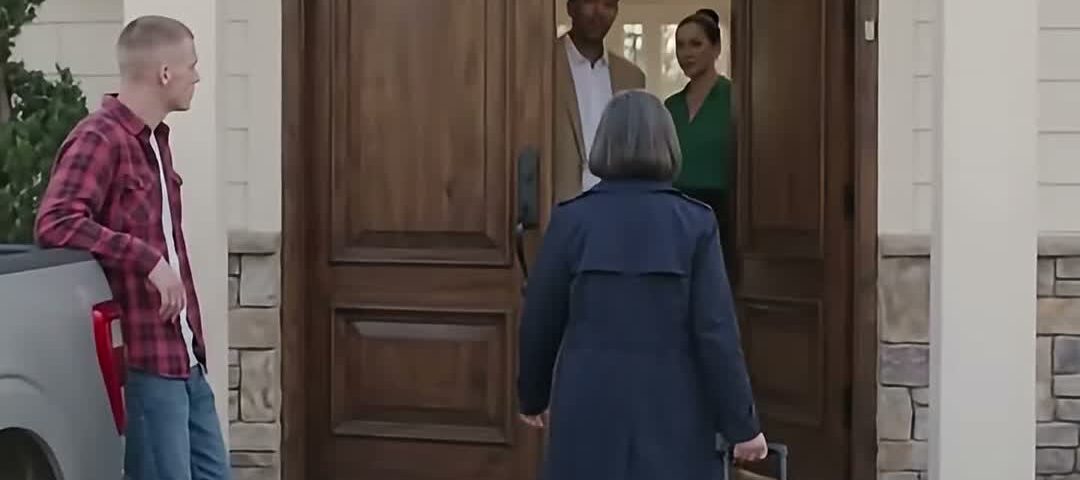
My entire livelihood collapsed, and I found myself homeless on the streets. Out of desperation, I begged my children for a roof over my head. My wealthy eldest son violently slammed the door right in my face. My middle child, a successful doctor, entertained me for barely a minute before shooing me away with a crisp $20 bill. It was only my youngest son, a simple construction worker living paycheck to paycheck, who took me in. He and his wife were even willing to pawn their wedding rings just to put food on our table.
But the very next day, an unexpected turn of events shook everyone to their core, bringing bitter regret to my two ungrateful children. Before I begin, please don’t forget to hit the like and subscribe buttons. Follow my story until the end and leave a comment telling me what state or country you’re watching from, so I know how far my story has reached.
The rain was falling in cold, steady drops as I sat in the dark alleyway of a closed storefront. The chill of the autumn night pierced through my worn-out winter coat, finding every thin spot in the lining, settling into my shoulders and my knees until my whole body ached with it. On my lap was a black garbage bag containing a few items of clothing and a thin blanket, all I had managed to grab when the door of my own house closed behind me for the last time.
Beside me sat a small suitcase with a broken wheel, tilted at an angle that made it look as tired as I felt. My entire life had been reduced to what could fit in those two containers. Everything else — the furniture, the photographs on the walls, the kitchen where I had cooked ten thousand meals, the yard where my children had played — all of it now belonged to someone else. Across the street, a massive billboard glowed brightly against the night sky, its light cutting through the rain like a stage lamp.
It featured the face of a man in a tailored suit smiling with absolute confidence, the kind of smile that has never once doubted itself. The text read Richard Hayes. Hayes real estate and fine dining, a name you can trust.
Passersby probably looked at that billboard and saw only a highly successful entrepreneur, a man who had built an empire from nothing, a name worth trusting with your money and your celebrations. What I saw was the little boy I used to bathe in our cramped bathroom, splashing water everywhere and laughing while I tried to keep his hair out of his eyes. What I saw was the little boy I used to hold against my chest when he had a fever, his small forehead burning against my cheek while I whispered to him that he would be all right. My eldest son, Richard Hayes.
A few cars stopped at the traffic light, their windshield wipers beating a steady rhythm. Passengers glanced at me and hurriedly looked away, as if poverty were something they might catch by looking too long. In their eyes, I was just an old beggar hoping for spare change, one more shadow in an alley on a rainy night. They had no idea that I was a mother of three, Richard, Melissa, and Ryan.
They didn’t know that I used to have a house of my own, small and modest, but full of love. A house where the walls were thin but the laughter was loud, where every room held a memory. I stared at my wrinkled hands, turning them over slowly in the dim light. These hands used to be strong. They were more than capable of carrying my babies, hauling heavy bags of groceries up the front steps, and stirring large pots of stew on the stove while three hungry children circled the kitchen like small storms.
I still remember the day my husband and I first held the keys to that house. The paint on the walls was fresh, and the hardwood floors were bare, but we laughed like children, standing in the empty living room and already hearing the life that would fill it. “Martha, starting today, we finally have a home of our own,” my husband, Arthur, said as we stood on the front porch, his arm around my shoulders, both of us grinning like we had won something enormous. We planted a small oak sapling in the front yard that very afternoon, pressing the soil down with our hands, promising it — and each other — that we would grow old beside it. Back then, Richard was in elementary school, Melissa was in kindergarten, and Ryan was still a toddler I carried on my hip.
Every morning, our house was loud and full of life. Richard would run around looking for his baseball socks, tearing through drawers while the clock ticked toward the school bus. Melissa would cry because her hair wasn’t braided right, standing in front of the mirror with her arms crossed while I tried again, gentler this time. And Ryan would storm the kitchen demanding pancakes, his little voice rising above the rest as if pancakes were a matter of national urgency. I would shout over the chaos, telling them breakfast was ready, while the smell of butter and syrup filled the whole house. Meanwhile, Arthur would be out front, opening up the small local hardware store we owned, sweeping the sidewalk and arranging the window display with the care of a man who loved his work. It was exhausting, but my heart was full.
We weren’t rich, but we had hope, and hope in those days felt like enough. Arthur ran the hardware store, and I baked pies and casseroles to sell to the neighbors, stacking them in foil trays and carrying them door to door with a smile. At night, we would count our dollar bills and coins at the kitchen table, spreading them out in little piles while the children slept down the hall. Arthur would always say, “Richard is going to be a big man someday. Melissa will be a doctor, and Ryan, what matters is that Ryan becomes a good man.” Back then, I thought we had all the time in the world to make those dreams come true. I believed, the way young mothers do, that love and hard work were a kind of promise the future was bound to keep.
When Richard got accepted into a prestigious university in the city, we sold the plot of land we had inherited upstate to pay his tuition. It was not a small thing to give up. That land had been in the family for years, a quiet patch of earth we had always imagined building on someday, or keeping for a rainy day. But Richard’s future was standing right in front of us, holding an acceptance letter, and Arthur said he needed a better head start in life than we had. That was Richard’s capital, the foundation we poured everything we had into. Richard promised he would succeed and lift the family up. He said it with tears in his eyes, hugging us both on the porch, and I believed him completely. Why wouldn’t I? He was my son, and his promise sounded like the most natural thing in the world.
Years later, Melissa wanted to go to medical school to become a specialist. “Just this once, Mom, Dad,” she pleaded, sitting at our kitchen table with her books stacked beside her, “once I become a specialist, everything will be easier.” So, we tightened our belts again, a little tighter than before. Arthur took on weekend shifts doing carpentry, coming home with sawdust in his hair and aching hands, and I doubled my baking orders, waking before dawn to roll out pie crusts while the house was still dark. We told ourselves it was temporary, that one day all three of them would be standing on solid ground, and we would look back on these lean years and laugh about how hard they had been.
Only Ryan never asked for anything. After high school, he chose to enter the workforce immediately, without a speech, without a plea, without a single request for tuition or a head start. Sometimes he helped out at the store, sweeping floors and carrying lumber for customers. Sometimes he worked as a day laborer in construction, rising before sunrise and coming home with dust on his boots and concrete on his jeans. And sometimes he helped neighbors fix their leaky roofs, climbing up ladders in the rain with a toolbox in his hand, refusing payment more often than not. I secretly harbored a sense of guilt, feeling as though all our money and prayers had been poured into Richard and Melissa while Ryan stood in the background smiling and accepting whatever was left. He never complained. That, somehow, made the guilt worse. He would grin and say he was fine, that he liked working with his hands, that school was never really his thing anyway — and I would smile back while a small, quiet ache settled somewhere deep in my chest.
Everything changed when my husband got sick. It started with a persistent cough, the kind you notice at first and then try to explain away. A cold, we thought. The change of seasons. Then came the rapid fatigue, a heaviness that crept into his limbs until he could no longer get out of bed without help, until the man who had carried lumber and climbed ladders and opened his store every morning could barely sit up. The doctors at the hospital said his lungs and heart were failing, and they said it in that careful, lowered voice that doctors use when they have already run out of good news.
Our savings were drained one by one, like water slipping through cupped hands. The medical bills piled up into a mountain of debt, envelope after envelope, each one heavier than the last. Melissa was already a doctor by then, a real doctor with a white coat and a hospital badge, but she simply said, “This isn’t my specialty, Mom, but I’ll help you file the paperwork.” Paperwork. As if forms could hold back what was happening to her father. We still had to figure out how to pay, and there was no one left to figure it out with. Arthur had been the one who handled the accounts, who talked to the bank, who made the hard calls. Now the calls were mine, and I made them with shaking hands from our kitchen phone while he slept in the next room.
On Arthur’s final night, he gripped my hand tightly, his fingers weaker than I had ever felt them, but still holding on with everything he had left. “Take care of the kids,” he whispered, his voice thin as paper. “Especially Ryan. He is the kindest, but he is also the most easily broken.” Shortly after, he took his last breath. The room went so quiet I could hear the clock on the wall, and then I couldn’t hear anything at all. Since he passed away, the house felt overwhelmingly empty. Not just quiet — hollow, as if the walls themselves had forgotten what they were for.
Business at the hardware store dried up. Without Arthur’s hands and his relationships with the regulars, the customers drifted away, and the debts began to rear their ugly heads, one after another, like weeds after a rain. Richard rarely came home, always busy with business pitches and board meetings, his phone always buzzing, his calendar always full. Melissa was drowning in her hospital shifts, twelve hours on her feet, too tired to do more than send a short message. They still visited occasionally, bringing a fruit basket or a little cash, but they would leave just as quickly, already checking their watches before they had finished saying hello. “Sorry, Mom. We just can’t visit often right now,” was their constant excuse, delivered with a kiss on the cheek and a hand already on the door. Only Ryan came by regularly. He fixed whatever was broken, a leaking tap, a sticking door, a loose step on the porch. He made sure I was eating, opening my refrigerator and frowning at what he found there. And he drove me to the clinic when my blood pressure spiked, sitting beside me in the waiting room, holding my hand like I had once held his.
A cold gust of wind blew, rustling the plastic bag on my lap. Inside a smaller pouch at the bottom of my bag were several letters from the bank, warnings printed in cold, formal language, and the final letter, an eviction notice. The sheriff’s deputies had arrived that morning, their cars parked in front of the house I had lived in for decades. They handed me documents and gave me a brief window to pack my life into a few bags. They took the keys to the house. The front yard where we had planted the oak tree, now tall and sturdy, its branches reaching wide over the lawn, belonged to someone else. I held my breath as I stepped off the porch for the last time, my shoes pausing on the step where Arthur and I had once stood laughing with a set of new keys in our hands. I had no choice. The accumulated medical debts and compounding interest had slowly swallowed me whole, month by month, until there was nothing left to bargain with.
All I could bring were essential clothes, a few old photograph albums, and some basic dishes, the things that fit in a suitcase and a bag and could be carried by one tired old woman. I was dropped off at Ryan’s rented apartment. It was cramped. The walls were damp and the paint was peeling in long strips, but Ryan’s face looked sadder than mine when he opened the door and saw me standing there with my bags. He forced me to eat some toast and canned soup, heating it on a stove that rattled, watching me take each bite as if making sure I really swallowed. “I’m so sorry, Mom,” he said, staring at the linoleum floor, unable to meet my eyes. “I can’t afford to buy you a house yet. I can’t get our old home back from the bank.” I rubbed his arm, feeling the tension in it, the way his muscles stayed knotted even when he tried to relax. “You are more than enough, Ryan,” I replied. But we both knew it was just a comforting lie, the kind of lie a mother tells when the truth would break her child’s heart clean in half. Now here I was on the sidewalk staring at the billboard of Richard flashing a million-dollar smile. My stomach grumbled, a small, embarrassing sound in the rain. In my coat pocket, my old cell phone felt heavy, heavier than a phone has any right to feel. Tomorrow I had to decide whose door I would knock on.
A few days before I ended up on that cold sidewalk, my life had slowly crumbled, piece by piece, the way a cliff crumbles into the sea — not all at once, but a little more every day until one morning you look up and the ground you were standing on is simply gone. The letters from the bank had arrived relentlessly. At first, I just stacked them on the table with the grocery flyers and utility bills, as if pretending they were ordinary mail would make them ordinary. Eventually, the envelopes bore harsh red stamps. Final notice. The words seemed to shout even when the house was silent.
One morning, I went to the bank with my purse and whatever courage I had left, clutching the strap with both hands like a lifeline. The marble floors felt slippery beneath my shoes, which were used to the worn wooden floors of my own home, floors that had creaked in familiar places and never once tried to trip me. People sat neatly in waiting chairs, the smell of expensive cologne mixing with the sound of numbers being called, a soft electronic chime that felt like a countdown. When my turn came, I sat across from a young man in a sharp suit, his tie perfectly knotted, his desk perfectly clean. His name tag sat on his desk, though I’d forgotten his name now. All I remember is his emotionless corporate voice, the voice of someone delivering weather reports about other people’s storms.
“Mrs. Martha Hayes, we’ve sent several notices. Your mortgage is severely delinquent. The interest has compounded significantly.” “Can’t I negotiate a payment plan, son?” My voice trembled, and I hated that it did. “That’s our only home. My husband passed away. My income is very small.” He clicked his mouse a few times and sighed, the sigh of a man who had delivered this same speech a hundred times before. “The outstanding balance is too high, ma’am. The property must go into foreclosure and be auctioned. The proceeds will go toward the debt. If there is a surplus, we will contact you,” he said, as if delivering good news, as if the possibility of a surplus were a gift rather than a crumb.
I gripped the hem of my shirt fighting back tears. “My children have good jobs. My eldest has a business. My daughter is a doctor. Can’t you just give me a little more time? Let me talk to them first.” “You can talk to them, ma’am, but the foreclosure process will continue. It’s the bank’s final decision.” When I left the bank, my knees felt weak, and I had to sit on a low wall outside until the trembling stopped. At the bus stop, I sat for a long time holding my phone, watching buses come and go, watching people hurry past with their shopping bags and their busy lives. In my contacts list sat the names of my children, Richard, Melissa, Ryan. My thumb hovered over Richard’s name.
I pressed call. “Hello, Mom.” Richard’s voice sounded rushed, clipped at the edges, already halfway somewhere else. In the background, there was the chatter of a busy restaurant, glasses clinking, voices rising and falling like a tide. “Richard, I just came from the bank. Our house, the house you grew up in, it’s being foreclosed. Your dad’s medical debts have caught up and the interest is huge.” “Mom, Mom, hold on a second,” he interrupted. “I have a very important meeting right now. Let’s talk about this later. All my capital is tied up in the restaurants and real estate right now. It’s not easy to just pull cash out.” He let out a strained chuckle, clearly impatient, the laugh of a man who wanted the conversation to be over. “Just don’t panic yet.” “But the letter says I have to vacate by next week, son.” “Mom, I’m stepping into the boardroom. I’ll call you back.” The line went dead. A text arrived a few minutes later. “Sorry, Mom. I’ll try to figure something out.” That was it. My phone remained silent after that, a small dark rectangle in my hand that refused to light up again.
I took a deep breath and called Melissa. “Yes, Mom.” Melissa’s voice was exhausted, the voice of someone who had been on her feet for hours and had hours yet to go. “I’m at the hospital, on rotation.” “Melissa, the bank is taking the house. They sent the final notice. I’m afraid I have to leave by next week.” “Oh my god, Mom.” Melissa sighed heavily, a long sound that seemed to carry the weight of her entire schedule. “I have so many payments right now. The mortgage, the BMW, the clinic equipment loans, Victoria’s private school tuition. You can ask the government for help, you know. There are plenty of Medicare programs and state-run nursing homes now.” “I don’t want to go to a nursing home,” I said weakly. “I just need a little help.” “Mom, please don’t be like this,” Melissa snapped, her patience snapping like a thin wire. “Excuse me for saying this, but I worked hard to get where I am by myself. Just let them sell the house, pay the debt, use whatever is left to survive. You can’t keep dragging us down financially.” At the end of her speech, she sounded exactly like an irritated doctor scolding a non-compliant patient, as if I were a chart she needed to close. “I have to do my rounds, Mom. I’ll call you later.” She never called back.
Eviction day arrived much faster than I anticipated, the way bad news always seems to arrive — first slowly, then all at once. Two sheriff’s deputies arrived with a representative from the bank and a moving crew, their vehicles lined up along the curb like a small, official parade. In the front yard, the oak tree we had planted stood tall, its autumn leaves vibrant against the gray sky, as if it didn’t know anything was wrong. I stood beneath it for a moment before going inside, pressing my palm against its bark, feeling the rough ridges under my hand, remembering the afternoon Arthur and I had pressed a sapling into the earth with our bare hands. “Ma’am, please pack the personal belongings you need to take,” one of the deputies said. His tone was polite but firm, the tone of a man doing a job he did not enjoy but would do anyway. “We can only give you a couple of hours.”
I wasn’t alone. Ryan had arrived at dawn with his wife, Sarah, their faces pale with anxiety, their eyes already tired though the day had barely begun. “Mom, the important thing is your clothes, your documents, and your photos,” Ryan said, his voice steady in the way he always made it steady when he was frightened. We moved quickly, all three of us, through rooms that suddenly felt like someone else’s. Sarah wrapped my plates and glasses in old newspaper, her hands careful and quick, folding the corners the way I had taught her years ago without ever realizing I had. Ryan carried my thin mattress and a few plastic storage bins to his rusty pickup truck, his shoulders straining, his breath coming short. The large, heavy oak dresser, a family heirloom from my late husband, stood in the corner of the bedroom, solid and immovable as a monument. It was incredibly heavy and hard to maneuver, and the clock was ticking louder with every minute. Exhausted and out of time, we decided to leave it behind. “What about this, Ryan?” Sarah asked, pointing at the dresser, her voice small. “Leave it. It’s too heavy. Let the bank deal with it,” Ryan said, wiping sweat from his forehead with the back of his hand. I stared at the dresser for a moment. On top of it sat our faded wedding photo, Arthur and me, young and laughing, frozen in a time when the future still looked simple. I grabbed the frame and put it in my bag. We left the dresser leaning against the wall, its drawers still holding things I would never see again.
In the living room, the bank rep was taping papers to the door, notice of foreclosure, the white sheets bright against the wood like fresh snow. I held back my tears as I handed over the keys, placing them in his palm one by one, feeling the weight of each one leave my hand. “I’m sorry, ma’am. Just doing my job,” the rep murmured, not quite meeting my eyes. I just nodded. Outside, the neighbors were standing on their porches, peeking through their curtains. Some offered sympathetic nods, small and sad. Others just whispered behind their hands, and I pretended not to hear. Ryan loaded my suitcase into the bed of his truck. His apartment was much smaller than my house, but I had nowhere else to go.
During the drive, I clutched my bag tightly to my chest, feeling the frame of the wedding photo press against my ribs through the fabric. The crisp autumn air hit my face through the truck’s open window, but inside I was freezing, a cold that had nothing to do with the weather. The home we built with sweat and prayers was gone in a single day. My husband was gone, and my two most successful children only had time for quick dismissive words over the phone. That night in Ryan’s cramped apartment, I lay on my thin mattress in the living room, listening to the building settle around me. Nearby, Sarah and their young son Danny were sleeping on the pull-out couch, their breathing soft and even. Ryan was sitting on the floor in the dim light of the kitchen staring at a stack of past-due utility bills, his head in his hands, the numbers swimming in front of him.
“Mom,” he whispered, noticing my eyes were open, “it’s going to get really tight in here if you stay long-term. I’m so happy to have you, but” — his voice broke, and he had to stop and start again — “I’m scared I can’t give you the life you deserve.” I stared at the peeling paint on the ceiling, following a crack with my eyes the way you follow a river on a map. “You’ve done more than enough, Ryan.” He shook his head, and I could see his jaw working, the way it did when he was holding back tears. “Richard and Melissa have the means. Maybe try staying with them just temporarily. Just so you can sleep in a real bed and I can pick up some extra shifts. I’ll save up, and when things get better, I’ll find us a decent place.” His words felt like a knife to my chest. My poorest child was the one sacrificing his pride, urging me to go to his wealthy siblings just so I could be comfortable, just so I could sleep in a real bed. He was willing to feel like a failure as a son so that I could feel like a mother who was cared for.
I didn’t answer him that night, but the next morning when the sun peeked through the blinds, thin and pale, I knew what I had to do. I would knock on the doors of the children I had devoted my life to. I would beg not for their money, but for a tiny corner where I could lay my old mattress and rest my tired bones. It was not a grand request. It was the smallest thing a mother could ask, and I would ask it with my whole heart.
The next morning, I woke up before dawn, while the apartment was still dark and the street outside was still quiet. I put on my most presentable clothes, the good coat, the scarf without holes, smoothing everything down with my hands as if neatness could make the difference. My small bag of essentials and medications sat by my feet. In the cramped kitchen, Sarah was making instant coffee, the spoon clinking softly against the mug. “Are you really going to Richard and Melissa’s, Mom?” she asked softly, her voice careful, as if the question itself might bruise me. “I’m going to try. I don’t want to be a burden on you two anymore.” Ryan walked out of the tiny bathroom, toweling his hair. “I’ll drive you, Mom. I don’t have a shift at the site today anyway.” Soon we were in his rusty pickup truck driving out of the rundown neighborhood and heading toward the affluent suburbs, the streets getting wider and cleaner with every mile, the houses getting bigger, the lawns getting greener. I clutched the hem of my coat as we passed several Hayes real estate signs, my son’s name smiling down at me from every corner.
Richard’s gated community had a security booth, high wrought iron fences, and perfectly manicured lawns, grass so even it looked painted. Ryan’s beat-up truck stuck out like a sore thumb among the polished cars, and I saw the guard’s eyes linger on it a second too long. After a quick phone call from the guard, the gates slowly opened, the ironwork swinging inward with a smooth, expensive hum. Richard’s house was massive, a modern white colonial with two pristine luxury SUVs in the driveway, their paint gleaming even under a cloudy sky. Ryan put the truck in park. “I’ll wait right here, Mom,” he said, his voice gentle, and I could hear the effort it cost him to sound calm. I walked up the stone pathway to the heavy oak door, each step feeling longer than the last. At my first knock, it swung open. Claire, Richard’s wife, stood there in a designer cashmere sweater, her hair perfect, her smile freezing the moment she recognized me. “Oh, Martha,” she said, visibly shocked. “Good morning. Is Richard here?” I asked, my voice sounding smaller than I wanted it to. From inside I heard Richard’s voice. “Who is it, honey?” He appeared in the foyer, his hair perfectly gelled, his shirt crisp. When he saw me, he froze for a second before forcing a tight smile, the kind of smile that doesn’t reach the eyes. “Mom, why didn’t you call ahead?” He glanced nervously toward the street, toward the truck, toward anything that wasn’t my face.
“I don’t have a house anymore, son,” I said weakly, the words feeling strange in my mouth, as if they belonged to someone else’s life. “The bank took it. I stayed at Ryan’s last night, but it’s too cramped. I just wanted to ask if I could stay here for a while, just temporarily. I can help clean, cook, whatever you need. I won’t ask for anything.” Claire sighed loudly, a sound that filled the whole foyer. “Richard, the girls from the country club are coming over for a charity lunch later. If your mother lives here, how are we going to explain it?” Richard rubbed the back of his neck, a gesture I remembered from when he was a boy caught in a lie. “It’s not that simple, Mom. The guest rooms are full. Kevin and Chloe need their own space, and my home office is here. If you move in, what will people think? A successful CEO having his displaced mother crash in his house? It’ll ruin my reputation.”
“Just a thin mattress, son. Just in a corner somewhere,” I pleaded, hearing my own voice shrink with every word, hating how small it sounded, hating that I had to beg my own child for a corner of his enormous house. “Please don’t talk like that.” He looked away, embarrassed, not by his answer but by my asking, as if my need itself were the embarrassing thing. “I’ll help you some other way. I can send Ryan some money for rent or look for a cheap motel. But living here, it’s impossible. I host important clients. It’ll disrupt my business.” Claire nodded quickly, eager to agree. “Yes, Martha. You’d be much more comfortable somewhere else. It’s too chaotic here.” “So I can’t stay here,” I confirmed, my voice hollowing out, becoming something flat and empty that I barely recognized. Richard took a deep breath. “Not right now. Sorry, Mom. I’ll think about it. But I have an appointment to get to.” He looked at Claire. “Honey, please walk Mom out.” Claire shifted her body to block the doorway, stepping sideways with a practiced smoothness. “Let’s go outside, Martha. Let’s not stand right in the open doorway. The neighbors might see.” Before I could say another word, she pulled the heavy oak door shut. I heard a loud click as it locked right in my face, a sound so final it seemed to echo in my chest.
For a few seconds, I just stood there, staring at the polished wood, at the brass knocker, at the door that had just closed on a mother. Behind that wood was the boy I used to hold, the boy whose fever I had cooled with damp cloths, whose tears I had wiped with my own sleeve. Now he was more terrified of what his wealthy neighbors thought than he was of his mother freezing on the street. I walked slowly back to the truck, my steps careful on the stone path, my bag feeling heavier with every step. Ryan was leaning against the door, watching me come, his face already telling me he knew. “How did it go, Mom?” he asked gently, his voice soft as if he were speaking to someone who had just been hurt, which I suppose I had. I shook my head. I couldn’t say it out loud yet. “Take me to Melissa’s house.”
Melissa’s neighborhood was equally affluent, lined with iron gates and professional landscaping, hedges trimmed into perfect shapes, flowerbeds arranged like displays. I pressed the intercom button, my finger trembling slightly, and it didn’t take long for Melissa to march out wearing her white doctor’s coat and carrying her designer tote bag, her stride brisk and efficient, the stride of a woman with somewhere important to be. “Mom, what is this sudden visit?” she asked, eyeing me up and down, her gaze flicking over my coat, my bag, my shoes, taking inventory the way a doctor takes vitals. I sat on a patio chair on her porch. She didn’t even invite me inside. The door stayed closed behind her, and I understood that I was not going to cross that threshold today.
“The bank took my house. I stayed with Ryan, but they have no room. I wanted to ask if I could stay here. I can watch the house while you’re at work. I won’t be a burden.” Melissa checked her Apple Watch, the screen lighting up her wrist. “Oh, Mom, I’m in such a rush. My schedule is packed. If you stay here, I’ll have to worry about you. The rooms are full anyway. Victoria needs her study room for her SAT prep. I work night shifts at the ER. If you get sick here, it’s just going to be another problem for me.” “But I have nowhere else to go,” I whispered, the words barely making it past my throat. She sighed dramatically, opening her designer purse with a practiced motion. She pulled out her wallet. “Here Mom, for gas and food.” She handed me a crisp $20 bill, so new it barely bent, the paper stiff between my fingers. “There are lots of state programs. Nursing homes are really nice these days. Go look into one of those. You can’t keep relying on your kids. We have our own lives, too.”
I stared at the $20 bill. It was the same amount I used to slip into her pocket for lunch money when she was in high school, back when Arthur and I would skip meals just to make sure she had enough, back when we told her it was nothing while our own stomachs growled. My hand shook as I took it, and I hated that it shook, hated that she could see it. “So I can’t stay?” “It’s not that you can’t, Mom. It’s just that I really can’t handle it right now.” She answered quickly, already turning, already moving on. “I have to go. Sorry.” She turned toward the door. “Victoria, do not open the door for anyone you don’t know,” she yelled inside, loud enough for me to hear, loud enough for the whole street to hear. My chest physically ached. I had finally been categorized as a stranger at my own daughter’s house, a person unknown, a risk to be warned about. Melissa walked me to the front gate, shut it with a firm clank, and drove off in her BMW, the engine purring smoothly as it carried her away from me.
She left me standing on the sidewalk holding a $20 bill. I walked back to Ryan’s truck, my steps slow, my eyes fixed on the ground. He looked at me, his eyes full of sorrow, and I could see him trying to find words that wouldn’t make it worse. “Let’s go home, Ryan,” I said, fighting to keep my voice steady, fighting to keep the tears behind my eyes where they belonged. “To the apartment?” he asked, quietly, as if he needed to be sure. I nodded. “Yes.” Looks like that’s our only home now. As we drove back, the harsh autumn wind battered my face through the window, and I thought about how strange it was that the two doors that had just closed on me belonged to the two children I had given everything to, while the flimsy, peeling wooden door in a run-down part of town was waiting at the end of this journey. But behind that door was the only place that still called me mother without any conditions, without any price, without any embarrassment.
From the day I was rejected at my older children’s doors, the days in Ryan’s apartment felt heavier, as if the air itself had thickened. The ache in my joints I could tolerate — old age had taught me to live with that kind of pain, to move a little slower, to sit a little longer. The crushing weight in my chest was unbearable, a pressure that never quite lifted no matter how deeply I breathed. The apartment was tiny, my mattress pushed against the living room wall, a plastic storage bin in the corner holding what was left of my life, and a rattling space heater keeping us from freezing, its coils glowing orange in the dark. At night, we were packed tight, four people in a space meant for two, stepping around each other in the dark, whispering so as not to wake Danny.
Every morning Ryan left to look for construction work, pulling on his boots while the sky was still gray. Some days he found a day labor job, and he would come home at dusk covered in drywall dust, his hair white with it, his hands raw, but his face carrying a small, tired victory. Other days he didn’t, and he came home by noon, his face defeated, his boots barely dusty, the whole day stretching empty in front of him. One afternoon while I was folding laundry, the fabric soft from a hundred washes, Sarah was counting coins on the kitchen counter, stacking them in small, careful piles. “This is enough for a loaf of bread and some eggs for 2 days,” she whispered to Ryan, who had just walked in, his shoulders slumped. “But the electric bill is 2 months past due, honey.” Ryan rubbed his temples, his fingers pressing hard into his skin. “I asked the foreman. The big commercial project wraps up next week.” “After that, I don’t know.” His voice trailed off, and the silence that followed was heavier than any answer.
I pretended to be focused on the laundry, folding the same shirt twice, but my heart was breaking. I had lost my home, and now my youngest son was drowning because of me, sinking a little deeper every day while trying to smile and tell me the water wasn’t cold. In the corner, the small box TV was on, its screen flickering with afternoon light. The local midday news was playing. “Renowned restaurateur Richard Hayes opens a new flagship steakhouse downtown,” the upbeat anchor announced, her voice bright and polished. On the screen, Richard appeared wearing a sharp navy suit, smiling broadly as he cut a red ribbon, the scissors flashing in the camera lights. Beside him, Claire wore an elegant designer dress, her smile practiced and perfect. Kevin and Chloe were posing perfectly, two beautiful children arranged like ornaments. The graphic below read, “Successful entrepreneur inspires the city.” Sarah glanced at me and quickly changed the channel, her hand moving fast, as if she could outrun the image. “I’m so sick of the news only caring about rich people,” she muttered, her voice tight with anger she was trying to swallow. I suppressed a bitter smile. The son cutting ribbons for a new restaurant was the same son who locked his front door on me yesterday, the same son who had been afraid of what the neighbors might see.
The channel changed to a daytime health talk show, all soft music and bright studio lights. Suddenly, Melissa’s face filled the screen. She was in her pristine white lab coat, her hair perfect, talking about preventative care with the confident authority of someone who had never once doubted herself. “I believe society needs to be more compassionate and proactive about regular health checkups,” she said, her voice smooth and rehearsed. The caption read, “Dr. Melissa Hayes Carter, MD. Medical Excellence Award Winner.” My chest throbbed again, a deep, physical ache. The daughter who told me to go to a state-run nursing home was on television preaching about compassion, telling strangers to care for one another while her own mother slept on a mattress in a cramped apartment. Sarah turned the TV off completely, pressing the button with more force than necessary. The room fell into a heavy silence, broken only by the rattle of the space heater, that small, faithful machine doing its best against the cold.
That night, lying awake, Melissa’s words echoed in my mind, turning over and over like a stone in a river. “You can’t keep relying on your kids. We have our own lives, too.” Maybe it was true, I thought, staring at the ceiling in the dark. But didn’t Arthur and I have our own lives once, too? And didn’t we sacrifice it all for them — our land, our savings, our sleep, our youth, our comfort — pouring everything we had into their futures without ever once keeping score? A few days later, the crisis arrived in the form of a final shutoff notice from the electric company, the paper thin and official, the words stamped in red. “If we don’t pay this by tomorrow, we lose power,” Ryan said, staring at the paper, his face gray. In the pantry, there was only half a box of cereal and a few cans of soup left, lined up like soldiers on an empty shelf. Outside, a bitter frost was settling in, whitening the edges of the windows.
“I’ll just fast,” I said, trying to lighten the mood, forcing a smile I didn’t feel. “I’m old. I don’t need to eat much.” “No, Mom,” Sarah replied quickly, her voice sharp with worry. “What if you get sick?” Ryan stayed silent, his eyes bloodshot from lack of sleep, his hands hanging empty at his sides. That afternoon, Danny spiked a fever. His forehead was burning, his small body limp and lethargic on the couch, his cheeks flushed an alarming red. Sarah panicked, her hands fluttering over him, checking his temperature again and again as if hoping the thermometer had made a mistake. “Ryan, we have to take him to urgent care,” she said, her voice shaking. “Even the walk-in clinic has a copay,” Ryan whispered, the words barely audible, as if saying them quietly would make them less true. I sat next to the couch, stroking Danny’s damp hair, feeling the heat radiating off his small head. My little grandson gripped my hand, his fingers weak but trusting. “Let’s just sponge him with lukewarm water for now, Sarah. If it gets worse tonight, we’ll take him,” Ryan said, but his voice didn’t sound convinced, not even to himself. Sarah stared at her husband, her eyes wide and wet. “Ryan, I can’t watch him suffer like this. The power is getting shut off. We have no food, and Danny is sick. We have to do something.”
Ryan took a deep breath and stood up, his whole body straightening as if he had made a decision that cost him something enormous. He walked over to their small bedroom dresser and opened the top drawer, the wood sticking slightly, the way cheap drawers always do. From it, he pulled out a scuffed velvet box, its fabric worn at the edges from years of being opened and closed. I recognized it immediately, the box that held their wedding rings. “I think it’s time,” he said softly, his voice barely above a whisper. “Ryan.” Sarah covered her mouth with both hands. Those rings were simple, thin gold bands they had bought with their meager savings before getting married, choosing them together in a small jewelry shop, laughing because they could only afford the simplest ones. I remembered the day they came home from the jeweler, laughing like kids because they finally had their own rings, holding them up to the light and admiring how they caught it. “I’m sorry,” Ryan’s voice cracked, and he looked at his wife with eyes full of apology and love at the same time. “I have nothing else to give. Let the rings go. What matters is that Mom and Danny eat, and we get Danny his medicine. I’ll buy you a new one when things get better.”
Tears streamed down Sarah’s face, silent and steady. “I’ve been with you since we had nothing, Ryan. I didn’t marry gold. I married you. If this is the only way, do it.” She quickly wiped her cheeks with the back of her hand, straightening her shoulders the way brave people do. “As long as we’re together.” I sat frozen. No words would come out of my mouth. It felt like someone was choking me, like the air had been taken from the room. Ryan put on his jacket. “Mom, we’re just going to the pawn shop downtown and then to the pharmacy for Danny,” Sarah said, her voice gentle, as if she were telling me they were only going to the store. “Can you watch him?” I just nodded, unable to speak, unable to do anything but nod. When the door closed behind them, I stared at my grandson. The damp washcloth on his forehead was getting warm. I swapped it for a cool one, fighting back the tears that threatened to spill, whispering to him softly that his parents would be right back, that everything was going to be all right.
Hours later, Ryan and Sarah returned carrying plastic grocery bags, the handles cutting into their fingers. They had bread, eggs, milk, Tylenol, and cough syrup, simple things that suddenly looked like treasure. Their faces were exhausted but relieved, the relief of people who had done something painful and necessary and were still standing. “Do you want to eat something, Mom?” Sarah asked, already moving toward the kitchen. I stared at their bare hands, at the pale circles on their fingers where the rings had been, circles that would take weeks to fade. “Your rings. How much did you get?” I asked weakly. “Not a lot,” Ryan replied with a small smile, the smile of a man trying to make a hard thing sound easy. “But enough to get us through the week. It’s enough.” I couldn’t hold it back anymore. I broke down sobbing, great shaking sobs that came from somewhere deep in my chest. “Forgive me. It’s because of me that it’s come to this.” Ryan rushed over and sat beside me, wrapping his arm around my shoulders. “Don’t say that, Mom. You are not a burden. If it weren’t for you, I wouldn’t be here. You worked yourself to the bone to put us all through school. Now it’s our turn to take care of you. Even if it’s hard, what matters is that we’re together.” Sarah nodded, her eyes red but steady. “Yes, Mom. Money comes and goes. Houses come and go. But you only get one mother.” I took a deep shuddering breath, holding onto their words like a rope. Out there, my two successful children were living in mansions, appearing on TV, and receiving praise. In here, my youngest son pawned his wedding ring just to feed his mother. That night, as I held Danny, whose fever was finally breaking, his forehead cooling under my hand, something shifted in my heart. For the first time, I felt anger. Not at life, but at my older children, a clean, sharp anger that felt almost like strength. And beneath that anger, a quiet determination was taking root. A desire to stop being a passive victim, to stop accepting whatever was handed to me, to stop apologizing for existing.
The next morning, I was sweeping the floor, the broom moving in slow, steady strokes across the worn linoleum, when someone knocked on the door, a soft, hesitant knock, not the confident rap of someone who belongs. “Martha, Martha Hayes,” a woman’s voice called out, uncertain, hopeful. I opened the door. Standing on the crumbling concrete walkway was a middle-aged woman in jeans and an oversized sweatshirt, her hair pulled back, her hands clutching a plastic bag and an old yellowing envelope. “Ma’am, do you remember me?” she asked hesitantly, shifting her weight from one foot to the other. I squinted, studying her face, searching through years of memories for the shape of her smile. “I’m so sorry. I’m Brenda. I used to help clean your house on weekends back when Mr. Hayes was still running the hardware store.” “Brenda,” I smiled faintly, finally recognizing her, the warmth of old familiarity cutting through my confusion. “I’m sorry my eyes aren’t what they used to be.” She chuckled nervously, but her face quickly turned serious, the way a person’s face does when they are carrying news that matters.
“Ma’am, I was actually at your old house. The new owners hired a cleaning crew before they move in next week. Yesterday, while I was trying to move that massive oak dresser in the master bedroom, I found this.” She held up the envelope, its paper yellowed with age, its edges soft from years of hiding. It was taped to the back of the dresser, almost like it was hidden on purpose, pressed flat against the wood where no one would think to look. “It has Mr. Hayes’s name on it.” She handed it to me, her hands careful, as if she were handing me something fragile and precious. My hands shook as I took it. On the front, in handwriting I knew better than my own, the loops and slants I had seen on a thousand grocery lists and birthday cards, it read, “For Martha. Keep safe.” My throat went dry. “Brenda, can I open this now?” “Of course, ma’am. It’s yours. That’s why I rushed over here. I asked around the old neighborhood to figure out where Ryan lived. I was terrified the new owners would throw it away.”
I took a deep breath and carefully tore open the envelope, my fingers clumsy, my heart hammering so hard I was sure Brenda could hear it. Inside was a thick, slightly yellowed piece of paper with an official bank seal, the embossed stamp catching the light. It was a deposit slip and a cashier’s check. I stared at the numbers unable to process them, my eyes moving over the digits again and again as if they might change. $1,500,000. In the bottom left corner, written in blue ink, in Arthur’s hand, “Our life savings. If I don’t make it, use this for your retirement.” My hands began to tremble violently, the paper shaking in my grip. “Oh my god,” slipped from my lips, barely a whisper. “Is it real, ma’am? Is it a lot?” Brenda asked, trying to peek respectfully, leaning in just slightly. “One and a half million dollars, Brenda,” I whispered, the words feeling unreal even as I said them. Brenda’s eyes widened, her mouth falling open. “Lord have mercy. That much? No wonder Mr. Hayes was always so busy with paperwork back then. I thought it was just the hardware store.”
I remembered Arthur in the months before he died. He had been taking trips downtown, meeting with brokers and bank managers, coming home late with a briefcase full of papers he never quite explained. He had quietly set aside this money, likely intending to give it to me, to make sure I would be safe, but his illness escalated so rapidly, the cough becoming the fatigue becoming the bed, that he must have taped it behind the heavy dresser to keep it safe from burglars and then either forgot or simply ran out of time to tell me. The thought hit me like a physical blow — all those months of suffering, of choosing between medicine and food, of watching my home slip away, and this money was sitting there the whole time, hidden behind a piece of furniture we had been too tired and too rushed to move. I covered my mouth as tears poured down my face. “I suffered so much. The bank took the house and this money was sitting there the whole time,” I sobbed, the words breaking apart in my throat. Brenda patted my shoulder gently, her hand warm and steady. “That’s why I brought it straight to you, ma’am. I didn’t want anyone else claiming it. I’m just a cleaner, but I know what’s right. What ain’t mine, I don’t touch.” I looked at her, this woman who had nothing to gain and everything to lose by coming here, and my heart filled with a gratitude so deep it hurt. “Thank you, Brenda. If it weren’t for you, this would have been thrown in a dumpster.”
“Don’t worry, ma’am. But don’t checks expire?” she asked, her brow furrowing. That question snapped me back to reality like cold water. I looked at the date. It was from 10 years ago, a decade of dust and silence sitting in my hands. My chest tightened. “It might be invalid. I need to go to the bank. Right now.” Hours later, I was sitting across from a different bank official, an older man wearing wire-rimmed glasses, his manner slower and kinder than the young man who had foreclosed on me. “So you found this document in your foreclosed home?” he asked after examining it, turning it over carefully, studying the seal. “Yes, sir. My husband passed away a decade ago. I only just found out this existed.” He nodded slowly, his fingers moving across his keyboard. “According to policy, a standard cashier’s check expires after a certain period. However, this isn’t just a check. It represents funds tied to a high-yield trust account set up under your late husband’s name. Let me check the system.” He began typing, and I held my breath, feeling like I was waiting for a judge’s verdict, feeling the whole room narrow down to the sound of his keys. He leaned closer to his screen, his eyes moving across lines I couldn’t see. “You’re very fortunate, Mrs. Hayes. This account was frozen because no beneficiary ever stepped forward to claim it. The principal amount is still there along with a decade of compounded interest minus some administrative fees.” “You mean the money is still there?” I asked weakly, afraid to believe it, afraid the words would dissolve if I touched them. “In principle, yes, ma’am. But to access the funds, you need to go through the legal claiming process as the primary beneficiary. We’ll need the death certificate, your marriage license, and the birth certificates of your children. It would be much easier if you had a lawyer.”
A lawyer. I swallowed hard. The word felt too expensive, too intimidating for someone like me, a woman who had just been evicted and was living on her son’s couch. The banker smiled kindly, seeing my fear. “It just so happens that the attorney your husband used to set this up works closely with our branch. His name is attorney Miller. He’s on the paperwork. I can call his office if you’d like.” The name wasn’t foreign to me. Arthur used to mention a David Miller, in passing, over dinner, in the store, a friend from years back. “Yes, please, sir.” Attorney Miller’s office was just a few blocks away. It was a modest but highly organized space lined with law books, the shelves reaching toward the ceiling, the air smelling faintly of paper and coffee. A man with graying hair and round spectacles greeted me warmly, rising from his desk with a smile that reached his eyes. “Mrs. Martha Hayes, am I right?” he asked, shaking my hand, his grip firm and kind. “I’m David Miller. I was a good friend of Arthur’s.” “Yes, attorney. My husband used to mention you.” We sat down and I told him everything — the foreclosure, moving into Ryan’s cramped apartment, my older children’s rejections, and the envelope that arrived that morning. The words poured out of me, months of silence breaking open all at once.
Attorney Miller listened intently, nodding and sighing, his hands folded on his desk, his eyes never leaving my face. “Arthur told me he wanted to set up a nest egg for you,” he said softly, his voice carrying the weight of an old friendship. “He told me, ‘David, if I go, help Martha handle this money. She’s too kind-hearted. People might take advantage of her.’ But then he got sick. And I lost contact with you both. I assumed he had given you the documents.” I looked down at my hands, at the wedding photo frame I still carried in my bag. “No, sir. He probably meant to, but he faded so fast.” Attorney Miller took a deep breath, the kind of breath a man takes when he is rearranging his understanding of the past. “Fate works in strange ways. But what matters is the future. This money is your right.” “But my children, attorney,” I said, my voice catching. “I’m hesitant. If Richard and Melissa find out, they have their own lives now. Ryan is the only one taking care of me. Because of that, I need to be careful. That kind of money changes people.” “I strongly suggest you don’t tell anyone yet, except the person you trust the most,” Miller advised, leaning forward slightly. I instantly remembered Ryan holding the box with his wedding rings, his hands steady, his voice quiet, his sacrifice absolute. “My youngest, Ryan. He’s a good boy. He took me in when the others slammed their doors. He pawned his wedding ring just so we could eat.” Attorney Miller looked at me with deep respect, the kind of look I had not seen on a stranger’s face in a very long time. “Then you know who truly loves you, not your wallet.” I nodded slowly, feeling the truth of it settle into my bones.
“Here is what we do, Mrs. Hayes,” Miller said, his tone shifting into the calm, capable voice of a man who had handled a hundred hard cases. “I will handle all the probate and claim documents. It will take some time, but I will do everything in my power to expedite it. As for my legal fees, don’t worry. Consider it me fulfilling an old promise to my friend Arthur. We will discuss fees only after the funds are secured in your name.” “I don’t have a dime right now, attorney,” I said quickly, the shame rising in my cheeks. “I know. Don’t worry. And believe me, I won’t take much. I have enough.” He smiled, a warm, unhurried smile. When I walked out of his office, my footsteps felt different on the pavement, lighter somehow, as if the ground had shifted beneath me. Ryan’s apartment was still cramped. The utility bills were still unpaid. But for the first time since losing my home, I didn’t feel completely powerless. My whole life, I thought fate was just something that happened to me, and my job was to endure it, to bear it quietly and keep going. But now, I had something to protect. Not just the money, but my dignity. I resolved that I would never again let anyone, even my own flesh and blood, use my kindness as a doormat.
A few days after my meeting with Attorney Miller, life in the apartment remained the same on the surface. I swept the floors, cooked whatever cheap meals we could afford, and comforted Danny when he fussed. The only difference was that inside my old purse sat the paperwork for a trust worth over 1.5 million, folded carefully between my wallet and my medications, a secret that hummed quietly every time I opened the clasp. That night, after Sarah and Danny fell asleep, their breathing soft in the next room, I sat on the floor next to Ryan. The single bulb in the kitchen cast a dim glow, throwing long shadows across the peeling walls. “Ryan,” I whispered, my voice barely louder than the hum of the refrigerator. He turned to look at me, his face open and tired. “I need to tell you something, but you have to promise not to breathe a word to anyone yet.” “Yes, Mom. What is it?” I pulled out the copies of the bank documents and handed them to him, watching his face as he unfolded them. He stared at the numbers, his eyes darting back and forth as if afraid he was reading it wrong, as if the figures might rearrange themselves into something smaller and more believable. “1.5 million dollars.” His voice barely registered, a breath more than a sentence. “Yes,” I said. “Your dad left it. I just found the paperwork hidden in the old house. The bank says it’s still there. Attorney Miller is helping me claim it.” Ryan stared at me in shock, his mouth slightly open, his hands holding the papers as if they might break. “Mom, if you get that, you can buy a house again. You can live comfortably. We won’t have to squeeze you into this living room.” “Yes,” I said, and then I took his hand, holding it tightly. “But Ryan, this kind of money makes people forget themselves. That’s why I don’t want Richard or Melissa knowing. I’m terrified they’ll only see the dollar signs, not me.” Ryan fell silent, his eyes dropping to the floor. “Do you really think they’d fight over it?” I remembered the locked doors, the $20 bill, the way Melissa had warned her daughter about strangers. “If they couldn’t be bothered to give me a bed when I had nothing, imagine what they’ll do when they find out I have millions.” Ryan took a deep breath, his shoulders rising and falling slowly. “Okay, Mom. Don’t worry. I’m here to protect you. That money is your right. Once it’s settled, we’ll figure everything out.” I squeezed his hand. For the first time in years, I felt secure, not because of the money, but because of the person sitting beside me.
But greed has a way of traveling faster than the law, faster than paperwork, faster than any promise made in a quiet kitchen. A few mornings later, while I was hanging laundry out back, clothespins between my teeth, the damp shirts flapping in the wind, I heard the roar of heavy engines pulling into our narrow street. The neighborhood kids ran to look, shouting and pointing, because luxury cars rarely ventured into this part of town. Two SUVs parked out front, their paint gleaming, their engines rumbling low and expensive. Richard stepped out of a Range Rover, dressed impeccably, followed by Claire, her sunglasses perched on her head, her expression already arranged into distaste. From a sleek BMW, Melissa and her husband James emerged, Melissa in a tailored coat, James in a dark suit, both of them looking around at the run-down buildings with absolute disgust, as if the peeling paint might stain them. Sarah stepped out of the kitchen, wiping her hands on a towel, her face going pale. “Honey, Richard and Melissa are here,” she whispered frantically to Ryan, who was already moving toward the door. Ryan walked out to the small porch, standing straight, his jaw set. “Richard. Melissa,” he said formally, his voice steady and cold. “This is where you live?” Richard asked, eyeing the peeling siding and the sagging roof, his lip curling slightly. Melissa wrinkled her nose. “Let’s just go inside. I don’t want to stand out here.” They pushed past Ryan without waiting for an invitation, brushing by him as if he were part of the furniture. Our tiny living room instantly felt suffocatingly small, the air thick with perfume and tension. I pulled the laundry baskets off the cheap plastic chairs, my hands moving on their own. “What brings all of you here?” I asked, trying to keep my voice steady, trying to sound like a mother greeting her children instead of a woman bracing for a storm.
Richard didn’t mince words. “Mom, we heard you’re processing a massive trust from Dad. Over a million dollars.” My heart pounded so hard I could feel it in my throat. “Where did you hear that?” James, Melissa’s husband, spoke up, his voice smooth and corporate, the voice of a man used to boardrooms. “I work in wealth management at the regional bank, Martha. When a dormant account of that size gets flagged for activity, the system alerts the executives. I looked into it and saw your name and attorney Miller’s.” Melissa stepped forward using her authoritative doctor voice, the voice she used with patients who wouldn’t listen. “What shocked us, Mom, is why you didn’t tell us. Why go to a lawyer behind our backs?” “I wasn’t sure about the process yet,” I replied, my voice thinner than I wanted. “I didn’t want to get anyone’s hopes up.” “Or were you hiding it because you were afraid we’d ask for our cut?” Richard interrupted coldly, his eyes hard. I fell silent. His words stung, not because they were cruel, though they were, but because they were honest about what he believed — that I saw him as a threat, that I had been right to.
“Richard, don’t talk to Mom like that,” Ryan interjected, stepping forward, his voice rising. “She’s just confused by all the legal stuff.” Richard glared at him, his eyes narrowing. “You’re the most suspicious one here, Ryan. You live with her. You’re the first one who knew. It’s so easy for you to manipulate her.” “I have never told Mom what to do,” Ryan raised his voice, his face flushing. “I took her in because you two threw her out.” Richard ignored him and turned back to me, his attention snapping to me like a spotlight. “Mom, honestly, a million and a half is too much money for you to manage alone. You’re getting old. Lawyers are just out to make a buck. It’s safer if James and I handle the investments. Put the trust in our names. We’ll give you a generous monthly allowance.” “An allowance?” I asked softly, the word tasting bitter in my mouth. “This is the money your father left for me.” James shrugged, a small, practiced motion. “It’s for your own good, Martha, especially at your age. Elderly people forget things. You might sign the wrong paper and lose it all.” Melissa nodded quickly, eager to add her professional weight. “Medically speaking, cognitive decline is a real risk. We should get you a psychiatric evaluation. If you’re declared legally incompetent, we, as your eldest children, have the legal right to take power of attorney and manage your assets.”
My blood boiled. The room seemed to tilt slightly, the walls pressing inward. “So, you’re saying I’m losing my mind?” “Not exactly, Mom,” Melissa offered a fake placating smile, the kind doctors give patients before bad news. “It’s just for your protection.” Ryan stepped between us, his body a shield. “Protection for Mom or protection for your own bank accounts? When Mom needed a place to sleep, you told her to go to a nursing home. Now that you hear she has a million dollars, you roll up in your luxury SUVs ready to declare her insane.” Richard’s jaw clenched, the muscle jumping in his cheek. “Watch your mouth, Ryan. Our lives are expensive. We have mortgages, private schools. If that money falls into the hands of someone who doesn’t know how to build wealth, we all lose.” Someone who doesn’t know how to build wealth clearly meant me and Ryan, the woman who had baked pies and the son who worked with his hands, as if a lifetime of honest work counted for nothing next to their portfolios. I looked at them one by one, these children I had raised, these adults standing in my youngest son’s living room demanding my future. “When you needed money for college, for your medical exams, I sold everything. I never asked for a return on my investment. Now that I have a single stroke of luck, why are you rushing in to take control?” Melissa sighed, the sigh of someone who believes she is being reasonable. “Because we’re your children, too, Mom. We don’t want Ryan brainwashing you.” “Don’t accuse me of that,” Ryan yelled, his voice cracking with fury and hurt. “If I hadn’t taken Mom in, where would she be right now? On the streets.” The room grew tense, the air so thick it felt hard to breathe. Danny clung to Sarah’s leg, his eyes wide with fear, too young to understand the words but old enough to feel the anger.
Finally, Richard spoke, his voice low and threatening, the voice of a man who has decided to stop pretending. “Let’s make this simple. If you’re going to be stubborn about this, Mom, we’ll have to take legal action. We can call adult protective services. We’ll report that Ryan is exploiting an elderly woman and coercing you into giving him the money.” Ryan’s eyes widened, his face draining of color. “Richard, you can’t be serious.” “Let the courts decide,” Richard replied coldly, his expression flat and final. The threat hung heavy in the stale air of the apartment, settling over us like dust. For a moment, I felt dizzy, the room swimming slightly, my knees threatening to give way. “Go home,” I said, my voice barely a whisper, but laced with steel, a steel I didn’t know I still had. “I am tired. I need to think clearly.” Melissa opened her mouth to argue, but Richard put a hand on her arm, a small, controlling gesture. “Fine, but don’t blame us if this ends up in a courtroom.” They walked out, their heels clicking on the thin floor, leaving the scent of expensive perfume lingering in our cramped living room like an uninvited guest. The rumble of their engines faded down the street, then absolute silence, a silence so complete it rang in my ears. I slid down the wall and sat on the floor, my hands trembling, my back against the peeling paint. “Mom.” Ryan’s voice broke, soft and frightened. “If they really call the state or the cops, what chance do I have? They have money. They have lawyers.” I looked at my youngest son. He looked exhausted, his shoulders bowed, but his eyes were honest, clearer than they had been in weeks. My whole life I had stayed silent to keep the peace, swallowing my own needs so that others could be comfortable. But inside my chest, a fierce mix of anger and courage erupted, hot and sudden, like a match struck in the dark. I told myself, “Enough is enough. If I back down now, I won’t just destroy myself, I’ll destroy the only son who gave me a home.”
That night I couldn’t sleep. The space heater hummed, but my mind was loud, replaying every word, every threat, every cold, calculating look. Call Adult Protective Services. Declare her legally incompetent. Power of attorney. They spoke about me not as a mother, but as a walking ATM that had suddenly malfunctioned, a machine that needed to be taken over and managed. Ryan slept on the floor, but I saw his eyes open periodically, catching the dim light, watching the ceiling the way I was. Sarah held Danny tight, her arm curled protectively around him. “Ryan,” I whispered, my voice barely disturbing the dark. He turned, his face pale in the shadows. “You’re still awake, Mom.” “Are you scared?” I asked. “Yes, Mom,” he admitted honestly, his voice small in the quiet room. “I’m scared they’ll ruin my name. I’m scared I’ll go to jail for something I didn’t do.” I was quiet for a moment, listening to the heater, listening to my own heart. “I’m scared, too. But I’m more terrified of what will happen if we do nothing. I’m tired of them treating me like I’m stupid just because I’m old.” “So, what’s the plan, Mom?” he asked, his eyes searching mine. I took a deep breath, feeling the weight of the decision settle onto my shoulders, heavy but right. I was standing at a crossroads. For decades I had learned to just accept my fate, my husband’s death, the foreclosure, the locked doors, absorbing each blow and calling it life. But now I realized that staying silent wasn’t keeping the peace. It was just surrendering to abuse, handing over my dignity one quiet concession at a time. “Tomorrow I’m going back to Attorney Miller’s office,” I said firmly, my voice steady in a way that surprised even me. “But you stay here. I need to do this alone. I need to make sure everything is bulletproof before Richard and Melissa try anything else.” “Are you sure you can go alone, Mom?” Ryan asked worriedly, sitting up slightly. “I dealt with the banks alone when your dad was dying. I can do this.”
The next morning I left before the sun was fully up, the sky still gray at the edges. Sarah made me a thermos of coffee and wrapped a piece of toast in a napkin, pressing it into my hands with a tenderness that nearly undid me. “In case you get hungry waiting for the bus, Mom.” At the bus stop I felt a mix of anxiety and a strange, profound sense of liberation, two feelings tangled together so tightly I couldn’t tell where one ended and the other began. This was the first time in my life I was making a massive decision solely for myself, not for my children, not for my husband, not for the house or the bills, but for me. Attorney Miller’s office felt like a sanctuary when I walked in, the smell of paper and coffee, the quiet order of the shelves. “Martha,” he greeted me, rising from his desk, his face creasing with concern. “I’m pushing the paperwork through, but you look stressed today. What happened?” I recounted the ambush by Richard and Melissa, their accusations, and their threat to report Ryan to the state for elder abuse. As I repeated their words, the sting was still fresh, each one landing again like a slap. Attorney Miller sighed heavily and took off his glasses, rubbing the bridge of his nose. “I expected this. Money of this magnitude brings out the absolute worst in families, especially estranged ones.” “I’m so conflicted, Attorney,” I said, my hands twisting in my lap. “I love all my children. But Ryan is the only one looking out for me. When I needed a bed, the other two threw me out. Now that I have money, they want to lock me in a nursing home and take control. They want to say I’m losing my mind.” Miller looked at me, his eyes steady behind his glasses. “Do you think you’re losing your mind?” I smiled bitterly, a smile with no joy in it. “If a mother fighting for her own right to survive makes her crazy, then I guess I am.” He smiled back, a real smile this time. “Your recall is sharp, your reasoning is sound, and you are fully articulate. You are far from incompetent. But to stop them in their tracks, we play their game. I will set up an appointment for you with an independent board certified psychiatrist this afternoon. They will evaluate you and write a formal declaration of your mental competency. Once that is on file, Richard and Melissa’s threats of conservatorship are completely toothless.” “We can do that?” I asked, hope flickering. “Absolutely,” he said, his voice firm. “And there’s one more thing we need to do. Estate planning. This money is yours, but eventually when you pass, it will go to your heirs. We need to draft an ironclad will and trust right now so they can’t fight over it later.”
I went quiet. This was the topic I had agonized over for nights, lying awake while the heater rattled, turning it over and over until the edges wore smooth. “Honestly, attorney,” I started softly, my voice barely above a whisper, “if I died tomorrow and the money went to Richard and Melissa, they would completely disregard everything Ryan has sacrificed. They’ll say, ‘We’re her kids, too.’ But when I had nothing, only Ryan and his family stood by me.” Miller pulled out a legal pad and a pen, his movements calm and unhurried, giving me all the time I needed. “Then let’s draft a will exactly to your wishes.” I stared at the mahogany desk, at the grain of the wood, at my own reflection in its polished surface, gathering my thoughts like scattered papers. “Here is what I want. First, I want to buy a house. Not a mansion, just a solid modest home with a room for me and rooms for Ryan, Sarah, and Danny, so we never have to worry about eviction again.” “Done.” He wrote it down, his pen scratching softly. “Second, I want to set up a business fund for Ryan. He’s broken his back doing odd jobs his whole life. I want to buy a local diner or a hardware store, something stable so he never has to pawn his wedding ring again.” Miller smiled warmly, the kind of smile that says he has heard many wishes in this room and this one is a good one. “A great idea.” “Third, I want to set up an educational trust for my grandchildren, especially Danny. If Chloe or Victoria need it for college, they can access it through a strict trustee. The money goes directly to the schools, not to their parents.” “And for Richard and Melissa?” Miller asked gently, his pen pausing. I took a deep breath, feeling the weight of the words before I said them. “I will not leave them anything directly, not right now. I gave them everything I had. I put Richard through business school. I helped Melissa become a doctor. The only thing I have left are my final years of peace. If they ever change and come to me out of love, I am still their mother, but I will not hand my life savings over to people who treated me like a burden.” Miller nodded slowly. “So the estate goes into a protective trust for your and Ryan’s benefit with remainders to the grandkids education and to charity. Richard and Melissa are explicitly excluded from the primary distribution.” “Yes,” I said, the word landing with a finality that felt like setting down something heavy I had carried for years. “I’m not being vengeful. I just refuse to be a victim anymore.” He looked at me with a level of respect my own children hadn’t shown me in decades, a look that said he understood exactly what this cost me. “It is a highly rational and fair decision. I’ll draft the documents. Once the competency eval is in, we’ll sign them. As for the police threats, let them call. I will handle them.”
When I stepped out of Attorney Miller’s office, the autumn air felt brisk and clean against my face, carrying the smell of pretzels roasting at a street cart, sweet and salty and wonderfully ordinary. I realized my posture was straighter, my shoulders back in a way they hadn’t been in months. Whatever Richard and Melissa did next, whether they got angry or tried to humiliate me, I was no longer wandering aimlessly, no longer waiting for someone else to decide what happened to me. I had made a choice to protect the one person who protected me, and that choice felt like solid ground under my feet for the first time since Arthur died.
The day of the meeting at the lawyer’s office arrived. From the moment I woke up, my stomach was in knots, twisting and turning like a rope being pulled too tight. Ryan, Sarah, and I took the bus downtown, leaving Danny with a trusted neighbor, a kind woman who waved us off with a reassuring smile. Throughout the ride, I clutched my purse like it was my lifeline, my knuckles white around the strap. The tension in Attorney Miller’s waiting room was thick enough to cut, the air heavy with everything unsaid. Richard and James had parked their luxury cars out front, gleaming and out of place on the modest street. When we walked in, they were already sitting in the conference room, arranged like a delegation. Richard wore a custom suit, sharp and dark. Claire clutched a Birkin bag, her fingers tight around the handles. Melissa was still in her scrubs, having come straight from a shift, and James sat with a stony corporate expression, his face a mask of practiced calm. “Mom,” Richard greeted me tightly, the word clipped and formal. “Glad you made it.” Attorney Miller stepped in, his presence filling the room with a quiet authority. “Good, everyone is here. Let’s begin.” We sat around the large mahogany table, the wood polished to a shine, my heart pounding against my ribs so hard I was sure everyone could hear it. “Let me clarify the situation,” Miller began, his voice even and measured. “A few weeks ago, Mrs. Hayes brought me a financial instrument left by her late husband. After verification, the trust holds approximately $1.5 million. By law, as the primary beneficiary, these funds belong entirely to her.” Richard leaned forward immediately, his elbows on the table, his eyes sharp. “We aren’t disputing her right to the money, attorney. Our concern is management. Mom is elderly. We are concerned about undue influence from Ryan.” Melissa chimed in, her voice taking on its professional edge. “And her memory is failing. She gets confused easily.” “Dr. Hayes-Carter,” Miller cut her off smoothly, but firmly, his voice dropping into a register that brooked no interruption. “Before we proceed, please review this.” He slid a manila folder across the table, the paper whispering against the wood. “This is a sworn medical evaluation from Dr. Aris Thorne, a leading independent psychiatrist in the state, conducted last week. The results are unequivocal. Your mother is in perfect cognitive health, possesses full legal capacity, and shows zero signs of dementia or undue susceptibility.” Richard and Melissa froze, scanning the document, their eyes moving fast, their faces going still. “Therefore,” Miller continued, his voice calm and final, “we will not be entertaining any baseless claims regarding conservatorship or mental incompetence. We will respect her autonomy.” Ryan glanced at me, his eyes shining, and I took a slow, steady breath, feeling something inside me unclench for the first time in weeks.
Miller pulled out a thick-bound document, its cover dark and heavy, and laid it on the table with a soft thud. “Regarding the estate, since the funds belong to Mrs. Hayes, she has established an irrevocable living trust to dictate how the money is used now and upon her passing. I will read the core stipulations.” The room went dead silent, so quiet I could hear the clock ticking on the wall. “First,” Miller read, his voice clear and formal, “a portion of the trust will purchase a primary residence titled jointly to Martha Hayes and Ryan Hayes to serve as their permanent home.” I felt Ryan stiffen beside me, his breath catching. Across the table, Richard’s face turned red, the color rising from his collar upward. “Are you serious, Mom?” Richard snapped, his voice cracking with disbelief. “You’re just giving Ryan a house.” I swallowed hard, my throat tight, but my voice held. “That house is for me, Richard, so I have a place to live until I die. Ryan takes care of me. It’s only right he is co-owner.” Richard scowled but stayed quiet, his jaw working, his hands clenched on the table. “Second,” Miller continued, unhurried, “capital will be dispersed to purchase a commercial business, specifically a local diner to be owned and operated by Ryan and Sarah Hayes. The purpose is to establish financial independence for them while they act as Mrs. Hayes’s primary caregivers.” Sarah gasped quietly, covering her mouth with both hands, her eyes filling with tears. Melissa slammed her hand on the table, the sound sharp as a gunshot. “Attorney, this is completely absurd. Why is Ryan getting everything? We are her children, too.” “I suggest you let me finish,” Miller said, his voice dropping an octave, cold and absolute. “Third, a separate educational trust is established for the grandchildren. This includes Danny, Chloe, and Victoria. Funds will be dispersed directly to accredited universities. The parents will have zero access to the capital.” Claire and James exchanged panicked looks, their composure cracking at the edges. “Fourth,” Miller said, turning a page, “a set amount is earmarked for various local charities, including elder care facilities and homeless shelters at Mrs. Hayes’ personal request.” Melissa crossed her arms defensively, her chin lifted. “And what about us? What about me and Richard?” Miller looked down at the documents, then back up, his gaze steady. “In this trust, Mrs. Hayes has designated zero direct financial distribution to Richard Hayes or Melissa Hayes Carter.” The room seemed to freeze over, the air itself going still and cold.
“What?” Richard shouted, jumping up, his chair scraping loudly against the floor. “Mom, what is the meaning of this?” I looked at the table, at my own hands resting on the polished wood, then looked up, meeting his eyes directly, without flinching, without looking away. “It means that for once, I am choosing to protect myself. I gave you both everything. Your father sold his land to put you through business school. I baked pies until my hands bled to pay for Melissa’s med school. But when I lost everything and needed a roof over my head, you locked your doors. Ryan opened his. So, if I have anything left, I am securing my future and Ryan’s.” Melissa laughed bitterly, a harsh, unhappy sound. “So, all our hard work means nothing. We send you gifts. We visit on holidays.” I shook my head slowly, feeling a sadness deeper than anger. “Dropping off a fruit basket on Thanksgiving does not equal letting me sleep on a cramped apartment floor and pawning a wedding ring just so we could eat.” Richard glared venomously at Ryan, his finger pointing across the table. “You happy now? You pulled off the ultimate con. You manipulated her perfectly.” Ryan stood up, meeting his brother’s gaze without backing down, his voice steady and clear. “I never asked Mom for a dime. I didn’t tell her to choose. I just didn’t slam the door in her face when she was homeless. That’s it.” “I am not here to mediate family drama,” Miller interjected sharply, his voice cutting through the shouting like a blade. “I am here to execute my client’s legal will. Everything is ironclad. From a legal standpoint, it is unassailable. From a moral standpoint, I believe her reasoning speaks for itself.”
The tension was suffocating, thick enough to choke on. Suddenly, Richard’s cell phone buzzed loudly on the table, rattling against the wood. He snatched it up, irritated, his face already darkening. “What? I’m in a family meeting.” Whatever was being said on the other end made the blood drain from Richard’s face, the color leaving his cheeks in seconds. “What do you mean the lead investor pulled out? The audit leaked. No, that’s impossible. Stop the press release.” He hung up, his hands shaking, the phone nearly slipping from his grip. “There’s an emergency at the company. The board is freezing our expansion projects.” Almost simultaneously, James’s phone rang. He answered it, listened, and went rigid, his whole body going stiff. “Yes, sir. I understand. An internal compliance investigation. Yes, I will cooperate.” He hung up and looked at Melissa horrified, his eyes wide. “The bank’s ethics committee is investigating flagged transactions, including the vendor contracts your clinic signed with that pharmaceutical rep.” Melissa turned pale as a sheet, all the color leaving her face at once. The room fell into a stunned silence, broken only by the ticking clock. Inside me something heavy finally let go, a knot I had carried for months loosening all at once. Attorney Miller cleared his throat, his voice calm and measured. “I won’t interfere in your professional matters, but let me be exceedingly clear. Mrs. Hayes’s trust is untouchable. It will not be liquidated to cover any corporate bankruptcies or legal defense fees for anyone.” Richard stared at me, a mix of fury and genuine terror in his eyes, the look of a man watching his empire crack in real time. “So, you’re just going to abandon us when we’re going under?” I shook my head slowly, feeling a strange, sad clarity. “The problems you are facing are not my doing. They are the consequences of your own choices. I can no longer sacrifice the final years of my life to plug the holes in yours.” For the first time I spoke those words without guilt, without the familiar twist in my stomach. I felt a pang of sorrow, yes, but mostly I felt free, lighter than I had felt in years. Whatever happened after today, I knew I would never again stand silently while being trampled on.
Life has a way of balancing the scales. One year after that meeting in the lawyer’s office, my life felt like a brand new chapter, a page I had never dared to imagine turning. Our new home was nestled in a quiet working-class suburb, a street where neighbors waved and children rode bicycles and nobody hurried past anyone else. It wasn’t a mansion, but the walls were sturdy, the roof didn’t leak, and the heating worked perfectly, warm air flowing through every room like a promise kept. There were three bedrooms, a cozy living room, and a big kitchen with windows that let in the morning light. On the back patio, Sarah grew tomatoes and basil in terracotta pots, the green leaves bright against the clay, the smell of basil drifting through the open door on warm days. I slept in my own room on a thick comfortable mattress, sinking into it each night with a sigh of disbelief. Every morning it took me a few seconds to realize I wasn’t in that drafty apartment, or waiting for the sheriff to evict me, or wondering where my next meal would come from. I would lie there for a moment, listening to the quiet house, and feel gratitude wash over me like sunlight.
Down the street in the town square sat a charming storefront with a bright neon sign, Ryan’s Hometown Diner, the letters glowing warmly in the evening. The menu was classic American comfort food, burgers, meatloaf, pancakes, and my homemade pies, their crusts golden and flaky, the way I had made them for decades. It had become a favorite spot for local contractors and families, the booths full at lunch, the counter crowded at breakfast, the bell over the door ringing all day long. Sometimes I’d sit in a booth near the back peeling potatoes and chatting with the regulars, men in work boots and women with shopping bags, all of them calling me by name. “Danny, your dad’s a real businessman now,” I joked one morning as Danny ate his pancakes before school, syrup on his chin, his backpack already on. Ryan laughed from behind the grill, flipping a burger with practiced ease. “We’re a long way from the Fortune 500, Mom, but at least the lights are staying on.” We laughed together, and the sound filled the little diner like music.
One afternoon while I was wiping down the counter, the diner’s TV was tuned to the local news, the volume low, the screen flickering above the pie case. Sarah gasped and pointed, her hand freezing mid-air. “Mom, look.” On the screen was a graphic, bold and unforgiving: “Prominent Doctor Indicted in Healthcare Fraud Scandal.” Below it was footage of Melissa wearing a gray tracksuit, looking exhausted, her hair pulled back, her face bare of makeup, as she walked out of a courthouse surrounded by reporters, their cameras flashing, their microphones thrust toward her. “Dr. Melissa Hayes-Carter has been officially stripped of her medical license following allegations of accepting kickbacks from pharmaceutical companies and inflating patient billing,” the anchor reported, her voice grave and steady. Melissa kept her head down, her shoulders hunched, a woman who had once walked hospital corridors with total confidence now unable to meet a single camera’s eye. The hospital had fired her. James was under federal investigation for his role in hiding the money, his own career unraveling alongside hers. Sarah grabbed the remote, her fingers tight around it. “I’m sorry, Mom. I’ll change it.” I took a deep breath, watching my daughter’s face on the screen, feeling a complicated ache I couldn’t name. “Leave it, Sarah.” I had said before that life would collect its debts. I didn’t have to do a thing. They were paying the price for their greed, and no satisfaction I felt could erase the sadness of watching my own child fall.
A few weeks later, another piece of the past caught up to me. I was walking back from the grocery store with Ryan, carrying a bag of fresh vegetables between us, the autumn sun warm on our faces. Near a busy intersection, a group of homeless people was clustered near an overpass asking for change, their voices soft, their hands outstretched. Among them sat a man with unkempt hair wearing a stained oversized coat with a black garbage bag sitting next to him, the same kind of bag I had once carried through a rainy alley. At first I just glanced at him, the way you glance at strangers on the street. But as we got closer, my heart stopped, a sudden, terrible stillness in my chest. It was Richard. He was sitting on a piece of cardboard holding a half-empty water bottle, his shoulders hunched, his eyes fixed on the ground. The face that used to look down from billboards was weathered, unshaven, and defeated, lined with a hardship I had never seen on him before. I stopped dead in my tracks, my bag slipping in my grip. Ryan noticed and followed my gaze, his own steps faltering. “Is that Richard?” Ryan whispered, his voice barely audible over the traffic. The news of his downfall had made the local papers months ago. His commercial real estate empire had collapsed under a mountain of hidden debt and fraudulent investor reports. The restaurants closed, one after another, their doors shuttered, their staff scattered. Claire divorced him and took Kevin and Chloe to another state, disappearing with the children as completely as if they had never been his. The bank foreclosed on the McMansion, that great white house with its manicured lawns and its heavy oak door. He had fallen all the way to the pavement, from billboards to cardboard, from boardrooms to an overpass.
I stood a few feet away, my heart hammering. He hadn’t noticed me yet, his eyes still on the concrete. “Richard,” I called out softly, my voice trembling. He looked up. His eyes widened, then his jaw tightened defensively, the old pride flaring for just a second, and then his face completely crumbled, every wall he had built collapsing at once. “Mom,” his voice cracked, barely audible over the traffic, a sound so broken it barely sounded like a word. In a flash I saw the little boy running in the yard with a baseball glove, laughing in the summer sun. Then I saw the man who locked his heavy oak door in my face, his expression cold, his wife’s hand on his arm. He tried to stand but his legs were weak, trembling beneath him. Ryan stepped forward and caught him by the arm, steadying him the way he had once steadied me. “Easy, Richard,” Ryan said quietly. Richard looked down, tears spilling onto the dirty concrete, dark spots on the gray pavement. “I lost it all, Mom, everything. My friends, my business, my house. Claire left me. Kevin won’t take my calls. I don’t even know where Chloe is.” His voice shook violently, each word costing him something. “I’m exactly where you were. Sitting on the sidewalk. I locked you out because I was embarrassed of what people would think. Now everyone looks at me with disgust.”
His words cut straight to my heart. Part of me knew this was poetic justice, the scales balancing in a way that felt almost too perfect. But the mother in me only saw a child in immense pain, a boy who had made terrible choices and was now paying for all of them at once. I sat down on the low concrete wall next to him, my old knees protesting, my grocery bag at my feet. From my grocery bag I pulled out a Styrofoam container holding a hot slice of meatloaf and mashed potatoes from the diner, steam still rising when I opened the lid. “Here,” I handed it to him. “Eat something.” His hands trembled as he took it, his fingers dirty, his nails broken. “I don’t deserve anything from you, Mom.” “Whether you deserve it or not is between you and God,” I replied, my voice steady, my eyes on his. “I just can’t stand to see you starve.” He opened the box and ate ravenously, barely pausing to breathe, the way a starving person eats, as if the food might disappear. “Mom,” he swallowed hard, wiping his mouth with the back of his hand. “I’m not asking for your money. I just want to say when you stood on my porch, I shut the door because of my ego. I thought having a poor mother would ruin my image. But, the most shameful thing wasn’t being poor. The most shameful thing was having a heart so cold toward the person who loved me most.” He broke down sobbing again, his shoulders shaking, the container trembling in his hands. Ryan looked away, wiping his own eyes, his jaw tight with emotion. I took a deep steadying breath, feeling the weight of everything that had brought us to this moment. “I am a mother to all three of you. I was furious. I was heartbroken. I still don’t want to see you destroyed,” I said firmly, my voice clear above the traffic. “But, I will not sacrifice what I have left to fix the mess you made. When you had everything, you made your choices. Now, I am old. I have earned my peace.” Richard nodded rapidly, tears still falling, his head bobbing like a man agreeing to something he doesn’t fully understand but knows is true. “I understand, Mom. I won’t ask for a dime. I’m just grateful you didn’t look right through me today. That’s enough.”
I stood up, brushing off my coat, my knees aching from the wall. “If you need a hot meal, go to Ryan’s Diner. Not every single day, but if you’re truly hungry, go there. Tell them you are my son.” Richard looked at me stunned, his mouth slightly open, as if he couldn’t believe what he was hearing. “But, as for living in my house or accessing the trust, that door is closed. You need to rebuild your own life.” He bowed his head, but there was a flicker of light in his eyes, small and fragile. Not hope for a sudden fortune, but the hope that someone in the world hadn’t entirely abandoned him, that somewhere there was still a door that wasn’t locked. Ryan and I walked away, our steps slow, the traffic loud around us. “Do you regret feeding him, Mom?” Ryan asked quietly, his voice thoughtful. I shook my head, feeling the truth of it settle deep. “If I repaid his cruelty with my own, how would I be any different than the man who locked me out? Life has already handed him his bill. But, I’m not going to let him drag us down again, either.”
That afternoon, I sat on my back patio, the sun warm on my face, the tomatoes ripening in their pots. Danny came running up the driveway from the school bus, his backpack bouncing, his shoes slapping the pavement. “Grandma, I got an A on my spelling test,” he yelled, waving his paper in the air like a flag. I smiled and ruffled his hair, feeling his small, solid warmth beside me. Inside, Sarah was brewing fresh iced tea, the glasses clinking softly. Ryan was closing up the diner early so we could all watch a movie together, a family evening, ordinary and precious. I looked up at the clear autumn sky, blue and endless, and in my heart, I spoke to my late husband. Arthur, the money you left was used right. Not for prestige, but to build a home for the son who truly loved us, to educate the grandchildren, and to give a little mercy to those who need it. The pain of the past doesn’t just vanish, but it no longer dictates my life. I have scars, but I also have peace. I was evicted, slept on a floor, and was handed a $20 bill like a beggar. Now, I sit on the porch of my own home, surrounded by people who are imperfect, but deeply loyal. Life isn’t always fair, but eventually everyone reaps what they sow. My job now is simple. Take care of myself, cherish this little home, and teach my grandson that parents are never a burden, but a blessing to be respected. And I will make sure the door to my home never closes to those who approach it with an honest and loving heart. Perhaps even someday to my lost children, if they ever truly find their way back.
Thank you so much for joining me until the end of my story. Life is a long journey full of trials, pain, and lessons that shape who we are. I hope you found some valuable takeaways from the hardships I endured. Wherever you are in the world right now, I’d love to know what state or country are you watching from. What are you doing while listening to my story? And most importantly, what part of this tale resonated most with your heart and mind? Please share your thoughts in the comment section below. I read every single one and truly appreciate your perspectives. If you enjoyed this story and want to hear more narratives filled with life lessons, please don’t forget to like this video and subscribe to our channel. Your simple click is a huge help in allowing our stories to reach more people who might need a little inspiration today. Until next time, this is your storyteller, reminding you love and cherish your parents while they are still with you. Goodbye.
If you came here from Facebook because of this story, return to the Facebook post, tap Like, and comment exactly “Amazing” to support the storyteller. That small action means more than it seems and gives the writer genuine encouragement to keep sharing more stories about family pressure, firm boundaries, and protecting what you worked so hard to build.
Any resemblance to real persons, events, or places is coincidental. This story is a work of fiction created for entertainment purposes.