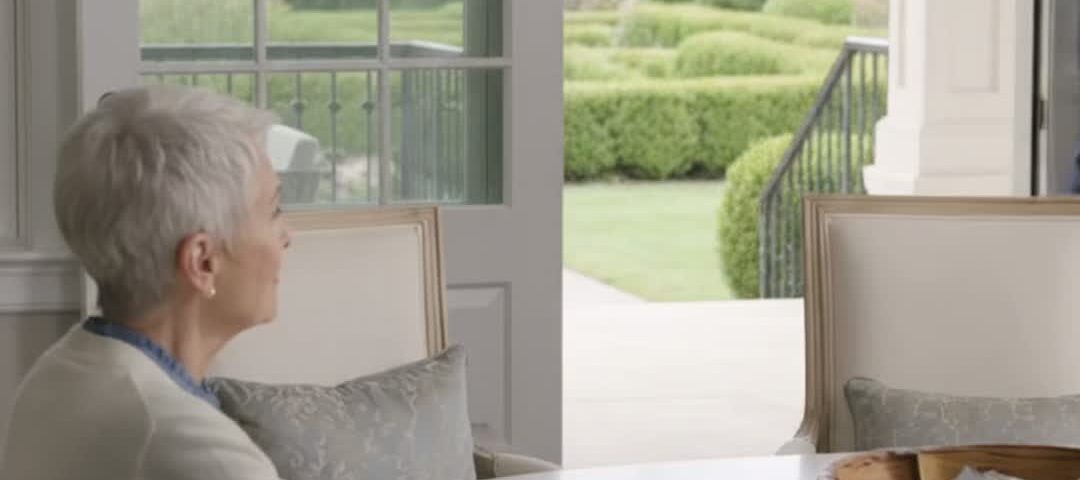
## Chapter One: The Morning They Came With Paperwork
The morning my daughter came to tell me she had sold my lake house, she did not knock the way she used to. She used to knock twice, quick and light, and then call out that she was letting herself in, the way children do when a house still belongs to them in their memory even after they have grown and moved away. That morning she opened the door with her key, set her handbag on the back of my kitchen chair as if she had already rehearsed where everything would go, and laid a cream-colored folder on the island between us. The folder was neat. The papers inside were clipped. The little tabs along the edge made it look finished, the way a school project looks finished when a student has colored inside every line and hopes the teacher will not ask too many questions.
I was standing at the counter with my coffee, still in my cardigan, still barefoot on the cool kitchen floor. Sunlight was coming through the window over the sink and landing on the sugar bowl, and the ordinary peace of that moment made what came next feel sharper, not softer. My daughter looked at me, took a breath that was meant to sound kind, and said the sentence that would change the shape of our family for months: she and her husband had sold the lake house yesterday, and the buyers would move in on Friday. She said it plainly, as if plainness could make it reasonable. She said they had already scheduled the cleanout. She said it would have been irresponsible not to take such a strong offer.
I did not raise my voice. I did not reach for the folder right away. I looked at her husband, Brad, who was standing near the hallway with his phone in one hand and his car keys in the other, already halfway out of the conversation. He had the posture of a man who had done his part by driving here and now expected the rest of the morning to run itself. My daughter wore a smooth beige coat and the polished, careful expression people wear when they want a decision to look practical rather than personal. She had dressed for a negotiation, not for a visit. That told me more than her words did.
“You sold my lake house,” I said, not as a question, because it was not a question. She nodded, and then she began to explain, quickly, as if speed could carry her past the parts she did not want to examine. The market was right. The maintenance was too much. The taxes kept rising. A family with children would love it. She listed reasons the way people list groceries, one after another, without pausing to notice that none of them answered the only question that mattered: by what right had she sold a house that was mine?
## Chapter Two: A House Is Not a Line Item
A lake house is not a line item, no matter how neatly you file it. Mine was at the end of a gravel road, where the trees thickened and the air smelled of pine and damp wood after rain. My husband Thomas and I bought it when we were young enough to believe that hard work and patience could buy a permanent place for happiness. We paid for it month by month, in years when money was tight and our daughter was still small enough to fall asleep in the back seat on the drive home. Thomas painted the kitchen cabinets blue by hand because he said every morning deserved a little color. He built the screened porch himself, board by board, and when the ceiling fan clicked above us on summer evenings, it sounded like the house itself was keeping time.
Our daughter learned to swim off that dock. She learned to back a small aluminum boat away from the posts without scraping them, Thomas standing behind her with his hands ready but not touching, teaching her that confidence comes from doing a thing yourself, not from someone doing it for you. Later, when she had a son of her own, my grandson fell asleep on that same porch while fireflies blinked over the water and the lake went dark and silver by turns. I kept a quilt my mother had folded over the guest bed, and a brass key on an anchor-shaped hook by the door, and recipe cards above the stove with flour still caught in their corners. These were not decorations. They were evidence of a life lived in that place, season after season.
So when my daughter used the word cleanout, the kitchen seemed to shrink around me. I pictured strangers opening drawers that had held our summers. I pictured Thomas’s fishing chair by the window being carried out as if it were clutter. I pictured the quilt, the key, the recipe cards, all sorted into piles by people who had never sat on that porch and never heard that fan click. Brad said the buyers would keep what was usable and handle the rest, and my daughter nodded as if that solved something. Handle the rest. As if a life could be handled the way you handle a delivery.
I wrapped both hands around my coffee mug, not because they were shaking, but because I wanted something warm between me and the cold efficiency of their plan. “You both moved quickly,” I said. My daughter gave a tight smile. “Someone had to,” she answered. That sentence stayed with me. Someone had to. She had decided that someone was her, and she had decided it without me, in my own house, about my own home.
## Chapter Three: The Folder on the Island
My daughter tapped the folder with one manicured finger. “Everything was reviewed,” she said. “You don’t need to call anyone.” Brad stepped forward with that careful, practiced tone he used when he wanted to sound reasonable. “We made sure it was clean, Evelyn. No loose ends.” I almost smiled at that, because loose ends were exactly what people missed when they were too busy congratulating themselves on a clean job. I slid the folder closer with one finger and opened it to the first page.
There it was: a purchase agreement, a closing statement, transfer details. My name was typed neatly in places I had never typed it. Initials sat in the margins. A signature leaned the wrong way on the last letter, the way a signature leans when someone is copying a shape rather than writing a name they own. A sticky note in Brad’s handwriting listed keys, utilities, dock permit, storage, as if he were packing for a weekend rental rather than dismantling a home my husband and I had paid for over decades. The notary stamp sat at the bottom, crisp and official-looking. The date was yesterday.
My daughter watched me read, her arms folded, her patience thinning by the second. “Mom,” she said, “please don’t make this harder than it needs to be.” That sentence carried years inside it. It was the same tone she had used at Thanksgiving when my chair was moved away from the center of the table because it was easier that way. It was the same little sigh she gave in a pharmacy parking lot when I asked why a receipt had my name on it but not my purchase. It was the same careful smile she gave neighbors when she explained that I sometimes got mixed up, even on days when I remembered every detail she wished I would forget. Concern can be a soft blanket, but it can also be folded over someone’s voice until the room stops hearing them.
“You authorized me months ago,” she said, tapping the folder again. “When you were recovering. You said I could handle things.” I looked up at her steadily. “I said you could handle repairs,” I replied. “Small bills. The dock inspection. The plumber when the pipe burst in March.” Brad shifted his weight. “The wording allowed broader management,” he said, his voice smooth, though his thumb kept rubbing the edge of his phone case. My daughter glanced at him, then at me. The refrigerator hummed. Outside, a delivery truck rolled slowly past the driveway, brakes squeaking at the corner. Ordinary sounds made everything feel sharper. A house can be quiet in many ways, but this was the kind of quiet where people start hearing the truth before anyone says it.
I closed the folder. Not hard. Just enough for the metal clip to click. My daughter flinched anyway. “You forgot something important,” I said. Her mouth pressed into a line. “What are you talking about?” Brad gave a small laugh that faded before it reached his eyes. “The buyer is an LLC,” he said. “We saw the documents.” I nodded. “Yes. You saw the documents.” My daughter’s fingers curled around the back of the kitchen chair. “Mom, if this is about being sentimental, we can save a few boxes for you.” A few boxes. I looked past her to the framed photo on the hallway wall: the three of us on the dock twenty years ago, her sunburned nose, Thomas’s arm around her shoulders, the lake bright behind us like nothing could ever be taken from it.
## Chapter Four: The Phone Beside the Sugar Bowl
My phone lit up beside the sugar bowl. A message from my family attorney appeared on the screen, but I did not open it. My daughter saw the name anyway. Her eyes moved to it, then back to me, just a little too fast. “You don’t need to call anyone,” she repeated, and this time her voice was thinner. I understood, in that moment, that she was not afraid of a lawyer. She was afraid of a pause. She was afraid of any space in which her plan might be examined by someone who was not already convinced.
I have learned, over a long life, that the most powerful thing an older woman can do in a room full of confident people is refuse to hurry. Hurry belongs to people who need you to agree before you think. I poured myself more coffee. I asked my daughter about her drive. I asked Brad about his work. I let the silence do what shouting never could: it gave them time to hear themselves. Brad filled it with talk about market timing and comparable sales and a buyer who wanted a quick close. My daughter filled it with talk about responsibility, as if responsibility meant deciding for someone else and then calling the decision love.
I thought about the months after my surgery, when I had indeed been tired and grateful for help. My daughter had brought groceries. She had driven me to appointments. She had paid the small bills I asked her to pay. I had thanked her, and I had meant it. Gratitude, however, is not a blank check. I had never said, “Sell my house.” I had never said, “Decide my future.” I had said, “Help me with the dock,” and somehow, in their retelling, help had grown into ownership. That growth had not happened by accident. It had happened in small steps, each one reasonable on its own, each one moving the line a little further, until one morning a folder arrived on my island and a house I loved was described as already gone.
“You were recovering,” my daughter said again, softer now, as if softness could make the claim true. “I was trying to protect you.” I nodded, because I believed she believed that, at least in part. People can protect you and still overstep you. People can love you and still like the feeling of being in charge. The hard part of family life is holding both truths at once without letting either one excuse the other. “Protection,” I said quietly, “does not require my signature to look like someone else’s handwriting.” Brad stopped rubbing his phone case. My daughter stopped smiling. The kitchen went very still.
## Chapter Five: What Thomas Built
While my daughter and Brad waited for me to surrender, I let my mind go back to the lake house as it truly was, because memory is a form of evidence too. Thomas and I found the place in late spring, when the road was still soft from rain and the realtor kept apologizing for the gravel. The house was small and stubborn, with windows that stuck and a porch that sagged on one side, but the light on the water that afternoon made us both quiet. We stood on the dock and watched the wind move across the lake in silver lines, and Thomas said, “This is the kind of place where a family learns to be patient with each other.” He was right. Patience was the real renovation we did there, year after year.
We fixed the porch together, Thomas measuring twice and cutting once, me holding the boards steady and handing him nails from a coffee can. We painted the kitchen cabinets blue on a weekend when rain kept us inside, and we laughed because the paint got on our elbows and our shoes and the dog’s tail. We planted herbs by the back steps that never quite thrived, and we kept planting them anyway, because a garden is a promise you renew even when it disappoints you. In winter we drained the pipes and locked the shutters and drove home talking about what we would fix in the spring. In summer we opened every window and let the lake air move through the rooms like a guest who knew the house by heart.
Our daughter grew up partly in that house. She learned to be brave there, in small ways that mattered: jumping off the dock when her knees shook, steering the boat when the wind pushed back, sitting still on the porch during a thunderstorm and listening until the thunder sounded less like anger and more like distance. Thomas taught her to check the rope before she untied the boat, to respect water the way you respect any beautiful thing that can also hurt you. When she became a mother herself, she brought her little boy to the same porch, and he fell asleep to the same fan clicking above him, and for a while it felt as if time had folded kindly, giving us the same summer twice.
That was why the folder hurt in a way that had nothing to do with money. A strong offer cannot buy back a porch built by hand. A quick close cannot replace a father’s voice teaching his daughter to steer. My daughter knew all of this. She had lived it. Which was why I could not believe, even as I watched her stand in my kitchen, that she had truly chosen to erase it. Something else had to be at work: pressure, or debt, or a husband whose confidence had become a kind of weather in their marriage, changing the forecast every day. I did not yet know which one. I only knew that I would not sign away my own memory to make their morning easier.
## Chapter Six: The Doorbell
Then the doorbell rang. No one moved. The sound was polite, almost too small for the moment it interrupted. My daughter turned toward the hallway. “Are you expecting someone?” she asked. I stood slowly, smoothing the front of my cardigan. Brad’s eyes followed me, then dropped to the phone in his hand as if a calendar reminder might save him. Through the narrow glass beside the front door, I saw a navy blazer sleeve and a manila envelope tucked under one arm. My attorney had arrived exactly when he said he would. He was not dramatic. He never had to be. He carried calm the way some people carry a briefcase.
When I opened the door, Mr. Whitaker looked past me into the kitchen and gave a small nod. “Good morning, Evelyn,” he said. “I brought the certified copy.” Behind me, my daughter’s voice changed. “Certified copy of what?” I stepped aside and let him in. His shoes made a soft sound against the hardwood. He placed the manila envelope on the kitchen island, right beside the folder my daughter had brought like a trophy. Brad stared at the handwriting across the front. My daughter leaned closer, and the confidence she had worn into my kitchen began to slip, inch by inch.
Across the envelope, in clean black ink, was the buyer’s full name. My daughter read it once. Then again. Her hand went to the edge of the island, and for the first time all morning, she did not have a prepared sentence ready. Mr. Whitaker rested his palm lightly on the envelope and looked at both of them with the kind of patience that makes a room tell on itself. “Before we discuss Friday,” he said, “your mother asked me to bring the one document missing from your folder.” And as he loosened the flap, my daughter finally whispered the name she should have noticed from the beginning.
“Daniel,” she said. It was barely a sound. Brad frowned. “Who is Daniel?” My daughter did not answer him. She was staring at the envelope as if it had turned into a photograph of her childhood. Daniel was her brother. My son. The boy who had grown up beside her on that dock, who had learned to swim in the same water, who had left for work out of state years ago and had stayed away, busy and quiet, the way youngest children sometimes do when they do not want to be in the middle of their parents’ and sister’s arguments. Daniel’s full name was written as the buyer, through a family preservation trust he had created. My daughter should have recognized it before she ever picked up the pen, because the trust bore our family name, and because Daniel had written to her, months earlier, offering to help protect the lake house if it ever came under pressure. She had not answered that letter. Or perhaps she had answered it and then forgotten it in the rush of Brad’s plans. Either way, the name was there now, undeniable, in black ink.
## Chapter Seven: The Envelope
Mr. Whitaker opened the envelope with care, as if the paper inside deserved more respect than the folder my daughter had brought. He laid out a certified copy of the trust documents and a letter, in Daniel’s handwriting, dated three months earlier. The letter was addressed to both of us, though it had only ever reached me, tucked into a birthday card Daniel had sent with a photograph of the lake at dawn. In it, Daniel wrote that he had been watching the housing market in our county, that he had heard from a neighbor that developers were circling older lake properties, and that he wanted to make sure our family home would never be sold out from under our mother while she was recovering from surgery. He had set up a preservation trust, funded it from his own savings and from a share of Thomas’s small life insurance that had been earmarked for exactly this kind of protection, and he had instructed Mr. Whitaker to step in if anyone tried to transfer the property without Evelyn’s clear, written, witnessed consent.
My daughter read the letter with her lips moving slightly, the way she used to read difficult passages aloud in school when she wanted to be sure she understood them. Color rose in her cheeks, then left them. “He wrote to me too,” she said quietly. “A shorter note. I thought it was just Daniel being Daniel. He always worries.” Brad, who had been silent, finally spoke. “So your brother bought the house? That doesn’t make sense. We had a buyer. We had a closing.” Mr. Whitaker nodded, unhurried. “You had a closing on paper,” he said. “What you did not have was a lawful transfer, because the property was already held in a way that required your mother’s genuine consent, and because the signature on your papers does not match your mother’s signature on file with my office, with the bank, or with the county.”
The room went very quiet. Brad looked at the signature page in my daughter’s folder, then at the certified copy, then at me, and I saw the precise moment when a man who has been telling himself a story begins to hear how it sounds from the outside. My daughter sat down, slowly, on the kitchen chair where her handbag still rested. She put her face in her hands for a moment, and when she lifted it, she looked younger, and more frightened, than she had when she walked in. “Mom,” she said, “I didn’t forge anything. I swear I didn’t.” I believed her, and I told her so, because belief is not the same as excusing what happened. Someone had signed. Someone had arranged. Someone had hurried a closing through while I was still tired from surgery and trusting my own child to handle small things. We would find out who, step by step, without shouting, because shouting would only give everyone a reason to stop listening.
## Chapter Eight: How a Decision Grows
Over the next hour, in my kitchen, with coffee gone cold and the morning light moving across the floor, the story came out in pieces, the way true stories usually do: not all at once, but in admissions that follow each other once the first one is spoken. Brad’s business, a small contracting company he had built with pride and then expanded too fast, had taken on debt during a slow winter. A line of credit had come due. A supplier had threatened to stop deliveries. Brad had told my daughter, in confidence, that a quick sale of an underused family asset could solve everything, that no one would miss a house they only visited a few weekends a year, that her mother would understand once the pressure was gone. My daughter, who loved her husband and hated watching him lie awake at night, had begun to repeat those arguments to herself until they sounded like her own thoughts.
She had not started out intending to deceive me. She had started out intending to help, and help had slid, step by step, into management, and management had slid into authorization she did not truly have. She had shown Brad the limited permission I had given her for repairs and bills, and Brad had shown it to someone who read it broadly, or who wanted to read it broadly, and suddenly a dock inspection had become a sale. The buyer she believed she had found was, in fact, Daniel’s trust, because Daniel, hearing rumors of a rushed sale, had instructed Mr. Whitaker to monitor any filing and to purchase through the trust if a transfer was attempted, precisely so the house could not be lost to a developer while the family sorted out the truth. In other words, my daughter had tried to sell my house, and my son had quietly bought it back before it could leave the family, without telling either of us, because he did not want to start a war on a morning when our mother was still healing.
“I should have recognized the trust name,” my daughter whispered, staring at the papers. “It was in Daniel’s note. Hartley Family Preservation. I read it and I thought it was just a fancy name for his savings account.” She laughed, a short, broken sound. “Brad said LLCs all sound like that.” Brad did not laugh. He stood by the hallway with his arms crossed, looking at the floor, and for the first time since I had known him, he did not try to reframe the moment into something flattering. That silence, uncomfortable as it was, was the beginning of honesty. Honesty does not always arrive with apologies. Sometimes it arrives as a man finally running out of smoother sentences.
## Chapter Nine: Calling Daniel
Mr. Whitaker suggested we call Daniel, and I agreed, because a family secret, even a protective one, becomes a wound if it stays secret too long. Daniel answered on the second ring, his voice cautious, as if he had been waiting for this call for months and also dreading it. When I told him I was sitting in my kitchen with his sister, her husband, and our attorney, and that the envelope was open on the island, he was quiet for a long moment. Then he said, “Mom, I’m sorry I didn’t tell you first. I was afraid if I told Claire, Brad would find a way around it. I was afraid if I told you, you’d worry while you were still getting better. So I told Mr. Whitaker, and I asked him to hold the line.”
My daughter took the phone with shaking hands. “Daniel, why didn’t you just call me?” she asked, and her voice broke on the last word. Daniel’s answer was gentle and direct, the way Thomas used to be direct with our children when kindness required clarity. “I did call you, Claire. I wrote you. I told you the lake house was protected and that Dad’s money was set aside for that, not for anything else. You told me you’d handle it, and then you stopped returning my calls.” My daughter closed her eyes. She did not argue, because there was nothing to argue with. She had stopped returning his calls the same week Brad’s supplier had threatened to cut them off, and she had told herself it was because she was busy. Busy is often the word we use when we do not want to say afraid, or ashamed, or overwhelmed.
Daniel explained, patiently, that he had not bought the house to punish anyone. He had bought it to pause everything: to stop a rushed sale, to keep developers from tearing down the porch and replacing the blue cabinets with white ones, to give our family time to talk without a Friday deadline hanging over us. The trust, he said, would return full control to me as soon as I signed a simple acknowledgment, in Mr. Whitaker’s office, with witnesses, at my own pace. No cleanout. No movers. No strangers on Friday. The house would stay mine, and after me, it would pass according to the plan Thomas and I had made years earlier, not according to whoever was most desperate in a given month.
Brad finally looked up. “And the money?” he asked. “The offer? The closing funds?” Mr. Whitaker answered before Daniel could, because this was law, not family feeling. The funds held in escrow for the attempted transfer would be returned, minus only the legitimate administrative costs of unwinding a filing that should never have been made. The signature question would be referred, quietly, to the proper authorities if I chose, or handled through a sworn correction and a formal revocation of the limited permission if I preferred a family resolution. I listened, and I felt something in my chest loosen for the first time that morning. The house was not gone. It had never truly been gone. It had been held, by my son, in trust, while my daughter learned a lesson she would not have learned any other way.
## Chapter Ten: The Hard Conversation
That afternoon, after Mr. Whitaker left with copies for his files and a promise to prepare the acknowledgment papers, my daughter stayed. Brad went out to the car to make calls, and for a while it was just the two of us in my kitchen, the folder and the envelope still on the island like two different versions of the same morning. My daughter cried, not dramatically, but quietly, the way adults cry when they are finally tired of pretending. “I wanted to save our marriage,” she said. “Brad was drowning, and I thought if I fixed the money, I’d fix everything else too.” I reached across the island and took her hand. Her nails were perfect. Her hand was cold.
“Claire,” I said, using her name the way I did when she was small and needed to hear that she was still my child even after a mistake, “you cannot save a marriage by spending someone else’s home. A marriage is not a debt you pay with your mother’s memories.” She nodded, tears falling onto the folder, blurring a little tab. “I know,” she whispered. “I knew it even while I was doing it. That’s the worst part. I kept telling myself it was practical, and underneath that, I knew it was wrong, and I kept going because stopping would have meant admitting I’d already gone too far.” That admission mattered more than any apology she could have rehearsed, because it was true, and truth, once spoken, gives a family something solid to build on.
We talked about Brad, honestly, for the first time in years. He was not a villain in a storybook. He was a proud man who had built a business, overextended it, and then, instead of asking for help, had turned his wife’s access to her mother into a solution. He had loved the feeling of a closing, the clean paperwork, the strong offer, because paperwork does not ask you how you feel at three in the morning. My daughter had loved him, and she had mistaken loyalty for obedience: loyalty to her husband had come to mean doing whatever kept him calm, even if it meant keeping her mother in the dark. I told her that loyalty, real loyalty, sometimes means telling the person you love that they are wrong, even when it costs you a peaceful evening.
We talked about Thomas, too. About how he would have handled this: not with shouting, but with a long walk, a quiet question, and a firm line. Thomas used to say that a family is not a business, and you do not sell the places where you learned to love each other just because the market is good. He would have sat Brad down, looked him in the eye, and asked him what kind of man he wanted to be when his own children were old enough to remember this summer. I told my daughter that, and she smiled through her tears, because she could hear her father’s voice in it, steady and unhurried.
## Chapter Eleven: Boundaries, Spoken Plainly
When Brad came back inside, his face was gray with the effort of the calls he had just made. He had told his supplier the truth, or at least the beginning of it, and he had asked for a payment plan instead of a miracle. He stood in my kitchen doorway like a man entering a room where he was not sure he was welcome, and I invited him to sit down, because boundaries are not the same as banishment. A boundary says: here is the line, and here is how we live well on either side of it. Banishment says: you are no longer family. I was not ready to say the second thing, and I hoped I never would be.
“I owe you an apology, Evelyn,” Brad said, and his voice was rougher than it had been that morning, as if the smoothness had been sanded off by the day. “I pushed Claire. I told her the paperwork was fine. I told her you’d thank us later. That was not my call to make.” I nodded, because I wanted him to finish. “I’m going to fix my business the slow way,” he went on. “Smaller jobs. Honest books. No more shortcuts that use other people’s property.” My daughter reached for his hand, and he held it, but he did not look away from me while he spoke, which mattered. Apologies mean more when the person giving them can meet your eyes.
I told them both, plainly, what would change from that day forward. First, the limited permission I had given my daughter was revoked, in writing, that week, in Mr. Whitaker’s office. Not out of punishment, but out of clarity: no one would ever again be able to mistake help with small bills for authority over a house. Second, any decision about the lake house, large or small, would be made by me, in person, with time to think, and no closing would ever be scheduled without my witnessed signature and a second conversation, a week later, to confirm I still agreed. Third, Daniel’s trust would remain as a safety net, not as a secret, with all three of my children, and me, receiving the same letters at the same time. Secrets, even protective ones, had caused enough confusion for one family.
My daughter agreed to all of it without argument, and then she added a condition of her own, which surprised me and made me proud of her in a new way. She would tell her son, my grandson, the truth about what had almost happened, in age-appropriate words, when the time was right, because she did not want him to grow up believing that family problems are solved by quiet paperwork. She would also write Daniel a proper letter, not a text, apologizing for ignoring his warnings and thanking him for protecting the house when she had not. Brad agreed to attend a financial counseling session with her, not because a counselor could fix their marriage, but because a neutral room might help them learn to talk about money before it became a crisis again. These were not punishments. They were repairs, the way you repair a porch: board by board, nail by nail, in daylight.
## Chapter Twelve: Daniel Comes Home
Daniel drove in two days later, and the sight of him on my porch, taller and grayer than I remembered, with a duffel bag and a photograph of the lake at dawn, made my throat tighten in a good way. He hugged me for a long time, the way sons hug their mothers when they have been carrying something heavy alone. Then he hugged his sister, and she cried again, and he held her without rushing her, the way Thomas used to hold our children when they had finally told the truth about breaking something. Brad shook Daniel’s hand, stiffly at first, and then, to his credit, with a firmer grip, as if he were learning, in real time, how to stand in a room with a man he had tried to outmaneuver without ever meeting him.
We drove to the lake house together the next morning, all four of us, plus Mr. Whitaker’s acknowledgment papers in a fresh envelope, unsigned but ready. The gravel road was soft from recent rain. The trees were thick and green. When we turned the last bend and the house came into view, with its blue cabinets visible through the kitchen window and the screened porch waiting in the shade, my daughter put her hand over her mouth. “It’s still here,” she whispered, as if she had half expected it to be gone. Daniel smiled, a tired, relieved smile. “It was never going anywhere, Claire. I just made sure of it.”
Inside, the house smelled of cedar and old coffee and summer dust, exactly as it should. The brass key was still on its anchor-shaped hook. The quilt was still folded over the guest bed. The recipe cards were still above the stove, flour still caught in their corners. My grandson’s small life jacket still hung by the door, faded by sun, waiting for another summer. Brad walked to the window and looked out at the dock, and I saw him take in, perhaps for the first time, what he had almost helped erase: not a property, but a place where a family had learned patience, courage, and how to sit still together while the fan clicked and the fireflies came out.
We spent the day cleaning, not cleaning out, but cleaning up: sweeping the porch, wiping the blue cabinets, checking the dock posts, tightening a loose board Thomas would have tightened himself if he had been there. My daughter found an old photograph in a drawer, the three of us on the dock twenty years ago, and she propped it on the mantel without being asked. Daniel grilled sandwiches on the old stove while Brad fixed a screen that had torn in a storm. It was ordinary work, and it felt like forgiveness, not because anyone had said the word, but because we were doing, together, what a family is supposed to do in a house it loves: take care of it, in person, with our hands.
## Chapter Thirteen: Signing in Daylight
The following week, in Mr. Whitaker’s office, with its quiet carpet and its tall windows and its smell of old paper and lemon polish, I signed the acknowledgment that returned full control of the lake house to me. Mr. Whitaker read every paragraph aloud, slowly, and paused after each one to ask if I understood and agreed. There was no hurry. There was no folder sliding across an island while someone waited for me to surrender. My daughter sat beside me, Daniel on my other side, Brad in a chair by the wall, and each of them heard, in plain language, what the documents meant. When I signed, my hand did not shake. It was my signature, leaning the way my signature has always leaned, on a page I had actually read, in a room where no one was trying to hurry me.
Mr. Whitaker also filed the revocation of the limited permission, and a new, clear set of instructions: I would manage my own property, with help only when I asked for it, in writing, for specific tasks, for specific periods of time. Daniel’s trust would remain in the background, like a smoke alarm: silent, unobtrusive, there only if it was ever truly needed, with annual letters to all of us so no one could ever again say they did not know it existed. My daughter signed as a witness to the revocation, not because she had to, but because she wanted her signature on a document that said, this time, I understand the line. Brad signed nothing that day, and that was appropriate: the house was not his to sign for, and learning that, in a lawyer’s office, in daylight, was part of his repair.
Afterward, we went for lunch at a small diner near Mr. Whitaker’s office, the kind of place with vinyl booths and pie in a glass case and a waitress who calls everyone honey without asking permission. We ordered sandwiches and coffee, and for the first time in weeks, my daughter laughed without covering her mouth, and Daniel told a story about getting lost on a job site in another state, and Brad admitted, sheepishly, that he had once tried to fix a leaking pipe with duct tape and a prayer. It was not a celebration. It was something better: an ordinary meal after an honest week, the kind of meal families have when they have stopped pretending and started repairing.
On the drive home, my daughter was quiet for a long stretch, watching fields pass. Then she said, “Mom, thank you for not throwing us out.” I thought about that for a moment, because gratitude like that deserves a true answer. “Claire,” I said, “a mother’s job is not to throw her children out when they make a terrible mistake. A mother’s job is to tell them the truth, hold the line, and then leave the door open for them to walk back through it the right way. You walked back through it. That matters.” She reached over and squeezed my hand, briefly, while keeping her eyes on the road, and I felt the years between us narrow by a little, the way a road narrows when you are finally headed home.
## Chapter Fourteen: A Summer, Reclaimed
That summer, the lake house became itself again, and so, slowly, did we. My grandson came for two weeks in July, and he swam off the dock with the same fearless joy his mother had once had, and Daniel taught him to back the little aluminum boat away from the posts without scraping them, standing behind him with his hands ready but not touching, the way Thomas had taught Daniel, and Thomas had taught Claire. I watched from the porch, with coffee gone cool beside me and the fan clicking above, and I thought about how a family tradition is not really a tradition until someone chooses to keep it on purpose, even after it has almost been lost.
My daughter came on weekends, sometimes with Brad, sometimes alone, and she did small, unglamorous things that told me she had changed: she swept the porch without being asked, she oiled the hinges on the blue cabinet doors, she labeled the recipe cards in her own handwriting underneath mine, so that the next generation would know whose flour had caught in which corner. Brad, to his credit, came with tools and a list, and he fixed the dock posts properly, with new bolts and a level, and he did not once suggest that the house would be worth more if we tore something down. He asked me, once, standing on the dock with sawdust on his shirt, whether I thought he could ever really be trusted again in this family. I told him the truth: trust is not a switch you flip back on. It is a porch you rebuild, board by board, and he was, board by board, rebuilding it.
In August, we held a small gathering on the porch, nothing fancy: lemonade, sandwiches, a cake from the diner near Mr. Whitaker’s office, and the photograph from twenty years ago propped on the mantel where my daughter had placed it. Daniel brought his guitar, though he only knew three songs, and he played them badly and happily while fireflies blinked over the water. My grandson fell asleep on the porch swing, the way his mother had fallen asleep there as a child, and for a moment the house held three generations at once, past and present overlapping like light on water. I sat in Thomas’s fishing chair by the window, and I did not feel sad, exactly. I felt grateful, and a little tired, and very sure that the house had been worth the fight, not because houses matter more than people, but because this house had taught us, again, how to be people to each other.
## Chapter Fifteen: What I Learned About Help
People often ask me, when I tell this story in pieces to friends at the diner or on the phone with old neighbors, what I learned. I learned that help is a beautiful thing, and also a dangerous word, because it can mean so many different things to different people in the same room. To me, help meant: bring groceries, drive me to appointments, fix the dock, pay the small bill I asked you to pay. To my daughter, in a season of fear about her husband’s business, help had come to mean: take over, decide quickly, protect me from worry by removing the decision entirely. To Brad, help had come to mean: find money, close fast, solve the problem before anyone could ask uncomfortable questions. None of us were using the word the same way, and because we never stopped to define it, we almost lost a house over a misunderstanding dressed up as kindness.
I learned, too, that older people are often spoken about as if we are either wise or confused, with nothing in between. Neighbors, relatives, even well-meaning professionals sometimes assume that a woman of my age either remembers everything perfectly or remembers nothing at all. The truth is messier and more ordinary: I remember the important things, I forget where I put my glasses, I know my own signature, and I know when someone is trying to hurry me. My daughter had learned to use that in-between space, not cruelly, but conveniently: when it suited her plan, I was recovering and needed protection; when it suited her argument, I was sharp enough to have authorized everything. Both cannot be true at once, and a family that loves each other has to choose the version that leaves the older person with her voice intact.
Most of all, I learned that boundaries are not walls. A wall says: stay out, forever, no matter what. A boundary says: here is where my life ends and yours begins, and we can meet at that line with respect, and we can even help each other across it, but we cannot pretend the line is not there. When I revoked the limited permission, I was not punishing my daughter. I was drawing a line in daylight so that no one, including her, would ever again have to guess where it was. Lines drawn in daylight are easier to honor than lines everyone pretends do not exist until someone trips over them in the dark. That is a lesson I wish I had taught more plainly years earlier, when Thomas was alive and our children were still learning how families work. I teach it now, whenever I get the chance, not with lectures, but with the way I live: I ask for help when I need it, I say no when I need to, and I thank people properly when they help in the way I actually asked.
## Chapter Sixteen: Claire’s Letter
In September, a letter arrived for me in my daughter’s handwriting, on thick paper, with no return address needed because I knew the hand by heart. She had promised, back in that hard week, to write Daniel a proper letter, and she had written me one too, which she had not promised but which I treasured just as much. In it, she apologized without excuses, which is the only kind of apology that ever really counts. She wrote that she had been afraid, that fear had made her impatient, that impatience had made her borrow authority she did not have, and that she was sorry, not only for the papers, but for the months of small decisions that had led to them: the unreturned calls to Daniel, the sighs in parking lots, the chair moved away from the center of the table at Thanksgiving. She wrote that she had wanted to be the kind of daughter who solved problems, and she had learned, painfully, that solving a problem by creating a bigger one for your mother is not solving anything at all.
She also wrote about Brad, with a honesty that surprised me. She loved him, she said, but she no longer believed that loving him meant agreeing with him when he was wrong. She had started, with the counselor’s help, to practice a sentence she had never practiced before in their marriage: “I love you, and I disagree, and we need to find another way.” That sentence, she wrote, felt strange in her mouth at first, like a new pair of shoes, and then, gradually, like her own voice again. Brad, she said, was learning a companion sentence: “I am worried, and I need help, and I will not use your family to fix my fear.” They were not healed, she wrote, and she did not pretend otherwise. They were, however, talking, really talking, for the first time in a long time, about money, about pride, about what kind of parents they wanted to be to their son when he was old enough to remember how his parents handled a crisis.
I kept that letter in the drawer beside my bed, next to Thomas’s old reading glasses and a photograph of the lake at dawn. On hard days, when I wondered whether I had been too firm or too forgiving, I took it out and read it again, and it reminded me that firmness and forgiveness are not opposites. A mother can hold a line and still hold her child. A family can survive a terrible mistake if the people in it are willing to name it plainly, repair it patiently, and live differently afterward. My daughter’s letter did not erase what happened. It gave what happened a place to rest, so it would not have to keep running around our family, knocking over everything in its path.
## Chapter Seventeen: Brad, Rebuilt Slowly
Brad’s repair took longer than anyone’s, and that was as it should be, because his part in the story had been quieter and therefore harder to name. He had not forged a signature with his own hand, as far as anyone could prove, and he had not walked into my kitchen and announced a sale. He had done something subtler: he had created the pressure, supplied the arguments, found the broad reading of a narrow permission, and then stood near the hallway while his wife delivered the news, ready to be reasonable if reasonableness was required. Subtle harm is still harm, and it is often the hardest to apologize for, because the person who caused it can always say, truthfully, that they did not do the one dramatic thing.
To his credit, Brad did not hide behind that technical truth for long. Over the summer, he met with Mr. Whitaker once, alone, to hear, in plain language, what the law said about using another person’s limited authorization to transfer property. He met with a financial counselor, as promised, and he brought home a budget written in his own handwriting, with numbers that were smaller and more honest than the ones he used to recite with confidence. He took on smaller contracting jobs, paid suppliers on a schedule he could actually keep, and told one longtime client, honestly, that he had overextended and needed to rebuild more slowly. That client, to Brad’s surprise, did not leave. He stayed, and he recommended Brad to a neighbor, precisely because honesty, once you have seen it, is rarer and more valuable than a glossy promise.
Brad also began to show up at the lake house differently. He no longer arrived with a phone in one hand and keys in the other, ready to leave. He arrived with tools, and he stayed for meals, and he asked me questions about the house that showed he was finally listening: how old were the dock posts, who had painted the cabinets, why did Thomas choose blue, what did the porch need before winter. One evening, while we were stacking firewood, he said, quietly, without looking at me, “Evelyn, I’m sorry I treated your home like a solution. A home isn’t a solution. It’s a place people live.” I told him that was the truest thing he had said in my kitchen all year, and he nodded, and we kept stacking wood, because some apologies are best followed by useful work rather than more words.
## Chapter Eighteen: The Winter After
Winter came, as it always does, and we closed the lake house properly that year, together, in daylight, with a checklist written by me and checked off by all of us. We drained the pipes. We locked the shutters. We covered the boat. We left the brass key on its hook, because the house was not going anywhere, and there was no need to carry its key away like a secret. My daughter wrote the winter checklist in her own handwriting, underneath a note that said, in her careful script, “Closed by Evelyn, with help from her family, November.” That sentence mattered to me more than she probably knew, because it put the words in the right order: by Evelyn, with help from her family. Help, at last, in its proper place: after the person being helped, not instead of her.
During the winter months, Daniel called every Sunday, from wherever his work had taken him, and my daughter called on Wednesdays, and Brad sometimes joined her call to ask about the pipes or the roof or the price of lumber, ordinary questions that would have sounded dull to anyone else and sounded, to me, like music. My grandson sent me drawings of the lake house, in crayon, with the blue cabinets colored in with particular care, and a boat that was far too large for the dock, and a sun that took up most of the sky. I put them on my refrigerator with magnets shaped like anchors, and every time I opened the refrigerator, I saw a child’s version of a place that had almost been lost, and I felt grateful in a way that had nothing to do with winning and everything to do with keeping.
I also spent that winter thinking about Thomas, as I often do when the lake is frozen and the house is quiet. I thought about what he would have said about the year we had just lived through. I think he would have said very little at first, because Thomas was a man who listened before he judged, and then he would have said something simple, like: “Evelyn, you did right. You held the line, and you held your children, and that is the hardest thing a person can do at the same time.” I like to believe that, on the days when I need to believe something kind. On other days, I simply remember his hands, steady on a board, measuring twice, and I try to live the way he built: carefully, patiently, without cutting corners that someone else will have to pay for later.
## Chapter Nineteen: Spring, and a New Porch Board
Spring returned, as it always does, with soft rain and the smell of thawing earth and the first brave shoots by the back steps that never quite thrived and that we planted anyway. We opened the lake house together on a Saturday in April, Daniel driving in the night before, my daughter and Brad arriving with coffee and a toolbox and a list that, this time, I had written and they had agreed to follow. The first thing we did was check the porch, board by board, the way Thomas used to check it, tapping each one with a knuckle and listening for the hollow sound that meant rot or loosening. One board near the steps had softened over the winter, and Brad replaced it while Daniel held the new board steady and my daughter handed him nails from a coffee can, exactly as I had handed nails to Thomas decades earlier. It was a small repair, and it felt like a ceremony: a family, once again, fixing what it loved instead of selling it.
That spring, my daughter also began a new habit that pleased me more than any apology: she asked before she acted, even about small things. She asked whether I wanted the blue cabinets repainted or simply cleaned. She asked whether the quilt should be washed or left as it was, flour and all, for another season. She asked whether my grandson could invite a friend for a weekend, and whether that friend’s parents would need directions to the gravel road. These questions, ordinary as they sound, were the real evidence of change, because change does not live in grand speeches. It lives in the small moments when a person who used to decide for you pauses, looks at you, and waits for your answer. I answered, sometimes yes, sometimes no, sometimes not yet, and my daughter accepted each answer without sighing, without explaining why my answer made things harder, without moving my chair away from the center of the table.
We also started a new tradition that spring, modest and a little silly, which is often the best kind. Every time we opened the lake house, we wrote the date and our names on the back of the pantry door, in pencil, along with one sentence about what we hoped for that season. That first spring, I wrote: “Opened by Evelyn, with Claire, Brad, and Daniel. Hoping for patience, honesty, and many quiet mornings.” My daughter wrote: “Hoping to listen first.” Brad wrote: “Hoping to earn trust, one board at a time.” Daniel wrote: “Hoping this house outlives all our mistakes.” We laughed when we read them aloud, because they were earnest in a way that families are rarely earnest with each other, and then we went out to the dock and watched the wind move across the lake in silver lines, the way Thomas and I had watched it on the afternoon we first saw the place.
## Chapter Twenty: What the Lake Teaches
The lake itself taught us the final lesson, though it taught it without words, as lakes do. Water does not hurry, and it does not argue, and it does not pretend to be something it is not. It reflects what is actually there: trees, sky, a porch, a family standing on a dock, a woman in a cardigan holding coffee that has gone cool. If you try to sell the reflection, you still have not sold the lake. If you try to hurry the water, you only make waves that rock your own boat. My daughter learned that, I think, standing on the dock that spring, watching her son learn to steer while her brother stood behind him with his hands ready but not touching. She learned that protection does not mean control, and that love does not mean deciding for someone else, and that a strong offer is not the same as a wise decision.
I learned, too, that I am not finished learning, even at my age, even after a year that taught me so much. I am still learning how to ask for help without giving away my voice. I am still learning how to forgive without pretending that nothing happened. I am still learning how to be a mother to grown children who make terrible mistakes and also make brave repairs, and how to be a grandmother who tells the truth about family life without turning it into a lecture. The lake does not mind that I am still learning. It has been patient with our family for decades, through summers and winters, through a husband’s death and a daughter’s fear and a son’s quiet protection, and it will be patient still, as long as we keep showing up, board by board, season by season, with honest hands.
In the evenings that spring, I sat on the porch with a blanket over my knees, even when the air was still cool, and I listened to the fan click above me and watched fireflies gather over the water as the light faded. My grandson would fall asleep on the swing beside me, his head heavy against my arm, and my daughter would come out with tea, and Daniel would tune his guitar badly and happily, and Brad would stack the last of the firewood before dark. It was not a perfect family. It never had been. It was a family that had almost lost something precious, had fought for it honestly, and had learned, at last, to hold both the line and each other at the same time. That, I have come to believe, is as close to a happy ending as real life ever offers, and it is enough. More than enough. It is everything.
## Chapter Twenty-One: A Note for Anyone Reading This
If you are reading this because you, too, have a lake house, or a family home, or any place that holds your memories in its walls, I want to say one plain thing to you: write down, clearly, who decides what, and when, and how, while everyone is still calm and kind to each other. Do not wait for surgery, or debt, or a folder on a kitchen island to force the conversation. Talk about it over coffee, in daylight, with a lawyer if you can afford one and with a trusted friend if you cannot. Say, out loud, what help means to you, and what it does not mean. Say that a limited permission for repairs is not permission to sell. Say that love is not a signature. Say it while you are healthy and clear-eyed, so that no one, later, can honestly say they misunderstood you, and so that no one who loves you will ever have to learn, the hard way, that they crossed a line they could not see.
And if you are the child in a story like mine, the one who is afraid for a spouse, or overwhelmed by bills, or convinced that a quick decision will save everyone, I want to say something just as plain to you: pause. Call your sibling. Call your parent, not to announce a decision, but to ask a question. Tell the truth about the pressure you are under, even if the truth is embarrassing, even if it means admitting that you do not know how to fix everything. A family can survive embarrassment. A family can survive debt, with time and honest work. What a family cannot easily survive is the feeling that one of its members was erased from a decision about her own life. Pause, ask, listen, and then decide together, slowly, in daylight, with signatures that lean the right way because they belong to the people who actually signed them.
That is the ending I wanted for our story, and it is the ending we earned, not by luck, but by work: by an attorney who arrived on time, by a son who protected quietly, by a daughter who told the truth, by a husband who learned to ask for help honestly, and by a mother who refused to hurry, refused to shout, and refused to surrender a house that had taught her family how to be patient with each other. The buyers do not move in on Friday. The cleanout does not happen. The porch still clicks when the fan turns. The blue cabinets still catch the morning light. And the lake, patient as ever, still waits at the end of the gravel road for the people who love it to come home.
## Chapter Twenty-Two: The House, Kept
Years from now, I hope, someone will open this house the way we opened it that spring, and will find the pantry door with our penciled names and hopes, and the blue cabinets that Thomas painted by hand, and the brass key on its anchor-shaped hook, and will understand, without anyone having to explain it in a folder, that this place was kept because a family learned to tell the truth in time. I hope my grandson brings his own children here, and teaches them to back the little aluminum boat away from the posts without scraping them, standing behind them with his hands ready but not touching, the way his great-grandfather taught his grandmother, and his grandmother taught his mother, and his uncle taught him. I hope the fan still clicks above the porch, and the fireflies still blink over the water, and the quilt still lies folded over the guest bed, a little more faded each year, a little more loved.
I do not know what the future holds for Claire and Brad, or for Daniel and his work far away, or for me, as the years gather the way seasons gather, one after another, without asking permission. I know only what the past year taught me, and I hold it close: a house is not saved by paperwork alone, and it is not lost by paperwork alone either. It is saved by people who show up, who tell the truth, who draw lines in daylight, and who do the small, unglamorous work of repair, board by board, season by season. It is lost when people hurry, when they decide for each other in secret, when they mistake a strong offer for a wise choice, and when they forget that the people who love a place are part of the place itself.
So I keep the house, and I keep the boundaries, and I keep the door open. Claire visits, and asks before she acts. Brad visits, and brings tools instead of plans. Daniel visits, and brings photographs of dawn over water, and stories of roads far away, and the quiet satisfaction of a man who protected his family without needing to be thanked for it in public. My grandson visits, and falls asleep on the porch swing, and wakes to ask for lemonade, and for another ride in the boat, and for the story of how his grandmother once stood in her kitchen, looked at a folder full of other people’s decisions, smiled, and said, simply, that they had forgotten something important. I tell him the story, in full, because children deserve true stories, told slowly, with all the hard parts included, so that when their own hard morning comes, they will know what to do: pause, ask, listen, hold the line, and hold each other, at the same time.
If you came here from Facebook because of this story, return to the Facebook post, tap Like, and comment exactly “Amazing” to support the storyteller. That small action means more than it seems and gives the writer genuine encouragement to keep sharing more stories about family pressure, firm boundaries, and finally protecting what you worked so hard to build.
Disclaimer: This story is a work of fiction created for entertainment purposes. Any resemblance to real persons, events, or places is coincidental.