Most people are afraid of coming home to an empty house. I came home early on a Tuesday in July, and for one savage minute, when I first understood that something was wrong, I wished ours had been empty.
Not quiet. Not peaceful. Empty.
There is a difference.
When you have been married to someone for twenty-three years, you learn the shape of their presence the way you learn the shape of your own hand. You know the rhythm of the house when they’re in it. You know which cabinet door gets left half-open, which lamp they turn on before the sun goes down, how their shoes end up just slightly crooked beside the back entry mat no matter how many times they insist they are placing them neatly. You know when something is off before there is any evidence to prove it. It arrives first as a pressure change. A wrongness in the air. The emotional version of smelling smoke before you see flame.
That morning I had been in Denver, standing in a hotel ballroom that looked like every other conference ballroom in America: beige carpet, bad coffee, too much air-conditioning, and a speaker at the front of the room who had somehow managed to turn a straightforward topic about regional procurement into a hostage situation. Then his assistant walked to the stage, whispered something in his ear, and five minutes later the entire thing was over. Personal emergency, they told us. Event concluded early. Safe travels.
Personally, I thought the man had looked at three hundred middle managers in quarter-zips and decided life was not worth continuing in that room.
I was not complaining. My own presentation had gone well the day before. I had a carry-on, a rebooked flight, and the rare sensation that the universe had handed me a free evening. I remember texting no one. Calling no one. I remember thinking I would surprise Cassandra.
That was the whole thought. Simple. Harmless. Tender, even.
Cassandra loved surprises only when she was the one engineering them, but she loved Thai food enough to forgive almost anything, and there was a place ten minutes from our house that made drunken noodles exactly the way she liked them: extra basil, no carrots, enough heat to make her eyes water and pretend they weren’t. I thought I would stop there on the way home. I thought maybe we would eat at the kitchen island instead of in front of separate screens. I thought maybe I would get one evening with my wife that belonged to us and not to work, or errands, or our adult son asking for one more temporary favor that somehow always involved money.
I was in a good mood.
I should have known better.
The first thing I saw when I turned onto our street was Preston’s car in the driveway.
I actually slowed down before I reached the house, like my body had registered the problem a full second before my brain did. Preston was twenty-six. Married for two years. Living across town with his wife, Lindsay, in an apartment nicer than the one Cassandra and I had lived in during our first seven years of marriage. I knew this because I had helped furnish it. I had paid for the living room sofa and the dining table and, after a great deal of sighing from Cassandra, the absurd espresso machine Preston insisted was an investment in quality of life.
Preston did not drop by unannounced on a Tuesday afternoon.
Preston barely dropped by when invited.
I pulled to the curb instead of into the driveway and sat there with the engine idling. Across the street, Mrs. Keller’s flag was snapping in a dry breeze. Somebody down the block was mowing a lawn. A UPS truck rolled past the corner. All normal. All offensively normal.
I remember saying out loud, to absolutely no one, “Warren, why is your son’s car in your driveway on a Tuesday?”
No answer came.
So I turned off the ignition, grabbed my carry-on, and walked to the front door.
The second thing I noticed was the silence.
Not the good kind. Not the kind that means somebody fell asleep with a book in their lap or music is playing low in another room. This was thick silence. Heavy silence. The kind of silence that makes a house feel occupied by something other than people.
I let myself in and stepped into the foyer.
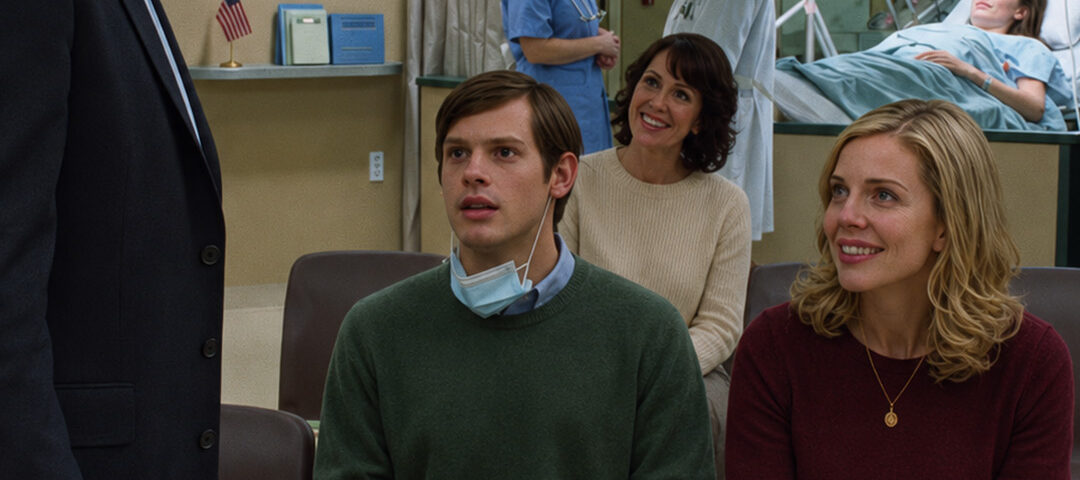
Preston and Lindsay were sitting on the couch in the living room.
That, by itself, would not have made my skin go cold.
It was what they were not doing.
They were not watching television. They were not scrolling on their phones. They were not talking to each other. They were just sitting there, side by side, straight-backed, hands too still, like two people in a waiting room who already knew the doctor had bad news and were now only waiting to hear how bad.
Preston looked up first.
I have replayed that moment enough times to wear grooves in it, and every time I come back to the same detail: he was not surprised to see me.
Think about that.
Your father is supposed to be in Denver until the following day. He walks through the front door twenty-four hours early, and you do not jump, or blink, or frown, or say, “Dad? What are you doing home?” You do not even have the decency to look caught off guard.
He just looked at me with a face I had known since it was red and screaming in a hospital nursery, and what I saw in that face was calculation.
Lindsay smiled.
It was a small smile. Polite. Controlled. The kind of smile a woman gives a waiter when she is about to ask for dressing on the side.
It had no business being on her face that afternoon.
I set my carry-on down without taking my eyes off either of them.
“Preston,” I said. “What’s going on? Where’s your mother?”
He cleared his throat.
“Dad, hey. We were actually just about to call you.”
“Were you?”
I said it flat. Not a question.
He shifted forward, elbows on knees, as if he were preparing to deliver something difficult with maturity he had not earned.
“Mom had an episode this morning. We took her to Mercy General. She’s stable, but they wanted to keep her for observation.”
I did not hear anything after Mercy General.
Shock is a fascinating animal. It doesn’t move like panic. Panic is loud. Shock is efficient. It strips the world down to a few usable pieces and discards everything else.
I was back in my car in eleven seconds.
I know because I counted.
I don’t know why I counted. Maybe because the human brain, when it cannot survive on meaning, survives on numbers. Eleven seconds. Seat belt. Ignition. Reverse. Turn. Go.
I called Kurt before I hit the second light.
Curtis Barnes has been my best friend since 1987. He is one of those rare men whose loyalty is not sentimental. He will not tell you what makes you feel better. He will tell you what is true, and then he will show up with jumper cables, Scotch, or a shovel, depending on the nature of the emergency. Over the course of three decades, he had seen me through two recessions, a false rumor that my company was downsizing my division, a brief marital cold war in 2004 that started with a kitchen remodel and almost ended with me sleeping in a Marriott, and the humiliating beard experiment of 2009, which made me look like a substitute history teacher having a midlife event.
He picked up on the second ring.
“Warren. What’s up, brother?”
“Cassandra’s in the hospital.”
There was no warm-up in me. No runway. Just the fact.
“Mercy General. I just got home and Preston and Lindsay were sitting in my living room like two people who already knew the ending of a movie.”
Silence.
Then Kurt said, “What do you mean, already knew?”
“My son didn’t even react when I walked through the door. I was supposed to be in Denver.”
Another silence, shorter this time, but heavier.
Then, in the careful voice he uses when he thinks I am one bad decision away from making the news, he said, “Warren, I need you to stay calm.”
“I am calm.”
“No, you’re driving. That’s not the same thing.”
He was not wrong.
Mercy General was fifteen minutes from my house if you respected traffic laws and basic civilization. I made it in nine and will not be taking follow-up questions.
Dr. Beverly Nash met me at the nurses’ station on the ICU floor. Mid-fifties. Hair pinned back. No jewelry except a wedding band and a watch. Steady eyes. Controlled voice. The kind of doctor who could tell you the truth without making it about her own discomfort with saying it.
I liked her instantly for that.
“Mr. Trevor,” she said, extending a hand. “I’m glad you made it.”
“How is my wife?”
“She’s stable for the moment, but she’s very sick.”
There are phrases doctors use because they are accurate and phrases they use because they are kind. That one was both.
“Your son brought her in this morning,” Dr. Nash continued. “She presented with severe disorientation, dehydration, organ stress, and elevated toxicity markers in her blood work. We’ve admitted her to ICU because we needed to move quickly while we identify the cause.”
I stared at her.
“Toxicity markers?”
“Yes.”
She didn’t soften it.
“We’re still running a full panel, but I want to be direct with you. The pattern we’re seeing is not consistent with a sudden virus or a simple adverse reaction. It suggests repeated exposure to something over time.”
Over time.
Those two words landed inside my body like a dropped safe.
I braced a hand against the edge of the nurses’ station because the floor had abruptly become theoretical.
“Dr. Nash,” I said, and I heard how carefully I was pronouncing every syllable. “Are you telling me somebody has been doing something to my wife?”
She held my gaze for one beat too long to be accidental.
“I’m telling you we need more answers. And I suspect you do too.”
Then she led me into Cassandra’s room.
Let me tell you something about love at midlife. It is not glamorous most days. It is blood pressure cuffs and shared calendars and arguing over whether the contractor is overcharging us for grout. It is knowing which side of the bed the other person cannot fall asleep without. It is automatic things, ordinary things, things so woven into the fabric of your days that you stop seeing them as miracles.
Until the day you do.
I had seen Cassandra sick before. Flu. Food poisoning. One memorable norovirus at a beach rental in the Outer Banks that nearly ended us both in very different ways. I had seen her furious enough to make salesmen reconsider their ethics. I had seen her laugh so hard she snorted and deny it while doing it again. I had seen her in a black dress at funerals and in paint-spattered sweatpants standing in the middle of our kitchen with a wooden spoon, threatening a tile contractor who had the nerve to tell her crooked grout was “within tolerance.”
I had never seen her like that.
She looked diminished in a way that frightened me more than any machine in the room.
The monitors were doing their quiet mechanical work. The IV dripped. The fluorescent light above the sink was too bright. Cassandra lay against white pillows with her skin gone that particular shade of gray that doesn’t belong to the living. Her hair, usually controlled within an inch of its life, had been pushed back from her face without ceremony. Her hands looked smaller than I had ever seen them, and those were hands that had built a house full of order, built a marriage, built a life, and apparently built a charitable trust without mentioning it to me because the woman loved a completed surprise more than she loved oxygen.
I sat down beside her and took one of those hands in mine.
“Cass,” I said.
Nothing.
I bent closer.
“I’m here.”
Nothing.
I don’t make vows easily. That is not modesty. It is biography. I know the cost of promises, so I do not scatter them around like rice at a wedding.
But I sat there in that ICU room with my wife’s hand cold in mine and I said, quietly enough that only she or God could hear it, “I’m not leaving until I know exactly what happened to you.”
Then I stood up and walked back into the waiting area.
Preston and Lindsay were there.
Of course they were.
Preston rose the second he saw me.
“Dad, we should talk. There’s a lot you don’t know.”
I lifted one hand.
Just one.
Something in my face must have translated all the way through his nervous system because he stopped mid-sentence.
“Not yet,” I said.
Then I walked to the far corner of the waiting room, took out my phone, and did the first useful thing that day.
I locked every account they could touch.
Every one.
Joint household account. Emergency card. Preston’s limited-transfer access that Cassandra had insisted on keeping after his third financial emergency because “I want him to know we are still his parents,” and I had said, “He is twenty-six, not six,” and we had landed, as we often did, in a compromise that satisfied no one and made disaster possible.
I locked the retirement bridge account. Froze the linked savings. Changed passwords. Removed devices.
My hands were steady by then. Ice does that.
The notifications hit their phones within seconds.
I watched Lindsay first. I don’t know why. Maybe because she had smiled at me in my own living room like a woman waiting for weather to pass.
The change in her face was immediate and almost beautiful in its honesty. That little polished expression vanished. Her mouth tightened. Her eyes cut down to her screen and then up again, fast, sharp, animal.
Only then did I allow myself to look at Preston.
He had gone pale.
Good, I thought.
Now we are having the same conversation.
That was the first moment I understood that whatever had happened to Cassandra, I had just stepped into the middle of it. Not the edge. The middle. I had kicked a nest, and something in me already knew I was not dealing with one bad impulse or one ugly decision. I was dealing with a pattern.
The question was how long it had been there.
I did not sleep that night.
That is technically untrue. I sat in a vinyl chair in a family waiting area with a cup of hospital coffee I would not have used to remove rust, and at some point around three in the morning I lost ten or fifteen minutes to the kind of involuntary collapse the body permits when it realizes the mind is being useless.
The rest of the time I thought.
About Cassandra’s symptoms over the last few months. The headaches she said were probably dehydration. The nausea we blamed on anti-inflammatory medication after she twisted her ankle on the back stairs. The fatigue that seemed to roll in heavier after breakfast and then lighten toward evening. The times she had pushed food around her plate and said, “I don’t know what’s wrong with me. Everything tastes off.”
We had given it names that made it manageable.
Stress.
Middle age.
Hormones.
A bad supplement.
Too much coffee.
Not enough water.
Anything except what it was.
That is the cruelty of a slow crime. It borrows everyday explanations until the truth looks dramatic and unreasonable by comparison.
At 9:43 that night, sitting in the hospital parking structure with sodium lights buzzing overhead and the ICU three floors above me, I called Kurt again.
He answered before the first ring finished.
“Talk to me.”
“She looks terrible,” I said.
My voice misbehaved on the last word. I will not dwell on that.
“The doctor said toxicity. Said it’s been building. Not sudden. Gradual.”
Kurt let out a slow breath.
“Warren, gradual means deliberate.”
“I know what it means.”
“And Preston and Lindsay?”
“In the house when I got home. At the hospital afterward. Acting like concerned family and failing.”
He didn’t speak for a second.
Then he said something I have carried with me ever since.
“Brother, you need to think carefully about who had access to Cassandra’s food, her drinks, her medicine, everything she put in her body, and not just once. Every day. Every week. For months.”
I closed my eyes.
And there it was.
Four months earlier Cassandra had twisted her ankle on the back stair after carrying in two grocery bags and insisting she did not need help because, quote, “I carried a baby, a diaper bag, and a crockpot into church once. I can handle Trader Joe’s.”
The sprain was not catastrophic, but it slowed her down. Dr. Patel told her to stay off it for a week, elevate it, take the anti-inflammatory with food, and let other people help for once in her natural life.
Preston had appeared inside of twenty-four hours.
Not with flowers. Not with soup. With solutions.
Lindsay, he said, had a flexible schedule. Lindsay could stop by in the mornings. Make breakfast. Put out Cassandra’s medication. Keep her company until the cleaning service came or until Cassandra felt steady enough to move around on her own.
At the time, I had been almost touched.
I remember saying to Kurt, over beers on a Thursday night, “Maybe I misjudged that boy.”
Kurt, to his everlasting credit, had only grunted.
Now, sitting under fluorescent parking deck lights with my wife upstairs fighting for her kidneys and maybe her life, I wanted to reach back through time and slap myself hard enough to correct my own ancestry.
When I went back inside, Preston was standing by the vending machine with his arms crossed. Lindsay was seated three chairs away, phone face down on her lap.
That last part mattered.
You have to understand Lindsay to understand why. She was one of those women who lived with her phone like an additional organ. She scrolled while water boiled. She scrolled at red lights. One Thanksgiving, I watched her glance at it during grace and then smile at something on-screen while my wife was thanking God for health, family, and another year. Cassandra had caught it too. She kicked me under the table and whispered later, “If that girl ever officiates a funeral, she’ll probably check Instagram between the psalm and the eulogy.”
So a face-down phone meant one of two things: either Lindsay was expecting a message she didn’t want me to see, or she had already received one.
I sat directly across from them.
Preston leaned forward.
“Dad, I know how this looks.”
“Do you?”
He blinked.
I kept my voice even.
“Walk me through it, Preston. I am genuinely curious. Tell me exactly how you think this looks.”
He shifted, buying time.
“Mom’s been having health issues for a while. We were trying to help. Lindsay’s been coming by every morning, making sure she eats, takes her vitamins—”
“Her vitamins.”
He stopped.
“Yes.”
“Which ones?”
He frowned. “What?”
“Which vitamins?” I asked. “She takes three different supplements, one prescription anti-inflammatory with breakfast, and blood pressure medication in the evening. Which of those was Lindsay handling?”
He looked at Lindsay.
Lindsay looked at her lap.
Three seconds.
That was all it took.
A whole family can die inside three seconds if the right two people avoid eye contact.
I stood.
“I’m going to need both of you to go home.”
“Dad—”
I said his name once. Quietly.
My father used to say mine that way when I was a boy and standing on the edge of a bad decision. Not loud. Never loud. Just low enough that the disappointment arrived before the consequences did.
“Go home, Preston.”
He looked at me like he might push. Maybe argue. Maybe make one more performance out of concern and confusion.
He didn’t.
He picked up his keys. Lindsay stood. Neither of them touched me on the way out.
The moment the elevator doors closed, I sat back down, opened my banking app, and started digging.
Now, I am not a forensic accountant. I am a fifty-four-year-old operations executive who still finds half the features on online banking portals needlessly dramatic. If I want my money, I do not need my money represented by six tabs, a pie chart, and an AI assistant named Ava. But even I could see within minutes that something was wrong.
There were transfers from our joint household account going back almost five months.
Not one catastrophic hit. Nothing dramatic enough to trigger immediate panic.
Two hundred dollars.
Three hundred fifty.
One hundred eighty-nine.
Four hundred twenty.
Always odd amounts. Always small enough to blend into a life full of groceries, contractor deposits, pharmacy charges, utility spikes, and the random financial abrasions of being an adult in America.
But patterns are louder than numbers when you line them up.
The transfers clustered on mornings when Lindsay had been at the house. The destination was not immediately obvious on every line item, but several of them routed through the same external account Preston had once asked me to help him link during what he called “an annoying app issue” and what I now recognized as reconnaissance.
By 1:40 in the morning, I had a legal pad full of dates and a total: just under eleven thousand dollars.
At 2:03 I called Kurt again.
He answered like it was lunch.
“Tell me.”
“Eleven thousand,” I said. “Five months. Small transfers. Deliberate. Not emergencies. Drips.”
“From which account?”
“The joint household account. The one Preston had partial access to if something went wrong.”
Kurt was silent for long enough that I knew he was thinking, not doubting.
Then he said, “That isn’t panic money. That’s planned money. That’s someone teaching himself how much he can take before anyone notices.”
“My son.”
Those two words nearly took me apart right there in that waiting room.
My son.
I had taught that boy how to throw a spiral in the backyard and how to check the oil in a car and how not to let a man keep his word only when it’s convenient. I had sat on bleachers in sleet. I had paid orthodontists. I had hugged him on high school graduation day with tears in my eyes because I truly believed the hardest part was behind him.
“My son sat down and thought this through,” I said.
Kurt inhaled slowly.
“We don’t know every detail yet.”
“Kurt, I know enough.”
Another pause.
Then, quieter, he said, “Yeah. I think you do.”
There was a history there, if I was honest enough to look at it.
Preston had not become that man overnight.
The terrible thing about betrayal by your own child is that it forces you to revisit the entire archive looking for the first missed warning label. Was it the way he always had a reason things weren’t his fault? The student loans that were somehow the economy’s fault, the car trouble that was somehow the mechanic’s fault, the unpaid rent in his first apartment that was somehow the leasing office’s fault because the online portal “glitched”? Was it the way he could cry on command when cornered as a teenager and joke on demand five minutes later if the room softened? Was it that he had my charm but none of my shame, Cassandra’s intelligence but none of her discipline?
Or was it me?
Because if I am going to tell this story honestly, then I have to admit something ugly: I had covered for him longer than Cassandra had.
Not always with money. Sometimes with interpretation.
He’s immature, not cruel.
He’s behind, not dishonest.
He’s overwhelmed, not irresponsible.
He just needs time.
Cassandra used to look at me across the kitchen after one of his minor emergencies and say, “Warren, time is not a moral intervention.”
I would roll my eyes, or laugh, or tell her not to turn every problem into a philosophy class.
Turns out she was right. I know that now. I knew it then too, somewhere underneath the father’s instinct that keeps hoping the next version of your child will be the finished one.
The next morning Dr. Nash found me exactly where she had left me, in that same waiting area wearing the same clothes and looking, I imagine, like a man who had been dragged behind a vehicle.
She sat down beside me. Doctors do not always sit. When they do, pay attention.
“The full tox panel came back,” she said.
I nodded once.
“Tell me straight.”
“Your wife has elevated levels of a compound consistent with chronic heavy-metal exposure. The levels indicate repeated ingestion over time, not a one-time event. Her kidneys are under significant stress, but treatment is underway and it is working. I want to be very clear about that last part. We caught this. She has a strong chance of recovery.”
I closed my eyes.
Not from relief. Not entirely.
From the sudden unbearable coexistence of hope and fury.
When I opened them again, I asked the question that had been sitting in my throat all night.
“If somebody were doing this intentionally, how would it be administered?”
Dr. Nash took the kind of breath professionals take when they are about to say something they know will rearrange a life.
“It can be introduced through food, beverages, or supplements. Powder-based supplements are especially difficult for patients to question because people assume the taste difference is the supplement itself. Hospital policy requires us to report suspicious toxicology findings when intentional exposure is possible. That process has already started.”
A report.
Good.
I wasn’t looking for drama anymore. I was looking for paperwork.
I heard Preston’s voice in my head.
Lindsay’s been coming by every morning, making sure she eats, takes her vitamins.
I stood up so fast my chair barked backward across the floor.
Dr. Nash put a hand lightly on my forearm.
“Mr. Trevor?”
“I need to make some calls.”
The first call went to our bank’s fraud department.
The second went to Margaret Holloway.
Margaret was not a woman you hired for reassurance. She was a woman you hired when you wanted a straight road between damage and consequence. Late fifties. Silver bob. Suits cut like decisions. She had represented my company in a contract dispute eight years earlier and ended the matter so cleanly that the opposing counsel actually looked relieved to lose because at least it was over.
She answered on the third ring.
“Holloway.”
“Margaret. It’s Warren Trevor. I need private counsel, probably civil protection, and I need it today.”
Her voice sharpened.
“Tell me why.”
So I told her.
The ICU. The toxicology. The gradual exposure. Lindsay’s morning visits. The bank transfers. The insurance question I had not answered yet but could feel circling like weather.
When I finished, Margaret did not gasp. She did not say my God. She did not offer sympathy before strategy.
She said, “Do not touch anything in that house unless law enforcement tells you to. Do not clean. Do not throw anything away. Do not confront either of them in writing beyond what you have already sent. Save every message. Screenshot every transfer. Forward everything to my secure email in the next thirty minutes. Can you do that?”
“I can.”
“Good. I am going to coordinate with the hospital’s reporting trail and make sure the police receive a coherent evidentiary package instead of a grieving husband’s panic spiral. In the meantime, lock every financial door you have. Every account. Every automatic transfer. Every card. Remove Preston’s access to anything with your last name on it.”
“I already started.”
“I knew there was a reason I liked you.”
Then she paused.
“One more thing, Warren. They may still think they have time. Let them think that a little longer.”
That sentence lodged inside me like a blade placed gently on a table.
Within twenty minutes I had every remaining account frozen or restructured. Preston’s emergency transfer permissions disappeared. The secondary card on the household line was canceled. The linked savings was isolated. Passwords changed. Security questions changed. Two-factor devices changed.
Then my phone began to ring.
Preston, four times.
Lindsay, twice.
Then a text from Preston:
Dad what did you do? Why can’t I access anything? Call me back right now.
Right now.
Caps and everything.
I stared at that message for long enough to feel something inside me turn from shock into clarity.
This was the same young man who had hugged me at Christmas and said, with both hands on my shoulders and all the sincerity of an actor nailing the last scene, “You know you’re the best dad anybody could ask for, right?”
I had believed him.
I had told Kurt about it the next day.
My son said I’m the best dad anybody could ask for.
What I hear now, when I remember it, is not love. It is market research.
I typed one sentence back.
You should have thought about that before you touched my wife.
Then I put the phone away and went upstairs because Cassandra mattered more than any text, any account, any legal strategy, any need I had to hear my own suspicions confirmed.
She was going to wake up.
Dr. Nash had said so.
And when she did, I wanted my face to be the first familiar thing she saw, not fluorescent ceiling tile and fear.
Still, by that evening one question had rooted itself in me so hard it felt structural.
Why?
Eleven thousand dollars and months of exposure did not happen because two people got bored. That kind of patience belongs to motive. There had to be a destination.
So I called Kurt again.
He answered immediately.
“How’s Cassandra?”
“Stable. Treatment’s working.”
“Thank God.”
“Kurt, I need you to do something for me. I need you to find out whether Cassandra changed anything recently. A will. An insurance beneficiary. Any estate document. Anything with my name or Preston’s name on it.”
Silence.
Then: “You think this is money.”
“I think my son needed eleven thousand badly enough to steal it in spoonfuls. And I think whatever he thought he was heading toward was bigger than that.”
Kurt exhaled through his nose.
“I’ll make calls.”
What made Kurt especially useful in moments like that was not magic. It was biography. He had spent thirty-two years in commercial banking and private lending. He knew which offices kept clean records, which assistants actually ran the world, and which favors could still be collected if you had lived long enough and helped enough people move a couch, bury a parent, or refinance during a recession.
By the next morning, he called me at 7:14.
I know the exact time because I had been staring at the digital clock above the coffee kiosk, willing the minutes to move faster until ICU visiting hours resumed.
He did not say hello.
“Warren, you need to brace yourself.”
I set down the cup in my hand. The coffee in it tasted like wet cardboard and heat.
“Tell me.”
“Six weeks before Cassandra landed in ICU, she met with an estate attorney. Alone.”
That alone part made sense instantly. Cassandra never announced a surprise while it was still in the larval stage. She liked finished things. Wrapped things. Numbered plans. If she had told me halfway through, I would have asked questions. She hated questions during construction.
“What did she change?” I asked.
“Her life insurance policy.”
I leaned against the waiting-room window.
The parking lot below was filling with day-shift cars. A man in blue scrubs jogged in with a bagel in one hand. Somewhere behind me, a television nobody was watching was talking about weather fronts.
Kurt kept going.
“The original policy listed you as primary and Preston as secondary beneficiary. Standard setup from when he was younger. Cassandra filed an update to remove Preston entirely and redirect the secondary benefit into a charitable trust she’d been building for about two years.”
I said nothing.
He let the silence sit.
Then he added, “A literacy foundation, Warren. Books, tutoring grants, neighborhood reading programs. She’d already started laying the groundwork.”
That was Cassandra so completely I actually laughed once through my nose.
Of course she had.
Of course while I thought my wife was simply volunteering on Saturdays at the community library and fussing over school-board funding stories in the local paper, she had quietly been building a structure large enough to outlive her.
“What was the policy worth?” I asked.
Kurt told me.
Two point three million dollars.
It is a strange feeling, hearing a number large enough to distort people you know.
I closed my eyes.
“How did Preston find out?”
“We know this part now,” Kurt said. “Lindsay was sorting Cassandra’s mail in the mornings. Estate paperwork came to the house in a marked envelope. Preston later called the attorney’s office pretending to be Cassandra’s assistant. Asked about the status of the beneficiary change. Left his own cell number for a callback.”
I pulled the phone away from my ear and stared at it as if it had become untrustworthy in the telling.
“He used his own phone?”
“Apparently your son is capable of patience and stupidity in equal measures.”
That was almost funny. Almost.
The rest of it was not.
The estate attorney had confirmed there was a sixty-day administrative window on the change. Cassandra had collapsed with roughly thirty days left in that window.
Thirty days.
My wife had thirty days left to live in someone else’s schedule.
I sat down because my knees had made a private decision without consulting me.
There are pieces of information that do not arrive dramatically. They do not shatter glass or score thunder behind themselves. They simply enter the room and alter the load-bearing walls.
My son and his wife had not lashed out in anger.
They had made a timeline.
He had discovered that his mother intended to cut him out of a $2.3 million secondary benefit and send the money instead to children who needed books more than he needed another bailout, and he had responded not like a hurt man, not even like a greedy man, but like a man entitled to a future he believed had already been promised.
That distinction mattered.
Greed is ugly. Entitlement is colder.
Because greed at least recognizes the thing it wants belongs to someone else.
Entitlement believes the theft is a correction.
I sat there for a long minute, watching strangers move through a hospital lobby with coffees and clipboards and lives that had not just come apart.
Then I stood up, straightened my jacket, and made the decision that changed the rest of it.
I was not going to be loud.
I was not going to be sloppy.
I was not going to grab Preston by the shirt in a hallway and feed him the kind of speech people think they want until they hear their own lawyer say they should not have given it.
I was going to be precise.
I called Margaret.
She listened, and for the first time since I had hired her, I heard something like satisfaction underneath her professionalism.
“That gives us motive,” she said. “A real one, and a timeline. Good.”
“Nothing about this is good.”
“You know exactly what I mean.”
I did.
She continued, “The hospital report is already in motion. I am coordinating with law enforcement and preserving the financial records. I want copies of the transfers, timestamps, and every message Preston sends. I also want a written timeline from you today: Cassandra’s symptoms, Lindsay’s visits, the ankle injury, all of it.”
“Done.”
“Have you been back to the house?”
“Only to grab clothes.”
“Did you touch the kitchen?”
“No.”
“Excellent. Because if she was being exposed there, I want the house to stay exactly as it was until investigators document it.”
Then her voice hardened.
“And Warren? Do not warn them.”
“I wasn’t planning to.”
“Good. Because by the time this lands, I want there to be no cracks and no exits.”
I believed her.
The next seventy-two hours were the longest of my life, not because nothing happened, but because too much did and none of it answered the question my body kept asking every time I saw my wife’s chest rise and fall.
Is she going to stay?
Cassandra improved in increments that only people in hospitals learn to worship.
A lab value moved in the right direction.
Her blood pressure stabilized.
The swelling eased.
She responded to her name.
Dr. Nash remained careful but optimistic, which meant more to me than dramatic reassurance ever could have.
On the second full day, just after noon, Cassandra opened her eyes.
I was in the room.
I had been pretending to read an email I had already opened three times when I saw the slightest movement and looked up so fast I made my own neck crack.
Her eyelids fluttered once, twice, and then she fixed those dark, unnervingly intelligent eyes on me, and for one suspended second the whole room narrowed to that point of contact.
I stood.
“Cass?”
Her lips moved. No sound came out.
I leaned closer.
She tried again, voice rough as gravel dragged over asphalt.
“Warren,” she whispered, “you look terrible.”
I laughed.
I actually laughed in the ICU, a cracked, helpless sound I could not have suppressed if my life depended on it. A nurse glanced in from the door like I might have lost my mind.
Maybe I had.
But Cassandra’s sarcasm, that specific weaponized tenderness she had been using on me since 1999, hit me like a defibrillator to the chest.
I bent down and kissed her forehead.
“You’re in intensive care and you’re critiquing my appearance?”
Her mouth moved again.
“Someone has to.”
I took her hand and held it.
I did not let go for a very long time.
I did not tell her everything that day. She needed strength more than truth in the first hour. But I told her she was safe. I told her Dr. Nash expected her to recover. I told her I was handling what needed handling.
She watched my face the way only a spouse of twenty-three years can. She knew every angle of it. Every concealment.
After a few quiet minutes she said, weaker but clearer, “It was Preston, wasn’t it?”
Not a question.
A finding.
I did not answer immediately.
I squeezed her hand. That was answer enough.
She closed her eyes and rested for a moment, as if the confirmation cost energy she did not have in abundance.
Then, without opening them, she said, “I always knew that boy inherited my worst traits and none of my best ones.”
Even half-conscious, half-medicated, and tethered to monitors, Cassandra Trevor remained the most formidable woman I had ever met.
Later that evening, when the nurse stepped out and the room settled into its soft machine noises again, Cassandra asked for water. I helped with the straw. She took two small sips, grimaced, and lay back.
“I need you to tell me what you remember,” I said gently.
She stared at the ceiling.
“At first I thought I was just run down.”
Her voice was stronger now, though it dragged.
“After the ankle sprain, Lindsay started coming in the mornings. She made smoothies sometimes. Or oatmeal. She brought those powdered vitamin packs she said were better absorbed if mixed into juice.”
I said nothing.
“Every time she helped, I felt worse by noon. Nauseated. Foggy. That strange metallic taste. My hands tingled once. I told myself it was the medication or the pain or not eating enough. Then I told myself I was being dramatic.”
Her mouth tightened.
“I threw one drink out into the sink two weeks ago because it tasted wrong. Lindsay laughed and said the new supplement had a mineral base. She acted like I was being precious.”
I kept my face still by force.
“Why didn’t you tell me?”
Those eyes moved to mine.
“Because I didn’t know. Not really. And because once you say a thing like that out loud about your own son, you don’t get to take it back if you’re wrong.”
That landed where truth always lands: in the place that hurts because you recognize yourself in it.
She continued more quietly, “I started writing the symptoms down. Dates. What I ate. When Lindsay came by. I thought I would look at it when you got back from Denver and see if there was actually a pattern or if I was turning into one of those women who thinks WebMD is a second opinion.”
My breath caught.
“Where did you write it down?”
“My green planner. The small one from the bookstore. Should be in the kitchen junk drawer or my tote bag.”
I looked at her.
Then I thought of Margaret telling me not to touch anything in the house and nearly kissed that woman on the mouth out of legal gratitude.
“Cass,” I said softly, “did Preston know about the insurance?”
She stared at me for so long I thought she might not answer.
Then she said, “I didn’t tell him. Lindsay saw the estate envelope one morning and asked if I was updating legal documents. I said yes. I shouldn’t have said anything else, but she stood there with coffee in her hand and that wide-eyed helpful look, and I said I was redirecting some things to the foundation.”
“The foundation.”
She gave the smallest nod.
“I didn’t tell her an amount. I just said I was finally taking Preston out of anything that could hurt him by making him lazier.”
There was no self-pity in her when she said it. Only exhaustion. And beneath that, a grief so old and intimate I understood it had been living in her longer than I knew.
“You thought leaving him money would ruin him,” I said.
“I thought leaving him money without character would finish a job life hadn’t corrected yet.”
I sat there with that.
After a while she added, “I was going to tell you after Denver. Everything. The trust. The policy. The notes about the symptoms. I wanted proof before I put that kind of ugliness in your hands.”
I bent my head and pressed my lips against her knuckles.
“You don’t have to protect me from ugly things anymore.”
A faint ghost of a smile touched her mouth.
“Warren,” she whispered, “you say that like it was ever a choice.”
The investigators processed the house on the third day.
I was not there when they did it. Margaret insisted that I stay at the hospital and let professionals preserve what needed preserving. It was the correct decision, which irritated me on a primal level. There is a helplessness to doing the smart thing when what you want is to tear your own kitchen apart with your bare hands.
The search turned up what we expected and what we didn’t.
On the expected side: supplement containers in the pantry Lindsay had introduced after the ankle sprain, some partially used, some recently opened; residue in a shaker bottle; and Cassandra’s green planner in the kitchen drawer, where she said it would be. Her notes were not melodramatic. Cassandra did not write like a woman trying to build a case. She wrote like a woman trying to out-think her own body.
May 11: Nausea after berry smoothie. Lindsay used new powder. Ask if okay with BP meds?
May 18: Dizzy by 11 a.m. Fine by dinner. Weird.
June 2: Metal taste again. Stop taking powder if it keeps happening.
June 7: Preston here too. Both of them hovering. Hate that word. Hovering.
July 14: Need to tell Warren something feels wrong.
It was enough to make the room inside me go very quiet.
On the unexpected side, investigators found the packaging from estate paperwork in a kitchen trash bin tucked beneath newer garbage, and a printed callback note from the attorney’s office on the mudroom desk with Preston’s cell number written across the top in Lindsay’s handwriting.
People who think they are smarter than consequences often get undone by ordinary laziness.
Margaret called me that afternoon.
“Kurt deserves a medal,” she said without preamble.
“For what now?”
“He tracked down pharmacy surveillance from two towns over. Preston bought the same supplement brand three separate times in four months. Paid cash. Went alone twice. Lindsay was in the car on the third purchase.”
I sat down slowly in the chair beside Cassandra’s bed because my body had started making those decisions for me whenever a new piece clicked into place.
Margaret kept going.
“I have the bank trail. I have the estate attorney’s confirmation on the policy update. I have Cassandra’s symptom log. I have the hospital tox report. And I have your son’s astonishingly stupid phone call to the attorney’s office pretending to be his mother’s assistant.”
“He used his own number,” I said.
Margaret laughed once, short and sharp.
“Criminal confidence is frequently just stupidity wearing a blazer.”
“What now?”
“Now the police finish their side. The district attorney’s office is getting a file so clean it practically alphabetizes itself.”
I looked at Cassandra, asleep again, color slowly returning to a face I had been too close to losing.
“I want them to feel this,” I said.
Margaret’s voice lost its edge and became almost warm.
“Honey, by the time this is over, they will.”
There was one more piece, ugly in a different way, that arrived on day four.
Kurt came by the hospital in person carrying a bag of clothes, a real cup of coffee, and a folder. He set all three on the little round table in Cassandra’s room while she slept.
“You’re going to hate this,” he said.
“I hate most things right now. Narrow it down.”
He handed me the folder.
Inside were copies of public filings, late notices, and records Margaret’s investigator had lawfully pieced together from account traces and civil paperwork, and a summary that made my stomach burn.
Preston and Lindsay were drowning.
Credit cards near max.
A delinquent personal line of credit.
Two missed car payments on Lindsay’s leased SUV.
Three overdue rent notices in six months.
A failed attempt to put earnest money down on a townhouse they could not remotely afford.
And, insult layered on injury, a private loan Preston had taken from one of Lindsay’s cousins for what he called a “short-term bridge” and used instead to cover losses on a speculative investment he had bragged to me about at Easter and described, with total confidence, as “basically guaranteed.”
Eleven thousand dollars had not been the reason.
It had been triage.
Cassandra and I were not dealing with two masterminds patiently building wealth. We were dealing with two entitled adults trying to keep the walls up long enough to get their hands on a bigger payout.
I set the papers down.
“Kurt,” I said, “when did he turn into this?”
Kurt leaned against the window and looked at me with the kind of mercy only old friends know how to offer without sounding condescending.
“Probably gradually,” he said. “Just like everything else. Small justifications. Small rescues. Small lies. Same as the money.”
He was right. Of course he was right.
Character rarely collapses all at once. It frays.
The two of them came to the hospital on day five carrying flowers.
Flowers.
There is something almost impressive about the audacity it takes to walk into an ICU with lilies and rehearsed concern after spending months helping create the need for the ICU in the first place.
I saw them before they saw me.
I was standing in the corridor outside Cassandra’s room, reviewing a message from Margaret, when the elevator opened and out stepped my son in a navy pullover and expensive sneakers, Lindsay at his side in a cream coat that probably cost more than my first mortgage payment. She carried the flowers. He carried his face.
That face.
Concerned son. Tight mouth. Soft brow. Eyes arranged into the shape of worry.
At twenty-six, Preston had discovered that performance is often enough to get you through rooms where people want to believe you. Teachers. Girlfriends. Landlords. Parents.
Not anymore.
He saw me and came forward immediately.
“Dad. How is she? We’ve been so worried.”
I looked at him. Then at Lindsay. Then back to him.
“She’s awake,” I said. “She’s talking. And she’s going to make a full recovery.”
It happened fast, but I caught it.
Not relief.
Not joy.
Recalculation.
The kind of flicker a man cannot control when a plan he has been depending on suddenly fails.
Lindsay stepped in with a bright little breath.
“That is such wonderful news, Warren.”
“The police are on their way,” I said.
Flat. Calm. The same tone I might have used to mention rain in the forecast.
Preston’s color drained so fast it almost looked medical.
“What?”
“Margaret Holloway filed the evidence package this morning,” I said. “The hospital report, the pharmacy footage, the bank transfers, the call records with the estate attorney, Cassandra’s notes, all of it. The state has enough to start. More than enough, actually.”
Lindsay made a sound I cannot describe any better than this: it sounded like composure leaving the body.
Preston took one step closer.
“Dad, just listen to me for one second, okay? Just let me explain—”
“Because I am, despite everything, your father, I will tell you this clearly,” I said. “There is nothing you can say to me right now that covers what you did. There is not a sentence in the English language large enough for it. So you need to stop talking.”
His jaw worked.
He looked suddenly younger and uglier at once.
“It wasn’t like that.”
That, finally, got a reaction out of me.
I laughed.
Not warmly.
Not kindly.
“It was exactly like that,” I said. “You just thought you were going to have more time.”
He flinched.
Lindsay’s grip tightened around the flowers hard enough to bend the paper wrap.
“Dad, please—” Preston started again.
I cut him off with one glance toward Cassandra’s door.
“My wife is ten feet away,” I said. “You will not use that voice with me outside her room. If you have a conscience left, you can stand there silently for the next sixty seconds and imagine what she looked like when I found her.”
He went still.
For one irrational moment, I thought he might cry.
Then I realized what I was seeing was not remorse.
It was self-pity.
That killed something in me more cleanly than rage ever could have.
I nodded toward the flowers.
“Those are nice,” I said. “I’m sure someone else will enjoy them.”
The officers met them in the parking lot.
Margaret had coordinated the timing with a professionalism that bordered on art. They were still carrying the flowers when the detectives approached. I watched from the corridor window with Kurt standing beside me, because naturally he had materialized at exactly the moment a man most needs a witness who loves him and will later tell the story correctly.
Preston tried to talk his way through the first thirty seconds.
Of course he did.
He gestured. He leaned in. He wore his best reasonable-guy face. Even from the fourth floor I could see him trying to argue reality into a more convenient shape.
Lindsay went still almost immediately. Not shocked. Not frozen. Still in the calculating way of somebody already running scenarios.
The flowers ended up on the pavement.
One of the lilies snapped at the neck.
Kurt folded his arms and stared out the window.
“How do you feel?” he asked.
I thought about lying. Men our age are trained to answer that kind of question with practical nonsense.
Tired.
Fine.
Hungry.
Need coffee.
Instead I told the truth.
“Like I aged ten years in five days,” I said. “Like I want to sleep for a month. Like I am simultaneously the saddest I have ever been and the surest I have ever been about anything in my life.”
Kurt nodded once.
“And Cassandra?”
I looked back toward her room. Through the narrow window in the door I could see the foot of the bed, the monitors, the soft rectangle of afternoon light on the wall.
“Cassandra is going to be fine,” I said. “She was always going to be fine. She’s the toughest person I know.”
Then I added, because if you don’t make a joke at the right time the grief starts thinking it owns the whole house, “And she married me, which proves she can survive anything.”
Kurt laughed. A real laugh. It bounced off the corridor walls and loosened something in my chest for half a second.
The arrest was not the end.
People love to imagine that the cuffs are the finish line because it makes justice look cinematic. It isn’t. Arrest is logistics. The real work comes after, when lawyers start testing the load-bearing beams of your certainty and the story has to survive being told in rooms built for doubt.
The district attorney’s office moved faster than I expected once Margaret delivered everything and the hospital toxicology team backed it up. Charges were filed. Investigators interviewed staff, neighbors, pharmacists, and the estate attorney. Subpoenas went out. Bank records multiplied. The supplement purchases formed their own neat little path through surveillance timestamps and receipts. Preston’s call to the attorney’s office, in which he impersonated Cassandra’s assistant badly enough that the receptionist had made a note about “unusual tone,” became the sort of detail juries remember because arrogance is memorable.
Cassandra continued to recover.
Slowly at first.
Then all at once in ways that made the first slowness easier to forgive.
Her color returned. Her appetite came back in crooked little increments. Her voice stopped sounding like dry leaves. By the second week she was insulting the hospital oatmeal with almost professional sharpness.
“This tastes like a sermon about grain,” she told me one morning.
I had been halfway to tears over a lab report five minutes earlier. That sentence saved me.
When she was strong enough to sit up for longer stretches, Margaret came to the hospital and explained the process.
The state would prosecute the criminal case. Margaret would protect our finances, coordinate with prosecutors, oversee the civil exposure, and make sure nobody on our side said anything stupid because grief makes fools out of otherwise educated people.
Cassandra listened with her hands folded over the blanket.
When Margaret finished, Cassandra said, “Are they going to try to make this look like a misunderstanding about supplements?”
“Probably,” Margaret said. “Defense attorneys are paid to rent ambiguity where they can.”
Cassandra’s mouth went flat.
“Well,” she said, “I hope they enjoy bankruptcy. Because if anyone uses the word misunderstanding about this, I am suing whatever still belongs to them.”
Margaret smiled like a woman admiring quality craftsmanship.
“You and I are going to get along beautifully.”
Three months later Cassandra came home.
October in our town does this particular thing with light in the mornings. It turns everything gold for about forty-five minutes and makes even ugly houses look like they have emotional depth. I pulled into the driveway with Cassandra beside me, thinner than she had been, still tired faster than she liked to admit, but upright, alive, and glaring at the world with restored standards.
She stood just inside the foyer after we entered and looked around the house for a long moment.
At the umbrella stand.
At the staircase where she had twisted her ankle.
At the kitchen beyond, where so many apparently harmless mornings had been staged.
I knew better than to fill the silence.
She finally exhaled and said, “Warren, the kitchen needs repainting.”
I turned.
“Absolutely not. I painted it two years ago.”
“It’s the wrong shade of white.”
“There is only one shade of white.”
She raised a finger toward the wall with the authority of a woman who had stared down death and was now ready to reassert standards in all categories.
“That is not white. That is the color of a bureaucratic apology.”
I looked at the wall. I looked at her.
Then I pulled out my phone and called a painter.
That was marriage too.
Not grand declarations. Not candles. Not anniversaries at expensive restaurants you can’t hear each other inside. Sometimes marriage is watching your wife survive the worst thing ever done to her and deciding, on the basis of one sentence about interior paint, that the house itself needs to remember who won.
The trial began in January.
Eleven days.
Long enough to grind. Short enough to remain dangerous.
I had never spent that much time in a criminal courtroom. Civil disputes have their own brutality, but criminal court is different. It is less polite about what human beings are capable of. The air feels denser. The stakes smell closer.
The defense did exactly what Cassandra predicted.
They tried to make it about confusion.
About supplements and crossed instructions and stress and financial pressure and a helpful daughter-in-law overstepping in an attempt to support an injured woman whose body was already under strain.
They suggested the bank transfers were unauthorized but unrelated.
They suggested Preston’s call to the estate attorney was clumsy concern over whether his mother was being manipulated.
They suggested so many things that by day four I realized suggestion is just respectable people’s word for smoke.
What they could not explain away was accumulation.
Cassandra’s symptom log.
The timing of Lindsay’s visits.
The pattern of the toxicology.
The supplement purchases.
The bank trail.
The attorney callback note.
The texts.
And, perhaps most damning of all, the complete absence of genuine surprise on either of their faces when Cassandra first fell ill and Warren returned home early.
Yes, I had to testify about that. And yes, it was strange hearing my own name used in the third person by a prosecutor building my life into an exhibit.
Margaret sat behind the state’s table each day, not because she was prosecuting but because she had effectively built the runway. The assistant district attorney handling the case, a lean, unshowy woman named Dana Mercer, had the good sense not to overperform. She asked short questions. Let ugly facts stay ugly. Never rescued the defendants from the sound of their own choices.
Cassandra testified on day seven.
She wore navy. Minimal jewelry. Hair cut a little shorter after the hospital because she said starting over in some areas felt useful.
When she took the stand, the room changed.
Not because she cried.
She didn’t.
Not because she tried to be noble.
She didn’t do that either.
She simply told the truth in the flat, intelligent voice of a woman who had spent months being made to doubt her own body and had now recovered enough to name what had been done to it.
She described the ankle sprain. The morning visits. The new powdered supplements. The metallic taste. The nausea that arrived after Lindsay left. The notes in her planner. The estate paperwork. The conversation with Lindsay at the kitchen counter when she mentioned redirecting part of the insurance into the literacy trust.
Then Dana Mercer asked, “Why were you removing your son as a secondary beneficiary?”
The defense objected. Overruled.
Cassandra folded her hands in her lap and answered exactly the way Cassandra answers when she has already decided politeness is not relevant.
“Because my husband and I spent years confusing rescue with love,” she said. “And because by the time a grown man starts budgeting his future around somebody else’s death, money stops being help.”
The courtroom went very still.
I did not look at Preston.
I couldn’t. Not in that moment.
Because I knew I would see one of two things, and I did not want either. Remorse I couldn’t use, or resentment I could never forgive.
On day nine, the prosecution introduced the financial records showing where the stolen money had gone. Minimum payments. Late rent. Vehicle arrears. Bridging debt. An attempted earnest deposit they could not sustain. The picture it painted was not glamorous. There is something almost pathetic about how ordinary financial collapse looks on paper. It is groceries, gas, vanity, denial, and one too many fantasies about future money solving current character.
On day ten, Preston did not take the stand.
Lindsay didn’t either.
Smart, from a legal standpoint.
Cowardly, from every other one.
The verdict came back after four hours.
Guilty on attempted murder.
Guilty on conspiracy.
Guilty on theft and financial fraud.
I do not remember exhaling. I only remember realizing, all at once, that I had been holding more than breath for months.
Sentencing came later. There are numbers attached to it, but I will tell you honestly that numbers were never the satisfying part. No count of years could return the time Cassandra lost, or the version of my son I used to think existed. What mattered was this: the judge saw them clearly. The court saw them clearly. The story they tried to rent with smoke collapsed under the weight of facts.
At sentencing, Preston finally spoke.
He said he made mistakes.
Mistakes.
He said the financial pressure had gotten out of hand. He said he never intended things to go as far as they did. He said he loved his mother.
I felt nothing while he spoke, and that frightened me less than I expected.
Because grief can coexist with emptiness. It turns out the human body has room for both.
Then Cassandra stood to give her victim statement.
She did not shake. She did not weep. She did not look at Lindsay until the end.
She looked at Preston.
And she said, “The worst part is not what you tried to take from me. The worst part is what you revealed about yourself while doing it. You did not need money. You needed permission to believe you were owed something that had never belonged to you. I was your mother. That should have been enough. It wasn’t. So let this be enough instead.”
Even the court reporter looked up at that one.
Afterward, in the parking garage, I leaned against the car and put both hands over my face for a minute because the body always collects its bill eventually.
Cassandra waited. She knew better than to rush me through private weather.
When I lowered my hands, she said, “I want Thai food.”
I blinked.
“Right now?”
“I have been thinking about Thai food for three months, Warren. Do not test me.”
So we got Thai food.
Kurt came. Margaret came. Dana Mercer stopped by for one drink and stayed for noodles. Dr. Beverly Nash came too, because sometime during Cassandra’s recovery my wife had apparently charmed a critical care physician into lifelong loyalty by critiquing the hospital’s tea and asking intelligent questions about kidney function.
We sat around a table near the window while snow needled lightly against the glass outside. Cassandra gestured wildly while telling the story of how terrible I had looked in ICU, and Margaret nearly choked laughing when Cassandra described our kitchen wall as “the color of an administrative excuse.”
I watched my wife laugh.
That was the whole night. That was all the justice I actually needed in my bones.
There she is, I thought.
There is Cassandra.
Spring came slowly after that.
The painter fixed the kitchen. Cassandra approved the white on the third sample, which I considered an act of mercy. The stairs got new lighting. I replaced the back doorknob for reasons that made sense only to me. We changed routines, not because fear had won, but because survival leaves fingerprints.
Some absences stayed.
Preston’s room had been repurposed years ago into a guest room and home office, but I still found myself glancing toward it sometimes when I passed the hall, as if some younger version of him might still be in there surrounded by baseball trophies and ungraded possibility.
He wasn’t.
That boy was gone, whether he had ever really existed or not.
The literacy foundation did not die with the plan to fund it.
That is the part I want on the record more than any sentencing transcript.
Cassandra recovered. The trust was finalized. The policy changes went through. The civil case recovered part of what had been taken, and what did not return in dollars came back in clarity. By late May, the first round of grants went out to two neighborhood programs and one public elementary school library that had been surviving on parent fundraisers and exhausted volunteers.
In June, Cassandra asked me to wear a jacket on a Saturday morning and not complain about it.
There was a ribbon across the doorway of a renovated storefront on the east side of town, where a reading room with low shelves, donated books, tutoring tables, and bright rugs now sat beneath a sign that said THE CASSANDRA TREVER LITERACY HOUSE.
She frowned at the sign when she first saw her name.
“I told them not to do that.”
“Nobody listens to you when you’re both right and recovering,” I said.
Kids spilled through the doors with the chaotic focus only children can achieve. A little boy in a Spider-Man hoodie made directly for the shelf with graphic novels. Two girls sat cross-legged on the rug before the speeches were even over. A grandmother thanked Cassandra with both hands around hers and tears in her eyes because the tutoring slots meant her grandson would have help after school three days a week.
I stood off to the side and watched my wife move through that room.
Not as a victim. Not as a survivor, even, though she was that too.
As herself.
Sharp. Direct. Alive. Already reorganizing the placement of beginner chapter books because the current layout was “irrational.”
At one point she turned and caught me looking at her.
“What?” she said.
“Nothing.”
“That is not a nothing face.”
I smiled.
“I’m just thinking you survived everything.”
She walked over, straightened my collar because apparently public dignity was still a shared responsibility, and said, “Of course I did. I had plans.”
That night, back home, we ate leftovers at the island because some habits deserve to survive. The kitchen walls were, according to Cassandra, finally white. Outside, somebody on the block was grilling. A dog barked two houses down. The dishwasher hummed. American life, ordinary and therefore holy.
After dinner, Cassandra set her wine down and said, “Do you still wish you had come home to an empty house that day?”
I leaned back in my chair.
At the start of all this, I would have said yes. Because the image that had haunted me for months was Preston and Lindsay on that couch, waiting with their practiced faces, already adjusted to an outcome they had no right to expect.
But time has a way of correcting first reactions.
“No,” I said.
She watched me quietly.
I shook my head.
“No. I don’t. I wish my son had been the man I thought I raised. I wish you had never been hurt. I wish I’d seen more sooner. But I don’t wish I stayed in Denver one day longer.”
Because that was the truth that remained after all the louder truths burned off.
If the conference had run on schedule, if the keynote speaker had kept droning, if my return flight had been the one I originally booked, Cassandra might not have made it. Her last thirty days might have become their first clean step toward a payday they believed was waiting for them.
Instead, I came home early.
I saw the wrongness.
I felt the silence.
I looked at my son and recognized, too late but not fatally late, that love without clarity can become permission for terrible people to rehearse on your life.
So no, I do not wish the house had been empty.
I am glad I walked through that door.
I am glad I turned on the lights.
And I am glad that when the dark finally showed me what had been growing inside it, I did not look away.
Have you ever had a moment when your instincts told you something was wrong before you had proof, and how did you learn to protect your peace, set stronger boundaries, and trust yourself without losing the part of you that still wants to believe the best in people?