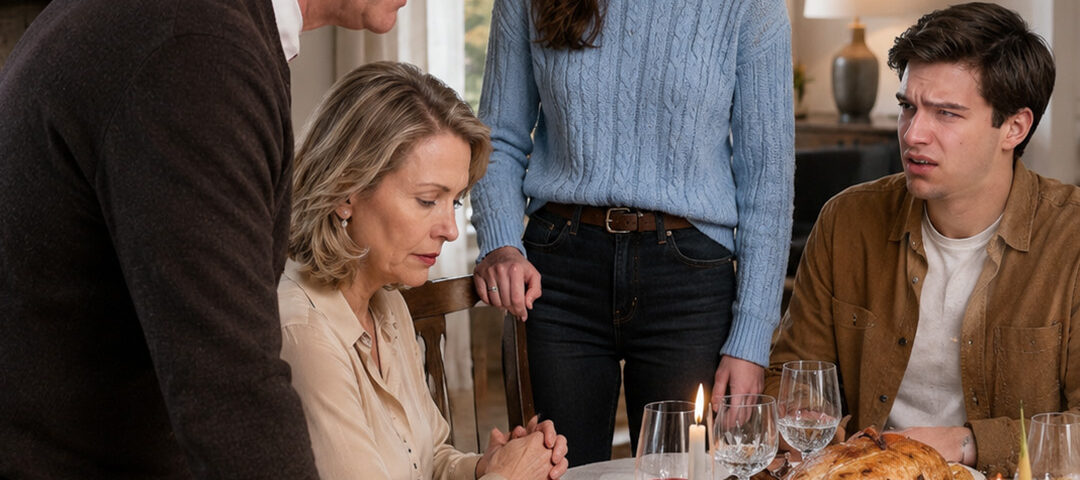
I sat in the back row of my brother’s swearing-in ceremony, invisible as always. My parents hadn’t even saved me a seat. Then the judge looked straight at me and said, “Thank you, Dr. Marchand.” My father’s hand shook. My mother stopped breathing. And I realized they had no idea who I’d become. My name is Chloe Marchand. I’m 32 years old, and I’m a neurosurgeon at Massachusetts General Hospital in Boston. But to my family, I’m still the daughter who quit Harvard Law School, the one who threw away the family legacy, the disappointment they don’t talk about at dinner parties.
Before I tell you what happened in that courtroom, I need you to understand something. This isn’t a revenge story. This is about what happens when you stop waiting for people to see your worth. If you’ve ever felt invisible in your own family, stay with me. By the end, you’ll understand why walking away was the bravest thing I ever did. Let me take you back to where it all started. I was 8 years old the first time I realized I didn’t matter as much as my brother.
It was my piano recital at the Brookline Music Academy. I’d been practicing Chopin’s Nocturne in E flat major for 6 months. My fingers knew every note by heart. I wore my favorite blue dress, the one with the white collar that made me feel grown up. The recital hall smelled like wood polish and nervous excitement. 23 kids performed that night. I was number 17. I kept scanning the audience for my parents’ faces. Row after row of proud mothers and fathers, cameras ready.
But the two seats I’d saved with my handmade reserved signs stayed empty. I played through the entire piece, my fingers trembling slightly on the keys. When I finished, the audience clapped. Ms. Patterson, my piano teacher, gave me a standing ovation, but I couldn’t stop staring at those empty seats. After the recital, Ms. Patterson found me crying in the bathroom.
“Where are your parents, sweetheart?”
“They had to take my brother Connor to his math Olympiad competition,” I whispered. “They said it was more important.”
Ms. Patterson drove me home herself. When we pulled into the driveway, my parents were already back celebrating in the living room. Connor had won second place. There was cake, balloons. My father was on the phone with someone bragging. My mother saw me come in and smiled.
“Oh, honey, how was your recital?”
“I played the whole piece without any mistakes.”
“That’s wonderful.” She kissed my forehead absently. “Connor’s competition was more important, you understand, right? He’s being scouted for the state championship.”
I understood. I understood that Connor’s achievements would always eclipse mine, no matter how perfectly I played. Four years later, at 12, I won first place at the Massachusetts State Science Fair. My project was on neuroplasticity, how the brain creates new neural pathways after injury. I’d spent 7 months researching, building models, interviewing a neurologist at Brigham and Women’s Hospital who took pity on an eager middle schooler.
The judges were impressed.
“This is graduate-level thinking,” one of them told me. “Have you considered medical school?”
I had. I’d been fascinated by the brain since I saw a documentary about brain surgery when I was nine. The idea that you could fix something as complex and mysterious as the human mind, it felt like magic. That night at dinner, I couldn’t wait to tell my family. I had the blue ribbon pinned to my shirt. My project board was carefully loaded in the car, protected with bubble wrap.
“Guess what?” I burst out before we’d even started eating. “I won first place at state.”
My father looked up from his phone.
“That’s nice, Chloe.”
Two words. That was it. Then he turned to Connor.
“Tell us about debate practice. Your coach thinks you’re ready for the regional finals.”
Connor talked for 40 minutes about his debate strategy. My mother asked follow-up questions. My father offered advice. The blue ribbon on my chest might as well have been invisible. I excused myself early and went to my room. I pinned the ribbon to my bulletin board next to my other forgotten achievements, perfect attendance certificates, honor roll commendations, a letter from the mayor congratulating me on my community service hours.
A collection of accomplishments that no one in my family would ever ask about. By 16, I’d learned not to expect much, but I still had hope. Naive, stubborn hope that maybe college would be different. Maybe when I had my own path, my own identity separate from Connor’s shadow, they’d finally see me.
I applied to MIT with a full scholarship for neuroscience. I got in. Full ride, research assistant position guaranteed for freshman year. It was everything I’d worked for.
Connor got into Harvard Law the same week, legacy admission through my father who’d graduated in 1985 and donated generously ever since. The acceptance letter arrived on the same day as mine. That evening, my father called a family meeting. He opened a bottle of champagne.
“To Connor,” he raised his glass. “Harvard Law. The next generation of Marchands carrying on the tradition.”
“And Chloe got into MIT,” my mother added, almost as an afterthought.
My father glanced at me.
“MIT is great for people who like science things. But Harvard Law is where real leaders are made, Chloe. That’s where careers are built. That’s where you make connections that matter.”
Something twisted in my chest.
“I want to study neuroscience. I want to research.”
“Research?” My father set down his glass. “You’ll spend your life in a lab making 40,000 a year while your brother is arguing cases that change the country. Is that really what you want?”
“I want to understand how the brain works. I want to help people.”
“Lawyers help people.” His voice was firm. “Doctors are important, sure, but lawyers shape society. They make laws. They protect rights. They lead.”
Connor, to his credit, looked uncomfortable.
“Dad, if Chloe wants to do science—”
“She’s smart enough for law school,” my father interrupted. “Why waste it on medical research? Chloe, you could apply to Harvard Law. You’ve got the grades. You’ve got the work ethic. Imagine, both my kids at Harvard. The Marchand legacy continued.”
I should have said no. I should have stood my ground, grabbed my MIT acceptance letter, and never looked back. But I was 16 and desperate for my father’s approval. Desperate to be seen the way Connor was seen. Desperate to matter. So I said yes. I turned down MIT. I applied to Harvard Law.
And I got in.
The irony is Connor dropped out of Harvard Law after 1 year. He hated it. Too much reading, too much pressure, not his passion. My parents were disappointed, but understanding.
“Law school isn’t for everyone,” my mother said gently. “Connor needs to find his own path.”
But when I struggled at Harvard Law 6 months later, when I realized I’d made a terrible mistake, there was no understanding, no gentle encouragement to find my own path, just disappointment, just shame.
My first semester at Harvard Law was suffocating. I sat in contracts class listening to Professor Brennan and dissect case precedents, and all I could think about was the neuroscience lecture I’d snuck into at Harvard Medical School the day before. The professor had talked about synaptic pruning, about how the brain eliminates unnecessary neural connections to strengthen important ones.
I felt like I was being pruned. Cut away from the person I was supposed to be. I tried. I really did. I studied until 2:00 in the morning. I participated in class discussions. I joined the mock trial team. But every morning, I woke up with this hollow feeling in my chest, like I was living someone else’s life.
Then I met Professor Elena Hartwell. She was giving a guest lecture at Harvard Med about her research on traumatic brain injuries. I snuck in during my free period, sitting in the back row like an intruder. For 90 minutes, I forgot I was supposed to be a law student. I forgot about torts and civil procedure. I just listened, mesmerized, as she described saving a patient who’d been in a car accident, how they drilled into his skull, relieved the pressure, brought him back from the edge of death.
After the lecture, I lingered. Professor Hartwell noticed me.
“You’re not one of my students,” she said. Not accusatory, just observant.
“No, ma’am. I’m at the law school.”
She raised an eyebrow.
“But you’re interested in neuroscience.”
“I’m obsessed with it.” The words tumbled out before I could stop them. “I turned down MIT to come here, to Harvard Law, but it was a mistake. I don’t belong in law school. I belong in a research lab, in an operating room, somewhere I can actually help people, not just argue about helping people.”
Professor Hartwell smiled.
“Then what are you still doing at the law school?”
It was a simple question, but it cracked something open inside me.
What was I still doing there?
Thanksgiving dinner, 2015. I was 19 years old and about to make the hardest decision of my life. Connor had just announced he was leaving Harvard Law to pursue business school. My parents were disappointed but supportive.
“You’ve got to follow your passion,” my mother said, squeezing his hand.
I took a deep breath.
“I want to transfer to medical school.”
The table went silent. My father’s fork stopped halfway to his mouth.
“What?”
“I don’t want to be a lawyer. I want to be a doctor. I want to study neuroscience, maybe become a neurosurgeon. It’s what I’ve always wanted before we convinced you to go to Harvard Law.”
My father’s voice was cold.
“You’re throwing away the Marchand legacy for what? To be a glorified nurse?”
“Neurosurgeons aren’t nurses, Dad.”
“You know what I mean. You’re throwing away prestige, throwing away connections, throwing away everything we’ve worked for.”
Connor shifted uncomfortably.
“Dad, if Chloe wants to be a doctor, at least finish what you start, Chloe.” Connor’s voice was gentle, but the words cut deep. “Don’t be a quitter.”
A quitter. That word would haunt me for years. My mother hadn’t said anything. I turned to her, pleading silently for support, for understanding, for anything. She looked down at her plate.
“We told everyone you’re at Harvard Law, Chloe. What am I supposed to tell them now? That you failed?”
“I didn’t fail. I’m choosing a different path.”
“You’re embarrassing us.” My father’s voice was flat. “Do you know how that looks? Connor left law school to pursue business. You’re leaving because you’d rather play doctor. That’s not the same thing.”
I felt something inside me break, not dramatically, just a quiet crack, like ice on a frozen pond.
“I’m sorry I’m such a disappointment.”
My voice was steady, calm, empty. I left the table, packed my bags that night, and by December, I’d withdrawn from Harvard Law School. I sent my parents one email, “I’m leaving law school. This isn’t my path.”
My father called. He didn’t ask if I was okay. He didn’t ask what my plans were. He yelled.
“You’re embarrassing this family, do you understand that? Everyone knows you were at Harvard Law. What am I supposed to tell them?”
“Tell them I quit.” I was surprised by how steady my voice was. “Tell them I wasn’t good enough. Tell them whatever you want.”
“Chloe.”
I hung up, blocked their numbers, and for the first time in my life, I chose myself.
The next 3 years were the hardest of my life. I applied to Johns Hopkins Medical School and got in with a scholarship. But my parents didn’t contribute a dime. I worked three part-time jobs, coffee shop barista, tutoring high school biology, weekend lab assistant. I slept 4 hours a night. I ate ramen more meals than I cared to count, but I was happy, actually happy.
My family didn’t call, not once. No texts, no emails, just silence. In 2017, Connor got engaged. I received a wedding invitation in the mail, not a personalized envelope, but one addressed to current resident, like I was a stranger, like I’d never lived in that house.
I didn’t go to the engagement party. I knew I wasn’t wanted. Every year my parents sent out holiday cards, professional photos of the family in matching outfits. 2016, 2017, 2018, 2019, 2020. In every single one, I was cropped out or simply not invited to the photo shoot. The caption was always the same, “The Marchands, Connor, Harvard Law ’14, future attorney.” No mention of me.
It was like I died, but no one bothered with a funeral.
Connor’s wedding was in 2018. I didn’t receive a formal invitation. I heard about it from my grandmother, the only family member who still talked to me.
“Your mother said you’re too busy with whatever you’re doing now.” Grandma’s voice was apologetic. “I’m sorry, sweetheart.”
I sent a congratulations card and a $500 wedding gift, money I’d saved over 2 months. It came back a week later with a note, “We don’t need charity from quitters.”
That’s when I stopped hoping they’d come around.
By 2020, I was in my residency at Mass General, specializing in neurosurgery. It was the most competitive residency program in the country, acceptance rate under 1%. My mentor was Dr. Alan Cross, a legend in the field. For the first time in my life, I felt seen, valued, believed in.
My grandmother called in 2021.
“Connor is running for district attorney. Your parents are so proud.”
“That’s great for him.”
“He’s using the family name, your father’s connections. Chloe, you should—”
“I’m happy for Connor, Grandma, but I’m not part of that family anymore.”
The silence on the other end was heavy.
“That’s not true, sweetheart.”
“It is, and that’s okay. I’ve made my peace with it.”
Connor’s campaign was everywhere in 2022, billboards, commercials, his slogan, “Marchand Family Legacy, Justice Through Generations.” The campaign website featured photos of my father standing next to Connor, both in expensive suits. The about page mentioned growing up in a family of Harvard legacies, of learning the importance of justice at the dinner table. I wasn’t mentioned, not once.
Connor won the election in January 2023. My father called me for the first time in 7 years.
“Connor’s swearing-in ceremony is next month.”
No greeting, no how are you, how, just an expectation.
“It would look bad if you’re not there.”
Not an invitation, an obligation.
“I’ll think about it.”
“Don’t embarrass us again, Chloe.”
He hung up before I could respond. The week before the ceremony, my mother texted me for the first time in 8 years.
“Wear something appropriate. No need to tell people what you’re doing now.”
The subtext was clear. Don’t mention medical school. Pretend you’re still figuring life out. Be invisible.
I didn’t respond.
The day of Connor’s swearing-in arrived. I almost didn’t go. I stood in my apartment staring at my closet and asked myself why I was even considering it, but something pulled me there, not hope, not a desire for reconciliation, just closure. I needed to see them one more time as the person I’d become and know for certain that I’d made the right choice in walking away.
I wore a black pantsuit, professional but understated. I arrived at the courthouse alone. The ceremony was held in a grand courtroom with mahogany panels and high ceilings. At least 200 people filled the seats, politicians, lawyers, journalists, family friends.
I sat in the back row. No one saved me a seat. No one waved me forward. I might as well have been invisible.
The woman sitting next to me smiled politely.
“Are you with the DA’s office?”
“I’m his sister.”
Her eyebrows rose.
“Oh, I didn’t know Connor had a sister.”
Of course she didn’t. I’d been erased.
The ceremony began. Connor looked confident at the podium, handsome in his tailored suit. My parents sat in the front row, glowing with pride. My father kept glancing around the room, making sure people saw him. My mother dabbed at her eyes with a tissue.
Connor gave a speech about justice, about family values, about standing up for those who couldn’t stand up for themselves.
“I stand here today because of my family’s unwavering support,” he said.
The camera panned to my parents, not to me. I should have felt angry, hurt, something, but I just felt detached. Like I was watching a play about someone else’s family. Then I noticed the judge.
Honorable Judge Margaret Whitmore sat at the bench, presiding over the ceremony. She was in her late 50s, with silver hair and sharp, intelligent eyes. While Connor spoke, she glanced toward the back of the room, directly at me. Our eyes met for two, maybe three seconds.
I didn’t recognize her, didn’t know why she was looking at me. I figured it was just a coincidence, but her expression, there was something in it. Recognition? Gratitude? I didn’t understand.
The ceremony continued. Connor finished his speech to enthusiastic applause. There were handshakes, photographs, congratulations. My parents stood with Connor, forming a perfect family tableau. I stayed in my seat, invisible.
Then the judge stepped to the podium.
“Before we conclude,” Judge Whitmore said, her voice carrying clearly through the courtroom, “I have a personal acknowledgement to make.”
Connor sat down, expecting more praise. My parents straightened in their seats, proud smiles ready. I stayed in the back, wondering when I could politely leave.
“Two years ago,” the judge continued, “my husband was dying.”
The room quieted.
“An aneurysm had ruptured in his brain. We were told to prepare for the worst. The odds of survival were less than 15%, but a young resident, overworked, underpaid, barely 48 hours into a double shift, refused to give up.”
My heart started pounding.
No, it couldn’t be.
“She performed an 11-hour surgery that saved his life. She stayed with him through every complication, every setback. She never wavered. She never gave up.”
I remembered. Richard Whitmore, emergency surgery, November 2021. The attending surgeon had been stuck in traffic during a nor’easter. I was only a second-year resident, but someone had to operate. Every minute we waited, brain cells died. I’d never done a surgery that complex on my own, but I scrubbed in, I made the call, and I saved his life.
“That resident never asked for recognition,” Judge Whitmore said. “She rotated to another department before we could thank her. I’ve been looking for her for two years.”
The courtroom was completely silent. Judge Whitmore looked directly at me.
“Dr. Chloe Marchand, would you please stand?”
Time stopped. Every single person in that courtroom turned to look at me. 200 faces, 200 pairs of eyes.
I stood slowly, my legs shaking. My mother gasped, actually gasped. My father’s hand trembled against the armrest. Connor froze, his smile locked in place, confusion clouding his eyes.
“Dr. Marchand,” Judge Whitmore’s voice was steady, warm. “My husband is alive today because of your skill, your dedication, and your refusal to let impossible odds define the outcome. On behalf of my family, and on behalf of every life you’ve saved and will save, thank you.”
The courtroom erupted in applause. People stood. Everyone stood. A standing ovation. But I wasn’t watching the crowd. I was watching my parents.
My father’s hand shook. My mother’s breathing stopped, then came back in a sharp gasp. Connor’s confident facade cracked, confusion and shock written across his face.
Eight years of being called a quitter. Eight years of being erased from family photos. Eight years of being told I’d embarrassed them, shattered in 60 seconds.
Judge Whitmore continued, “I understand Dr. Marchand is here today to support her brother. Connor, you’re lucky to have a sister like her.”
Connor forced a smile.
“Yes. Yes, I am.”
His voice cracked slightly. My father didn’t clap. My mother clapped mechanically, her eyes fixed on the floor. Neither could meet the judge’s gaze.
As the applause died down, people started approaching me. Strangers, guests, lawyers, and politicians who moments ago had walked past me without a second glance.
“You’re a neurosurgeon?”
“I had no idea Connor’s sister was a doctor. Mass General? That’s incredible.”
I smiled politely, answered briefly, but didn’t elaborate. I didn’t need to perform. I didn’t need to prove anything. I just existed, fully, finally.
Behind me, I could feel my parents standing alone, watching. The guests who usually crowded around them were surrounding me instead. Connor’s big day had been overshadowed by a truth they’d spent eight years denying.
I wasn’t invisible anymore, and that changed everything.
During the intermission before the reception, I stepped into the hallway to catch my breath. My hands were still shaking, not from fear, but from the sheer surreality of what had just happened. A woman approached me, mid-30s, professional, with kind eyes.
“Dr. Marchand?”
I turned.
“Yes?”
“I’m Sarah Chen, Judge Whitmore’s clerk.” She extended her hand. “The judge would like to speak with you after the ceremony, if you have time.”
I was confused.
“I think there’s been some mistake.”
“No mistake. You saved her husband’s life. Richard Whitmore, November 2021, ruptured cerebral aneurysm.”
The pieces clicked into place. I remembered the surgery. I didn’t realize that he was married to a judge. Sarah smiled.
“They keep their personal lives private, but Judge Whitmore has been trying to find you for two years. You rotated to a different department before she could thank you properly.”
My throat tightened. For two years, I’d believed no one saw me. No one valued what I did. But Judge Whitmore had been looking for me. Had remembered.
“His recovery?” I asked. “How is he?”
“Complete. Full cognitive function. He went back to teaching last year, philosophy at Boston College. You gave him his life back.”
I felt tears prickling at the corners of my eyes. This was why I became a doctor. Not for recognition, but for this, knowing that somewhere in the world, a man was teaching philosophy to college students because I’d refused to give up on him.
“I’d be honored to speak with her,” I managed.
Sarah smiled.
“She thought you might be hesitant. She wanted me to tell you something.” She leaned closer. “She said, ‘Tell Dr. Marchand that being unseen doesn’t mean being unimportant. Some of us have been watching all along.’”
Those words broke something open in my chest. I’d spent eight years believing I was invisible. Believing that because my family didn’t see me, I didn’t matter. But I’d been seen all along. By professors, by mentors, by patients, by people whose lives I’d touched without even realizing it.
I just hadn’t been looking for their validation.
The reception began. I stood near the windows, holding a glass of water I hadn’t touched. The room buzzed with conversation. Politicians networking, lawyers exchanging business cards, family friends congratulating Connor. Then I saw my father walking toward me.
His expression was controlled, but I knew that look. Controlled anger, the kind that came with tight jaw muscles and clipped words.
“Chloe.”
He stopped in front of me.
“We need to talk.”
I didn’t move.
“About what?”
“You could have told us.”
“Told you what?”
“That I became a doctor.”
“I tried. You called me a quitter and stopped speaking to me.”
His voice dropped lower.
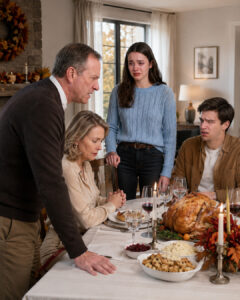
“That’s not fair. You left Harvard Law without your permission.”
I kept my voice level.
“You’re right. I didn’t ask.”
My mother appeared at his side. Her eyes were red. She’d been crying.
“We thought you were struggling,” she said softly.
“We didn’t know you were a doctor,” I finished. “You didn’t know because you never asked. When was the last time you called me not to demand I show up somewhere, to actually ask how I was?”
The question hung in the air. Neither of them could answer.
Connor joined us, his political smile fixed in place.
“Chloe, I think there’s been a misunderstanding.”
“No misunderstanding, Connor.” I looked at him directly. “I wasn’t invited to your wedding. I wasn’t in family photos. I was erased.”
“You left,” Connor said. “You walked away from the family.”
“I left law school. You all walked away from me.”
My father’s voice hardened.
“You embarrassed us. You were at Harvard Law. Do you know how that looks?”
And there it was. The truth beneath everything. It wasn’t about me failing. It was about how it looked.
“You’re right,” I said calmly. “I embarrassed you by choosing to save lives instead of upholding your image. I’m sorry I was such a disappointment.”
The sarcasm was evident, but my voice stayed steady. I’d practiced this conversation a thousand times in my head. Now that it was happening, I felt strangely calm.
My mother tried a different approach.
“Chloe, we’re proud of you. We just we wish you’d told us.”
I almost laughed.
“You’re proud now because a judge said my name in front of people who matter to you. Where was that pride when I called to tell you I got into Johns Hopkins? Oh, wait, I didn’t call because you’d already made it clear I wasn’t worth your time.”
“That’s unfair.” My father’s voice rose slightly. People nearby glanced over. He lowered it again. “We’re your parents. We always—”
“You were my parents,” I interrupted. “Now you’re just people I used to know who happened to share my last name.”
The words landed like stones in still water.
My father changed tactics.
“Chloe, let’s put this behind us. Come to dinner next week. We’ll start over.”
I looked at him, really looked at him, at the desperation in his eyes. But it wasn’t desperation for me. It was desperation for his image, for the narrative he’d built. The judge had publicly praised me, and now he needed to reconcile that with the story he’d been telling for eight years.
“I don’t need to start over,” I said quietly. “I already started eight years ago, and I’m exactly where I want to be.”
“You can’t just walk away from your family.” His voice had an edge now.
“You walked away first. I just stopped chasing you.”
Connor tried one more time.
“Chloe, we’re family. That has to mean something.”
I thought about all the times I’d believed that, all the times I’d clung to that word like a lifeline. Family, surely it meant something. Surely blood ties were enough, but they weren’t.
“Family means showing up,” I said. “Family means celebrating each other. Family means being there even when it’s inconvenient. You taught me what family isn’t. Thank you for that lesson.”
My mother’s face crumpled.
“Chloe, please—”
“I forgive you,” I said, and I meant it. “But I don’t need you, and that’s the difference.”
I walked away, not dramatically, not storming out, just calmly, my head high, not looking back. Behind me, I heard my mother crying. I heard Connor call my name once. I didn’t stop.
As I reached the exit, I passed Judge Whitmore. She was speaking with a group of attorneys, but she caught my eye and nodded, a simple acknowledgement, one professional to another. I nodded back.
In that moment, I understood something I’d been too hurt to see before. Being seen by the right people mattered more than being seen by everyone. Judge Whitmore saw me. Dr. Cross saw me. My patients saw me. The medical students I mentored saw me. My family’s blindness wasn’t a reflection of my worth. It was a reflection of their limitations.
I stepped out into the cold February air and breathed deeply. For the first time in eight years, I felt completely free.
I didn’t leave the courthouse immediately. Something made me stay. Maybe curiosity, maybe the need to see this through completely. I found a quiet corner in the marble hallway outside the courtroom and sat on one of the wooden benches that lined the walls.
My phone buzzed. A text from Dr. Cross.
“Heard what happened at your brother’s ceremony. Judge Whitmore’s husband tells everyone about you. Proud of you, kid.”
I smiled. Of course the medical community would know. Boston’s medical world was smaller than people thought. Richard Whitmore had become something of a legend at Mass General. The miracle patient who survived against impossible odds. I’d heard residents talking about the case in the break room, never knowing I was the surgeon they were discussing.
“Dr. Marchand?”
I looked up. Judge Whitmore stood before me, no longer in her judicial robes, but in a simple navy suit. Up close, I could see the fine lines around her eyes, the silver threads in her hair. She looked kind, tired, real.
“Judge Whitmore.”
I stood quickly.
“I’m sorry. I was just—”
“Please, sit.”
She sat beside me, and after a moment’s hesitation, I joined her.
“I’ve been trying to find you for two years. I called Mass General six times, but you’d rotated to different departments, different hospitals. I was beginning to think I’d never get the chance to thank you properly.”
“You already did, in front of 200 people.”
“That wasn’t for you,” she said gently. “That was for them, your family. I could see it in their faces. They had no idea who you were, what you’d become. And I thought, ‘Someone needs to tell them. Someone needs to make them see.’”
My throat tightened.
“You didn’t have to do that.”
“Yes, I did.” Her voice was firm. “My husband came home from that hospital. He came home because you refused to give up. Do you know what the other surgeons told me that night? They said it was hopeless. They said even if he survived the surgery, he’d have severe brain damage. They were ready to let him go.”
I remembered that night, November 2021, around 11:00 p.m. The ER was chaos. A multi-car pileup on I-93 had flooded us with trauma cases. Mr. Whitmore had been brought in seizing, his brain hemorrhaging. The attending surgeon was stuck 40 miles away in traffic. The snowstorm had turned the highways into parking lots.
“Someone had to operate,” I said quietly. “Every minute we waited, more brain tissue died.”
“You were a second-year resident. You could have waited for someone more senior. You could have played it safe. Playing it safe would have meant letting him die.”
Judge Whitmore’s eyes filled with tears.
“He’s teaching again, philosophy at Boston College. His students love him. Last week he gave a lecture on Kant and the categorical, talking my ear off about his students’ insights.” She smiled. “I got my husband back. My children got their father back because of you.”
I didn’t know what to say. In medicine, we celebrate the saves, but we rarely see the after. We rarely know how the story ends. Patients leave the hospital and return to their lives, and we move on to the next emergency, the next impossible case.
“I’m glad he’s doing well,” I managed.
“He wants to meet you, properly, not in a hospital, not during rounds. He wants to thank you himself.”
She pulled out a business card.
“This is our personal number. Call anytime. We’d love to have you for dinner.”
I took the card, feeling its weight in my palm.
“I’d like that.”
We sat in comfortable silence for a moment. Then Judge Whitmore spoke again, her voice softer.
“I saw your face during the ceremony, when I called your name. You looked shocked, like you couldn’t believe someone remembered you.”
I didn’t respond.
“Being unseen doesn’t mean being unimportant,” she continued. “Some people are too small-minded to see beyond their own narrow definitions of success. That’s their loss, not yours. My clerk told me you said that.”
“I meant it.”
She stood, smoothing her skirt.
“You know what I see when I look at you? Not someone who quit, someone who had the courage to choose herself. That’s rarer than you think, Dr. Marchand. Most people spend their whole lives waiting for permission to be who they are.”
She squeezed my shoulder once, then walked away, her heels clicking against the marble floor.
I sat alone for a few more minutes, turning her business card over in my fingers. Then I heard voices approaching, my parents and Connor leaving the reception early. I should have left. Should have slipped out the side entrance and avoided another confrontation.
But something rooted me to that bench. I was tired of running, tired of being the one who left.
They saw me at the same moment I saw them. My father’s face hardened. My mother looked like she’d been crying. Connor looked uncomfortable, caught between loyalty to his parents and something that might have been shame.
“Chloe.”
My father’s voice echoed in the empty hallway.
“We’re not done talking.”
“Yes, we are.”
“Don’t be dramatic.” He walked closer. “I’m trying to make things right here.”
“Make things right?” I stood up slowly. “You ignored me for 8 years. You erased me from family photos. You returned my wedding gift with a note calling me a quitter. And now, because a judge publicly praised me, you suddenly want to make things right?”
“We didn’t know,” my mother started.
“You didn’t ask.” I cut her off, but my voice wasn’t angry. It was just tired. “For 8 years, you could have picked up the phone. You could have sent one email, one text. Hey, how are you doing? That’s all it would have taken.”
“You blocked our numbers,” my father said.
“After you called me an embarrassment, after you told me I was throwing away the family legacy. I blocked you because every conversation was an attack. Every interaction reminded me that I wasn’t good enough for you.”
Connor finally spoke.
“Chloe, we were worried about you. We thought—”
“You thought what? That I was homeless? That I was struggling? You had my grandmother’s number. You could have asked her how I was doing, but you didn’t because you didn’t actually care. You just cared about how it looked that I’d left Harvard Law.”
My mother’s voice broke.
“That’s not fair. We love you.”
“Love?” The word came out sharper than I intended. “You love an idea of me. The daughter who was supposed to follow Connor to Harvard Law. The daughter who was supposed to make you look good at cocktail parties. But you don’t love me. You don’t even know me.”
“That’s not true,” my mother whispered.
“What’s my favorite color?”
She blinked.
“What?”
“My favorite color. If you know me, tell me.”
She opened her mouth, closed it.
“Blue?”
“Green. Sage green, like the scrubs I wear in the OR.”
I turned to my father.
“What’s my research focus?”
He stared at me.
“I’m working on a study about minimally invasive techniques for treating brain aneurysms. I’ve published three papers in the last 2 years. I’m presenting at a conference in Chicago next month. But you wouldn’t know that because you never asked.”
Connor shifted uncomfortably.
“Chloe, we want to fix this.”
“You can’t fix 8 years of silence with one conversation.”
I picked up my bag.
“You can’t erase what you did, what you didn’t do.”
My father’s voice turned cold.
“So, that’s it? You’re going to punish us forever?”
“I’m not punishing you. I’m protecting myself.”
I met his eyes.
“You taught me that love is conditional. That approval has to be earned. That my worth is determined by how well I fit into your plans for me. Those were painful lessons, but I learned them well.”
“We made mistakes,” my mother said desperately. “Parents make mistakes, but we can—”
“You didn’t make mistakes. You made choices. You chose not to come to my piano recital. You chose not to celebrate my science fair win. You chose to pressure me into law school when you knew I wanted medicine. You chose to cut me off when I finally stood up for myself. Those weren’t mistakes. They were choices.”
The hallway was silent except for the distant sound of the reception still going on. Laughter, music, celebration.
“I forgive you,” I said finally. “I do. Because holding on to anger was killing me. But forgiveness doesn’t mean reconciliation. It doesn’t mean pretending the last 8 years didn’t happen. It means I’m letting go of the pain and moving forward without you.”
My father’s jaw clenched.
“You’re being selfish.”
I almost laughed.
“I’m being selfish? I worked three jobs to put myself through medical school because you cut me off financially. I spent every holiday alone because you erased me from the family. I saved lives while you told people I was a quitter. And I’m the selfish one?”
“We’re your family.”
“No.”
The word came out firm, final.
“Family shows up. Family celebrates each other’s victories, even when those victories look different than expected. Family loves unconditionally. You’re related to me by blood, but you stopped being my family a long time ago.”
I walked toward the exit, then stopped and turned back.
“Connor, congratulations on becoming DA. I mean that. I hope you do good work. I hope you help people.”
Connor’s eyes were bright with unshed tears.
“Chloe, I’m sorry for all of it. I should have stood up for you. I should have—”
“You should have.” I nodded. “But you didn’t, and that tells me everything I need to know.”
I left them standing in that hallway. My mother crying, my father rigid with barely contained anger, Connor caught in the middle, finally understanding what his silence had cost.
I didn’t look back. The cold February air hit my face as I stepped outside. The sun was setting, painting the sky in shades of orange and pink.
I pulled out my phone and called a number I hadn’t used in months.
“Grandma?”
“Chloe. Sweetheart, I heard what happened at the ceremony. Judge Whitmore’s recognition.”
“Can I come over?”
There was no hesitation.
“Of course. I’ll put the kettle on.”
My grandmother lived in a small apartment in Somerville, 40 minutes from downtown Boston. The apartment smelled like lavender and old books. She opened the door before I could knock, pulling me into a hug that felt like coming home.
“Let me look at you.”
She held me at arm’s length.
“Dr. Marchand, I knew you’d make it.”
“You were the only one.”
“That’s not true. I think you knew it, too. Otherwise, you wouldn’t have kept going.”
We sat at her small kitchen table drinking chamomile tea from chipped mugs. My grandmother had always been different from my parents. Where they valued status and image, she valued kindness and authenticity. Where they demanded perfection, she celebrated effort.
“Your mother called me,” she said after a while. “About an hour ago.”
“What did she say?”
“That you were being unreasonable. That you were holding a grudge. That they were trying to make amends and you were shutting them out.”
She took a sip of tea.
“I told her she was wrong.”
I looked up, surprised.
“I told her that you don’t get to ignore someone for 8 years and then expect immediate forgiveness because it’s suddenly convenient. I told her that you’re not obligated to give them access to your life just because they’re embarrassed by how they look now.”
“How did she react?”
“She hung up on me.”
My grandmother smiled wryly.
“I suspect I’m not invited to Sunday dinner anymore. Good thing I never liked your mother’s pot roast anyway.”
I laughed, then felt guilty for laughing.
“Grandma, I don’t want to come between you and them.”
“Sweetheart, you’re not coming between anything. I’m choosing you because you deserve to be chosen.”
She reached across the table and squeezed my hand.
“I’m so proud of you. Not because you became a doctor, though that’s wonderful, but because you chose yourself when no one else would. That takes real courage.”
We talked for hours. She told me stories about my childhood that my parents had never mentioned. How I used to line up my stuffed animals and perform pretend surgeries. How I’d checked out every book about the human brain from the library. How I’d volunteered at a nursing home at 13 just to talk to the residents about their lives.
“You were always meant to be a doctor,” she said. “Always meant to help people. Your parents couldn’t see it because it didn’t fit their image of success. But I saw it, and I’m glad you didn’t let them take that away from you.”
It was nearly midnight when I left her apartment. She hugged me at the door and whispered, “You don’t owe anyone access to your life, not even family. Especially not family who only shows up when it benefits them.”
I drove home slowly, taking the long way through the city. Boston at night was beautiful, streetlights reflecting off the Charles River, the illuminated dome of the State House, the quiet streets of Beacon Hill.
When I got home to my small apartment in Cambridge, I found 17 missed calls and 43 text messages. Five from my mother. We need to talk. Please call me. I’m sorry. Don’t shut us out. I’m your mother.
Three from my father. This is childish. Call me. Family is family.
Nine from Connor. I’m sorry. Please talk to me. You’re right about everything. I should have stood up for you. I was a coward. Can we please just talk? I miss my sister. Please. Chloe?
I deleted them all. Then I made myself a cup of tea, curled up on my couch, and opened my laptop. I had a research paper to finish, a presentation to prepare for Chicago, three surgical cases to review for Monday morning.
I had a life, a full, meaningful, purposeful life. And I’d built it myself, without their help, without their approval, without them.
For the first time in 8 years, that felt like enough.
Six months passed. Spring turned to summer. The hospital was busy, it always was. I performed surgeries, mentored residents, published another paper. My life moved forward.
I didn’t hear from my parents again. The texts and calls stopped after the first week. Maybe they finally understood I meant what I said. Maybe they were just tired of being rejected. Either way, the silence was peaceful.
Connor reached out once more in April. A letter, handwritten, delivered to the hospital.
Chloe,
I know you don’t want to talk to me, and I respect that. But I need you to know, I’m sorry.
I’m sorry for not standing up for you. I’m sorry for letting them erase you from family photos. I’m sorry for calling you a quitter when you were the bravest person I knew. I’m sorry for everything. You deserved a better brother.
I hope someday you can forgive me.
Love, Connor.
I kept the letter in my desk drawer. I didn’t respond. Maybe someday I would, but not yet.
In July, my article on minimally invasive aneurysm treatment was published in the New England Journal of Medicine. Dr. Cross took me out for dinner to celebrate.
“You know what this means?” He grinned across the table. “You’re not just a surgeon now, you’re a researcher, a thought leader. They’ll be teaching your technique in medical schools. That’s terrifying. That’s legacy.”
He raised his glass.
“To Dr. Chloe Marchand, who saved lives, changed medicine, and did it all on her own terms.”
We clinked glasses. That night, I found my name mentioned in three medical blogs and two news articles. Promising new technique for brain aneurysm treatment. Mass General Surgeon Revolutionizes Neurosurgery Approach. My photo appeared alongside the articles, professional, confident, wearing my white coat.
I wondered if my parents saw the articles. I wondered if they Googled my name and found pages of accomplishments they’d missed. I wondered if they felt regret.
Then I realized it didn’t matter. Their opinion, their approval, their regret, none of it changed who I was or what I’d achieved.
In October, I received an invitation to speak at a medical conference in San Francisco. I accepted. The talk went well. Standing room only, enthusiastic questions, several surgeons wanting to collaborate on research.
After the presentation, a young woman approached me. She couldn’t have been more than 25, with nervous hands and hopeful eyes.
“Dr. Marchand? I’m sorry to bother you, but I had to tell you, I read about your story, about leaving law school to pursue medicine, about your family not supporting you.”
I waited.
“I’m in law school right now, first year, and I hate it.” Her voice cracked. “But my parents are so proud. They tell everyone their daughter is going to be a lawyer, and I keep thinking, what if they’re right? What if I’m throwing away a good opportunity because I’d rather be a teacher?”
I looked at this young woman and saw myself at 19, desperate for approval, terrified of disappointment, convinced that other people’s dreams mattered more than her own.
“What kind of teacher?” I asked.
“Elementary. I want to work with kids. I want to help them love learning.” She smiled despite her tears. “I know it sounds silly compared to being a lawyer.”
“It doesn’t sound silly. It sounds like you know exactly who you are.”
I took her hands.
“Listen to me. You get one life. One. Not your parents’ life. Not the life they imagined for you. Yours. And you can spend it being miserable in a career you hate, making other people proud. Or you can spend it doing what you love, making yourself proud. But you can’t do both.”
“What if they never forgive me?”
“Then you’ll learn to live without their approval. And it’ll hurt. But you know what hurts more? Looking back at 40 and realizing you wasted 20 years living someone else’s dream.”
She hugged me.
“Thank you. Thank you so much.”
After she left, I sat alone in the conference hall and cried. Not sad tears, relief tears, because that young woman was going to be okay. She was going to choose herself, and maybe, just maybe, my story had helped her do it.
That was worth more than any approval my parents could ever give.
November arrived. Thanksgiving. The holiday I used to dread. I hosted dinner in my apartment. Dr. Cross came with his wife. Sarah Chen, Judge Whitmore’s clerk, brought her girlfriend. Professor Hartwell from Harvard Med drove up from Providence with her husband. Three of my medical residents came. My grandmother flew in from Somerville.
Nine people crowded around my small dining table, laughing, sharing stories, celebrating.
“This is what family looks like,” my grandmother said, looking around at the gathered faces. “People who choose each other. People who show up.”
Dr. Cross raised his glass.
“To Chloe, who builds community wherever she goes.”
Sarah added, “To chosen family, the best kind.”
We toasted. We ate. We shared what we were grateful for. When it was my turn, I looked around the table at these people who’d believed in me, supported me, seen me when I felt invisible.
“I’m grateful for second chances,” I said. “For the courage to start over. For everyone in this room who taught me that being seen by the right people matters more than being seen by everyone.”
After dinner, Sarah pulled me aside.
“Your parents reached out to Judge Whitmore.”
I stiffened.
“What?”
“Last month, they wanted her to I don’t know. Convince you to talk to them? She declined, told them that wasn’t her place, but I thought you should know.”
“How did they even get her contact information?”
“They’re persistent. Your father called the courthouse six times.” Sarah shrugged. “The judge was very clear. She told them that you don’t owe anyone access to your life, and that they need to respect your boundaries.”
I felt a wave of gratitude for this woman I barely knew, who’d stood up for me without being asked.
“Thank you for telling me.”
“Of course.” Sarah squeezed my arm. “You deserve people who respect your no.”
That night, after everyone left, I stood on my apartment balcony looking out at the Boston skyline. The city glittered with lights. Somewhere out there, my parents were probably hosting their own Thanksgiving dinner. Connor was probably there, playing the role of successful DA, perfect son.
I felt nothing. No anger, no resentment, no longing, just peace.
I thought about that courtroom 6 months ago. My father’s shaking hand. My mother’s gasped breath. The moment they realized I’d become someone they didn’t recognize, they’d been right. I had become someone they didn’t recognize.
But that wasn’t a tragedy. It was a triumph.
December brought the first snow. I was working a night shift in the ER when a patient came in. Young man, motorcycle accident, severe head trauma. His family paced the waiting room terrified.
I scrubbed in for emergency surgery. Eight hours, delicate, precise work, removing a subdural hematoma and repairing damaged blood vessels. Every second mattered. Every decision could mean the difference between life and death.
He survived. Full neurological function preserved.
When I came out to tell his family, his mother collapsed in my arms sobbing with relief.
“Thank you. Thank you. You saved my son. You saved my baby.”
This. This was why I became a doctor. Not for recognition, not for status, not to prove anything to anyone, but for this moment, this mother holding her son, this family staying intact, this life continuing.
On Christmas Eve, I received a card in the mail, no return address. Inside, a handwritten note from my mother.
Chloe,
I see now that we failed you. I see that our pride mattered more than your happiness. I see that we chose image over substance. I see that we lost you long before you stopped calling.
I don’t expect forgiveness. I don’t expect reconciliation. I just wanted you to know I see you now. And I’m sorry it took so long. I’m sorry it took a judge publicly thanking you for me to realize what we’d thrown away.
You deserved better. You deserved parents who celebrated you instead of diminishing you. I’m sorry we weren’t those parents.
Love, Mom.
I read it three times, sat with it, let the words sink in. It was a good apology, sincere, no excuses, no justifications, just acknowledgement and regret. But it didn’t change anything. Maybe someday I’d respond. Maybe someday I’d be ready to rebuild something with them, but not now.
Not yet.
The wound was still too fresh, the trust too shattered. I put the card in a drawer with Connor’s letter. Someday. Maybe someday.
New Year’s Eve, I worked another overnight shift. At midnight, the staff gathered in the break room. Someone had brought champagne in plastic cups. We counted down together, celebrated, hugged.
“To 2024,” Dr. Cross said, “may we save more lives, publish more research, and never forget why we do this.”
“To—” I added.
We clinked our plastic cups. I thought about where I’d been a year ago, still carrying the weight of my family’s rejection, still questioning whether I’d made the right choice, still wondering if being seen by them would somehow make me more complete.
Now I knew better. Being seen by the right people was what mattered. Being valued by those who understood your worth. Being loved by people who showed up consistently, without conditions. I’d found that, built that, created that for myself.
Two weeks into January, I was offered a promotion, Chief of Neurosurgery Research. It meant less time in the OR, more time developing new techniques, teaching, leading. I accepted.
The hospital held a small ceremony. Press attended. My photo appeared in the Boston Globe. Mass General Names Youngest Chief of Neurosurgery Research.
I wondered if my parents saw the article. I wondered if they showed it to friends at their cocktail parties, claiming pride they hadn’t earned. I wondered. But I didn’t care.
That evening, I had dinner with Judge Whitmore and her husband, Richard. Their home was warm, filled with books and art, and the smell of homemade lasagna.
“To Dr. Marchand,” Richard raised his glass, “the woman who gave me my life back.”
“To second chances,” Judge Whitmore added, “and to people brave enough to choose themselves.”
We talked for hours. They told me about their children, their grandchildren, their life together. They asked about my work, my research, my dreams.
“Do you ever regret it?” Richard asked gently. “Leaving your family behind?”
I thought about it, really thought about it.
“No,” I said finally. “I regret that it had to happen. I regret that they couldn’t love me as I am, but I don’t regret choosing myself. That choice saved my life.”
Judge Whitmore nodded.
“The people who are meant to be in your life will show up. Everyone else is just scenery.”
“Wise words,” Richard smiled at his wife.
“I’ve been on the bench for 30 years,” she said. “You learn a lot about people, about family, about what really matters. And I’ll tell you what I’ve learned. Blood doesn’t make family. Showing up makes family. Consistency makes family. Unconditional love makes family. Everything else is just biology.”
I drove home that night with a full heart. No emptiness where my parents used to be. No void from their absence. Just fullness, gratitude, peace.
I thought about that young woman in San Francisco who’d approached me after my presentation. I wondered if she’d left law school. I wondered if she was teaching children now, helping them fall in love with learning. I hoped she was happy. I hoped she’d chosen herself.
Because that’s what my story was really about. Not about family rejection, not about being erased and finally seen. It was about learning that you don’t need permission to be yourself. You don’t need approval to follow your purpose. You don’t need anyone’s blessing to live your life.
You just need courage and the willingness to walk away from people who make you small, even if those people are family, especially if those people are family.
I pulled into my parking spot and sat for a moment, looking up at my apartment building, this small space I’d made mine, this life I’d built from scratch. Eight years ago, I had walked away from Harvard Law School with nothing but a backpack and a dream. No family support, no financial safety net, no certainty, just faith in myself and the stubborn belief that saving lives mattered more than saving face.
I’d been right.
I grabbed my bag and headed inside. Tomorrow I had surgery at 6:00 a.m., a complex aneurysm repair, high risk, high reward, the kind of case I lived for.
As I unlocked my apartment door, my phone buzzed. A text from an unknown number.
“Dr. Marchand, this is Emma. We met in San Francisco. I wanted to let you know I left law school. I’m starting my teaching credential program next month. I’m terrified, but I’m also happier than I’ve been in years. Thank you for giving me permission to choose myself. You changed my life.”
I smiled, tears pricking my eyes.
This. This was why I’d shared my story. This was why it mattered. Not for revenge, not to prove anything to my parents, but to give permission to everyone out there who felt trapped, who felt obligated, who felt like disappointing their family was worse than disappointing themselves.
I typed back.
“I’m so proud of you. You’re going to change lives. Trust yourself. You already know the way.”
I set my phone down and looked around my apartment. At the framed photos of my chosen family, at my medical journals stacked on the coffee table, at the life I’d created. And I realized something.
I’d spent years wanting my family to see me, to recognize me, to be proud of me, but I didn’t need that anymore, because I saw myself. I recognized my own worth. I was proud of myself, and that was enough, more than enough.
If you’ve ever felt invisible in your own family, I need you to hear this. Your worth isn’t determined by who refuses to see you. It’s determined by who you become when you stop waiting for permission to be yourself.
You don’t owe anyone access to your life, not even family. Especially not family who only shows up when it benefits them.
I’m Dr. Chloe Marchand. I’m a neurosurgeon. I save lives. And I don’t need my parents’ approval to know I matter, because the truth is, I’ve always mattered. I was always enough.
I just had to learn to see it myself.
Have you ever felt like you weren’t enough for your own family? Have you ever had to choose between their approval and your own happiness? If you have, I want you to know you’re not alone.
You are seen. And you are enough, exactly as you are, right now, without changing a single thing to fit someone else’s expectations. You are enough.