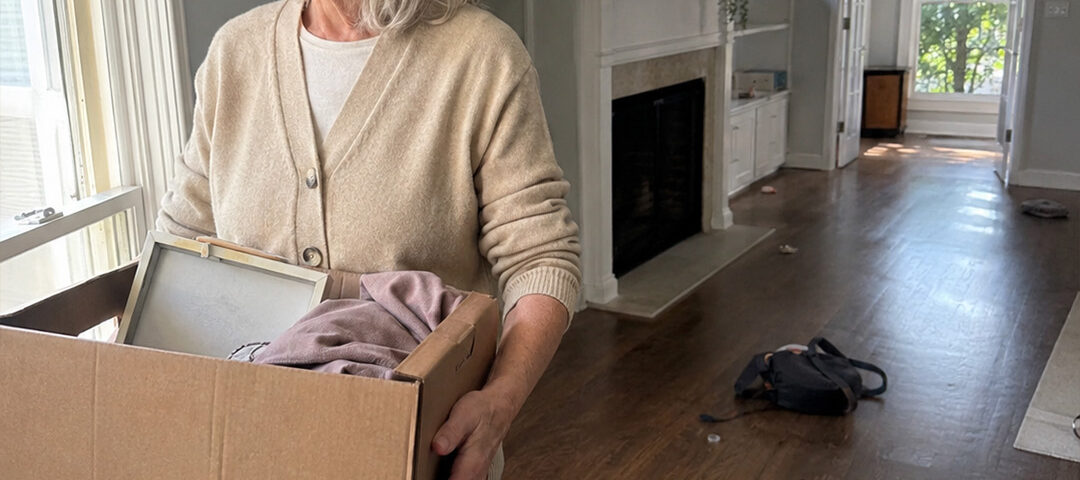
They said I was lucky they even let me sleep there in my own house. The house my husband and I bought 43 years ago. The house where I raised three children, said goodbye to a husband, and somehow survived more heartbreak than any person should have to carry.
My name is Patricia Brennan, and I am 71 years old. It started 18 months after Carl passed. Eighteen months of me rattling around in our four-bedroom colonial in Charleston, South Carolina, trying to figure out how to be a widow instead of a wife.
My daughter Jessica called it an intervention. She said I could not possibly manage the house alone. Too many stairs. Too much yard work. Too much everything for a woman my age.
“Mom, be reasonable,” she said, sitting at my kitchen table like she already owned it.
Her husband Derek nodded along beside her like one of those dashboard bobbleheads.
“We’re trying to help you,” he said.
Help. That word became the polite cover they used to justify everything that came next.
They moved in temporarily, just until they found a bigger place. Jessica said they had two teenagers, Brandon and Kylie, who immediately treated my home like a college dormitory. Wet towels on antique furniture. Shoes on the sofa. Music thumping through walls that had only ever known the soft sounds of jazz, family dinners, and occasional laughter.
I told myself it was fine. Family helps family. That was what Carl would have wanted.
But temporary became permanent. Months passed, then a year. They stopped looking for houses. They stopped pretending this was anything other than what it had become.
A takeover.
“We’re saving for a down payment,” Jessica explained when I asked.
But I saw the new cars in my driveway. I saw the designer bags, the expensive dinners out, the weekend trips, and the way Derek ordered delivery four nights a week without once asking how much the electric bill had gone up.
They were not saving. They were living rent-free in a house worth $750,000.
The disrespect started small. Derek used my formal dining room as his home office, spreading papers, laptop cords, and coffee cups across the mahogany table Carl and I had saved three years to buy.
Jessica rearranged my kitchen, putting things “where they actually make sense,” as if I had not cooked in that room for decades.
“Mom, you’ll adjust,” she said.
Then it got worse.
“Could you maybe eat dinner in your room tonight?” Jessica asked one Friday. “We’re having people over, and it’s just easier.”
My room. In my house.
I was being erased one small indignity at a time.
The final straw came on a Tuesday morning in March. I had made breakfast: scrambled eggs, toast, bacon, the same kind of breakfast I had made for my family for 50 years.
Derek walked in, looked at the plate I had set for him, and sighed like I had placed something offensive on the table.
“Patricia, we’re trying to eat healthy,” he said. “Can you not push your old-person food on us?”
Not Mom. Not even a thank you but no thanks.
Patricia. Like I was the house guest.
That was when Jessica delivered the line that changed everything.
“Dad, she’s right,” Jessica said, then looked at me. “And honestly, Mom, you should be grateful. You’re lucky we even let you sleep here.”
Let me sleep here.
In my house.
I stood at the sink, dish soap dripping from my hands, and something inside me crystallized. Not anger exactly. Anger is hot and impulsive. This was cold and clear, the kind of clarity that only arrives when you finally stop denying what is happening right in front of you.
My house. The house Carl and I bought in 1982 for $89,000. The house we poured our lives into. Carl had refinished every floor. I had painted every wall, some of them twice. We replaced the roof after Hurricane Hugo in 1989. We paid off the mortgage early by living lean for 15 years.
And now my daughter, my firstborn, the girl I had rocked through colic and walked through heartbreak, was telling me I should be grateful for permission to sleep under my own roof.
I did not say anything.
I dried my hands, hung up the towel, and walked to my bedroom. The smallest bedroom, because Jessica and Derek had claimed the master suite six months earlier.
“Your knees, Mom,” Jessica had said. “The stairs to your old room are too much for you.”
Never mind that my old room had been the master bedroom. Never mind that it was the room where Carl held my hand during his final days. Never mind that every corner of it still carried the shape of the life we had built together.
I closed the door and sat on the edge of my bed, the bed from our first apartment, the one Carl and I had somehow kept through six moves and four decades.
My hands were shaking. Not from weakness. From something else entirely.
Here is what they did not know.
I was not some confused old woman who had lost track of her own life. I had spent 40 years as an office manager for a law firm. I knew contracts. I knew property law. I knew what paperwork mattered, what signatures mattered, and what words could not be taken back once they were properly documented.
Carl had been the gentle one, the one who always saw the best in people. But I was the one who read every piece of paper before signing. I was the one who kept meticulous records. I was the one who built an entire filing system that the partners at Morrison and Bradshaw still talked about years after I retired.
And I was the one whose name, and only my name, was on the deed to that house.
That afternoon, while Jessica and Derek were at work and the kids were at school, I went to my filing cabinet. They had shoved it into the corner of the garage under old Christmas decorations, a broken tennis racket, and boxes of things that did not belong to me.
Inside a folder labeled Property Documents, I found everything I needed.
The deed recorded in 1982. Carl and I had owned the house jointly until his passing. After that, it passed entirely to me. I had never added Jessica’s name. I had never added Derek’s name. I had never added anyone’s name.
I made copies of everything. Then I made copies of the copies.
Then I opened my laptop, the one they thought I barely knew how to use, and started making phone calls.
My first call was to Robert Morrison. He was retired from the firm now, but still sharp as a tack. We had worked together for 30 years.
“Patricia,” he said warmly. “How are you holding up?”
“I need your help,” I told him. “And I need you to keep this completely confidential.”
There was a pause.
Then he said, “Tell me everything.”
So I did.
Robert listened without interrupting. When I finished, he was quiet for a long moment.
“Patricia,” he said, “I’m going to ask you something, and I need you to answer honestly. Are you absolutely certain this is what you want to do? Because once you start this process, there may be no comfortable way back.”
“I’ve never been more certain of anything in my life.”
“All right, then,” he said. “Let’s make sure we do this by the book. Every detail matters.”
Over the next week, Robert walked me through everything. We met at his house. His wife Martha made tea, gave me a sad little smile, and disappeared upstairs to give us privacy.
Robert’s dining room table became our planning table.
“First thing,” he said, spreading out documents. “We need to understand what rights they have. They’re living there without a lease, which makes them tenants at will in South Carolina. You’ll need to give proper written notice.”
“They’ll fight it,” I said.
“Let them,” Robert replied. “You own the property free and clear. They have no legal claim.”
He pulled out a yellow legal pad.
“But we’re going to be smarter than just asking them to leave. We’re going to make this airtight.”
Here is what they had done over the past year, thinking I was too old, too tired, or too trusting to notice.
They had switched the utilities into my name while contributing less and less to the bills. My electric bill had tripled with four extra people in the house. My water bill had doubled. They had promised to handle it, but never did.
Derek had used my address to register his business, some consulting LLC that generated mail I was not supposed to open.
“Privacy, Mom,” he had said when I asked about it.
Jessica had rerouted some of her bills to my house, including a credit card statement I accidentally opened once.
“Just temporary,” she had said with a sweet smile. “Until we update our address.”
They had accumulated parking tickets in Charleston, listing my address. They had even listed Jessica as an authorized resident on documents with the HOA, implying she had some kind of stake in the property.
“They’re establishing residency and creating paper trails that make them look more permanent than they are,” Robert explained.
“But they don’t own anything,” I said.
“Correct,” he said. “But perception matters, Patricia. What we’re going to do is create our own paper trail, one that is clear, legal, and difficult to challenge.”
We worked for hours.
Robert drafted an official notice to vacate, citing my need to sell the property for health and financial reasons. We prepared a complete accounting of the utilities they had used. We documented every conversation I could remember and every promise they had broken.
Then Robert pulled out another folder.
“Now,” he said, “let’s talk about the sale.”
“The sale?”
“You said you wanted to sell the house.”
“I do,” I said. “I can’t stay there anymore. Even after they leave, it won’t feel like mine.”
He nodded. “I have a client who has been looking in your neighborhood. Commercial developer. He would probably pay cash for a quick sale.”
“How quick?”
“If you’re serious, thirty days. Maybe less.”
I looked at him. “I’m serious.”
“Then we’ll time this perfectly,” Robert said. “The notice to vacate, the sale, all of it.”
For the first time that week, he smiled.
“They won’t know what is coming.”
The hardest part was acting normal.
Every morning, I made coffee and smiled when Jessica came downstairs. Every evening, I sat through dinner while Derek explained the news to me as if I had not been reading newspapers since before he was born.
Every night, I listened to Brandon’s music thumping through my ceiling and bit my tongue.
But I documented everything.
I started carrying a small notebook. When Derek left wet gym clothes on my antique settee, I documented it with a photo. When Kylie borrowed my car without asking and returned it with an empty gas tank, I documented it. When Jessica borrowed $200 from my purse for groceries and I later found designer candles from an expensive boutique, I documented that too.
I also started being more visible around the house. Not confrontational, just present. I wanted witnesses to my own displacement.
My neighbor Helen noticed.
We were outside one Saturday. I was gardening, and she was watching from her side of the fence when she said, “Patricia, honey, are you all right? You seem different lately.”
“Different how?”
“Quieter,” she said. “Like you’re walking on eggshells in your own home.”
I straightened up, my knees protesting.
“Helen,” I said, “if something were to happen, if I needed you to remember conversations or things you had observed, would you be willing to help me?”
Her eyes sharpened. Helen was 75 and sharp as a tack.
“What’s going on?” she asked.
I told her not everything, but enough.
She was quiet for a moment, then nodded.
“I’ve been watching,” she said. “I’ve seen how they treat you. Like you’re in their way.”
She paused, then reached across the fence and touched my hand.
“Whatever you’re planning, I’m on your side.”
“I might need you to make a statement about what you’ve observed.”
“You just say when.”
I hugged her, something I had not done in months. It felt good to have an ally.
The commercial developer, James Chen, came to see the property on a Tuesday morning. I arranged it for a time when I knew everyone would be out. He was younger than I expected, maybe 45, with an efficient manner I appreciated.
“Mrs. Brennan,” he said, “I’ll be direct. This location is perfect for what my client has in mind. Mixed-use development. The neighborhood zoning is changing.”
He walked through the house making notes. I followed him room to room, seeing the place through a stranger’s eyes. The crown molding Carl had restored. The kitchen where I had packed lunches for three children. The hallway where school pictures used to hang in crooked frames.
Every step hurt. But not enough to stop me.
James stood near the front window and closed his leather folder.
“I can offer you $825,000 cash, closing in three weeks.”
$825,000. Seventy-five thousand more than market value.
“Why so much?” I asked.
“Speed and certainty,” he said. “My client needs this property, and you’re motivated to sell quickly. It’s worth it to both sides.”
He extended his hand.
“Do we have a deal?”
I thought about Carl. About the life we had built there. About the fact that the house had already been taken from me in every way that mattered. I thought about Jessica telling me I was lucky to sleep there.
Then I shook James Chen’s hand.
“We have a deal.”
That afternoon, I signed the preliminary papers. The closing was set for April 15, 33 days away. Robert had timed the notice to vacate to expire on April 12.
“They’ll have three days after the notice expires before the new owner takes possession,” Robert explained. “But they won’t know about the sale. The notice will seem like you’re simply reclaiming your space.”
“And if they refuse to leave?”
Robert looked at me over his glasses.
“Then the situation becomes someone else’s problem very quickly.”
I served the notice on March 13, exactly 30 days before April 12. I did it myself with Helen and Robert present as witnesses.
I walked into the living room where Jessica was scrolling through her phone and Derek was watching basketball on my television.
“I need you to read this,” I said, handing Jessica the envelope.
She did not even look up. “What is it?”
“It’s a formal notice to vacate the property. You have 30 days.”
That got their attention.
Derek muted the TV. Jessica’s head snapped up.
“What are you talking about?” she asked, her voice sharp.
“I’m asking you to leave,” I said. “You said this was temporary. It has been over a year. It’s time.”
Derek stood. “You can’t just make us leave. We have rights.”
“Actually,” I said calmly, “you are not on a lease because there is no lease. You are not on the deed. This is my house, and I am giving you legal notice to vacate within 30 days.”
Jessica opened the envelope, her hands shaking. Whether from anger or shock, I could not tell. She read it, her face going pale, then red.
“Are you serious?” she said. “Where are we supposed to go?”
“That is not my concern. You are both employed adults. You’ll figure it out.”
“Mom, this is crazy. You can’t live here alone. You need us.”
“No, Jessica,” I said. “I don’t need you. You need me. You need my house, my utilities, and my free rent. But I’m done.”
Derek stepped forward, and Robert moved slightly, positioning himself between us without making a scene.
“You’re making a huge mistake, Patricia,” Derek said. “We’re family.”
“Family doesn’t tell me I’m lucky to sleep in my own house.”
Jessica’s eyes widened. She remembered.
“I didn’t mean—”
“Yes,” I said. “You did. You meant every word.”
I turned to leave, then stopped.
“Robert is my attorney. All communication goes through him now. You have 30 days.”
The next three weeks were extremely difficult.
They tried everything.
First came the apologies. Jessica cried and said she had been stressed. She said she had not meant it. Derek promised they would pay rent, contribute more, and respect my space.
“It’s too late,” I told them.
Then came the anger. Doors slammed. Derek complained about how ungrateful I was after “everything they had done for me.” Jessica called me vindictive and cruel.
I documented every outburst.
Then came the manipulation. They brought the kids into it.
Brandon and Kylie were suddenly sweet and helpful, asking if they had done something wrong.
“We love you, Grandma,” Kylie said, tears in her eyes.
That hurt. But I knew it was not their idea.
“This isn’t about you,” I told them gently. “This is about your parents’ choices.”
They tried to get my other children involved.
My son Michael called from Denver, confused.
“Mom, Jess says you’re making them leave. What’s going on?”
I explained calmly and completely. When I finished, there was a long silence.
“Mom,” he said quietly, “I had no idea it was that bad.”
“They didn’t want anyone to know.”
“Do you need help? Money? A place to stay?”

“I’m fine, honey. But thank you for asking.”
My youngest, Sarah, called next. She was less diplomatic.
“I told Jess this was a bad idea from the start,” she said. “She never listens.”
At least I had two out of three.
As the deadline approached, I started making my final preparations, things Jessica and Derek could not see and could not anticipate.
I had already opened a new bank account at a different institution and transferred most of my money there. I kept the old account open with just enough to avoid suspicion. I changed my mailing address to a P.O. box. I contacted every utility company.
On April 13, one day after the notice deadline, the electricity, water, gas, and internet would all be switched into Jessica and Derek’s names. Not shut off. Just transferred. Let them handle the bills they had been running up.
I had also done something they would never expect. I contacted the appropriate offices about Derek’s business registration. That LLC he had registered at my address appeared to be operating without the proper licensing. I made sure the relevant people received the information they needed.
Was it petty? Maybe.
But I was 71 years old and done playing nice while other people treated me like furniture.
I also hired a moving company. Everything I wanted to keep, Carl’s things, my photo albums, my mother’s china, and the furniture that actually mattered, was packed and placed into storage.
The movers came on a Wednesday when everyone was out.
Jessica noticed that evening.
“Where’s Dad’s desk?” she asked. “And the bookshelf?”
“I’m downsizing,” I said simply.
“You can’t just take furniture out of the house.”
“My furniture,” I said. “My house. I can do exactly that.”
She stared at me like she had never seen me before.
Maybe she had not. Maybe she had only ever seen the version of me she wanted. The accommodating mother. The widow who needed managing. The older woman who would be grateful for whatever scraps of dignity they allowed her.
April 12 arrived. Their deadline.
They had not moved a single box.
That morning, Derek confronted me in the kitchen.
“We’re not leaving.”
“Then you’ll deal with the legal consequences.”
“You can’t do this. We’ll fight it. We’ll take it to court. We’ll drag this out for months.”
I poured my coffee with a steady hand.
“Do what you need to do.”
But I knew something he did not.
The closing was in three days. On April 15, at 10 a.m., I would sign the final papers. James Chen would take possession. The house would no longer be mine, and therefore no longer available for Jessica and Derek to treat as theirs.
They went to work that morning, confident they had called my bluff. Brandon and Kylie went to school. The house was empty.
At 9:30 a.m., I left for Robert’s office with two suitcases. Everything I still needed. Helen drove me.
We did not speak much.
What was there to say?
At Robert’s office, we went over everything one final time.
“You understand what’s going to happen?” he asked.
“I understand.”
“You’re sure?”
“I’m sure.”
“Last chance to change your mind.”
I thought about Jessica’s sneer, Derek’s condescension, the way they had erased me from my own life one small indignity at a time.
“I’m not changing my mind.”
The closing on April 15 took 45 minutes. I signed my name 23 times. I counted. Each signature felt like taking back a piece of myself.
James Chen shook my hand.
“The property is mine as of this moment,” he said. “My team will be there at three to change the locks and post the notice of ownership transfer.”
“And security?” Robert asked.
“Already arranged,” James said. “Anyone who shows up will be told to contact my attorney.”
He paused, then looked at me with a gentleness I had not expected.
“Mrs. Brennan, I know this wasn’t easy. For what it’s worth, you did the right thing.”
I was not sure if I had done the right thing, but I had done the necessary thing.
Robert had arranged everything else. The utilities switched to Jessica and Derek’s names that morning. They would get the notifications on their phones, probably around lunchtime. The sheriff’s department had been notified of the situation and agreed to send a deputy to keep the peace when the new owner took possession.
I went to lunch with Robert and Martha at a quiet restaurant downtown. I ordered shrimp and grits, Carl’s favorite. I barely tasted them.
At 2:45 p.m., my phone started ringing.
Jessica.
I did not answer.
It rang again and again. Then Derek called. Then Jessica again.
Finally, a text came in from Jessica.
“Mom, where are you? The power company says we’re responsible for the account now. And Derek’s credit card isn’t working. Call me.”
I turned off my phone.
At 3:30, Robert’s phone rang. His expression stayed neutral as he listened.
“I see,” he said. “Yes. No, she’s aware. Yes, that’s correct. No, there’s no mistake.”
He paused.
“Sir, I suggest you speak to your attorney. This is a civil matter. My client has broken no laws.”
He hung up.
“Derek?” I asked.
“A very angry Derek,” Robert said. “They’re at the house. The locks are changed. There’s a security guard. James Chen’s attorney is there with the paperwork, and Derek is saying he wants to call the police.”
“And?”
“The attorney suggested he do exactly that. They can explain how property ownership works.”
I imagined them standing on the front porch. My front porch, except it was not mine anymore. It was not theirs either. It never had been.
My phone buzzed again. I turned it back on and saw a voicemail from Jessica. I played it on speaker.
“Mom, what is happening? Some man says he owns the house now. He has paperwork saying you sold it. This is insane. Where are you? Call me back right now.”
Then Derek’s voice sounded in the background.
“She actually sold the house. She sold the house out from under us.”
The voicemail ended.
Martha reached across the table and squeezed my hand.
“Are you okay?”
Was I?
I had just changed my daughter’s life in a way she would never forget. I had made my grandchildren’s home unstable, at least temporarily. I had damaged relationships that might never be rebuilt.
But I had also taken back my power. I had stopped being a quiet victim in my own story.
“I’m okay,” I said.
My phone rang again. This time it was Sarah, my youngest.
I answered.
“Mom. Oh my goodness, Mom, are you all right? Jessica just called me frantic about you selling the house. What’s going on?”
“It’s a long story, honey.”
“Are you safe? Where are you?”
“I’m safe. I’m with Robert Morrison and his wife.”
“The lawyer?”
“Yes.”
“Mom, what happened?”
I told Sarah everything. Unlike Jessica, she listened without interrupting. When I finished, she was quiet for a moment.
Then she said, “Mom, you actually did it.”
Her voice sounded half shocked, half proud.
“Jessica is losing her mind,” Sarah continued. “She called me demanding I talk sense into you. She wants me to help them sue you. I told her she got exactly what she deserved. Then she called me a traitor and hung up on me.”
Despite everything, I smiled.
“Thank you for understanding.”
“Mom, I’m proud of you,” Sarah said. “Seriously. You put up with their nonsense for over a year. You tried to be patient. They took advantage.”
She paused.
“Where are you going to live?”
“I found a beautiful condo in Mount Pleasant. Two bedrooms, water view, gated community. I close on it next week.”
“You already bought another place?”
“I’ve been planning this for a while, honey.”
“Apparently,” she said, laughing softly. “Can I come visit?”
“Anytime you want.”
Over the next few hours, the full scope of what I had done became clear to Jessica and Derek. The utilities were in their names. Derek’s business registration had been flagged. The house was sold. Their belongings were still inside, but they had no legal right to access them without the new owner’s permission.
James Chen, to his credit, was reasonable. He gave them 72 hours to remove their belongings, supervised by his security team. After that, everything left behind would be considered abandoned.
They had three days to pack up a year’s worth of life.
Michael called that evening.
“Mom, I just got off the phone with Jessica.”
“I imagine she’s upset.”
“She says you blindsided her. That you didn’t give her a chance to make things right.”
“Michael,” I said, “I gave her a year. I gave her dozens of chances. She told me I was lucky to sleep in my own house.”
He sighed. “She said that?”
“She did. Derek agreed with her.”
Another long silence.
“I don’t know what to say, Mom. This is a lot.”
“It is. And I’m sorry you’re in the middle of it, but I’m not sorry for what I did.”
“I’m not asking you to be,” he said. “For what it’s worth, I think you were incredibly patient. More patient than I would have been.”
“Thank you, honey.”
“But Mom,” he said carefully, “Jessica is still your daughter. Those are still your grandchildren.”
“I know that.”
“So what happens now?”
That was the question, wasn’t it?
What happens when you dismantle the life that was suffocating you in order to save yourself?
“I don’t know,” I admitted. “But I couldn’t keep living the way I was living. I was disappearing. Do you understand?”
“Yeah,” he said softly. “Yeah, I do.”
The next three days were chaos, though I did not have to witness most of it. Robert received multiple calls from Jessica and Derek’s hastily hired attorney. There were threats of lawsuits, all empty. I had done everything properly.
James Chen reported that they removed their belongings on the final day, looking shocked and defeated. Within weeks, the old house would be demolished for the new development.
I moved into my new condo on April 23.
Two bedrooms, 1,340 square feet, with a balcony overlooking the marsh. The building had a gym, a pool, and a community room where residents gathered for book clubs and card games. My neighbors were mostly retirees like me, people who had earned their peace.
For the first time in over a year, I could breathe.
I set up Carl’s desk in the second bedroom along with our photo albums and his favorite chair. I hung our wedding picture in the hallway. I arranged my mother’s china in the built-in cabinet. I made the space mine.
Ours, in a way the house on Palmetto Street had stopped being the moment Jessica told me I was lucky to sleep there.
Sarah visited the second week. She brought wine and takeout, and we sat on the balcony watching the sun set over the water.
“It’s beautiful, Mom,” she said. “Really beautiful.”
“It feels right,” I told her.
“Have you heard from Jessica?”
“No. Have you?”
“She called once. She’s renting a house in Goose Creek. She said it’s much smaller than what they’re used to, and the kids hate it.”
Sarah took a sip of wine.
“She wanted me to tell you that you ruined their lives.”
“And what did you say?”
“I said she damaged her own life by taking you for granted.”
Sarah looked at me.
“She hung up on me again.”
“I’m sorry, honey.”
“Don’t be. She needs to understand that actions have consequences. She’s 50 years old, Mom. If she hasn’t figured that out by now, that’s on her.”
Michael called a few weeks later.
“I wanted to let you know I’m coming to Charleston for work next month. Can I see your new place?”
“Of course.”
“And Mom,” he added, “I ran into one of Jessica’s friends at the grocery store. Apparently, the story has gotten around.”
My stomach tightened. “What are people saying?”
“Honestly? Most people think it’s unbelievable in a kind of satisfying way. There’s gossip about what terrible house guests they were and how they took advantage. Jessica isn’t getting much sympathy.”
“She’s still my daughter, Michael.”
“I know,” he said. “But maybe she needed this wake-up call.”
Maybe she did. Or maybe we were both just broken now in different ways.
The children, Brandon and Kylie, were harder. They had not asked to be caught in the middle. I sent them cards with money for their birthdays, but I did not hear back.
Jessica had probably turned them against me. Or maybe they were just being teenagers, and I was one more adult who disappointed them. Either way, it hurt.
But here is what I learned in those first few months in my new home.
I could survive the hurt. I could survive the guilt, the loss, and the knowledge that I had changed my family in order to save myself.
Because the alternative, continuing to shrink, continuing to disappear one small indignity at a time, would have drained the life out of me slowly.
I chose life. My life. On my terms.
Was it selfish? Probably.
Was it necessary? Absolutely.
Eight months have passed since I sold the house. Eight months since I stood on the front porch for the last time and walked away from 43 years of memories. Eight months since I chose myself.
Helen visits every Tuesday. We have lunch on my balcony and catch up on neighborhood gossip. She tells me about the construction where my house used to be. They are building a mixed-use development with shops on the ground floor and apartments above. She says it is coming along nicely.
I do not ask about Jessica. Helen does not offer.
Sarah comes once a month, usually bringing her husband and their two kids, my other grandchildren, the ones who still talk to me. We make dinner together, and the children ask if they can spend the night in the guest room.
It is not the big house with the yard, but it is enough.
Michael has visited twice. The last time, we sat on the balcony with bourbon, Carl’s favorite, and he looked at me for a long moment before speaking.
“I’m proud of you, Mom,” he said. “I know that probably sounds strange given everything, but I am.”
“Thank you, honey.”
“Jessica will come around eventually,” he said. “Or she won’t. But you did what you had to do.”
“I’m not sure Jessica will come around,” I said. “And I’m not sure I need her to.”
That sounds harsh, even to my own ears, but it is true.
I spent 71 years putting everyone else first. My parents, my husband, my children. I spent a lifetime shrinking myself to make room for other people’s needs, wants, and convenience.
This is the first time in my life I have chosen me.
Last week, I joined the book club in my building. We are reading mysteries, which I love. I signed up for the water aerobics class that meets three mornings a week. I am learning to paint at the community center, something I always wanted to try but never had time for.
I am building a life.
Not the life I planned when Carl and I bought that house in 1982. Not the life I imagined when I was raising three children and dreaming about grandchildren and family holidays. But a life nonetheless.
Is it lonely sometimes? Yes.
Do I wish things had turned out differently? Of course.
But I do not regret what I did. Not for a second.
I am Patricia Brennan. I am 71 years old. I am a widow, a mother, a grandmother, and a woman who finally learned that you cannot set yourself on fire to keep other people warm.
The house on Palmetto Street is gone now, replaced by something new and modern that serves a purpose I may never fully understand.
But I am still here.
I am still standing.
I am still waking up every morning in a home that is mine, where nobody tells me I am lucky to sleep, where nobody treats me like I am in the way, where nobody uses the word help while quietly taking everything I have left.
I sold the house. I ended the old arrangement. I redirected the bills. I changed the locks through the new owner and forced them to face the consequences of their choices.
And you know what?
I would do it again in a heartbeat.
Because sometimes the only person who can save you is yourself. Sometimes saving yourself means allowing the old life to collapse so a new one can begin. Sometimes the only way to reclaim your life is to take it back deed by deed, signature by signature, locked door by locked door.
And I did.