The day my daughter-in-law handed me a printed babysitting schedule, I knew something inside me had finally broken. It wasn’t just a list of pickup times, meal plans, and after school activities. It was the way Britney slid the paper across the table and said, “This should make things easier for everyone. Everyone except me.”
My son Ethan sat beside her and nodded as if assigning his 68-year-old mother a full-time job was perfectly normal. After years of helping them, loving them, and putting their needs before my own, I suddenly realized a painful truth. I wasn’t being treated like a grandmother anymore. I was being treated like free labor. What neither of them knew was that I had already booked a flight to Savannah, Georgia, and in less than a week, I was going to disappear. My name is Paula Stevens, and at 68 years old, I thought I understood what it meant to be needed.
For most of my life, being needed felt like a blessing. I had been married to my husband, Richard, for 42 years. We built our life in a quiet suburb outside Columbus, Ohio. We weren’t wealthy, but we always had enough. Richard worked as an electrical contractor, and I spent more than 30 years as a school secretary. We raised one son, Ethan, and poured everything we had into giving him a stable, loving childhood. When Richard died 3 years ago, my entire world changed.
People often talk about grief as if it’s a storm that eventually passes. That wasn’t my experience. For me, grief was more like learning how to walk with a missing limb. Some days were manageable. Other days I would see an empty chair at the dinner table and feel the loss all over again. The hardest part wasn’t the silence. It was the sudden realization that the person who knew me best was gone. After Richard passed away, Ethan became my closest family. At least that’s what I believed.
He lived about 25 minutes away with his wife Britney and their two children, Lily and Noah. Lily was 10 years old and had inherited her father’s warm smile. Noah was seven and seemed to have endless energy. They were the brightest parts of my week. Every Tuesday I picked them up from school. Every Thursday I took Noah to soccer practice. Almost every Saturday I cooked dinner for the entire family. I never complained. In fact, I loved it. Being around my grandchildren gave me purpose.
Their hugs felt genuine. Their excitement when they saw me reminded me that I still mattered. But for a while, I convinced myself that helping Ethan’s family was exactly what Richard would have wanted. And maybe it was. The problem wasn’t helping. The problem was what helping slowly became. At first, Britney always thanked me. You’re a lifesaver, Paula. I don’t know what we’d do without you. We appreciate you so much. Those words meant a lot to me, especially during the lonely months after Richard’s death.
But over time, the gratitude started disappearing. The requests became expectations. Then the expectations became obligations. The change happened so gradually that I almost didn’t notice it. One afternoon, Britney called me while I was having lunch with an old friend. “Can you get Lily from school today?” she asked. I glanced across the table at my friend Susan. I’m actually out right now. There was a pause. Then Britney sighed dramatically. Well, I guess I’ll have to leave work early. The guilt hit me immediately.
I’m sorry, I said. It’s fine, she replied in a tone that clearly meant the opposite. I spent the rest of lunch feeling terrible. Looking back, I realized that was the beginning. A few months later, I started canceling plans whenever Britney called. Lunches, book club meetings, church events, even medical appointments. Somehow, Ethan and Britney’s needs always seemed more important than mine. At least that’s how I treated them. The strange thing was that nobody ever forced me. I volunteered. I said yes again and again and again.
Partly because I love my family. Partly because I was afraid of becoming irrelevant. Many women my age will understand exactly what I mean. When your children grow up, your role changes. When your spouse dies, your role changes again. Sometimes helping feels like proof that you’re still important. I didn’t realize how dangerous that belief could become. One Friday evening, Ethan called. Mom, can you come over tomorrow morning? Sure. We’ve got a lot going on. No problem. The next morning, I arrived at 8:00.
I expected to watch the kids for a couple of hours. Instead, Britney handed me a list. Breakfast, laundry, school project, soccer equipment, dinner preparation. At first, I laughed because I thought she was joking. She wasn’t. We’ve got a busy day, she said. You know where everything is. Then she and Ethan left. Just like that. I stood in their kitchen holding a piece of paper that looked more like an employee schedule than a family favor. The feeling bothered me, but I pushed it aside.
I always pushed it aside. That became my pattern. Ignore the discomfort. Keep helping. Keep smiling. Keep pretending everything was fine. Months passed. The responsibilities kept growing. Whenever something went wrong, Britney called me. Whenever she needed child care, she called me. Whenever Ethan needed help fixing something around the house, he called me. Sometimes they didn’t even ask, they informed me. We need you Thursday. Can you take Noah Saturday? We’ll drop the kids off around 6. Not “would you mind,” not “are you available,” just assumptions.
And somehow I kept saying yes. One evening, I sat alone in my living room after spending nearly 12 hours helping with the kids. My feet hurt, my back hurt. I was exhausted. I looked around the house Richard and I had shared for decades. The silence felt different that night. Not peaceful, heavy. I glanced at a framed photograph sitting on the bookshelf. Richard was smiling in that picture. It had been taken during a vacation to Charleston many years earlier. I found myself talking to him out loud.
Am I doing the right thing? Of course, there was no answer, just silence. But for the first time, a troubling question entered my mind. Was I helping my family or was I allowing them to take advantage of me? The thought made me uncomfortable. I immediately tried to dismiss it. Ethan wasn’t a bad son. Britney wasn’t a terrible person. They were busy. They had careers. They had children. Life was stressful. That was the explanation I gave myself again and again. Yet, deep down, something felt wrong.
I noticed that nobody ever asked about my plans anymore. Nobody asked whether I was tired. Nobody asked what I wanted. The conversations were always about what they needed, never about what I needed. At the time, I didn’t realize how important that observation would become because within a few weeks, I was about to hear a conversation that would change everything. A conversation that would force me to see my role in their family in a completely different way. And once I heard it, there would be no pretending anymore.
The older I got, the more I noticed that people often confuse kindness with availability. If you’re kind, they assume you’ll always say yes. If you’re dependable, they assume you’ll always show up. And if you’ve spent years putting everyone else first, they eventually stop asking whether you’re willing. They simply expect it. That was exactly what happened to me. A few weeks after I started questioning my role in Ethan and Britney’s life, the demands became impossible to ignore. One Tuesday morning, my phone rang at 6:12 a.m. I reached for it half asleep.
It was Britney. Paula, can you come over this morning? I glanced at the clock. Is everything okay? Lily forgot about a project that’s due today. Ethan already left for work and I have an early meeting. I sat up. What time do you need me there? As soon as possible. No apology, no concern that she had called before sunrise. Just expectation. I threw on some clothes and drove across town. When I arrived, Britney was rushing around the kitchen. “There you are,” she said.
“Not “good morning,” not “thank you,” just relief that I had arrived.” She handed me poster board markers and a printed instruction sheet. “Lily needs this finished before school.” “Finished, not helped.” “Finished.” I looked at her. Shouldn’t Lily be doing the project herself? Britney laughed. She’s 10. Then she grabbed her purse and left. The front door closed behind her. I stood there staring at the supplies. Something about that moment stayed with me. Not because of the project itself, because nobody had considered whether I wanted to spend my morning doing it.
My time simply belonged to them now. At least that’s how it felt. Later that afternoon, I picked up Noah from school. Then I took him to soccer practice. Then I helped Lily finish homework. Then I made dinner. By the time I returned home, it was almost 8:00. I had spent nearly 14 hours taking care of responsibilities that weren’t mine, and nobody seemed to notice. The next weekend wasn’t any better. I had been planning to attend a luncheon at church with several women I hadn’t seen in months.
I was genuinely excited. The night before the event, Britney called. Can you take the kids tomorrow? I hesitated. Actually, I already have plans. There was silence. Then came the sigh. That sigh. The one designed to make me feel selfish. Oh. I waited. We were hoping to spend the day looking at new furniture. I almost laughed, not because it was funny, because I couldn’t believe what I was hearing. They wanted me to cancel my plans so they could go shopping. Yet somehow, I still felt guilty.
I’m sorry, I said. It’s okay. Her tone made it clear that she didn’t think it was okay at all. The next morning, I went to church anyway, but I spent half the event worrying about whether Britney was angry. That’s when I realized how deeply the pattern had affected me. I wasn’t making decisions based on what I wanted. I was making decisions based on avoiding their disappointment. That wasn’t healthy. But old habits are difficult to break, especially when family is involved. A few days later, Ethan stopped by my house after work.
He looked exhausted. Mom, we’re having a hard time balancing everything. I poured him a cup of coffee. I know the daycare costs are ridiculous. I understand. The kids have activities almost every day. I nodded. Then he smiled. You’ve been a huge help. For a moment, I felt appreciated. Then he added something that changed the entire conversation. We honestly don’t know what we’d do without you. At first glance, it sounded like a compliment, but something about it bothered me. Maybe because it wasn’t really gratitude.
It was dependence. The more I thought about it, the more I realized they had built their entire routine around my availability, not my willingness. My availability. There was a difference. Weeks passed. The calls continued. The favors multiplied. The expectations grew. One Friday afternoon, Britney sent me a text message. Not a request, a schedule. Monday, pick up Lily. Tuesday, watch Noah after school. Wednesday, dinner. Thursday, soccer practice. Friday, overnight babysitting. I stared at my phone. No question mark. No “if you’re available,” no “would you mind?”
Just a schedule. As though I were an employee receiving next week’s assignments. I couldn’t stop thinking about it. That evening, I sat on my back porch watching the sunset. Richard used to love sunsets. He would sit beside me with a cup of coffee and point out the colors in the sky, pink, orange, gold. Sometimes I could almost hear his voice. I missed him terribly, more than anyone knew. The loneliness had become easier to carry over the years, but it never disappeared completely.
Maybe that was why I tolerated so much. Helping Ethan made me feel connected. Helping the grandchildren gave me purpose, but purpose and exploitation are not the same thing, and I was slowly beginning to understand the difference. The following Saturday, I arrived at Ethan and Britney’s house for what I thought would be a normal afternoon. Instead, I walked into chaos. Laundry baskets everywhere, dirty dishes stacked in the sink, toys covering the living room floor. Britney met me at the door. Oh, good you’re here.
Then she handed me a list. Another list. This one included chores. Not child care, chores, vacuuming, laundry, meal prep, organizing the playroom. I looked down at the paper, then back at her. Britney. She checked her watch. We’ll be back around 6. Before I could finish my sentence, she and Ethan were already heading toward the door. Love you, Mom. Ethan called. Then they were gone. I stood there frozen, the list trembling slightly in my hand. For the first time, I felt something stronger than frustration, humiliation.
I had raised a son, worked for decades, supported my family, survived the loss of my husband, and now I was standing in someone else’s kitchen holding a chore list like hired help. The feeling stayed with me all day. It followed me while I folded laundry, while I cleaned the counters, while I made dinner, and while I drove home that night. When I finally pulled into my driveway, I sat in my car for several minutes without moving. The house was dark, quiet, empty.
I should have felt relieved to be home. Instead, I felt exhausted. Not physically, emotionally, because deep down, I knew something had changed. I could no longer pretend that everything was fine. The uncomfortable questions I had been avoiding were growing louder. And soon I was about to hear something that would make ignoring them impossible. Something that would reveal exactly how Britney saw me. And once I heard it, there would be no going back. There are moments in life when a single conversation changes everything.
Not because it reveals something completely new, but because it confirms what your heart has been trying to tell you for a long time. For me, that moment happened on a rainy Wednesday afternoon. Lily had a half day at school, so I picked her up and brought her home. Britney had given me the garage code months earlier, and I let myself inside the house the way I always did. Lily headed upstairs to change clothes while I carried her backpack into the kitchen.
The house seemed empty. I assumed Britney was still at work. Then I heard voices. They were coming from the family room. At first, I wasn’t trying to listen. I simply froze when I heard my name. Honestly, I don’t know how people survive without family nearby. That was Britney. Another woman laughed. You mean without Paula nearby? I recognized the second voice as Britney’s friend, Melissa. I should have walked away. I know that. But something about their tone made me stay exactly where I was.
Britney laughed. Seriously, daycare would cost us a fortune. Melissa said, “At least you pay her something, right?” The room exploded with laughter. My stomach tightened. Then Britney answered, “Pay her? Why would I pay her?” Another laugh. She’s retired. Melissa sounded uncertain. Still, she watches the kids constantly. Britney lowered her voice, but I could still hear every word. Paula loves feeling needed. Honestly, all I have to do is ask. The women laughed again. My chest felt tight. I stood perfectly still beside the kitchen counter, unable to move, unable to breathe.
Melissa asked, “Does she ever say no?” “Almost never.” Britney sounded proud, like she had mastered some clever strategy. Then came the sentence that changed everything. The sentence I would replay in my mind a thousand times afterward. Why pay for daycare when Ethan’s mom does everything for free? The women laughed again. Not awkward laughter, not uncomfortable laughter. The kind of laughter people share when they think they’ve said something clever. I felt heat rush into my face. My hands started trembling. Years of favors, years of child care, years of sacrifices reduced to a financial shortcut, a way to save money, a free service.
I wanted to believe there was more to it. I wanted to believe I had misunderstood. Then Melissa asked another question. Doesn’t she have her own life? Britney snorted. What life? The words hit harder than anything else. What life? As though my life ended the day I retired. As though becoming a grandmother erased everything else about me. The room fell silent for a moment. Then Britney added something even worse. Besides, Ethan says she doesn’t really have much going on. For a second, I thought I had heard her wrong.
Ethan says not Britney thinks. Ethan says, “My own son.” I felt sick. Truly sick. I quietly stepped backward, careful not to make a sound, careful not to reveal I had heard anything. Then I walked outside through the garage and sat in my car. The rain tapped softly against the windshield. I stared straight ahead, trying to process what had just happened, trying to convince myself it wasn’t real. The betrayal didn’t come from Britney. Not entirely. Part of me expected that from her.
What shattered me was hearing Ethan’s name because Ethan knew my story. He knew what losing Richard had done to me. He knew how lonely the first year had been. He knew how much I loved spending time with Lily and Noah. And apparently he believed I had nothing better to do. Nothing better. I sat there for nearly 20 minutes. By the time I finally walked back inside, I had forced a smile onto my face. Lily was waiting in the kitchen. “Grandma, are you okay?”
I nodded. “Of course.” Children notice more than adults realize. She studied me for a moment, then wrapped her arms around me. I hugged her tightly because none of this was her fault. None of it was Noah’s fault either. The children were innocent. The adults were the problem. That evening after I got home, I couldn’t stop thinking about the conversation. Every word replayed in my mind. Every laugh, every joke, every assumption. For years, I had told myself I was helping because I wanted to.
Now I wondered whether they had stopped seeing me as family altogether. Maybe I had become something else, something useful, something convenient. A resource. The thought broke my heart. Around 9:00, I walked into my bedroom and opened the closet. On the top shelf sat a small wooden box, Richard’s box. I hadn’t opened it in months. After he died, I couldn’t bear to look through his things. The memories hurt too much. But that night felt different. I carried the box into the living room and placed it on the coffee table.
Inside were old photographs. Letters, tickets, anniversary cards, 42 years of memories. I smiled through tears as I looked through them. There was a picture from our honeymoon, another from Ethan’s high school graduation, one from a camping trip where Richard accidentally burned dinner and spent the entire evening apologizing. For the first time that day, I laughed. Then I found an envelope. My name was written across the front in Richard’s handwriting. Paula. Just seeing his handwriting made my chest ache. I carefully opened it.
Inside was a letter, one he had written several years before his death. I had forgotten it existed. The letter wasn’t long. Most of it talked about ordinary things, memories, dreams, how much he loved our family. Then I reached a paragraph that stopped me cold. But promise me something. If I’m gone before you don’t spend the rest of your life living for everyone else, you’ve spent decades taking care of people. Make sure you leave room to take care of yourself, too. The world is bigger than our little corner of Ohio.
Go see it. Enjoy it. Don’t disappear inside other people’s lives. I read the paragraph three times, then four, then five. The tears came before I could stop them because Richard knew me better than anyone. Even years earlier, he had seen this tendency in me. The tendency to put everyone else’s needs first. The tendency to disappear. To become whatever other people needed to lose myself. I sat there long after midnight, the letter resting in my lap, the house completely silent. For the first time in months, maybe years, I allowed myself to ask a question I had been avoiding.
What did I actually want? Not what Ethan wanted. Not what Britney wanted. Not what the grandchildren wanted. What did I want? The answer arrived surprisingly fast. I wanted freedom. I wanted peace. I wanted to wake up without waiting for someone else’s schedule. I wanted to remember who Paula Stevens was before she became everyone’s unpaid solution. And that was when an idea entered my mind. A small idea, a ridiculous idea, an impossible idea. At least it seemed impossible at first. I stood up, walked to my laptop, opened a travel website, and began searching for flights.
I stared at the travel website for nearly an hour before I did anything. Part of me felt excited. The other part felt ridiculous. At 68 years old, I was sitting alone in my living room, looking at flights like a rebellious teenager, planning to run away from home. Except I wasn’t running away. I was trying to remember how to live. Savannah, Georgia appeared on my screen again and again. There were cheaper destinations, closer destinations, more practical destinations, but I kept coming back to Savannah.
Years earlier, Richard and I had planned to visit together. We had seen photographs of the historic squares, the oak trees draped with Spanish moss, and the riverfront lined with old brick buildings. One day, Richard had said, “One day, like so many dreams, we assumed we had time.” Then life happened. Work, bills, responsibilities, aging parents, children, and eventually illness. By the time retirement arrived, Richard’s health had already begun to decline. The trip never happened. Now, as I stared at the screen, I found myself whispering the same words.
One day. Then I shook my head. No, not one day. Today. Before I could talk myself out of it, I booked the flight. My finger hovered over the confirmation button for several seconds. Then I clicked. The reservation appeared. 5 days, Savannah, Georgia. Departure in less than 2 weeks. My heart pounded. I hadn’t felt that kind of excitement in years. The feeling almost frightened me. For so long, my life had revolved around routines, schedules, obligations, responsibilities. Now, I suddenly had something that belonged entirely to me.
No babysitting, no errands, no favors, just me. The next morning, I woke up feeling strangely guilty. The guilt surprised me. Why should I feel guilty for taking a vacation? I had worked my entire life, raised a family, supported everyone around me, yet somehow doing something for myself felt selfish. That realization alone told me how much had gone wrong. Over the following week, I kept the trip secret, not because I wanted to deceive anyone, because I knew exactly what would happen if Ethan and Britney found out.
They would argue, negotiate, pressure me, find reasons why I shouldn’t go, or worse, make me feel responsible for their inconvenience. I wasn’t ready for that conversation. Not yet. Instead, I quietly prepared. I bought a new suitcase. The old one still had airline tags from a trip Richard and I had taken nearly 10 years earlier. Seeing those tags almost made me cry. Instead, I smiled. Richard would have loved this. At least that’s what I kept telling myself. One afternoon, I stopped by the bank.
That visit ended up changing more than I expected. While reviewing my accounts, I noticed several automatic payments. Most of them were ordinary utilities, insurance, subscriptions. Then I saw a monthly payment connected to Ethan’s household. I had completely forgotten about it. Three years earlier, shortly after Richard died, Ethan had mentioned struggling with expenses. Nothing dramatic, just normal family challenges. At the time, I had offered to help. A small amount every month, just enough to ease the pressure. The arrangement had never been discussed again.
The payment simply continued month after month, year after year. I stared at the transaction history. Then another realization hit me. There wasn’t just one payment. There were several. The internet bill, part of Lily’s private tutoring expenses, a portion of Noah’s summer activity costs. Small amounts individually, significant amounts together. My chest tightened. Not because of the money. I could afford it. That wasn’t the issue. The issue was that nobody had acknowledged it in years. The support had become invisible, expected, just like everything else.
For the first time, I asked myself a difficult question. If I stopped helping tomorrow, would they even notice? The answer came immediately. Yes. Not because they would miss me, because they would miss what I provided. The thought hurt a lot. That evening, Ethan called. Hey, Mom. Hi, sweetheart. You free Thursday? I almost laughed. Not how are you, not what have you been up to, straight to the request. What do you need? Can you watch the kids after school? Normally, I would have agreed immediately.
Instead, I hesitated. The pause seemed to confuse him. Mom, I’m not sure yet. Another silence. I thought Thursdays were usually okay. Usually the word lingered in my mind as though my availability belonged to him. I’ll let you know. He sounded surprised. Okay. When the call ended, I sat quietly for several minutes. That tiny conversation revealed more than Ethan probably realized. He wasn’t trying to be cruel. In many ways, that made it worse. The expectations had become so normal that he couldn’t even see them anymore.
A few days later, I began packing. Not because the trip was imminent, because I enjoyed the feeling. Every item I placed in the suitcase felt symbolic. Comfortable walking shoes, a sun hat, a lightweight sweater, a new notebook. I couldn’t remember the last time I packed for something that wasn’t connected to someone else’s needs. Then another thought occurred to me. If I was truly taking this trip, I needed to prepare for the consequences because there would be consequences. Britney had built her weekly schedule around me.
Ethan depended on me more than he admitted. The children were used to seeing me constantly. My absence would create problems. The old version of me immediately started looking for solutions. Maybe I should arrange backup child care. Maybe I should help them find a daycare. Maybe I should postpone the trip until a better time. Then I stopped myself. A better time. There would never be a better time. There would always be another school event, another work emergency, another scheduling conflict, another reason to wait.
If I kept waiting for permission to live my own life, I would be waiting forever. That realization felt strangely liberating. A week before my departure, Britney sent me a group text. Attached was a detailed schedule for the following month. School pickups, sports practices, weekend babysitting, date nights, overnight stays. The entire month had already been planned without asking me, without consulting me, without even checking whether I was available. I stared at the schedule in disbelief. Then I noticed something else. The dates overlapped with my vacation.
I laughed out loud. Not because it was funny, because the timing felt almost absurd. Here I was secretly planning my escape while Britney was assigning me responsibilities weeks into the future for the first time in a very long time. I didn’t feel guilty. I felt calm. The decision was already made. The tickets were booked. The hotel was confirmed. And for once, I wasn’t changing my plans to make someone else’s life easier. That night before going to bed, I opened Richard’s letter again.
I read the same paragraph that had changed everything. Don’t disappear inside other people’s lives. I traced the words with my finger. Then I looked around my quiet house. For years, I had been living as though my own story ended when Richard’s did. Maybe that wasn’t true. Maybe there were still chapters left. Maybe Savannah was the beginning of one. And maybe for the first time in years, Paula Stevens was about to choose herself. The morning I left for Savannah felt strangely ordinary.
That surprised me. I had imagined some dramatic moment, a surge of fear, a last minute panic attack, a sudden urge to cancel everything. Instead, I woke up before sunrise, made myself a cup of coffee, and sat quietly at my kitchen table. The house was still. The world outside was dark. For the first time in years, nobody was expecting anything from me that morning. No school pickup, no soccer practice, no grocery run, no emergency babysitting request, just silence. And somehow that silence felt wonderful.
My flight wasn’t until late morning, but I had barely slept. Not because I was anxious, because I was excited. The feeling was unfamiliar. At 68 years old, I had forgotten what anticipation felt like. I finished my coffee, picked up my suitcase, and took one last look around the house. Then I smiled. I’m going, Richard. The words came out softly, almost like a prayer. Then I locked the door and left. The flight itself was uneventful. I spent most of it staring out the window, thinking, remembering, wondering whether I was making a terrible mistake.
Every time doubt appeared, I reminded myself of Britney’s laughter. Why pay for daycare when Ethan’s mom does everything for free? The memory hardened my resolve. By the time the plane landed in Savannah, I felt lighter than I had in years. The warm Georgia air greeted me the moment I stepped outside the airport. Everything felt different. The colors seemed brighter. The sky seemed larger. Even the pace of life felt slower. I checked into a small hotel overlooking the Savannah River. Nothing extravagant, just charming.
Historic brick walls, large windows, a balcony facing the water. The kind of place Richard would have loved. After unpacking, I walked along River Street. Tourists wandered between restaurants and shops. Street musicians played music near the waterfront. The scent of seafood drifted through the air. For the first time in a very long time, I wasn’t watching the clock. I wasn’t rushing somewhere. I wasn’t responsible for anyone else. I simply walked and breathed and existed. That evening, I sat outside a small restaurant overlooking the river.
The sun was beginning to set. Orange light reflected across the water. I found myself smiling for no reason. Then my phone rang. Ethan. I stared at the screen. The smile disappeared. Part of me considered letting it go to voicemail. Instead, I answered, “Hi, Ethan.” “Mom, where are you?”
No greeting, no concern. Straight to the question. I’m traveling. What do you mean you’re traveling? I took a sip of water. I’m in Savannah. Silence. Then you’re in Georgia. Yes. Another silence, longer this time. Then came the frustration. Mom, why didn’t you tell us? I almost laughed. The irony was incredible. For years, they had made plans involving my time without asking me. Now, they were upset because I had made a decision involving my own life. I wanted a vacation. You just left.
Yes. His voice became sharper. What about the kids? There it was. Not how are you? Not are you okay? Not I hope you’re having fun. What about the kids? I looked out at the river. That’s something you and Britney will have to figure out. The silence that followed felt different, almost shocked, as though he genuinely couldn’t believe what he was hearing. Finally, he spoke. We were expecting you tomorrow. I know, Mom. I’ll talk to you later, Ethan. Then I ended the call.
My hands shook slightly afterward, not because I regretted it, because it was the first time in years that I had chosen myself over someone else’s expectations. The phone rang again almost immediately. This time it was Britney. I ignored it. A minute later, she called again. Ignored. Then came the text messages. Where are you? Why didn’t you tell us? What are we supposed to do now? The last message almost made me laugh. What are we supposed to do now? The same thing millions of parents do every day.
Parent your children. I put the phone away and returned my attention to the sunset. For once, their emergency wasn’t my responsibility. The next morning, I woke up to 14 missed calls. Eight from Britney, five from Ethan, one from an unknown number. There were also several text messages. Most weren’t pleasant. Britney’s frustration had clearly grown overnight. One message read, “You can’t just disappear.”
Another, “This is incredibly selfish.” Then do you have any idea what kind of position you’ve put us in? I stared at the screen. Selfish. The word bothered me, not because I believed it, because of how easily it had been used. After years of free child care, years of financial support, years of sacrificing my own time, one vacation was enough to earn the label selfish. That told me everything I needed to know. I decided not to respond. Instead, I spent the day exploring Savannah.
I visited Forsyth Park, walked beneath the enormous oak trees, sat on a bench, and watched families pass by. Something about the city felt peaceful, healing, as though it had been waiting for me. Around lunchtime, my phone rang again. This time, it was Lily. I answered immediately. Grandma. Her voice sounded small. Uh, hi, sweetheart. Are you okay? The question nearly broke my heart because she was the first person who had actually asked. Yes, honey. I’m wonderful. Mom says you’re on vacation. I am.
There was a pause. Then Lily said something that made me smile. That sounds fun. I laughed. It is. Can I see pictures? Of course. We talked for several minutes about the river, the boats, the park, the hotel. When the conversation ended, I felt better because Lily wasn’t angry. She wasn’t keeping score. She simply loved me. Children often understand things adults complicate. That evening, Ethan called again. This time, I answered. His tone was less angry, more exhausted. Mom, we’ve been scrambling all week.
I listened quietly. We had to rearrange work schedules. I said nothing. Britney missed two meetings. Still nothing. The daycare we found is expensive. There it was. The real issue, not my disappearance, not my well-being, the inconvenience, the cost. For years, I had been saving them time and money. Now they were finally seeing what my help was actually worth. I’m sorry you’re having a difficult week, I said calmly, he sighed heavily. Mom, that’s not what I meant. But I wasn’t sure anymore.
For the first time in a very long time, the burden wasn’t on my shoulders. It was on theirs. And judging by the panic in their voices, they were finally beginning to understand how much they had relied on me. What none of us realized yet was that the worst was still coming. Because Britney wasn’t the type of person to accept losing control quietly. And within days, she would make a decision that would turn a private family conflict into a very public one.
The strange thing about freedom is that it feels uncomfortable before it feels wonderful. For the first few days in Savannah, I kept reaching for my phone. Not because I wanted to talk to Ethan or Britney, because I was conditioned to expect another request, another emergency, another problem that somehow belonged to me. Years of putting other people first had trained me to stay on alert. Even while walking through one of the most beautiful cities I’d ever seen, part of me was still waiting for someone to need something.
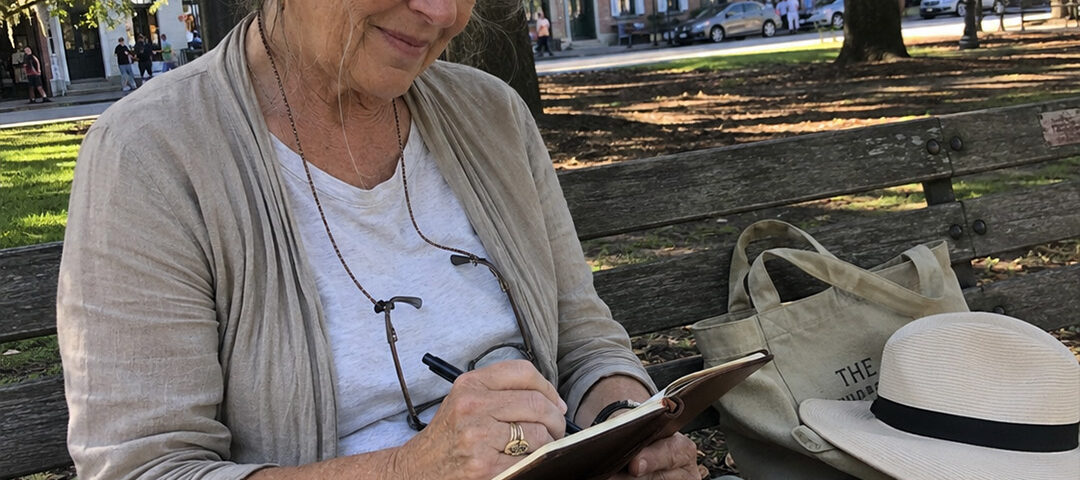
It took several days for that feeling to fade. And when it finally did, I felt something I hadn’t experienced in a very long time. Peace. On my fourth morning in Savannah, I took a coffee and sat in one of the historic squares near my hotel. Sunlight filtered through massive oak trees. Spanish moss swayed gently in the breeze. People walked dogs. Tourists took photographs. A street musician played softly in the distance. I opened my notebook and began writing. Not a grocery list, not reminders, not appointments, just thoughts, memories of Richard, things I wanted to do, places I wanted to see, dreams I had ignored for years.
I was so focused on writing that I didn’t notice the woman approaching until she spoke. Mind if I sit here? I looked up. She appeared to be around my age. Silver hair, kind eyes, comfortable walking shoes, the universal uniform of retired women. I smiled. Not at all. She sat down across from me. I’m Carol. For the next hour, we talked at first about ordinary things, the weather, the city, travel. Then somehow the conversation became more personal. Maybe that’s easier when you’re speaking to someone who has no history with you, no expectations, no assumptions, just curiosity.
Carol told me she lived in North Carolina. She had been widowed 6 years earlier. Her children lived in different states. She traveled several times a year. Life’s too short not to, she said. I smiled. Richard would have agreed. Eventually, she asked why I had come to Savannah. The honest answer slipped out before I could stop it. I needed to remember who I am. Carol nodded immediately as though she understood exactly what I meant. Family? She asked. I laughed softly. How did you know?
She laughed too. Because that’s usually the answer. The conversation continued over lunch, then coffee, then a walk along the riverfront. By the end of the afternoon, it felt as though I’d known her for years. That surprised me. After Richard died, I had gradually stopped making new friends. Not intentionally. Life simply became smaller, safer, predictable. Meeting Carol reminded me how much of the world still existed beyond my daily routine. That evening, I returned to my hotel, feeling lighter than I had in years.
Then I checked my phone. 23 unread messages. The feeling vanished instantly. Most were from Britney. A few were from Ethan. I opened the first one. Where are you exactly the next? When are you coming home? Then another. We need to talk. Then this vacation has gone on long enough. I stared at the screen. Gone on long enough. I had been there less than a week. The messages became progressively more hostile. You can’t ignore us forever. The kids miss you. You made this situation impossible.
I noticed something interesting. None of the messages asked whether I was happy. None asked how I was doing. None expressed concern. The focus was always the same. Their inconvenience, their frustration, their needs. The realization no longer hurt the way it had before. Now it simply felt revealing, like finally seeing a picture clearly after years of blurry vision. I didn’t respond. The next morning, Britney called three times before breakfast. I let every call go to voicemail. Then Ethan called. I answered, “Mom.”
His voice sounded tired. Hi Ethan. Can we talk? We are talking. A pause. Then he sighed. Britney’s upset. I nearly laughed. Of course, she was. Why? You know why. No, Ethan. Tell me. Another silence. Finally, he said it. Because you left without discussing it. There was something almost absurd about hearing that. For years, they had scheduled my time without discussion. Yet somehow, my own vacation required approval. I didn’t realize I needed permission. That’s not what I mean. Then what do you mean?
He struggled to answer. And I think that’s because deep down he knew how unfair the situation sounded. Eventually, he changed the subject. The kids ask about you every day. That part hurt because I missed them too, especially Lily. I miss them. They miss you. The conversation softened briefly. Then Ethan said something that immediately ruined it. We’ve spent almost $1,000 on child care already. There it was. The number, the cost, the real problem. I closed my eyes. $1,000. For years, I had been saving them thousands, and they had barely noticed.
Now, they were forced to pay for what I had provided for free. The irony was impossible to ignore. I’m sorry. Child care is expensive. Mom, daycare isn’t my responsibility. The words surprised both of us because I had never spoken that way before. Not once. The silence stretched between us. Then Ethan quietly said, “You’ve changed.”
I looked out toward the river. No. My voice remained calm. I think I’m finally remembering who I used to be. After we hung up, I sat on the balcony for a long time, thinking, reflecting, healing. For the first time since Richard died, I wasn’t merely surviving. I was actually living. That afternoon, Carol invited me to join her on a historic trolley tour. We spent hours exploring old neighborhoods and listening to stories about Savannah’s history. At one point, she glanced at me and smiled.
You seem happier today. I am. What changed? I thought about the question, then answered honestly. I’m finally starting to believe I don’t have to earn my worth by being useful. Carol stopped walking. For a moment, she simply stared at me. Then she nodded. That’s a lesson a lot of women spend their whole lives trying to learn. Her words stayed with me. That night, I slept better than I had in years. No anxiety, no guilt, no pressure, just peace. The next morning, however, that peace shattered.
Because while I had been rebuilding myself in Savannah, Britney had been growing increasingly angry back home. And unlike Ethan, who mostly complained in private, Britney wanted an audience. She wanted sympathy. She wanted validation. Most of all, she wanted control. So, she decided to take our family conflict public. What she didn’t realize was that the internet doesn’t always react the way you expect. And the moment she published her version of the story, everything began to unravel. I found out about Britney’s Facebook post by accident.
Carol and I were having lunch at a small cafe near the river when my phone began vibrating non-stop. At first, I ignored it. For days, my phone had been filled with messages from Ethan and Britney. I assumed it was more of the same, but the notifications kept coming one after another. Text messages, Facebook notifications, messages from people I hadn’t spoken to in years, even a voicemail from my former neighbor. Something was clearly different. I excused myself from the table and opened my phone.
The first message was from Susan, my friend from church. Paula, have you seen Britney’s post? My stomach tightened immediately. The second message said, please don’t let this upset you. The third, I can’t believe she posted that publicly. I opened Facebook and there it was, a photograph of Lily and Noah sitting on a couch. Underneath it, Britney had written a long post. At first glance, it looked innocent, but the message was carefully designed to make me look terrible. It read, “Some people only want to be grandparents when it’s convenient.
My children are heartbroken after someone they trusted suddenly abandoned them without warning.” Being a grandparent isn’t a part-time responsibility. Family should come first. Thousands of people hadn’t seen it, but enough people had. Friends, neighbors, church members, parents from Lily’s school, former co-workers, people who actually knew me. And that’s where Britney made her mistake because she assumed everyone would believe her version of the story. Instead, people started responding. The first comments were supportive, mostly from Britney’s friends. I’m so sorry. That’s terrible.
The kids deserve better. I felt my heart sink. Maybe she had won. Maybe everyone would believe her. Then I kept reading and everything changed. One woman wrote, “Didn’t Paula watch those kids almost every day for years?” Another replied, “I thought she practically raised them.” Someone else commented, “Maybe if grandparents are providing full-time child care, they deserve a vacation, too.”
The responses multiplied fast, very fast. People began sharing their own experiences. Many of them weren’t sympathetic to Britney at all. One comment caught my attention immediately. It came from an older woman I vaguely recognized from church. Uh-huh. Paula has spent years helping that family. If she wants a vacation, she has earned it. Hundreds of people like the comment. Then another appeared. Funny how nobody complains about a grandmother being involved until she takes one week for herself. More likes, more support. Then something unexpected happened.
People who actually knew the situation began speaking up. My former neighbor Denise commented, “Paula picked up those children from school more times than I can count.” Let’s not pretend she disappeared from their lives. A parent from Noah’s soccer team added, “She’s at every practice, every game, every event.”
Another person wrote, “Didn’t Paula help pay for Lily’s tutoring? I froze.” That comment hadn’t come from me. I hadn’t told anyone about that yet. Apparently, people had noticed more than I realized. The narrative Britney was trying to create started falling apart. Comment by comment, question by question. The more people talked, the more obvious the truth became. This wasn’t a grandmother abandoning her family. This was a grandmother finally taking a break. I continued reading. A woman wrote something that made me unexpectedly emotional.
Older women deserve lives, too. Simple, direct, true. For years, I had forgotten that. Maybe Britney had forgotten it, too. The comments became increasingly critical of her. Some people asked why she wasn’t using daycare. Others asked why Ethan wasn’t helping more. One comment received hundreds of reactions. Parents are responsible for child care. Grandparents are helpers, not employees. I stared at that sentence for a long time. Helpers, not employees. Exactly. Across the table, Carol watched my expression carefully. “Bad news?” she asked. I handed her the phone.
She read silently, then continued reading and reading. Eventually, she looked up. “Well, well, I think your daughter-in-law just made herself look worse.” I laughed despite myself. For the first time since the conflict started, I genuinely laughed because she was right. Britney had expected sympathy. Instead, she had started a conversation about entitlement. The phone rang. Ethan, I answered. His voice sounded exhausted. Mom. Hi. Have you seen the post? Yes. A long silence followed. Then this got out of control. I almost felt sorry for him.
Almost. What did Britney expect? I don’t know. That answer was probably honest. For the first time, Ethan sounded less defensive, less angry, more confused, as though he was beginning to see the situation from a different perspective. The comments are brutal. I didn’t respond because honestly I wasn’t enjoying Britney being criticized. I didn’t want revenge. I wanted respect. There was a difference. Ethan sighed heavily. People are saying things about us. No, Ethan. My voice remained calm. They’re saying things about how you’ve treated me.
The silence that followed told me the message had landed. For once, he didn’t argue. That afternoon, the situation became even more complicated. A local parenting group shared screenshots of Britney’s post. Then another group did the same. The discussion spread beyond our immediate circle. Women from all over began sharing stories about being taken for granted by their children. Some stories were heartbreaking. Women babysitting 60 hours a week. Women delaying retirement. Women sacrificing travel hobbies and friendships because their adult children expected it.
Reading those comments felt surreal. I wasn’t alone, not even close. What I had experienced wasn’t unusual. It was common. Far too common. That realization changed something inside me. For years, I had treated my situation like a personal failure, as though I had somehow allowed it to happen. Now I realized there was a larger pattern. Many women of my generation had been taught that love meant endless sacrifice. That good mothers never stopped giving. That saying no was selfish. The internet conversation wasn’t really about me anymore.
It was about boundaries, respect, self-worth. That evening, Britney finally called. I considered ignoring it, then answered. She didn’t say hello. She didn’t ask how I was doing. She immediately launched into frustration. People are attacking me. I closed my eyes. The lack of self-awareness was astonishing. Britney, no, Paula, this isn’t fair. Not fair. The phrase almost made me laugh. Years of unpaid child care, years of canceled plans, years of assumptions, and somehow she was the victim. You posted it. I was upset.
So was I. Silence. For several seconds. Neither of us spoke. Then she said something that revealed far more than she intended. We needed you. Needed. Not loved. Not appreciated. Needed. The distinction mattered more than she realized. After the call ended, I sat alone on the hotel balcony watching the river. The city lights reflected on the water. The air felt warm and peaceful. For the first time, I no longer felt guilty about leaving because the reactions back home had confirmed something important.
The problem wasn’t my vacation. The problem was that people had become too comfortable with my sacrifices. What I didn’t know yet was that the public embarrassment would make Britney desperate. And desperate people often make mistakes. A few days later, one of those mistakes would expose a secret far more serious than hurt feelings or social media drama. A secret involving money. And once that truth came out, nothing in our family would ever be the same. The trouble started with a bank notification.
At first, I almost ignored it. I was sitting in a small cafe near the savannah waterfront drinking coffee and writing in my notebook when my phone vibrated. Normally, I wouldn’t have thought much about it, but the alert came directly from my bank. Account activity requires verification. I frowned. That was unusual. I opened the notification immediately. A payment attempt had been declined. The amount wasn’t enormous. A little over $600. What caught my attention wasn’t the amount. It was the merchant. A child care payment service.
I stared at the screen, confused. Then another notification arrived. A second payment attempt also declined. My stomach tightened. I logged into my banking app. The account being used was one I rarely touched. An account connected to automatic family support payments I had set up years earlier. The same account that helped cover some of Ethan’s expenses. The same account Britney knew existed. Suddenly, I understood exactly what had happened. Someone had attempted to use my stored banking information to pay for child care without asking, without permission.
I sat frozen for several seconds, trying to convince myself there had to be another explanation. Maybe it was a mistake. Maybe the payment system had automatically charged the wrong account. Maybe no. Even as I thought it, I knew better. This wasn’t a mistake. It was an assumption. The same assumption that had fueled this entire situation. Paula will take care of it. Paula always takes care of it. Except this time, Paula wasn’t there. I immediately called the bank. The representative was polite and professional.
Within minutes, she confirmed what I already suspected. The payment attempt had originated from a previously authorized profile connected to Ethan’s household. Not fraud, not hacking, simply an attempt to use information that had once been voluntarily provided. The representative asked whether I wanted to continue authorizing access. I didn’t hesitate. No, she removed every linked payment authorization immediately. When the call ended, I felt strangely calm. Not angry. Not yet. Just clear. For years, boundaries had never existed. Now they did. A few hours later, another thought occurred to me.
If Britney had attempted to use that account without speaking to me first, what else had happened over the years? The question wouldn’t leave my mind. That evening, back at the hotel, I opened my laptop and started reviewing old statements. At first, I wasn’t looking for anything specific. I simply wanted to understand the full picture. What I discovered shocked me. Not because the amounts were huge, because the pattern was so consistent. Over and over again, I found transfers, payments, reimbursements that were never reimbursed, emergency requests, small amounts here, a few hundred there.
Nothing dramatic enough to trigger concern in the moment. But over several years, the total became significant. Very significant. I began making notes. Roof repairs, private tutoring, summer camp, medical expenses, car repairs, school supplies, holiday travel. The list grew longer and longer. Many of those expenses had been presented as emergencies, situations where Ethan and Britney supposedly had no other options. Yet now looking back, some details no longer made sense. One transaction caught my attention immediately. Three years earlier, $800. I remembered the conversation perfectly.
Britney had called in tears. She said their washing machine had broken unexpectedly. Money was tight. Could I help? Of course, I had helped. At the time, I didn’t think twice. Now I searched through old emails and there it was. Several weeks after receiving the money, Britney had posted photographs from a luxury spa weekend with friends. The timing was impossible to ignore. I kept digging. The deeper I looked, the worse it became. A supposed emergency home repair occurred the same month Britney purchased new living room furniture.
A child care crisis happened shortly before a family vacation. Another financial emergency coincided with a designer handbag purchase visible in social media photos. I sat back in my chair, stunned. Not because Britney spent money, that wasn’t the issue. The issue was honesty. Had she exaggerated those emergencies? Had she manipulated my sympathy? Had she deliberately presented wants as needs? The possibility made me feel sick. For years, I believed I was helping my family through difficult times. Now, I wasn’t sure how much of that difficulty had been real.
The next morning, I met Carol for breakfast. She immediately noticed something was wrong. You look upset. I told her everything. The bank notifications, the payment attempt, the financial records, the growing list of questions. Carol listened quietly. Then she asked a simple question. Does Ethan know? I stopped because honestly I didn’t know. Part of me assumed he did. How could he not? But another part wasn’t so sure. Ethan had always handled less of the household finances than Britney. Throughout their marriage, she managed most bills and budgeting decisions.
What if he genuinely had no idea? The thought complicated everything because there was a huge difference between a son who knowingly exploited his mother and a son who blindly trusted his wife. Neither situation was good, but one was far worse. That afternoon, I received another call from Ethan. His voice sounded exhausted, more exhausted than ever. Mom. Hi. Can we please talk about what? There was a pause, then everything. For the first time since I left Ohio, I heard genuine uncertainty in his voice.
Not anger, not frustration, confusion. I decided to test something. Ethan, how much do you think I’ve helped financially over the years? Silence, then a hesitant answer. I don’t know. A few times here and there. My heart sank because that answer told me everything. He truly didn’t know. A few times maybe. I opened my notebook. The notebook now filled with transaction dates and amounts. Huh. Ethan, do you remember when I paid for Lily’s tutoring? Yeah. Do you remember the roof repair? Sort of.
The summer camp, the car repair, the utility bills. Long silence. Then what utility bills? I closed my eyes. There it was. The moment I realized how little he actually knew. Many of the payments Britney had requested apparently never reached him. At least not completely. The conversation continued for another 20 minutes. With every question I asked, Ethan sounded increasingly confused, increasingly uncomfortable, increasingly concerned. When the call ended, I sat quietly on the hotel balcony, watching boats move along the river, thinking, reflecting, trying to process everything.
The situation had evolved far beyond babysitting, far beyond respect. Now, money was involved, trust was involved, possibly deception. And for the first time since this entire ordeal began, I wasn’t angry at Ethan. I was worried about him. Because if my suspicions were correct, he was about to learn some very painful truths. That evening, I organized every statement, record, and note I had gathered, not because I wanted revenge, because I wanted clarity, facts, evidence, the truth. And soon enough, that truth would force a confrontation none of us could avoid.
Because within a few days, Ethan would board a plane to Savannah. He would arrive angry, defensive, convinced I had abandoned the family. But before he returned home, he was going to discover exactly how much his mother had sacrificed and exactly how much his wife had hidden. 3 days later, Ethan arrived in Savannah. I knew he was coming before he told me. The moment our phone conversation ended, I sensed a shift in him. For the first time since I had left Ohio, he wasn’t focused on babysitting schedules or daycare costs.
He was asking questions, real questions, questions that suggested he had finally started looking beneath the surface. Still, I wasn’t prepared for how exhausted he looked when he walked into the cafe where we agreed to meet. The dark circles under his eyes immediately caught my attention. His shoulders sagged. His posture looked defeated. For a brief moment, all I saw was my son. Not the man who had disappointed me, not the husband who had remained silent, just the little boy I had raised.
The feeling almost broke my heart. Almost. Then I remembered the last few years. The assumptions, the entitlement, the silence, the way he had allowed everything to continue. I stood and hugged him. The embrace felt awkward, uncertain. Neither of us knew where we stood anymore. After we sat down, neither of us spoke for several seconds. Finally, Ethan sighed. “You look happy.”
The comment surprised me. I glanced toward the river outside the cafe window. I am another silence. Then he nodded. I can see that for some reason hearing him say it made me emotional because nobody in my family had asked whether I was happy in a very long time. The waitress brought coffee. We ordered lunch. Small talk filled the first few minutes. Weather, travel, the city, anything except the real reason he had flown halfway across the country. Eventually, Ethan set down his coffee cup.
Mom. I looked up. We need to talk. There it was. The conversation both of us had been avoiding. I nodded. Okay. His jaw tightened. You hurt a lot of people when you left. The words didn’t surprise me. I expected them. What surprised me was my own reaction. I wasn’t defensive. I wasn’t angry. I was tired. Ethan. My voice remained calm. Do you know how many times I’ve canceled plans for your family over the last 3 years? He blinked. Do you know?
He looked confused. No. Neither do I. The table fell silent. I continued. Uh, do you know how many lunches I’ve missed? How many church events? How many weekends? How many opportunities? His expression softened slightly, but I wasn’t finished. For years, every time I wanted to do something for myself, someone needed something. He stared at me, listening, really listening. Perhaps for the first time in years. I took a deep breath. Then I said the words I had carried inside for months. I stopped feeling like your mother.
The sentence hit him visibly. His eyes widened. What? I stopped feeling like family. The silence afterward felt enormous. People laughed at nearby tables. Glasses clinked. The city continued moving around us. Yet our little corner of the cafe felt completely still. Ethan, when was the last time you called just to ask how I was doing? He opened his mouth, then closed it. When was the last time you invited me somewhere without needing child care? More silence. When was the last time you asked what I wanted?
He looked down at the table. And for the first time, I saw shame. Real shame. Not defensiveness, not frustration. Understanding. The difference mattered. I didn’t realize. His voice trailed off. No. I nodded. You didn’t. For several minutes, neither of us spoke. Then Ethan said something unexpected. Britney told me you were exaggerating. I wasn’t surprised. About what? Everything. The word hung between us. Everything. I reached into my bag, removed the notebook, and placed it on the table. Then I opened it. Page after page of notes, dates, payments, transfers, expenses, records.
Ethan stared at them. At first, he seemed confused, then concerned, then stunned. “What is this?” I slid the notebook toward him. “Read it.” The next 10 minutes changed everything. I watched his face as he turned pages. The confusion disappeared first, then disbelief, then shock. The tutoring payments, the roof repairs, the utility bills, the summer camps, the emergency expenses, the monthly support transfers. Each page revealed something new, something he clearly hadn’t known. Eventually, he looked up. His face had gone pale. Mom, I said nothing.
Because there was nothing left to say. The numbers spoke for themselves. I didn’t know. His voice sounded hollow. I know. No, seriously. He looked devastated. I didn’t know. For the first time, I believed him. Not because I wanted to. Because the reaction was genuine. He wasn’t pretending. He truly had no idea how much financial support I had provided. The realization created a complicated mix of emotions. Part of me felt relieved. Part of me felt heartbroken because ignorance wasn’t innocence. Even if Ethan didn’t know about the money, he still knew about the babysitting, the schedules, the assumptions, the expectations.
He still watched it happen. Yet, seeing his shock made one thing clear. Britney had controlled far more of the family finances than I realized. I pointed to one particular entry, the daycare payment. His eyes narrowed. What about it? I explained the bank notification, the attempted charge, the authorization removal, everything. The more I talked, the worse his expression became. She tried to use your account. It appears that way. Without asking, the words didn’t need to be spoken. Both of us understood. Ethan leaned back in his chair.
For several moments, he stared out the window, trying to process everything. Finally, he spoke. “This doesn’t make sense.” “It does to me,” he looked at me. I continued. “When people get used to receiving something for free, they stop seeing its value.” The truth seemed to hit him hard because suddenly the child care costs made sense. The public backlash made sense. The panic made sense. Everything made sense. For years, my contributions had been invisible because they cost them nothing. Now that those contributions were gone, their true value became impossible to ignore.
Ethan rubbed his face, looking exhausted, defeated, ashamed. I failed you. The words were barely above a whisper. I wasn’t prepared for them because throughout this entire conflict, Ethan had defended, explained, justified, excused. This was different. This was accountability. The first real accountability I had heard. Tears stung my eyes, but I forced them back because we weren’t finished yet. Not even close. What happens now? He asked quietly. I looked at my son, really looked at him. The little boy was gone. The man remained, a man standing at a crossroads, and the choice ahead of him was unavoidable.
Because the next conversation would be with Britney, and once she arrived in Savannah, every hidden truth would finally come into the open. What neither of us knew yet was just how desperate she had become, or how far she was willing to go to protect the version of the story she had spent years creating. Britney arrived in Savannah 2 days later. I knew she was coming before Ethan told me. The signs were obvious. After our conversation in the cafe, Ethan had become unusually quiet.
He spent most of the following day reviewing financial records. Bank statements and old emails. Several times I caught him staring into space, thinking, recalculating years of assumptions, trying to reconcile the mother he thought he knew with the reality now sitting in front of him. By the second evening, he finally admitted what neither of us had wanted to say out loud. I confronted Britney. I looked up from my coffee and his jaw tightened. It didn’t go well. That answer didn’t surprise me, not even a little because Britney had spent years building a narrative.
A story in which she was overwhelmed, overworked, underappreciated, a story in which my help was natural and expected. People rarely surrender those narratives willingly, especially when they benefit from them. The next morning, Ethan called. She’s flying here. The statement hung in the air. I nodded slowly. When? Today. Neither of us said anything for several seconds because we both understood what that meant. The confrontation we had been circling around was finally unavoidable. That afternoon, Ethan and I agreed to meet at a quiet restaurant near the river.
Neutral ground, public, calm. At least that was the plan. Britney arrived 20 minutes late. The moment she entered the restaurant, I could feel the tension. Her expression wasn’t sad. It wasn’t apologetic. It was angry. Very angry. She walked directly to our table, dropped her purse into a chair, and immediately crossed her arms. No greeting, no hello, nothing. Are you happy now? I blinked. The question was so unexpected that I almost laughed. What? Everyone thinks I’m some kind of villain. There it was.
The first sentence out of her mouth. Not concern, not regret, not accountability, reputation, public image, what other people thought. Ethan looked exhausted already. Britney. No. She cut him off immediately. You don’t understand what this has done to me. I sat quietly listening, observing. For the first time, I wasn’t interested in defending myself. I simply wanted the truth. And sometimes the easiest way to find the truth is to let people keep talking. Britney continued. My friends think I’m terrible. The parenting groups attacked me.
People are judging me. Finally, I spoke. What exactly were they judging? The question caught her off guard. For a moment, she hesitated, then she recovered. They think I took advantage of you. I maintained eye contact. Did you? Silence. The first real silence of the conversation. Britney looked away, then laughed awkwardly. Oh, come on. Not a denial, I noticed. So did Ethan. The waitress arrived with drinks. Nobody touched them. The tension was too thick. Finally, Ethan spoke. Britney. His voice was calm.
Dangerously calm. Did you know mom was paying some of our bills? She immediately stiffened. And in that moment, I knew before she said a single word. I knew because innocent surprise looks different. What flashed across her face wasn’t surprise. It was panic. Only for a second, then it disappeared, but not fast enough. Ethan saw it, too. I asked you a question. Her voice became defensive. We’ve all helped each other. That wasn’t an answer. The silence grew heavier. I opened my bag, removed the notebook, and placed it on the table.
Then, I slid several printed statements beside it. For the first time, Britney looked genuinely nervous. Not angry. Nervous. The distinction mattered, Ethan picked up the papers one by one, carefully, methodically, the tutoring payments, the utility bills, the repair costs, the monthly transfers, every documented expense, every forgotten sacrifice, every contribution that had quietly become expected. The restaurant suddenly felt very small, very quiet. Finally, Ethan looked up. Why didn’t you tell me? Britney blinked. What? Why didn’t you tell me? His voice cracked slightly.
The pain behind it was unmistakable because this wasn’t just about money anymore. It was about trust, marriage, honesty, family, everything. Britney’s response came quickly. Too quickly. I didn’t think it mattered. The answer landed like a bomb. Even she seemed to realize it immediately because Ethan stared at her in disbelief. It didn’t matter. The hurt in his voice broke my heart. Not because he was innocent. He wasn’t, but because I could see the exact moment his understanding of the situation changed. For years, he had believed I simply enjoyed helping.
Now he was learning how much had been hidden from him. Britney shifted in her chair trying to regain control trying to redirect the conversation. Then she made a mistake. A very big mistake. Honestly, Paula wanted to help. I nodded. Yes. She looked relieved. Then I continued, but wanting to help isn’t the same as wanting to be used. Her face hardened immediately. There it was, the mask slipping, the frustration, the resentment, the entitlement. For years, she had hidden it beneath politeness. Now it was visible, clear as day.
You weren’t being used. I leaned forward slightly. No. The restaurant noise seemed to disappear. All I could hear was my own heartbeat. You gave me chore lists. Silence. You scheduled my time without asking. Silence. Um, you expected me to rearrange my life whenever it was convenient for you. More silence. Then I said the sentence I had carried inside me for months. The sentence that represented everything. You didn’t want a grandmother. Britney stared at me. I continued. You wanted free labor. The words landed hard.
Hard enough that even Britney couldn’t immediately respond. Across the table, Ethan lowered his head because he knew it was true. Not entirely his fault, not entirely hers, but true nonetheless. For years, they had slowly transformed my kindness into obligation, my generosity into expectation, my love into a resource. The silence lasted almost 30 seconds. Then Britney finally exploded. You act like you’re some kind of victim. The restaurant turned quiet around us. Several nearby diners glanced over. I remained calm. You think one vacation makes you a hero?
No response. You abandoned your family. Still no response. Then she said something none of us expected. Something so revealing that it changed everything. If you had just sold your house and moved closer, none of this would have happened. The words hung in the air. Ethan looked up immediately. “What?”
Britney froze. Too late. She had already said it. “What do you mean?” Ethan asked. Panic flashed across her face again. The same panic I had seen earlier. And suddenly everything made sense. The constant suggestions, the comments about my house being too large, the discussions about downsizing, the invitations to move closer. It had never been about family, not entirely. It had been about access, convenience, control, a plan, one I was only beginning to understand. And judging by Ethan’s expression, he was beginning to understand it, too.
The moment Britney mentioned selling my house, everything changed. Until then, the conversation had been painful, emotional, uncomfortable. But after those words left her mouth, the discussion stopped being about babysitting and child care. It became something much bigger because for the first time, her long-term expectations were visible, and Ethan saw them, too. “What do you mean sell her house?” he asked. His voice was low, controlled. The kind of control people use when they’re trying very hard not to lose their temper. Britney immediately realized her mistake.
I didn’t mean it like that, then explain it. The firmness in Ethan’s voice surprised even me. For years, I had watched him avoid conflict, especially with Britney. Now, he wasn’t avoiding anything. The restaurant suddenly felt too small, too public, too crowded. Yet none of us moved. None of us wanted to because the truth was finally surfacing. And once truth starts coming out, it becomes difficult to stop. Britney looked from Ethan to me and back again. Then she sighed dramatically. We talked about this before.
We Ethan asked. She hesitated. That was answer enough. Not we, she. I felt an unexpected sadness settle over me because suddenly I remembered dozens of conversations from the past few years. Comments that seemed harmless at the time. You don’t need that much space anymore. Wouldn’t life be easier closer to family? That house must be expensive to maintain. You should think about downsizing. At the time, I had interpreted those remarks as concern. Now, I saw them differently. Very differently. Ethan stared at his wife.
Did you actually want my mother to sell her house? No. The answer came too quickly. He noticed. So did I. Britney. His voice hardened. The silence stretched. Finally, she looked away. I thought it would make sense. There it was, the truth. Small, incomplete, but truth nonetheless. Ethan leaned back in his chair. The disappointment on his face was impossible to miss. And for the first time since arriving in Savannah, I felt something unexpected. Relief. Not because Ethan was suffering, because he was finally seeing.
Really seeing the patterns I had lived with for years. After a long silence, I reached into my bag. Neither of them noticed at first. Their attention remained fixed on each other. Then I placed a folder on the table. Ethan looked down. What is that? I smiled sadly. Something I should have done months ago. The folder contained documents from my attorney. Documents I had requested shortly before leaving Ohio. Documents neither Ethan nor Britney knew existed. Slowly, I opened it. Inside were copies of estate planning revisions, trust documents, property instructions, legal directives.
Britney’s eyes widened immediately. Ethan looked confused. Mom. I took a deep breath, then spoke calmly. The week before I left for Savannah, I updated my estate plan. The table went silent. Even Britney stopped moving. I continued. My house investments and savings are no longer structured the way they used to be. Ethan blinked. What does that mean? It means everything is now held in a trust. The confusion remained on his face. So I explained carefully, clearly, without emotion. Years earlier, my estate plan had been relatively simple.
After my death, Ethan would oversee most decisions. The assets would eventually benefit the family. Straightforward, traditional, exactly what many parents do. But after hearing Britney’s conversation, after realizing how much of my life had become transactional, after discovering the financial deception, I changed my mind. The trust now protected the assets directly for Lily and Noah. Not immediately, not recklessly, but eventually when they reached adulthood, when they could make their own decisions without interference, without manipulation, without pressure. As I spoke, Ethan’s expression shifted from confusion to understanding, then sadness, because he knew what the change represented, a loss of trust, not legal trust.
Personal trust. The kind that takes years to build and seconds to damage. Britney was the first to react. What? The word came out sharper than she intended. I remained calm. The assets will eventually go to the grandchildren. She stared at me almost speechless. For several seconds, she couldn’t seem to form a response. Then finally, “You changed everything.”
I nodded. Yes. The panic that crossed her face was impossible to hide. And that reaction told me everything I needed to know. Because if her concerns were truly about family relationships, the trust wouldn’t matter. The children were still protected. The family still benefited. The only thing that changed was control. Control she no longer had. Ethan noticed, too. I watched the realization spread across his face slowly, painfully, like someone waking from a long sleep. He looked at Britney, then at me, then back again.
For years, he had assumed conflicts between us were misunderstandings. Personality differences, stress, normal family tension. Now he was seeing something else. Patterns, motives, consequences. The weight of that realization seemed to crush him. Mom. His voice sounded fragile. I’m sorry. The words caught me off guard. Not because I hadn’t wanted an apology. Because this one sounded real. No excuses, no explanations, no defenses, just regret. I looked at my son, the little boy who used to bring me dandelions from the backyard, the teenager who cried when Richard was hospitalized, the man who had lost his way somewhere between responsibility and convenience.
Tears filled his eyes. I should have paid attention. I didn’t speak, he continued. I should have asked more questions. Still, I remained silent. I should have protected you. That was the sentence that finally broke my heart because deep down that’s all I had ever wanted. Not money, not gratitude, protection, respect, consideration, the basic things family should provide one another. For several moments, nobody spoke. Then Ethan lowered his head. I failed you. The restaurant noise faded into the background. Everything seemed distant, muted, unimportant.
Because in that moment, something fundamental had changed. Not fixed, changed. There was a difference. Healing had not happened. Trust had not magically returned, but honesty had finally entered the room. And honesty is where healing begins. Across the table, Britney remained silent. For once, she had nothing to say, no defense, no justification, no social media post, no explanation, because facts are difficult to argue with, especially when they are documented, especially when the people around you finally see them clearly. Eventually, Ethan wiped his eyes, then looked directly at me.
What happens now? It was a fair question, a difficult question. The answer came easier than I expected. I keep living my life. The simplicity surprised all three of us, including me, because that was the truth. I wasn’t interested in revenge, punishment, humiliation. I wasn’t trying to destroy anyone. I simply wanted my life back, my freedom, my identity, my right to exist as something more than a resource. And for the first time, Ethan seemed to understand that completely. What none of us knew yet was that the hardest part wasn’t exposing the truth.
The hardest part would be living with it because apologies are easy compared to change. And once we returned home, everyone would be forced to decide whether they were truly willing to change at all. The confrontation in Savannah ended quietly. No dramatic exits, no shouting match, no movie style resolution, just three exhausted people sitting in silence, surrounded by truths that could no longer be ignored. In many ways, that silence felt heavier than any argument because now everyone understood and understanding creates responsibility.
Once you see the problem clearly, you have to decide what to do about it. The following morning, Ethan called and asked if we could meet alone. Without Britney, I agreed. We met in one of Savannah’s historic squares, the same place where I had first met Carol. The weather was beautiful. Warm sunlight filtered through the trees. Children played nearby. Dogs wandered across the grass. Life continued as if nothing had happened. Meanwhile, my family felt like it had been turned upside down. Ethan arrived carrying two coffees, one for himself, one for me.
It was a small gesture, yet somehow it felt meaningful. For years, I had been the one taking care of everyone else. Now, my son was taking care of me, even in a tiny way. We sat quietly for several minutes. Neither of us seemed eager to begin. Finally, Ethan spoke. “I didn’t sleep.”
I nodded. I figured. He laughed weakly, then looked down at his coffee. When Dad died, I promised myself I’d look after you. The statement caught me off guard because I remembered that promise. “Richard’s funeral had been one of the hardest days of my life.” After everyone left, Ethan hugged me and whispered those exact words. I’ll take care of you, Mom. At the time, I believed him. I think he believed himself, too. The problem was that life got in the way. Marriage, work, children, stress, responsibilities.
None of those things excuse what happened, but they do explain how it happened. I forgot. His voice cracked slightly. The honesty hurt more than excuses ever could. Because I knew it was true. Not maliciously, not intentionally. He had simply stopped paying attention, stopped noticing, stopped asking questions. The result was the same, but the cause mattered. I stared across the square, watching sunlight move through the trees. Then I asked a question. Do you know what hurt me the most? Ethan looked up.
I continued. It wasn’t the babysitting. Confusion crossed his face. It wasn’t the money either. He remained silent. It was realizing nobody seemed interested in whether I was happy. The words hung between us. Simple, honest, painful. For years, every conversation revolved around their needs, schedules, problems, requests, emergencies. Very few people ever stopped to ask about mine. Tears filled Ethan’s eyes. I’m sorry. I believed him. For the first time, I truly believed him. Not because the apology fixed everything, because it sounded genuine.
No qualifications, no excuses, no blame, just remorse. The conversation continued for nearly 2 hours, longer than any meaningful discussion we’d had in years, and slowly something surprising happened. My son started telling the truth, not the truth about Britney, the truth about himself. He admitted that he had become comfortable. Comfortable relying on me. Comfortable assuming I would always say yes. Comfortable allowing Britney to handle situations he should have paid attention to. I took you for granted. The sentence was difficult for him to say.
I could see that. But he said it anyway, and that mattered a lot because accountability begins where defensiveness ends. Eventually, Ethan asked the question that had been hanging over us since Savannah began. What do you want now? The answer came quickly. Because I had spent days thinking about it. I want boundaries. His expression softened. What does that mean? I smiled slightly. Then I explained carefully, clearly. One boundary at a time. I won’t babysit according to schedules anymore. He nodded immediately. No argument, no resistance.
Good. I’ll spend time with Lily and Noah when I choose to. Another nod. I won’t be available every time someone has a conflict. Again, agreement. Then came the harder part. I won’t provide financial support without transparency. That one hit differently. Not because Ethan objected, because he finally understood why it mattered. Trust had been damaged. Rebuilding it required accountability for everyone, including him. Finally, I said the most important boundary of all. I won’t stay in relationships where I’m treated like an obligation instead of a person.
The silence that followed felt significant because this wasn’t really about child care or money or schedules. It was about respect. Always had been. Respect is the foundation underneath everything else. Without it, even love becomes unstable. Ethan stared at the ground for several seconds, then nodded slowly. I understand. I believed he did. At least I believed he was trying. The real challenge would come later, after Savannah, after emotions settled, after daily life returned. That’s when change becomes difficult. Not during dramatic conversations, during ordinary Tuesdays, ordinary Thursdays, ordinary moments when old habits try to return.
Later that afternoon, Britney requested to meet one final time before returning to Ohio. I agreed, mostly because I wanted closure. The meeting lasted less than 30 minutes. That alone told me everything. Unlike Ethan, she wasn’t interested in reflection. She wasn’t interested in accountability. She wasn’t interested in understanding. She wanted resolution without responsibility. Those things rarely happen together. The conversation remained polite, civil, cold. Several times she apologized, but each apology sounded incomplete, carefully worded, strategic, as though she wanted the conflict to disappear without fully acknowledging her role in creating it.
The difference between remorse and inconvenience became obvious. Ethan noticed it, too. By the end of the meeting, I understood something important. Not everyone changes at the same speed. Some people confront painful truths and grow. Others resist them. Maybe Britney would eventually learn. Maybe she wouldn’t. That choice belonged to her, not me. For the first time in years, I wasn’t interested in managing someone else’s personal growth. I had spent enough of my life carrying responsibilities that weren’t mine. That evening, I walked along the river one last time.
The sun was setting. The water glowed orange and gold. Tourists laughed. Music drifted through the air. Savannah had given me something I didn’t realize I needed. Perspective. Before this trip, I thought my problem was Britney. Then I thought my problem was Ethan. Now I understood the truth. My biggest problem had been my inability to say no. Not because the others were innocent. Because healthy relationships require participation from both sides, their entitlement mattered. My silence mattered, too. Learning that lesson hurt, but it also felt liberating because it meant I had power.
The power to choose differently, the power to create boundaries, the power to protect my peace. And when I finally returned home, those boundaries would be tested almost immediately, especially by someone who still wasn’t ready to let go. Returning home felt different than I expected. For years, every trip ended the same way. I would unpack my suitcase, answer missed messages, catch up on errands, and immediately slide back into everyone else’s routine. This time, something had changed. Not around me, inside me. As the plane descended into Columbus, I looked out the window and realized I wasn’t afraid anymore.
Before Savannah, I would have spent the entire flight worrying. How angry is Britney? How much trouble am I returning to? What will everyone expect from me now? Those questions barely crossed my mind because for the first time in years, I understood something important. Other people’s expectations are not obligations. The realization felt simple, almost obvious. Yet, it had taken me nearly seven decades to fully embrace it. When I arrived home, the first surprise came waiting in my mailbox, a handwritten card. The return address belonged to Lily.
I smiled immediately. Inside was a drawing. Crayon flowers, stick figures, a bright yellow sun. The kind of artwork only a child can create. At the bottom, she had written, “I hope you had fun, Grandma. I love you.” The words brought tears to my eyes. Because unlike the adults, Lily had never made the situation complicated. She loved me. I loved her. That was enough. The next few days were peaceful, almost suspiciously peaceful. No emergency calls, no surprise babysitting requests, no detailed schedules appearing in text messages.
I suspected Ethan had something to do with that. And I was right. 3 days after I returned, he called, not to ask for anything, just to talk. The fact that this felt unusual made me sad, but it also gave me hope. We spoke for nearly 30 minutes about ordinary things. Work, the kids, my trip, a new restaurant he wanted to try. Nothing dramatic, nothing stressful, just a conversation between a mother and son. Something we should have been doing all along. Then came the real test.
The following Saturday, my phone rang around noon. The caller ID showed Britney. I stared at the screen for several seconds. Part of me considered letting it go to voicemail. Eventually, I answered, “Hello.” Her voice sounded strangely cheerful, almost rehearsed. “Hi, Paula.” “Not mom, not Mrs. Stevens.” “Paula, interesting.”
We exchanged a few minutes of polite conversation. Then, she finally arrived at the real reason for the call. I was wondering if you could take the kids next weekend. There it was, the moment I had been expecting, the first boundary test. I remained calm. I already have plans. The silence arrived immediately. Not angry silence, confused silence, the kind of silence people make when they expect a different answer. Oh. I waited. We thought maybe you could watch them Saturday and Sunday. Normally, the old version of me would have started explaining.
Apologizing, justifying. This time, I simply repeated myself. I already have plans. Another pause. Then something surprising happened. She didn’t argue. She didn’t guilt trip me. She didn’t pressure me. She simply said, “Okay.” The conversation ended a few minutes later. Afterward, I sat quietly on my porch, thinking, reflecting, feeling strangely emotional. Not because I had said no, because I had survived saying no. For years, I had treated boundaries as dangerous. As though refusing a request would destroy relationships. The world hadn’t ended.
Nobody exploded. Nobody disowned me. Life continued. The realization felt powerful. A week later, another challenge arrived. This one involved the children. Ethan called and asked if I wanted to meet Lily and Noah for ice cream. Just me and the kids. No babysitting, no responsibilities, no hidden expectations, just time together. I agreed immediately. The three of us met at a small ice cream shop near a park. Watching them run toward me made my heart ache. I had missed them terribly. Lily wrapped her arms around me first.
Then Noah nearly knocked me over with his hug. For a few moments, nothing else mattered. Not family conflict, not financial disputes, not Savannah, just grandchildren. The afternoon was wonderful. We talked, laughed, walked through the park, fed ducks by the pond. Everything felt normal until Lily asked a question. A very serious question. Grandma? Yes, sweetheart. Are you mad at mommy? The innocence in her voice nearly broke my heart. Children always notice more than adults think. I knelt beside her, carefully choosing my words.
No. She looked relieved. Really? Really? Then why were people arguing? I smiled gently. Because this was the moment. The moment where honesty mattered. Not adult honesty. Child honesty, the kind children can understand. Sometimes grown-ups forget how to listen to each other. She thought about that, then nodded, apparently satisfied. But I wasn’t finished. I wanted her to learn something I hadn’t learned until much later in life. Do you know something important? What? It’s okay to love people and still have boundaries. Her brow furrowed.
What are boundaries? I smiled. A boundary is when you tell people how they can treat you. She considered that carefully, then asked. Like saying no. Exactly. Her face brightened. Oh, children understand truth when it’s simple, sometimes better than adults do. The afternoon ended with hugs and promises to see each other again soon. As I watched Ethan load the kids into the car, I noticed something different. He looked tired. But he also looked present, more involved, more aware. Perhaps for the first time he was experiencing the responsibilities I had quietly carried for years.
That wasn’t punishment. It was reality. And reality can be an excellent teacher. A few days later, Carol called from North Carolina. We had stayed in touch since Savannah. Talking with her had become one of my favorite parts of the week. During our conversation, she asked a simple question. So, what’s next? I looked around my living room. The same house, the same furniture, the same neighborhood. Yet somehow everything felt different. I don’t know. That’s not true. I laughed. Okay. So, tell me.
I stared out the window, thinking about Savannah, thinking about Richard, thinking about the woman I had been before life became centered around everyone else’s needs. Then I smiled. I think it’s time to build a life that belongs to me. The words felt right, very right. And for the first time since Richard died, the future didn’t feel empty. It felt open, full of possibilities. What I didn’t realize yet was that one final decision remained ahead of me. A decision that would surprise everyone, including Ethan.
A decision that would prove my journey had never been about escaping my family. It had been about finding myself again. 3 months after returning from Savannah, I sold my house. When people hear that, they usually assume it happened because of everything that occurred with Ethan and Britney. It didn’t, at least not entirely. The decision came from a much deeper place. For years, I had been living in a house built for a different chapter of my life. A house filled with memories.
A house where Richard and I raised our son. A house where we celebrated birthdays, anniversaries, holidays, and ordinary Tuesdays that somehow became precious with time. I loved that house. I always would. But loving something doesn’t mean you have to stay there forever. One evening, I sat alone in the living room looking through old photographs. Richard’s smile stared back at me from dozens of frames. For the first time since his death, I felt something unexpected. Not grief, gratitude. The life we shared had been beautiful.
And because it had been beautiful, I no longer needed to cling to it. The realization felt peaceful, not sad, peaceful. A few weeks later, I listed the house. The process moved faster than expected. Within a month, it sold. When Ethan heard the news, he immediately called. “Mom, are you sure?”
I smiled. “Yes, you don’t have to rush. I’m not rushing.” The truth was simple. For the first time in years, I wasn’t making decisions based on fear. I wasn’t trying to avoid loneliness. I wasn’t trying to please anyone. I was choosing. And there is tremendous freedom in choosing. I purchased a smaller condominium near a lake about 20 minutes away. Nothing extravagant, just beautiful. Large windows, walking trails nearby, a community center, a small art studio. Exactly the kind of place I never would have considered before Savannah.
Moving day felt surprisingly emotional. As the last box was loaded into the truck, I stood in the driveway and looked at the house one final time. Memories flooded my mind. Richard teaching Ethan how to ride a bicycle. Christmas mornings, backyard barbecues, family dinners. For a moment, tears filled my eyes. Then I smiled because those memories weren’t staying behind. They were coming with me. The house had been a chapter, not the entire story. My new life began slowly, deliberately, the way most meaningful changes happen.
I joined a watercolor painting class. The first painting was terrible. The second wasn’t much better, but I loved every minute. I started attending local community events, made new friends, explored places I had ignored for years. Most importantly, I stopped waiting for permission to enjoy my own life. That may sound simple. It isn’t. Many women spend decades putting themselves last. Eventually, it becomes automatic. Breaking that habit requires effort, practice, courage. Every day I became a little better at it. Carol remained part of my life, too.
What began as a chance meeting in Savannah turned into a genuine friendship. We spoke weekly, sometimes daily. A few months after my move, she visited Ohio. We spent an entire weekend laughing, exploring local shops, and discussing future travel plans. At one point she looked at me and smiled. You seem different. I laughed. I am different. And I meant it. Not because Savannah changed me. Because Savannah reminded me who I already was. The trip hadn’t created a new Paula Stevens. It helped me rediscover the woman I had gradually abandoned.
Meanwhile, things with Ethan continued improving. Slowly, not perfectly, but honestly, that mattered more. For the first time in years, he stopped assuming my availability. He started asking respectfully. Sometimes I said yes, sometimes I said no. And amazingly, the relationship survived. Actually, it became healthier because healthy relationships aren’t built on obligation. They’re built on choice. The biggest surprise involved Lily and Noah. I worried my boundaries might create distance. Instead, the opposite happened. The time we spent together became more meaningful. When I visited, I wasn’t exhausted, resentful, overextended.
I was present. Truly present. We baked cookies, visited parks, played board games, shared stories. I became a grandmother again instead of an unpaid employee. The difference was extraordinary. As for Britney, the relationship remained polite, cautious, respectful, not warm, not yet, perhaps not ever. And honestly, I was okay with that. Not every relationship returns to what it once was. Sometimes the healthiest outcome isn’t reconciliation, it’s clarity. We both understood where the boundaries were now. And for the first time, those boundaries were respected.
One afternoon, nearly six months after Savannah Ethan visited my condominium alone, we sat on the balcony overlooking the lake. The water reflected the afternoon sunlight. Everything felt calm, peaceful, the kind of peace I once believed was impossible. After a long silence, Ethan spoke. You know, I was angry when you left. I nodded. I know. I thought you were abandoning us. I waited. Then he smiled sadly. But now I think you were saving yourself. The words caught me off guard. Not because they were dramatic, because they were true.
I looked across the water. Thinking about Richard. Thinking about Savannah. Thinking about the woman who had boarded that airplane months earlier. The woman who felt guilty for taking a vacation. The woman who believed her worth depended on how useful she was. She felt like someone else now, someone distant, someone I loved, but someone I had outgrown. No. I smiled gently. I wasn’t saving myself. Ethan looked confused. I continued. I was finding myself. The distinction mattered because my trip had never been about punishing Britney or teaching Ethan a lesson or proving a point.
It was about remembering that my life still belonged to me. Even at 68, especially at 68, the greatest twist in this entire story wasn’t that I disappeared. It was why. Everyone assumed I left because I was angry. And yes, I was angry. Everyone assumed I wanted revenge. I didn’t. The truth was much simpler. I left because I finally understood something Richard tried to teach me years ago. Love does not require self-erasure. You can love your family deeply without surrendering your identity.
You can help without becoming responsible for everything. You can be generous without allowing yourself to be used. Most importantly, you can choose yourself without betraying the people you love. That lesson changed my life. And in many ways, it saved it. Because the day I disappeared wasn’t the day I walked away from my family. It was the day I finally came back to myself. Sometimes the people who love us begin taking us for granted. Not because they are evil, but because we quietly teach them that our time, energy, and sacrifices are unlimited.
Over time, what begins as kindness can become expectation. What begins as generosity can become obligation. One of the most important lessons I learned is that boundaries are not punishments. Boundaries are acts of self-respect. They tell the people around us how we deserve to be treated. Without boundaries, resentment grows. With boundaries, healthy relationships have a chance to survive. Many women spend decades caring for everyone else. We raise children, support spouses, help grandchildren, and solve problems before anyone even asks. There is beauty in that kind of love.
But there is also danger when we forget that our lives matter, too. Being a mother does not mean being available every hour of every day. Being a grandmother does not mean becoming unpaid labor. Being loving does not mean becoming invisible. It is never too late to choose yourself. It is never too late to travel, learn something new, make new friends, or start a new chapter. And it is never too late to remind people that respect should exist alongside love.