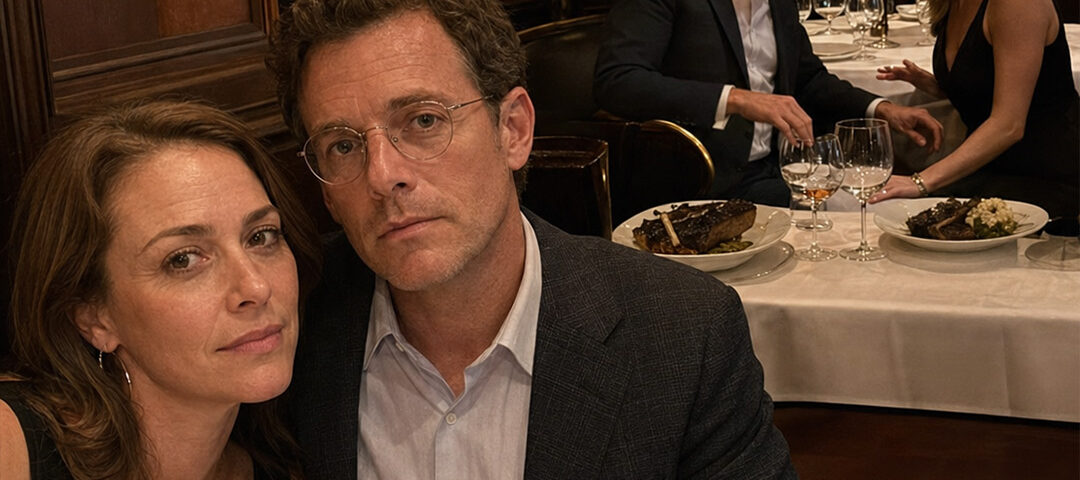
My husband thought he was walking into a romantic dinner with his mistress that night. What he didn’t know was that I had already seen the hotel receipts, the secret messages, and the reservation confirmation hidden in our shared credit card account. So, instead of confronting him at home, I quietly booked the table right beside theirs.
But I didn’t come alone. And the moment my husband walked into that Chicago restaurant holding another woman’s hand, both of them froze in horror when they saw who was sitting across from me. The first thing my husband did when he walked into the restaurant was smile at her.
Not at me, at the woman whose hand he was holding. Then his eyes moved across the room, landed on my table, and the color drained from his face so fast it almost looked painful. Beside him, the woman froze too, her fingers slipping from his hand as if she had touched fire.
Because the man sitting across from me was not a stranger. He was her husband. And for one long silent moment inside that elegant downtown Chicago steakhouse, the four of us simply stared at each other while the piano player kept performing as if nothing in the world had just shattered.
Three weeks earlier, I still believed my marriage was tired, not broken.
My name is Claire Bennett, and at 38 years old, I had spent almost half my life married to Ethan Bennett. We lived in Naperville, Illinois, in a two-story colonial house with white shutters, an overwatered lawn, and a mortgage that still had 12 years left on it. We had a 16-year-old daughter named Lily, two aging parents between us who constantly needed help with appointments and prescriptions, and careers that had slowly transformed us into people who discussed grocery lists more often than dreams.
From the outside, our life looked stable, respectable, American in the most ordinary sense. And maybe that was part of the problem. Nothing dramatic had happened between Ethan and me at first.
No screaming fights, no slammed doors, no obvious cruelty. Affairs in movies always seem to begin with chaos, but real betrayal, the kind that destroys your life quietly often begins with silence. Tiny silences, heavy silences.
Silences that slowly replace intimacy until two people become efficient roommates sharing bills and responsibilities. Ethan worked as a regional sales director for a medical supply company based outside Chicago. And for years, his schedule had been predictable enough that I could almost set my watch by it.
Then sometime around the previous winter, things shifted. More client dinners, more last minute travel, more evenings where he came home smelling faintly of expensive cologne he never used to wear. At first, I blamed stress.
Middle-aged men reinvent themselves all the time. New gym memberships, better haircuts, watches they suddenly cannot afford but buy. Anyway, I told myself he was anxious about getting older, about work, about life.
But the truth was much uglier than that. And deep down, I think part of me already knew.
The night everything changed began with something painfully small. Ethan had come home late on a Thursday evening, exhausted and distracted, loosening his tie while talking about a hospital contract his company was trying to secure in Milwaukee. Lily was upstairs studying for a chemistry exam and I was cleaning the kitchen when Ethan disappeared into our bathroom to shower.
Then his Apple Watch lit up on the counter beside me. I did not mean to look. That is the part people never understand afterward.
How betrayal rarely begins with suspicion. It begins with accident, with one glance, one moment that cannot be undone.
The message appeared across the screen. Can’t wait for tomorrow night. I remember staring at the tiny red heart as if my brain could not process what it meant.
My hands became cold first, then numb. And suddenly, the kitchen around me felt strangely distant, as though I were standing underwater watching someone else’s life collapse. Ethan had never used heart emojis with me.
Not even when we were dating. I picked up the watch before I could stop myself. Another message appeared.
I booked the corner table. Wear that black dress I like. My knees nearly gave out.
For a few seconds, I honestly thought I might throw up right there beside the dishwasher. Then the shower shut off upstairs and something inside me changed. Not rage, not yet.
Something colder. I placed the watch exactly where I found it and continued wiping the kitchen counter while my husband walked downstairs in sweatpants, kissed the top of my head absent-mindedly, and opened the refrigerator as if he had not just detonated 14 years of marriage with two text messages. “You okay?” he asked.
I looked at him carefully, and what frightened me most was how normal he seemed. That was the moment I understood something devastating about infidelity. People do not become monsters overnight.
They become experts at compartmentalizing. Ethan could betray me and still ask if I wanted takeout. He could lie to my face and still remind Lily about her homework.
The cruelty was hidden inside the normalcy. “I’m fine,” I said quietly. And for the first time in my life, I lied to my husband as smoothly as he lied to me.
I barely slept that night. Ethan snored softly beside me while I stared into darkness, replaying every strange moment from the previous year, every canceled dinner, every distracted conversation, every sudden business trip that now felt contaminated with new meaning. By morning, grief had already begun turning into investigation.
I worked in human resources for a midsized logistics company downtown, which meant I had spent years dealing with dishonesty professionally. People always thought lies were complicated, but most lies were careless. Emotional people make mistakes, and cheating people make many.
Ethan left for work at 7:30. At 8:15, I opened our shared credit card account online. The first thing I noticed was the hotel charges.
Not one, five different dates over three months, all from boutique hotels in downtown Chicago and Evanston. Then came restaurant receipts, wine bars, steakhouses, expensive rooftop lounges, places Ethan never took me anymore because they were supposedly too overpriced. My stomach tightened harder with every click.
Then I found the reservation confirmation. Friday, 7:30 p.m. Hawthorne Steakhouse. Table for two.
I kept reading until my eyes landed on the second detail. Reservation guest preference quiet corner booth. Underneath it was the name attached to the booking confirmation.
Sophia Carter.
I wrote it down on a sticky note and sat motionless at the kitchen table for almost 10 minutes while the refrigerator hummed softly behind me. Part of me still wanted an explanation that would make this less terrible. Maybe a coworker.
Maybe flirtation that had not become physical yet. But instinct already knew the truth. I searched her name online during my lunch break.
Sophia Carter was 34 years old, a real estate consultant from Oakbrook, blonde, elegant, beautiful in a polished suburban way that made me suddenly aware of every line forming around my own eyes. And she was married. Her Facebook profile picture showed her standing beside a dark-haired man with wire-rimmed glasses, both smiling in front of Lake Michigan during sunset.
The caption read, “10 years together.” I stared at that photo for a very long time. Then I clicked through more pictures.
Anniversary dinners, Christmas mornings, vacation photos. Another ordinary American marriage. Another woman who had probably believed her life was safe.
I should have hated her immediately. But strangely, my first feeling was pity. Not for Sophia, for her husband.
Because somewhere out there was another person who had no idea his world was already burning down. That night, Ethan came home carrying Thai takeout and kissed me on the cheek while discussing weekend plans, and I realized something almost unbearable. The man I loved was already gone.
Whoever stood in my kitchen now was simply someone wearing his face.
The next morning, I sat in my office downtown pretending to review employee compliance reports while Sophia Carter’s husband stared back at me from my laptop screen. Daniel Carter, 43 years old, partner at an architectural firm in Chicago, Northwestern graduate, volunteer board member for a local housing nonprofit. No wedding ring in his professional headshot, though there was one in every personal photograph I found online.
He looked intelligent in a tired sort of way. The kind of man who probably skipped lunch to answer emails and forgot anniversaries because he genuinely believed working harder was another form of love. In other words, exactly the type of man who gets cheated on without seeing it coming.
I closed the laptop and rubbed my temples while traffic groaned outside my office window. For nearly 24 hours, I had lived inside a fog of adrenaline and disbelief. But now, a new question kept pressing against my mind.
Do I tell him?
A crueler version of myself whispered, “No.” “Why destroy another life? Why drag another stranger into this humiliation?
If Ethan wanted to blow apart our marriage, maybe I should handle my own pain privately and let the rest collapse on its own.” But every time I tried convincing myself to stay silent, I pictured Daniel smiling in those family photographs while his wife planned hotel nights with my husband behind his back. No one deserved that kind of blindness, especially not from the person sleeping beside them every night.
Around noon, I finally called. The phone rang four times before a calm male voice answered. “Daniel Carter.”
For a moment, I forgot how to breathe. “Hi,” I said quietly. “You don’t know me, and I’m sorry for calling you like this, but my name is Claire Bennett.” A pause. “Okay, my husband works with your wife.” Silence settled heavily between us. Not suspicious silence, careful silence.
Then he said, “What is this about?” I looked down at the printed hotel receipt sitting beside my keyboard. I think I said slowly, “Our spouses are having an affair.” Nothing happened for several seconds, no shouting, no immediate denial, just absolute stillness. Then Daniel exhaled once sharply as if someone had punched him in the chest.
“You have proof?” he asked. The professionalism in his voice nearly broke me. Yes.
Another long silence followed. When he finally spoke again, his voice sounded lower, somehow hollowed out from the inside. “How long?” I don’t know exactly.
At least three months. I heard movement in the background, then the click of a door shutting. He was looking for privacy.
“Can you send me what you have?”
I hesitated. “I’m not trying to hurt you.”
Daniel laughed softly then, but there was no humor in it. “I think that already happened.” We agreed to meet the following evening at a coffee shop near Millennium Park.
After hanging up, I sat frozen at my desk while office conversations drifted faintly through the walls around me. Somewhere nearby, two employees were laughing about fantasy football. Someone microwaved popcorn in the breakroom.
Normal life continued moving forward while mine quietly collapsed beneath it.
That evening, Ethan came home unusually cheerful. He grilled salmon on the back patio while Lily talked about a boy at school who had gotten suspended for vaping in the bathroom. And I stood there listening to them both while trying to understand how people survive this kind of emotional split, how one version of reality can exist openly while another festered underneath it like rot beneath floorboards.
Ethan touched my lower back while passing behind me in the kitchen, and I nearly flinched. “Everything okay?” he asked. There it was again, that terrifying normalcy. “I’m tired,” I answered.
He nodded sympathetically, kissed my temple and continued discussing weekend weather forecasts while secretly planning a romantic dinner with another woman. I barely looked at him during the rest of the night because every glance felt dangerous. Rage was beginning to grow now, slowly replacing shock.
But beneath the anger lived something even heavier, humiliation. Not because Ethan wanted someone else, because he believed I was too stupid to notice.
The next evening, I arrived at the coffee shop 10 minutes early and immediately recognized Daniel when he walked in. He wore a navy overcoat despite the mild spring weather, and there was something visibly strained about his expression, the face of a man who had not slept. When our eyes met, we both paused awkwardly.
How do two strangers introduce themselves after discovering their lives are connected by betrayal? “Claire?” he asked quietly. I nodded.
Up close, he looked older than his online photos. Not old exactly, just exhausted in the particular way middle-aged people become when responsibility hardens into permanent tension. We ordered coffee, neither of us really wanted, and sat near the window overlooking Michigan Avenue.
For the first few minutes, conversation felt painfully formal. Then I handed him the folder. Inside were hotel receipts, screenshots, restaurant reservations, copies of billing statements.
Daniel studied everything carefully, saying almost nothing. At one point, his jaw tightened so hard I thought he might crack a tooth. Finally, he placed the papers down.
“She told me she was attending networking events,” he said softly. “Every single time.” I stared at my untouched coffee. “Ethan said he had client meetings.” Daniel leaned back slowly, looking out the window toward the crowded street below.
“You know the worst part?” he asked. I said nothing. “I actually thought our marriage was improving recently.” That sentence settled between us like smoke.
Then he explained Sophia had become distant almost a year earlier, critical, distracted, emotionally absent. She complained about everything, his schedule, his attention, the house, their routines. Then suddenly over the last few months, she became warmer again, more energized, more affectionate.
Affair behavior, though neither of us used the phrase aloud. She started going to the gym twice a day, he continued quietly, bought expensive dresses, changed her phone password. He gave a bitter smile.
I told myself she was rediscovering confidence. I nodded slowly because every detail sounded horribly familiar. Ethan had done the same thing.
New cologne, better suits, extra haircuts, more attention to his appearance than he had shown in years. It was astonishing how predictable cheating became once you finally saw it clearly.
For nearly two hours, Daniel and I compared timeline stories and evidence while the city darkened outside the coffee shop windows. Gradually, the awkwardness between us disappeared, replaced by something heavier but strangely comforting. Recognition.
Neither of us had imagined this. Neither of us was crazy. And maybe most importantly, neither of us was alone anymore.
At one point, Daniel rubbed both hands across his face and muttered, “I don’t even recognize my own life right now.” That sentence hit me harder than anything else he said all evening because it perfectly captured the surreal horror of betrayal. Infidelity does not simply break trust, it rewrites memory. Suddenly, every anniversary photo, every vacation, every quiet evening on the couch becomes suspect.
You start questioning entire years of your life.
When we finally stood to leave, Daniel asked the question I had been silently avoiding all night. “What do you want to do?” Outside, cold wind swept through the streets while taxis crawled beneath glowing city lights.
I thought about Ethan sitting comfortably at home, believing his secrets were safe. Then I thought about Friday night, the restaurant reservation, the corner booth, and suddenly a strange calm settled over me. “I know exactly what I want to do,” I said.
Two days later, I called Hawthorne Steakhouse and reserved the table directly beside theirs. When I told Daniel the plan, he stared at me for several seconds before slowly shaking his head in disbelief. “You’re serious?”
“Yes.”
“Claire, that could get ugly.”
I looked down at my wedding ring. “No,” I said quietly. “Ugly is lying to your spouse for months while pretending to love them.”
Friday night was coming. And if Ethan and Sophia wanted a romantic dinner together, then Daniel and I were going to give them something they would never forget for the rest of their lives.
By Friday evening, I had rehearsed a hundred different versions of the confrontation in my mind, and every single one ended differently. In some versions, Ethan begged. In others, he denied everything.
A few ended with me throwing wine in his face like women did in movies written by people who had clearly never experienced real betrayal. But deep down I already understood something important. The most devastating revenge is not chaos.
It is clarity.
That night Chicago glowed beneath cold spring rain. The sidewalks slick with reflections from traffic lights and restaurant signs. Daniel and I arrived separately at Hawthorne Steakhouse just after 7:00.
The place sat inside a renovated brick building overlooking the river. All dark wood, low lighting, and polished glass, expensive without being flashy. The kind of restaurant where businessmen ordered $100 steaks while pretending they were not checking stock prices under the table.
The hostess greeted me warmly, unaware she was escorting emotional explosives into her dining room. “Right this way, Mrs. Bennett.” Hearing my married name almost made me stop walking.
Daniel was already seated when I reached the table. He stood politely as I approached his expression tense beneath the soft amber lighting. He wore a charcoal blazer over an open collar white shirt, and for the first time since meeting him, I noticed how carefully composed he looked like a man holding himself together through sheer discipline.
“You okay?” he asked quietly.
“No,” I admitted, “but I will be.”
That was the truth.
I had spent days crying in private in showers and parking lots in the silent darkness beside my sleeping husband. But strangely, the closer this confrontation came, the calmer I became. Grief had slowly hardened into resolve.
A waiter poured water into our glasses while piano music drifted softly through the restaurant. Around us, couples leaned across candlelit tables discussing vacations, promotions, childcare, retirement accounts, ordinary lives unfolding peacefully beside the wreckage of ours. For several minutes, Daniel and I barely spoke.
Not because there was nothing to say, because too much had already been said.
At exactly 7:34 p.m., the front doors opened, and there they were. Ethan entered first one hand, resting casually against Sophia’s lower back while she laughed at something he whispered into her ear. She wore a fitted black dress and gold earrings that caught the light as they walked.
And for one strange moment, I saw them not as villains, but as two people completely intoxicated by secrecy, two middle-aged adults behaving like reckless teenagers because they believed they had escaped consequence. Then Ethan looked up. Everything changed instantly.
His body physically jerked to a stop. Sophia followed his gaze toward our table and the smile vanished from her face so abruptly it almost looked erased. The silence that followed felt enormous.

Daniel slowly stood first. Not aggressively, just calmly. Sophia’s lips parted slightly as recognition hit her.
“Oh my god,” she whispered. Ethan looked like someone had drained blood directly from his body. His face turned pale beneath the restaurant lighting, and for the first time in 14 years, I saw genuine fear in my husband’s eyes.
Not guilt, fear. The hostess beside them glanced back and forth between all four of us, instantly sensing disaster. “Sir,” she asked nervously.
Ethan ignored her completely. “Claire,” he said hoarsely. I folded my napkin carefully onto the table. “You should sit down,” I said calmly.
“You already reserved the table.” Nearby conversations began fading as people noticed tension spreading through the room. Not openly staring yet, Americans usually pretend not to notice public conflict, but listening quietly while avoiding eye contact.
Sophia looked at Daniel as if searching desperately for an explanation that did not exist. “How long have you known?” she asked.
Daniel gave a small, humorless laugh. “Long enough.” Ethan finally found his voice.
“This isn’t what it looks like.” The absurdity of that sentence nearly made me smile. After hotel rooms, after months of lies, after walking into a romantic steakhouse holding another woman’s hand, still instinct pushed him toward denial.
I leaned back slowly in my chair. “Then what exactly does it look like, Ethan?” He opened his mouth, but said nothing because there was nothing left to invent. Sophia sat down first, trembling visibly now.
Daniel remained standing another moment before lowering himself carefully into the chair across from her, and the sight of them facing each other felt strangely intimate. In the saddest possible way, two spouses staring across a grave neither of them had chosen. Ethan still had not sat down.
“Claire,” he said quietly. “Can we talk privately?”
“No.” One word, cold and final.
For the first time all night, anger flashed across his face. “You’re making a scene.” That sentence nearly shattered something inside me.
Not because it was cruel, because it was so deeply unfair. I stared at the man I had loved for 14 years and realized he still viewed himself as the victim here, embarrassed, cornered, inconvenienced by exposure. Not devastated by what he had done.
“You made the scene,” I said softly. “I just bought tickets.” Daniel looked down briefly, covering his mouth to hide what might have been disbelief. Sophia suddenly began crying.
Not dramatic sobbing. Quiet tears sliding down carefully applied makeup while diners nearby pretended not to notice. “I never wanted this to happen,” she whispered. Daniel looked at her for several long seconds before speaking.
“Then why did it?” She had no answer. “Because affairs survive on fantasy, and fantasy collapses under direct questions.” Ethan finally sat down heavily beside her. “This marriage hasn’t been good for a long time,” he muttered.
There it was, the rewriting of history. The same marriage he had smiled through at neighborhood barbecues. The same marriage he praised during Christmas dinners.
The same marriage he still benefited from every single day while secretly dismantling it behind my back. I reached into my purse calmly and placed several folded papers onto the table. Hotel receipts, restaurant charges, reservation confirmations. Every lie reduced to ink and numbers.
Ethan stared at them silently. Then, incredibly, he became angry. “You went through my private information.” I actually laughed then once sharply because the audacity was almost breathtaking.
“Your private information,” I repeated quietly. “You used our joint credit card to cheat on me.” Several heads turned nearby now.
The restaurant had grown noticeably quieter around us. Daniel picked up one of the receipts slowly. “This was our anniversary weekend,” he said to Sophia, his voice suddenly unsteady.
“You told me you were visiting your sister.” Sophia covered her face with both hands. Ethan rubbed his jaw aggressively trapped between shame and defensiveness. “We didn’t mean for this to happen.” That sentence finally broke something open inside me.
Not rage, heartbreak. Real devastating heartbreak. Because after all the lies, after all the sneaking around, after all the destruction, he still spoke about their affair like bad weather.
Like something that simply happened to him instead of choices he made repeatedly. I looked directly at him. “I spent 14 years building a life with you,” I said quietly, my throat tightening. “While you spent our money on hotel rooms.” The words landed hard. Ethan’s eyes dropped instantly.
And for the first time that evening, he had nothing to say. Not because he was sorry enough, because the truth finally sounded ugly when spoken aloud. A waiter approached cautiously, then clearly terrified.
“Is everything all right here?” I looked up at the poor man standing beside emotional nuclear fallout and almost felt sorry for him. “Yes,” I said calmly. “We’re finished.” Then I stood.
Daniel looked at me in surprise. “So soon?” he asked softly. I picked up my purse.
There’s nothing left to hear. And there really wasn’t. No explanation could rebuild trust once respect disappeared.
No apology could erase months of deception. I looked at Ethan one last time. The man sitting there no longer resembled my husband.
Just someone who had mistaken loyalty for weakness. Then I walked away from the table through the silent restaurant and out into the cold Chicago rain while my entire old life collapsed quietly behind me. For the first time in months, I could finally breathe again.
People imagine revenge as a single moment. A confrontation, a confession, a public collapse dramatic enough to balance the pain. But real revenge, the kind that lingers, unfolds slowly afterward inside the ordinary consequences, people never think about when they are busy chasing excitement.
Because once the adrenaline fades, life still has to continue. Bills still arrive, teenagers still need rides to school, mortgages still have due dates, and eventually the fantasy that justified betrayal begins rotting beneath the weight of reality.
The morning after the restaurant confrontation, Ethan slept in our guest room for the first time in 14 years. Neither of us had suggested it. He simply carried a pillow downstairs around midnight while I stood in our bedroom pretending to fold laundry, and the quiet humiliation of that moment hurt more than screaming ever could.
Lily noticed immediately. Children always do. At 16, she was old enough to recognize tension, but still young enough to hope adults could fix everything if they just talked honestly enough.
That Saturday morning, she watched Ethan drink coffee silently at the kitchen island while I loaded the dishwasher without speaking, and confusion slowly tightened across her face. “What’s going on?” she finally asked. Neither of us answered right away.
Ethan looked at me cautiously, silently, asking permission to lie. That hurt almost as much as the affair itself. Even now, his instinct was still concealment.
I dried my hands carefully on a kitchen towel before looking at my daughter. “Your father and I are having serious problems,” I said gently. Lily’s eyes moved between us.
“Like divorce problems.” Ethan flinched visibly. “I noticed because I had spent 14 years noticing everything about him.”
“Yes,” I said quietly. The room became painfully still. Lily stared at her father for several seconds, and I could almost see realization beginning to form behind her eyes, not full understanding yet, but enough to sense blame drifting toward the person who looked guiltiest.
“Did somebody cheat?” she asked suddenly.
Ethan inhaled sharply. I closed my eyes for one brief moment because children often arrive at truth faster than adults.
“Lily,” Ethan said carefully, “this is complicated.”
“No,” she replied softly. “It isn’t.”
Then she looked directly at him. Somehow, before either of us confirmed anything, she already knew.
Teenagers spend their lives studying emotional weather. They know who avoids eye contact, who sounds rehearsed, who suddenly becomes defensive. Lily pushed her chair back slowly and left the kitchen without another word.
A few seconds later, we heard her bedroom door close upstairs. Ethan buried his face in both hands. “I never wanted to hurt her.”
I stared at him across the kitchen island, exhausted beyond anger now. “That stopped being true the second you started the affair.” He looked up sharply.
“It wasn’t supposed to become serious.” There it was again.
It was the language of people who mistake intention for innocence, as though betrayal becomes smaller if the original plan was temporary. I walked past him quietly and went upstairs before the conversation could become uglier.
Because somewhere beneath all my rage still lived grief, not only for my marriage, but for the man I once believed Ethan was.
Over the next several weeks, our house transformed into a polite war zone. Ethan tried repeatedly to speak with me alone, usually late at night after Lily went upstairs. Sometimes he apologized sincerely.
Sometimes he became defensive. Sometimes he blamed stress, distance, middle-age, loneliness, every explanation except the simplest one. He made selfish choices because he believed he could escape consequences.
But consequences had arrived now and they were larger than he expected.
Three weeks after the restaurant incident, I officially contacted a divorce attorney. That was the moment Ethan truly panicked. Until then, part of him still believed our marriage would survive through routine alone, that enough apologies, enough tears, enough promises would eventually return life to normal.
Men like Ethan often mistake stability for unconditional forgiveness because they have spent years benefiting from emotional labor they barely notice. The lawyer’s office changed everything.
Reality suddenly became financial, legal, permanent. We sat across from each other in a conference room discussing retirement accounts, home equity, shared investments, insurance policies, and custody arrangements, while a woman in a Navy suit calmly explained Illinois divorce procedures as if dismantling 14 years of marriage were merely administrative.
In some ways, it was. That was the horrifying part. A life can end quietly on paper.
Outside the legal process, the social consequences spread faster than either Ethan or Sophia anticipated. Affairs thrive inside secrecy, but once exposed, they become deeply unromantic very quickly. Mutual friends began choosing distance.
Neighborhood invitations stopped arriving. Several couples who once adored Ethan suddenly treated him carefully the way people handle someone contagious. Because infidelity frightens happily married people.
It forces them to confront uncomfortable truths about trust, loyalty, and how little control any of us truly have over another person’s choices. At work, Ethan’s performance declined noticeably. He missed deadlines, lost focus during meetings.
One afternoon, he forgot an important client presentation, entirely something so unlike him, that his supervisor quietly asked if he needed personal leave.
Meanwhile, Sophia and Daniel separated within two months. I knew because Daniel and I remained in contact, not obsessively, not romantically, but steadily. There is a strange intimacy between people who survive the same disaster together.
We understood each other without explanation. One evening, Daniel called while I sat alone on my back patio after Lily went to a friend’s house.
“She moved into an apartment downtown,” he said quietly. I leaned back in my chair, listening to distant lawnmowers humming somewhere across the neighborhood.
“How are you holding up?”
Daniel laughed softly. “Depends on the hour.” That answer felt painfully honest.
For a while, Ethan and Sophia attempted to continue seeing each other openly, but reality poisoned whatever fantasy had existed between them. Affairs often survive because they are carefully edited versions of life: hotel rooms, excitement, escape, validation.
No bills, no routine, no consequences. Once those consequences arrive, people finally meet each other honestly, and often they do not like what they find.
Sophia apparently became resentful almost immediately. Ethan, according to Daniel, grew possessive and insecure now that secrecy was gone. The same relationship that once felt thrilling suddenly carried the weight of public judgment and broken families.
Nothing kills fantasy faster than daylight.
The hardest part for me was Lily. She withdrew emotionally after learning the truth, speaking to Ethan only when necessary. One night, I overheard them arguing softly in the kitchen after she returned from school.
“You lied to mom for months,” she said. “I made mistakes.” “No,” Lily replied coldly.
“You made choices.”
I stood frozen upstairs listening. Then came the sentence that finally broke Ethan completely.
“Mom cried alone for months,” Lily whispered. “And you still chose her anyway.” The silence afterward lasted a very long time.
Later that night, Ethan sat alone on the back porch in darkness while rain drifted across the yard. And for the first time since discovering the affair, I almost pitied him. Almost.
Because remorse looks very different once consequences become personal.
Meanwhile, something unexpected began happening to me. I slowly started returning to myself. Not dramatically, not all at once.
But little by little, the fog lifted. I restarted therapy, began painting again for the first time in years, reconnected with old friends I had neglected during marriage and motherhood. Small things at first, coffee dates, bookstore visits, long walks downtown after work.
And gradually, I realized something unsettling. I had spent so many years managing everyone else’s emotional needs that I no longer remembered who I was outside of being someone’s wife. Betrayal did not simply destroy my marriage.
It exposed how much of myself I had quietly abandoned to preserve it.
One evening, Daniel and I met for dinner near the river after finalizing another painful round of legal paperwork. Halfway through the meal, he looked at me carefully and said something I never forgot. “You know,” he said, “I think they expected us to fall apart.” I looked out at the dark Chicago water beyond the windows.
They underestimated us, and maybe that became the real revenge in the end. Not humiliation, not destruction, survival.
One year after the night at Hawthorne Steakhouse, I stood barefoot in my new condo, watching snow drift across downtown Chicago while jazz music played softly from a speaker near the kitchen window. The silence no longer frightened me. That was the first thing I noticed about healing.
In the beginning, silence feels unbearable because it leaves you alone with grief, with memory, with all the questions betrayal creates. But eventually, if you survive long enough, silence becomes peace again. My condo was smaller than the house Ethan and I once shared, but it felt lighter somehow, cleaner, honest.
There were no family portraits hanging on walls beside hidden lies. No rooms carrying the weight of performance, just bookshelves, soft lighting, unfinished paintings leaning against corners, and a life that finally belonged entirely to me.
Divorce had finalized three months earlier. The process itself had been exhausting in exactly the way all American divorces are exhausting: endless paperwork, financial negotiations, custody schedules, retirement accounts divided down to percentages. In the end, Ethan kept the house because Lily wanted to finish high school without changing districts, and I let it happen because fighting over square footage no longer seemed worth the emotional cost.
By then, I had learned something difficult but necessary. Not every battle deserves your remaining energy. Lily split her time between us, though emotionally she remained closer to me.
Her relationship with Ethan improved slowly over the year, but trust once broken inside a child never fully repairs in the same shape. Some wounds mature instead of healing. Still, Ethan tried.
I will give him that. He attended therapy consistently after the divorce, stopped drinking as heavily as he had during the collapse of our marriage, became more present with Lily, more honest, or at least less dishonest. Pain changes people eventually, especially when they can no longer outrun themselves.
As for Sophia, she disappeared from Ethan’s life six months after our confrontation. Ironically, the affair collapsed for the exact reasons most affairs collapse once exposed reality. Without secrecy, stolen excitement, and fantasy, they were simply two deeply flawed people standing inside the wreckage they created together.
Daniel told me she moved to Seattle for work. We never discussed her much after that. Some stories do not deserve permanent space in your life.
That Saturday morning, while snow covered the city outside my windows, my phone buzzed unexpectedly across the kitchen counter. Ethan. I stared at the screen for several seconds before answering.
“Hello.”
His voice sounded cautious. “Can we meet?”
I closed my eyes briefly. “For what?”
“To talk, please.”
There was a time hearing desperation in his voice would have devastated me. Now it mostly made me tired. Still, after a long pause, I agreed.
We met the following afternoon at a quiet cafe near Lincoln Park. The place smelled like espresso and cinnamon crowded with students pretending to study while couples huddled beside fogged windows escaping the cold. Ethan looked older than I remembered.
Not dramatically older, just worn down around the edges. Regret ages people in subtle ways. When I sat down across from him, he gave a nervous half smile before wrapping both hands around his coffee cup.
“Thank you for coming.”
I nodded politely. For a few moments, neither of us spoke. Then Ethan finally exhaled heavily and looked directly at me.
“I ruined my life,” he said. The sentence hung quietly between us. A year earlier, hearing those words might have satisfied something angry inside me.
Now they mostly felt sad. “You ruined a lot of lives,” I corrected gently. He lowered his eyes.
“I know.” And strangely enough, I believed he finally did know. Not because he got caught, because he had lived long enough afterward to understand the full cost.
Affairs feel exciting in fragments. Secret messages, hotel rooms, validation, escape from routine. But eventually, fragments become consequences.
Real life returns demanding payment, and payment always comes. Ethan rubbed his jaw slowly before speaking again. “I kept trying to figure out why I did it,” he admitted.
“At first, I blamed our marriage, then work stress, then getting older. But honestly…” He shook his head bitterly. “I think I just liked feeling wanted again.”
There it was. The truth. Small, human, pathetic.
Not some grand tragic romance. Just selfishness mixed with insecurity. “I never stopped loving you,” he added quietly.
I studied him carefully across the table. For years, that sentence would have meant everything to me. Now I understood love differently.
“You stopped respecting me,” I said calmly. “And eventually that matters more.” His expression tightened painfully.
Outside, snow drifted past the cafe windows while traffic crawled through slush-covered streets. Around us, strangers continued their ordinary lives completely unaware that an entire marriage was being autopsied quietly beside them.
“I thought we had time,” Ethan whispered.
I frowned slightly. “For what?”
“To fix things later. To stop before it got too serious. To…” He laughed once at himself. “I don’t know. I think part of me honestly believed I could keep both lives separate forever.”
That statement felt important somehow because it revealed the central delusion behind most betrayals.
People imagine consequences as distant abstractions until suddenly those consequences are sitting across from them signing divorce papers. Ethan looked at me again, eyes reddening slightly. “You didn’t lose me the night you found out,” I said softly.
“You lost me the moment you stopped valuing the life we built together.” He closed his eyes, and for the first time since all of this began, I saw genuine understanding settle across his face.
Not defensive shame, not panic, not self-pity. Understanding the kind that arrives too late to save anything. We spoke another 20 minutes after that, mostly about Lily’s schedules, practical things.
Then eventually the conversation ended naturally because there was nowhere else for it to go. Outside the cafe, snowflakes melted against my coat as we stood awkwardly on the sidewalk.
Ethan looked at me carefully. “I really am sorry, Claire.” I nodded once. “I know.” And surprisingly, I meant that, too.
Forgiveness, I discovered, is not the same thing as reconciliation. Sometimes forgiveness simply means refusing to carry someone else’s ugliness inside you forever. Ethan walked away first, disappearing slowly into the crowded winter street, and I realized I felt nothing close to hatred anymore.
Only distance, a peaceful kind of distance.
That evening, I attended a small art exhibit hosted by a local gallery where several amateur painters, including me, were displaying work. I nearly dropped my wine glass when I spotted Daniel standing near the back wall studying one of my paintings quietly. “You came,” I said, smiling despite myself. He turned, returning the smile warmly. “Wouldn’t miss it.” For a moment, we simply stood there together beneath soft gallery lights while people drifted around us discussing art and winter weather.
No dramatic declarations, no rushed romance, just two people who had survived something painful and somehow remained kind afterward. Daniel glanced toward my painting again. “You look lighter these days,” he said softly.
I thought about that for a moment. Then I smiled. “I am.” Because revenge had not healed me.
Exposure had not healed me. Watching Ethan suffer had not healed me. The truth healed me.
The truth set me free from a life built partly on illusion and walking away with my dignity intact became the only victory that truly mattered in the end.