On Mother’s Day morning, Helen Whitaker stood in her kitchen in Arlington, Virginia, watching the sunlight move across the marble counters she had paid for herself, inside the house she had nearly lost twice while raising three children on her own.
The house was quiet in the way only a house can be quiet after decades of being used too hard.
There were no sneakers by the back door anymore. No half-finished cereal bowls on the counter. No backpacks thrown over chairs. No one yelling from upstairs that they could not find a uniform, a permission slip, a phone charger, a shoe, a life.
Only morning light.
Only the low hum of the refrigerator.
Only Helen, sixty-two years old, standing barefoot on the cool tile, stirring cream into a cup of coffee she actually had time to drink while it was hot.
Her phone buzzed.
It was a group text from her oldest son, Brian.
Brian: Mom, we picked the restaurant. Sterling & Vine at 1:00. You’re covering all twelve of us, like always.
Helen stared at the screen.
Not asked.
Not suggested.
Not, Mom, what would you like to do for Mother’s Day?
Picked.
Covering.
Like always.
A moment later, her daughter Madison added:
Madison: Don’t be late. They charge if the whole party isn’t seated.
Then her youngest, Kevin, wrote:
Kevin: Happy Mother’s Day
Helen looked at the messages for a long time.
Twelve people. Her three grown children, their spouses, and six grandchildren. Sterling & Vine was not some simple brunch spot. It was the kind of restaurant where a glass of orange juice cost fourteen dollars and the waiter talked about butter as though it had earned a degree.
She had been there once before, on Brian’s birthday, when he ordered a dry-aged ribeye “for the table” and then forgot his wallet with such casual confidence that Helen understood he had never intended to remember it.
Sterling & Vine sat in a renovated brick building with brass fixtures, velvet chairs, exposed beams, and little white cards on the table explaining which local farm had suffered the honor of producing the eggs. The food was good. The service was quiet. The bills were insulting.
For fifteen years, Helen had paid for every birthday dinner, every holiday meal, every “quick family brunch” that somehow turned into a three-hour feast. She had bought school clothes, helped with down payments, covered emergency rent, paid for Madison’s divorce attorney, Kevin’s car repair, and Brian’s “temporary business loan” that had never found its way back to her.
And every Mother’s Day followed the same pattern.
They chose the restaurant.
They ordered whatever they wanted.
They let the children ask for dessert.
They hugged her afterward and said, “Thanks, Mom.”
Then one of them would add, with a laugh that was not quite a joke, “You know we’d be lost without you.”
For years, Helen had taken that as love.
Now, standing in her silent kitchen with her phone in her hand, she realized something colder.
Sometimes when people say they would be lost without you, what they mean is that they have never bothered to learn the way.
This year, she had made different plans.
Her suitcase was already sitting near the front door. Navy blue. Small enough to fit in the overhead compartment. Inside were linen dresses, walking shoes, a new journal, a travel-size bottle of perfume she had bought without asking whether anyone needed anything else first, and a ticket confirmation for a flight from Dulles to Rome, leaving at 2:40 p.m.
The ticket had been booked for six months.
Helen had bought it on a Wednesday night in November after standing in line at a grocery store behind a woman about her age who was FaceTiming from Florence. The woman had turned her phone toward a glowing Italian street and said to someone on the other end, “I can’t believe I waited this long.”
Helen had gone home, opened her laptop, stared at flight prices until midnight, then purchased one ticket before fear could talk her out of it.
One ticket.
Not three.
Not twelve.
Not one with a flexible return date in case Brian needed childcare, Madison had an emergency, or Kevin’s car made another “weird sound.”
Just Helen Whitaker.
Dulles to Rome.
Seat 4A.
For weeks, she had told no one.
At first, secrecy felt childish.
Then it felt necessary.
Her children had a way of turning her plans into family negotiations. If she mentioned taking a trip, Brian would mention tuition payments. Madison would say the timing was inconvenient. Kevin would ask whether she could delay until after he figured out his truck. Someone would remind her that international travel was expensive, as if every meal they had ever charged to her retirement account had been a moral investment.
So Helen kept Rome to herself.
She packed slowly over several evenings. She bought compression socks. She watched videos about airport transfers. She practiced saying buon giorno softly in the bathroom mirror and laughed at herself when it sounded wrong.
That morning, with the suitcase ready and the car scheduled, she finally told them.
Helen typed one sentence.
Helen: Then enjoy it, because I’m spending today on a flight to Italy.
For thirty seconds, no one responded.
Then Brian sent:
Brian: Very funny.
Madison followed:
Madison: Mom, don’t start drama today.
Kevin wrote:
Kevin: You’re not going to Italy. You don’t even like long flights.
Helen smiled faintly.
That was the first mistake they always made.
They assumed knowing the old version of her meant they owned the current one.
She slipped her passport into her purse, checked that the stove was off, turned the thermostat down, and ordered a car.
Before she left, she paused in the hallway.
On the small console table beside the door sat a framed photograph of Daniel, her late husband, holding all three children on a windy beach vacation in North Carolina. Brian had been twelve, already bossy. Madison was nine, missing two teeth and dramatic as a stage actress. Kevin was five, sandy, sunburned, and clinging to Daniel’s neck.
Daniel had been laughing in the photo.
He had always laughed with his whole face.
Helen touched the frame with one finger.
“I’m going,” she whispered.
There was no answer, of course.
Daniel had been dead for fourteen years.
But sometimes grief leaves behind a room where permission can still be imagined.
At 12:54, while her children sat beneath the restaurant skylight, laughing over mimosas, Helen was at Dulles International Airport, moving calmly through security with her boarding pass in hand.
She had expected to feel guilty by then.
That was what had surprised her most.
Guilt had always been her body’s first language. It arrived before thought. It tightened her chest when she said no. It made her apologize for needing rest. It made her write checks and then reassure the person cashing them that of course, of course, it was fine.
But at the airport, with her shoes back on and her laptop tucked into her tote, guilt did not come.
Instead, she felt exposed.
Like she had stepped out from under an old family roof and discovered the sky was much bigger than she remembered.
At 1:37, Brian called.
She let it ring.
At 1:52, Madison called twice.
Helen declined both calls.
At 2:11, Kevin sent a picture of the restaurant table loaded with lobster Benedict, steak, champagne, pancakes for the children, and three untouched salads nobody had actually wanted.
Kevin: Okay, joke’s over. Where are you?
Helen looked through the airport window at the plane waiting outside.
A white jet. Blue tail. Workers in reflective vests moving beneath it. Suitcases rolling up the belt into the belly of something that would soon carry her across an ocean she had only ever crossed in dreams.
Then she typed:
Helen: Gate C18. Boarding now.
She watched the dots appear.
Then vanish.
Then appear again.
Nobody knew what to say to a mother who had already left.
At 2:26, while Helen settled into seat 4A, the waiter at Sterling & Vine placed a black leather folder beside Brian’s elbow.
Inside was the bill.
$1,486.72.
Brian Whitaker opened the bill first because he always opened bills he assumed someone else would pay. He glanced down with the casual expression of a man checking the weather, then went completely still.
His wife, Lauren, leaned closer.
“How much?”
Brian shut the folder too quickly.
“It’s wrong.”
Madison reached across the table and snatched it from him. Her bracelets clicked against her champagne flute.
“What do you mean wrong?” she asked.
Then she saw the total.
Her mouth opened, but no words came out.
Kevin, still chewing a piece of maple-glazed bacon, laughed.
“Come on. It can’t be that bad.”
Madison turned the folder toward him.
Kevin stopped chewing.
Around them, the restaurant stayed soft and elegant. Forks rang lightly against plates. A violin version of an old pop song floated from hidden speakers. Their six children were restless, sticky-fingered, and asking about dessert.
The waiter, a slim man named Tomas, stood patiently beside the table.
He had served enough holiday brunches to recognize a family ritual cracking in real time.
There was always one person who reached for the check without being asked.
At this table, that person was missing.
“Will there be one card,” Tomas asked politely, “or would you prefer to split it?”
Brian cleared his throat.
“Our mother is joining us.”
Tomas looked toward the empty thirteenth chair.
“Of course, sir. Would you like me to give you more time?”
“She’s on her way,” Madison said sharply.
Kevin looked down at his phone. Helen had sent nothing after the gate message.
Brian called her again.
Straight to voicemail.
Madison tried.
Voicemail.
Kevin sent three question marks.
No reply.
Lauren folded her arms.
“Brian, did your mother actually go to Italy?”
“She wouldn’t,” Brian said.
But there was no confidence in his voice.
Madison’s husband, Eric, muttered, “Maybe someone should have checked before ordering two seafood towers.”
Madison snapped, “Don’t start.”
“Don’t start?” Eric repeated, lowering his voice. “Madison, you told me your mom wanted to treat everyone.”
“She always does.”
“That is not the same thing.”
Kevin’s wife, Amber, pushed her mimosa away.
“This is embarrassing.”
Brian’s oldest daughter, fourteen-year-old Chloe, glanced up from her phone.
“Grandma posted on Instagram.”
Every adult at the table turned.
Chloe held up the screen.
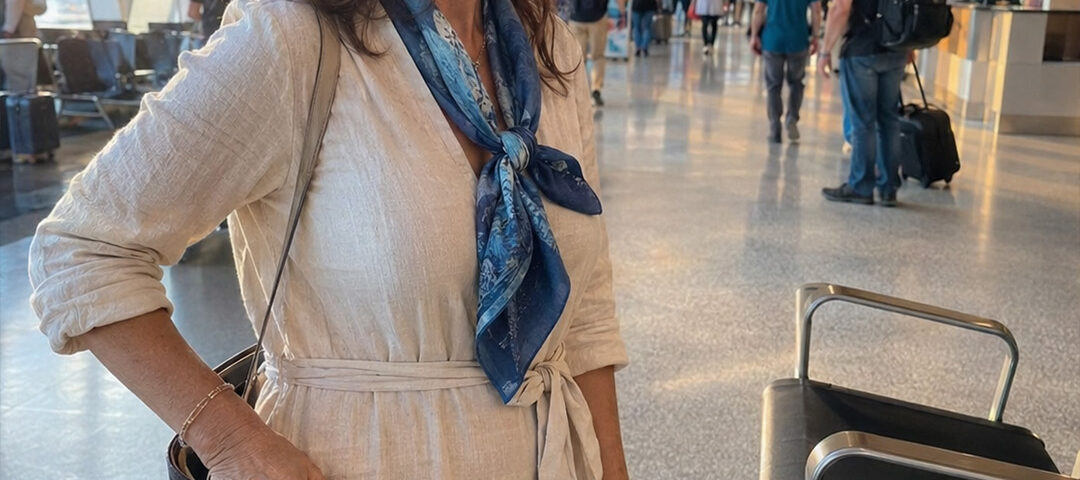
There was Helen, standing beside an airport window, wearing sunglasses and a cream-colored scarf, smiling in a way none of them had seen for years. Behind her, a plane waited beneath a bright blue sky.
The caption read:
First Mother’s Day gift to myself. Rome tonight.
No one said a word.
For a strange second, the entire table seemed to tilt.
Their mother was not late.
Their mother was not bluffing.
Their mother was not parking the car, not stuck in traffic, not waiting outside to make an entrance, not sitting at home feeling guilty enough to change her mind.
Their mother was in an airport.
Their mother was smiling.
Their mother had left the bill behind.
Tomas returned with the same professional smile.
“Are we ready?”
Brian stared at the bill as if it might shrink if he looked hard enough.
Madison whispered, “Put it on your card.”
“My card?” Brian barked.
“You make the most money.”
“I have three kids!”
Kevin said, “I can cover two hundred.”
Madison glared at him.
“Two hundred? You ordered the tomahawk steak.”
“It said brunch special!”
“It was eighty-six dollars!”
“It came with eggs!”
“It came with a bone, Kevin!”
Nearby tables began to glance over.
At Sterling & Vine, people did not stare openly. They lifted their water glasses, adjusted napkins, tilted heads slightly. The room had good manners, which meant gossip moved softly.
The grandchildren went quiet.
Lauren looked humiliated.
Eric rubbed his forehead.
Amber asked whether anyone had a card that would not decline.
That made Brian look at her.
“What is that supposed to mean?”
“It means,” Amber said, voice tight, “I remember Christmas Eve when your mother paid because your card ‘locked for security reasons.’”
“It did lock.”
“And Madison’s birthday?”
Madison snapped, “Why are we suddenly discussing everyone’s finances?”
“Because your mother is not here to make them disappear,” Eric said.
The silence after that was clean and brutal.
For years, Helen had absorbed these moments before they became visible. A hand reaching for a check. A quiet “Don’t worry about it.” A credit card slipped into the folder before the spouses had to admit they had overspent again. A mother’s smile covering the soft violence of being expected.
Now the cover was gone.
Chloe looked at her father.
“Dad,” she said quietly, “why did you tell Grandma she was paying?”
Brian’s face changed.
Not because he was ashamed yet.
Because the question came from someone whose opinion he still wanted to manage.
“I didn’t tell her,” he said. “I reminded her.”
Lauren closed her eyes.
“Brian.”
“What?”
“You hear yourself, right?”
Tomas stood with the black folder in one hand, looking at a point just above everyone’s shoulder.
Restaurant staff are professionals at becoming invisible during family collapse.
In the end, they split the bill four ways, not evenly, not gracefully, and not without consequences. Brian paid the largest share and immediately texted Helen:
Brian: That was cruel.
Madison added:
Madison: You humiliated us in public.
Kevin wrote:
Kevin: Hope Italy is worth it.
By then, Helen’s phone was on airplane mode.
High above the Atlantic, she opened the small bottle of sparkling water the flight attendant had handed her. She looked out at the darkening clouds and felt something she had not felt in a very long time.
Not guilt.
Not anger.
Relief.
The plane rose through a layer of white cloud, and Washington disappeared beneath her.
For a moment, Helen gripped the armrest.
She had never loved flying. The takeoff always made her think of surrender, the terrible trust of letting steel leave the ground. Daniel had loved it. He used to take the window seat and narrate the world below until the children begged him to stop.
“Look,” he would say. “Tiny cars. Tiny houses. Tiny problems.”
Helen almost smiled at the memory.
The flight attendant came by and asked whether she wanted wine with dinner.
Helen hesitated.
Then she said, “Yes, please.”
Red wine arrived in a small glass, nothing special, but to Helen it felt ceremonial.
She took a sip and leaned back.
Somewhere beneath her, her children were angry.
Somewhere ahead of her, Rome waited.
Somewhere inside her, an old door had finally opened.
Helen landed in Rome shortly after sunrise.
The airport was bright, busy, and unfamiliar. People moved past her in every direction, speaking Italian, English, Spanish, and languages she could not name. For one brief moment, standing near baggage claim with the warm handle of her suitcase in her palm, she felt a tiny flicker of fear.
She was sixty-two years old.
She had never traveled overseas by herself.
Her husband, Daniel, had once promised to take her to Italy when the children were grown. He had died at forty-eight from a heart attack while replacing a broken fence panel in their backyard. After that, “when the children are grown” had become a cruel little phrase. The children grew, yes, but their needs kept growing too.
Brian needed help with college.
Madison needed help with her wedding.
Kevin needed help getting back on his feet.
Then came babies, medical bills, moving expenses, new appliances, custody fights, business ideas, summer camps, and holiday presents.
Helen had told herself that mothers gave. That was simply what mothers did.
But somewhere along the way, giving had become expected, and expected had become demanded.
At the taxi stand outside the airport, Helen checked her phone.
Forty-three messages were waiting.
She did not open them.
Instead, she gave the driver the address of her hotel near Piazza Navona and watched Rome appear beyond the window. Ancient walls. Scooters slipping through traffic. Narrow streets glowing gold in the morning sun. Laundry hanging from balconies. Cafés unlocking their doors.
The taxi driver spoke enough English to point things out.
“Very old,” he said, gesturing toward a wall.
Helen laughed.
“Yes. I gathered.”
He grinned at her in the mirror.
“First time?”
“Yes.”
“Alone?”
Helen looked out the window at a woman sweeping the front of a café, at a priest waiting to cross the street, at a young man balancing flowers on a motorbike.
“Yes,” she said. “Alone.”
The driver nodded as if this made perfect sense.
“Good,” he said. “Rome is good for alone.”
By the time she arrived at the hotel, her exhaustion had shifted into a strange, clear happiness.
Her room was not ready yet, so she left her suitcase at the front desk and went walking.
She bought a cappuccino and a pastry whose name she could not pronounce. She sat at a tiny outdoor table and ate slowly, without cutting anyone else’s food, without checking whether someone needed ketchup, without reaching for the check before the waiter even brought it.
For the first time in years, no one needed anything from her.
She did not know how to sit with that at first.
Her hands kept wanting a task.
Fold napkins.
Wipe a child’s mouth.
Check a bill.
Answer a text.
Fix someone’s mistake before it became visible.
Instead, she held the tiny cup of cappuccino and watched sunlight move across the cobblestones.
A woman walked by with a dog in a red sweater.
Two men argued cheerfully near a delivery truck.
A little boy dropped a piece of bread and laughed when pigeons attacked it like a battlefield.
Life went on in a language Helen did not need to manage.
That felt like mercy.
At noon, she finally opened the family group chat.
Brian had written several messages over the last day.
Brian: You made us look like idiots.
Brian: Do you know how expensive that place was?
Brian: You could have warned us.
Brian: The kids were upset.
Brian: Call me.
Madison’s messages were no better.
Madison: I cannot believe you chose Mother’s Day to prove whatever point you’re trying to prove. The kids were confused. Everyone was uncomfortable. You ruined the day.
Madison: I hope you’re happy sitting on a plane while your family had to deal with that.
Madison: You always say family matters, then you do this?
Kevin’s were shorter.
Kevin: Seriously, Mom?
Kevin: This isn’t you.
Kevin: Amber’s mad at me now.
Helen sat on a stone bench near a fountain and read each message twice.
Then she typed:
Helen: You’re right. This isn’t the old me.
She turned off notifications.
Back in Virginia, the message landed like a spark in dry grass, but the initial shock soon turned into a long, quiet week of hard truths.
A few days after the brunch disaster, Brian was sitting in his home office, staring at his credit card app. The pending charge had finally posted. His jaw tightened when he remembered Helen’s last reply.
Lauren stood in the doorway with a laundry basket balanced on her hip.
“Maybe you should leave her alone.”
Brian looked up.
“Leave her alone? She pulled a stunt.”
Lauren’s expression hardened.
“No. She stopped letting you pull one.”
That silenced him.
Lauren had been quiet at brunch, but not because she agreed with him. She had been embarrassed, yes, but not by Helen. She had watched her husband order champagne for the table after texting his mother that she was paying. She had watched Madison complain that Helen was “being dramatic” before even knowing whether Helen was safe. She had watched Kevin joke about Grandma’s wallet in front of the children.
And she had watched her own children absorb every bit of it.
Brian looked back down at his phone.
“She’s my mother.”
Lauren shifted the laundry basket.
“Then maybe try treating her like one.”
“I do.”
“No,” Lauren said. “You treat her like insurance.”
Brian’s face flushed.
“That is not fair.”
“Isn’t it?”
He did not answer.
Lauren stepped into the room and set the laundry basket down.
“Do you know what Chloe asked me in the car on the way home?”
Brian’s shoulders stiffened.
“What?”
“She asked if Grandma only comes to family things because everyone needs her money.”
Brian looked away.
Lauren’s voice softened, but not enough to save him.
“She asked because that is what she saw.”
Across town later that week, Madison paced through her kitchen in yoga pants and bare feet, retelling the restaurant scene to her best friend on speakerphone.
“She just abandoned us there,” Madison said.
Her friend, Nora, was silent for one second too long.
Madison frowned.
“What?”
Nora sighed.
“Maddie, you picked an expensive restaurant and told your mother she was paying.”
“It was Mother’s Day.”
“Exactly.”
Madison stopped pacing.
Nora continued carefully.
“I love you, but you’ve complained for years that your mom inserts herself with money. Maybe she finally stopped.”
Madison’s face flushed.
“That’s not fair.”
“Maybe not,” Nora said. “But is it wrong?”
Madison hung up soon after, angry enough to cry and too proud to admit why.
Her husband, Eric, found her standing at the sink ten minutes later, gripping the edge of the counter.
“You okay?”
“No.”
“Do you want me to say she was wrong?”
Madison turned.
“Yes.”
Eric exhaled.
“I can’t.”
Madison’s eyes filled.
“You too?”
“I’m not against you,” he said. “But Madison, your mother paid for my daughter’s braces last year because we were short. She paid your attorney when the custody thing with Jason got ugly. She gave us money for the HVAC system. We never even made a plan to pay her back.”
“She offered.”
“Sometimes people offer because everyone in the room has learned to wait them out.”
Madison looked as if he had slapped her.
“That is cruel.”
“No,” Eric said quietly. “Cruel is choosing a restaurant you can’t afford and texting your mother that she is covering twelve people like she works for you.”
Madison sat down at the kitchen table.
For once, she had no comeback.
Kevin dealt with it differently.
He went quiet.
By the weekend, he sat in his garage with a beer sweating on the workbench beside him, looking at the old motorcycle he had been rebuilding for three years. His mother had paid for half the parts. He had never paid her back.
Amber came out and leaned against the doorframe.
“Your mom texted you?”
“Just the group.”
Amber nodded.
“You should apologize.”
Kevin gave a humorless laugh.
“For brunch?”
“For the last ten years.”
He looked at her sharply, but she did not look away.
“You think I use her?”
Amber folded her arms.
“I think you call it borrowing because it sounds less ugly.”
Kevin looked back at the motorcycle.
The garage smelled like oil, dust, and old cardboard. On the shelf above the workbench sat three unopened boxes of chrome parts Helen had bought him for Christmas two years earlier. He had asked for them casually, saying he would pay her back after tax season.
He had never paid her back.
At the time, he told himself she liked helping.
Maybe she did.
Maybe that was what made it worse.
Meanwhile, toward the end of her trip in Rome, Helen walked to the Pantheon.
She stood beneath the massive dome while sunlight poured through the oculus in a perfect white column. Tourists whispered and took photos around her, but Helen stood still with her eyes raised.
She thought of Daniel.
She thought of the twenty-two-year-old version of herself who had wanted to study art history, who had loved old buildings and handwritten letters and black coffee. She thought of the thirty-five-year-old mother packing lunches before dawn. The forty-eight-year-old widow signing insurance papers with numb fingers. The fifty-five-year-old grandmother driving across town with groceries because Brian had forgotten to shop before a snowstorm.
All of those women had been her.
But none of them had to be all of her.
Inside the Pantheon, the air felt ancient and cool. Helen stood with her hands clasped in front of her, looking up at that circle of open sky.
A hole in the roof.
A deliberate absence.
A way for light to enter.
She almost laughed at the thought.
Maybe that was what leaving had done.
Not destroyed the family.
Opened the roof.
That afternoon, she joined a small walking tour. The guide was a silver-haired Roman woman named Lucia who spoke English with warmth and precision. There were seven people in the group: two retired teachers from Oregon, a young couple from Toronto, a nurse from Chicago, and a widower from Boston named Arthur Bell.
Arthur was sixty-six, gentle in manner, and carried a folded map even though he used his phone for directions. During the tour, he noticed Helen lingering over a carved doorway longer than the others.
“First time in Rome?” he asked.
“Yes,” she said. “First time anywhere just for myself.”
Arthur smiled.
“That is a very good reason to look slowly.”
Helen liked him immediately for not making the sentence sad.
They had coffee with the others after the tour, then separated with polite goodbyes. It was nothing dramatic. No sweeping romance. No sudden rebirth. Just a pleasant conversation with a stranger who asked Helen what she liked and then actually listened to the answer.
That alone felt luxurious.
Later, in her hotel room, Helen removed her shoes and sat on the edge of the bed.
Her feet ached.
Her back hurt.
Her phone sat on the nightstand, silent because she had made it silent.
She looked around the room: cream walls, narrow bed, old wooden shutters, a tiny desk with a brass lamp, her scarf draped over a chair.
No one had asked where their socks were.
No one had opened the door without knocking.
No one had turned her rest into availability.
Helen slept for ten straight hours.
As the days stretched into two weeks, the silence from Helen allowed the reality to settle in back home. The heavy defensive texts from her children slowly began to change.
Brian wrote first, after Lauren’s words had spent days working through his pride.
Brian: Mom, I’ve been thinking. I was angry at first, but Lauren said some things I needed to hear. I’m sorry for assuming you’d pay. I’m sorry for making Mother’s Day about us.
Helen read it while sitting near the Spanish Steps.
She did not respond right away.
That was new too.
The old Helen would have rushed to reassure him.
It’s okay, honey.
Don’t worry about it.
I know you didn’t mean it.
But Brian had meant it.
Maybe not cruelly.
Maybe not consciously.
But meaning harm is not always required for harm to be real.
Madison sent a message a couple of days later.
Madison: I’m still upset about how things happened, but Eric made me realize how unfair I’ve been. I shouldn’t have spoken to you like your money was already mine. I’m sorry.
Kevin’s came last, right before Helen was set to return.
Kevin: I owe you more than an apology. Literally and otherwise. I’m making a list of what I borrowed over the years. I can’t pay it all back fast, but I’m going to start.
Helen sat on the edge of her hotel bed, reading their words in the soft yellow glow of the bedside lamp.
Part of her wanted to forgive them immediately. That old instinct rose in her chest like muscle memory. Smooth everything over. Make them comfortable. Tell them it was fine.
But it had not been fine.
So she did not lie.
Instead, she opened the leather notebook she had brought from home, the one she had bought before the trip but not yet written in. On the first page, she made three columns.
Brian.
Madison.
Kevin.
Under each name, she began listing what she could remember.
Not to punish them.
To tell herself the truth in ink.
Brian: college gap payment, first apartment deposit, wedding rehearsal dinner, business loan, emergency payroll, boys’ summer camp, Thanksgiving flights.
Madison: wedding dress balance, divorce attorney, custody filing, roof repair, car insurance, dance lessons for Lily, grocery deliveries during the move.
Kevin: truck repair, motorcycle parts, rent twice, medical deductible, furnace replacement, credit card payoff, “temporary” loan after job loss.
The list grew.
And grew.
And grew.
Helen stopped only when the page ran out.
For years, each item had seemed separate.
A little help.
A motherly gesture.
A temporary bridge.
On paper, it became something else.
A pattern.
Not of love.
Of access.
She stared at the page for a long time.
Then she wrote one message to all three.
Helen: Thank you for apologizing. I love you. I also need you to understand that things are changing. I will not be paying for family meals unless I offer. I will not be giving loans. I will not be covering emergencies that come from poor planning. I am your mother, not your bank.
She paused, then added:
Helen: When I come home, we can have dinner at my house. Potluck. Everyone brings something.
Brian stared at the message for a long time before replying.
Brian: Okay.
Madison replied with a thumbs-up, then, a minute later:
Madison: I’ll bring salad.
Kevin wrote:
Kevin: I’ll bring dessert. And a check.
Helen laughed out loud at that one, startling the woman in the next room enough that she knocked lightly on the wall.
Helen covered her mouth, still smiling.
The rest of the trip passed gently.
She visited the Vatican Museums and cried quietly inside the Sistine Chapel, not because she was sad, but because beauty sometimes finds bruises people have forgotten they carry.
She took a train to Florence for one day and bought a leather journal from a shop owner who stamped her initials inside. H.W. in gold. Helen ran her thumb over the letters and felt absurdly proud, as if someone had engraved proof that she existed outside other people’s needs.
She ate pasta with clams by a window during a thunderstorm.
She got lost twice and found streets better than the ones she had intended to take.
She bought a blue silk scarf she did not need.
Then she bought it anyway.
On Thursday evening, she saw Arthur again by accident near Piazza Navona.
He was standing under an awning, arguing gently with a paper map in the rain.
Helen stopped.
“Still trusting the map?”
He looked up and smiled.
“Trusting is a strong word.”
She laughed.
They had dinner together at a small restaurant with red-checked tablecloths and a waiter who called everyone signora or signore with theatrical seriousness. Arthur told her about his late wife, Ellen, who had loved opera and hated olives. Helen told him about Daniel, who had promised her Italy and then left without meaning to.
They did not compete in grief.
That was another luxury.
Some people tell loss like a contest. Arthur did not. He listened. He asked questions. He let Daniel be real at the table without turning him into an obstacle.
After dinner, Arthur walked her back toward her hotel through wet cobblestone streets shining under streetlights.
“I hope this is not too forward,” he said, pausing near the door, “but you seem like someone learning to belong to yourself.”
Helen looked at him.
The sentence landed so gently that it hurt.
“I think I am,” she said.
“Good,” Arthur replied. “It is never too late to be good company to oneself.”
There was no kiss.
No promise.
No sudden music swelling in the Roman night.
Just a warm goodbye and the strange comfort of being seen by someone who wanted nothing from her.
On her final night, she ate dinner alone at a small restaurant near the river. The waiter asked if she was waiting for someone.
Helen smiled and said, “No. Just me.”
He gave her the table by the window.
She ordered slowly.
Not cheaply.
Not with one eye on what everyone else wanted.
She ordered artichokes, pasta, wine, and a dessert with pistachios.
When the bill came, she reached for it without dread.
It was hers.
That made all the difference.
When she returned to Virginia, no one met her at the airport. She had not asked them to. She took a cab home, unlocked her front door, and found the house quiet and exactly as she had left it.
For one second, disappointment moved through her.
Not because she wanted balloons, flowers, or a dramatic apology in the driveway.
But because some small part of her, the mother part, the wounded part, the part that still looked for proof of being chosen, wondered whether anyone had thought to come.
Then she stepped into the kitchen.
On the marble counter sat three envelopes.
Brian.
Madison.
Kevin.
Helen stood still.
The house smelled faintly of lemon cleaner, but not the way she had left it. Someone had wiped the counters. Someone had watered the basil on the windowsill. Someone had taken the trash cans back from the curb.
She opened Brian’s envelope first.
Inside was a printed payment plan for the old business loan, signed at the bottom. Not perfect, not immediate, but real.
There was also a note.
Mom,
I have been calling what you gave me “help” because that made it easier not to look at what I kept taking. I do not know how to fix years in one letter. This is a start.
Brian
Helen sat down.
Her hands shook.
Not because the note was enough.
Because it was honest enough to begin.
Madison’s envelope held a handwritten letter. Three pages. Messy, emotional, honest. She admitted she had been angry at Helen for having money after the divorce, angry that she still needed help, angry that being grown had not felt as safe as she thought it would.
None of that excused her behavior, she wrote.
But she wanted to do better.
The last paragraph made Helen cry.
I think I kept making you pay because I was scared if you stopped paying, I would have to find out whether I could still count on you. I confused your money with your love because money was the part I could measure. I am sorry I made you prove motherhood with receipts.
Kevin’s envelope held a check for five hundred dollars and a sticky note.
First payment. Also, I fixed the loose porch railing. No charge.
Helen walked outside.
The railing was steady beneath her hand.
That was when she cried hardest.
Not because of the check.
Because Kevin had fixed something without asking to be praised, paid, rescued, or reminded.
That was new.
The following Sunday, the family came over for dinner.
No one arrived empty-handed. Brian brought roasted chicken. Lauren brought potatoes. Madison brought salad and two bottles of lemonade. Eric carried folding chairs out of the garage without being asked. Kevin brought a chocolate cake and, just as he had promised, another check folded inside a plain envelope.
The grandchildren ran around the backyard while the adults set the table.
At first, there was awkwardness. Of course there was. A family does not change shape without creaking at the joints.
Brian apologized in person, stiffly but sincerely.
He stood near the back door with his hands in his pockets, looking more like the boy who once broke a neighbor’s window and confessed before dinner than the man who had ordered champagne on his mother’s card.
“I’m sorry,” he said. “I hated paying that bill. But I hated more that Chloe saw what I’d become around you.”
Helen’s throat tightened.
“She asked me why I did it,” he continued. “I didn’t have an answer that didn’t make me sound awful.”
“Sometimes that is the beginning of a better answer,” Helen said.
Brian nodded.
Madison cried before dessert and hugged Helen so tightly that Helen had to remind her she still needed air.
“I don’t want your money,” Madison said.
Helen raised an eyebrow.
Madison laughed through tears.
“Okay, I have wanted your money. A lot. But I don’t want that to be who I am with you.”
“It will take practice,” Helen said.
“I know.”
“And discomfort.”
Madison wiped her face.
“I know that too.”
Kevin said less than the others, but after dinner, he washed every dish.
Helen found him at the sink, sleeves rolled up, scrubbing a casserole dish with unnecessary intensity.
“You do not have to punish the pan,” she said.
Kevin glanced back.
“I’m concentrating.”
“On the pan?”
“On not making a joke because I’m uncomfortable.”
Helen leaned against the counter.
“That is growth.”
He gave her a sideways smile.
“I’m trying.”
“I know.”
He looked down at the soapy water.
“I never thought of it as taking.”
“No,” Helen said. “I know.”
“That doesn’t make it better.”
“No.”
He nodded.
After a moment, he said, “I fixed the railing because Dad would’ve done it.”
Helen felt the sentence enter quietly.
Daniel.
Always present in the spaces where a decent man would have stood.
“Yes,” she said softly. “He would have.”
Kevin’s eyes reddened.
“I miss him.”
“So do I.”
They stood in the kitchen with the water running and the evening light turning gold through the window, missing the same man from different places in the same family.
When the evening was over, Brian reached for the stack of paper plates and said, “Same time next month? We can rotate houses.”
Helen looked at her children.
For years, she had mistaken being needed for being loved. Now she could feel the difference. Need grabbed. Love made room.
“We can,” she said. “And everyone pays their own way through life.”
Kevin lifted his hands.
“Understood.”
Madison smiled sheepishly.
“Understood.”
Brian nodded.
“Understood.”
That could have been the ending.
For a softer story, maybe it would have been.
But real families do not change because of one brunch bill, one Roman vacation, one potluck dinner, or one round of apologies.
They change when the first boundary holds long enough for everyone to stop calling it a mood.
Two weeks later, Brian called.
Helen saw his name and felt the old instinct tense inside her.
“Hi, sweetheart.”
“Mom,” he said, and his voice carried that careful tone adult children use when approaching money without saying money yet.
Helen sat down at the kitchen table.
“What happened?”
A pause.
“The water heater went.”
There it was.
The first test.
Not malicious.
Not planned.
But familiar.
Helen looked toward the hallway, where her suitcase still stood, unpacked from a weekend trip to Charlottesville she had taken with two friends from her book club.
“What are you going to do?” she asked.
Brian was silent.
Then he said, “I guess we’ll use the emergency fund.”
“You have one?”
“Lauren started it after Mother’s Day.”
Helen smiled.
“Good.”
Another pause.
“I wanted to ask you,” Brian admitted.
“I know.”
“But I’m not going to.”
“I am proud of you.”
He laughed weakly.
“That’s a weird thing to hear about a water heater.”
“No,” Helen said. “It’s not.”
A month after that, Madison texted.
Madison: Lily’s camp balance is due tomorrow and I messed up the dates.
Helen read the message while standing in the produce aisle at the grocery store.
Before she could reply, another message arrived.
Madison: I’m not asking you to pay. I just needed to say that out loud instead of panicking and making it your emergency. Eric and I are figuring it out.
Helen stood between tomatoes and avocados and breathed through the strange ache of not being needed in the old way.
Then she typed:
Helen: I love you. You’ll figure it out.
Madison replied:
Madison: I know. That’s the terrifying part.
Kevin was slower.
He missed two repayment dates.
The first time, Helen said nothing for three days, waiting to see whether he would mention it.
He did.
Kevin: I missed the payment. I spent stupidly and I’m embarrassed. Sending half Friday, half next Friday. Not asking you to say it’s okay.
Helen stared at that message for a long time.
Then she replied:
Helen: Thank you for telling the truth.
That became the new family language.
Not perfect.
Not easy.
Truthful.
In July, Helen invited everyone over for Daniel’s birthday.
They had not marked it properly in years. At first, the day had been too raw. Later, it became inconvenient. Then it became one of those dates everyone noticed privately and mentioned vaguely, if at all.
This year, Helen wanted a meal.
Not a performance.
Not a memorial full of forced sadness.
Just grilled chicken, corn, lemonade, and stories.
Everyone brought something.
Chloe made brownies from Daniel’s old recipe, the one with too much cocoa powder. Madison brought flowers. Brian brought a box of Daniel’s tools he had borrowed years earlier and never returned. Kevin brought a framed photograph Helen had forgotten existed.
In it, Daniel stood in the backyard beside a half-built fence, holding a hammer and laughing at something outside the frame.
Helen took the photograph with both hands.
“Where did you find this?”
“In my garage,” Kevin said. “Behind some boxes.”
She looked at him.
He looked ashamed.
“I should have given it to you sooner.”
“Yes,” Helen said.
Then she added, “Thank you for giving it to me now.”
During dinner, the grandchildren asked about their grandfather.
At first, the adults answered with the usual soft summaries.
He was funny.
He was kind.
He loved baseball.
Then Helen put down her fork.
“He also burned pancakes every single Saturday because he insisted the pan was the problem.”
The children laughed.
Brian said, “He cried when the Nationals lost that playoff game.”
“Brian,” Lauren said, smiling.
“He did.”
Madison said, “He used to sing in the grocery store.”
Kevin added, “Badly.”
Helen laughed so hard she had to wipe her eyes.
This, she thought, was what she had wanted all along.
Not repayment.
Not obedience.
Not children who never needed help.
A family that could gather without turning her into the foundation under everyone else’s chair.
By autumn, Helen had become difficult in the best possible way.
That was Madison’s phrase.
She said it one afternoon while helping Helen plant mums near the front steps.
“You know you’re difficult now, right?”
Helen looked up from the soil.
“Am I?”
“Yes. You say no and then don’t explain for twenty minutes.”
Helen considered that.
“I like it.”
Madison smiled.
“I’m learning from you.”
They worked quietly for a while.
Then Madison said, “I think I was angry after Dad died.”
Helen sat back on her heels.
“At him?”
“At you.”
Helen did not speak.
Madison’s face flushed.
“I know it doesn’t make sense.”
“It might.”
“You kept going,” Madison said. “You were so strong that I thought it meant you were fine. And then because you were fine, I thought I could keep needing things.”
Helen looked at her daughter.
“I was not fine.”
Madison’s eyes filled.
“I know that now.”
A younger Helen might have rushed to comfort her.
This Helen let the truth sit between them.
Then she said, “I wanted you children to feel safe. I did not realize I was teaching you that my safety did not matter.”
Madison covered her mouth.
“I’m sorry.”
“I know.”
Helen reached over and squeezed her muddy hand.
“That apology is not a magic eraser. But it is a seed.”
Madison laughed through tears.
“That is such a mom thing to say.”
“I remain your mother,” Helen said. “Just not your bank.”
The phrase became a family joke after a while, but not the old kind of joke. Not the kind with teeth hidden inside.
At Thanksgiving, when Kevin reached for the check at a diner where they stopped after a charity 5K, he raised both hands and said, “Relax. I’m paying for my own pancakes. Mother, not bank.”
Helen smiled.
Brian’s boys started saying it too whenever someone tried to dump responsibility onto someone else.
“Chloe, can you do my dishes?”
“She’s your sister, not your maid.”
“Grandma, can you buy me—”
Brian interrupted, “Grandma is Grandma, not Amazon.”
The first time he said it, Helen had to excuse herself to the powder room because she was afraid she would cry at the table.
Change, she was learning, could be tender.
It could also be late.
Both things could be true.
In December, Helen received an email from Arthur Bell.
She had given him her address before leaving Rome, expecting perhaps a polite holiday note and nothing more.
His email included a photograph of a rainy Boston street, a brief update about his daughter’s new baby, and one sentence that made Helen sit very still.
I hope you are still looking slowly.
She replied that she was.
They began writing.
Not every day.
Not romantically at first.
They wrote about books, weather, old buildings, grief, grown children, the strange freedom of aging into someone more honest. Arthur had a dry wit. Helen liked that. He did not ask too much. She liked that more.
In March, he came to Washington for a museum exhibition and asked whether she would like to have lunch.
Helen almost said no.
Not because she did not want to.
Because wanting to still felt like a room she was not used to entering.
She told her children the week before.
Not for permission.
For information.
Madison called immediately.
“Is this a date?”
“It is lunch.”
“With a man from Rome?”
“A man I met in Rome.”
“So a date.”
Helen smiled.
“You sound twelve.”
“I feel twelve. Mom has a gentleman caller.”
“Please never say that again.”
Brian texted:
Have fun. Also, not my business, but I can run a background check.
Helen replied:
It is absolutely not your business, and no.
Kevin wrote:
If he doesn’t pay his own bill, run.
Helen laughed so loudly that the neighbor’s dog barked.
Lunch with Arthur was easy.
Too easy, maybe.
He paid for himself. Helen paid for herself. They walked through the museum afterward and stood in front of a painting of a woman reading by a window.
“She looks peaceful,” Arthur said.
Helen tilted her head.
“She looks interrupted.”
Arthur laughed.
“You may be right.”
“I usually am,” Helen said.
He looked at her then, amused and admiring, and Helen felt something inside her stretch after a long sleep.
She did not know what would happen with Arthur.
That was the beautiful part.
She did not need to know.
Her life was no longer a waiting room for other people’s emergencies.
The next Mother’s Day arrived with a softness that made Helen cautious.
Old patterns love anniversaries.
They wait for familiar doors.
A week before the day, Brian started a new group text.
Brian: Mother’s Day plan. Mom chooses. Mom does not pay unless she wants to buy herself something.
Kevin: Strong start.
Madison: Mom, what do you want?
Helen read the question three times.
What do you want?
It should not have felt revolutionary.
It did.
She typed:
Helen: Backyard brunch at my house. Everyone brings food. No gifts over $20. I want handwritten cards from the grandchildren and two hours where nobody mentions money, repairs, bills, tuition, loans, or emergencies.
Kevin: So no weather talk either? Because my roof—
Madison: KEVIN.
Brian: Too soon.
Helen laughed.
On Mother’s Day morning, one year after the Sterling & Vine incident, Helen stood in the same Arlington kitchen, watching sunlight move across the same marble counters.
Her phone buzzed.
For a moment, her body remembered.
Then she saw the message.
Chloe had sent a picture from Brian’s house: three kids in pajamas holding a crooked sign that said HAPPY MOTHER’S DAY GRANDMA. Underneath, in smaller letters, someone had written:
WE ARE BRINGING BAGELS WE PAID FOR OURSELVES.
Helen laughed until she had to sit down.
By noon, the backyard was full.
Not fancy.
Not perfect.
Better.
A folding table covered in mismatched dishes. Lemonade in a glass pitcher. Children running through the grass. Lauren arranging flowers in a mason jar. Eric trying to light the grill while Madison read instructions over his shoulder. Kevin carrying a cake with one corner already missing because, as he explained, “quality control matters.”
Brian came last with a stack of envelopes.
Helen raised an eyebrow.
“What is this?”
He looked nervous.
“Receipts.”
That word hit the table harder than he intended.
He quickly added, “Not for you to pay. For us.”
He handed her the first envelope.
Inside was a copy of the final payment toward his old business loan.
Paid in full.
Helen stared at it.
The backyard blurred.
“Brian.”
“I know it doesn’t fix everything,” he said.
“No,” Helen whispered. “But it fixes that.”
Madison handed her a second envelope.
Inside was a bank statement showing a new emergency fund in Madison and Eric’s names.
“We started small,” Madison said. “But we started.”
Kevin handed her the third.
Inside was a receipt for the last motorcycle part he had returned for a refund, along with another check.
“I’m still paying,” he said. “But I also sold some stuff I should not have bought in the first place.”
Helen looked all three of them.
For a moment, she saw them as children again.
Brian with scraped knees and too much pride.
Madison furious because her doll’s dress would not button.
Kevin asleep in Daniel’s arms after crying through a thunderstorm.
Then she saw them as they were.
Grown.
Flawed.
Trying.
That mattered.
They ate under the open sky.
No one asked Helen for money.
No one let her clear the plates alone.
No one turned gratitude into a bill.
After dessert, Chloe handed Helen a folded piece of notebook paper.
“Mine is a card,” she said. “But also kind of an essay.”
Helen opened it.
Dear Grandma,
Last year at brunch I thought everyone was mad because you went to Italy. Then Mom explained that sometimes people get mad when someone stops doing what they were never supposed to have to do forever.
I think you were brave.
Also, Rome looked cool.
Love, Chloe
Helen pressed the paper to her chest.
“It was cool,” she said, voice unsteady.
“Are you going back?”
Helen looked across the yard.
Brian was helping Kevin stack chairs. Madison was wiping Lily’s face. Lauren and Amber were laughing near the table. Arthur, who had been invited as “Mom’s friend” and had wisely brought flowers under twenty dollars, stood by the porch talking to Eric about baseball.
Helen thought of the woman she had been one year earlier, standing in the kitchen with a group text in her hand and a plane ticket by the door.
She had thought she was escaping.
Maybe she was.
But she had also been teaching.
Not by lecturing.
Not by begging.
Not by crying at another overpriced brunch while everyone thanked her with full mouths.
She had taught them with an empty chair.
With a boarding pass.
With a bill.
“Yes,” Helen said finally. “I’m going back.”
Chloe smiled.
“Can I come someday?”
Helen touched her granddaughter’s cheek.
“Someday, yes.”
“Will you pay?”
Helen burst out laughing.
Chloe grinned.
“I’m kidding.”
“Good,” Helen said. “Because I love you too much to teach you that love means never reaching for your own check.”
That evening, after everyone left, Helen walked through the house slowly.
The kitchen was not perfectly clean, but it was not destroyed.
The railing outside was steady.
The envelopes sat on the counter beside the flowers.
Her leather journal from Florence lay open by the window.
She poured herself a glass of wine, sat down, and turned to a new page.
For a while, she did not write.
She listened to the quiet house breathe around her.
Then she wrote:
Mother’s Day was the day I finally gave my children something useful: the bill.
She paused, smiled, and added:
The second Mother’s Day was the day they finally understood it.
Outside, the Virginia evening softened into gold.
Helen looked at Daniel’s photograph on the console table.
“I went,” she said softly. “And I came back different.”
This time, she did not imagine his permission.
She did not need it.
She loved him.
She missed him.
But the life ahead of her belonged to her.
Later that night, after the dishes were done and the house had settled, Helen opened her laptop.
Flights to Lisbon.
Flights to Athens.
Flights back to Rome.
She smiled at the screen, not because she was running from motherhood, but because she had finally stopped confusing motherhood with disappearance.
Her phone buzzed once.
A message from Kevin.
Kevin: Forgot to say this earlier. Happy Mother’s Day, Mom. Not because of what you do. Just because of who you are.
Helen read the message twice.
Then a third time.
For years, she had waited for a thank-you that did not come attached to a receipt.
There it was.
Small.
Late.
Real.
She typed back:
Helen: Thank you, sweetheart.
Then she turned the phone face down, opened the travel page again, and began planning her next trip.
Disclaimer: This story is a work of fiction created for entertainment purposes. Any resemblance to real persons, events, or places is coincidental.