Part 1
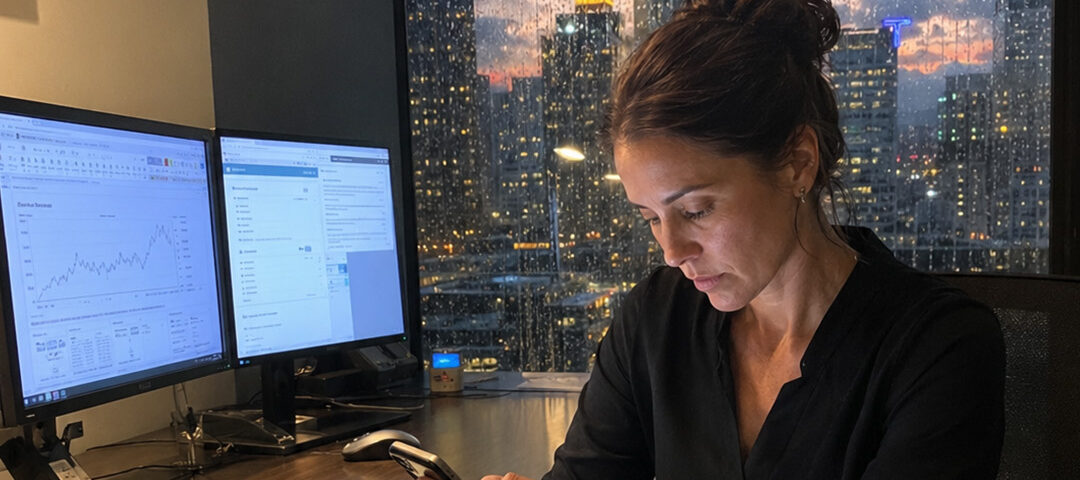
My father’s text arrived at 6:18 on a Thursday evening, while rain tapped against the windows of my office thirty-two floors above downtown Seattle.
Skip Christmas Eve this year. Evan’s fiancée is a pediatric surgeon, and we want the evening to focus on celebrating her. It might be uncomfortable with everyone comparing careers.
A second message appeared before I could respond.
She’s a real doctor, Claire. Please don’t make this difficult.
The blue light from my monitors washed over my hands. On one screen, mortality data moved through a series of graphs. On another, a proposed expansion budget waited for my approval. The third displayed a confidential list of finalists for a department leadership position.
I read Dad’s message twice.
It still hurt, which annoyed me more than the message itself.
At thirty-four, I should have been immune to my family’s opinion. I had spent years building a life they had never bothered to understand. I owned a cedar-sided house overlooking the water. I had paid off every dollar of my medical school loans. I had a corner office, an executive assistant, and enough responsibility to keep me awake at night even when I was exhausted.
None of that mattered to my father.
To him, I was still the quiet daughter who had disappointed him by choosing “hospital paperwork” instead of standing dramatically beneath operating-room lights.
I typed one word.
Understood.
Then I placed my phone facedown.
A soft knock came from the open doorway.
My assistant, Maya Bennett, stepped in carrying two folders and a mug of coffee I had forgotten to drink an hour earlier. She was in her early forties, always composed, with sharp eyes that missed very little.
“The board approved the pediatric wing budget,” she said. “They want your final hiring recommendation by January second.”
She placed the folders on my desk.
“And the last three interviews are confirmed for December twenty-sixth.”
“Good.”
“Do you want me to move them? You normally take the day after Christmas off.”
“I won’t be traveling.”
Maya studied me for half a second, then glanced at my overturned phone.
“Family plans changed?”
“Apparently Christmas Eve is being reserved for real doctors.”
One of Maya’s eyebrows rose.
She knew my family history. Not every detail, but enough.
“Should I send your father a copy of the executive organizational chart?”
“No.”
“Your medical license?”
“No.”
“The article naming you one of the country’s most influential healthcare leaders under forty?”
I looked at her.
“That one would be excessive.”
“I disagree.”
Despite myself, I laughed.
Maya smiled, but her expression softened when she saw I was still staring at the phone.
“I’m sorry, Claire.”
“So am I.”
Not because I had been excluded. I had spent enough lonely holidays during residency to survive one more.
I was sorry because some childish part of me had still believed that eventually my parents would look at me and see what everyone else in my professional life saw.
Competence.
Discipline.
Leadership.
Someone worth listening to.
Instead, my father had reduced my entire career to a comparison with a woman he had known for less than four months.
Maya opened the first folder.
“The three finalists are Dr. Julian Mercer from Northern California University Hospital, Dr. Lena Patel from Eastlake Children’s Institute, and Dr. Vanessa Hale from Harbor Children’s Medical Center.”
The third name felt vaguely familiar, but I couldn’t place it.
“Send me their complete files tonight,” I said. “Publication history, surgical outcomes, references, leadership evaluations, everything.”
“They’re already in your secure drive.”
“Of course they are.”
Maya turned to leave, then paused.
“One more thing. The CEO wants you at tomorrow morning’s donor breakfast.”
“I thought he was handling it.”
“He says people write larger checks after hearing how you turned this hospital around.”
“That sounds suspiciously like flattery.”
“It is. But it’s effective flattery.”
After she left, I walked to the window.
Below me, ambulances moved toward the emergency entrance, their lights flashing against wet pavement. A helicopter descended toward the rooftop landing pad of the trauma center. Somewhere beneath my office, nearly three thousand doctors, nurses, technicians, therapists, and staff members were doing the work that kept Northbridge Regional Medical Center alive.
Three years earlier, the hospital had been close to collapse.
Its infection rates were climbing. Its best physicians were leaving. It was losing almost fifty million dollars a year, and the board was considering selling it to a national corporation that planned to close two departments.
I had been given eighteen months to save it.
I did it in fourteen.
My father knew none of that.
He knew Evan had recently been promoted at a marketing company. He knew Evan’s fiancée performed surgery. He knew I “worked in administration.”
That was enough for him to decide who belonged at Christmas.
At eight thirty, I opened the finalists’ files.
Julian Mercer’s résumé was excellent.
Lena Patel’s was exceptional.
Then I opened Vanessa Hale’s application.
Her photograph loaded first.
Perfect dark hair. Polished smile. Confident eyes.
I recognized her immediately.
She was the woman who had spent Thanksgiving explaining to my family that people who left clinical practice for administration usually did so because they “couldn’t handle real medicine.”
She was also Evan’s fiancée.
And on December twenty-sixth, she would be walking into my office to interview for one of the most important jobs in pediatric surgery on the West Coast.
Vanessa had no idea who would be sitting on the other side of the desk.
### Part 2
Evan had always been the sun in our family.
The rest of us existed in his orbit.
He was charming before he was old enough to understand what charm meant. Teachers forgave his late assignments. Coaches found ways to keep him in games despite mediocre grades. Relatives handed him cash at birthdays and laughed when he forgot to write thank-you notes.
I was two years younger and nothing like him.
I liked quiet rooms, sharpened pencils, and plans written in neat columns. While Evan filled our house with teammates and loud music, I studied at the dining-room table with foam earplugs tucked into my ears.
Dad admired people who could command a room.
He sold medical equipment for most of his career and treated every conversation like a competition he intended to win. He believed confidence was proof of intelligence and popularity was evidence of character.
Evan had both.
I had test scores.
When I was accepted into an elite medical program, Mom hugged me and said, “That’s wonderful.”
Dad looked up from the television long enough to ask whether I would still be able to attend Evan’s regional championship game.
When Evan received a partial athletic scholarship, Dad threw a backyard party for seventy people.
There were banners, catered food, and a cake shaped like a football field.
For my medical school acceptance, Mom ordered pizza.
My parents paid the expenses Evan’s scholarship did not cover because, as Dad explained, “He needs to focus on his future.”
I worked nights in an emergency department registration office and borrowed the rest.
By graduation, I owed more than three hundred thousand dollars.
Evan left college debt-free and joined one of Dad’s friends at a marketing firm. The position paid less than my first-year residency salary, but Dad called it “a real career with upward potential.”
My own path confused him.
During medical school, I became fascinated by the failures that happened before a physician ever entered a patient’s room. Delayed test results. Poor staffing systems. Communication breakdowns. Preventable infections. Departments protecting their own budgets while patients fell through the gaps.
I wanted to treat more than one person at a time.
I wanted to repair the machinery around them.
After completing my clinical training, I pursued advanced work in healthcare leadership and hospital operations. I still maintained my medical credentials, but my career shifted toward systems, policy, patient safety, and institutional strategy.
Dad heard only one thing.
I wasn’t performing surgery.
“So you spent all that money to become a manager?” he asked at dinner.
“I oversee clinical programs.”
“But you’re not actually seeing patients.”
“My decisions affect thousands of patients.”
Evan’s girlfriend at the time was an attorney, so Mom quickly changed the subject to her latest court case.
That pattern continued for years.
When I became a director of clinical quality at twenty-nine, Dad asked whether it came with a better parking space.
When I was recruited to Northbridge, he said, “Seattle’s expensive. Are you sure your office salary can cover it?”
When a national medical journal profiled the recovery of our hospital, I mailed my parents a copy.
Mom texted me a thumbs-up emoji.
Dad never mentioned it.
Eventually, I stopped giving them opportunities to be unimpressed.
I bought my house without telling them until after closing. I accepted speaking engagements without sending links. I stopped explaining why hospital CEOs called me for advice or why government health committees requested my testimony.
At family dinners, I answered questions with, “Work is busy.”
It was easier.
Then Evan brought Vanessa Hale to Thanksgiving.
She arrived in a cream-colored coat that probably cost more than my first car. She carried an expensive bottle of wine and greeted my parents as though she were entering a room full of people already prepared to adore her.
They were.
Within twenty minutes, Dad had introduced her to two neighbors as “the surgeon joining our family.”
Vanessa was talented. I could tell from the way she discussed procedures. She understood the technical aspects of her work and had the smooth confidence of someone accustomed to being admired.
The problem was that she needed everyone else to know it.
At dinner, she described an emergency operation involving a child with an intestinal obstruction. My mother listened with her hands clasped beneath her chin. Dad asked question after question.
When Vanessa finished, Mom gestured toward me.
“Claire works at a hospital too.”
“In administration,” Dad added quickly.
Vanessa gave me a generous smile.
“That’s important work. Someone has to keep track of the forms.”
Evan laughed.
Dad did too.
I cut a piece of turkey and placed it in my mouth before answering.
“Paperwork does tend to accumulate.”
Vanessa missed the dry edge in my voice.
“The administrative side would drive me crazy,” she continued. “I need to know I’m actually helping patients. I couldn’t spend my life in meetings.”
“Claire has always preferred being behind the scenes,” Dad said.
“I suppose not everyone has the temperament for clinical responsibility,” Vanessa replied.
Across the table, Mom looked uncomfortable.
She still said nothing.
Later, while rinsing my plate in the kitchen, I heard Vanessa speaking to Evan near the pantry.
“Your sister seems distant.”
“She’s always been like that,” he said. “She’s smart, but she never really did anything with the medical side.”
“What a waste.”
“Dad says the same thing.”
I placed my plate in the dishwasher without making a sound.
When I left, Vanessa called after me, “It was nice meeting you, Claire.”
Her tone carried the effortless kindness of someone speaking to a person she considered harmless.
Now, weeks later, that harmless woman had her complete professional file open on an executive computer.
I reviewed every page.
Vanessa’s credentials were strong but not extraordinary. Her complication rate was slightly higher than our target. Her references praised her confidence and technical ability, but two mentioned difficulty accepting feedback. She had never managed a significant budget. She had supervised residents but never led a department. Her publication history was respectable, though thin for the role she wanted.
She was qualified to remain where she was.
She was not clearly qualified to build the program Northbridge needed.
Still, I knew that evaluating her myself could create the appearance of retaliation.
At nine the next morning, I called our head of human resources and our general counsel into my office.
“I have a personal connection to one of the finalists,” I told them. “She is engaged to my brother.”
The general counsel leaned back.
“Does she know you work here?”
“She knows I work at a hospital. She doesn’t know my position.”
“Any personal conflict?”
“She insulted my career at Thanksgiving.”
The HR director blinked.
“That’s unusually direct.”
“I want the process protected,” I said. “Use identical core questions for all three finalists. Keep the full panel present. Record every interview with consent. Score independently before discussion. I’ll disclose the connection to the board.”
The attorney nodded.
“That’s the correct approach.”
“And if the other evaluators believe she is the strongest candidate?”
“Then we hire her,” I said.
I meant it.
But as I looked again at Vanessa’s application, I wondered whether she would recognize the opportunity in front of her—or destroy it the moment she saw me.
### Part 3
I spent Christmas Eve alone, though not unhappily.
There is a particular kind of peace that settles over a house when no one expects anything from you.
I lit a fire, roasted a small chicken with rosemary, and opened a bottle of wine I had been saving since the hospital returned to profitability. Rain blurred the city lights beyond my windows, turning the skyline into soft streaks of silver and gold.
At seven fifteen, Mom sent me a photograph.
Dad stood beside the Christmas tree with one arm around Evan and the other around Vanessa. Vanessa wore red and held up her left hand so the engagement ring caught the light.
The caption read, Our family is growing!
Mom followed it with another message.
I wish things weren’t so tense. Your father thought this was best.
I stared at the word best.
Best for whom?
I typed three different responses and erased them all.
Finally, I wrote, I hope you have a pleasant evening.
Evan posted photographs throughout dinner.
Vanessa opening a personalized surgeon’s bag.
Dad raising a glass.
Mom hugging her beside the fireplace.
The final photograph showed the four of them seated around the dining table, the place where I usually sat removed so the table looked perfectly balanced.
Evan’s caption read, Celebrating an incredible doctor and the exciting future ahead.
I turned off my phone.
At the hospital, Christmas had never been quiet. Even from home, I could picture the emergency department doors opening and closing, the fluorescent hallways, the coffee cooling beside nursing stations. Holiday shifts carried their own strange atmosphere: paper snowflakes taped to windows, trays of cookies beside medical charts, families trying to celebrate inside rooms where nothing felt normal.
I had spent six Christmases working in hospitals.
My family had called that dedication when it prevented me from attending dinner.
They called it failure when it became my career.
The next morning, I drove to Northbridge before sunrise.
The city was pale and nearly empty. Streetlights reflected on wet asphalt, and the hospital’s glass entrance glowed against the gray sky.
The security guard greeted me by name.
“Merry Christmas, Doctor.”
“Merry Christmas, Luis.”
I spent the morning walking through three departments. I spoke with nurses, thanked the overnight teams, and checked on a staffing issue in the intensive care unit. In pediatric oncology, someone had decorated an IV pole with silver garland. A tired father slept in a chair beside his daughter’s bed, one hand resting on the blanket near her feet.
That was why I did my job.
Not for titles.
Not for articles.
Not to prove anything to my family.
Every staffing plan, safety protocol, and budget decision eventually reached a room like that one.
On the afternoon of December twenty-sixth, the hiring panel gathered in the executive conference room.
There were six of us: the CEO, the head of surgery, the HR director, a board representative, the director of nursing, and me.
The interviews would be scored across five categories: clinical excellence, leadership, research, program development, and institutional fit.
Julian Mercer interviewed first.
He was thoughtful and technically impressive, though cautious when discussing budget responsibility. His answers were detailed, and he admitted what he did not know.
Lena Patel arrived next.
Within ten minutes, I understood why her references spoke so highly of her.
She did not simply describe what she had accomplished. She explained how she had built teams, addressed mistakes, improved surgical outcomes, and mentored younger physicians. When asked about a failed program at her current hospital, she described her own errors before discussing anyone else’s.
After she left, the head of surgery exhaled.
“She’s the one to beat.”
No one disagreed.
Vanessa’s interview was scheduled last.
At two fifty, Maya entered the conference room.
“Dr. Hale has arrived.”
My pulse remained steady, but I became aware of every detail around me: the low hum of the ventilation system, the cold edge of the water glass beneath my fingers, the faint smell of coffee from the service cart.
“Bring her in at three,” I said.
I moved to my office, where the first portion of the interview would take place before we joined the full panel.
The arrangement had been identical for all three candidates.
At exactly three, footsteps approached.
Maya’s voice carried through the door.
“Northbridge has changed significantly during the last three years. Our clinical leadership team rebuilt nearly every major program.”
Vanessa answered brightly.
“I’ve read about the turnaround. Whoever led it did remarkable work.”
“You’ll meet her in a moment.”
There was a pause.
“Her?”
“Yes.”
A knock sounded.
I looked at the nameplate on my desk.
Dr. Claire Whitmore
Chief Medical Officer
“Come in.”
The door opened.
Vanessa entered with a polished smile, one hand extended.
“Thank you so much for meeting with—”
She saw me.
Her hand stopped in midair.
For one suspended second, neither of us moved.
Then her gaze dropped to the nameplate, shifted to the framed medical degree behind me, and traveled across the wall of leadership awards she had never imagined existed.
The color slowly left her face.
“Claire?”
“Good afternoon, Dr. Hale.”
I stood and indicated the chair across from my desk.
“Please sit down. We have a great deal to discuss.”
### Part 4
Vanessa remained by the door.
Her expression moved from confusion to disbelief, then settled into something close to panic.
“You’re interviewing me?”
“I’m conducting the executive portion of the interview. The full panel will join us shortly.”
“You’re the chief medical officer?”
“Yes.”
“But Evan said you worked in administration.”
“I do.”
Her eyes flicked around the room again as if searching for evidence that this was some elaborate misunderstanding.
The white coat hanging near my window carried my name and title. A photograph on the shelf showed me standing with the board after the opening of our new trauma center. Beside it sat a framed copy of the national healthcare profile my father had never read.
Vanessa swallowed.
“I didn’t realize.”
“That has become clear.”
She looked toward Maya, who was still standing near the door.
“Could we have a minute alone?”
“The interview process requires another staff member to remain present,” I said. “As explained in the consent form, all finalist interviews are also recorded.”
Vanessa’s eyes widened.
“For quality control and legal protection,” I added. “The same procedure applies to every candidate.”
She finally sat.
Her leather portfolio landed awkwardly on her knees.
I opened her file.
“We’ll begin with your clinical record. You have performed three hundred and twenty-six procedures during the past five years. Your overall complication rate is two-point-two percent.”
“That’s within the accepted national range.”
“It is. Northbridge’s current rate is below one percent.”
She straightened.
“My hospital treats a different patient population.”
“Tell me how that difference affects your data.”
She began answering, slowly at first. As she moved into clinical details, some of her confidence returned. Her explanation was reasonable, though she became defensive when I asked what quality improvements she had personally led.
“I’ve participated in several committees.”
“What measurable changes resulted from your participation?”
“I would have to review the exact numbers.”
“Who chaired those committees?”
“Usually the department director.”
“What was your individual responsibility?”
She hesitated.
“I contributed clinical insight.”
I made a note.
Her fingers tightened around the edge of the portfolio.
“Are you writing down everything I say?”
“I take notes during every interview.”
“This feels different.”
“Why?”
“You know why.”
“I know we met at Thanksgiving. I also disclosed our personal connection to human resources, legal counsel, and the board before today. You are receiving the same questions and scoring criteria as the other finalists.”
Her lips parted.
“You told the board about us?”
“I told them you are engaged to my brother. I did not discuss Thanksgiving because it is irrelevant to your application.”
A faint flush rose along her neck.
The conference-room door opened, and the rest of the panel entered.
Introductions were made. Vanessa recognized the CEO and the head of surgery immediately. Her posture became rigid when she realized everyone in the room deferred to me to begin.
The board representative asked about research.
Vanessa discussed minimally invasive pediatric procedures and two studies she had coauthored. Her answers were competent, but she could not outline a clear plan for securing grant funding.
The nursing director asked how she would address conflict between surgeons and nursing staff.
“I believe the surgeon must have final authority in the operating room,” Vanessa said.
“During a procedure, yes,” the director replied. “What about when a nurse raises a safety concern?”
“I would evaluate the concern.”
“What would you do if the concern challenged your judgment?”
Vanessa paused.
“It would depend on the situation.”
The head of surgery leaned forward.
“Give us an example of a time someone junior to you identified your mistake.”
Vanessa’s face tightened.
“I can’t think of a significant example.”
No one moved.
In medicine, a person who claimed never to have been corrected was either inexperienced or dangerous.
She seemed to realize how her answer sounded.
“I mean, of course people have offered suggestions. I’m always open to feedback.”
“Tell us about one,” I said.
She looked at me.
The silence stretched.
Eventually, she described a resident questioning an imaging decision. Vanessa had dismissed the concern, only to learn later that the resident had been right.
“What did you do afterward?” I asked.
“I changed the treatment plan.”
“Did you speak to the resident?”
“Not directly.”
“Did you acknowledge the error to the team?”
“It wasn’t necessary. The patient was fine.”
The CEO wrote something on his evaluation sheet.
For the first time, Vanessa appeared to understand that I was not the only person in the room finding her answers inadequate.
We moved to leadership experience.
She had supervised two residents at a time but never managed a large team. She had contributed to equipment decisions but never controlled a budget. She had never recruited senior physicians, designed a fellowship, negotiated staffing models, or developed a department-wide strategic plan.

None of those facts made her a bad surgeon.
They made her unprepared for this particular job.
Near the end, I asked the same final question presented to the other candidates.
“Why should Northbridge choose you?”
Vanessa looked around the table.
“I’m passionate. I’m ambitious. I care deeply about children, and I believe I could grow into the role.”
“Grow into it?” the board representative repeated.
“Yes.”
The head of surgery folded his hands.
“We need someone capable of building the program immediately.”
“I can do that.”
“What would your first ninety days look like?” I asked.
Vanessa stared at me.
She offered general statements about meeting staff, reviewing cases, and identifying opportunities. There were no measurable priorities, no recruitment strategy, and no financial plan.
When she finished, the room was quiet.
I closed my folder.
“Thank you, Dr. Hale. Do you have any questions for us?”
Vanessa’s professional smile had disappeared.
“No.”
The other panelists stood and filed out, leaving Maya near the door.
Vanessa remained seated.
As soon as the last panel member disappeared, she leaned toward me.
“You planned this.”
“No.”
“You let me walk in here without warning.”
“You applied without researching the hospital’s clinical leadership.”
“Evan never told me.”
“Evan never asked.”
Her eyes filled with anger.
“This is because of what I said at Thanksgiving.”
“The scoring sheets were completed independently. You will be evaluated on your answers and qualifications.”
“You’re going to reject me.”
“I have not reviewed the final scores.”
“You already decided.”
I looked directly at her.
“No, Vanessa. You decided how seriously to prepare for this interview. You decided whether to research the people leading the institution. You decided how to answer questions about your own experience.”
I opened the door.
“Everything after that is simply the result.”
### Part 5
My brother called before Vanessa reached the parking garage.
I knew because my phone began vibrating while Maya was still collecting the evaluation forms.
Evan.
I declined the call.
He called again.
Then Dad.
Then Mom.
At four twelve, Vanessa sent a message.
You humiliated me on purpose.
I did not respond.
The panel reconvened without her.
Each evaluator submitted scores before any discussion began. The HR director projected the anonymous totals onto the screen.
Lena Patel: 94.
Julian Mercer: 86.
Vanessa Hale: 68.
Vanessa had received her lowest scores in leadership, program development, and institutional fit. My own score was slightly higher than the average given by the other panelists.
The general counsel looked at me.
“For the record, Dr. Whitmore scored Dr. Hale more favorably than three members of the panel.”
“Include that in the file,” I said.
The CEO turned to the group.
“Any argument for moving Hale forward?”
No one spoke.
The head of surgery shook his head.
“She may become a strong leader eventually, but she isn’t one now.”
The nursing director added, “Her response about the resident concerned me.”
It concerned all of us.
We agreed unanimously to recommend Lena Patel.
At six, I was home heating soup when Evan left his fourth voicemail.
“What is wrong with you, Claire? Vanessa came home crying. She says you ambushed her, attacked her qualifications, and made her look incompetent in front of the entire hospital leadership team. Call me before Dad gets involved.”
Dad was already involved.
His name appeared on my screen seconds later.
This time, I answered.
“What did you do?” he demanded.
“Good evening to you too.”
“Vanessa says you sabotaged her interview.”
“I conducted an interview.”
“You had no right to be there.”
“I had every right to be there.”
“She was interviewing for a surgery position. What does that have to do with your office job?”
For a moment, I said nothing.
Even after excluding me from Christmas, even after building an entire celebration around Vanessa’s profession, he had not taken five minutes to learn what I did.
“Dad, what do you think my position is?”
“You’re some kind of hospital administrator.”
“What kind?”
“I don’t know. Operations? Paperwork?”
I set my spoon down.
“I am the chief medical officer of Northbridge Regional Medical Center.”
Silence.
I could hear a television in the background.
“What does that mean?” he finally asked.
“It means I oversee the clinical operation of an eight-hundred-bed hospital. Every medical department reports through my office. I approve clinical budgets, physician recruitment, patient-safety standards, quality protocols, and department leadership.”
“You hire surgeons?”
“I approve the hiring of department heads, yes.”
“But you don’t perform surgery.”
“That has never been the requirement for leading a hospital.”
His voice changed slightly.
Not softer. More uncertain.
“Why didn’t you tell us?”
“I did.”
“No, you said you worked in administration.”
“I explained my position when I accepted it three years ago. You interrupted me to tell everyone Evan had been promoted.”
“That doesn’t sound like me.”
“It sounds exactly like you.”
He exhaled sharply.
“Whatever your title is, Vanessa is going to be your sister-in-law. You should help her.”
“Help her how?”
“Put in a good word. Give her another interview. She’s family.”
“She received the same interview as every other finalist.”
“You were hostile.”
“The interview was recorded, and six people scored her independently.”
That stopped him.
“Six?”
“Yes.”
“So this wasn’t just your decision?”
“It never is. That is how responsible institutions prevent favoritism.”
“Then tell them she deserves another chance.”
“She doesn’t.”
His voice hardened again.
“You’ve always resented Evan.”
“No. I resented being treated as though his accomplishments mattered and mine did not.”
“This is petty.”
“Hiring an unprepared department head because she is marrying my brother would be unethical.”
“She’s a surgeon.”
“She is a capable surgeon. The role requires a surgeon, researcher, recruiter, mentor, strategist, and department executive. She has almost no experience in five of those areas.”
“You made her feel stupid.”
“I asked her questions she should have expected.”
Dad lowered his voice.
“Claire, fix this.”
The command was so familiar that for a second I was twenty-two again, standing in my parents’ kitchen while Dad explained why Evan needed financial support more than I did.
“No.”
“What did you say?”
“I said no.”
“Think carefully. This could destroy your relationship with your brother.”
“Our relationship survived him laughing while his fiancée called my career a waste. It survived him celebrating Christmas in a house from which I had been deliberately excluded. I think it can survive me refusing to compromise patient care for him.”
“That Christmas decision was misunderstood.”
“Your text was clear.”
“I was trying to avoid tension.”
“You avoided tension by removing the person you expected to tolerate the insult.”
“That’s not fair.”
“Fairness didn’t concern you when you told me not to come because Vanessa was a ‘real doctor.’”
He went quiet.
I continued before he could redirect the conversation.
“Vanessa’s application will be handled professionally. She will receive formal notice after the board confirms its decision. You, Mom, and Evan will stay out of the process.”
“You can’t order us around.”
“At my hospital, concerning a confidential hiring matter, I absolutely can.”
I ended the call.
Ten minutes later, Mom texted.
Your father is very upset.
I looked at the message and felt something inside me finally settle.
For years, my family had treated their disappointment like an emergency I was responsible for fixing.
That night, for the first time, I understood that their emotions belonged to them.
I turned off my phone and finished my soup.
### Part 6
The board met the next morning at nine.
Outside the conference-room windows, the sky was bright and cold, the mountains visible beyond the city for the first time in days.
I presented each candidate’s record without mentioning my personal relationship with Vanessa until the evaluation was complete.
Clinical outcomes.
Research history.
Leadership experience.
Financial readiness.
Interview performance.
The board listened, asked questions, and reviewed the panel scores.
When I disclosed that Vanessa was engaged to my brother, several members looked surprised.
The board chair removed his glasses.
“Did the other panelists know?”
“Human resources, legal counsel, and the CEO knew. The remaining evaluators were informed after submitting independent scores.”
“And your score?”
“Seventy-two. The panel average was sixty-eight.”
The chair looked toward the general counsel.
“Any concern about the integrity of the process?”
“None,” she said. “The questions were standardized, the interviews were recorded, and Dr. Whitmore followed every conflict-disclosure recommendation.”
The chair nodded.
“Then the personal connection is irrelevant.”
The vote to offer the position to Lena Patel was unanimous.
I called Lena from my office twenty minutes later.
When I made the offer, there was a brief silence on the line.
“Are you serious?” she asked.
“Completely.”
“I thought the interview went well, but this program could become something extraordinary.”
“That is why we chose you.”
She accepted before noon.
At three, the official rejection emails were sent to the other candidates.
At three eleven, Vanessa called my direct office line.
I allowed Maya to transfer her because candidates had the right to request feedback.
“Dr. Whitmore,” Vanessa said. Her voice was tight. “I received the email.”
“I expected you would.”
“I want to know whether the decision is final.”
“It is.”
“You hired Patel?”
“Candidate information is confidential until the appointment is publicly announced.”
“That means yes.”
I said nothing.
Vanessa inhaled.
“I want a formal explanation.”
“You will receive a written summary from human resources. I can also provide professional feedback now.”
“I know what your feedback is. You think I’m average.”
“I think your clinical ability is appropriate for your current position. This role requires experience you have not yet developed.”
“You enjoyed saying that.”
“No.”
“You enjoyed watching me realize who you were.”
That accusation reached closer to the truth than I wanted.
There had been a moment—one brief, human moment—when seeing her confidence collapse had felt satisfying.
But satisfaction was not the same as misconduct.
“I did not enjoy the situation,” I said. “I did appreciate the irony.”
She gave a short, bitter laugh.
“There it is.”
“The irony did not determine your score.”
“You hated me before I entered the room.”
“I disliked the way you treated me at Thanksgiving. That is true. It is also true that I gave you a higher score than half the panel.”
Silence.
“What?”
“My evaluation was not your lowest.”
“You expect me to believe that?”
“The records would establish it if you requested an official review.”
Her anger faltered.
“Then why didn’t anyone choose me?”
“Because your résumé describes a good practicing surgeon, not a department head.”
“I could have learned.”
“We had candidates who had already learned.”
She began crying quietly. I heard her try to hide it.
“I need this,” she said. “I told everyone I was going to get it.”
There it was.
Not I need the program.
Not I need the resources to help patients.
I told everyone.
“Confidence is useful,” I said. “But it cannot replace preparation.”
“Evan’s family thinks I’m some kind of star.”
“My family often confuses admiration with understanding.”
“That’s easy for you to say now.”
“It took me years to stop needing their approval.”
She was quiet for several seconds.
Then she said, “What am I supposed to do?”
It was the first honest question she had asked me.
“Improve your outcomes. Lead a measurable quality project. Publish stronger research. Manage a real budget. Learn how to receive correction without treating it as disrespect. Apply for a smaller leadership role and prove you can build trust.”
“You really think I could qualify someday?”
“Yes.”
“Would you ever hire me?”
“If you became the strongest candidate in a fair process.”
She exhaled shakily.
“I’m still angry with you.”
“You’re allowed to be angry.”
“I’m filing a complaint.”
“You’re allowed to do that too. Human resources will provide the process.”
Her voice sharpened.
“You’re not scared?”
“No.”
The interview record protected me. More importantly, the truth did.
Vanessa ended the call without saying goodbye.
That evening, Mom asked me to attend New Year’s Eve dinner.
We need to talk as a family, she wrote.
I almost refused.
Then I realized there were things I wanted to say while they were all in one room.
Not to convince them.
Not to earn an apology.
To close the door they had spent years assuming would always remain open.
I replied that I would arrive at six and leave at seven.
At five fifty-eight on New Year’s Eve, I parked outside my parents’ house.
Through the dining-room window, I could see Evan pacing.
Vanessa sat rigidly on the sofa.
Dad stood beside the fireplace with his arms crossed.
They looked less like a family preparing for a celebration than witnesses waiting for a verdict.
### Part 7
Mom opened the door before I knocked.
She looked tired. The house smelled of roast beef, furniture polish, and the cinnamon candles she burned every winter.
“Thank you for coming,” she said.
“I said I would.”
She reached toward me as if to hug me, then seemed to think better of it.
In the living room, Evan stopped pacing.
“You have some nerve.”
“Happy New Year to you too.”
Vanessa sat with her hands folded in her lap. Her eyes were swollen, but her expression was controlled.
Dad pointed toward an armchair.
“Sit down.”
“I’ll stand.”
His jaw tightened.
“This is exactly the attitude I’m talking about.”
“What attitude?”
“Acting superior.”
I glanced at the clock above the mantel.
“I have fifty-six minutes left. Use them wisely.”
Evan stepped closer.
“You destroyed Vanessa’s career.”
“No, I declined to accelerate it.”
“She’s humiliated.”
Vanessa looked at him.
“Evan, let me speak for myself.”
He ignored her.
“You could have warned us you ran the hospital.”
“I don’t run the entire hospital. I lead its clinical operations.”
“You know what I mean.”
“I warned all of you for years that my work mattered. None of you listened.”
Dad made an impatient sound.
“This isn’t about your childhood.”
“It became about my childhood the moment you demanded that I give Evan’s fiancée a position she did not earn.”
“I earned the interview,” Vanessa said quietly.
I turned toward her.
“Yes, you did.”
Everyone else fell silent.
“You were one of three finalists because your clinical credentials were strong,” I continued. “You lost because the other candidates had stronger leadership records.”
Vanessa’s mouth tightened, but she nodded once.
Evan stared at her.
“You’re agreeing with her?”
“I filed a request for review,” Vanessa said. “Human resources sent me the scoring summary this afternoon.”
Dad looked confused.
“What scoring summary?”
“The panel evaluations. Claire didn’t give me the lowest score.”
Evan’s face changed.
“But you said she sabotaged you.”
“I thought she did.”
“Did she?”
Vanessa looked down.
“No.”
The admission landed heavily.
Mom sat on the edge of the sofa.
“Then why are we fighting?”
“Because she still embarrassed me,” Vanessa said. “Because I walked into that office thinking I was more accomplished than she was. I had told all of you she wasn’t a real doctor. Then I discovered she was responsible for deciding whether I was qualified to lead a department.”
She looked at me.
“I was arrogant. That doesn’t mean Claire was kind.”
“I wasn’t unkind,” I replied. “I was direct.”
“You told me I wasn’t ready.”
“You weren’t.”
Vanessa gave a humorless smile.
“That is what I mean.”
Dad raised both hands.
“Fine. Maybe Vanessa wasn’t ready. But Claire could have guided her instead of rejecting her.”
“The hospital is not a family mentoring program.”
“Why do you always have to be so cold?”
The question came from Mom.
Her voice was soft, but it cut deeper than Dad’s anger.
I looked at her.
“Because warmth never protected me in this family.”
Her eyes filled.
“Claire—”
“When Evan needed help, he received money, attention, introductions, and forgiveness. When I needed help, I received explanations about why there wasn’t enough left for me.”
“That isn’t true,” Dad said.
“I worked overnight shifts while attending medical school because you paid Evan’s rent. You celebrated his partial scholarship with a party and barely acknowledged my acceptance. Every girlfriend he brought home became the center of your world, while every promotion I earned became ‘office work.’”
“We were proud of you,” Mom whispered.
“Privately?”
She flinched.
“Because you never showed it where I could see.”
Evan rubbed the back of his neck.
“I didn’t know about the loans.”
“You never asked.”
“I didn’t know how important your position was.”
“You never asked.”
Dad’s face had become red.
“We are asking now.”
“No. You are asking because my authority affected someone you value.”
No one answered.
That silence told me I was right.
I picked up my purse from the chair.
“I did not come here to punish anyone. I came to explain what happens next.”
Mom stood.
“What do you mean?”
“I am no longer attending gatherings where I am mocked, minimized, or excluded for someone else’s comfort. I am not providing professional favors to relatives. I am not discussing confidential hospital decisions. And I am not pretending Christmas Eve did not happen.”
Dad stared at me.
“You’re cutting us off?”
“I am limiting contact.”
“For how long?”
“That depends on your behavior, not your promises.”
Mom began crying.
“I said I was sorry.”
“No. You said you wished things weren’t tense. That is not the same thing.”
Evan stepped between us.
“What do you want from us, Claire?”
“Nothing.”
He looked startled.
That answer was the one they had never expected.
For years, they had assumed I wanted their praise so badly that they could withhold it forever without losing me.
“I wanted you to see me,” I said. “You chose not to. I learned to live without it.”
Dad’s anger faded, leaving something older and smaller behind.
“Can we start over?”
“No.”
Mom covered her mouth.
I kept my voice steady.
“We cannot erase thirty years because you finally discovered my job title. We can build something different from this point forward, but it will not be the same relationship. You do not get the same access to me after treating me as disposable.”
I walked toward the door.
Behind me, Evan said, “Claire, wait.”
I turned.
His expression had changed. For the first time that night, he looked less angry than ashamed.
“I’m sorry.”
“I believe you’re sorry tonight.”
“What does that mean?”
“It means I’ll judge the apology by what you do after tonight.”
Then I left.
Outside, the air was cold enough to sting my lungs.
At midnight, fireworks rose above the city while I stood alone on my back deck with a glass of champagne.
For the first time in my life, being alone did not feel like rejection.
It felt like freedom.
### Part 8
Dr. Lena Patel began work on February first.
On her first morning, she arrived at six thirty carrying a canvas bag, two notebooks, and a detailed ninety-day plan.
Within three months, she had recruited two pediatric specialists, redesigned the surgical review process, and established a weekly conference where residents and nurses could raise concerns without fear of retaliation.
Within six months, pediatric complications had fallen to the lowest rate in the state.
A year later, Northbridge became the regional referral center for complex pediatric surgery.
Choosing her had been the right decision.
That mattered more than every angry phone call I had received.
Vanessa remained at Harbor Children’s.
Through professional contacts, I heard that she joined a quality-improvement committee and applied for a deputy leadership position in her department. She also began working with a mentor known for being brutally honest.
She and Evan ended their engagement in March.
Mom called to tell me, speaking in the careful tone she had adopted after New Year’s.
“Vanessa says she needs to focus on her career.”
“That may be good for her.”
“Evan is devastated.”
“I’m sorry he’s hurting.”
There was a pause, as if Mom expected me to offer more.
I did not.
My relationship with my family changed exactly as I had promised.
I did not cut them off completely, but I stopped arranging my life around their expectations.
When Mom invited me to dinner, I asked who would be there and left if the conversation became dismissive.
When Dad offered advice about my career, I reminded him that he had never taken the time to understand it.
When Evan called only because he needed something, I let the call go unanswered.
Apologies came slowly.
Real change came more slowly.
Dad sent me a message after reading a national profile about Northbridge.
I finally understand what you built. I’m proud of you.
I read it while standing in an airport lounge before a healthcare conference.
Years earlier, those words would have made me cry.
Now they made me tired.
I replied, Thank you.
Nothing more.
A week later, he asked to visit my office.
I considered refusing, then agreed because I wanted him to see the world he had dismissed.
He arrived wearing a jacket and tie, as though coming to a job interview.
Maya led him through the executive floor. By the time he entered my office, he had passed department leaders waiting for my approval, physicians asking for meetings, and staff members greeting me with genuine respect.
He stopped in front of the windows.
“I didn’t know your office was like this.”
“The view isn’t the job.”
“I know.”
His attention moved to the wall displaying hospital performance awards, patient-safety recognition, and photographs from new clinical programs.
“I read the article,” he said. “All of it this time.”
I gestured toward the chair.
He sat.
For several seconds, neither of us spoke.
Finally, he said, “I failed you.”
The directness surprised me.
“Yes.”
“I thought Evan needed me more because he was always chasing something. Sports. Promotions. Relationships. You seemed capable of handling everything alone.”
“I became capable because no one came when I needed help.”
His eyes lowered.
“I told myself that giving more to him was practical. I didn’t understand that I was teaching both of you that he mattered more.”
“You understood enough to exclude me from Christmas.”
He closed his eyes briefly.
“That was cruel.”
“It was.”
“I thought Vanessa’s profession would impress people. I wanted the family to look successful.”
“And I did not fit the picture you wanted.”
“You did. I was too ignorant to recognize it.”
The old version of me might have rushed to comfort him.
I let him sit with the truth.
“Can you forgive me?” he asked.
“No.”
He looked up.
The word did not come from anger. It came from certainty.
“I may reach a place where I am no longer hurt by what happened,” I said. “I may choose to have some relationship with you. But forgiveness is not something you receive because you finally admitted what you did.”
He nodded slowly.
“I understand.”
“I don’t think you do yet.”
“Then I’ll keep trying.”
“That is your choice.”
We finished our lunch politely.
When he left, he did not ask for a favor, a hospital tour, or an introduction to anyone important.
That was the first sign that perhaps he had listened.
Evan took longer.
Six months passed before he called and asked whether he could take me to dinner.
“What do you need?” I asked.
“Nothing.”
“That would be new.”
“I deserve that.”
We met at a small restaurant near the water.
He apologized without defending himself. He admitted that being the favored child had been comfortable, and that he had never questioned what it cost me.
“I liked being the one Dad bragged about,” he said. “When Vanessa came along, I liked it even more. Her success made me feel important.”
“That sounds honest.”
“It’s ugly.”
“Honesty often is.”
He asked whether we could become close.
I told him I did not know.
“I’m willing to be civil,” I said. “I’m willing to see whether your behavior changes. But you do not get to skip from apology to intimacy.”
He accepted that.
Our relationship remained limited.
That was enough.
In April, the board promoted me to executive vice president of clinical operations for the entire Northbridge health system—four hospitals, twenty-one clinics, and more than eleven thousand employees.
The announcement appeared in national medical publications.
This time, I did not send the articles to my family.
I framed one for myself.
On the morning it was hung in my office, Maya stood beside me studying the photograph.
“You used to hide these,” she said.
“I used to think displaying them looked arrogant.”
“And now?”
“Now I think pretending I didn’t earn them would be dishonest.”
She smiled.
That evening, I walked through the hospital before going home.
The pediatric wing was bright with afternoon sunlight. Nurses moved between rooms. A child laughed somewhere near the rehabilitation center. Lena stood at the end of the hallway speaking with a resident, listening carefully as he explained a concern.
The system was working.
Not perfectly. Hospitals never did.
But better.
Safer.
Stronger.
Because I had helped build it.
My family had spent years deciding I was not a real doctor because I did not hold a scalpel every day.
They never understood that I had chosen a different kind of operating room.
Mine was an entire hospital.
My instruments were budgets, policies, teams, data, and decisions. My patients were every person who entered our doors.
I no longer needed my father to understand that.
I no longer needed my mother to explain me to relatives or my brother to defend me at dinner.
They had finally learned my title, but the title was never the most important discovery.
The important discovery was mine.
I had spent years waiting for people who diminished me to decide I was valuable.
When I stopped waiting, their judgment lost its power.
That Christmas, I did not return to my parents’ house.
I invited Maya, several colleagues, and two neighbors who had also found themselves without family plans. We cooked too much food, exchanged ridiculous gifts, and laughed until after midnight.
My phone remained on the kitchen counter.
Dad sent a message wishing me a merry Christmas.
Mom sent a photograph of the tree.
Evan wrote that he hoped I was happy.
I was.
Not because my family had changed.
Not because they finally respected my career.
I was happy because I had built a life in which their approval was no longer the price of belonging.
I had my work, my home, my chosen family, and the peace that came from knowing exactly who I was.
Dr. Claire Whitmore.
Physician.
Leader.
Builder.
And absolutely, unquestionably real.
If you came here from Facebook because of this story, return to the Facebook post, tap Like, and comment exactly “Amazing” to support the storyteller. That small action means more than it seems and gives the writer genuine encouragement to keep sharing more stories about family pressure, firm boundaries, and finally protecting what you worked so hard to build.
Disclaimer: This story is a work of fiction created for entertainment purposes. Any resemblance to real persons, events, or places is coincidental.