The House I Sold to Protect My Granddaughter
“You sold the house without giving us the money?”
My son’s voice filled the quiet conference room before the closing attorney had finished stacking the final documents.
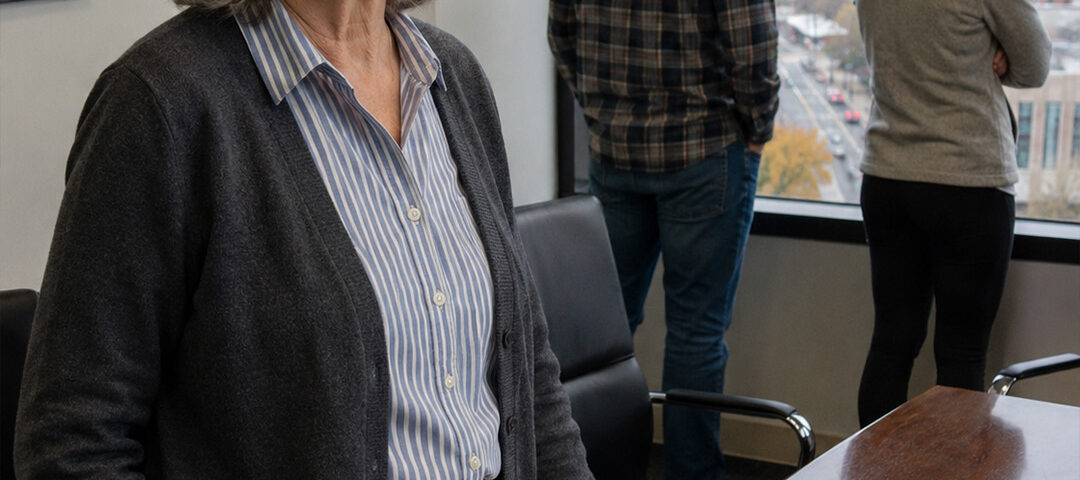
Andrew stood beside the long walnut table with both hands pressed flat against its polished surface. His wife, Lauren, remained near the window, one arm folded across her waist and the other gripping her phone. Beyond the glass, late-afternoon traffic moved through downtown Columbus beneath a sky the color of old silver.
The sale of my family home had been completed less than twenty minutes earlier.
The proceeds—just over eight hundred thousand dollars after taxes, repairs, and closing costs—were no longer sitting in my personal account.
Every dollar had been transferred into a protected education trust for my four-year-old granddaughter, Bella.
Andrew stared at me as though I had sold his childhood twice: once to the young family now holding the keys, and again by placing the money somewhere he could not reach.
“I told you what I was doing,” I said.
“You said you were securing Bella’s future.”
“That is exactly what I did.”
Lauren turned from the window.
“No,” she said. “You made a major family decision and wrapped it in legal language so no one could question you.”
The closing attorney glanced toward me, then quietly gathered his folders and left the room.
I waited until the door clicked shut.
“The trust agreement was sent to both of you six weeks ago.”
Andrew straightened.
“We thought it was a college account.”
“It is.”
“A normal college account doesn’t lock away this much money for fourteen years.”
“A normal college account can be emptied.”
Lauren’s expression sharpened.
“By whom?”
I did not answer immediately.
That silence became the first crack in our family.
My name is Margaret Ellis. I was sixty-seven years old when I sold the redbrick house where Andrew had grown up, where my husband and I had spent thirty-eight years, and where Bella had learned to climb the stairs by holding tightly to the same oak railing her father once used.
The house stood on a tree-lined street in Upper Arlington, ten minutes from downtown Columbus. It had four bedrooms, white shutters, a narrow porch, and a backyard large enough for birthday parties but too small for the garden I always imagined planting.
My husband, Robert, and I bought it when Andrew was three.
We could barely afford the mortgage.
Robert worked in commercial insurance. I taught eighth-grade English, first full-time and later as a literacy coordinator. For years, our lives ran on calendars taped to the refrigerator, grocery lists written on the backs of envelopes, and careful discussions about whether the furnace could survive another winter.
The house was never luxurious.
It became valuable because the neighborhood changed around it.
Old homes were renovated. Young families arrived. Property values climbed faster than either Robert or I expected. By the time he passed away, the mortgage had been paid for nearly a decade, and the home was worth more than everything else we owned combined.
Robert died after a brief illness when Bella was eighteen months old.
For almost a year after his funeral, I stayed in the house because leaving felt like a second loss.
His coat remained in the hall closet.
His coffee mug stayed on the shelf above mine.
The small dent he had made in the kitchen cabinet while installing a childproof latch for Andrew was still visible beneath the paint.
Bella visited every Wednesday afternoon. She called the house “Grandma’s castle,” though it had no tower, no gate, and no room large enough to resemble a ballroom.
She loved the linen closet because it smelled like lavender.
She loved the pantry because I kept animal crackers on the second shelf.
Most of all, she loved Robert’s study, where sunlight crossed the rug in a wide yellow stripe every afternoon.
She would sit in that light with picture books spread around her and tell me stories she had invented from the illustrations.
I began thinking about selling the house after I found myself standing at the bottom of the basement stairs, wondering whether I could safely carry a laundry basket down without using both hands.
The roof needed work.
The property taxes had increased again.
Three of the four bedrooms remained closed most of the year.
I was spending money to preserve rooms I no longer used because memory had convinced me that changing the house meant changing what had happened inside it.
Then Bella fell asleep in Robert’s old chair one winter afternoon.
A book rested open across her knees. Her hair curled against the same worn fabric where Robert had read financial pages every Sunday morning.
I looked at her and understood that the house was not the future.
She was.
That evening, I called a financial planner.
I did not announce the decision to Andrew until I had gathered information. I knew my son. He loved me, but he also had a way of treating financial possibilities as if they became plans the moment he imagined them.
When his construction business struggled, he spoke about using my home equity to purchase equipment.
When he and Lauren wanted a larger house, he suggested I move into an apartment and invest with them.
When Bella was born, he joked that my property would someday pay for college, a wedding, and perhaps a first home.
Each comment sounded harmless by itself.
Together, they made me cautious.
I met with an estate attorney named Grace Whitmore in a quiet office overlooking the Scioto River. Grace was in her early fifties, precise without being cold, and skilled at asking questions that made vague fears become clear decisions.
“What do you want the money to accomplish?” she asked.
“I want Bella to have choices.”
“What kind?”
“Education. Training. A degree, if she wants one. Graduate school. Something that allows her to build a life without beginning beneath a mountain of debt.”
“Do you want her parents to control the funds?”
I thought about Andrew’s business accounts.
Lauren’s spending habits.
The way both of them had recently financed a luxury SUV while claiming they could not increase their monthly savings for Bella.
“No.”
“Do you want them involved?”
“Yes. But not in sole control.”
Grace leaned back.
“Then we create a protected education trust with an independent trustee. The principal remains invested until Bella turns eighteen. Before that, limited distributions can be approved only for clearly defined educational needs and only with documentation.”
“What happens at eighteen?”
“The trust can pay qualified tuition, housing, books, training, and related costs. Depending on your design, unused funds can continue supporting education or be released in stages later.”
“Can her parents borrow against it?”
“No.”
“Can they pressure the trustee?”
“They can ask. The trustee can say no.”
I smiled.
“That sounds useful.”
Grace did not smile back.
“It may also make you unpopular.”
“I taught middle school for thirty-one years. I have survived unpopularity.”
The trust took two months to create.
I selected Martin Hale, a longtime bank trust officer, as independent trustee. He had known Robert professionally and had no personal loyalty to Andrew or Lauren.
The document allowed limited early distributions for exceptional educational needs, but only if the expense could not be reasonably met through ordinary parental support and if the distribution did not threaten the long-term purpose of the trust.
The house sale would fund it.
Andrew and Lauren were required to sign an acknowledgment confirming that they understood they had no ownership interest, no borrowing authority, and no right to demand distributions.
They signed.
I watched both signatures appear at my dining-room table.
Andrew barely read the final pages.
Lauren skimmed the first section, asked whether Bella could attend any college she chose, then signed beside him.
“Imagine the schools she’ll be able to consider,” I said.
Lauren smiled.
“The best ones.”
I assumed we meant the same thing.
At the closing office six weeks later, I learned we did not.
Andrew wanted two hundred thousand dollars from the proceeds to stabilize his business, though he called it a temporary family loan.
Lauren wanted money for a down payment on a home in a neighborhood with a better social reputation than the one where they currently lived.
They had discussed these plans with each other.
Neither had discussed them with me.
When they realized the sale proceeds had moved directly into Bella’s trust, disappointment became accusation.
“I’m your son,” Andrew said in the conference room.
“Yes.”
“You don’t trust me.”
“I trust you to love Bella.”
“That isn’t what I asked.”
“No.”
Lauren placed her phone on the windowsill.
“Families help one another.”
“I have helped both of you.”
“This is different,” she said. “You had the chance to change our lives.”
“I changed Bella’s.”
“You could have done both.”
“Not without weakening the only part of the plan that cannot be rebuilt later.”
Andrew turned away.
The back of his neck had gone red, the way it did when he was trying not to raise his voice.
“You chose money over your own family.”
“No. I chose the family member who had no ability to protect her own future.”
Lauren laughed softly.
“Bella has parents.”
“I know.”
The words came out more sharply than I intended.
Lauren looked at me.
For the first time, I saw something colder than hurt in her expression.
“You think we would take from her.”
“I think life becomes complicated. Businesses fail. Marriages struggle. People convince themselves that temporary withdrawals will be replaced.”
Andrew faced me again.
“You’re talking about us.”
“I’m talking about human beings.”
“You always do that,” he said. “You say something personal and then hide it inside a general lesson.”
I gathered my purse.
“The trust is complete. The house is sold. We can be disappointed with each other without pretending the decision is still open.”
Lauren stepped closer.
“You may have signed the closing papers, Margaret. That does not mean this is finished.”
At the time, I believed she was speaking from anger.
I did not yet understand how literally she meant it.
For the next several months, we tried to behave as though the argument had passed.
I moved into a two-bedroom condominium near a park and a grocery store. The rooms were smaller, the maintenance was handled by someone else, and the elevator meant I never had to carry laundry down basement stairs.
I brought Robert’s chair.
I brought the oak bookshelf from his study.
I brought the lavender sachets from the linen closet, though there was no linen closet in the new place.
Bella visited every Wednesday.
She adjusted quickly.
Children understand home differently from adults. They do not require the same walls. They require familiar faces, repeated rituals, and confidence that someone will open the door.
She still received animal crackers from the second shelf.
She still sat in the afternoon sunlight with books around her.
The castle changed shape.
The queen remained.
Andrew’s business improved slightly after he sold two unused vehicles and renegotiated a supplier agreement. He stopped mentioning the trust.
Lauren did not.
She asked questions disguised as conversation.
How much had the investments earned?
Could the trustee approve private lessons?
What counted as an educational expense?
Would preschool tuition qualify?
I answered carefully.
“Ordinary school costs are the parents’ responsibility.”
“Even if a better opportunity exists?”
“What opportunity?”
She mentioned Worthington Academy, an elite private school known for small classes, language immersion, and an annual tuition larger than many college programs.
Bella was four.
She was attending a neighborhood early-learning center three mornings a week and would begin public kindergarten the following fall.
“Worthington has a waiting list,” Lauren said.
“Then this may not be relevant.”
“I already applied.”
I looked at her across my new kitchen table.
“Without discussing it with Andrew?”
“He knows.”
“Without knowing how you would pay?”
Her expression changed.
“The trust should pay.”
“The trust is for Bella’s future education.”
“This is her education.”
“At four years old?”
“The early years matter.”
“They do. That does not mean an eighty-thousand-dollar distribution is necessary.”
“It would be closer to one hundred and forty thousand through fifth grade.”
I set down my coffee.
“You expect the trust to cover six years of private elementary school?”
“I expect the trust to give Bella the best opportunity available.”
“And after fifth grade?”
“We would reassess.”
“Then middle school, high school, college, and graduate school could consume the rest before she has any voice in the decision.”
Lauren leaned back.
“You don’t know what private education can do.”
“I worked in public education for three decades.”
“That is not the same environment.”
“No. It is not.”
The comment was polished enough to avoid sounding insulting. Its meaning remained obvious.
Lauren believed the world I had devoted my career to was beneath the future she imagined for her daughter.
I called Andrew after she left.
He sounded tired.
“She’s excited about the academy.”
“Can you afford it?”
“Not without the trust.”
“Then you cannot afford it.”
“That’s why the trust exists.”
“No. The trust exists so Bella can make choices when she is old enough to understand them.”
“She’s our daughter.”
“Yes.”
“We decide where she goes to school.”
“You decide. You also pay.”
His voice hardened.
“Why do you have to make everything a test of responsibility?”
“Because responsibility is usually the part people want someone else to fund.”
The application proceeded.
Bella was accepted.
Lauren mailed me a copy of the acceptance letter inside a cream envelope embossed with the school crest. A handwritten note was attached.
This is the future you said you wanted for her.
I kept the letter.
Not because it changed my mind.
Because it was the first piece of evidence that Lauren intended to turn love into a financial argument.
Martin denied the initial distribution request.
His letter was respectful and clear. The trust’s primary purpose was higher education and advanced training after Bella reached adulthood. The requested elementary tuition was an ordinary parental obligation and would substantially reduce long-term growth.
Lauren requested reconsideration.
Martin denied it again.
Then a formal petition arrived.
Lauren had filed in county court seeking release of nearly one-third of the trust principal for private education, transportation, uniforms, extracurricular programs, and associated fees.
She named Andrew as a supporting parent.
She named me as the trust creator.
She named Martin as trustee.
The petition claimed the restrictions were unreasonable because they prevented Bella’s parents from acting in her best educational interest.
I read it in Grace Whitmore’s office.
The pages rested between us.
“Did Andrew agree to this?” I asked.
“He signed the filing.”
His signature appeared beneath Lauren’s.
I recognized it immediately.
The same fast, slanted mark he had used on the trust acknowledgment.
“He signed both documents,” I said.
“Yes.”
“So he agreed that the money would remain protected, then agreed that the protection should be removed.”
“People often understand agreements differently once money becomes useful.”
“What happens now?”
“We respond.”
“Will the trust survive?”
Grace folded her hands.
“It was drafted carefully. But courts consider the beneficiary’s interests. Lauren will argue that early education supports long-term development.”
“And we argue?”
“That Bella is receiving appropriate education, the parents voluntarily accepted the restrictions, and the requested amount would undermine the trust’s central purpose.”
I looked out at the river.
“This will reach Bella.”
“We should make every effort to prevent that.”
“How?”
“Mediation first.”
The mediation took place in a neutral office near the courthouse.
Lauren arrived wearing a cream suit and carrying a folder organized with colored tabs. Andrew sat beside her but spoke little.
Martin attended with counsel.
Grace sat beside me.
The mediator, a retired judge named Walter Benton, began by asking what each person wanted.
Lauren answered first.
“I want my daughter to receive the education she deserves.”
I answered second.
“I want Bella’s future protected until she is old enough to participate in major decisions about it.”
Andrew rubbed one thumb against his wedding ring.
The mediator asked whether compromise was possible.
I proposed a limited annual distribution for specific enrichment activities—music, language programs, tutoring if needed—while preserving principal for later education.
Martin agreed such a structure could be considered.
Lauren refused.
She wanted full tuition at Worthington Academy.
“Bella has been accepted,” she said. “Turning it down now could close doors permanently.”
“She is four,” I said.
“Exactly. This is when foundations are built.”
“She already has a foundation.”
“Not the right one.”
The mediator looked at her.
“What is wrong with her current school?”
Lauren paused.
“It is ordinary.”
The word entered the room and changed it.
Andrew looked down.
I thought about Bella laughing with children at her neighborhood center. I thought about finger-painted suns taped to the classroom wall and the teacher who sent home weekly notes about sharing, letters, and kindness.
“Ordinary is not the same as inadequate,” I said.
Lauren’s face remained still.
“It is easy for you to say that. You already lived your life.”
“And Bella has not yet begun hers. That is why we should not spend her future building your preferred image of her childhood.”
Lauren closed her folder.
Mediation ended without agreement.
The conflict leaked into family life.
Birthday dinners became careful.
Holiday visits shortened.
Andrew stopped calling me unless the conversation involved logistics.
Lauren began posting photographs from school tours, charity events, and neighborhood gatherings, often accompanied by captions about fighting for children’s opportunities.
She never named me.
She did not need to.
Relatives called to ask why I was blocking Bella’s education.
One cousin said, “You can’t take money with you.”
Another said, “Private school could change her entire life.”
My sister Ruth, who lived in Michigan and avoided family conflict as though it were bad weather, finally called.
“Is Bella unhappy where she is?”
“No.”
“Is she behind?”
“No.”
“Then what exactly are they fighting for?”
“Status.”
“You’re certain?”
“No. But I’m concerned enough to protect the money until the court reviews it.”
Ruth sighed.
“Andrew says you never believed he could manage finances.”
“Andrew’s business was nearly insolvent last year.”
“That is not the same as being a bad father.”
“I never said it was.”
“He hears it anyway.”
I closed my eyes.
“Then perhaps he should ask why.”
The question that strengthened my resolve came from Bella herself.
She was coloring at my dining table one Wednesday afternoon. A purple crayon rolled onto the floor. When I bent to retrieve it, she asked quietly, “Grandma, are you and Mommy fighting because of me?”
The room seemed to lose all sound.
I placed the crayon beside her paper.
“No, sweetheart.”
“She said you won’t let me go to the good school.”
I sat across from her.
“Your school is good.”
“Mommy said there is a better one.”
“There are many kinds of schools.”
“Is the money mine?”
The question startled me.
“In a way.”
“Then why can’t Mommy use it?”
I chose every word carefully.
“Because it was saved for you when you are older.”
“How old?”
“Eighteen.”
“That’s forever.”
“It feels that way when you’re four.”
She drew a large circle on the page.
“Are you mad at Mommy?”
“I disagree with her.”
“Is that mad?”
“Sometimes people can disagree and still love one another.”
“Does Mommy love you?”
“I believe she does.”
“Do you love Mommy?”
“Yes.”
That answer required more honesty than I expected.
I loved Lauren because she was Bella’s mother, Andrew’s wife, and a woman who had once brought soup to my house every day during Robert’s final month.
I did not trust her judgment.
Love and trust are related.
They are not identical.
Bella pushed the picture toward me.
She had drawn three figures holding hands beneath an enormous orange sun.
“Who is this?” I asked.
“Me, you, and Mommy.”
“Where is Daddy?”
“At work.”
That was so accurate I almost laughed.
Instead, I reached across the table and took her hands.
“None of this is your fault. Adults are making decisions because we care about you. Sometimes adults disagree about the best way to do that.”
“Will you stop being my grandma if Mommy wins?”
“No.”
“Will Mommy stop being my mommy if you win?”
“No.”
She looked relieved.
I wished I could promise that no adult would ever make her feel responsible for the outcome.
I could not.
But I could refuse to participate in using her.
Before the court hearing, I visited Bella’s public school.
I did not announce myself as the grandmother involved in a trust dispute. I asked Andrew’s permission to attend an open-house morning, and he agreed.
The building was fifty years old.
The front office had scuffed tile and a row of children’s coats hanging from hooks. Construction-paper snowflakes covered the windows. The library was smaller than Worthington Academy’s admissions lobby.
None of that concerned me.
I watched teachers kneel to speak at children’s eye level.
I watched a classroom aide help a nervous boy zip his jacket without embarrassing him.
I watched the principal greet students by name near the entrance.
Bella sat in a reading circle on a blue rug. Her teacher held up a picture book about a bear searching for home.
Bella raised her hand so high that her entire body leaned sideways.
The teacher smiled.
“Bella?”
“A home is where people know you’re coming back.”
The teacher paused.
“That is a beautiful answer.”
Bella looked pleased.
Later, during outdoor play, she ran across the yard with two girls and a boy wearing a bright green coat. She laughed without checking who was watching.
She was confident.
Included.
Safe.
She was not waiting for rescue from an ordinary education.
She was living inside a good childhood.
That afternoon, I wrote a statement for the court.
I did not criticize private schools.
I did not attack Lauren’s motives.
I described the trust’s purpose, Bella’s current educational environment, and the financial impact of withdrawing such a large amount before she could participate in the decision.
Grace added school records, teacher observations, investment projections, and the signed trust acknowledgment.
Lauren’s attorney submitted brochures from Worthington Academy, educational research, and letters from two families praising the school.
The hearing lasted two days.
Lauren testified that she wanted Bella to have advantages she had never received.
She spoke about small class sizes, language immersion, college preparation, and social networks that could benefit Bella throughout life.
Her attorney asked why the trust should wait until eighteen when earlier investment in education could produce greater opportunity.
It was a thoughtful argument.
That mattered.
Lauren was not a cartoon villain. She loved Bella. She also confused visible prestige with lasting security.
When Grace questioned her, she asked whether Lauren and Andrew had read the trust agreement before signing.
“Yes.”
“Did you understand that ordinary childhood education remained your responsibility?”
“I understood the trust was for education.”
“Did you understand that principal was intended to remain protected until Bella reached eighteen?”
“I understood that was Margaret’s preference.”
Grace lifted the acknowledgment.
“You signed that you understood it as a binding restriction.”
Lauren’s mouth tightened.
“Yes.”
“Did the trust exist when you applied to Worthington Academy?”
“Yes.”
“Had funding been approved?”
“No.”
“Then you committed Bella to a school you could not afford based on money you did not control.”
Lauren looked toward the judge.
“I believed any reasonable trustee would approve it.”
Martin testified next.
He explained that one hundred and forty thousand dollars removed at Bella’s age represented far more in lost growth by the time she reached college.
He projected several scenarios.
If the trust remained intact, Bella could attend almost any undergraduate institution without loans and retain support for graduate school or professional training.
If substantial withdrawals began at four, the fund could be reduced to less than half its projected value by eighteen.

The judge asked one question.
“Is the child’s current education inadequate?”
“No,” Martin replied.
The court ruled three weeks later.
The trust would remain intact.
Early distributions could be considered only for documented exceptional needs and would require approval from the trustee and both parents.
Any future change to private primary schooling would remain a parental decision, but the parents could not compel the trust to fund it.
The judge emphasized that the ruling did not declare private education unnecessary.
It enforced the agreement the adults had signed.
I read the order at my kitchen table.
Relief came first.
Then dread.
Winning the case did not repair the family.
Lauren became colder.
She attended visits but sat apart.
She corrected Bella whenever she referred to my condominium as home.
“Grandma’s home,” she would say.
Bella began repeating adult phrases.
“Grandma controls the money.”
“Grandma doesn’t trust us.”
“Grandma thinks public school is enough for me.”
I never criticized Lauren in return.
That restraint felt noble for approximately two weeks.
After that, it felt exhausting.
Andrew tried to remain between us.
Instead, he disappeared into work.
His business recovered, then expanded. He hired two project managers and began traveling. The more conflict grew at home, the more useful his office became.
One evening, I asked him to meet me at a diner near his job site.
He arrived twenty minutes late and kept his phone beside his plate.
“Lauren is angry,” he said.
“I know.”
“She feels judged.”
“She challenged a trust agreement in court.”
“She thinks you never accepted her.”
“That is not true.”
“You think she is shallow.”
“I think she sometimes values appearances too much.”
“That means yes.”
The server brought coffee.
Andrew looked toward the window.
“I should have handled this differently.”
“What does that mean?”
“I should not have signed the petition without making sure we agreed.”
“Why did you?”
“She said if I supported you, I was choosing my mother over my wife.”
“And if you supported her?”
He looked at me.
“I chose my wife.”
“You signed an agreement affecting your daughter.”
His face tightened.
“Do not make me sound weak.”
“I am asking you to be present.”
“I am present.”
“No. You are available for signatures.”
He pushed his coffee away.
“That is unfair.”
“Then prove it wrong.”
He left before finishing his meal.
For a time, nothing dramatic happened.
That made what followed more frightening.
Lauren stopped posting online.
She withdrew Bella from two weekend activities.
She told Andrew she needed space from the family.
She began selling clothing and furniture through online marketplaces. Andrew assumed she was reducing expenses.
Helen, Lauren’s mother, noticed that several suitcases were missing from the basement storage room.
She asked Lauren about them.
Lauren said she had donated them.
Then, on a Tuesday morning in October, Andrew called me.
His voice did not sound like my son’s.
“Mom, is Bella with you?”
“No.”
“Are you sure?”
“I would know.”
“Lauren’s car is here. Her phone is off. Bella’s backpack is gone.”
I stood so quickly that my chair moved backward.
“When did you last see them?”
“Last night. Bella was asleep. Lauren said she had a headache and went to bed early.”
“Check the school.”
“I did. She never arrived.”
“Call Helen.”
“I already did.”
“What did she say?”
“She has not heard from Lauren.”
The next hour became a sequence of doors, calls, and unanswered messages.
Andrew contacted the family attorney and requested an emergency welfare response. Transportation stations, airports, and lodging networks were alerted through proper channels.
I drove to his house.
Bella’s pink cup remained beside the bathroom sink.
Her favorite sweater was gone.
The stuffed rabbit she slept with was gone.
Lauren’s passport remained in the drawer.
Bella’s did not.
Andrew stood in the kitchen holding one of Bella’s socks.
“I should have seen it.”
“Seen what?”
“The suitcases. The cash withdrawals. She asked me where the birth certificate was last month.”
My stomach tightened.
“What did you tell her?”
“I showed her.”
He pressed both hands against the kitchen counter.
“I thought she was organizing school paperwork.”
Helen arrived forty minutes later.
Her face looked pale beneath her makeup. She carried a small stack of papers and a key.
“I found these in Lauren’s old room,” she said.
Bus tickets.
Columbus to Nashville.
Nashville to Dallas.
Dallas to Tucson.
Purchased with prepaid cards.
The departure time had been six that morning.
Beneath the tickets was a letter.
Andrew opened it.
Lauren had written that she was taking Bella somewhere far from people who controlled their choices. She said she intended to create a peaceful life where no judge, trustee, or family member could dictate what kind of future Bella deserved.
She did not name the destination.
At the bottom, she wrote:
When everyone stops treating me like the problem, I may consider contact.
Andrew sat down.
The letter slipped from his hands.
Helen remained standing.
“I am so sorry,” she whispered.
Andrew looked at her.
“Did you know?”
“No.”
“You defended her.”
“I defended my daughter’s feelings. I did not know she planned this.”
“She took Bella.”
Helen closed her eyes.
“Yes.”
The next fourteen hours moved with unbearable slowness.
Every lead became another wait.
A ticket agent remembered Lauren because Bella carried a stuffed rabbit and asked repeated questions about when they would reach the desert.
Camera records confirmed they boarded the first two buses.
Then a schedule delay caused Lauren to leave the Dallas terminal.
For several hours, no one knew where she went.
Andrew paced between the kitchen and the porch.
I sat at the table with Bella’s drawing of the three figures beneath the orange sun.
Helen made coffee no one drank.
At eight that evening, Grace called.
A lodging payment had been connected to one of the prepaid cards. Lauren and Bella had checked into a roadside motel in southern Arizona near a major bus route.
A local family-safety team was on the way.
Andrew gripped the phone.
“Is Bella safe?”
“We do not know yet.”
The answer nearly broke him.
At nine forty-three, the second call came.
Bella was safe.
She was tired and confused but physically well.
Lauren had not resisted the transfer to temporary care. She had cried, repeatedly said she was trying to protect her daughter, and asked that no one treat her like a criminal.
I covered my face with both hands.
Helen began crying beside me.
Andrew stood completely still.
Then he sat on the kitchen floor.
I went to him.
My son rested his forehead against my shoulder as though he were five years old and had awakened from a nightmare.
“I let her take Bella,” he said.
“No.”
“I signed everything she put in front of me. I avoided every argument. I watched her pull away and told myself she needed time.”
“You did not choose this.”
“I chose not to look.”
That was harder to deny.
Bella returned home with Andrew two days later.
Lauren remained in Arizona briefly while emergency family-court orders were arranged. She was not treated as an enemy. She was evaluated, given legal counsel, and required to participate in a structured plan before requesting unsupervised time with Bella.
The court granted Andrew temporary primary custody.
Lauren’s parenting time would occur in a supported setting.
She was required to attend counseling and complete a co-parenting program focused on boundaries, conflict, and the effects of placing a child inside adult disputes.
Helen testified in support of Bella’s immediate stability.
That choice cost her.
Lauren called it betrayal.
Helen answered, “I am choosing your daughter’s safety while you learn how to choose it too.”
The family court later extended Andrew’s primary custody.
The trust remained untouched.
The judge ordered that future educational changes require written agreement from both parents or court review.
No parent could remove Bella from the state without notice and consent.
The legal decisions created structure.
They did not create peace.
Peace arrived gradually.
Bella began seeing a child counselor named Nora James, whose office contained a small tent, shelves of toys, and a sand tray where children could arrange figures without explaining them immediately.
At first, Bella refused to discuss the trip.
She built roads in the sand.
Long roads.
Small cars.
A figure of a mother near one edge.
A child figure in the middle.
A grandmother and father at the opposite side.
Nora did not tell her where to place anyone.
After several weeks, Bella moved all four figures closer.
Not touching.
Closer.
Andrew changed too.
He reduced his work travel.
He learned the names of Bella’s classmates, teachers, and favorite books.
He packed lunches.
He attended school conferences.
He stopped treating fatherhood as something that happened around the edges of work.
One evening, he called me while preparing spaghetti.
“Does Bella eat the sauce with pieces of tomato?”
“No.”
“I thought so.”
“You can blend it.”
“I already did.”
There was pride in his voice.
Not because he had solved a difficult problem.
Because he had noticed a small one before Bella had to ask.
Lauren’s progress was slower.
For months, she spoke about the trip as a desperate mistake caused by pressure.
Her counselor asked her to rewrite that sentence without blaming anyone else.
Eventually, she did.
I took Bella away because I believed my fear justified removing her from everyone who loved her.
That was the beginning.
Not the end.
She attended supervised visits.
At first, she arrived with gifts.
Nora advised her to stop.
“Bella needs predictability more than presents.”
Lauren learned to sit on the floor and build puzzles.
She learned not to ask whether Bella missed her more than she missed Andrew.
She learned not to use phrases like “when we are together again” before any future arrangement had been decided.
She learned to say, “I made a choice that scared you. It was not your fault.”
Bella did not forgive her in one emotional moment.
She trusted her through repetition.
Lauren arrived when she said she would.
She ended visits calmly.
She followed the schedule.
She stopped discussing money.
A year after the house sale, I invited Andrew, Bella, Helen, and Lauren to a beach rental on the Carolina coast.
Not because everything had been repaired.
Because healing sometimes needs a place where the horizon is larger than the problem.
Lauren’s visit was approved for one afternoon.
She arrived with Helen and carried no gifts.
Bella was building a sandcastle with Andrew near the water.
I sat beneath an umbrella reading a book I had not turned a page of in twenty minutes.
Lauren stopped beside me.
“Thank you for allowing this.”
“It was Andrew’s decision too.”
“I know.”
She looked toward Bella.
“I used to think you wanted to control us.”
“I wanted to control the money.”
“That sounds similar.”
“It is not.”
She waited.
“I controlled the money because Bella could not protect it,” I continued. “I never wanted to control your marriage, your parenting, or where you lived.”
“You judged me.”
“Yes.”
The honesty surprised her.
“I judged some of your decisions.”
She looked down.
“I thought the private school would prove I was giving her something better than what I had.”
“What did you have?”
“A mother working two jobs. Apartments. Public school. Secondhand clothes.”
“Helen gave you stability.”
“She did.”
“But it did not look the way you wanted success to look.”
Lauren’s eyes filled.
“No.”
“You were trying to rewrite your childhood through Bella.”
“I know that now.”
The wind moved a strand of hair across her face.
“When you sold the house, I thought you had chosen money over Andrew.”
“I chose time.”
“What does that mean?”
“I turned a house into fourteen years of protected possibility.”
Lauren watched Bella carry wet sand in a blue bucket.
“I tried to spend the possibility early.”
“Yes.”
“I am sorry.”
I believed her.
Belief did not erase consequences.
It allowed another conversation.
Bella called from the shoreline.
“Mommy! Come see!”
Lauren looked at me.
“Go.”
She walked toward the castle.
Bella had built four towers.
One leaned slightly toward the ocean.
She pointed to the largest.
“This one is Grandma’s.”
Then the second.
“This is Dad’s.”
The third was smaller but decorated with shells.
“This is Mommy’s when she comes to visit.”
Lauren pressed one hand to her mouth.
Bella pointed to the final tower.
“This is mine.”
“Why is yours in the middle?” Andrew asked.
“So everybody knows where to find me.”
No adult spoke.
Children do not dream about winning legal arguments.
They dream about knowing who will return.
The tide began moving toward the castle. Bella rushed to reinforce the walls. Andrew helped dig a trench. Lauren gathered shells. Helen carried water in the bucket.
I watched from beneath the umbrella.
The family did not look the way it once had.
There was no redbrick house in the background.
No long dining table.
No familiar oak railing.
There was only sand, wind, careful distance, and four people learning that love without boundaries can become fear, while boundaries without love can become another kind of emptiness.
We needed both.
The trust grew.
So did Bella.
At twelve, she became interested in marine biology after a school trip to an aquarium.
At fourteen, she attended a summer science program funded through a limited trust distribution approved by Martin, Andrew, and Lauren together.
The request was documented.
The amount was reasonable.
Bella wrote a letter explaining why the program mattered to her.
It was the first time the trust supported something she had chosen.
Lauren signed the approval without argument.
When Bella turned eighteen, the fund had grown far beyond the original house proceeds.
She was accepted to several colleges, including one near the coast with a respected environmental-science program.
At the trust meeting, Martin placed the account summary in front of her.
Bella stared at the number.
“This came from Grandma’s house?”
“Yes,” I said.
“The whole house?”
“The value of it.”
She looked at Andrew.
“Did you want the money?”
He smiled without humor.
“Very much.”
“Are you mad she didn’t give it to you?”
“I was.”
“What changed?”
“I learned that wanting access to something does not make it mine.”
Bella turned toward Lauren.
“And you?”
Lauren folded her hands.
“I wanted to use it to build the childhood I thought you should have.”
“Was my childhood bad?”
“No.”
“Then why?”
Lauren looked at me, then back at Bella.
“Because I was afraid ordinary would not be enough. I made that fear everyone else’s responsibility.”
Bella absorbed the answer.
Then she opened the trust booklet.
“I want the marine program.”
Martin nodded.
“The trust can cover tuition, housing, books, and approved research travel.”
Bella laughed softly.
“Grandpa’s old study became an ocean degree.”
“In a way,” I said.
She reached across the table and took my hand.
“Do you miss the house?”
“Yes.”
“Do you regret selling it?”
“No.”
That remained true.
Selling the house was not my greatest sacrifice.
The harder sacrifice was allowing people I loved to misunderstand me while I protected something they wanted access to.
The trust did not save our family by itself.
The court did not save us.
The custody order did not save us.
They created the space where better choices could be practiced.
Andrew became the father Bella needed because silence finally cost him more than participation.
Lauren became safer because she stopped treating fear as permission.
Helen proved that loving a daughter does not require defending every choice she makes.
I learned that protection can become controlling if it never leaves room for growth.
And Bella learned that adults could fail, accept limits, and still return to the work of loving one another.
The redbrick house belongs to another family now.
They painted the shutters dark green.
They replaced the old porch railing after a winter storm.
Once a year, the new owner sends me a photograph because she knows I raised my son there. In the most recent one, two children sat on the front steps holding school backpacks.
For a moment, I could see Andrew at six years old, waiting for the bus.
Then the image became what it was.
Someone else’s beginning.
My memories did not disappear because the deed changed names.
Robert remained in the oak chair I carried to my condominium.
Andrew remained in every pencil mark once hidden inside the kitchen pantry.
Bella remained in the sunlight that followed her from one home to another.
Homes are not preserved by refusing to let them change.
They are preserved by carrying forward what was worth protecting.
The house became a trust.
The trust became time.
Time became education.
Education became choice.
And choice was the inheritance I wanted Bella to receive.
Not wealth without limits.
Not prestige purchased before she could speak.
Not a family that never disagreed.
The courage to build a life without owing her future to someone else’s fear.
On the day Bella left for college, we gathered outside my condominium beside a car packed with boxes.
Andrew checked the tires twice.
Lauren placed a small cooler in the back seat.
Helen slipped an envelope into Bella’s backpack.
I gave her Robert’s old fountain pen.
She held it carefully.
“Was this Grandpa’s?”
“He signed the original mortgage with it.”
“And you used it for the trust?”
“Yes.”
She looked at the engraved initials.
“Then I’ll use it for school.”
Lauren turned away to wipe her eyes.
Andrew hugged Bella and reminded her to call.
Helen told her to eat real meals.
I said nothing at first.
Bella stepped toward me.
“You’re supposed to give advice.”
“I taught middle school. I have enough advice to ruin the entire morning.”
She smiled.
“Just one thing.”
I thought about the house.
The courtroom.
The bus tickets.
The motel room.
The sandcastle.
The trust documents waiting in Martin’s office.
“Never confuse someone loving you with someone owning your choices.”
Bella’s smile faded into something more thoughtful.
“I won’t.”
She hugged me.
Then she climbed into the car and drove toward the life the redbrick house had been sold to protect.
The building was gone from our family.
Its purpose remained.
That was enough.
If you came here from Facebook because of this story, return to the Facebook post, tap Like, and comment exactly “Amazing” to support the storyteller. That small action means more than it seems and gives the writer genuine encouragement to keep sharing more stories about family pressure, firm boundaries, and finally protecting what you worked so hard to build.
Disclaimer: This story is a work of fiction created for entertainment purposes. Any resemblance to real persons, events, or places is coincidental.