The first time my father buried a crime, he called it strategy.
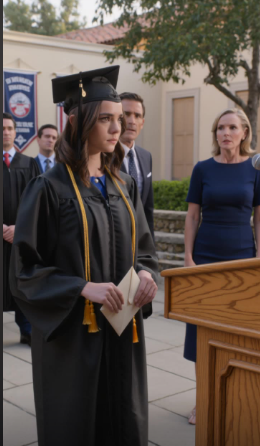
The second time, he tried to bury me in front of a room full of strangers, on the very day I graduated with honors from the University of California, Berkeley.
What he didn’t understand was that I had stopped being afraid of him years before he stood up in that restaurant and announced, coldly and publicly, that I was no longer his daughter.
He thought he was cutting me off.
He thought he was teaching me a lesson.
He thought the Richards name was still something I needed.
But I had been carrying his darkest secret since I was seventeen years old.
And by the time he finally pointed his disappointment at me like a loaded weapon, I had nothing left to lose.
My name is Natalie Richards.
At twenty-two years old, I believed graduating summa cum laude from Berkeley would be the proudest moment of my life.
Instead, it became the day my father publicly disowned me in front of everyone I knew.
And it became the day I finally told the truth about the man who had spent his life teaching us that image mattered more than integrity.
I grew up in suburban Chicago, in a two-story colonial house that looked perfect from the street.
Perfectly trimmed lawn.
White shutters.
Spotless windows.
A flag mounted beside the front porch every Memorial Day, every Fourth of July, every Veterans Day, because my father believed symbols were useful when they made the right impression.
Everything about our house reflected his obsession with order.
The hedges were clipped before they grew wild.
The cars were washed before they looked dirty.
The family photos were updated before the old ones revealed too much time had passed.
My father, Matthew Richards, was the Chief Financial Officer of Westridge Capital Partners, a respected financial firm downtown. In the world he inhabited, success had only one acceptable shape: prestigious schools, powerful jobs, clean suits, quiet confidence, expensive watches, and the approval of men who understood money as a language of superiority.
In the Richards household, expectations were not suggestions.
They were rules.
My father rarely needed to raise his voice. A slight change in tone could silence an entire dinner table. He could make a room colder simply by setting down his fork.
James, my oldest brother, learned early how to survive him.
Tyler, my second brother, learned how to bend without looking like he had bent.
My mother learned how to disappear beautifully.
And I learned how to defend myself before I even understood what I was defending.
My mother, Diana Richards, had once been a completely different person.
Before marrying my father, she studied art history. She wanted to work in museums. She spoke French badly but passionately. She could stand in front of a painting for twenty minutes and notice details no one else saw.
By the time I was old enough to understand sadness, that woman had mostly vanished.
In her place stood Mrs. Matthew Richards: elegant, composed, charitable, careful. She hosted dinners. She remembered birthdays. She wrote thank-you notes in blue ink. She kept the peace at any cost.
Sometimes, when my father traveled for work, she would take me secretly to art exhibitions downtown.
In those quiet museum halls, I saw who she used to be.
Her eyes brightened.
Her voice changed.
She would lean close to a painting and whisper facts like secrets.
“Look at the hands,” she once told me in front of a portrait. “People hide things in their faces, Natalie. But hands always tell the truth.”
At home, though, whenever my father criticized me, she became smaller again.
“Your father means well,” she would say.
Even when he treated an A-minus like a personal betrayal.
Even when he laughed at my interest in civil rights law.
Even when he made it clear I wasn’t quite the daughter he had ordered from the universe.
My brothers fit better into the life he designed.
James Richards, the eldest, was practically my father’s clone. He studied business at Northwestern, wore navy suits before he was old enough to rent a car, and learned to speak in the same calm, condescending tone that made disagreement sound childish.
Tyler had once shown signs of rebellion.
During college, he nearly turned a semester abroad in Spain into a gap year. He sent home photos from Seville, smiling in linen shirts, eating late dinners, writing emails full of sunlight and possibility.
My father flew to Spain personally.
He stayed for three days.
Tyler came home two weeks later.
No one called it surrender.
In our house, surrender was called “getting serious.”
After graduating from the University of Chicago’s business school, Tyler joined my father’s firm.
James followed the blueprint.
Tyler returned to it.
I never did.
While my brothers played stock-market simulations with my father, I read books about the Supreme Court, civil rights cases, whistleblowers, housing discrimination, environmental justice, and the strange, fragile idea that the law could sometimes stand between powerful people and the damage they caused.
Our dinner table often became a battlefield.
My father would listen to me argue about constitutional protections or corporate misconduct, then slice into his steak and dismiss the entire subject with one sentence.
“The law is for people who couldn’t succeed in finance,” he would say.
“It reacts to problems instead of preventing them.”
At the time, I did not understand how ironic that statement would become.
Or maybe I did.
Maybe some part of me had already begun to sense that my father hated the law not because it was weak, but because it had the power to ask questions he did not want answered.
During my senior year of high school, acceptance letters began arriving.
I had applied to business programs because peace in our house always required some performance of obedience.
But secretly, I had also applied to pre-law programs.
When my acceptance letter from Berkeley arrived, along with a substantial scholarship, I stared at the page until the words blurred.
University of California, Berkeley.
Pre-law track.
Scholarship awarded.
My hands shook.
Not from fear.
From the realization that there was a version of my life that existed outside my father’s permission.
That evening, I called a family meeting.
My mother sat on the edge of the sofa, already nervous because I had used the words “family meeting,” and in our house, children did not call meetings.
James leaned against the fireplace like a corporate heir waiting for quarterly numbers.
Tyler sat with one ankle crossed over his knee, eyes flicking between me and Dad.
My father remained in his leather chair, the one positioned to face the room like a judge’s bench.
“I’m going to Berkeley,” I said. “I’m studying pre-law.”
My mother’s face moved through pride, fear, and pain in less than two seconds.
James gave a sharp little laugh.
Tyler looked at the floor.
My father repeated one word.
“Berkeley.”
He said it as if I had announced a disease.
“Yes.”
“And the business programs?”
“I was accepted to some of them. But I’m choosing Berkeley.”
His expression did not change.
That was how I knew it was bad.
He stood and walked to the window, looking out at the lawn he paid men to keep flawless.
Then he turned around and said three words that altered my life forever.
“Without my support.”
He did not shout.
He did not argue.
He spoke with the same tone he used to discuss underperforming assets.
“I allocated funds for your education based on certain expectations,” he said calmly. “If you choose this path, those funds will be reallocated.”
“You’re cutting me off because I want to study law?” I asked.
“I’m reallocating resources where they will provide better returns.”
That was my father.
His daughter’s future was not a dream.
It was a portfolio.
My mother whispered, “Matthew, please.”
He did not look at her.
James said nothing.
Tyler’s jaw tightened, but he stayed quiet.
I looked at all of them and understood something I had not wanted to understand.
In that house, love was conditional.
Safety was conditional.
Even family was conditional.
That night, my mother slipped into my room after midnight.
She carried a white envelope.
Her eyes were red.
“He can’t know,” she whispered.
Inside was five thousand dollars.
Cash.
Folded carefully.
Her hands trembled as she gave it to me.
“It’s not enough,” she said. “But it’s yours.”
I hugged her so tightly she almost dropped the envelope.
“Come with me,” I whispered before I could stop myself.
She closed her eyes.
For one impossible second, I thought she might say yes.
Then she pulled back and touched my face.
“Oh, Natalie,” she said softly. “I don’t know how.”
That was the tragedy of my mother.
She had lived inside the cage so long that the open door looked like a cliff.
That money became the first step toward my independence.
But the real turning point came two weeks later.
My father was in London.
My mother was at a charity luncheon.
I was looking for a stapler in his home office.
His desk was always locked.
His file boxes were always locked.
His drawers were arranged with military precision.
But that day, one leather file box sat on the side credenza, unlocked.
I bumped it with my elbow.
It tipped over.
Papers spilled across the carpet.
At first, I panicked.
My father’s office was not a room people entered casually. It smelled of leather, old paper, and controlled power. Even the family photos on his shelves looked arranged by importance rather than affection.
I dropped to my knees and started gathering the papers.
Then I saw the first name.
Morrison.
Then Guzman.
Then Taylor.
Three settlement agreements.
Three non-disclosure clauses.
Three numbers large enough to make my stomach tighten.
I did not fully understand the documents then. I was seventeen, not a lawyer. But I knew enough to recognize fear when it appeared in legal language. I knew enough to see repeated words: misrepresentation, advisory failure, unsuitable investment allocation, confidential settlement, no admission of wrongdoing.
One memo caught my eye.
Internal exposure must be contained before broader review.
Another line.
Client migration to high-risk holdings was approved despite known instability.
Then an email printed and marked confidential.
Move Morrison/Guzman/Taylor accounts before Q3 reporting cycle. Preferred clients must be shielded first.
My heart beat so loudly I could hear it in my ears.
I photographed everything with my phone.
Hands shaking.
Breath shallow.
Then I put every page back exactly where I found it.
That night at dinner, my father asked why I was quiet.
“Just tired,” I said.
He looked at me for a long moment.
For the first time in my life, I understood that my fear of him had changed shape.
I was not afraid of disappointing him anymore.
I was afraid of what he had done.
And what he might do to keep it buried.
When I left for Berkeley, I carried two suitcases, five thousand dollars from my mother, a scholarship letter, a phone full of photographs, and a secret too heavy for any seventeen-year-old girl.
California terrified me.
It also saved me.
Berkeley was loud, brilliant, messy, alive.
Students argued under eucalyptus trees. People held protests before breakfast. Professors encouraged disagreement instead of punishing it. Nobody cared that my father was Matthew Richards. Nobody cared about the house in suburban Chicago or the country club Christmas cards or the fact that my brothers wore suits to family dinners.
At Berkeley, I was not the disappointing daughter.
I was Natalie.
Just Natalie.
My scholarship covered tuition.
Everything else was my responsibility.
I worked morning shifts at a campus coffee shop, evenings at the library, and weekends assisting a law professor with research.
Sleep became a luxury.
So did fresh fruit.
So did saying yes to dinner out with friends.
But slowly, I built something better than approval.
I built a life.
My roommate, Stephanie Carter, was the first person who truly understood me.
She was from Oregon, had curly hair that seemed to have its own legal rights, and believed every emotional crisis could be improved by coffee, sarcasm, and one good blanket.
She often found me asleep at my desk and draped a sweatshirt over my shoulders.
“You know beds exist, right?” she joked one morning, placing a coffee beside my laptop.
“Beds are for people without deadlines.”
“Beds are for people who want spines after thirty.”
Stephanie became the first person I told the partial truth to.
Not about the documents.
Not yet.
But about my father.
About being cut off.
About the way I still heard his voice in my head whenever I made a mistake.
She listened without trying to fix it.
Then she said, “Your father sounds like someone who mistakes control for love.”
I stared at her.
No one had ever named it that cleanly before.
Soon our circle grew.
Rachel Alvarez, an environmental science major with fearless eyes, a voice made for protests, and a moral compass so sharp it could cut glass.
Marcus Chen, a computer science student with a quiet brilliance and a surprising obsession with constitutional law. He could build an encryption tool in one afternoon, then spend two hours arguing about the Fourth Amendment over instant noodles.
They became my family before I admitted I needed one.
Rachel dragged me to rallies.
Marcus debated case law with me until midnight.
Stephanie reminded me to eat.
They taught me that love could be loud, inconvenient, teasing, honest, and unconditional.
No one asked me to become smaller to earn my seat at the table.
One of the most important people I met at Berkeley was Professor Eleanor Williams.
She was famous for her constitutional law seminars and infamous for dismantling lazy arguments with surgical precision.
During my first semester, I made what I thought was a brilliant point about corporate personhood and constitutional protections.
Professor Williams listened patiently.
Then she destroyed my argument in front of the entire class.
Afterward, she asked me to stay.
I expected criticism.
Instead, she studied me with a thoughtful expression and said, “You argue like someone who has been defending herself her whole life.”
I froze.
She continued, “That is not a weakness. It is power, if you learn to use it.”
Under her mentorship, I changed.
Not quickly.
Not easily.
But steadily.
I stopped arguing to survive.
I started arguing to reveal.
By junior year, Professor Williams recommended me for an internship at Goldstein & Parker, a firm specializing in corporate accountability cases.
The irony was almost too sharp to touch.
Every day, I studied how powerful companies hid wrongdoing behind language, influence, settlement agreements, and polished reputations.
My supervisor, Laura Goldstein, noticed my dedication.
“You understand how these companies think,” she told me once after I found a discrepancy in a disclosure timeline.
I looked up from the file.
“But you still have a conscience.”
She smiled.
“That combination makes dangerous lawyers. In the best way.”
For the first time, someone valued the exact qualities my father had criticized.
By senior year, I had accomplished everything I once dreamed about.
Top of my class.
President of the pre-law society.
Published undergraduate research.
Internship experience.
Early acceptance into three prestigious law schools.
Including Yale.
My dream.
But my bank account was nearly empty, my body was exhausted, and there were nights when I still woke from dreams of my father’s office, papers scattered across the floor, his voice behind me asking what I had seen.
I kept the photographs.
I did not use them.
Not because he deserved protection.
Because I did not know yet what justice would look like.
And because, despite everything, part of me still wanted a family.
Out of obligation, I sent graduation invitations.
One to my parents.
One to James.
One to Tyler.
I expected silence.
Three weeks later, my mother emailed.
Natalie, we can’t attend. Your father has an important client meeting. I am so sorry. I am proud of you. Love, Mom.
I read the email twice.
Then I closed my laptop and went to my shift at the library.
I told myself I was not surprised.
That was true.
I told myself it did not hurt.
That was not.
My friends stepped in immediately.
Rachel planned a celebration.
Marcus’s parents insisted on attending as my “California family.”
Stephanie bought a ridiculous sash that said Future Supreme Court Justice and threatened to make me wear it in public.
For the first time, I believed graduation could still feel special, even without the people whose last name I carried.
Graduation morning arrived with perfect Berkeley weather.
Sunny sky.
Cool breeze.
A campus full of families, flowers, cameras, caps, gowns, and joy.
Stephanie woke me by throwing a pillow at my head.
“Rise and shine, future legal menace.”
Rachel arrived with bagels and orange juice.
Marcus brought his parents, who handed me flowers and a card that nearly made me cry before the ceremony even began.
We walked toward the stadium surrounded by excitement.
For once, the absence of my family did not hurt as much as I had expected.
Until I looked toward the audience.
Out of habit, I scanned the crowd.
Not hoping.
Not really.
Then I saw them.
Four rows back.
Left side.
My entire family.
My father sat ramrod straight in an expensive dark suit that looked almost aggressive among the casual California crowd.
My mother sat beside him, clutching her purse with white knuckles.
James and Tyler flanked them like bookends.
My heart lurched so hard I nearly stumbled.
Rachel caught my elbow.
“What’s wrong?”
“They’re here,” I whispered.
She followed my gaze.
Her expression hardened.
She knew enough stories to understand what their presence might mean.
“Well,” she said, squeezing my hand, “now they get to see what they almost missed.”
The ceremony passed in a blur.
When they called “Natalie Richards, summa cum laude,” my friends screamed so loudly that several people turned around laughing.
From the stage, I saw my mother clapping with tears in her eyes.
Tyler smiled.
James applauded politely.
My father brought his hands together exactly three times.
The minimum acceptable acknowledgment.
Still, he had come.
And because hope is stubborn, especially in daughters, I let myself believe that maybe it meant something.
After the ceremony, I moved through the crowd toward them.
My mother reached me first and pulled me into a perfume-scented embrace.
“I’m so proud of you,” she whispered fiercely. “So proud.”
Tyler hugged me awkwardly but sincerely.
“Nice job, Nat. Berkeley looks good on you.”
James offered a stiff handshake.
“Congratulations on your achievement.”
Then my father stepped forward.
“Natalie,” he said.
He extended his hand.
Formally.
Like I was a junior associate.
I shook it.
“Thank you for coming,” I said. “I thought you had an important meeting.”
“Plans change,” he replied.
Nothing more.
Before silence could spread, Stephanie bounded over with her parents, followed by Rachel, Marcus, and Marcus’s parents.
Introductions were made.
The warmth of my chosen family collided with the chill of my biological one, and the contrast was so sharp I almost felt embarrassed for the Richardses.
Marcus’s father, Mr. Chen, announced, “We made lunch reservations for everyone at Bayside. Our treat. Today is for celebrating.”
My father’s jaw tightened.
He did not like being absorbed into someone else’s plans.
My mother quickly said, “How thoughtful. We’d be delighted.”
Lunch was an exercise in two worlds pretending they could sit at the same table.
My friends’ families asked about favorite classes, dorm memories, law school plans, and funny stories from freshman year.
My father asked about rankings, salary outcomes, institutional prestige, and whether Yale was strategically preferable to Harvard.
When Marcus’s mother praised my internship at Goldstein & Parker, my father turned toward me.
“What exactly did you do there?”
“We worked on corporate accountability cases,” I said carefully. “Fraud investigations, whistleblower claims, investor misrepresentation, that kind of thing.”
Something flickered across his face.
So quick that anyone else might have missed it.
But I had spent my childhood studying his smallest movements.
It was fear.
Not much.
But enough.
“Sounds like glorified tattling,” he said.
Rachel’s eyes sharpened.
Marcus stopped buttering his roll.
My mother’s hand flew to her necklace.
“The business world requires discretion and loyalty,” my father added.
“I think it requires ethics and transparency,” I said.
The table chilled.
We managed to get through the rest of lunch with superficial conversation, but the damage had been done.
As everyone prepared to leave for the afternoon reception, my father announced that he had made dinner reservations for just our family at Laurel Heights, one of the most expensive restaurants in Berkeley.
“We need family time,” he said.
Not asked.
Announced.
“Seven o’clock.”
Rachel squeezed my arm when we stepped outside.
“Text us if you need an emergency rescue.”
I laughed.
But part of me wondered if I would.
Laurel Heights looked like the kind of restaurant my father trusted.
Polished wood.
Crystal glasses.
White tablecloths.
Low lighting.
Quiet waiters.
Money disguised as taste.
The dining room was full of graduation parties. Families toasted their graduates with champagne. Parents took photographs. Grandparents wiped tears. Siblings made jokes. Everywhere around us, love seemed easy.
At our table, it felt like a performance already going wrong.
My father ordered an expensive bottle of wine without asking what anyone wanted.
For the first twenty minutes, he interrogated me about Yale.
“New Haven,” he said with mild distaste. “Another four years away from Chicago. One might think you’re choosing locations based on distance from family.”
“I’m choosing based on education and career opportunities.”
“Yale has a reputation, certainly. Though Harvard aligns better with certain serious career objectives.”
“Yale is the right fit for me.”
“And constitutional law?” he asked. “What do you plan to do with that? Spend your career arguing theoretical points while earning a public defender’s salary?”
My mother said softly, “Yale is wonderful, Matthew.”
He continued as if she had not spoken.
“My concern is practical. Education should create tangible outcomes.”
“My education isn’t a stock portfolio,” I said.
His eyes narrowed.
“It has value beyond dollars.”
James cleared his throat, trying to redirect.
“How’s Stephanie handling job hunting? Finance, wasn’t it?”
“Environmental science,” I corrected. “She accepted a position with a climate research institute.”
My father scoffed.
“Another idealist. You certainly found your people out here.”
I set down my fork.
“Maybe I did.”
Tyler said, “Dad, she graduated summa cum laude today. Could we just celebrate that for five minutes?”
My father placed his wineglass down carefully.
“I am celebrating. I am also trying to understand how my daughter intends to convert four years of expensive education into a life that commands respect.”
“I already have a life that commands respect,” I said quietly.
He smiled without warmth.
“Among whom?”
That was when the table changed.
My mother whispered, “Matthew, please.”
He ignored her.
The waiter arrived with our entrees, giving us a temporary reprieve.
But my father was not finished.
As we began eating, my mother asked about my favorite Berkeley experiences.
I started telling her about the legal aid clinic where we helped low-income residents facing housing disputes.
“We prevented three evictions last semester,” I said.
My father cut into his steak with surgical precision.
“Pro bono work,” he said. “Noble, but unsustainable. Law is not charity.”
“Some of us believe skills should be used for more than enriching ourselves.”
His knife stopped.
“And what exactly are you implying about my career, Natalie?”
“I’m not implying anything. I’m talking about mine.”
The restaurant noise seemed to fade.
His face hardened.
“Your career has not begun. Yet you speak with certainty despite having virtually no real-world experience.”
“I have four years of internships, clinics, and research.”
“Four years of playing at being a lawyer,” he said. “Let me tell you what I see. I see a young woman who had every advantage, every opportunity to excel in a proven field, and chose instead to waste her potential on ideological crusades.”
The humiliation burned hot behind my eyes.
He leaned back, voice growing louder.
“Do you know what it looks like when colleagues ask about my daughter and I have to explain that she has chosen to become a professional antagonist to the business world that gave her every privilege?”
“I didn’t have your privileges,” I said. “You cut me off. I worked three jobs. I earned everything I have.”
“With a name and upbringing provided by my years of work,” he snapped.
“My scholarship funded my education.”
He laughed.
A small, brutal sound.
“You truly believe you did this alone? That the Richards name had nothing to do with your opportunities? That naivety is exactly why you’re not ready for the real world.”
Nearby tables had gone quiet.
People were pretending not to listen, which meant everyone was listening.
Tyler leaned forward.
“Dad, stop.”
“No,” my father said. “It is time for honesty.”
He turned his cold gaze back to me.
“Not only have you rejected everything this family stands for—our values, our career path, our city, our network—but you have chosen to work against the very world that built your life.”
My mother looked pale.
“Matthew.”
“Stay out of this, Diana.”
He did not even look at her.
Then he said it.
Clear.
Public.
Deliberate.
“If you insist on this path, then you do it completely on your own. Not with my support. Not with my connections. And not with my name.”
The room went silent.
My heartbeat slowed.
Not because I was calm.
Because something inside me had gone still in the way the air goes still before lightning strikes.
“Are you disowning me at my graduation dinner?” I asked.
He lifted his chin.
“I am clarifying the terms of our relationship moving forward.”
My mother gasped.
Tyler looked furious.
James stared at his plate.
And I felt the last thread snap.
Four years of independence had taught me my own strength.
Four years of love from people who did not demand obedience had shown me what family could be.
Four years of studying justice had made one thing clear:
Some truths rot when buried.
I straightened my shoulders.
“If that’s how you want to play this,” I said, my voice steadier than I felt, “then I think it’s time everyone heard the real reason I chose corporate accountability law.”
Something flashed in my father’s eyes.
Not anger.
Not yet.
Fear.
“This is not the place for dramatics, Natalie,” he said softly.
“You made it the place when you publicly disowned me.”
My mother reached across the table.
“Natalie, please.”
I looked at her gently.
“It’s okay, Mom. I’m not angry anymore.”
Then I turned back to my father.
“When I was seventeen, I was looking for a stapler in your home office. You were in London. Mom was at a charity luncheon. I accidentally knocked over the leather file box you kept locked.”
My father’s jaw tightened.
“I found settlement documents,” I said. “For the Morrisons. The Guzmans. The Taylors.”
James lifted his head.
Tyler went very still.
My father’s face lost color.
“I did not understand everything then,” I continued. “But I understood enough to know something was wrong. Invoices for consulting services that didn’t exist. Balance sheets with discrepancies. Internal communications about moving certain clients into doomed investments before the 2008 crash.”
“Natalie,” James said, warning in his voice.
I did not stop.
“I photographed everything.”
My father’s hand tightened around his glass.
“You have been investigating me.”
“I have been understanding you.”
His face hardened.
“You have no idea what those documents meant.”
“I know the Morrison family lost almost everything after following advice Westridge gave them. I know the Guzmans’ daughter had to drop out of college. I know the Taylors lost their home. And I know all three settlements included non-disclosure agreements.”
The restaurant was completely silent now.
No one pretended anymore.
My mother was crying.
That was when I realized.
“You knew,” I said.
She looked away.
The pain of that nearly knocked the breath out of me.
“You knew.”
Her lips trembled.
“I knew there were settlements,” she whispered. “Your father said it was normal.”
My father slammed his hand lightly against the table.
“That is enough.”
“No,” I said. “It was enough when you cut me off at seventeen. It was enough when you tried to humiliate me today. It was enough when you built this family on money that came from other people’s ruin and then called my career an embarrassment.”
His eyes were dangerous now.
“Those were legitimate settlements for investment losses. Standard practice during volatile markets.”
“The documents described intentional misrepresentation.”
“Legal language is complicated. You were a child.”
“And now I’m not.”
That landed harder than I expected.
My father stared at me as if the little girl he controlled had disappeared and someone else had taken her seat.
“It’s why I chose Berkeley,” I said. “It’s why I studied corporate accountability. It’s why I interned at Goldstein & Parker. It’s why I’m going to Yale to study financial fraud and public accountability. I wanted to understand how powerful people hurt others and then hide behind polished language.”
His voice dropped.
“You wouldn’t dare.”
“I’m not threatening you.”
“You are.”
“No. I am explaining myself. You said I rejected this family. The truth is, I saw what this family was built on, and I refused to become another person helping keep the walls painted.”
Tyler looked at our father.
“Is it true?”
My father did not answer fast enough.
That was answer enough.
James stood abruptly.
“This is ridiculous.”
“Sit down,” my father commanded.
James sat.
The old training still worked on him.
For a moment, I almost felt sorry for all of us.
My father had not simply controlled me.
He had trained an entire family to orbit his image.
I stood.
My napkin fell beside my untouched plate.
“You asked me to be independent,” I said. “I accept. But understand this: my choice to study corporate accountability isn’t rebellion. It’s redemption.”
I looked at my mother and brothers.
“I love you. When you are ready to talk honestly, I’ll be there. But I won’t participate in the fiction anymore.”
Then I walked away.
Past the staring diners.
Past a waiter frozen with a tray of champagne glasses.
Past a family whose graduate was still wearing a gold honor cord like mine.
Through the ornate doors.
Into the cool Berkeley evening.
My hands were shaking.
But my steps were steady.
Behind me, I heard my mother call my name.
I did not turn around.
Four years earlier, I had left Chicago with two suitcases and hidden pain.
That night, I left Laurel Heights having finally set down the heaviest burden I had ever carried.
The truth was out.
Whatever happened next would be built on something real.
My phone buzzed before I reached my apartment.
Rachel, Stephanie, and Marcus had created a group chat titled Emergency Response Team.
Rachel: ARE YOU ALIVE?
Stephanie: We have ice cream.
Marcus: And tequila. Also emotional support encryption if needed.
I laughed for the first time in hours.
By the time I unlocked my apartment door, my mother was calling.
I hesitated before answering.
“Natalie,” she said, voice raw. “Where are you? Are you safe?”
“I’m fine. I’m home.”
“Your father is…” She paused. “He’s not in a good place.”
“I imagine not.”
“We’re at the hotel. James is with him. Tyler and I are here too.”
“Mom,” I asked quietly, “did you know about the settlements?”
Silence.
That silence hurt more than any answer.
“I knew there were problems,” she said finally. “I knew there were settlements. Matthew said all investment firms had losses during the crisis. He said it was standard.”
“But you suspected more.”
Another silence.
“There were signs,” she whispered. “Things he said. The way he changed. The anger. The control.”
“Why didn’t you say anything?”
“What would I have said, Natalie? Accuse your father without proof? Destroy the family? You don’t understand what those choices feel like.”
I closed my eyes.
The sad thing was, I did understand.
I had spent years choosing between loyalty and truth.
“Mom,” I said, “covering something up does not make it disappear. It just teaches everyone else to carry it.”
She started crying again.
A knock sounded at my door.
“My friends are here. I need to go.”
“Natalie, please,” she said quickly. “Don’t go to authorities. Don’t go to journalists. Give us time.”
There it was.
The old pattern.
Protect the image.
Contain the damage.
Keep the peace.
“I’m not planning to do anything tonight,” I said. “But I won’t lie if asked, and I won’t pretend it didn’t happen. That’s all I can promise.”
“I love you,” she whispered.
“I love you too.”
When I opened the door, my friends stood outside with ice cream, tequila, flowers, and faces full of fury.
Stephanie hugged me first.
Rachel followed.
Marcus shut the door behind them and said, “No one is allowed to make legal decisions while emotionally unstable and underfed.”
We sat on my floor because my apartment did not have enough furniture for disaster recovery.
I told them everything.
Not just the dinner.
The office.
The documents.
The photographs.
The families.
My father.
My mother.
The silence.
When I finished, Rachel looked ready to commit a felony.
Stephanie was crying.
Marcus stared at the floor, jaw tight.
Finally, he said, “You didn’t blow up your family.”
I looked at him.
“Your father built a house over a gas leak,” he said. “You lit a match only after he tried to lock you inside.”
Rachel pointed her spoon at him.
“That is disturbingly poetic for a computer science major.”
We stayed up until three in the morning.
At 4:23, my phone lit up.
Tyler.
Is it true? All of it?
I typed back.
Yes. I have copies.
The typing dots appeared, disappeared, appeared again.
I always wondered where the money for James’s Harvard tuition suddenly came from. Dad said it was a bonus. I need time.
I replied:
Take all the time you need. I’m sorry you had to find out that way.
His answer came a minute later.
I’m sorry he made you carry it alone.
That was the first time one of my brothers had ever acknowledged the weight.
I cried then.
Quietly.
Not because I regretted speaking.
Because I had been lonely for a very long time, and one sentence had reached me across the wreckage.
Morning brought consequences.
Messages from relatives.
Unknown numbers.
An email from James with the subject line How could you?
I did not open it.
A message from Professor Williams arrived just after ten.
Proud of you.
Inside, one line:
Standing up for truth is never easy, but it is always clarifying. My office door is open.
I sat with that sentence for a long time.
Clarifying.
Yes.
That was exactly what truth did.
It did not always heal immediately.
Sometimes it simply revealed the shape of the wound.
At noon, my mother called again.
“Your father is flying back to Chicago today. James is going with him. Tyler and I are staying one more day.”
“Why?”
“Tyler wants to talk to you. So do I. Properly.”
We met at a quiet café far from campus.
My mother looked like she had aged ten years overnight.
Tyler looked exhausted.
When I sat down, my mother reached for me. I let her hug me.
For a moment, she was not the woman who had stayed silent.
She was my mother.
Then we sat.
“Your father is consulting with the firm’s legal team,” she said. “He is concerned about implications.”
“Is he denying it?”
Tyler answered.
“Not really. At first, yes. Then he started talking about the financial crisis, difficult decisions, protecting the majority of clients. He said people who never had to make hard calls should not judge those who did.”
“Classic,” I said.
My mother winced.
“He’s afraid you’ll expose him.”
“I didn’t collect the documents to destroy him. I collected them because I needed to understand why our family felt like a courtroom where he was always the judge.”
Tyler looked down at his coffee.
“You could expose him, though.”
“Yes.”
“Will you?”
I watched steam rise from my cup.
“The statute of limitations may have passed on much of it. The settlements created legal barriers. Public exposure would hurt a lot of people beyond him. Employees. Clients. Maybe even the families again.”
My mother exhaled in relief.
I looked at her.
“That doesn’t mean I’m going back to pretending.”
She froze.
“I won’t lie. I won’t be threatened. I won’t let him use the Richards name like a leash. And if anyone asks me directly, I will tell the truth.”
Tyler nodded slowly.
“That seems fair.”
My mother’s eyes filled.
“He does love you, Natalie. In his way.”
“His way is not enough anymore.”
The words came gently, but they landed hard.
We talked for nearly three hours.
For the first time, my mother spoke honestly about her marriage. About how my father’s control had not arrived all at once. It came politely, in stages. A comment about her clothes. A suggestion about her friends. A criticism of her spending. A dismissal of her dreams. A reminder that he knew better.
“One day,” she said, staring at her hands, “I realized I had not chosen anything for myself in years.”
Tyler spoke too.
He admitted he hated working at Westridge but had been too afraid to leave.
“I thought Dad’s approval was the same as success,” he said. “Now I don’t even know what I’m doing there.”
My mother touched his arm.
The three of us sat in that café like survivors of the same storm, finally admitting the roof had been leaking for years.
That evening, as I packed my apartment for my upcoming move to New Haven, my phone exploded again.
A journalist from the Chicago Tribune left a voicemail asking about allegations concerning Westridge Capital Partners.
A distant aunt texted that family matters should remain private.
Another cousin wrote, Proud of you. Don’t let them scare you.
Then Stephanie knocked on my door.
“You need to see this.”
She handed me her phone.
The headline read:
Westridge Capital Partners Announces Executive Restructuring; Matthew Richards Steps Down as CFO, Citing Family Priorities.
I stared at the screen.
The speed of it told me everything.
My father was not innocent.
He was controlling the narrative before someone else could.
“Are you okay?” Stephanie asked.
I considered the question.
Then I nodded.
“Yeah,” I said. “I think I am.”
Three months later, I moved into a small but sunny apartment in New Haven.
Close enough to Yale Law School to walk.
Far enough to feel like my own life.
The apartment had uneven floors, old radiators, tall windows, and one kitchen cabinet that refused to close. I loved it immediately.
Rachel, Stephanie, and Marcus helped me move.
Rachel decorated my refrigerator with ridiculous magnets.
Stephanie arranged my bookshelf “by emotional damage.”
Marcus installed security protections on my laptop and phone with the seriousness of someone guarding national secrets.
“New Haven isn’t Berkeley,” Rachel warned before leaving. “You’ll need new friends who understand your specific brand of intensity.”
“I’m not intense.”
All three of them laughed at once.
After they left, the apartment felt quiet.
Not lonely.
Quiet.
There is a difference.
A week before classes began, someone knocked on my door.
I looked through the peephole.
Tyler stood in the hallway, holding a potted plant.
I opened the door.
“Surprise,” he said awkwardly. “Housewarming gift. Apparently impossible to kill, which seemed appropriate.”
“Tyler, what are you doing here?”
“I should have called,” he admitted. “But I thought you might say no.”
I stepped aside.
He had luggage with him.
We stood in the middle of my apartment, surrounded by books and unpacked boxes.
Then we both spoke at once.
“I left the firm.”
“I left Chicago.”
We stopped.
Then laughed.
He sat on my couch and looked around.
“This place is nice.”
“It has a haunted radiator.”
“Very Yale.”
I smiled.
He rubbed his hands together.
“I accepted a job in Boston. Ethical investment advisory firm. Smaller salary. Better sleep, hopefully.”
I stared at him.
“That’s huge.”
“Yeah.” He looked at the plant. “Turns out working for Dad lost its appeal after I understood what I was helping legitimize.”
“How did he take it?”
“Badly. Betrayal. Ingratitude. Warnings that I’ll ruin my future. The usual motivational speaking.”
“And Mom?”
His face softened.
“She moved out.”
I inhaled sharply.
“She’s staying with Aunt Patricia for now. Looking for an apartment. She mentioned taking art classes again.”
The image almost undid me.
My mother in a studio.
Paint on her fingers.
Someone asking what she wanted to create.
Not what would look appropriate.
Not what Matthew would approve.
What she wanted.
Tyler handed me an envelope.
“From Mom.”
Inside was a check and a handwritten note.
Natalie,
This is from my personal savings. Money that is truly mine to give. I should have supported you from the beginning. I cannot undo the years I stayed quiet, but I can begin telling the truth now. I am proud of you, not because you succeeded, but because you refused to become cruel in order to survive.
All my love,
Mom.
I pressed the note to my chest.
Tyler looked away to give me privacy.
When I could speak again, I said, “Tell her I’m not angry.”
“She thinks you are.”
“I’m sad. I was disappointed. But I’m not angry. Not anymore.”
“You should tell her yourself.”
“I will.”
That night, Tyler and I ordered takeout and talked until after midnight.
He told me James was struggling.
“At first he said you betrayed the family,” Tyler said. “But then he started asking Dad questions. Dad kept giving answers that sounded like press releases.”
“That must have shaken James.”
“Everything shakes James if it threatens the image. But I think he’s beginning to see the image was the problem.”
As summer turned to fall, my new life began.
Yale was intense in a way that made Berkeley look relaxed.
The students were brilliant, ambitious, sleep-deprived, and occasionally unbearable.
I loved it.
Professor Harrington’s corporate accountability seminar became the center of my academic world. She had written extensively on financial fraud, whistleblower protections, and the ethics of corporate governance.
During one discussion about family businesses and institutional loyalty, I spoke more personally than I intended.
After class, she asked me to stay.
“You bring a particular clarity to this material,” she said.
I gave a careful smile.
“Personal history?”
“Complicated family history.”
She nodded.
“The best lawyers often come from complicated histories. They know how power hides itself.”
I thought of my father’s office.
The leather file box.
The quiet settlements.
“Yes,” I said. “They do.”
In Chicago, my family continued rearranging itself around the truth.
My mother found an apartment in the arts district.
She began painting classes.
Then therapy.
Then she cut her hair shorter than my father had ever liked.
She called me every Sunday.
At first, our conversations were careful.
Then they became real.
“I painted today,” she told me one afternoon.
“What did you paint?”
“A door.”
“Open or closed?”
She paused.
“Opening.”
Tyler settled in Boston.
He worked long hours, but his voice changed. He sounded tired, yes, but not trapped.
James finally called in November.
I let it ring twice before answering.
“Hi,” he said.
“Hi.”
Silence.
Then he exhaled.
“I was angry at you.”
“I know.”
“I still don’t know what to do with all of it.”
“You don’t have to know immediately.”
“I thought Dad was…” He stopped. “I don’t know. I thought he was hard because he had to be. Because success required it.”
“That’s what he wanted us to believe.”
James was quiet.
“I miss my sister.”
The sentence surprised me.
“I miss my brother,” I said.
We did not fix everything in one call.
Families do not work like courtroom verdicts.
But we began.
As for my father, he remained silent.
I heard updates through others.
Consulting work.
A smaller apartment.
A carefully worded separation from my mother.
An insistence that he had made difficult decisions during an unprecedented financial crisis and that history was always written by people without responsibility.
He never apologized.
I stopped waiting for him to.
His absence no longer felt like punishment.
It felt like room.
In December, Professor Harrington asked me to assist with research on a paper about confidential settlements and long-term accountability failures in financial institutions.
I almost laughed when she described the topic.
“Too close?” she asked.
“Close enough to be useful,” I said.
The work was difficult.
Not intellectually.
Emotionally.
I read case after case where powerful people used legal silence to turn harm into paperwork. Families lost homes. Retirees lost savings. Students abandoned school. People died under stress, and companies called it exposure management.
One night, alone in the law library, I found myself searching for the Morrison family.
Then the Guzmans.
Then the Taylors.
I had avoided doing it for years because knowing names was one thing.
Seeing lives was another.
Mr. Morrison had died in 2011.
Heart attack.
His wife still lived in Illinois.
The Guzmans’ daughter, Elena, had never finished college, but she now worked at a community center.
The Taylors had moved to Arizona after losing their home.
I sat there staring at the screen.
The documents had become people again.
That was the thing my father had erased.
Numbers were easier than faces.
On Christmas Eve, I received a letter.
No return address, but I recognized the handwriting.
My father’s.
I almost threw it away.
Then I opened it.
Natalie,
I am told you are doing well at Yale.
I have considered writing many times. I am not certain what you expect from me. I will not confess to crimes I did not commit in the way you have characterized them. The financial crisis forced difficult decisions on many of us. You are young, and one day you may understand that leadership requires choices that look cruel from the outside.
That said, I regret the manner in which our disagreement occurred at your graduation dinner. It should not have happened publicly.
You are intelligent. You have always been intelligent. I hope you use that intelligence wisely.
Dad.
I read it once.
Then twice.
It was not an apology.
It was a negotiation with guilt.
I folded the letter and placed it in a drawer.
For a moment, I felt the old ache.
Then it passed.
Not because I did not care.
Because I had finally stopped mistaking his inability to love properly for proof that I was difficult to love.
On New Year’s Day, my mother visited me in New Haven.
She arrived wearing a red scarf and carrying a small canvas wrapped in brown paper.
“For you,” she said.
I unwrapped it.
A painting.
A young woman standing before an open door.
Beyond the door was not a perfect landscape.
Not sunlight and flowers.
Just a road.
Long, uncertain, real.
“I call it Leaving Without Vanishing,” my mother said.
I could not speak for a moment.
Then I hugged her.
She held me tightly.
“I’m sorry,” she whispered. “For every time I told you he meant well when I should have said you deserved better.”
That was the apology I had needed for years.
Not perfect.
Not complete.
But honest.
“I forgive you,” I said.
And I meant it.
Not because the past had stopped hurting.
But because she had finally stopped defending it.
Months later, during spring semester, Professor Harrington invited me to attend a panel in New York on corporate accountability after financial crises.
During the reception afterward, Laura Goldstein found me near the coffee table.
“Natalie Richards,” she said warmly. “Yale hasn’t eaten you alive yet.”
“Not yet.”
“I’ve been following your work with Harrington.”
“That sounds ominous.”
“It sounds promising.” She handed me her card. “When you’re ready for summer work, call me.”
I looked at the card.
Goldstein & Parker.
The firm that had first taught me the law could be used as a flashlight in rooms powerful people wanted kept dark.
“Thank you,” I said.
She studied me for a moment.
“You know, Natalie, some people enter this field because they love rules. Others because they hate bullies. The second group usually lasts longer.”
I smiled.
“I’ll remember that.”
That summer, I joined Goldstein & Parker again, this time as a law student intern.
One of our cases involved a regional investment advisor accused of steering elderly clients into unsuitable high-risk products.
The first time I sat across from a retired couple describing how they had lost their savings, I felt seventeen again.
In my father’s office.
On the carpet.
Holding papers I did not yet know how to read.
But this time, I was not alone.
And I was not powerless.
After the meeting, I went to the restroom and cried quietly.
Then I washed my face and returned to work.
Justice, I learned, was not clean.
It did not arrive like thunder.
Most of the time, it arrived through documents, patience, interviews, filings, late nights, revisions, setbacks, and people brave enough to tell the truth one more time than powerful people expected them to.
By the end of the summer, I knew exactly what kind of lawyer I wanted to become.
Not the kind my father feared because she wanted revenge.
The kind he feared because she understood systems.
Because she understood language.
Because she understood that fraud often wore a suit and called itself prudence.
Near the end of August, I received an email from Elena Guzman.
The subject line was simple.
Your father.
My hands went cold.
I opened it.
Natalie,
I don’t know if this is appropriate. I got your email from someone connected to Berkeley after hearing a version of what happened at your graduation. I am Elena Guzman. My parents were clients of Westridge Capital Partners.
For years, I hated your last name.
I wanted you to know that.
But I also heard you chose to study corporate accountability. I heard you spoke the truth publicly, even though it cost you something.
My parents never recovered fully from what happened, but my mother said something I want to share: “Maybe one honest person in that family is enough to change the meaning of the name.”
I don’t know if that’s fair to put on you.
But I wanted you to know.
Elena.
I sat at my desk, unable to move.
Then I replied.
Elena,
Thank you for writing. You owed me nothing, especially kindness. I am sorry for what your family suffered. I know apology cannot repair harm, but I want you to know that your family’s story changed my life long before you knew my name. It is one of the reasons I chose this path. I will try to deserve the hope your mother offered.
Natalie.
I sent it before I could overthink it.
Then I closed my laptop and looked out the window.
For years, I had believed the secret belonged to my father.
It didn’t.
It belonged to everyone harmed by it.
That realization changed me again.
Not dramatically.
Deeply.
By my second year at Yale, my life had taken a shape I could not have imagined at seventeen.
My mother visited museums again.
Tyler built a career he could sleep with.
James slowly became less polished and more honest.
My father remained distant, proud, and unrepentant, but smaller in my mind than he had ever been.
And I carried the Richards name differently.
Not as inheritance.
As responsibility.
One evening after class, I stood outside the law school as snow began to fall.
My phone buzzed.
A text from my mother.
Your father asked about you today.
I stared at it.
Then typed back:
What did he ask?
A moment later:
Whether you were happy.
I looked up at the snow.
For a long time, I did not know how to answer.
Finally, I wrote:
Tell him I’m free.
My mother sent back a heart.
I slipped my phone into my coat pocket and walked home through the cold.
The streetlights glowed softly.
Students hurried past with backpacks and coffee.
Somewhere nearby, church bells rang the hour.
I thought of Berkeley.
The restaurant.
The silence after my father disowned me.
The moment I stood and told the truth.
At the time, I thought that was the ending.
It wasn’t.
It was the beginning of every honest thing that came after.
I have come to believe that family is not defined by silence.
It is not defined by obedience.
It is not defined by a shared last name, matching Christmas cards, or the ability to sit through dinner without saying what everyone knows.
Family, real family, requires truth.
And truth is not always gentle.
Sometimes it arrives at the worst possible moment.
Sometimes it humiliates the person who tried to humiliate you.
Sometimes it cracks a perfect house wide open and lets everyone see the rot in the beams.
But once the house is open, light can enter.
My graduation was supposed to be my proudest day because of a diploma.
It became my proudest day because I finally stopped asking permission to tell the truth.
My father thought he disowned me.
In reality, he released me from the last illusion that I needed his approval to be whole.
I walked out of that restaurant shaking.
But I did not walk out broken.
I walked out carrying my own name for the first time.
Not the Richards name he built on fear, money, and silence.
Mine.
Natalie Richards.
Daughter of Diana, who found her paintbrush again.
Sister of Tyler and James, who are still learning how to speak without echoing.
Student of the law.
Witness to what power can hide.
Proof that one person telling the truth can change the story of an entire family.
And maybe, someday, a little more than that.
Because the thing about buried secrets is this:
They do not stay buried forever.
Sometimes they wait.
Sometimes they grow roots.
Sometimes they rise on a day full of sunshine, flowers, graduation robes, and proud families.
And sometimes, when a powerful man finally decides to use public shame as a weapon, the daughter he underestimated looks him in the eye and turns that weapon back into truth.
If you came here from Facebook because of this story, return to the Facebook post, tap Like, and comment exactly “Amazing” to support the storyteller. That small action means more than it seems and gives the writer genuine encouragement to keep sharing more stories about family pressure, firm boundaries, and finally protecting what you worked so hard to build.
Disclaimer: This story is a work of fiction created for entertainment purposes. Any resemblance to real persons, events, or places is coincidental.