Part 1: The Birthday Exclusion & Collapse
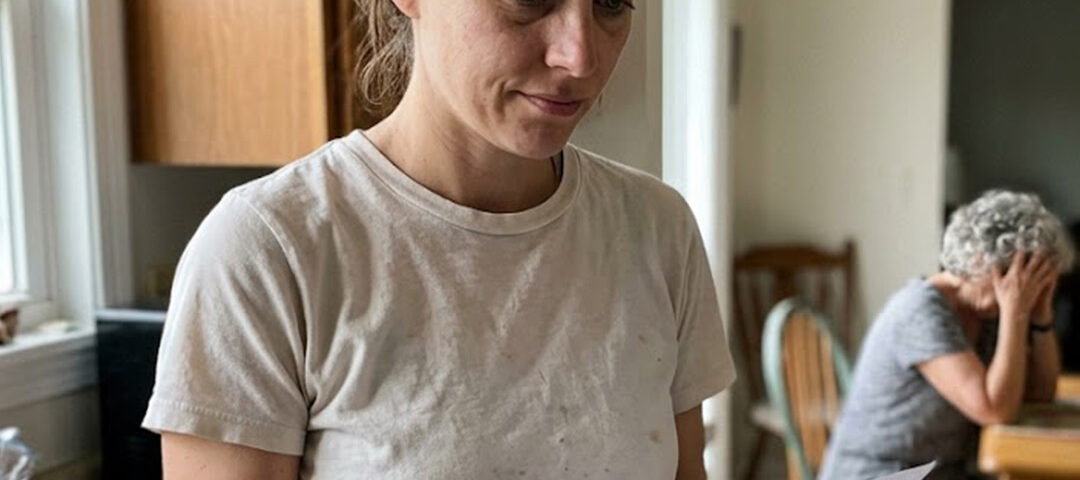
My mom invited my sister to her 60th birthday, but excluded me because I look like my father. Her face was priceless when I told her that I am removing her from my life.
I found out through my cousin’s Instagram story, seeing the invitation on her counter: Diane’s 60th family celebration with the date, time, and her house address.
My sister Brin called me that night pretending to check in about work stuff. 20 minutes of small talk before she casually mentioned she had a “thing” on Saturday.
“What thing?” I asked.
“Just some dinner.”
She knew. She knew, and she was lying to me.
“Is it mom’s birthday party?”
Silence.
“Then how did you find out?”
So it’s true. She invited everyone except me.
“Maybe she just hasn’t gotten around to inviting you yet.”
“Brin, the party is in 4 days.”
“Look, I don’t want to get in the middle of this.”
“You’re already in the middle. You’re going to a party I’m not invited to.”
She sighed. “What do you want me to do?”
“Not go. I want you to ask her why her child isn’t invited. You know why?”
Everyone knew why. I looked like my father. Same heavy brow, same gray eyes, same crooked smile. The mirror showed me his face every morning—the face of the man who broke our family apart.
I drove to my mom’s house that Thursday. She was in the garden pulling weeds that probably didn’t need pulling, always finding things to do when she wanted to avoid something.
“Hey, Mom.”
She looked up, her face tightening the way it always did when she saw me, like I was a bill she didn’t want to pay. “What are you doing here?”
“Can I visit my mother?”
“I’m busy.” She turned back to the flower bed.
“Are you having a party Saturday?”
Her shoulders stiffened. “Who told you?”
“Does it matter? Why wasn’t I invited?”
She finally turned around, looked right at me with those cold eyes. “You know why.”
“No, I don’t.”
“Every time I look at you, I see him. Same eyes, same mouth, same lying face.”
My father cheated on her 15 years ago. I was 12. Brin was 14. He left with the other woman, moved to Arizona, started a new family. We hadn’t seen him since.
“I’m not him,” I said. “I’m your child. I stayed. I chose you.”
“Doesn’t matter. You look just like him, sound like him, even stand like him.”
“That’s not my fault.”
“I don’t care whose fault it is. I can’t have you there. Not for my birthday. Not with everyone watching, thinking about what he did.”
“But Brin looks like him, too. We’re siblings. We have the same father.”
“Brin looks like me. Acts like me. You’re all him. Every gesture, every laugh, everything.” She went back to her tools. “Please leave.”
“Mom, I’ve been here every Mother’s Day, every Christmas, even when you barely acknowledged me.”
“I said, Leave.”
I sat in my car for an hour before driving home, thinking about all the times she’d looked through me like I was transparent. All the school events where she’d cheer for Brin and barely clap for me. The driving lessons she gave Brin, but not me, saying I could figure it out myself.
Saturday came. I stayed home, ordered pizza, watched TV, tried not to think about what was happening at her house.
Brin texted me pictures from the party. Everyone was there—aunts, uncles, cousins I hadn’t seen in years. Even my grandmother, who could barely travel anymore, had made the trip from Florida. In every photo, there was an empty space where I should have been, standing next to Brin, hugging my grandmother, laughing with my cousins. But I was home alone because my face was wrong.
Brin called me Sunday morning. “It was weird without you.”
“Was it? But you still went. You still chose her side.”
“There aren’t sides. She’s our mother.”
“She’s your mother. Apparently, I’m just a reminder of her ex-husband.”
“That’s not fair.”
“Fair? She excluded me from a family party because of my genetics. Tell me what’s fair about that.”
Silence.
“She’s hurting,” Brin finally said. “She’s been hurting for 15 years.”
“So have I. The difference is I didn’t turn away from my child over it.”
Monday, I went back to her house. This time I didn’t knock. I used my key—the one she forgot I had.
She was at the kitchen table going through birthday cards, probably thank-you notes she’d never send.
“Get out,” she said without looking up.
“No.” I sat across from her. “You need to hear this. He did it to all of us. Brin and I lost our father, but I also lost my mother. She’s sitting right here, but she’s been gone since I was 12. And you know what the worst part is? I kept trying, kept showing up, kept hoping one day you’d see me instead of him. I’m done trying to earn something that should be free. Brin can have you all to herself.”
“Where are you going?”
I smiled, and then I felt my head spinning before everything went black. The last thing I saw was her shocked face as she ran toward me.
Part 2: The Hospital & Confrontation
I woke up on the kitchen floor with Diane’s face hovering over mine, her hands shaking as she touched my shoulder. Sirens wailed outside, getting louder, and I realized she must have called 911 while I was out.
The paramedics came through the front door seconds later—a woman with short blonde hair and a man with a beard, both carrying equipment bags. Diane scrambled back to give them room, her face white and scared in a way I’d never seen before.
The female paramedic knelt beside me, pressing two fingers against my wrist while asking my name and if I knew where I was. I managed to answer, my voice coming out weak and scratchy. She checked my eyes with a small flashlight, asked me to follow her finger, then wrapped a vital signs cuff around my arm.
The male paramedic set up equipment while Diane stood against the counter, wringing her hands and explaining that we’d been arguing and I just collapsed. The female paramedic asked Diane about my medical history, any medications I took, or known conditions, and she stumbled through answers, admitting she didn’t actually know most of it. The paramedic glanced at her with raised eyebrows, then back at me, clearly picking up on the tension in the room.
My vital signs reading made her frown, and she told her partner they needed to transport me. They brought in a stretcher, helped me onto it, and secured straps across my chest and legs.
Diane followed them to the ambulance, asking if she could ride along. The male paramedic hesitated before nodding. They loaded me into the back, the female paramedic climbing in with me while Diane took a seat on the side bench. She hooked me up to a heart monitor that beeped steadily, placed an oxygen mask over my face, and started asking questions about chest pain and dizziness.
I told her I’d felt dizzy before I passed out, but no chest pain, just overwhelming exhaustion. Diane sat across from me, looking pale and shaken, her hands gripping her knees. The paramedic asked more questions, writing notes on a tablet, and I watched Diane reach toward me like she wanted to take my hand. Her arm extended halfway across the space between us, fingers outstretched, then stopped. She held that position for several seconds—her hand just hanging there in the air—before pulling it back and pressing both palms against her thighs.
The ambulance turned corners, the siren cutting through traffic, and neither of us spoke. We arrived at the emergency room and they wheeled me through automatic doors into a bright hallway that smelled like antiseptic and floor cleaner. A nurse directed them to a room with a curtain partition and they transferred me from the stretcher to a hospital bed. Diane followed, but stayed near the doorway looking lost and uncomfortable.
A doctor came in minutes later—a tall man with gray hair and glasses who introduced himself as Dr. Whitlock. He reviewed the paramedic’s notes, then examined me, checking my pulse, looking in my eyes, listening to my heart and lungs. He asked pointed questions about what led to the collapse, whether I’d eaten today, how much water I’d had, and about recent stress in my life. His eyes kept moving between me and Diane, clearly sensing something wrong in the dynamic. Diane sat down in a corner chair, staring at her hands like they belonged to someone else, saying nothing.
Dr. Whitlock explained that I’d had a severe stress-induced episode combined with dehydration and low glucose—a perfect storm that caused my body to shut down. He said they needed to run some tests and keep me for observation. A nurse came in with an IV kit, cleaning a spot on my arm, and sliding the needle in with practiced efficiency. She taped it down, hung a bag of fluids on a pole, and adjusted the drip rate, telling me I’d need to stay for at least 4 hours.
I closed my eyes, exhausted from everything, and heard footsteps approaching fast. Brin’s voice cut through the quiet, asking what happened, and I opened my eyes to see her standing at my bedside, still wearing her dress from the party. She looked between me and Diane, her face tight with worry.
Diane finally spoke up, her voice rough: “She collapsed at my house.”
Brin’s expression shifted, her eyes narrowing as she looked at our mother, clearly knowing there was more to the story. Brin pulled Diane toward the door, gesturing for her to step into the hallway, and I could hear their voices rising even through the closed door. Brin demanded to know what was said before I collapsed, her tone sharp and angry. Diane’s defensive response carried clearly, insisting I’d just shown up and started accusing her of things. Brin’s voice got louder, telling Diane that excluding me from the party was deeply unfair and everyone there felt uncomfortable about my absence.
Their argument continued until footsteps approached, and Marin appeared in the doorway holding my phone charger and a bag from my apartment. She looked through the door window at Diane, then back at Brin, asking if she was the reason I was here. Brin nodded, and Marin’s jaw tightened, but she came straight to my bedside instead of engaging with the hallway drama. She asked what I needed and whether I wanted Diane to leave, her voice gentle, but her eyes hard.
I told her I didn’t have the energy to deal with Diane right now. Marin walked to the door and opened it, asking Diane politely but firmly to go home and let me rest. Diane looked like she wanted to argue, her mouth opening then closing, but Brin backed Marin up: “Mom, you’ve done enough for one day.” Diane’s shoulders slumped, and she walked away down the hospital corridor looking smaller somehow, her back hunched like she’d aged 10 years.
Dr. Whitlock returned with a tablet displaying test results, his expression serious. He explained that I was severely stressed, malnourished from not eating properly, and my vital signs were dangerously elevated for someone my age. He asked directly if I was in a safe living situation and whether the family conflict that brought me here was ongoing. The question broke something in me, and I started crying, tears running down my face as I explained about the birthday party and being excluded because I looked like my father.
Dr. Whitlock’s expression shifted from clinical to genuinely sympathetic as he listened, his professional mask slipping to show actual concern. He recommended I follow up with both my regular physician and a therapist, explaining that chronic stress was literally making me sick. He said the collapse was my body’s way of forcing me to stop and address what I’d been enduring.
Brin sat beside my bed looking guilty, her hand hovering near mine before finally taking it. She admitted she should have confronted Mom years ago instead of taking the path of least resistance, her voice thick with regret. Marin stood on my other side, one hand on my shoulder, steady and solid.
The door opened again, and Carol walked in, still wearing her party dress, her face tight with an anger I’d never seen directed at her own daughter before. She marched straight to my bedside and took my free hand, her grip firm and warm. She apologized for not speaking up sooner about Diane’s treatment of me, her voice shaking with emotion.
Carol told us both that she’d been watching this dysfunction for years, and her silence made her complicit—that she should have intervened long ago instead of hoping Diane would eventually come to her senses on her own. She squeezed my hand tighter, her mouth set in a hard line. She revealed that she had confronted Diane at the party right after realizing I wasn’t there. She had walked right up to her in front of everyone and asked why her child was excluded from a family celebration.
When Diane gave her the same excuse about me looking like my father, Carol told her that was the most pathetic thing she’d ever heard from her own daughter. Several cousins and aunts had stopped talking to listen. Diane’s face went red and she tried to walk away, but Carol followed her. That was why Nadia and others had been texting me worried messages—they had heard the whole thing and realized I’d been excluded.
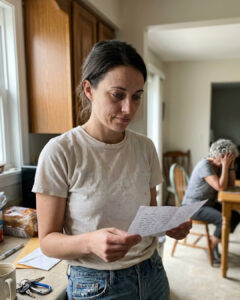
Carol said she was staying in town for a few more days, whether Diane liked it or not, and wasn’t leaving until she’d had a proper conversation with her about her behavior.
Part 3: The Aftermath & Setting Boundaries
Dr. Whitlock returned around six that evening with discharge papers, giving instructions about rest, nutrition, and following up with my doctor within 3 days. The nurse removed my IV, and Brin immediately announced I was staying at her apartment. Marin agreed before I could argue, having already retrieved my clothes and essentials. Carol extended her hotel stay as well.
The nurse wheeled me out in a wheelchair per hospital policy, and the evening air felt cold as we left. Brin’s apartment was a small one-bedroom. She hovered constantly, ordering Thai food and insisting I eat. As we sat across from each other, Brin apologized repeatedly for attending the party, admitting she was terrified of losing Mom’s approval and being rejected too. I told her flatly that while I wasn’t angry, I was deeply hurt that she hadn’t stood with me.
Marin slept on the couch while I took Brin’s bed, and Brin took a sleeping bag on the floor. We stayed up until 2:00 AM talking. I found myself recounting years of hidden rejections—how Diane barely looked at my 8th-grade honor roll report card, or how she took 1 photo of me at high school graduation compared to 40 of Brin. I spoke about getting pneumonia in 10th grade and being dropped off alone at a clinic while Diane took Brin to a tournament, and the 15th birthday where she forgot until 8 PM and handed me a gas station gift card.
Brin covered her face, admitting she had never realized the extent of the emotional absence. Marin noted, “A single big rejection is almost easier to point at than 15 years of being treated like an afterthought.”
The next morning, Diane called Brin’s phone repeatedly. Brin put it on silent, but soon a text came through: Diane wants to know if I’m okay. Brin texted back that I was alive, but needed space. When Diane pushed to see me, Brin firmly stated it was my decision alone.
Around noon, my cousin Nadia arrived with grocery store daisies, crying as she apologized for posting the party invitation on Instagram. She confessed that several cousins had whispered about how wrong the exclusion was, but no one had stood up or walked out. I thanked her for coming and reassured her I didn’t blame her for the post.
Over the next few days, I rested at Brin’s. Marin worked remotely from the couch, discussing family trauma, self-protection, and boundaries. She shared that she had cut off her own toxic mother 3 years ago and had never regretted prioritizing her mental health. Carol visited on the third day with homemade chicken and rice soup. She admitted she had enabled Diane for years by staying silent, hoping time would heal her daughter’s bitterness after the divorce, but realized now that Diane’s pain had simply “calcified into permanent rejection.”
On Thursday, Brin drove me to my follow-up medical appointment. The doctor diagnosed me with chronic stress disorder, warning that my physical health was in jeopardy if I didn’t make drastic lifestyle changes. She prescribed two weeks of medical leave from work and referred me to Dr. Hail, a therapist specializing in family trauma.
Two days later, I returned to my own apartment. I unlocked the door to find my fridge and mirrors covered in bright sticky notes from Marin (“You’ve got this,” “One day at a time”), along with a fully stocked kitchen. Once Brin left, the quiet hit me, and I broke down crying at the kitchen table. I realized I had been mourning a living mother for 15 years.
Part 4: Therapy & The List of Requirements
Three days after returning home, I attended my first therapy session with Dr. Hail. I spent the first thirty minutes pouring out the history of my father leaving, the favoritism, the hospital collapse, and the years of conditional love.
When I finished, Dr. Hail asked what I wanted from my relationship with Diane. I admitted I didn’t know anymore. She introduced the concept of accepting reality versus accepting mistreatment: “I can acknowledge Diane’s limitations while still protecting myself from her rejection.” She warned that hope can become unhealthy when it keeps you accepting harm, adding, “Sometimes the kindest thing we can do for ourselves is grieve what we’ll never have so we can build something different with what’s actually possible.”
That evening, Brin called to say Diane was demanding a meeting to apologize. I told Brin I wasn’t ready to see her face-to-face, but would read a letter if she wrote one. Four days later, Brin delivered the envelope.
Diane’s letter was a single, cramped page. It was defensive and brief—focusing almost entirely on her own shock over my collapse, her lingering trauma from the divorce, and how hard it was for her to look at my face. There was no real apology for excluding me or for the decades of neglect.
I took the letter to Dr. Hail, who pointed out how Diane minimized her actions. She suggested I write a response letter detailing everything I needed to say, regardless of whether I chose to send it.
It took me three days and four drafts to write it.
Draft one was too forgiving.
Draft two was pure rage.
Draft three approached the truth.
Draft four captured the reality: losing both parents at age 12, watching her celebrate Brin while ignoring me, and stating clearly that her failure to separate me from my father was her responsibility, not mine.
I printed it out, had Brin read it (which brought her to tears), and instructed her to deliver it to Diane with a strict boundary: I did not want an immediate response; she needed to sit with it.
Three days later, Brin called to report that Diane had broken down sobbing after reading the letter, claiming she “never realized how deeply she’d hurt me.” Carol also kept pressing Diane daily, cutting off her excuses about the divorce and forcing her to focus on the harm inflicted on her child.
The following weekend, Marin helped me draft a formal document outlining explicit requirements for any future contact with Diane:
Therapy: She must attend specialized grief and family therapy for at least six months.
Accountability: She must explicitly acknowledge and apologize for specific past events (missing my high school writing award, ignoring me at college graduation, the pneumonia incident).
Behavioral Change: No further comments about my resemblance to my father, no comparisons to Brin, and consistent inclusion during holidays without me having to ask.
Brin delivered the two-page document to Diane. When Diane asked if the terms were negotiable or “harsh,” Brin shut her down immediately, telling her that 15 years of emotional rejection was harsh, and these terms were the bare minimum for basic human decency.
Part 5: Small Steps Forward
Two weeks after the collapse, I returned to work. My manager was supportive, and my co-workers noticed I was more grounded and less willing to people-please. Meanwhile, Nadia reported that family members were rallying around the situation—aunts and uncles were calling Diane directly to express their shame over how I had been treated.
By week three, Diane enrolled in therapy. Brin kept track of her progress so I wouldn’t have to engage directly. During this time, Dr. Hail guided me through reparenting exercises, having me write letters to my 12-year-old self to reinforce that the rejection was a reflection of Diane’s damage, not my worth.
When Thanksgiving approached, I refused to attend any gathering centered around Diane. Instead, Brin visited Diane briefly before spending the main holiday with me, Marin, Carol, and a group of friends. It was one of the best holidays I’d ever had. The next day, a short Thanksgiving card arrived from Diane containing a brief, non-defensive note thanking me for being alive and acknowledging she had a lot of work to do.
Throughout December, Diane continued her weekly therapy sessions, eventually experiencing a major breakthrough where she confronted how she had projected her rage toward my father onto me. On Christmas Eve, a thick envelope arrived from her.
This second letter was fundamentally different. It was detailed and accountable. She listed specific rejections from my childhood, owned her choices, admitted she had used me as a symbol for her failed marriage, and stated she would continue therapy regardless of whether I ever forgave her.
I took the letter to Dr. Hail. While it offered genuine validation, my therapist reminded me that a good letter did not obligate me to reconcile—it was merely one piece of evidence to evaluate over time.
In January, I sent a measured reply, acknowledging her effort while maintaining my boundaries. By February, Diane requested permission via email to start low-pressure communication. With Dr. Hail’s guidance, I agreed to bi-weekly emails under strict ground rules: no guilt trips, no mentions of my father.
Over the next six weeks, the emails evolved from stiff exchanges to genuine conversations where Diane actually asked about my life and remembered details. In late March, she invited me to meet for coffee in a public place with Brin present as a buffer.
We met at a neutral cafe. Diane looked genuinely anxious, careful not to cross boundaries or make the time about herself. The meeting went smoothly, lasting 45 minutes. A month later, we met for coffee one-on-one, engaging in a mature conversation about her upbringing and my healing.
Part 6: The Unopened Letters
In early May, I attended a small family dinner for Brin’s birthday at Diane’s house—my first time back since the collapse. The evening was quiet and respectful. Midway through a story, Diane caught herself before making a comparison between Brin and me, stopping to apologize immediately.
After dinner, she retrieved a custom photo album she had compiled. It contained childhood photos of me I had never seen—at piano recitals, reading on the porch, my 8th-grade graduation. She explained that her therapist had instructed her to look at my childhood pictures to separate me from my father. Looking at me without flinching, she acknowledged that this album didn’t fix 15 years of damage, but she wanted me to have it.
Four days later, I examined the album again at my kitchen table. Noticing a thick page near the back, I reached into the plastic sleeve behind an 8th-grade photo and pulled out a yellowed piece of notebook paper.
It was a note from my father, dated from my senior year of high school, congratulating me on my writing award and stating: “I hope you know my leaving had never meant you were unwanted.”
In shock, I called Marin over. Together, we checked every sleeve in the album. Hidden behind my college graduation photo, we found a second unopened envelope postmarked from Phoenix with my father’s return address. Inside was a graduation card containing a short note and his phone number.
The realization hit hard: my father had attempted to reach out, and Diane had hidden the communications.
The next morning, Brin came over. When she saw the letters, her face went pale. She immediately called Diane on speakerphones. When confronted, Diane went silent before whispering, “I can explain… I thought I was protecting you.”
Brin snapped: “Protecting us from what?”
When Diane admitted there was a bin in her hall closet filled with unsent correspondence, I cut in: “Bring me the box. Exactly as it is.”
An hour later, Diane arrived at my apartment with a gray plastic storage bin. I called Carol to join us before opening it. When Carol saw the contents—stacks of rubber-banded birthday cards, Christmas notes, photos of half-siblings, and printed emails—she looked at Diane and said softly, “You thought it would hurt them more? No. You thought it would hurt you more.”
Near the bottom was a printed email sent two weeks before my high school graduation where my father asked if he could attend or send flowers. Diane’s printed reply read: Do not come. She does not want you there. Neither of them do. Let them have peace.
I looked at Diane and stated clearly, “I am going to contact him. You do not get a vote, you do not get to manage it, and if you interfere, I am done.”
Part 7: Rebuilding on Real Ground
That night, I emailed the address provided. My father, Robert Hale, replied early the next morning. He owned his responsibility immediately, expressing remorse for abandoning us and leaving us vulnerable to Diane’s gatekeeping.
Over the next two weeks, Robert answered every practical question Dr. Hail and I prepared. Brin joined the correspondence shortly after. While he did not become a hero, he was no longer a monster—just a flawed man who had made terrible choices but attempted to keep a line open. To her credit, Diane respected our boundary and did not ask for details about our exchanges with him.
By late June, the family gathered for Carol’s summer cookout. When Aunt Lila tried to smooth over the past by calling it a “rough patch,” Diane publicly intervened:
“Please don’t call it a rough patch. I left my child out of my birthday because I could not separate my own pain from the person standing in front of me. I kept letters that were not mine to keep. That is not a rough patch. That is a pattern I am responsible for.”
In August, nearly a year after the original incident, Diane invited me to her 61st birthday dinner, writing: “There will be a place for you whether you come or not.”
I chose to go, accompanied by Marin. My place setting was marked with a handwritten name card. Midway through dinner, a package arrived on the porch—a delivery from Robert containing childhood photos his younger daughter had found. Instead of reacting with bitterness, Diane offered me space and privacy to look through them, asking no intrusive questions.
Afterward, she showed me the hallway wall. The old display—which had featured only photos of Brin—had been updated to include my graduation portraits, writing award, and recent photos of me with friends.
“I know putting pictures up now does not make up for the years they were missing,” she said. “But I wanted the house to tell the truth.”
In September, Brin and I had our first video call with Robert, establishing a distant but functional line of communication. By late fall, life felt lighter and less consumed by past trauma. I maintained regular boundaries, seeing Diane for occasional coffees and stepping away whenever old patterns resurfaced.
On the anniversary of the party invitation, a simple text arrived from Brin apologizing for her initial choices, followed by a card from Diane acknowledging that while she couldn’t erase the past, she was committed to changing her present behavior. I added it to my “evidence drawer”—a collection of notes, cards, and documents marking the transition from denial to reality.
That Christmas, I hosted the family dinner at my apartment. Diane arrived quietly with a dish, asking where to place it rather than taking over. We took a group photo—imperfect, real, and grounded.
When Diane left that night, she lingered at the door.
“Good night,” she said.
“Good night, Mom,” I replied.
I closed the door and leaned against it. I looked in the mirror—at my father’s eyes, my mother’s mouth, and my own crooked smile. I was no longer a reminder of someone else’s worst day.
I was just myself, and that was enough.
If you came here from Facebook because of this story, return to the Facebook post, tap Like, and comment exactly “Amazing” to support the storyteller. That small action means more than it seems and gives the writer genuine encouragement to keep sharing more stories about family pressure, firm boundaries, and finally protecting what you worked so hard to build.
Disclaimer: This story is a work of fiction created for entertainment purposes. Any resemblance to real persons, events, or places is coincidental.