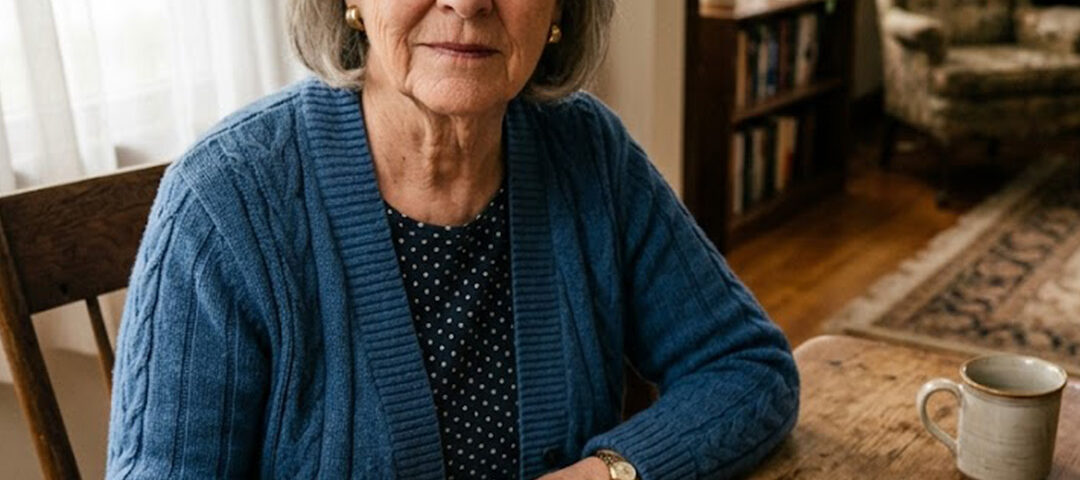
My name is Tony Weston, and at 70, my daughter decided I had lived alone long enough.
She did not ask me. She booked a tour.
We were at brunch. Eggs, mimosas, the good linen napkins. Then she slid a glossy brochure across the table and smiled like she was handing me a gift.
“We toured a beautiful place for you, Mom,” she said. “Assisted living. You’ll love the gardens.”
Her husband nodded along, checking his watch like the matter was already closed.
Here is the thing they were all so certain about that morning.
Whose apartment was whose?
They were wrong.
And that brochure was not even the worst thing in my daughter’s purse.
I set down my coffee. I let the table go quiet. Then I said one calm sentence that pulled the floor out from under every plan they had made without me.
Let me tell you who I am so the rest lands the way it should.
I worked escrow for 22 years. Closings, deeds, signatures. I read fine print for a living, and I was good at it.
My husband, Walt, passed away when I was 48. No warning at all. One Tuesday, he was mowing the lawn, and by that Friday, I was a widow with a mortgage and a part-time job.
So I built the rest of my life myself.
I took the closing desk full-time. I saved every spare dollar. I bought one small rental, then a second, and I paid this house off the year I turned 59.
People assume a quiet woman is a simple one. My family made that assumption for years.
Lately, they talked about me in those gentle, careful voices.
“Mom’s slowing down.”
“Mom forgets her keys.”
I do not forget my keys.
I stopped explaining myself to people who had already made up their minds.
Walt used to say I had a closer’s patience.
“Watch, wait, sign last.”
I kept a work motto taped over my desk for two decades.
Title does not care who sleeps in the house. It cares whose name it carries.
I never thought I would need that old line at my own brunch table.
I was about to, because the daughter handing me garden photos did not know which gardens were already mine, and I had spent 15 years saying nothing about it.
I kept telling myself silence would be understood. That love would explain itself.
That was my mistake. Not pride. Not weakness.
I trusted quiet to do a job that only words can do.
The brunch was Brooke’s idea, which should have been my first clue.
My daughter does not organize family gatherings. She attends them late, with a reason she has to leave early.
So when she picked the restaurant and the time, I noticed.
We sat in the corner booth at Maddox and Vine, the brick place off Larkin Street. Brooke and her husband, Brad, sat on one side. My granddaughter Ivy sat beside me. My oldest friend, Marian, sat on the end.
I had invited Marian. Brooke had not loved that.
Brooke was warmer than usual that morning. She touched my hand twice. She asked about my blood pressure, my knees, whether the stairs at home were getting to be a lot.
Brad kept glancing at the leather bag by Brooke’s feet. Not at his phone. At the bag.
“You look tired, Mom,” Brooke said, smiling. “Doesn’t she look tired?”
“I look 70,” I said. “It’s going around.”
Ivy laughed into her orange juice.
She was the only one at that table who hugged me like she meant it.
Brad ordered for everyone without asking. Brooke complimented my cardigan, then complimented it again, which is what she does before she wants something.
Marian caught my eye over the bread basket. She had seen a hundred closings go sideways, too. She knew the look of a table being set for a deal nobody had told you about.
I sipped my water. I let them warm me up.
My daughter only smiles like that when she is about to ask for the thing she has already decided to take.
And her hand kept drifting back toward that bag on the floor.
She waited until the plates were cleared. Closers do that, too.
“Mom, Brad and I have been worried about you,” Brooke said. “Really worried.”
Then she reached into the bag.
The brochure was heavy, glossy, expensive. Willow Crest Senior Living. A photo of a silver-haired woman laughing at a watercolor class she would never actually take.
Brooke slid it across the linen.
“We toured a beautiful place for you,” she said. “Assisted living. You’ll love the gardens.”
“You toured it?” I said. “Without me?”
“We didn’t want to overwhelm you,” Brad said smoothly. “It’s safer. Staff around the clock. No more stairs, no more yard.”
“It’s $6,200 a month,” I said.
I had seen the brochure’s fine print upside down.
“Who’s paying that exactly?”
Brooke’s smile tightened half an inch.
“We’d figure out the house,” she said. “Sell it. Downsize you. It just makes sense, Mom.”
There it was.
Sell the house.
My house.
“You’ve been falling,” Brooke pressed. “You left the stove on last month.”
“I have never left a stove on in my life.”
“See, that’s the thing.”
She lowered her voice for the whole table to hear.
“It’s time, Mom. You can’t be trusted on your own anymore.”
The word trusted sat there on the table like a dropped fork.
Ivy went still beside me. Marian set down her coffee very slowly. Brad slid the admission packet half out of his folder, the kind of move you make when you think the signature is already coming.
They were not worried.
Worry does not tour. Worry does not price the house. Worry does not bring paperwork to brunch.
This was a plan dressed up as love.
And they had rehearsed it.
So I did what I do best.
I looked at the brochure. I looked at my daughter. Then I picked up my coffee because the next thing I said deserved a clean, steady voice.
I took my time. I drank. I set the cup back in its saucer without a sound.
“That’s a lovely brochure,” I said. “Very glossy.”
“Mom—”
“I already toured your apartment.”
I let it land.
“It’s listed for sale.”
For a second, nobody moved.
Brooke’s fork hit the plate. The sound was small and enormous at the same time.
“What?” she said.
“Your apartment,” I repeated, pleasant as Sunday. “The condo on Pearl Street. I toured it Tuesday. The photographer came Wednesday. It went on the market this morning.”
“That’s not funny.”
Brooke laughed, but it cracked in the middle.
“You can’t list my apartment.”
“Can I?”
I did not say it like a question.
Brad’s smooth face did something it had not done all morning.
It calculated.
I watched him run the math behind his eyes and not like the total.
“She’s confused,” he said to Brooke quietly, as if I were not there. “Tony, you’re confused.”
“I closed escrow on more homes than you’ve ever rented, Brad.”
I folded my napkin.
“I’m not confused. I’m prepared.”
Marian’s mouth twitched. Ivy had stopped breathing.
I did not explain how. I did not say one word about deeds or names or what I had signed 15 years ago.
Let them sit in it.
Brooke reached for her phone, then put it down, then picked it up again.
“You’re bluffing,” she said.
She still thought it was a bluff.
She would keep thinking that for about another week, right up until a stranger wanted to walk through her kitchen.
I picked up the dessert menu like the conversation was over.
“The lemon tart here is wonderful,” I said. “Shall we?”
Brooke did not want the lemon tart.
“This is insane,” she hissed. “You can’t just—Mom, look at me. This proves it. This is exactly the kind of thing we’re talking about.”
“What thing?”
“This erratic, threatening behavior. You sound paranoid.”
That is the move. You understand?
When the quiet woman finally speaks, they call it a symptom.
“I sound like someone who reads her mail,” I said.
Brad leaned in.
“Tony, nobody’s the enemy here. We love you. We’re trying to protect you.”
“From my own house?”
“From yourself.”
Marian made a small sound, the kind a person makes when they decide to remember every word of this later.
Good.
I wanted a witness, and I had brought one.
Ivy’s eyes were shining.
“Grandma’s not paranoid,” she said. “She’s the sharpest person at this table.”
“Stay out of it, Ivy,” Brooke snapped.
I put two twenties under my water glass for the staff and slid out of the booth slowly, deliberately, on my own two feet.
“We’ll talk when you’re ready to listen,” I said. “Right now, you’re only ready to win.”
“Mom, sit down. People are looking.”
“Let them.”
I picked up my purse.
“I’ve spent 15 years being the one who sits down quietly. I’m done with that chair.”
I walked out past the hostess stand, past the couple at table nine who had stopped chewing to watch.
The bell over the door rang behind me. I did not slam it. I did not cry in the car.
I just sat there a moment, hands steady on the wheel, and let one question settle in.
How does a mother end up owning the apartment her daughter calls home and never tell her why?
The answer was in a cedar box on my kitchen counter.
I drove home the long way, past the Pearl Street condo with the new sign already staked in the strip of grass out front.
For sale.
My name on the listing, not hers.
At home, I set the Willow Crest brochure face down on the kitchen counter. I did not throw it out. I wanted to remember exactly what they thought I was.
Then I opened the cabinet where I keep my papers.
The cedar box was my mother’s. It still smells faintly of the closet she kept it in.
Inside is the architecture of my whole quiet life.
Walt’s final certificate, the deed to this house, the rental papers, and one manila envelope I had folded shut 15 years ago.
I did not open the envelope that night. I just held it.
You should know how the condo happened because it matters.
Fifteen years ago, Brooke’s first marriage came apart in the worst way.
Her husband emptied their accounts and went after everything, including the little apartment she was trying to keep so Ivy, six years old and scared, would have a bed that stayed put.
So I stepped in.
I bought the Pearl Street condo. I put it in my name on purpose so no lawyer of his could ever touch it. And I let Brooke live there for a token rent that drifted over the years to nothing.
I never made her sign a thank-you. I never reminded her.
I thought love was clearer when you did not keep a receipt.
That was the silence I told you about.
I let her come to believe the apartment was simply hers, the way children believe the lights stay on by magic.
I had kept that envelope folded for 15 years.
By the end of the month, my whole family would learn what was inside and why I had really kept it.
But first, they tried to convince the world I was losing my mind.
The text started that night.
Brooke: Mom, I’m scared for you.
Brooke: You’re confused and you won’t admit it.
Brooke: Please let us help before things get harder for you.
Brooke: I already called Daniel. He agrees with me.
Daniel is my son. Forty-six, two states away, allergic to conflict since birth.
If Brooke called him, it was to build a chorus, not to ask a question.
My phone buzzed again at eleven, then again at midnight.
I did not answer.
I made tea. I read every message twice, the way I used to read a contract. Not for the feeling. For the structure.
And the structure told me something cold.
This was not a daughter panicking. Panic is messy. This was tidy.
Confused. Risk. Daniel agrees.
Those were words being lined up on a record the way you line up exhibits before a hearing.
She was not venting at me.
She was documenting me.
I had watched it happen to a client once, years ago. A son who wanted control of his father’s accounts started a paper trail of incidents. One misplaced bill here. One confused phone call there. By the time anyone looked closely, the old man had a thick file describing a decline that never happened.
I set my phone down on the counter beside the face-down brochure.
Garden photos on one side. A campaign on the other.
Same morning. Same hand.
They did not want me safe.
They wanted me declared.
I rinsed my cup, dried it, and put it away.
Then I sat at the table and started doing what I had told myself for 15 years I would never have to do.
I started getting ready.
Because if my daughter wanted a record, I would make sure mine was the one that held up.
By Sunday, the phone calls began.
Not from Brooke.
From the cousins.
My niece Paula called first, syrupy with concern.
“Aunt Tony, we just want what’s best. Brooke says you’ve been struggling.”
“Struggling with what?”
“The stove. The falling. The public outburst at brunch.”
“I didn’t fall. I left the restaurant.”
“Brooke said you threatened to make her homeless.”
There it was already, polished into a story.
I had threatened. I was unstable.
The woman who paid off her own house at 59 had overnight become a danger to herself.
“Paula,” I said, “did Brooke tell you who owns that condo?”
A pause.
“She said it’s hers.”
“Did she?”
I hung up gently.
Then my cousin Ray called with the same script. Then a church friend gently asking if I had thought about getting evaluated.
That word again.
Evaluated.
I understood what was happening.
Brooke was not just talking about me. She was assembling a jury, one phone call at a time, so that when the real move came, everyone would already believe the verdict.
Brooke texted that evening.
“Everyone agrees you’re slipping, Mom. Don’t make this harder than it has to be.”
Everyone.
As if a person could be voted out of her own competence.
I will admit it stung.
Not the lie. The speed.
How fast people I had fed at this table chose the louder story.
But I noticed something else, too.
In every call, the same details surfaced.
The condo. The house. The money.
Not my health.
The real estate.
Concern, it turns out, has a price tag if you read it closely enough.
And somewhere out there, someone was writing the incidents down. Dates, times, a tidy little file.
I just did not know yet who was holding the pen.
I found out on a Tuesday at the grocery store.
I was reaching for the oat milk Ivy likes when I overheard Brad in the next aisle on speaker, not bothering to lower his voice.
“No, the geriatric angle is cleaner than the financial one,” he was saying. “If we go capacity, the house follows.”
A second voice answered, oily and confident.
“Trust me, I’ve done a dozen of these. Families united. Doctor signs off. Judge does the rest. We just formalize what the family already sees.”
Then he added, “And the listing she put on Pearl Street? A confused old woman trying to sell a property that isn’t even hers. That helps us. That’s the picture.”
I stood very still by the oat milk.
When Brad turned the corner, he nearly walked into my cart.
Beside him was a tall man in a too-bright blazer, a lanyard around his neck.
Vance Cruz. Senior transition consultant, the badge said.
Realtor, the suit said.
“Tony,” Brad said, recovering fast. “Funny running into you.”
“Hilarious,” I said.
Vance put out a hand like we were old friends.
“Mrs. Weston, I help families navigate these difficult seasons. I’d love to sit down just to listen.”
“You’d love to list my house,” I said.
His smile did not flicker.
That is how I knew he was good at this.
Brooke wanted my apartment vacated. Brad wanted the equity.
But this man turned grief and worry into commission, and he had done it a dozen times before.
“Think about your family,” Vance said, soft as a closing pitch.
“I am,” I said. “Constantly.”
I rolled my cart to the register. My hands were steady.
Inside, something had gone very quiet and very clear.
They did not just want me in a home.
They wanted me declared incapable, and they had hired a man who knew exactly how.
Most people hearing all that would have fallen apart.
I went to my filing cabinet instead.
You spend 22 years in escrow, you do not panic about ownership.
You check it.
That night, I pulled the chain of title on the Pearl Street condo.
Purchased 15 years ago. Grantee: Tony M. Weston.
No transfers. No quitclaim. No second name ever added.
It was as clean as the day I signed it.
Brooke had lived there 15 years and never once asked whose name was on the deed, because asking would have meant admitting she did not pay for it.
I sat with that a while.
Not gloating. Just certain.
Then I opened the cedar box and lifted out the old photo I keep beneath the deed.
It is Brooke at 25, standing in the doorway of that condo the day she moved in. Ivy is on her hip, six years old. Both of them are crying and laughing at once because they finally had a door that locked from the inside.
I took that picture.
I remember the relief in my own chest like it was an hour ago.
I bought that apartment so my daughter could feel safe.
Now my daughter wanted to use the same kind of paperwork to remove me from my own life.
I want you to understand something because it matters for everything that comes next.
I was not angry.
Anger is loud, and it makes mistakes.
I was accurate.
I was not going to scream that I owned her home. I was going to be ready to prove it on paper in front of the people she had recruited as her jury.
I put the photo back. I put the deed on top of it. I closed the lid.
And I made one phone call I never thought I would have to make.
To a doctor.
Ivy came by Thursday after her shift, still in her cafe apron, eyes red.
“I heard them,” she said before I had even closed the door.
“Who?”
“Mom and Brad. At dinner. I wasn’t supposed to be home.”
I poured the oat milk. I waited.
“They have a folder, Grandma.”
Her voice shook like a whole binder.
“Brad keeps it in his office. Dates and stuff. Times you supposedly forgot things.”
“I figured as much.”
“There’s worse.”
She pressed her lips together.
“They want to move fast. Brad said they have to do it before you change any paperwork. Before you talk to a lawyer.”
So that was the clock.
They were not afraid I was incompetent.
They were afraid I was capable.
“Ivy,” I said gently, “this isn’t your fight to carry.”
“You raised me.”
She said it like a fact, not a feeling.
“When Mom worked doubles, you were there. You taught me to ride a bike on Pearl Street. I’m not leaving you, Grandma.”
I am not a crier, but I had to look at the window a moment.
“Did you see what’s in the folder?” I asked.
“Some. There’s like a hospital form with your name already filled in.”
She swallowed.
“And papers about guardianship, power of attorney, the whole set.”
“Okay,” I said. “Thank you. You did the right thing telling me.”
“What are you going to do?”
I thought about the deed, the photo, the doctor’s appointment on my calendar for Monday.
“I’m going to let them keep building their case,” I said. “And I’m going to make sure mine is the one that’s true.”
Ivy frowned.
“That’s it? You’re just going to wait?”
I smiled.
“Watch. Wait. Sign last.”
Then I said, “There’s a folder I’d like to see for myself.”
Before I went looking for paper, I gave my daughter one honest chance.
I think you should always give the honest chance first, even when you know it will not take.
I called Brooke on Friday morning.
No cousins. No Brad. No audience.
“I’d like to talk,” I said. “Just us. No lawyers, no consultants. Mother to daughter.”
“Finally.”
Relief, then suspicion.
“Are you ready to be reasonable?”
“I’m ready to listen if you are.”
She came over.
She sat at my kitchen table, where she had done her homework for 18 years, and she did not soften an inch.
“Mom, this is happening,” she said. “You’re 70. You’re alone. The house is too much.”
“I take care of three rentals and this house. I drive. I do my own taxes.”
“For now.”
She said it like a diagnosis.
“We’re trying to get ahead of it.”
“Brooke,” I said, keeping my voice level, “I am not moving out of my home. That’s not a negotiation. That’s a no.”
“You don’t get to just say no.”
“No is a complete sentence,” I said. “I’ve been saying yes to you for 15 years. I’m allowed one no.”
Her jaw set.
I saw the girl who used to close doors hard, all grown up and closing them quieter.
“You’ll regret being difficult,” she said, standing. “When the doctors agree with me, you’ll wish you had cooperated.”
“When the doctors,” I repeated softly. “Not if.”
She did not catch it. She was already gathering her keys.
The door closed, not slammed.
Worse. Business-like.
I sat in the quiet she left behind and understood the honest chance was spent.
Words were not going to reach her.
She had already moved past words into forms and folders and a man in a bright blazer.
So I would meet her there.
On paper.
Ivy let me into the house Saturday while Brooke and Brad were at Willow Crest touring it again, this time to pre-select my room.
The irony was not lost on me.
Brad’s office smelled like cold coffee.
The folder was exactly where Ivy said it would be. Third drawer. A fat green binder. Unlabeled.
I did not take it.
I am not the kind of person who takes things without permission, and a binder taken without permission proves nothing in a courtroom.
I just read it page by page the way I have read ten thousand files, while Ivy kept watch at the window.
It was worse than I had let myself imagine.
Three pages of incidents, typed and dated.
June 14: left stove on, per Brooke.
July 2: forgot grandson’s name.
There is no grandson.
August 9: confused about ownership of own residence.
That one made me laugh out loud quietly.
They had written my one true statement down as a symptom.
Behind the incidents was a printed guardianship petition, half-filled in. My name. My birth date. A blank where a judge would sign.
And behind that was the thing that turned my stomach to ice.
A hospital pre-admission form for Willow Crest, dated for the end of the month. My name typed at the top. A line at the bottom waiting for a signature that was supposed to be mine, or failing that, a guardian’s.
They had not just toured a home.
They had scheduled my removal.
There was even a sticky note in Brad’s blocky hand.
Get her to sign voluntarily first. Cleaner. If not, capacity route by Oct 30.
October 30.
They had given me a deadline.
I closed the binder exactly as I had found it. Spine out. Drawer flush.
“Did you get what you needed?” Ivy whispered.
“I got the calendar,” I said. “Now I know how long I have.”
Twenty-three days.
I had 23 days to be undeniable.
Most people finding that binder would have driven straight to Brooke’s and confronted everyone in the driveway. I understand the urge. I felt it in my hands.
But I had seen how this goes.
You fight a lie with noise, and the noise becomes their next exhibit.
See how agitated she is. See how unstable.
They had manipulation. They had a smear. They had a man who knew the courthouse.
I had something they kept forgetting I had.
I knew how paper works.
So I made my plan at the kitchen table in a steady hand, the way I used to map a closing.
One: a real cognitive evaluation. Not a friend. Not a favor. A board-certified geriatrician. Full battery. Dated and signed. If they wanted to claim I was incompetent, I would hand the court proof I was not.
Two: my estate, locked tight. A revocable trust, updated with a power of attorney naming someone I actually trusted. If they wanted my house, they would find every door already deadbolted by law.
Three: let the listing run. The Pearl Street condo would stay on the market, legal and public. My name on every page. Their own confused old woman would turn out to hold the only deed in the family.
I was not going to argue with a lie.
I was going to outdo it.
I wrote one line at the bottom of my plan and underlined it twice.
Stay calm.
Calm is the proof.
Because here is what I knew that they did not.
A loud old woman looks exactly like their story.
A calm one holding clean paperwork breaks it in half.
I had 23 days, a doctor’s appointment, and a lawyer to call.
I made the coffee, picked up the phone, and got to work.
Dr. Ellen Ferris had been my doctor for nine years. I had never needed her for anything but flu shots and a stubborn knee.
I sat in her office and told her the whole thing. The brunch. The folder. October 30.
She did not gasp or pat my hand. She got out her test forms.
“Full neuropsych battery,” she said. “Memory, executive function, judgment. We date it. We document it. We make it airtight.”
It took two hours.
Clock drawings. Word lists. Numbers backward.
The kind of test that has no mercy and no favorites.
Three days later, she called me in for the results.
She slid a signed, sealed report across the desk.
“Cognition intact across all domains,” she read. “No evidence of impairment. I’d be comfortable saying that to a judge.”
“You may have to,” I said.
Then I drove to Ruth Callaway, the estate attorney I had sent a hundred clients to over the years.
Ruth is 73 and does not suffer foolishness.
She read my situation in about four minutes.
“They’re running a capacity play,” she said flatly. “Classic.”
“And the listing on the condo?” I asked. “My name. Clean title. Fifteen years.”
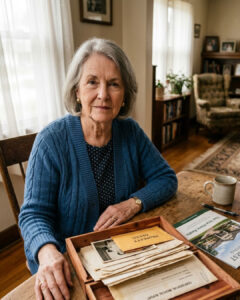
Ruth almost smiled.
“Then they’ve built a case against a woman who holds the deed and a doctor’s note.”
She pulled out fresh forms.
“Let’s lock the estate. Trust, durable power of attorney, healthcare directive. By the time they file anything, there’ll be nothing left to grab.”
I named Ivy and Ruth jointly on the documents.
Not Brooke. Not Daniel.
The two people in my life who had shown up without an angle.
I signed everything in a steady hand, dated and witnessed.
Walt would have liked Ruth.
She signs last, too.
Now everything was ready.
I just had to wait for them to walk into it.
They felt me getting ready.
People always do, even when they cannot say what they sense.
So Brooke escalated.
The email went out to the entire family on a Wednesday.
Subject line: An honest update about Mom.
Twenty-two relatives copied. Cousins, in-laws, church friends.
I will spare you all of it.
The gist was that I was declining. I was lashing out. I had threatened to render my own daughter homeless. The family would be gathering soon to make a loving plan for Mom’s care.
A loving plan for Mom, whether Mom liked it or not.
Within the hour, my phone filled with replies.
All so sorry, Brooke.
You’re such a good daughter.
Let us know how to help.
One cousin actually wrote, “Tony was always stubborn.”
Stubborn?
Yes. I paid off a house being stubborn.
Then came the call I expected.
Daniel, my son, finally weighing in from his safe two states away.
“Mom, I don’t want to take sides,” he said.
Which is what people say when they have already taken one.
“Then don’t sign anything,” I said.
“Brooke’s overwhelmed. She just needs everyone on the same page.”
“Which page is that, Daniel? The one with my hospital admission already filled out?”
Silence.
He had not known that part.
Or he had and did not want to.
“It’s not like that,” he said weakly.
“It’s exactly like that. I’ve read it.”
I let him sit in the quiet a moment, the way I used to when he had lied as a boy.
“There’s going to be a family meeting,” he finally said. “Brooke’s setting it up at your house. She thinks if everyone’s there, you’ll see reason.”
“Oh, I’ll come,” I said. “I wouldn’t miss it.”
A meeting. An audience. Everyone she had recruited in one room.
She thought she was building a courtroom.
She was building my stage.
I want to be fair to my daughter even now.
So let me tell you what I learned about why Ivy brought it to me, because Ivy notices things.
A second envelope had fallen out of Brad’s binder. A bank letter he had not meant to leave loose.
It was a notice of default. A home equity line. $180,000 drawn against their house, three months behind.
Underneath it was a dissolved LLC notice. Brad’s last business venture gone, taking their savings with it.
They were not rich people scheming for more.
They were drowning, and they had looked around for the nearest thing that could keep them afloat.
A house paid off, owned by a 70-year-old woman they had decided was on her way out anyway.
And there was the older wound underneath it.
Fifteen years ago, I had rescued Brooke once before with that very condo.
She had never had to learn to swim, so when the water rose again, she did not reach for a job or a budget.
She reached for me the way she always had.
Except this time, reaching for me meant reaching past me.
I understood it. I even ached over it.
The girl crying in that doorway with Ivy on her hip had grown into a woman who could not tell the difference between being saved and being owed.
But understanding is not the same as allowing.
Desperation explains a person. It does not entitle them to your front door, your deed, or your name on a hospital form.
I sat with the default notice a long time.
I thought about quietly paying it off.
The old reflex.
Rescue first. Ask never.
Then I put it down.
That reflex was exactly how we got here.
I had loved my daughter into believing love was a checkbook she could write against forever.
Not anymore.
The most loving thing left to do was stop catching her.
The meeting was in nine days.
Brooke called to invite me to my own house.
“Sunday at two,” she said. “Everyone’s coming. Daniel’s flying in. Please be open-minded, Mom.”
“In my own living room,” I said. “How generous.”
“Don’t be like that. We’re doing this because we love you.”
“I’ll be there,” I said. “Two o’clock. I’ll make coffee.”
She paused, thrown by how easy it was.
She had braced for a fight and gotten a hostess.
“You’re being weirdly calm about this,” she said.
“I’m 70,” I said. “I’ve stopped wasting energy.”
After she hung up, I will admit I sat there grinning at the kitchen wall.
They thought they were setting a trap.
They were sending in their RSVP to one.
I called Ruth.
“Sunday at two,” I said. “My house. Full family. The consultant will be there with papers.”
“Want me present?” she asked.
“No,” I said. “If a lawyer’s in the room, they’ll say I’m being coached. I want it to be just me, my family, and the truth. But I want you on the phone on speaker if it comes to it.”
“Witnesses?”
“Marian. She was at the brunch. And Ivy lives it every day.”
“Good,” Ruth said. “Two clean witnesses beat 22 coached cousins.”
I made one more arrangement, the quiet kind.
I called the real estate agent handling Pearl Street and asked a simple question about the listing.
She had news for me.
Good news.
The kind I had been waiting for.
I thanked her, hung up, and looked at my calendar.
Sunday at two, circled.
Outside, the leaves had started to turn.
October does that. Everything bright right before it lets go.
I had spent my whole life signing other people’s important days into the record.
Sunday, I would sign my own.
Saturday night, I laid everything out on the dining table and packed it the way I would want a stranger to find it.
In order. Clean. Undeniable.
I started with the cedar box. I emptied it gently, the way you handle the past.
In went the deed to the Pearl Street condo.
Tony M. Weston. Sole owner. Fifteen years clean.
In went the printed listing. My name. The address. The photos of the kitchen where Brooke made Ivy’s lunches.
In went Dr. Ferris’s report. Sealed, signed, dated 11 days ago. Cognition intact across all domains.
In went the trust documents and the durable power of attorney, witnessed and notarized, locking every asset I owned behind the law.
And on top of all of it, last, I placed the photograph.
Brooke at 25 in that doorway. Ivy on her hip. Both of them crying and laughing, finally safe behind a door I had bought so no one could take it from them.
I looked at that picture a long time.
Everything I needed to win fit inside one cedar box that used to hold my mother’s recipes.
Not a recording. Not a notebook of every dollar I had ever spent on them.
I had never kept those.
And I am glad this was not a ledger of resentment.
It was a record of love and law, which it turns out are the only two things that hold up under pressure.
I closed the lid.
The hinge gave its small familiar creak.
Tomorrow they would sit in my living room, certain they had already won, and I would open this box one item at a time.
I set it by the front door so I would not forget it, as if I could.
Then I went to bed and, to my own surprise, slept like a woman with nothing to hide.
Daniel came early Sunday morning before the others, knocking like he was not sure he was allowed in.
He looked older. Tired around the eyes, the way his father got when money was bad.
“Mom,” he said, standing on the porch with his hands in his pockets. “Can we talk before everyone gets here?”
I let him in. I poured two coffees. We sat.
“I don’t think you’re crazy,” he said finally. “I want you to know that. I never thought that.”
“And yet your name is on a family email saying I’m declining.”
He flinched.
“I didn’t write it.”
“You didn’t stop it either.”
He stared into his cup.
“Brooke and Brad are in real trouble, Mom. The money kind. I just thought if everyone agreed it would be quieter. Easier. Nobody wants a fight in the family.”
There it was.
The whole shape of my son in one sentence.
He did not want me harmed. He just wanted it handled smoothly, with his hands clean.
“Easier for who, Daniel?”
He did not answer.
For one moment, I saw the boy he had been. Nine years old. The one who would hide when his parents argued and come out only when it was over.
He was not cruel.
He was a coward, and cowardice had let him sign his name to my removal because removal is quiet.
“You could still choose differently,” I said. “Today. In that room.”
He looked at me, and for a heartbeat, I thought he might.
Then he looked away.
“Brooke’s my sister,” he said. “I have to back her.”
I nodded.
I had given him the honest chance, too.
“Finish your coffee,” I said. “They’ll be here soon.”
He drank it.
He did not look at me again.
Some people show you they are human right before they prove they will not act like it.
At 1:30, Ivy slipped in the back door and found me in the kitchen.
“Grandma.”
She was breathless.
“I have to tell you before they get here. The condo.”
“I know,” I said. “The agent called Friday.”
“You know?”
Her eyes went wide.
“Mom doesn’t know. She thinks it’s still a bluff.”
It was not a bluff.
It had never been a bluff.
The Pearl Street condo had an offer.
Full asking. $415,000 cash. Fifteen-day close.
A young couple with a toddler who had cried, the agent said, when they saw the kitchen. They wanted to move in by the first of the month.
The first of the month.
The same week Brad’s calendar said I would be checking into Willow Crest.
I almost laughed at the symmetry.
While they had been scheduling my exit from my house, I had been arranging Brooke’s exit from hers.
Legally. Publicly. With her name on nothing.
“I already toured your apartment,” I murmured, mostly to myself. “It’s listed for sale.”
The line that had cracked a fork in half at brunch was now a signed contract on my counter.
Ivy looked sick.
“Where’s Mom going to live?”
It was the right question, and it told me everything about which one of them I had raised right.
“That,” I said gently, “is a question your mother should have asked before she scheduled my room at Willow Crest.”
I did not say it with cruelty.
I said it like a closing statement.
A car pulled into the driveway, then another.
Doors closed hard. Voices gathered outside.
Ivy squeezed my hand.
“Stay by the window,” I told her. “Whatever happens, you don’t have to say a word unless you want to. Just be a witness.”
The doorbell rang in my own house.
I picked up the cedar box and went to let my family in.
They filled my living room like they owned it.
Brooke, Brad, Daniel, four cousins, two church friends, and Vance Cruz in a blazer the color of a traffic cone.
I made coffee.
I offered the good cookies.
I let them get comfortable.
“Mom, sit down,” Brooke said, taking my own armchair. “We need to talk.”
I sat on the sofa, cedar box beside me, lid closed.
Marian sat at the end. Ivy stood by the window.
Vance led, of course.
He had a leather portfolio and a gentle, practiced voice.
“Mrs. Weston, your family loves you very much. They’re concerned about your safety and your judgment.”
He opened the portfolio.
“We’ve prepared some documents just to make things easier. A voluntary transition agreement and a healthcare authorization.”
He slid the papers across my coffee table toward me.
Toward the pen he had thoughtfully placed on top.
“We just need your signature,” he said. “And we can all stop worrying.”
“Sign it, Mom,” Brooke said.
Her voice wobbled between command and plea.
“Please, before this gets ugly.”
“And if I don’t?”
Brad spoke for the first time, flat and cold.
“Then we let the court decide whether you’re fit to be making these decisions at all.”
The room went quiet.
They thought the quiet meant they had won.
A cousin murmured, “It’s for the best, Tony.”
Daniel studied the carpet.
I looked at the papers. I looked at the pen placed so helpfully, pointing toward the rest of my life in a building with a watercolor class I would never take.
“I’m not signing anything today,” I said.
My hand did not shake.
I noticed that after 15 years of going along, the one time it mattered most, my hand was perfectly still.
“Mom—”
“But since everyone’s here,” I said, “let’s make a loving plan together.”
And I reached for the cedar box.
“Before I open this,” I said, resting my hand on the lid, “I want to be fair. Everyone in this room got one version of the story. Brooke’s. You all answered her email. You all came to help me see reason.”
Heads nodded, uncertain.
“So I’m going to give you the other version. Not shouted. Not in an email. Right here, where you can see it with your own eyes and decide for yourselves.”
“Mom, don’t make a scene,” Brooke said.
“This isn’t a scene, sweetheart. It’s a closing. I’ve done thousands. They’re very calm.”
Vance shifted in his bright blazer.
“Mrs. Weston, I really don’t think—”
“You’re a guest in my home, Mr. Cruz,” I said. “You’ll get your turn to talk when I want to buy something.”
A cousin snorted a laugh, then caught herself.
“Marian,” I said, “you were at the brunch. You heard what was said.”
“Every word,” Marian said. “I wrote it down that night.”
“And Ivy lives close to this family. She’s seen things up close.”
Ivy nodded once, steady.
I felt the room tilt just slightly.
The jury Brooke had assembled was no longer sure which way the verdict ran.
That is the thing about an audience.
You can borrow it, but you cannot keep it.
The moment a calmer, clearer story walks in, the crowd quietly switches sides, and they never tell the loud one they have gone.
I opened the cedar box.
The hinge creaked in a silent room.
“This is everything,” I said. “Every claim made about me, answered on paper. Let’s go through it together, item by item, and then you can all decide who in this house actually needs looking after.”
I lifted out the first document.
Brooke leaned forward, and for the first time all month, she looked afraid.
I held the first paper but did not unfold it yet.
I wanted one breath of honesty before the proof.
“You all think this is about a house,” I said. “It isn’t. It’s about a word. Trusted. My daughter said I couldn’t be trusted on my own.”
I looked at Brooke.
“So let’s talk about trust.”
Fifteen years ago, your husband cleaned out your accounts and came after everything you had. You stood in a doorway with Ivy on your hip and nowhere to go.
Brooke’s face changed.
She had not expected the past in this room.
“Who showed up?” I asked quietly. “Who made sure that man could never touch the roof over your daughter’s head?”
She did not answer.
She did not have to.
Everyone there knew.
“I’m not saying it to shame you,” I said. “I’m saying it because you stood in a safe doorway I built, and 15 years later, you used the same kind of paperwork to try to push me out of mine.”
The cousins were very still now.
The church friends looked at their hands.
Ivy had tears on her face by the window. She remembered that doorway. She had been six.
Daniel finally looked up at me.
Too late.
But he looked.
“I loved you all the quiet way,” I said. “No receipts. No reminders. I thought that was the higher kind. I was wrong about that. Quiet love lets people forget where the floor came from.”
I unfolded the first document.
“So here’s me finally speaking up. Better late than buried in a brochure.”
Marian let out a breath that was almost a laugh.
I turned the paper around so the whole room could see it.
“Let’s start,” I said, “with whose name is on what.”
I laid the deed on the coffee table.
But before the deed could settle, Brad made his move.
They always do, the cornered ones.
He stood up, reached into his bag, and dropped the Willow Crest brochure on the coffee table, right on top of my deed, covering it like he could bury the paper under the picture.
The same glossy brochure. The silver-haired woman. The watercolor class. The gardens.
Clipped to it now was the Willow Crest pre-admission form, my name typed at the top.
“This is the responsible plan,” Brad announced to the room, loud and performing for the cousins. “A safe place. Professional care. We’ve already reserved her room for the first.”
He tapped the form.
“All we need is a signature. Hers or the court’s. We’d rather it be hers.”
A church friend murmured approval.
Brooke nodded, gathering her cousin’s faces back to her side.
For a moment, the brochure sat on top of my deed.
The lie on top of the truth.
And the room leaned toward the brighter picture, the way rooms do.
I let it sit there.
I did not snatch it away.
Snatching looks like panic, and panic was their whole story.
Instead, I picked up the brochure with two fingers, the way you lift something you are returning, and I read the price aloud.
“$6,200 a month,” I said. “For me, funded by selling my house.”
I set the brochure down, face up, beside the deed, not over it.
“Let’s leave that right there,” I said. “Picture of where they want me. Now let me show you the paperwork they hoped I’d never read.”
I slid the deed out from under the brochure and held it up.
“Brad,” I said, “you’re about to learn the difference between a person who tours a home and a person who owns one.”
Vance’s pen, abandoned on the table, suddenly looked very small.
Brooke saw the deed coming and panicked the only way she knew how.
She went louder.
“Don’t listen to her,” she said, standing and turning to the cousins. “This is what I’ve been telling you. She gets fixated. She makes up stories about owning things.”
“Brooke.”
“She thinks she owns my apartment now.”
Brooke laughed, sharp and brittle, sweeping a hand at me.
“Do you hear her? It’s time, Mom. You can’t be trusted on your own. This is exactly why we’re here.”
The words hung in the air.
The same words from the brunch table.
And this time, the room did not move with her.
They looked at the steady woman on the sofa with the box of papers. They looked at the shaking woman in the borrowed armchair.
And something quietly turned.
“Sit down, Brooke,” Daniel said softly. “Let her talk.”
His own sister.
He could not choose me, but he could not stomach the sound of her anymore either.
“Stay out of it,” she snapped at him.
“Honey,” Marian said in the tone she would use on a child near a hot stove, “you might want to hear this before you say anything else.”
Vance closed his portfolio.
He had done a dozen of these.
He knew the exact sound a deal makes when it dies, and he had just heard it.
Brooke looked around the room for her jury and found a row of people leaning away from her.
“Mom,” she said.
Now there was fear under the anger.
“What’s in the box?”
I had waited 15 years to be asked that question by someone ready to hear the answer.
She was not ready.
But she was about to find out anyway.
“Everything,” I said, calm as still water. “Let’s start with your front door.”
And I read the name on the deed out loud.
“Pearl Street Condominium,” I read, level and clear. “Grantee: Tony M. Weston. Recorded 15 years ago. No transfers. No second name ever.”
Silence.
“That’s the apartment my daughter has called hers for 15 years,” I said. “It has never, for one single day, been in her name. It’s in mine because I bought it.”
Brooke’s mouth opened.
Nothing came out.
I set the deed down and lifted the next page.
“This is the listing. Same condo. On the market legally by the owner. Me.”
I laid it beside the deed.
“As of Friday, it has a buyer. Full asking. $415,000. They close on the first.”
A cousin gasped.
Brad sat down hard.
I lifted the third document.
“This is a full cognitive evaluation dated 11 days ago, signed by a board-certified physician. Cognition intact across all domains. No impairment.”
I looked at Vance.
“Your capacity case is a single sheet of paper, Mr. Cruz. So is mine. Mine has a doctor’s signature, and yours has a sticky note.”
I set down the report and reached for the green binder I had Ivy retrieve that morning.
Brad’s binder.
The one with the dated incidents and the half-filled petition.
Brad went white.
“I won’t read the whole thing,” I said gently. “But there’s a note inside in your handwriting, Brad. Get her to sign voluntarily first. Cleaner. If not, capacity route by October 30.”
I closed the binder.
“You didn’t tour a home for me,” I said, still calm, still quiet. “You scheduled a removal and gave it a deadline.”
Then the last documents.
The trust. The power of attorney.
“And in case anyone in this room still thinks they’re getting my house,” I said, “every asset I own is now inside a trust the law won’t let you touch. I did that two weeks ago while you were pre-selecting my room.”
I folded my hands on top of the cedar box.
“You can’t move someone,” I said, “who owns the room.”
Across the coffee table, my daughter stared at the deed with her own name nowhere on it, and the entire month collapsed in her eyes.
Then I did the thing I dreaded most.
I reached for the photograph.
“Brooke,” I said, “look at this before you say another word.”
I turned it around.
Her at 25. Ivy on her hip. The doorway of the Pearl Street condo. The day they moved in safe.
“I bought that apartment so a man couldn’t take the roof off your daughter’s head,” I said. “I put it in my name so no court of his could reach it. I never made you thank me. I never reminded you. I thought that was love.”
My voice did not rise.
I had promised myself it would not.
“You took the safety I built you and turned it into the blueprint for pushing me out of my life.”
I set the photo on the table between the deed and the brochure.
“Concern is a gift,” I said. “You sent me a bill.”
Brooke broke, but not the way you would hope.
“You’re punishing me,” she cried, on her feet now. “You want me on the street, your own daughter, after everything I do for you?”
She was crying.
But it was the crying that demands, not the crying that is sorry.
“This is elder mistreatment,” she said. “I’ll sue you. I’ll take you to court and tell them everything.”
“Tell them,” I said. “I have a deed, a listing, a doctor’s letter, and your husband’s handwriting. Bring it all to a judge, please.”
Brad did not yell.
Brad did worse.
He picked up his folder, smoothed his jacket, and said, flat as a closed door, “We’ll see what my lawyer says.”
Then he walked out.
No apology. Just arithmetic.
Vance was already gone.
I had not even seen him leave.
And Daniel?
Daniel sat with his hands over his face and would not look at me.
Not in shame that fixed anything.
Just shame.
He had had the morning to choose and the room to choose, and he had let it pass twice.
The cousins did not say it was for the best anymore.
The room had a new verdict.
It just had not said it out loud yet.
I stood up slowly on my own two feet in my own living room.
“Here’s the loving plan,” I said, since everyone had come for one.
The room went still.
“I’m staying in my home. That isn’t on the table, and it never was. The condo sells on the first. I won’t be funding anyone’s HELOC, and I won’t be catching anyone who jumped on purpose.”
Brooke made a wounded sound.
I kept going, gentle and final.
“Brooke, I love you. I will love you until the day I die. But I’m done being the floor you stand on while you reach for my walls. You have until the first to find a place. I’ll help you move boxes. I won’t help you avoid the lesson.”
“Mom, please.”
“My door is open,” I said. “My deed is mine. Both of those are true, and you’ll have to learn to live with both.”
I looked at the cousins and the church friends who had answered an email about a woman they had not bothered to call.
“Coffee’s still warm if anyone wants it,” I said. “Otherwise, I think this meeting’s adjourned.”
One by one, they gathered their coats.
A few mumbled apologies on the way out.
The embarrassed kind. The kind that comes too late to mean much, but still counts for something.
Marian stayed.
Ivy stayed.
Brooke was the last to leave.
Mascara ruined, looking back at me from the doorway.
My doorway.
She had no idea she was standing in the exact spot from the photograph.
She did not recognize it.
That, more than anything, told me I had made the right call.
I closed the door behind her.
Not slammed.
Just shut with a steady hand.
Then I sat down with my two witnesses, and for the first time in a month, the house was quiet because I had chosen the quiet, not because I had been told to hold my tongue.
Here is how it landed in the plain numbers I trust more than feelings.
The Pearl Street condo closed on the first.
$415,000 clean.
The young couple’s toddler now naps in the room where Ivy learned to walk.
Brad’s $180,000 line of credit was their problem, not mine.
And without my house to raid, they had to face it the ordinary way.
They downsized to an apartment, a rented one, in both their names.
The guardianship petition was never filed.
You do not bring a capacity case against a woman holding a clean neuropsych report.
Vance knew it, which is why Vance evaporated.
No commission. No case. No blazer at my door again.
A handful of cousins called to apologize.
I accepted, and I noted who never did.
Daniel emailed.
Three lines.
He was sorry it got so heated.
Not sorry he had signed on.
Sorry it got loud.
I wrote back two words.
I know.
We talk now, a little carefully.
Brooke sent a long message a week later.
“I only ever worried about you, Mom. I can’t believe you’d do this to family.”
The manipulative kind.
The kind with no apology in it.
Only a fresh invoice.
I read it once.
I did not write back.
Some letters do not deserve a reply, only a closed lid.
I took the Willow Crest brochure off my counter at last.
I folded it once, slid it inside the old listing sheet for the condo, the lie tucked inside the truth that beat it, and dropped them both in the recycling.
Then I put the deed and the photograph back in the cedar box where the safe things live, and set it on the shelf.
The hinge creaked shut the way it has my whole life.
The house was mine.
It always had been.
Concern is a gift, not an invoice, not a verdict, and never a key to your mother’s front door.
That’s my story.
One brochure, one cedar box, one steady no.
If you came here from Facebook because of this story, return to the Facebook post, tap Like, and comment exactly “Amazing” to support the storyteller. That small action means more than it seems and gives the writer genuine encouragement to keep sharing more stories about family pressure, firm boundaries, and finally protecting what you worked so hard to build.
Disclaimer: This story is a work of fiction created for entertainment purposes. Any resemblance to real persons, events, or places is coincidental.