The morning my marriage ended, my coffee was still hot.
That was the strangest part of all.
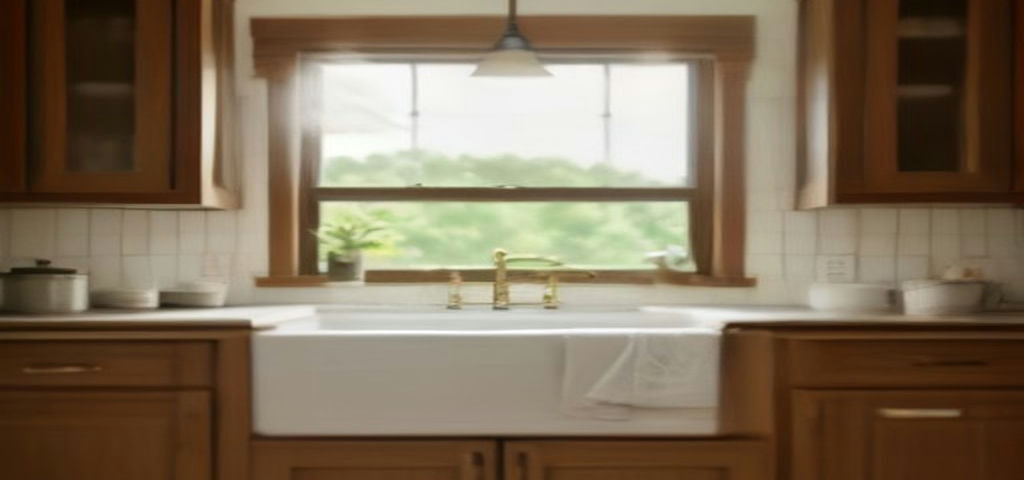
The world had not stopped turning. The sunlight had not dimmed, and the quiet hum of the refrigerator continued as if nothing in my life were about to change. Pale Missouri sunlight streamed through the tall kitchen windows, spilling across the polished hardwood floor and glinting off the brass cabinet pulls I had spent three evenings carefully choosing. The white quartz countertops gleamed beneath the pendant lights hanging over the island, so spotless that their smooth surfaces seemed to reflect every detail of the room.
It was beautiful.
It was the kitchen I had dreamed about creating, the kind of space I had pictured when I imagined building a home with the man I loved. Every cabinet, every fixture, every carefully chosen detail had been selected with the future in mind.
And almost every beautiful thing in that kitchen had been paid for by me.
Just ten weeks earlier, the room had looked like something the Mercer family had learned to tolerate rather than appreciate. The stove had only two working burners, and even those seemed unreliable. Several cabinet doors hung crookedly, refusing to close properly no matter how gently someone pushed them. The laminate around the sink had swollen and bubbled from years of moisture, leaving rough edges that caught against anything placed too close. One electrical outlet had been covered with painter’s tape because Ethan insisted nobody trusted it enough to use.
The entire kitchen had been tired, neglected, and desperately in need of attention.
Then I had come along and changed it.
I had believed I was improving the place where my husband and I would begin our life together. I had never imagined that those improvements would eventually become the reason his family decided I owed them money.
Yet that morning, my sister-in-law stood on the opposite side of the island as though the room’s history meant nothing at all.
Tessa Mercer folded her arms across her chest. Her posture was rigid, her expression composed, and there was something almost rehearsed about the way she looked at me.
“Starting next month, you need to pay one thousand dollars.”
For a moment, I thought I had misunderstood her.
I waited for her to explain herself, assuming there had to be another sentence coming, something that would make her demand sound less absurd.
When she offered nothing more, I set my coffee cup down slightly.
“For what?”
“For living here.”
I stared at her, trying to make sense of the words, and then slowly turned toward Ethan.
My husband stood beside the refrigerator wearing gray sweatpants and an old college sweatshirt. His shoulders were slightly hunched, and his gaze remained fixed on the floor. He seemed deeply interested in something near his shoes, as though the hardwood might offer him a way out of the conversation.
He didn’t look at me.
Not once.
Tessa continued speaking, apparently unconcerned that her brother was standing only a few feet away, allowing her to deliver this news without offering a single explanation.
“The payment is due on the first. If you don’t want to pay, you’ll need to move out of the upstairs unit.”
My coffee cup remained suspended halfway between my hand and my mouth.
For half a second, I genuinely believed this had to be some kind of bad joke. Perhaps Tessa was testing me, or perhaps Ethan had arranged some ridiculous surprise that would make sense once someone finally explained it.
But she wasn’t smiling.
There was no trace of humor in her face, no hint that she expected me to laugh.
“The arrangement is changing,” she said firmly.
I lowered my cup.
“What arrangement?”
“The family decided the upstairs apartment shouldn’t be occupied for free anymore.”
She said it as though she were explaining a simple household policy, something ordinary and reasonable that I should have anticipated.
Then her eyes moved around the kitchen.
The gesture was small, almost casual, but I caught every part of it. Her gaze traveled over the white quartz counters, the newly installed cabinets, the stainless-steel appliances, the backsplash, the recessed lighting, and the refinished hardwood floor.
She took in the room from one end to the other, inspecting the improvements I had worked so hard to complete.
Then she said, “It’s valuable now.”
Something cold settled into my stomach.
Of course it was valuable now.
I had made it valuable.
Ten weeks earlier, Ethan had stood in the center of the old kitchen, wrapped both arms around me, and rested his chin against my hair. I could still remember the warmth of his hands and the tenderness in his voice. At the time, I had taken his words as a promise, a declaration that we were beginning something that belonged to both of us.
“Make it ours, Claire,” he had whispered.
And I had.
I had approached the renovation with the same determination I brought to every important decision in my life. I researched contractors, compared estimates, and asked questions until I understood exactly what I was paying for. I spent weekends driving through St. Louis, visiting showrooms and studying tile samples beneath different kinds of lighting. I stood in appliance stores while salesmen explained features I didn’t care about, trying to remain polite while mentally calculating costs.
I coordinated electricians around plumbers and plumbers around cabinet installers. I answered calls during my lunch breaks, rearranged my schedule when deliveries were delayed, and spent evenings reviewing invoices and checking measurements.
There were days when I came home exhausted and could barely keep my eyes open, yet I still found myself thinking about grout colors, cabinet dimensions, and whether the new fixtures would look right against the counters.
Then I wrote the checks.
Cabinets.
Appliances.
Flooring.
Electrical repairs.
Counters.
Fixtures.
Labor.
Forty-five thousand three hundred dollars.
My money.
Every dollar had come from savings I had accumulated through years of careful planning and hard work. It was not money I had stumbled upon or inherited unexpectedly. It represented choices I had made, things I had gone without, and opportunities I had sometimes postponed because I wanted to build a secure future.
Ethan had repeatedly assured me that the upstairs unit would be our long-term home. We had been married exactly ninety days. When I invested that money in the renovation, I believed I was investing in the place where we would establish our life together.
I had thought of the money as a foundation.
Now his sister was telling me I needed to pay another twelve thousand dollars a year simply for the privilege of remaining there.
I turned toward Ethan again.
“Did you know about this?”
He shifted his weight and rubbed the back of his neck, a familiar gesture that usually appeared when he was uncomfortable or trying to avoid answering a difficult question.
“Claire, maybe we should just hear her out.”
That sentence told me more than an argument ever could have.
I studied his face, waiting for him to correct himself, to look at me and admit that he had no idea what his sister was talking about.
He didn’t.
Instead, he stood there as though my confusion were the problem and Tessa’s demand were something I needed to consider calmly.
“You already heard her out, didn’t you?”
He finally raised his eyes, but only briefly.
“It’s complicated.”
Tessa gave a short, dismissive laugh.
“It really isn’t. This building belongs to the Mercer family. Claire married into the family. That doesn’t mean she owns Mercer property.”
I felt the first sharp flicker of anger beneath my confusion.
“I never said I owned it.”
“No,” Tessa replied, tilting her head slightly. “But you act like this place is yours.”
For a moment, I could only look at her.
Then I glanced around the kitchen again, taking in the room I had poured so much of myself into.
A short, disbelieving laugh escaped me.
“I replaced a stove that barely worked.”
“You chose to renovate.”
Ethan flinched.
It was a small movement, barely noticeable, but I saw it immediately.
“You asked me to renovate,” I said, turning directly toward him.
“I said we could improve the place.”
“You said, ‘Make it ours.'”
“Claire—”
“No.” I kept my eyes on his face. “Tell me I imagined that. Tell me you never said it.”
He remained silent.
He didn’t deny it, and somehow that made the moment even worse. The words had been his. The promise had come from him. Yet now he was standing beside the refrigerator while his sister treated my contribution as though it had been an unnecessary personal indulgence.
Tessa shifted her weight and looked impatient.
“This isn’t about the renovation.”
I turned back toward her.
“It became about the renovation the second you said the place was more valuable now.”
“The family has expenses.”
“So did I.”
“We all contribute.”
“I contributed forty-five thousand three hundred dollars.”
The number seemed to change the atmosphere in the room.
Tessa’s expression shifted, and for the first time since she had begun speaking, she looked uncertain. Her arms loosened slightly, and she glanced toward Ethan as though she expected him to explain something she had not known.
“You spent that much?”
I looked at my husband.
Apparently, he had never told her the full amount.
“Yes,” I said.
Tessa recovered quickly, straightening her shoulders as though she could restore her authority simply by standing more firmly.
“Well, nobody forced you.”
“No,” I replied. “Your brother encouraged me.”
Ethan finally stepped away from the refrigerator, though he still seemed more concerned with ending the conversation than addressing what had happened.
“Can we not do this right now?”
I almost smiled at the absurdity of it.
“Your sister arrived at breakfast demanding money from me. When would be a better time?”
He lowered his voice, adopting that careful, restrained tone I had come to recognize all too well.
“Claire.”
There was something familiar in the way he said my name. It was the voice he used when he wanted me to stop asking questions in front of his family, when he wanted me to soften my position and make the discomfort disappear so everyone else could move on.
In the past, it had often worked.
I had mistaken his desire for quiet for a desire to resolve things. I had told myself that marriage required patience, that sometimes I needed to let small disagreements pass rather than turn them into larger conflicts.
That morning, however, something had changed.
His tone no longer had the power to make me doubt myself.
I turned toward Tessa.
“How long has the family been discussing this?”
Her eyes flicked toward Ethan.
It was a tiny movement, lasting barely a second, but I caught it.
There it was.
The first real answer I had received all morning.
“This wasn’t decided today,” I said.
Neither of them responded.
I waited, allowing the silence to stretch between us.
“It wasn’t decided this week either.”
Ethan stepped forward, his expression tightening.
“Let’s talk upstairs.”
“No.”
“Claire.”
“If my money can be discussed in front of Tessa, then your answer can be discussed in front of Tessa.”
Tessa’s mouth tightened into a thin line.
“You’re turning this into something bigger than it is.”
I stared at her, unable to understand how she could possibly believe that.
“You told me to pay or leave the home I just spent forty-five thousand dollars improving. How small am I supposed to make that?”
The room fell silent.
Even the ordinary sounds of the house seemed to fade into the background. I could hear the refrigerator humming and the faint ticking of a clock somewhere beyond the kitchen, but neither Ethan nor Tessa appeared willing to fill the space between us.
Then I noticed something beside Tessa’s purse.
A sheet of paper lay partially concealed beneath the edge of a folder. It was positioned close enough to her belongings that she might have intended to take it with her, but not so carefully hidden that it escaped my attention.
I leaned slightly toward it.
Her expression changed immediately.