The Ticket He Thought Would Teach Me a Lesson
My dad canceled my flight and texted, “walk home” — I replied, “you sure?” and five minutes later, my family realized the house, car, and trip plans they had been counting on were all booked through me.
The airline agent looked at her screen twice before raising her eyes to meet mine. Her expression had shifted from routine politeness to the kind of uncomfortable sympathy people wear when they have to deliver news they know will hurt.
“I’m sorry, Ms. Bennett,” she said, turning the monitor slightly as if that might somehow make the information easier to accept. “The reservation was canceled online less than an hour ago.”
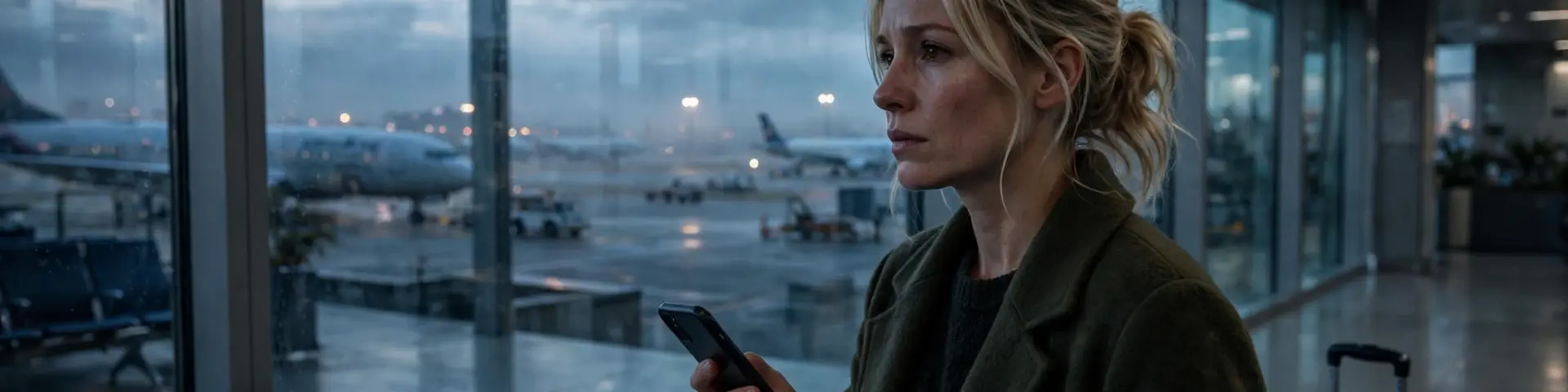
I stood beside the check-in kiosk at Seattle-Tacoma International Airport with my carry-on at my feet, my coat still damp from the morning rain, and a boarding pass that no longer existed. Around me, the terminal buzzed with the familiar chaos of travelers dragging suitcases, checking departure boards, and hurrying toward security. A child laughed somewhere behind me. A luggage cart rattled across the polished floor. Everything continued as normal, even though my family had just made a decision that left me standing alone.
My father had dropped me at the north entrance twenty minutes earlier, giving me a casual wave through the windshield before driving away. My mother, Diane, my brother, Mason, and my younger sister, Lauren, were already somewhere inside the terminal, or so I assumed. We were supposed to fly together to California for Mom’s sixtieth birthday, spending four days in Carmel at a rental house overlooking the coast.
It had been my idea to make the trip special. Mom had spent years talking about Carmel, describing the ocean views, the little shops, and the quiet roads winding along the coastline. When her birthday approached, I decided we should finally go. Dad had purchased the airline tickets because he wanted all five seats together, and I had reimbursed him for mine the same day. I had taken care of nearly everything else.
I checked my email again, hoping I had misunderstood something. The airline confirmation had vanished from the app. When I refreshed the reservation, the cancellation notice appeared with its cold, unmistakable details. The action had been made by the person who originally booked the family reservation.
My father.
I called him. No answer. Then Mom. No answer. My brother, Mason, went straight to voicemail. Lauren’s phone rang several times before the call ended without anyone picking up.
I stared at my screen, trying to understand why all four of them were suddenly unavailable when we were supposed to be traveling together. Then a text appeared.
Dad: Walk home.
I read it once. Then again. The words were so childish that, for a moment, I genuinely thought he had sent them to the wrong person. I even checked the contact name at the top of the screen, as though there might be another Russell Bennett in my life who had decided to communicate in the language of a playground bully.
But there was no mistake.
Two weeks earlier, we had argued about the expansion loan he wanted me to guarantee for his company. He had wanted me to co-sign for a new fabrication machine and a service truck. I had refused because the numbers did not make sense, and I was unwilling to place my own financial future at risk to support a decision I believed was too dangerous.
Apparently, my refusal had become a personal offense he intended to punish.
I looked back at the airline agent. “Can you tell whether the rest of the reservation is still active?”
She typed something, scanned the screen, and nodded. “Yes. Four passengers remain confirmed.”
Of course they did.
My father had not canceled the family trip. He had canceled me.
A small, disbelieving laugh escaped me. It was quiet enough that the agent looked concerned, perhaps wondering whether I was about to cry or lose my temper. I did neither. I had spent too many years learning to keep my emotions contained whenever my family decided they knew better than I did.
I typed a reply.
You sure?
Dad sent nothing back.
I opened another app. The Carmel rental house was confirmed under my name. So was the seven-seat SUV waiting at San Jose. So was the prepaid coastal tour Mom had spent three months talking about. The reservations sat there in neat rows, each with a confirmation number and a payment record.
My father had paid for the airline tickets because he wanted all five seats together. I had reimbursed him for my ticket. Everything else had been my contribution to Mom’s birthday.
I stared at the reservations, then at his message. Walk home.
Five minutes later, my phone began ringing.
Dad. Then Mom. Then Dad again.
A notification appeared from the rental platform confirming my cancellation request. We were still inside the full-refund window because check-in was the following afternoon. I canceled the house. Then the SUV. The coastal tour was nonrefundable but transferable to future travel credit, so I moved the value back into my account.
I did not touch their airline tickets. I did not change anyone else’s reservation. I did not interfere with their accounts or take anything that belonged to them. I simply stopped paying for the portion of the vacation that belonged to me.
By the time I walked toward the rideshare pickup area, my father had called six times. Then nine. Then eleven. His messages were arriving faster than I could read them, each one more urgent than the last.
I was sliding into the back seat of a gray Toyota when I saw our family SUV turn into the airport loop. Dad was driving. Mom sat beside him. Mason leaned forward from the back seat, scanning the curb as if he expected to find me standing there with my luggage and an apology already prepared.
My phone lit up again.
WHERE ARE YOU?
I looked through the rain-streaked rideshare window as our driver pulled away from the curb. For a moment, I watched the SUV crawl alongside the terminal, searching for someone who was no longer waiting to be rescued.
Then I turned my phone facedown.
The Loan That Started Everything
My name is Meredith Bennett. I was thirty-five years old that morning, working as a senior risk analyst for a marine insurance firm in downtown Seattle. Risk analysis is not glamorous work. Most days, nobody notices you when you do it well because your job is to identify expensive mistakes before they become expensive disasters.
I liked that about my work. I liked the clarity of it, the way numbers could be examined from different angles until the risks became visible. Numbers did not become offended when you questioned their assumptions. They did not accuse you of being disloyal because you refused to ignore a warning sign.
People, unfortunately, were not always so reasonable.
My father, Russell Bennett, owned a commercial sign installation company near Tacoma. Bennett Sign Systems had existed for twenty-seven years, long enough that Dad no longer described it as a small business, even though its size rose and fell with construction cycles. Some years were good. Some were lean. Dad had always been skilled at finding the next project before the last one ended, but he was less skilled at accepting when expansion should wait.
Two weeks before the airport, he asked me to review a loan package. We sat at my parents’ kitchen table with the same blue ceramic mugs Mom had owned since I was in high school. The room smelled faintly of coffee and the lemon cleaner she used on the counters every morning. Outside, rain tapped against the windows.
Dad slid the lender’s proposal toward me.
“We can finally bring fabrication in-house,” he said, leaning back in his chair. “Do you understand what that would mean for us? We wouldn’t have to outsource half the work. We’d control the schedule, the materials, the margins. We could take on bigger contracts.”
I began reading.
The proposal included a large equipment purchase, a commercial truck, high interest, a personal guarantee, and a balloon provision after thirty-six months. I turned the page, then another. When I reached the section he had folded underneath the rest of the paperwork, I understood why he had been so eager for me to review the package in person.
Additional guarantor required.
My name was already handwritten in the margin.
I looked up. “You want me to co-sign.”
Dad gave me the confident smile he used with lenders and clients. “Not really co-sign. Just strengthen the application.”
“That is co-signing.”
“It’s paperwork.”
“No.”
His smile disappeared. “You haven’t even looked at the numbers.”
“I’m looking at them.” I turned the page toward him and tapped the relevant figures. “The monthly obligation is larger than my mortgage.”
“The machine pays for itself.”
“If utilization stays high.”
“It will.”
“If customers stay on schedule.”
“They will.”
“If your receivables come in.”
“They always do.”
I looked at him for a moment. “No, they don’t.”
His expression hardened, and I knew I had touched the part of the conversation he did not want to discuss.
I knew because I had helped before. Four years earlier, when Bennett Sign Systems had experienced an uneven quarter, I had quietly covered three payments on the company’s box truck. Dad had told me that losing it would cost him current installation jobs and that the problem would resolve as soon as two clients paid their outstanding invoices.
The arrangement was supposed to last two months. It became almost three years of monthly transfers. None of the individual payments seemed enormous, especially when I considered how much trouble the company might face without the truck. The transfers became routine, and routine has a way of disguising the weight of a responsibility.
Dad had apparently stopped treating them as help.
I slid the loan back across the table.
“I’m not signing.”
He stared at me as though I had spoken in another language. “Why?”
“Because the lender is telling you the company cannot safely carry this debt without another person’s income behind it.”
“The lender is conservative.”
“That’s their job.”
“You work in risk. You’re afraid of everything.”
“I work in risk because I know what happens when people confuse optimism with evidence.”
Dad pushed his chair back, the legs scraping sharply across the kitchen floor.
“Successful families support each other.”
I almost smiled, though there was nothing amusing about the conversation anymore.
“We do.”
“You have the income.”
“That does not make my credit family equipment.”
Mom stood near the counter, drying the same plate for too long. I could tell she was listening to every word, even though she kept her eyes lowered. Mason was in the living room. Lauren had stopped by after class. Everyone heard us. Nobody said anything.
Dad gathered the papers into a neat stack and tapped them against the table.
“Fine.”
It was only one word, but there was enough anger packed into it to fill the room. I should have understood that the conversation was not over for him. Instead, I left believing we had reached an uncomfortable but final disagreement.
I was wrong.
The Support I Had Never Counted
The rideshare carried me north toward my apartment while the airport disappeared behind us. Rain blurred the passing buildings, and the city looked washed out beneath the gray sky. I sat with my bag on the floor beside me, feeling the strange exhaustion that follows a shock before your mind has fully decided what it means.
I called my aunt Colleen.
Dad’s younger sister was sixty-one, a high school librarian, and the only person in our extended family who could disagree with Russell without turning the disagreement into a campaign. She had a calm voice and a stubborn streak that had survived decades of family arguments.
She answered on the second ring.
“Why are you calling instead of boarding?”
That was enough to tell me she knew something.
“Dad canceled my ticket.”
Silence filled the line.
Then she said, “He actually did it.”
I looked out the window. “You knew?”
“I knew he was angry.”
“That isn’t what I asked.”
She sighed. “Two days ago, he told me you needed to remember who helped you get where you are.”
My stomach tightened. “What else?”
“He said maybe missing part of the vacation would teach you that family support goes both ways.”
I closed my eyes and pressed my head against the seat.
“So it was planned.”
“Yes.”
“Did Mom know?”
“I don’t know how much.”
“Mason?”
“No idea.”
“Lauren?”
“No idea.”
Colleen became quiet for a moment before asking the question I had been avoiding.
“What are you going to do?”
I opened my banking app.
For four years, family support had grown around me the way vines grow around a fence. Slowly enough that you stop seeing where the original structure ends and dependency begins. Every new request had seemed manageable on its own. A tuition installment here. A truck payment there. A deposit to help someone get started. A temporary contribution that somehow became part of the monthly budget.
Lauren was finishing a respiratory therapy program. I paid part of her tuition directly to the college because I wanted her to graduate without panic over the final semesters. Dad’s box truck transfer was automatic. My parents had fallen behind on county property taxes the previous year, and I had negotiated an installment plan with the county, then covered several early payments to keep them from falling further behind.
Mason wanted to start a mobile bicycle repair business. I had placed a refundable deposit on specialized tools, battery systems, and a compact service van while he gathered the remaining capital.
And then there was the Carmel trip, which I had planned as a gift for Mom’s sixtieth birthday. The rental house. The SUV. The activities. The details I had researched after work and on weekends because I wanted the family to have a few days together without worrying about logistics.