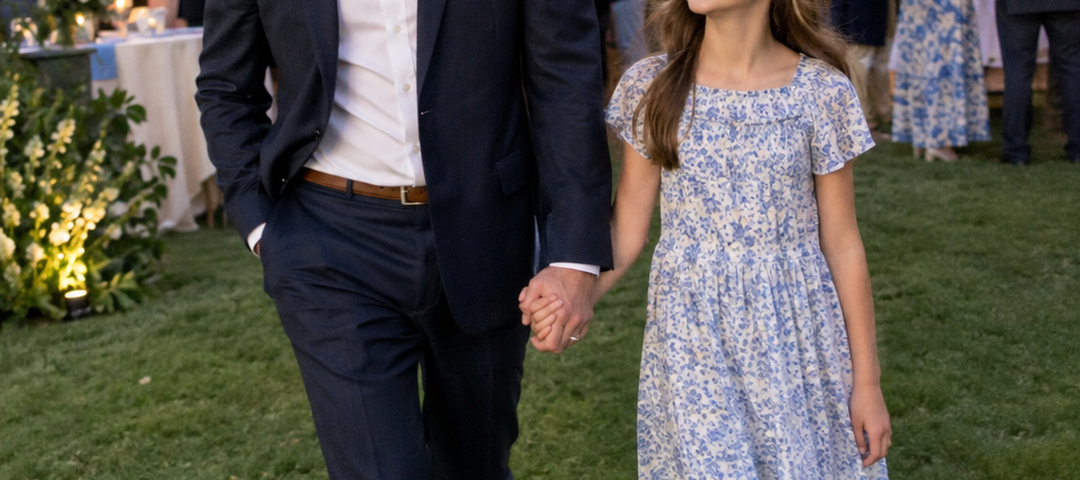
I stood in the middle of the expansive garden of my parents’ estate, where lanterns dangled from the branches of old oak trees and cast a warm, trembling light over familiar faces. Music floated from the outdoor speakers, laughter drifted through the evening air, and everything smelled of grilled meat and late-blooming roses. It was my father’s seventy-second birthday, and the whole of respectable Charlotte seemed to have shown up to celebrate him.
My father, Richard Bennett, was not simply a doctor. He was the director of St. Mary’s Medical Center, a man whose name carried weight in boardrooms, charity galas, and hospital corridors across North Carolina. Our family had been tied to medicine for generations, and I, David Bennett, thirty-eight, a neurosurgeon at that same hospital, had always been expected to carry the torch.
I had been born into what looked like a perfect painting. Privilege, discipline, applause. Golden plaques on the wall. Dinners where my father lectured on ethics while my mother, Margaret, president of a charity foundation, smiled at guests like a queen. I told myself that was the price of a good name.
That night, I was chatting with a few guests, colleagues from the hospital, old friends of my parents. They asked about a complex brain tumor I had removed the week before, and I answered modestly, the way surgeons learn to answer. But my attention kept drifting across the lawn.
Sophie was there, my nine-year-old daughter, running around the grass with her uncle. Matthew, my younger brother, thirty-five, was telling her one of his famous stories, and she was giggling so hard she could barely hold the ball in her hands.
Matthew had always been like that with her. The warm smile, the funny voices, the stories that went on forever. He was the easygoing younger son, the literature teacher everyone adored, the one my parents praised constantly. Sophie followed him around at every family gathering, and I had always been glad she had him, especially since the divorce.
My phone vibrated in my suit pocket. A light buzz. I pulled it out and the name on the screen made my stomach tighten: Laura Mitchell, my ex-wife.
We had divorced three years earlier. The split had been civil, almost kind, because of Sophie. Laura was a police detective with the Charlotte force, a woman who did not call without a reason. When she called, it mattered.
I excused myself and walked to a quieter corner of the garden. The jazz kept playing behind me. I pressed answer.
“David, it’s me. Are you there?”
Her voice was urgent and raw, nothing like the measured detective tone I knew. No greeting. No warmth. Just panic, pressed down hard.
“Yes, I’m here. What’s going on?”
“Where are you? Where is Sophie? Who is she with?”
Each question came faster than the last. I looked across the lawn. Sophie was still laughing with Matthew under the lanterns.
“She’s here with me, in the garden, playing with Uncle Matthew. Why? Is something wrong?”
Silence. A few seconds that felt like an hour. I could hear her breathing, quick and shallow, and the hairs on the back of my neck stood up.
Then her voice hardened into something I had never heard from her in all the years I had known her.
“Get her out of there right now, David. Right now.”
My hand tightened around the phone. “What? What are you talking about, Laura?”
“Don’t ask me over the phone. Just take Sophie home. It involves Matthew.”
My brother. The one everyone loved. A literature teacher. Beloved by his students, praised by my parents, adored by my daughter. “Involves him how? Laura, explain.”
“Trust me, David. I will explain when Sophie is home and safe. But right now, get her out.”
I was a neurosurgeon. I spent my days making decisions under pressure that could cost a life. I did not panic easily. But Laura was a detective, and fear like that in her voice was not something she faked.
“Okay,” I whispered. “I’ll take her home. But you have to explain.”