I am Valerie. I am 28 years old and yesterday afternoon, a senior editor from Forbes magazine called my office to verify the financial details of my tech company. They wanted to confirm the revenue numbers, the user acquisition cost, and the profit margins before they put my face on the front cover of their next issue.
The valuation they were calling about was $50 million. But if you truly want to understand how a $50 million empire is built from scratch, you do not start by looking at the sleek corporate boardrooms or listening to the polished venture capital pitches. You have to go all the way back to the very beginning.
You have to look at the dirt, the grit, and the quiet desperation. You have to look at a 12-year-old girl who realized very early on that if she wanted to survive in her own house, she was going to have to treat her childhood like a cold, calculated business transaction. Let me take a moment to paint a highly accurate picture of my family for you because context is everything.
My father, Richard, and my mother, Barbara, were not poor. They were not even comfortably middle class. They were wealthy.
They owned and operated a highly successful commercial real estate firm in a very affluent, gated suburb where the neighborhood association dictated the exact shade of green your lawn was allowed to be. Money flowed through our house like a river. There were imported Italian leather sofas that nobody was allowed to sit on.
Annual winter vacations to the Swiss Alps and matching luxury European SUVs parked in our oversized driveway. It was a picture perfect upper class American existence, at least from the outside looking in. They threw lavish summer barbecue parties and donated generously to the local country club.
But inside those freshly painted walls, there was a dividing line so thick and so heavy that you could physically choke on it. On one side of that line stood my younger sister, Clara. On the exact opposite side was me.
Clara is three years younger than I am. And I need to make one thing perfectly clear right now before we go any further. Clara was never the villain in this story.
She was simply a kid who was born into the sunlight while I was somehow permanently pushed into the shade. From the moment she could walk and talk, she was the undisputed golden child of the household. If Clara showed even a fleeting momentary interest in painting watercolors, my parents would immediately hire a private art tutor from the city, paying top dollar, and completely convert our spare guest room into a fully functioning art studio just for her.
If Clara mentioned that she wanted to try horseback riding, the absolute finest leather riding boots and a premium exclusive stable membership were arranged and paid for before we even sat down for dinner that evening. She never had to ask for anything twice. In fact, she rarely even had to ask once.
Richard and Barbara anticipated her needs and desires as if she were royalty. They meticulously curated her entire life to ensure she never experienced a single moment of friction, disappointment, or struggle. They spoke endlessly about protecting her future, about ensuring her inheritance would set her up for a life of complete ease and social prestige.
My daily experience in that exact same house, breathing the exact same air, was entirely different. Whenever I needed something, the atmosphere in the room would instantly drop ten degrees. If I needed new sneakers for physical education class because the soles of mine were completely wearing thin and separating from the fabric, my mother would sigh heavily, cross her arms tightly across her chest, and deliver a long, exhausting hour-long lecture about financial responsibility, the value of a hard-earned dollar, and how I was draining their resources.
It was absolutely baffling. We lived in a house with a heated in-ground swimming pool and a wine cellar. Yet I was treated like a massive financial burden that they were barely tolerating out of legal obligation.
By the time I blew out the candles on my 12th birthday cake, I understood the unspoken ironclad rule of the household. If I wanted anything beyond basic food and shelter, I had to buy it myself. So I went to work.
While my classmates were attending expensive summer camps, taking tennis lessons, or having carefree sleepovers, I was riding my rusty bicycle to the wealthy neighborhoods across town. I babysat hyperactive toddlers who threw wooden building blocks at my head for $5 an hour. I mowed massive lawns in the sweltering, unforgiving summer heat until my hands were covered in blisters.
I washed mountains of greasy dishes at a local run-down diner on weekend nights. Coming home at midnight smelling like stale French fry oil and industrial bleach, I hoarded every single crumpled dollar bill and heavy quarter I made, hiding them inside an old shoe box in the very back of my closet, hidden under a pile of winter sweaters. I taught myself how to budget, how to save for emergencies, and how to aggressively negotiate my hourly babysitting rate with cheap neighbors who tried to underpay me.
I was just a child, but I was operating with the cold, hard, survivalist logic of someone who knew that absolutely nobody was coming to save her. I foolishly thought that if I worked hard enough, if I proved exactly how independent and responsible I was, Richard and Barbara would finally look at me with the same beaming pride they reserved for Clara. I thought my independence would eventually earn their love.
I was incredibly, heartbreakingly wrong. The naive illusion that I could ever earn their respect or love shattered completely and permanently during the summer right before I left for college. I had spent all four years of high school working myself down to the absolute bone.
I had taken extra grueling shifts at the diner, tutored younger, struggling students in advanced math for pocket change, and deliberately skipped every single school dance, football game, and social event. All to save enough money for my university tuition. I had managed to secure a partial academic scholarship to a very good state university.
And with my carefully hoarded savings, I could just barely cover my dormitory room and my basic meal plan. I had calculated my budget spreadsheet down to the final penny, feeling an immense sense of pride that I was going to pull this off without owing them anything. But when the official syllabus for my freshman core classes arrived in the mail in late July, I realized I had made a devastating miscalculation.
The required textbooks, even if I aggressively hunted down the most heavily used, highlighted, and battered copies available online, were going to cost significantly more than I had anticipated. I ran the numbers over and over again until my eyes burned. I was exactly $200 short.
$200.
In a household that casually and easily dropped ten times that amount on weekend golf getaways or designer handbags without blinking an eye, it should have been nothing. It should have been a complete non-issue. I printed out my budget spreadsheet, double-checked my math, and walked downstairs.
I found Richard and Barbara sitting at the massive granite island in our custom-designed kitchen. They were drinking expensive imported wine and looking over some thick official-looking legal documents. The air in the room felt light, breezy, and celebratory.
I took a deep, steadying breath, clutching my printed paper in my sweaty hands, and approached them. I cleared my throat. I explained my situation as clearly and calmly as possible, keeping my voice entirely devoid of emotion.
I showed them the math on the paper. I humbly asked if they could spot me the $200 just for the required textbooks, promising on my life to pay them back in full by Thanksgiving once I secured a work-study job on the university campus. The silence that fell over the kitchen was absolute and deafening.
The celebratory mood vanished instantly, replaced by a thick, suffocating tension that made it hard to breathe. Richard slowly, deliberately placed his expensive wine glass down on the granite counter. He looked at me.
He did not look at me with sympathy, and he did not even look at me with standard parental annoyance. He looked at me with pure, unadulterated, visceral disgust. His face turned a deep, angry shade of red, the veins in his neck bulging slightly.
“Stop acting like a scavenger, Valerie,” he snapped, his voice harsh and echoing off the high vaulted ceilings. “You are always begging for scraps. We put a roof over your head.
We feed you. And now you want us to fund your poor planning and incompetence. We told you years ago that your college expenses were your sole responsibility.”
I stood there completely frozen, my feet rooted to the hardwood floor.
A scavenger.
The word hit me like a physical heavy blow directly to the chest. I was working 30 hours a week as a high school teenager, paying my entirely own way through life, holding a near-perfect grade point average, and I was being called a scavenger for asking for $200 for educational materials. Before I could even process the profound humiliation and injustice of his words, Barbara chimed in smoothly, tapping her perfectly manicured fingernails against the thick legal documents on the counter.
“Besides,” she said smoothly, not even bothering to make eye contact with me, keeping her eyes fixed on the paperwork. “We just finalized a major significant purchase today. We need to be very careful with our liquid assets right now.”
I looked down at the documents she was tapping. The bold black print at the very top of the page was impossible to miss. It was a property deed.
Clara, who was still only a sophomore in high school, had casually mentioned a few weeks prior that she wanted to go to a very specific, highly elite private university on the East Coast in a few years. She had casually complained that she did not want to live in a cramped, noisy dormitory with commoners. “We just bought Clara a $200,000 property near her dream campus,” Richard said, his chest puffing out with immense pride, entirely ignoring my shock.
“A beautiful, secure little villa. We want to make sure she is entirely comfortable and safe when she eventually moves out. We are setting up her future.
We cannot just hand out money every time you mismanage your little bank account, Valerie.”
A $200,000 house for a teenager who had not even applied to the college yet versus $200 for essential textbooks for the daughter standing right in front of them. I did not scream.
I did not cry.
I did not argue.
Something very deep inside my chest simply snapped cleanly, quietly, and permanently. The desperate, foolish, lingering hope I had harbored for 18 years. The pathetic hope that I could ever be seen as an equal valued member of this family died right there on the kitchen floor.
“I understand,” I said quietly. My voice sounded completely hollow, like it was coming from a different person in a different room. “I will figure it out myself.
I always do.”
I turned around and walked up the stairs to my bedroom. I did not look back.
I realized in that exact moment that I was entirely, fundamentally alone in the world. And honestly, it was the most brutally liberating realization of my entire life. I packed my bags that night in complete silence.
I was done waiting for their approval. I was going to build my own future with my own bare hands, and I was going to make absolutely sure they never ever had the power to make me feel small again. Leaving that house for college felt significantly less like a normal life transition and much more like a desperate, high-stakes prison break.
I managed to solve the immediate textbook crisis by marching into the campus library on my second day, finding the head librarian, and working out an exhausting deal. I agreed to organize the dusty, neglected historical archives in the damp basement for ten hours a week in exchange for being allowed to borrow the restricted reserve copies of the textbooks for my classes. I ate nothing but cheap instant noodles, drank terrible, burnt dining hall coffee, and took on a second nighttime job processing tedious data entry for the university administration office just to keep my head above water.
I was constantly exhausted, chronically sleep-deprived, and perpetually stressed about every single dollar I spent. But for the very first time in my entire life, I was genuinely profoundly happy. The university campus was a completely blank slate.
Nobody here knew me as the neglected, burdensome older sister. Nobody looked at me like a financial liability or a disappointment. Here, I was just Valerie, the incredibly intense, driven girl who always sat in the front row of the lecture hall and asked the professors far too many pointed questions.
During the fall semester of my sophomore year, I was randomly assigned to a massive group project in an advanced computer science and business integration seminar. That twist of fate was how I met Julian, Derek, and Nadia. Julian was a brilliant, highly chaotic coder who practically lived on energy drinks and rarely slept.
Derek was a quiet, meticulous interface designer who rarely spoke but could make any software look incredibly elegant and intuitive. And Nadia was an absolute force of nature, a fast-talking marketing genius who could confidently sell ice to a polar bear in a blizzard. We were only supposed to build a basic, hypothetical software model to pass the class.
But after three grueling days of brainstorming in a cramped, windowless, heavily air-conditioned study room in the library, staring at a whiteboard covered in dry erase marker, we realized we had accidentally stumbled onto something much, much bigger than a passing grade. We were designing a comprehensive productivity and workflow optimization platform. It was specifically designed to help small to medium-sized businesses completely automate their daily operational tasks, perfectly streamline their internal communication, and securely manage their customer data without needing to hire a massive expensive IT department.
It was simple, it was elegant, and it was incredibly ruthlessly effective. “Why in the world are we just doing this for a letter grade?” Julian asked late one night, wiping cheap pizza grease off his chin and pointing at his glowing laptop screen.
“This core code is absolutely solid. We could actually build this for real. We could sell this.”
That single sentence was the spark that ignited a massive fire. We officially called the platform Momentum. We practically moved all of our belongings into Julian’s damp, unheated, poorly lit basement apartment located completely off campus.
We spent every single one of our nights and weekends writing endless lines of code, designing seamless user interfaces, and aggressively cold calling local businesses to beg them to test our very rough beta version. We fought constantly. We argued over button placements.
We celebrated tiny incremental victories with the cheapest beer we could buy, and we pulled significantly more all-nighters than my body cares to remember. For the absolute first time in my existence, I felt like I truly belonged to something real and meaningful. Julian, Derek, and Nadia quickly became my actual chosen family.
When I was dangerously short on my share of the rent one month, Derek quietly spotted me the cash without delivering a single lecture about responsibility. When I was sick with a terrible flu, Nadia brought me hot soup, confiscated my laptop, and physically forced me to log off and sleep. They intensely valued my brain.
They deeply respected my relentless, borderline obsessive work ethic. And they never, not even once, made me feel like I was asking for too much or taking up too much space. We were building a technology company, yes, but more importantly, we were building a fortress.
Momentum was my personal blueprint for a life where I firmly held all the cards and dictated all the rules. I took every single ounce of my childhood pain, my lingering rejection, and my boiling anger, and I threw it directly into the company’s foundation. I knew with absolute certainty that the only way to truly protect myself from the Richard and Barbaras of the world was to become so successful, so undeniably powerful, and so heavily insulated by my own wealth that their opinions would no longer hold any weight whatsoever.
I was carefully building my permanent armor line of code by line of code. While my real authentic life was actively flourishing in that damp, messy basement with my co-founders, my lingering, forced obligations to my biological family remained a tedious, soul-crushing chore that I could not entirely escape just yet. Once a month, I was strictly expected to drive the two hours back to my wealthy hometown for a mandatory Sunday evening family dinner.
Richard and Barbara aggressively insisted on maintaining the pristine, flawless facade of a perfect, tight-knit, loving family solely for the benefit of their nosy, wealthy neighbors and their judgmental country club friends. Attending these dinners felt exactly like walking onto a brightly lit stage to perform in a terrible, poorly written play where absolutely everyone knew the script by heart except for me. The massive mahogany dining room table was always meticulously set with their most expensive fine china, crystal goblets, and heavy polished silverware.
The food catered or cooked was always incredibly expensive, featuring things like dry roast duck or imported truffles, and the conversation was always without fail agonizingly hollow. The established routine never varied. Richard would pour the expensive vintage wine, take his seat at the head of the table, and immediately turn 100% of his attention directly to Clara.
Clara was undeniably doing well. She was successfully attending that elite, ridiculously expensive university on the East Coast, living comfortably in her $200,000 villa, and casually studying art history. As I mentioned before, she was genuinely a sweet, well-meaning girl, and I held absolutely no anger towards her directly.
But the intensely obsessive way our parents openly worshiped her, every academic move was physically nauseating to witness. Every minor, insignificant two-page essay she wrote was discussed at length, as if it were a groundbreaking doctoral thesis. Every single weekend trip she took to a local art museum was treated like a monumental cultural milestone that needed to be documented.
“Tell us everything about your Italian Renaissance seminar, darling,” Barbara would softly lean forward across the table with wide genuine fascination in her eyes. “Your professor must be absolutely stunned by your incredible eye for historical detail.”
Clara would talk modestly about her week, and Richard and Barbara would hang on her every single word as if she were revealing the secrets of the universe.
Then, usually right around the time the expensive dessert was served, they would suddenly, almost forcibly, remember that their other daughter was also sitting silently at the table. “And Valerie,” Richard would say, his tone instantly shifting from warm and engaged to politely, painfully bored. “How exactly is your little computer project going?
Are you still playing around with that internet app with your friends?”
“It is a comprehensive B2B workflow optimization platform, actually,” I would repeatedly reply, keeping my voice perfectly level and devoid of the frustration I felt. “And it is going incredibly well.
We just successfully onboarded our 500th active beta tester earlier this week. We are currently seeing a 20% increase in user retention month over month, which is massive for our stage.”
The crushing, heavy silence that followed my updates was always exactly the same.
Richard would nod very slowly, his eyes instantly glazing over as if I had suddenly started speaking a dead, irrelevant language. Barbara would take a very delicate, measured sip of her black coffee, pat her mouth with a linen napkin, and offer a tight, highly artificial, pitying smile. “That is certainly nice, dear,” Barbara would say, utilizing the exact same patronizing tone she would use to compliment a toddler’s messy finger painting.
“But you really truly should start looking at actual stable careers soon. The technology world is very volatile and full of dreamers who fail. You need real stability.
We actually have an administrative assistant position opening up at the real estate firm next month. It is very entry level, mostly filing and answering the phones, but it would look good on your resume to have a real job.”
It was an absolute masterclass in psychological warfare and passive aggression.
They completely, effortlessly invalidated the company I was literally bleeding and sweating for, constantly reducing it to a silly, childish hobby, while simultaneously trying to shove me into a low-level desk job entirely under their direct control. They fundamentally could not stomach the idea of me succeeding wildly outside of their sphere of influence. They desperately wanted me answering their phones, fetching their morning coffee, and remaining firmly in my designated place as the lesser dependent daughter.
Ironically, the absolute only person in that entire house who actually cared about Momentum was Clara. After the agonizing dinner concluded, while her parents were in the living room watching television, Clara would quickly pull me aside into the kitchen pantry. “Tell me more about the software growth, Val,” she would whisper excitedly, her eyes wide with genuine unfiltered interest.
“500 active users is amazing. How are you and Julian handling the increased server load? Have you looked into cloud scaling?”
She always asked incredibly smart, perceptive questions. She actually listened to my answers. It was a bizarre, completely upside down dynamic, realizing that my younger, heavily spoiled, privileged sister saw my business potential far more clearly than the adults who had raised us.
But her secret, whispered support, was never enough to make the monthly dinners bearable. Every time I drove the two hours back to campus in the dark, my hands gripped the steering wheel so hard my knuckles turned stark white. I actively used their polite condescension and pity as raw fuel.
Let them think it was just a little project. Let them think I was completely wasting my time. I was going to quietly build a massive empire right under their incredibly arrogant noses.
Graduation day finally came and went, offering me a piece of paper that Richard and Barbara barely acknowledged. By that point, Momentum was growing steadily and aggressively. But we were completely stuck in that painful, highly precarious valley of death stage of a tech startup.
We had serious provable market traction and a growing user base, but we had very little actual cash flow. We were firmly committed to putting every single dollar of our meager revenue straight back into upgrading the servers, fixing bugs, and funding cheap online marketing campaigns to simply keep the electricity on in our apartments and feed ourselves more than instant ramen. Julian, Derek, Nadia, and I all made the difficult collective decision to get full-time standard day jobs while continuing to relentlessly run the company at night and on weekends.
Equipped with my hard-earned degree in business administration and a genuinely stellar grade point average, I confidently figured landing a decent mid-level corporate job would be fairly straightforward. I was not looking for a massive executive promotion or a luxurious corner office right out of the gate. I simply needed a steady bi-weekly paycheck, basic health insurance, and reasonable enough hours so I could focus entirely on Momentum the second the clock struck five.
I meticulously tailored my resume, bought a cheap but professional-looking navy blue suit from a local thrift store, and aggressively started applying to every single midsized logistics and management firm located within a 50-mile radius of the city. The very first interview I landed went incredibly, undeniably well. The senior hiring manager was clearly impressed with my professional portfolio, my sharp answers, and my obvious drive.
We shook hands firmly at the end, and he smiled warmly, telling me to expect an official offer call by the end of the week. That call never came. I politely followed up three days later only to receive a highly automated, curt, and vaguely worded email stating that they had unexpectedly decided to go in a different direction.
I brushed it off as bad luck and went enthusiastically to the next interview. The exact same result occurred. A great, highly energetic initial connection followed by absolute deafening silence and then a sudden, incredibly cold rejection email.
By the time I walked out of my fifth interview, I started feeling a deep, creeping, heavy sense of paranoia settling in my gut. Professionals who had been widely smiling, nodding, and eager to hire me on a Tuesday were suddenly inexplicably refusing to even return my emails on a Thursday. It made absolutely no logical sense.
I was vastly overqualified for half of these entry-level positions. My technical skills were sharp and I knew I interviewed exceptionally well. Someone or something was actively purposefully blocking me at the final stage.
The baffling mystery violently unraveled on a dreary, rainy Tuesday afternoon. I had just finished what felt like a very successful final round interview at a highly prestigious, well-known supply chain management company downtown. I was sitting alone in a cramped booth at a coffee shop directly across the street, waiting for the heavy rain to stop when my cell phone abruptly rang.
It was Nadia. She sounded entirely breathless and absolutely furious. “Val,” Nadia practically yelled into the receiver, not even bothering to say hello.
“I just got a phone call from a close friend of mine who works in the human resources department at that exact supply chain company you just interviewed at. You need to sit down right now.”
“I am sitting down in a coffee shop.
Nadia, what is going on? You are scaring me.”
“Your parents,” Nadia said, her voice physically shaking with raw, uncontained anger.
“Your parents have been actively calling the background check and reference departments of every single firm you apply to in this city. They are leveraging their massive real estate connections and country club friends to bypass the normal reference check process. Val, they are literally telling these companies that your college degree is entirely fake.”
The busy coffee shop around me seemed to violently spin. The noise of the espresso machines faded away. “What did you just say?”
“They’re explicitly telling hiring managers that you have a long documented history of lying.
They are saying that you forged your academic university transcripts, that you never actually graduated, and that you are a highly unstable pathological liar. My friend secretly forwarded me the internal notes from your HR file. Your father, Richard, literally told their lead background investigator to watch out for you because you are a master manipulator who cannot be trusted with company assets.”
I sat perfectly still in the vinyl booth, staring blindly out the window at the heavy rain hitting the pavement. It took a full agonizing minute for the absolute horrific reality of their calculated sabotage to fully sink into my brain. They were not just emotionally indifferent to my success.
They were actively, maliciously, and systematically trying to completely destroy my livelihood and my reputation.
Why?
The answer hit me with a sickening, heavy clarity.
They desperately wanted me to fail. They wanted me to be completely, utterly unemployable so that I would be financially ruined and forced to physically crawl back to their massive house, begging on my knees for that humiliating administrative assistant job at their real estate firm. They wanted to entirely break my fierce independence.
They wanted to prove once and for all that without their money, their social grace, and their connections, I was absolutely nothing but a helpless, pathetic scavenger. It was purely about control. It was about ensuring the rigid family hierarchy remained perfectly intact.
Clara situated perfectly at the top and Valerie permanently trapped at the bottom, fetching their coffee and answering their phones for minimum wage for the rest of my life.
I hung up the phone with Nadia. I did not shed a single tear.
The deep anger that instantly flooded my veins was so incredibly cold and so absolutely pure that it felt exactly like ice water. They wanted a war. They wanted to play dirty, but they had absolutely no idea who they were actually fighting.
Despite the devastating revelation from Nadia, I still had one final major interview strictly scheduled for the following morning. It was with a massive, highly successful independent venture capital and management firm that operated completely and totally outside of my parents’ suburban real estate network. The CEO of this firm was a notoriously ruthless, incredibly brilliant man in his late 60s named Arthur Vance.
He was widely known in the financial district for making his own rigid rules and intentionally conducting his own deeply thorough background checks on potential executive hires, absolutely trusting no one’s word but his own. I fiercely debated cancelling the meeting entirely. If Richard and Barbara had managed to poison the well here too, I truly did not want to endure another humiliating patronizing rejection.
But the freezing calculated anger from the day before violently propelled me forward. I put on my cheap navy blue thrift store suit, confidently walked into that towering intimidating glass building, and took the silent elevator all the way up to the top executive floor. Arthur Vance’s corner office was incredibly imposing.
It featured dark mahogany walls, heavy leather chairs, and a massive custom-built desk that looked like it easily cost more than my entire four-year college education. He did not even bother to look up when I walked in. He was staring intensely at a thick, heavily tabbed manila folder placed dead center on his desk.
“Sit down, Valerie,” he said, his voice incredibly gravelly, deep, and commanding.
I sat down in the leather chair, keeping my posture perfectly straight. The silence in the room stretched for an agonizing, painfully long minute.
Only the heavy rhythmic ticking of an antique grandfather clock in the corner broke the suffocating tension. Finally, he deliberately closed the folder, folded his large hands directly on top of it, and looked me dead in the eye with a piercing stare. “You have an incredibly impressive resume, Valerie,” he started, his facial expression completely unreadable and stoic.
“Your technical work on that software beta platform you mentioned is highly innovative. But I have a very serious problem. I received a highly disturbing phone call yesterday afternoon from a man loudly claiming to be your father, Richard.”
My stomach instantly dropped straight into my cheap shoes. They had somehow found this one, too. They were hunting my applications.
I mentally braced myself for the inevitable crushing accusation. I prepared to aggressively defend my degree, my sanity, and my personal character against my own blood. “He explicitly warned me,” the CEO continued slowly, emphasizing every word, “that you were a complete fraud.”
“He confidently stated that your university transcripts were entirely fabricated, that you stole money from previous employers, and that hiring you would be a massive immediate liability to my firm. He forcefully suggested I throw you out of my office the second you arrived.”
“Sir, I can explain everything,” I started quickly, leaning forward, a tiny hint of pure desperation leaking into my voice despite my best efforts.
“My parents and I have an extremely difficult and toxic relationship.”
He immediately held up a single large hand, silencing me instantly. He reached carefully into the thick manila folder, pulled out a single crisp sheet of paper, and slid it slowly across the heavy mahogany desk directly toward me.
I looked down.
It was a pristine, officially notarized copy of my university diploma, complete with the registrar’s official raised seal. “I do not ever take the word of suburban real estate brokers at face value,” Arthur Vance said quietly, leaning back in his chair. “When someone tries that incredibly hard to sabotage a young, promising candidate, I get extremely curious.
So I had my team of private investigators do a deep, comprehensive background check on you. I mean, a very deep check. We went entirely past your university records.
We looked into county archives. We looked into sealed historical legal proceedings from the year you were born.”
He looked down at my diploma on the desk and then he looked slowly back up at me.
The color had drained slightly from his normally stern face, leaving him looking unusually pale and deeply, genuinely unsettled by whatever he had found. “I verified absolutely everything,” he said, his voice dropping to a tense near whisper. “Your father is lying through his teeth.
This diploma is not fake. You earned it.”
He paused, taking a slow, very heavy breath, as if weighing his next words carefully.
“But looking closely at your heavily sealed birth records, your last name is—”
The massive office completely stopped spinning. The ticking of the grandfather clock seemed to fade into absolute terrifying silence.
“Excuse me, what did you just say?” I whispered. My brain physically could not process the combination of words he had just spoken.
“The surname on your original birth certificate was legally altered through closed, highly confidential legal proceedings exactly 27 years ago,” he said carefully, watching my reaction intently.
“Richard is legally your father on paper today. He adopted you. But he is absolutely not the man who was listed on the original hospital records.
The surname you have been using your entire life is not your real name.”
I stared at him completely and utterly paralyzed. A thousand tiny, fragmented, confusing memories from my childhood suddenly rushed into my head, colliding at light speed.
The persistent coldness, the vast emotional distance, the way Richard looked at me with visceral disgust instead of standard disappointment, the way Barbara violently protected Clara’s inheritance, but treated me like a parasitic financial burden. The way they so easily and ruthlessly threw me to the wolves to protect their own fragile egos. It was not just simple favoritism.
It was not just bad parenting.
I was not his daughter.
“I am truly sorry,” the CEO said softly, gathering the papers back into the folder and closing it.
“I cannot legally discuss the details further as the records are heavily sealed and it is a massive legal gray area for my firm to even possess them. But I strongly felt you had the absolute right to know exactly why your own family is trying so hard to destroy you. They are not trying to humble an arrogant daughter.
They are aggressively trying to erase a reminder of a past they want buried.”
He did not offer me the job. I did not even think to ask for it.
I stood up, my legs feeling like they were made of solid lead, and walked blindly out of the glass building into the bright, blinding sunlight of the busy city street. I did not have a job. I did not have a family.
And apparently, I did not even have a real name. But as I walked slowly back to the damp basement where my servers were humming loudly in the dark, the initial paralyzing shock slowly began to curdle into something else entirely, something incredibly sharp and dangerous. They had lied to me for 28 years.
They had treated me like a stray dog they were forced to feed. And then they had actively tried to ruin my entire future just to keep me trapped in their yard. I violently pushed open the door to the basement.
Julian, Derek, and Nadia looked up from their glowing screens immediately, expecting bad news about the interview.
“I didn’t get the job,” I said, my voice eerily, terrifyingly calm. I walked straight over to my desk and booted up my primary monitor.
“We are not doing any more side jobs. We are taking Momentum to market. Today I am going to build this company and I am going to make it so unbelievably massive that it casts a permanent shadow over their entire miserable lives.”
The next four years of my life were an absolute uncompromising blur of sleep deprivation, caffeine, and relentless grinding work. When I walked out of that venture capital firm and told my team that we were taking Momentum to the open market, I was not speaking out of blind optimism. I was speaking out of pure unadulterated necessity.
We completely abandoned the safety net of our traditional career paths. Julian, Derek, Nadia, and I locked ourselves inside that basement and practically became feral. We lived on cheap takeout, slept on inflatable mattresses under our desks, and poured every single ounce of our collective energy into perfecting the software code and aggressively pitching it to every small business owner who would pick up the phone.
It was agonizingly slow at first. We faced hundreds of rejections. We maxed out our personal credit cards just to keep the server hosting active.
But slowly, steadily, the tide began to turn. Businesses started realizing that our workflow optimization platform was not just a luxury. It was actively saving them thousands of dollars in operational costs every single month.
Our user base grew from 500 beta testers to 5,000 paying subscribers. Then it jumped to 50,000. Before we could even fully process the scale of our own rapid growth, we hit 100,000 active daily users.
We moved out of the damp basement and signed a lease on a sleek, modern, open concept office space in the downtown tech district. We hired our first ten employees, then 20, then 30. I moved out of my terrible college apartment and bought a beautiful high-rise penthouse overlooking the city skyline.
I finally had the financial security I had literally been fighting for since I was 12 years old. I could buy whatever I wanted without checking my bank balance. But the most satisfying part of the success was the profound, untouchable independence it granted me.
Despite my massive, undeniable leap in social and financial status, my incredibly strained relationship with Richard and Barbara remained completely stagnant. I still attended the occasional mandatory family holiday dinners, mostly just to see Clara, who was now finishing up her incredibly expensive art history degree on the East Coast. During these dinners, I made a very deliberate, calculated choice.
I completely stopped talking about Momentum. I stopped offering them eager updates on our massive revenue milestones. I stopped trying to prove my worth to them because I was no longer offering up my life for their judgment.
Richard and Barbara simply assumed my little computer project had completely stagnated or failed. They never bothered to Google my name or look up the company. “It is such a shame you did not take that administrative assistant job when we offered it to you, Valerie,” Barbara said during one particularly painful Thanksgiving dinner, taking a delicate sip of her wine.
“You would have had a solid three years of seniority by now. How are you even paying your rent with that internet hobby of yours?”
“I am managing just fine, Barbara,” I replied smoothly, slicing my turkey.
I had entirely stopped calling them mom and dad in my head. “Well, if you ever need a small, highly structured loan to get you through a rough patch, you can ask your father,” she offered, her tone dripping with that familiar, sickening pity. “We just want you to be stable like Clara.
Clara just landed a highly prestigious, unpaid internship at a gallery in Manhattan. We are paying for her apartment there, of course.”
I looked across the table at Clara.
She gave me a small apologetic grimace. Clara knew exactly how successful Momentum was. She was the only one in the family who read the tech blogs and followed our massive growth trajectory.
I gave her a tiny, barely noticeable wink. Let Richard and Barbara think I was a struggling, pathetic scavenger. Let them bathe in their own arrogant superiority.
I was quietly sitting on a massive ticking time bomb of absolute success and I was perfectly content to wait for the exact right moment to let it detonate. I did not need their validation anymore. I was the chief executive officer of a rapidly expanding tech empire.
My validation came in the form of massive seven-figure corporate contracts and a fiercely loyal team that would follow me into a blazing fire. The ultimate detonation sequence initiated on a completely random Wednesday morning in early October. I was sitting in our glass-walled conference room, aggressively reviewing our fourth quarter financial projections with Julian and our newly hired chief financial officer when my executive assistant urgently knocked on the door and stepped inside.
“Valerie,” she said, her voice unusually tight and excited. “I am so sorry to interrupt the meeting, but I have a woman named Carmen Reyes on line one. She is a senior editor at Forbes magazine.”
The entire conference room went completely dead silent.
Julian slowly lowered his coffee cup to the table.
Forbes.
We had been featured in a few niche technology blogs and local business journals, but Forbes was the absolute, undisputed holy grail of business media.
I took a deep breath, smoothed my jacket, walked back to my private office, and picked up the phone. “This is Valerie.”
“Valerie, it is an absolute pleasure to finally speak with you,” Carmen Reyes said, her voice crisp, professional, and full of energy.
“Our editorial team has been quietly tracking Momentum’s incredible growth metrics for the past six months. We are currently putting together our annual feature issue highlighting the most disruptive self-made young entrepreneurs in the tech sector, and we want you to be the primary cover story.”
I gripped the edge of my heavy oak desk to steady myself.
“The cover story?”
“Yes,” Carmen confirmed smoothly.
“Your user acquisition numbers are staggering, but what we are truly fascinated by is your incredibly efficient bootstrapping model. Our internal financial analysts have run the numbers based on your recent market share, and we are currently valuing Momentum at a minimum of $50 million. We want to do a deep comprehensive interview about exactly how you built a $50 million empire entirely from the ground up.”
$50 million.
Hearing that massive life-altering number spoken out loud by a senior editor at Forbes felt entirely surreal. It was a staggering validation of every single sleepless night, every skipped meal, and every moment of crushing doubt I had ever experienced in that damp basement. Over the next two weeks, my life became an absolute whirlwind of intense media preparation.
Carmen flew into the city with a full production team. She conducted hours of deeply probing interviews with me, Julian, Derek, and Nadia. A professional photography crew spent an entire afternoon taking hundreds of high-resolution pictures of me standing confidently in the center of our bustling downtown office wearing a sharply tailored, incredibly expensive designer suit.
Through it all, I made a very strict, highly calculated decision. I did not breathe a single word of this to Richard or Barbara. I specifically told Clara to keep her mouth completely shut.
Julian thought I was being incredibly petty. “Val, you’re going to be on the cover of Forbes,” he said one evening as we were reviewing the final draft of the article. “Why wouldn’t you want to rub this directly in your parents’ faces immediately?”
“Because,” I explained, staring at the digital proof of the magazine cover on his monitor, which featured my face under the bold headline, “The $50 Million Woman.” “If I tell them now, they will have time to mentally prepare. They will have time to fabricate a narrative where they were somehow responsible for this.
They will construct a fake reality where their tough love pushed me to greatness. I do not want their rehearsed, calculated reaction. I want them to find out in the most jarring, unexpected way possible.
I want to see the absolute unfiltered shock on their faces when the reality of what they threw away finally hits them.”

I wanted the magazine to simply arrive in their mailbox. I wanted them to casually pick it up off their kitchen counter, flip it over, and see the daughter they had repeatedly called a useless scavenger staring back at them.
Officially recognized by the global financial world as a $50 million powerhouse.
But fate, as it turns out, has a very twisted, highly ironic sense of humor. They did not find out by checking their mail.
They found out because Forbes is a highly reputable journalistic institution, and highly reputable journalistic institutions always conduct final rigorous background checks on their cover subjects before sending the magazine to the printing press. The phone call that completely shattered the rigid, suffocating reality of my biological family happened at exactly 2:00 in the afternoon on a Thursday. I was in my office going over some final interface designs with Derek when my personal cell phone began to vibrate aggressively on my desk.
I glanced down at the screen. The caller ID boldly displayed Richard’s name. This was entirely unprecedented.
Richard never ever called me during standard business hours. In fact, he rarely called me at all, preferring to let Barbara handle all the tedious family logistics. I held up a finger to Derek, asking for a moment of silence, and slowly answered the call.
“Hello, Richard.”
“Valerie,” he said.
His voice sounded incredibly strange. It was entirely stripped of its usual arrogant, booming confidence. He sounded thin, breathless, and deeply, genuinely panicked.
“Valerie, I—I need you to explain something to me right now.”
“I am in the middle of a very important meeting,” I replied coldly, leaning back in my leather chair. “What is going on?”
“I just received a phone call at the house,” he stammered, completely ignoring my tone.
“A woman named Carmen Reyes from Forbes magazine. She said she was calling to officially verify some minor biographical details for a massive cover story they are running on you.”
A slow, vicious, highly satisfied smile began to spread across my face.
Forbes must have pulled an old emergency contact number from my early college records, completely bypassing my corporate public relations team by mistake. “Yes,” I said smoothly, keeping my voice incredibly calm. “That is correct.
The issue hits the national newsstands next Tuesday.”
There was a long, agonizingly heavy silence on the other end of the line. I could hear the faint muffled sound of Barbara in the background asking him what was wrong, her voice laced with confusion.
“She said,” Richard started, his voice physically trembling now. He paused as if trying to force his brain to accept the words he was about to speak out loud. “She said they are actively valuing your software company at $50 million.
$50 million. Is this some kind of elaborate sick joke, Valerie? Are you involved in some kind of massive financial scam?”
The sheer audacity of his immediate assumption that I could not possibly be successful, so I must be a criminal, was absolutely staggering. Even now, faced with validation from a global financial authority, his first instinct was to tear me down. “It is not a joke, Richard, and it is certainly not a scam,” I said, my voice hardening into absolute icy steel.
“Momentum is a highly profitable, fully vetted, rapidly expanding B2B software platform. We have over 100,000 active corporate clients. The $50 million valuation is actually a highly conservative estimate based on our projected fourth quarter revenue.”
“Fifty million,” he repeated, completely shell-shocked.
It sounded like all the air had been violently punched out of his lungs. “But how? You—you just have that little computer hobby.
You apply for administrative jobs.”
“I applied for administrative jobs four years ago because you and Barbara actively maliciously sabotaged my corporate interviews by telling hiring managers that my university degree was entirely fake,” I shot back, finally dropping the heavy hammer I had been holding for years. “Did you honestly think I would never find out about that?
I built this empire with my own two hands, Richard. I built it without a single drop of your money, your support, or your fake country club connections. I built it despite you.”
He did not deny the sabotage.
He did not apologize. He was far too deeply in shock.
“Valerie, we need to talk,” he finally managed to say, his tone completely shifting from aggressive panic to a sickening, desperate, fawning warmth that made my skin physically crawl.
“This is—this is incredible news. This completely changes everything for our family. We need to properly celebrate this massive achievement.
Your mother and I want to take you out to dinner this Saturday to the Wellington. Just the three of us.”
The Wellington was the absolute most exclusive, ridiculously expensive, impossible to book restaurant in the entire city.
It was the place Richard and Barbara only went to celebrate massive multi-million dollar real estate closures. “Saturday works for me,” I said coldly.
“Wonderful,” he breathed, sounding incredibly relieved.
“We are so incredibly proud of you, Valerie. We always knew you had greatness in you.”
I hung up the phone without saying goodbye.
I looked up at Derek, who was staring at me with his mouth slightly open.
“They found out,” Derek asked quietly.
“They found out,” I confirmed, tossing my phone onto the desk. “And now they suddenly want to be a family. They’re setting a trap, but they have absolutely no idea that I am the one bringing the matches.”
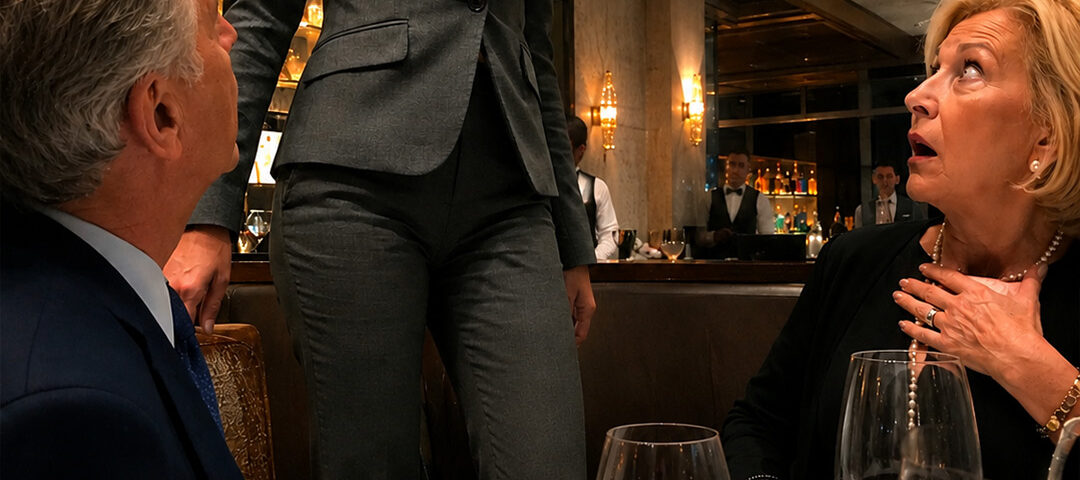
Saturday evening arrived with a heavy, suffocating sense of anticipation. I did not dress to impress them. I dressed to completely intimidate them.
I wore a tailored slate gray designer suit that cost more than my entire freshman year college budget, paired with a subtle but incredibly expensive watch. When I handed my keys to the valet outside the Wellington, I felt a deep, steady calm settle over me. I was completely untouchable now.
The maître d’ led me through the dimly lit, opulent dining room to a highly secluded private booth in the back. Richard and Barbara were already seated. The moment they saw me approach, they both instantly stood up.
It was absolutely repulsive to witness. For 28 years, I had been treated like a stray, burdensome dog. Now, Barbara practically threw herself at me, wrapping me in a suffocating, perfume-drenched hug.
Richard grabbed my hand and pumped it enthusiastically, his face stretched into a massive artificial smile that did not reach his cold eyes. “Valerie, darling, you look absolutely stunning,” Barbara gushed, refusing to let go of my arm as we sat down. “That suit is incredibly chic.
We are just so overwhelmed. So incredibly proud. $50 million.
I have been telling absolutely everyone at the country club all week. The phone has not stopped ringing.”
“I am sure it hasn’t,” I replied dryly, picking up the heavy crystal water glass.
“Though I find it highly fascinating that you are suddenly so eager to claim credit for a company you repeatedly told me was a silly, volatile hobby just a few months ago.”
Richard waved his hand dismissively, letting out a loud, hearty laugh that sounded entirely fake. “Oh, come on, Valerie. You know how parents are.
We were just trying to push you. We wanted to firmly test your resolve. The business world is incredibly brutal, and we needed to make absolutely sure you were tough enough to survive it.
Our tough love clearly worked out perfectly for you, didn’t it?”
The absolute sheer unadulterated delusion was staggering. They had actively aggressively tried to ruin my reputation and render me completely unemployable. And now they were attempting to rebrand their malicious sabotage as an intentional loving parenting strategy.
The waiter arrived and Richard aggressively ordered the most expensive bottle of vintage champagne on the menu without even glancing at the price. For the next hour, as we ate heavily truffled appetizers and expensive cuts of steak, they completely subjected me to a barrage of incredibly pointed, highly invasive financial questions. They did not ask about how I was feeling.
They did not ask about the massive emotional toll of running a rapidly scaling tech startup. They only asked about the hard numbers. They wanted to know my exact percentage of equity ownership.
They aggressively probed into my specific profit margins, my corporate tax structures, and my long-term acquisition strategies. They were completely salivating over the wealth, treating my tech company like it was a shiny new piece of commercial real estate they were actively evaluating for purchase. I answered their invasive questions with vague, highly corporate non-answers, entirely maintaining my calm, icy demeanor.
I knew they were building up to something. This massive expensive dinner was not an apology tour. Richard and Barbara never ever spent this kind of money or utilized this much flattery unless they were actively trying to close a highly lucrative deal.
Finally, as the waiter cleared our empty dinner plates and poured the last remaining drops of the expensive champagne, Richard heavily cleared his throat. The fake jovial warmth entirely vanished from his face, instantly replaced by the sharp, calculating predatory expression he used when negotiating commercial leases. He leaned forward, placing his elbows firmly on the white linen tablecloth, and looked directly into my eyes.
“Valerie,” Richard started, his voice dropping into a serious, highly commanding register. “Now that we have properly celebrated your incredible success, we need to have a very serious adult conversation about the future, specifically the future of this family’s overall wealth management.”
I leaned back slowly, crossing my arms over my chest.
“I am listening.”
“You have built a massive, highly valuable asset,” he continued smoothly.
“But managing an asset of that incredible magnitude is exceptionally complex. You’re still very young. Your mother and I have decades of high-level financial and management experience.
We want to completely integrate Momentum into the family’s broader portfolio.”
“Integrate it?” I repeated, my voice dangerously quiet.
“Yes,” Barbara chimed in, leaning forward with a hungry gleam in her eyes.
“We are a family, Valerie. Family entirely supports family. And with your massive success, it is only fair and right that we restructure things to ensure everyone benefits equally.
We have a highly specific proposal for you.”
The trap had finally been fully sprung. I stared at them, feeling absolutely no fear, only a cold, deep, and profound sense of anticipation for what was about to happen.
“A proposal,” I said, keeping my face completely blank.
“By all means, Richard, pitch me.”
Richard steepled his fingers together, looking incredibly confident, as if he were entirely used to getting exactly what he wanted. “As you know, your sister Clara is graduating soon.
She is a brilliant girl, but the art history market is highly competitive and doesn’t pay very well initially. We want to ensure she has a massive secure foundation. Therefore, we firmly believe the best course of action is for you to immediately bring Clara into Momentum as a fully vested equal partner.”
I simply stared at him. The sheer staggering audacity of the demand momentarily short-circuited my brain.
“An equal partner,” I repeated slowly, carefully testing the heavy words.
“Exactly,” Barbara nodded enthusiastically, completely misreading my shock as compliance.
“You handle the boring technical coding stuff and Clara can handle the high-level aesthetic branding and public relations. It is a perfect fit. And of course, your father and I will take a small reasonable advisory board fee, say 10%, for providing you with high-level corporate guidance and opening up our massive real estate network to your sales team.”
Let me translate this absolute insanity for you. They wanted me to casually hand over exactly 50% of a $50 million company, a company I had bled for, starved for, and built from absolute dirt, to my younger sister, who had never written a single line of code in her life. And on top of that, they wanted to actively siphon off another 10% for themselves just for gracing me with their presence.
They wanted to steal 60% of my life’s work simply because we shared a legal last name. I looked down at the white linen tablecloth. A slow, dark laugh started deep in my chest and bubbled up my throat.
I tried to suppress it, but I couldn’t. I started laughing right in their faces. It wasn’t a happy laugh.
It was a cold, sharp, incredibly harsh sound. Richard’s confident smile instantly vanished, replaced by a dark, angry scowl.
“I do not see what is so incredibly funny about securing your sister’s future, Valerie.”
I abruptly stopped laughing.
I leaned forward, resting my forearms on the table, closing the physical distance between us. The air in the private booth suddenly felt freezing cold.
“You want me to hand Clara $25 million in equity?” I stated, my voice dangerously low and quiet.
“Because we are family.
Because family supports family.”
“Yes,” Barbara said, her voice rising defensively.
“You owe this family.”
“I owe this family absolutely nothing,” I snapped, my voice slicing through the quiet restaurant like a razor blade. Several heads at nearby tables snapped in our direction, but I did not care.
“Do you honestly think I have amnesia? Do you think a glass of cheap champagne and a truffled steak suddenly erases 28 years of absolute neglect?”
“Valerie, lower your voice immediately,” Richard hissed, glancing nervously around the room, terrified of a public scene.
“Ten years ago in your massive custom kitchen, I begged you for $200 to buy textbooks so I could pass my freshman classes,” I continued relentlessly, locking eyes with Richard and refusing to let him look away. “You were signing the final paperwork to buy Clara a $200,000 villa. Do you remember exactly what you called me that day, Richard?
Do you remember the specific word you used?”
Richard’s face completely drained of color. He swallowed hard.
“You called me a scavenger,” I spat the word out, letting all the venom I had held on to for a decade completely coat the syllables.
“You told me I was begging for scraps. And then when I finally tried to get a corporate job to feed myself, you aggressively called every single hiring manager in the city and maliciously lied to them, saying my degree was completely fake, just to try and force me into becoming your pathetic administrative assistant.”
Barbara gasped loudly, pressing a hand to her pearls.
“We were just trying to protect—”
“You were trying to break me,” I interrupted her, my voice cold and hard as a diamond. “And you failed entirely. I built this massive empire.
Me. I am the scavenger who built a $50 million fortress. And now you have the absolute staggering nerve to sit here and demand that I hand over the keys to the golden child.”
I stood up slowly from the booth.
I reached inside my tailored suit jacket, pulled out a crisp $100 bill, and tossed it casually onto the table. “That is for the champagne,” I said, looking down at them. They both looked incredibly small, pathetic, and entirely defeated.
“Do not ever contact me again. Do not call my office. Do not try to leverage my name.
I am entirely severing ties with you. If you ever attempt to interfere with my business again, I will unleash a legal team so massive and ruthless that you will be fighting lawsuits until you are both dead.”
I turned on my heel and walked out of the restaurant, leaving them sitting in stunned absolute silence.
The adrenaline from the massive confrontation at the restaurant kept my blood completely boiling for hours. I drove back to my penthouse apartment, poured myself a heavy glass of bourbon, and paced the expensive hardwood floors. I had finally done it.
I had finally delivered the crushing blow I had been dreaming about since I was a teenager. But instead of feeling completely triumphant, I just felt a strange hollow exhaustion. At exactly midnight, the heavy security buzzer for my penthouse aggressively chimed.
I walked over to the intercom screen. It was Clara. She was standing in the lobby wearing sweatpants and a massive oversized hoodie, looking completely frantic.
I buzzed her up immediately. When I opened my front door, she practically collapsed into my apartment. Her eyes were completely red and swollen, and she had clearly been crying for hours.
“Val,” Clara sobbed, wrapping her arms tightly around herself. “I am so incredibly sorry. I had absolutely no idea they were going to do that to you tonight.
I swear to you, I did not ask for a single piece of your company. I don’t want it. It’s yours.”
“I know, Clara,” I said softly, guiding her to the large velvet sofa in the living room and handing her a glass of water.
“I know you didn’t. This was entirely their twisted, greedy play. I am not angry at you.”
Clara took a shaky sip of the water, her hands trembling violently. She looked down at the floor, refusing to meet my eyes. The silence stretched out, heavy and deeply uncomfortable.
“There is something else,” Clara whispered finally, her voice cracking. “Something I need to tell you. I should have told you years ago, but I was terrified.
And after what they tried to do to you tonight, I can’t keep their toxic secrets anymore.”
I sat down next to her on the sofa, feeling a cold knot of dread instantly form in the pit of my stomach. “Clara, what is it?”
She took a deep, shuddering breath.
“You know how they always treated you differently? Like you didn’t belong? Like you were an outsider?
They were just putting up with you?”
“Yes,” I said quietly. “I lived it for 28 years.”
“It’s because—it’s because you aren’t,” Clara stammered, tears spilling completely over her eyelashes and running down her cheeks.
“You aren’t Richard’s biological daughter, Val.”
The words hit me, but surprisingly they didn’t knock me completely off my feet. Instead, a massive, heavy puzzle piece suddenly slammed perfectly into place inside my brain.
I instantly thought back to that humiliating, terrifying interview with Arthur Vance, the ruthless CEO. I remembered his exact words. This diploma is not fake.
But looking at your sealed birth records, your last name is.
“How do you know this?” I asked, my voice barely above a whisper.
“I heard them fighting about it when I was 15,” Clara confessed, wiping her face with her sleeve.
“They were completely screaming at each other in the home office. Barbara admitted she got pregnant with someone else right before she met Richard. She panicked.
Richard agreed to officially put his name on the birth certificate and formally adopt you, but only if they entirely cut the biological father out of the picture permanently. He forced her to seal the records, but Richard, he never ever forgave her for it. And he took all of that massive toxic resentment directly out on you.
Every single time he looked at you, he saw another man’s child.”
The absolute clarity of her words was blinding. It explained absolutely everything.
It explained the massive, gaping, emotional void. It explained why a simple request for textbook money was treated as a personal offensive attack on his resources. I was literally paying the heavy lifelong price for my mother’s infidelity and my adopted father’s fragile, deeply bruised ego.
“Do you know who he is?” I asked, staring blankly at the wall. “My real father?”
“No,” Clara shook her head miserably.
“They never said his name out loud. Barbara just called him a massive mistake. Val, I am so incredibly sorry.”
I reached out and pulled my younger sister into a tight hug. She was crying, but for the first time in my entire life, I wasn’t. The cold knot of dread in my stomach completely vanished, replaced by a massive, overwhelming wave of pure relief.
I wasn’t defective.
I wasn’t unlovable.
I was just born into the wrong house.
“Don’t be sorry, Clara,” I whispered into her hair. “You just gave me the absolute greatest gift I have ever received. You just set me completely free.”
The Forbes magazine issue officially hit national newsstands the following Tuesday.
It was absolutely surreal to walk past downtown kiosks and physically see my own face staring back at me, framed by that iconic white border and bold text. The business world reacted instantly. My corporate email inbox was completely flooded with partnership inquiries, massive acquisition offers, and congratulatory messages from major tech executives.
But I was entirely waiting for a completely different kind of phone call. If my biological father was still alive and if he had any idea I existed, seeing my face heavily plastered across a major national publication accompanied by Barbara’s maiden name in the biographical section would absolutely be the ultimate beacon. The call finally came on a quiet Thursday morning.
My executive assistant buzzed my office line, sounding slightly confused. “Valerie, there is a gentleman on line two. He says his name is Harrison Caldwell.
He claims it is an incredibly urgent, highly personal family matter, but he refuses to give me any more details.”
My heart instantly slammed against my ribs. I took a deep breath, firmly pressed the glowing button on my phone, and picked up the receiver.
“This is Valerie.”
“Valerie,” a deep, warm, incredibly nervous voice said on the other end. “My name is Harrison Caldwell.
I—I don’t entirely know how to say this, so I am just going to be completely direct. I saw the Forbes article. I saw your photograph.
You have the exact same eyes as my mother. And when I read that your mother was Barbara from this specific suburb, I knew.”
I gripped the phone tightly.
“You knew what?”
“I knew that you were my daughter,” Harrison said, his voice violently cracking with emotion.
We immediately agreed to meet that same afternoon at a quiet, highly secluded coffee shop situated on the edge of the city. When I walked through the glass doors, I spotted him instantly. He was a tall man in his late 50s, wearing a simple, well-worn flannel shirt and jeans.
He looked absolutely nothing like Richard’s polished country club arrogance. And as I got closer, the physical resemblance was absolutely staggering and undeniable. We had the exact same jawline, the exact same slightly crooked smile, and the exact same hazel eyes.
He stood up so quickly, he almost knocked over his chair. He looked incredibly terrified that I was going to turn around and run away.
“Valerie,” he breathed.
“Hello, Harrison,” I said softly, sitting down across from him.
For the next three hours, we sat in that quiet corner booth, and he completely unraveled the massive, tangled lie of my existence. He and Barbara had been deeply in love in college. They were young, completely broke, and highly ambitious.
When Barbara found out she was unexpectedly pregnant, she absolutely panicked. She wanted wealth and immediate security, things Harrison, who was just starting out as a high school science teacher, could not instantly provide. She quietly left town, completely cut off all communication, and quickly married Richard, a man who already had massive family wealth.
“I tried desperately to find her,” Harrison explained, clutching his coffee mug tightly. “I hired an expensive private investigator. By the time I finally tracked her down, she was already married to Richard and Richard had officially legally adopted you.
They aggressively threatened me with massive ruinous legal action if I ever tried to disrupt your life. They told me you were incredibly happy, that you wanted for absolutely nothing, and that I would only destroy your perfect family if I intervened.”
He looked at me, his eyes shining with unshed tears.
“I backed off because I genuinely thought I was doing the right thing for you. I thought you were living a beautiful, highly privileged life. But when I read that Forbes article, when I read about how you had to completely bootstrap your own company, how you struggled and fought for every single dollar, I realized they had completely lied to me.
They didn’t protect you at all.”
“No,” I said quietly, feeling a strange, profound sense of peace wash over me. “They didn’t.
They treated me like a scavenger.”
I spent the next hour telling him absolutely everything. I told him about the textbook money, the interview sabotage, and the massive explosive dinner at the Wellington.
Harrison sat there, his face completely pale, visibly furious on my behalf. He didn’t make excuses for them. He didn’t tell me to forgive them.
He just listened to me genuinely and deeply.
“I am so incredibly proud of you, Valerie,” Harrison said finally, reaching across the table and gently taking my hand. “Not because you are worth $50 million, but because you completely survived them.
And I am so profoundly sorry I wasn’t there to protect you.”
Hearing those exact words from the man who is actually my father broke something deeply heavy inside me. For the first time in 28 years, I finally let myself cry.
The absolute final inevitable confrontation with Richard and Barbara occurred exactly two weeks after my deeply emotional meeting with Harrison. I had fully expected them to try and retaliate after I humiliated them and walked out of the Wellington, but their sheer, staggering audacity still managed to surprise me. They did not call.
They did not email. They aggressively marched directly into the main lobby of Momentum’s downtown headquarters, demanding to see me. My head of security, a massive, highly professional former Marine named David, immediately blocked their path to the elevators and called up to my penthouse office.
“Send them up,” I told David, my voice incredibly calm. “But escort them directly to the main conference room and stand physically inside the room.”
When I finally walked into the glass-walled conference room, Richard and Barbara were pacing furiously like trapped animals.
The moment they saw me, Barbara immediately launched into a highly rehearsed, dramatic tirade. “How absolutely dare you?” she shrieked, her face flushed with completely manufactured theatrical rage.
“How dare you embarrass us in public like that?
We gave you absolutely everything. We gave you a beautiful home. We completely fed you.
We formally adopted you when you were nothing but a massive mistake.”
“And there it is,” I said smoothly, leaning casually against the doorframe, completely unfazed by her screaming. “The absolute, undeniable truth finally comes out.
I was a massive mistake. A heavy burden you were legally forced to carry.”
Richard pointed a trembling, furious finger at my face.
“You listen to me, you arrogant, ungrateful little brat. You legally owe us. We put a roof over your head.
If you do not immediately sign over the equity we generously proposed for Clara, we will completely destroy your public reputation. We will go to the press. We will explicitly tell them how deeply unstable and mentally ill you are.
We will tell them you are a pathological liar.”
I looked at him, feeling absolutely nothing but pure, unadulterated pity for how incredibly small and pathetic he truly was. “Go ahead,” I challenged him, my voice dropping into a dead-ice calm.
“Call the major press, Richard. Call Forbes. Call the Wall Street Journal.
Do it right now.”
He hesitated, completely thrown off guard by my absolute lack of fear.
“While you are on the phone with the journalists,” I continued, taking a slow step toward him, “make absolutely sure you clearly explain to them exactly how you aggressively called five major corporate logistics firms four years ago to maliciously lie about my university degree. Make sure you fully explain how you desperately tried to sabotage a young woman’s entire career purely out of vicious petty spite because you hated her biological father.”
Richard’s jaw completely dropped.
Barbara suddenly looked as if she was going to be physically sick.
“Yes,” I smiled, a completely cold, ruthless expression.
“I heavily investigated it. I have the highly detailed internal HR notes from those specific supply chain companies. I have the exact times and dates of your phone calls.
I have undeniable, legally admissible proof of your aggressive, malicious corporate sabotage. So please, Richard, call the media, because the absolute second you attempt to drag my name through the mud, I will file a massive, highly public defamation and tortious interference lawsuit that will completely drain every single liquid asset your real estate firm possesses.”
The heavy silence in the conference room was absolute.
The massive threat of losing their precious wealth and their pristine fake public reputation completely destroyed their leverage. “You are entirely dead to me,” I said, looking at them both with absolute final clarity. “You are completely cut off.
You will never ever see me again. You will never see a single dime of my money. You are no longer my family.
You are just two incredibly toxic, highly pathetic people that I unfortunately used to know.”
I turned to my head of security. “David, please physically escort these two individuals out of my building.
If they ever step foot on this private property again, immediately call the police and press formal trespassing charges.”
I did not stay to watch them leave. I simply turned around and walked back to my private office. I sat down at my massive desk, looked out the large floor-to-ceiling window at the sprawling, bustling city below, and took a deep, incredibly clear breath.
The heavy, suffocating chain that had bound me to their toxic, abusive household for 28 years was completely permanently severed. The scavengers were finally gone. I was the one who firmly owned the castle.
Now, six months later, on a beautifully warm, incredibly bright Saturday afternoon in late May, I stood on the sprawling, wooden back deck of a modest, highly comfortable house located in the suburbs. I was holding a cold beer, watching Julian and Derek aggressively argue over the exact optimal cooking time for the steaks on the grill. A lot had significantly changed in six months.
I had officially sold Momentum to a massive global technology conglomerate for slightly over $75 million. The Forbes valuation had actually been highly conservative. Julian, Derek, Nadia, and I were all instantly phenomenally wealthy beyond our wildest imaginations.
We had stayed on the corporate board as high-level executive consultants, but the intense, crushing, daily grind of the startup phase was completely over. The house we were currently celebrating at did not belong to me. It belonged to Harrison.
I had bought it for him. He had initially stubbornly tried to refuse the massive gift, completely insisting that he didn’t need my money. But I had aggressively forced the property deed into his hands and refused to take no for an answer.
“You gave me the absolute profound truth about who I am,” I had told him, crying quietly in his living room. “Let me give you a comfortable place to finally retire.”
Harrison walked out onto the wooden deck now carrying a massive tray of side dishes, completely laughing at something Nadia had just said.
He looked incredibly happy. He looked completely at peace. We had spent the last six months aggressively making up for 28 years of stolen lost time.
We went hiking. We drank entirely too much coffee. And we slowly, carefully built a deep, unshakable father-daughter bond that was firmly based on mutual respect and genuine unconditional love rather than rigid legal obligation and toxic control.
The sliding glass door behind me opened abruptly, and Clara walked out carrying a stack of plates. She was wearing a simple sundress and a massive, completely relaxed smile. Clara had entirely cut ties with Richard and Barbara shortly after our massive explosive confrontation at the office.
When she realized exactly how far they were willing to go to destroy me, she completely refused to be their golden child anymore. She had moved out of the massive East Coast villa they had bought her, aggressively returned the keys, and moved into a small, highly affordable apartment in the city, determined to build her own authentic life without their suffocating conditional money. “The steaks look perfectly burned,” Clara teased, setting the plates down on the outdoor picnic table.
“They are perfectly seared, Clara. Have some respect for the culinary process,” Julian shot back, playfully pointing a pair of metal tongs at her.
I stood there quietly, watching my incredible, deeply chosen family fully interact.
I looked at Harrison, laughing loudly. I looked at Clara, entirely free from the massive burden of our parents’ toxic expectations. I looked at Julian, Derek, and Nadia, the brilliant people who had fiercely believed in me when I literally had nothing but a rusty bicycle and a highly questionable software prototype in a damp basement.
I realized then that success is absolutely not just a numerical valuation on a corporate balance sheet. It is not just about having your face heavily plastered on the front cover of Forbes magazine or having $75 million sitting quietly in a diversified investment portfolio. True absolute success is having the immense undeniable power to completely choose exactly who gets to have access to your life.
Richard and Barbara had spent my entire childhood aggressively trying to convince me that I was a worthless, pathetic scavenger who was desperately begging for their scraps. They wanted me completely reliant on their conditional, highly toxic wealth. But they had fundamentally misunderstood the basic mechanics of the universe.
When you aggressively starve someone, you don’t necessarily make them weak. Sometimes if you push them just hard enough, you make them incredibly ruthlessly hungry. And that deep, unyielding hunger is exactly what builds massive, unbreakable empires.
I raised my cold beer, silently toasting the bright, cloudless sky. I had successfully built the empire, but more importantly, I had finally found the right people to share it.