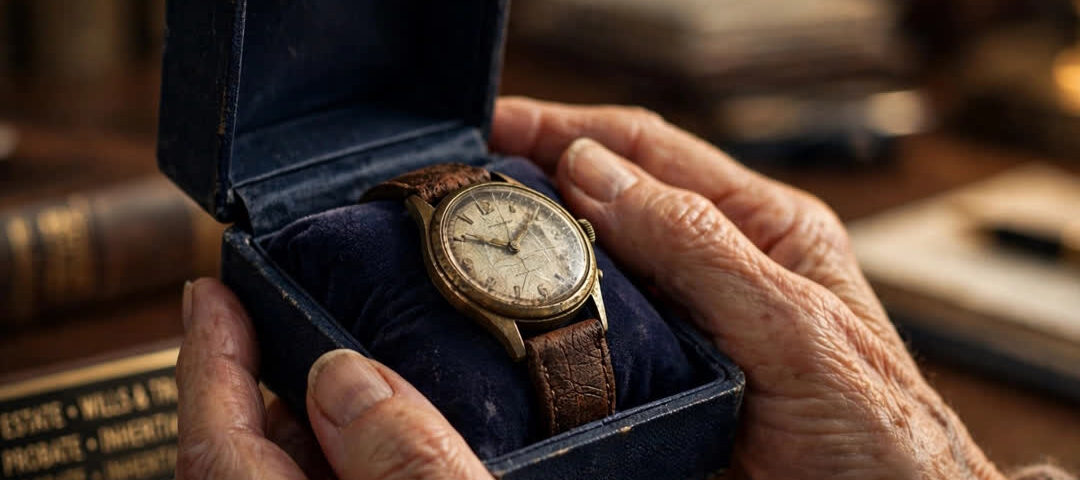
Michael leaned back.
I remembered the old watch.
His laugh.
For one second, the temptation to enjoy his discomfort arrived.
Then passed.
Daniel’s video had warned me too.
Do not destroy what love might still repair.
The probate distribution would continue.
They had not lost what their father genuinely left them.
The trust simply prevented them from converting my life into advance liquidity.
Michael turned toward me.
“Did you know this yesterday?”
“Yes.”
“When we came to the house?”
“Yes.”
“And you let us sit there.”
His tone was low.
Embarrassed.
“I did.”
Clare closed her eyes.
Michael stared.
“Did you know at the first meeting?”
“No.”
That stopped him.
“I found out later.”
“How?”
I thought of the four words.
Rebecca.
The video.
Then:
“Your father knew what you might do.”
Michael went pale.
“What does that mean?”
Mr. Whitmore quietly closed his folder.
“I think that part belongs to your family.”
He was right.
We drove separately to my house.
This time, nobody brought brochures.
Michael remained standing near the kitchen island.
“Did Dad set us up?”
“No.”
“You just said he knew.”
“The trust existed before this.”
“That isn’t the same thing.”
“No.”
I sat down.
“The watch was.”
Clare stared.
“What?”
So I told them.
Not every detail yet.
The note beneath the lining.
Rebecca.
The document box.
The trust.
Daniel’s video.
Michael paced.
“He wanted to see whether we’d laugh at you.”
“I don’t know exactly what he wanted.”
“That’s awful.”
“Yes.”
He stopped.
My answer surprised him.
“I’m angry with him too.”
Clare looked at me.
“You are?”
“Of course.”
“I thought…”
“What?”
“That you’d defend him.”
I laughed sadly.
“I spent forty-one years loving your father.”
Another.
“I can love him and still believe he made mistakes.”
That silenced both of them.
Michael said:
“How much is the trust worth?”
The question came too quickly.
My anger finally sharpened.
“Approximately nineteen million.”
Clare inhaled.
Michael stared.
Then I regretted giving the number.
Not because they should never know.
Because immediately the conversation threatened to become about scale again.
“And that is exactly the problem.”
I stood.
“Your father has been gone less than two weeks, and every room we enter becomes a discussion about numbers.”
Michael’s face hardened.
“That’s not fair.”
I pointed toward the empty spot where his acquisition spreadsheet had been.
“You spoke to a lender about expected family assets before probate had even begun.”
“I misunderstood.”
“Yes.”
“You’re acting like I wanted you homeless.”
“No.”
I lowered my voice.
“I’m saying you started planning around where I would live before asking whether I wanted to move.”
Clare covered her mouth.
Michael looked away.
Then I told them the part neither had known.
Daniel had not built our life alone.
That should have been obvious.
Somehow, wealth had blurred memory.
“When you were little, your father’s first real business almost failed.”
Michael turned back.
“I know it was difficult.”
“You know the story he liked to tell.”
I sat again.
“You don’t know the numbers.”
My mother had died the previous year and left me a modest savings account.
Fourteen thousand dollars.
Nearly everything I had inherited.
Daniel missed a receivable cycle.
Six employees needed payroll.
I gave him the money.
Not as an investment agreement.
Not as a loan with paperwork.
Because we were married and six families needed checks.
Two large invoices cleared shortly afterward.
The company survived.
Michael stared.
“You used Grandma’s money?”
“Yes.”
“Did Dad repay you?”
“We built a life.”
“That isn’t an answer.”
“It’s the answer we chose.”
I continued.
I carried family health insurance when Daniel’s business could not afford decent coverage.
Typed invoices.
Tracked receipts.
Handled school conferences.
Doctors.
Soccer practices.
House repairs.
Birthday parties.
Everything that allowed Daniel to take risks without wondering who would pick up Clare from school.
“Your father worked harder than anyone I knew.”
I looked at them.
“But he did not build our life alone.”
Clare began crying.
“You never told us.”
“There was no reason to turn marriage into an accounting ledger.”
I looked toward Daniel’s chair.
“Until both of you began treating his wealth as though it appeared independently of the life around him.”
Michael’s anger disappeared.
Not all at once.
Enough.
Then I told them what Daniel overheard.
Their discussion about a condo.
The retirement community.
The house.
Clare wiped her face.
“We were worried.”
“I believe you.”
“Then—”
“You still didn’t ask.”
She lowered her eyes.
Michael said:
“We thought we were helping.”
“You were helping yourselves to certainty.”
That sentence hurt him.
I could see it.
Still true.
Then my voice broke.
“I do not care that your father left you money.”
Both looked at me.
“I hope it gives you security.”
Another.
“I don’t care that you laughed at the watch nearly as much as I thought I did.”
That was not entirely true.
But it was close.
“What hurt was that Daniel had been gone eleven days, and you were already deciding where I should spend the rest of my life.”
Nobody spoke.
Michael picked up his keys.
“I need time.”
He left.
Clare stayed.
At the doorway, she turned back and hugged me.
No apology yet.
Just grief.
Sometimes grief comes before language.
That night, I returned to Daniel’s recording.
There was more.
He appeared on my laptop in the same blue sweater.
“I should have trusted you sooner.”
I began crying before he finished.
“The secrecy was wrong.”
No justification.
No cleverness.
Then:
“Do not use this trust to punish Michael and Clare.”
I wiped my face.
“Don’t threaten their inheritance.”
Another.
“Don’t make them pay forever for one ugly season.”
I laughed through tears.
Still giving instructions.
“You’ve rescued them enough.”
His expression softened.
“Protect yourself.”
Another.
“Then let them grow up the rest of the way.”
I closed my eyes.
For nearly forty years, when my children were uncomfortable, I looked for a way to make the discomfort smaller.
Money.
A phone call.
An excuse.
That habit had followed them into adulthood.
The next morning, Michael had a meeting with his business partner and a lender regarding the acquisition.
I wanted to call him.