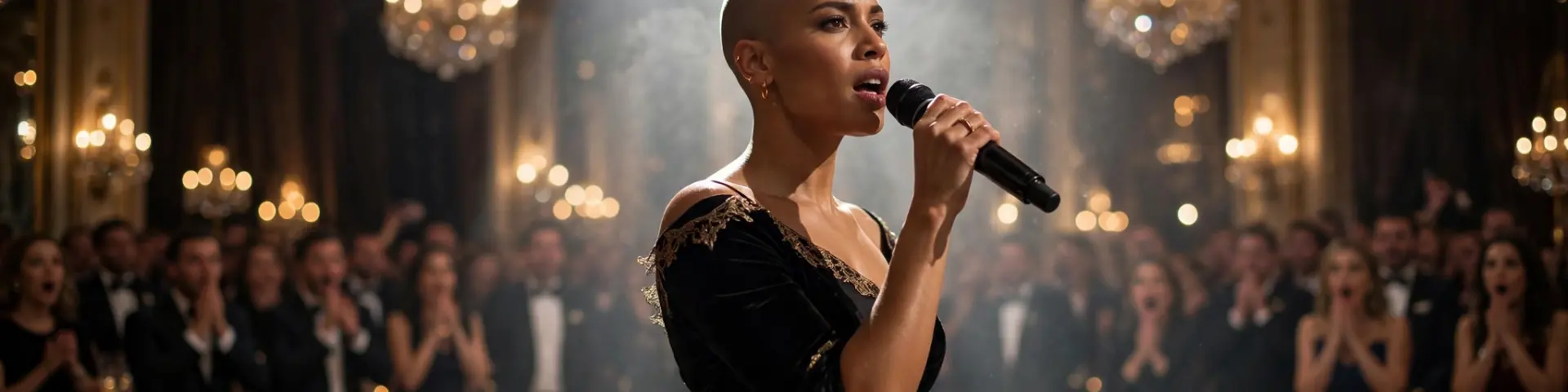
Arthur accompanied me through the ballroom doors, where the cool night air greeted us. My scalp stung slightly beneath the breeze, but the sensation felt strangely liberating. I had spent the entire day trying to understand how someone who claimed to love me could deliberately inflict such humiliation. Now I understood that I didn’t need to solve the mystery of Julian’s character before I could protect myself from it.
In the weeks that followed, the legal process moved forward. Arthur and his team reviewed our prenuptial agreement, documented the separate nature of my inheritance, and ensured that the relevant financial institutions received the necessary instructions. The court proceedings addressed the issues raised by the divorce, while the evidence surrounding Julian’s conduct was preserved and assessed through the proper channels.
Julian tried repeatedly to contact me. At first, his messages were angry. He accused me of overreacting, of humiliating him, of allowing a private dispute to become a public spectacle. Then the tone changed. His texts became pleading, filled with promises that he would seek counseling, change his behavior, and prove that the affair had been a mistake.
I read them without responding.
Not because I wanted revenge, but because I had finally learned that an apology offered only after consequences arrive is not necessarily an expression of remorse.
Six months later, the divorce was finalized. Our prenuptial agreement was upheld, and the inheritance remained protected as my separate property under the applicable terms and legal determinations. Julian lost the financial privileges and comfortable lifestyle he had come to regard as permanent. His car was gone, his stock holdings were liquidated or otherwise dealt with under the applicable agreements and proceedings, and the professional standing he had once enjoyed suffered badly as the consequences of his choices caught up with him.
He eventually found work as a clerk, earning a modest income and living far below the standard he had once considered his due. The waterfront estate he had toured with his mistress never became the future he had imagined. Once the money and prestige he had expected to enjoy disappeared, the young blonde woman who had shared his plans left him.
He had believed that wealth would make him desirable, that influence would shield him, and that I would remain too frightened of losing my marriage to defend what belonged to me. In the end, none of those assumptions saved him.
My own life changed more quietly.
At first, I hated looking in mirrors. My scalp was sensitive, and every morning reminded me of what Julian had done. Yet as the weeks passed, the tiny scratches healed and soft brown stubble began to appear. I stopped covering my head every time I left the house. I learned to walk into rooms without wondering whether strangers were staring at me, and I discovered that my confidence did not depend on the length of my hair.
Eventually, my hair grew into a short pixie cut. It suited me better than I expected. When I looked in the mirror, I no longer saw only the woman who had been humiliated on her anniversary. I saw the woman who had survived it, confronted the truth, and chosen herself.
I also began considering what my father’s legacy could accomplish beyond my own security. He had believed that education opened doors that poverty, prejudice, and circumstance often tried to keep closed. He had worked hard because he wanted the next generation to have opportunities he had once struggled to find.
So I established the Vance Educational Endowment, dedicating the eighteen-million-dollar inheritance to scholarships and educational support. The endowment would help students pursue degrees and professional training without allowing financial hardship to decide the limits of their futures. Arthur helped me structure the arrangements, ensuring that the funds would be managed responsibly and directed toward the purpose I had chosen.
When I signed the final documents, I thought of my father. I imagined how pleased he would have been to know that the fortune he had built would help people who needed a chance, rather than become a weapon in someone else’s hands.
For years, I had believed that keeping my marriage intact was proof of my strength. I had thought that patience meant enduring the things that hurt, and loyalty meant remaining silent when someone I loved crossed a line. I had confused the preservation of a relationship with the preservation of a life worth living.
Now I knew better.
My marriage had ended on the morning Julian shaved my head, although the legal papers would take months to make that ending official. The real ending came when I stopped making excuses for him. It came when I listened to the part of myself that had spent years whispering that I deserved better. It came when I realized that protecting my father’s inheritance was only one part of protecting myself.
Julian had tried to make me feel ridiculous, hoping that humiliation would keep me obedient. Instead, he forced me to see the truth that I had avoided for too long.
I had lost my hair, but I had not lost my dignity. I had lost a marriage, but I had not lost my future. And the fortune Julian had imagined taking from me became a source of opportunity for people he would never know.
Sometimes, when I pass a mirror and see my short brown hair, I remember that morning. I remember the note on the pillow, the cold bathroom light, and the awful silence before my laughter broke through the shock. I remember the moment Margaret asked about the transfer and how a single decision changed the direction of my life.
I no longer wish I could return to the woman I was before that morning. She loved deeply, trusted too easily, and believed that every problem could be solved if she tried hard enough. I have compassion for her now. She did the best she could with what she understood at the time.
But I am no longer her.
Today, I understand that love without respect is not partnership, that forgiveness without accountability can become permission, and that no amount of shared history obligates a person to remain where they are being harmed. I have learned that walking away is sometimes the bravest thing a person can do, especially when the world expects them to stay.
Julian wanted our tenth anniversary to mark the beginning of his richest chapter. Instead, it became the day I reclaimed my life. He thought he was cutting away my confidence, but he only stripped away the last illusion that had kept me bound to him.
And when I finally stood alone, with my head held high and my future entirely my own, I discovered something he had never understood: the most valuable thing I possessed was never the eighteen million dollars.
It was the freedom to decide what happened next.
If you came here from Facebook because of this story, return to the Facebook post, tap Like, and comment exactly “Amazing” to support the storyteller. That small action means more than it seems and gives the writer genuine encouragement to keep sharing more stories about family pressure, firm boundaries, and finally protecting what you worked so hard to build.