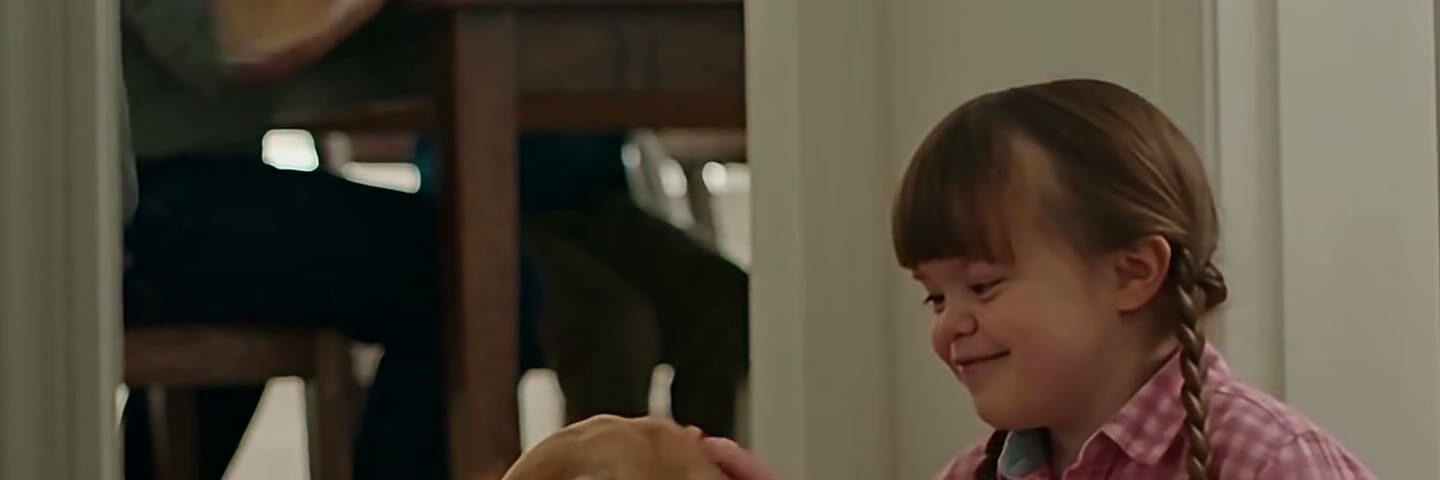
“One person?” Gabriel’s voice went quiet. “You meant she has Down syndrome, so you decided someone else could calculate how much future she deserves.”
“No.”
“That is exactly what happened.”
The Sentence Amelia Refused to Learn
“Did she want you to practice?” Gabriel asked Amelia. She nodded. “She said we were practicing for talking to important people. A judge maybe.” At Marlene’s old house on Hartwell Lane, a woman on a video call had asked Amelia simple questions — her name, her age, her favorite subject — while Marlene interrupted. “Grandma said I should practice answers before the real talking.”
Simone identified the woman: Dana Whitcomb, a licensed clinical social worker contacted by attorney Peter Voss for a preliminary family assessment. “Marlene described herself as the child’s primary caregiver,” Dana said. “She told me Gabriel was frequently absent and that Amelia had expressed a preference to live with her.”
“Did Amelia say that?”
“No. She said the opposite.”
Grandpa’s Locked Drawer
Everett met Gabriel at Hartwell Lane while Marlene was out. From the bottom drawer of an old dresser, under winter sweaters, he pulled a small lockbox: printed bank records, invoice copies, handwritten notes.
“You documented it?” “After the first six months.” “Why?” “Because I knew it was wrong.” “But you let it continue.” Everett nodded. No defense. Only shame. “I was afraid of losing the house.”
The ledger tracked every payment: trust distribution, deposit into Hart Family Support Services, payment to Adrienne, transfer to Marlene, mortgage, property taxes, legal fees. One column was marked M.K. — Martin. Dinner bills, event tickets, a $4,800 “consulting reimbursement.”
Then Everett produced a small digital audio recorder — Amelia’s, bought by Nora years ago for her “radio shows” about Biscuit. He pressed play.
The Account Nora Opened Early
Gabriel had always believed Nora’s trust was funded by her life-insurance policy after her death. That was only partly true. Westbridge confirmed the trust had been created eleven months earlier — initial funding $620,000, from the sale of Nora’s interest in her family’s medical-software company.
Archived correspondence showed an email from Nora — Amelia Planning Documents — Please Read — forwarded from Gabriel’s old address to Marlene’s. Their old email had once been configured on the Hartwell Lane home computer. Marlene had accessed them.
And Nora had included a family-conflict clause: if any extended relative attempted to use trust assets for personal debts or property unrelated to Amelia, that relative could be permanently barred from any advisory, caregiving-payment, or trust-protector role.
“She knew,” Gabriel whispered. “She knew enough to draft around it.”
The Incident Nobody Called an Accident
An old insurance document from Hartwell Lane — four years earlier, a pipe burst in the upstairs office during Nora’s illness. The adjuster’s photograph showed Nora’s desk with the lower drawer forced open; the wood was splintered above the water line. Someone had opened Nora’s locked drawer — in the same period trust documents went missing.
Then an unknown number texted Gabriel. Martin Keene. Westbridge’s suspended vice president wanted to talk. “Because Marlene is going to make me the entire crime.” “Did you approve false invoices?” “Yes. But I didn’t invent the scheme. Your mother came to me after Nora died. She already knew the trust structure.”
The Grandmother’s Version
Marlene requested the meeting herself — at Simone Reed’s office, her attorney beside her.
“I opened Nora’s drawer,” she said. “Because Adrienne was desperate. Nora had already said no. She was dying.” “That made her money easier to take?” “Nora was moving everything away from the family.” “To Amelia.” “To a bank.” “For Amelia.”
“You think a bank loves your daughter?” “I don’t need a bank to love her. I need it to follow the trust.”
“You were overwhelmed. Nora was sick. Amelia needed structure. Adrienne was drowning. Your father was frightened. Someone had to think about the whole family.” “And you appointed yourself.” “Yes.” The honesty stunned him. “Because nobody else does.” “No. Because you only trust solutions you control.”
“Nora saw it.” “Nora judged me.” “Nora protected Amelia.” “From me?” “Yes.”
Meadowridge
Meadowridge was real — a licensed short-term respite center forty miles away, with good inspection records and qualified staff. Nothing about the facility was wrong. The fraud was in the paperwork: a preliminary three-week reservation for Amelia, contact person Marlene, stated reason “parental work travel and caregiver exhaustion.”
The director confirmed: “We never finalized placement. We requested consent from the legal parent.” “Did anyone provide it?” “We received a digital form. Signed by me?” “Yes.” Another forged signature.
Gabriel thought of Marlene repeatedly encouraging him to accept a three-week assignment in Seattle. He had declined. Marlene had called him overprotective. Now the timing made sense — three weeks during which staged documentation could show Marlene arranging care because Gabriel was allegedly unavailable.
What If Something Happens?
Two weeks after a recorded conversation in which Marlene asked what would happen if something happened to Gabriel while he was gone, she began documenting “safety incidents”: Amelia supposedly wandering outside unsupervised, a kitchen burner allegedly left on, a medication dose allegedly missed. Each occurred while Gabriel was traveling. Each appeared only in Marlene’s private notes.
Gabriel checked the dates. On one supposed wandering incident, Amelia had been at school until 3:15 — Marlene’s note said she was found outside alone at 2:40. Impossible. The medication involved allergy tablets Amelia did not take daily. The burner incident had no photograph, repair record, or fire-department call.