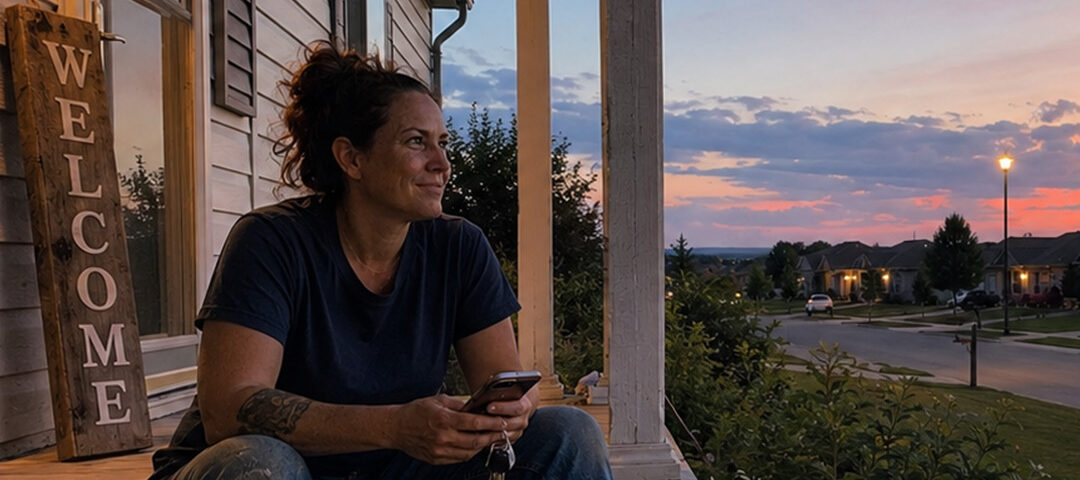
My parents used to say, “Teresa, you’ll never survive without us.” If I earned a dollar each time I heard that, I wouldn’t have needed a mortgage. I might have even paid off a few for fun.
My name is Teresa Owens. I’m 26, and I grew up in a house where independence was treated like a crime of immaturity. My mother, Linda, showed love through control, color-coded calendars, labeled leftovers, and a habit of calling three times if I didn’t answer the first.
My father, Gary, preferred tough love, mostly the tough part. If I succeeded, he’d remind me I got lucky. If I struggled, he’d claim he predicted this from the start.
And then there was Mandy, my older sister, golden child of the universe, recipient of five just-because spa days in one year. Mandy could accidentally drive through the garage door, and Mom would call her tired, poor thing. Meanwhile, I once forgot to vacuum the hallway and received a laminated list of chores for character building.
So, no, I didn’t tell them when I bought my first home.
The last time I shared good news, Dad asked, “Are you sure that’s wise?” And Mom followed up with, “Just promise you won’t make impulsive decisions like that ugly leather couch you bought.”
The couch was fine. It still is. It reclines.
I didn’t go to college. I didn’t want decades of debt just to learn from someone who’d never held a wrench. I went into HVAC work instead. Summers in crawlspaces, winters in attics so cold they felt like freezers, and more raccoons than any human should reasonably encounter.
But the pay was steady, and I saved every penny. No vacations, no takeout, no expensive coffees, just quiet, disciplined survival.
By 26, I’d scraped together enough for a down payment. Not a mansion, not beachfront, but a small two-bedroom ranch at the edge of town with a decent yard and a garage I dreamed of turning into a workshop.
And best of all, a front door that only I had the key to.
I didn’t tell anyone. Not my coworkers, not my boyfriend Evan, and definitely not my parents. Letting them think I still lived in my drafty old rental was easier.
That rental had a crooked mailbox and a mysterious smell that lived permanently in the carpet, but they believed I still lived there, and that lie let me breathe. And for the first time in my life, breathing didn’t feel like rebellion. It felt like peace.
I painted my walls whatever shade I wanted, put up floating shelves without lectures about screw holes lowering resale value. I even danced alone in my empty living room one night, a paint roller as my microphone, Marvin Gaye echoing off bare walls. I hadn’t felt that light in years.
Three weeks into living there, I found a rhythm. Work during the day, DIY projects at night. I replaced faucets, recaulked the windows, even fixed the leaky gutter. My house was becoming mine, inch by inch.
And then, small things started happening. Tiny, ridiculous things.
One Tuesday, I walked in and noticed the rug near the back door was crooked, only by an inch or two, but I knew how I left it, perfectly straight. I shook it off. Maybe I kicked it accidentally, or maybe I was tired.
Then it happened again. The sponge in the sink had been moved to the left side. I never put it there. I stared at it as if it had personally offended me.
And then came the spoon. A long-handled iced teaspoon sitting in my dish rack, a spoon I didn’t own. I froze.
It looked identical to the set my mother kept locked in her special utensils drawer, the same ones she used to brag about like they were heirlooms instead of stainless steel. I hadn’t seen one of those spoons since I moved out.
For five long minutes, I stood in my quiet kitchen just listening, as if the walls would whisper who had been there. That sinking pit in my stomach, it wasn’t imagination. It wasn’t paranoia. It was memory.
Because my parents had pulled this before.
When I was 22 and moved into my first apartment, Mom happened to be in the neighborhood every single Sunday. I eventually learned she sweet-talked my landlord into giving her a spare key by claiming she was my emergency contact. She brought him a pie. A pie.
When I confronted her, she gasped like I accused her of grand larceny. “I birthed you, Teresa. If I can’t enter my own daughter’s home, what does that say about our relationship?”
So, no, finding that spoon wasn’t random. It was them. It had to be.
I didn’t sleep that night. I lay awake, eyes open, staring at the ceiling as if expecting footsteps. The next morning, I drove to Home Depot and bought two new deadbolts. I changed every lock. Then I bought a camera doorbell.
I didn’t care if it was paranoid. This house was mine. No more unauthorized entries. No more boundary violations disguised as motherly concern.
A few days passed with no disturbances. I started to relax. Maybe the new locks scared them off. Maybe they realized I wasn’t a child they could walk in on anymore.
Then came Saturday.
I’d spent all morning installing a unit for an elderly couple across town. By the time I pulled into my street, I was exhausted, dreaming of a hot shower and cheap takeout.
But instead of peace, I saw them. My parents, parked in my driveway like they owned it. Dad’s silver truck half on the grass, Mom’s minivan blocking the driveway, the live, laugh, love bumper sticker glowing like a taunt.
Every muscle locked. For a moment, I genuinely considered reversing out of the neighborhood and pretending none of this existed.
But I didn’t run. I stepped out.
Mom’s head snapped toward me like a hawk noticing prey.
“Oh, Teresa,” she said too brightly. “There you are. We were just stopping by.”
Dad nodded with that authoritative disappointment he’d mastered.
Stopping by. Right.
My heart thudded against my ribs. “So, why are you standing at my front door?”
Mom waved her hand like it was silly. “Your father thought the key might still work. It didn’t, though. Must be a new lock.”
There it was. The casual entitlement, the assumption of access, the complete disregard for boundaries. But the old me, the Teresa who used to shrink under their disappointment, was gone.
I took a breath and said the three words I never believed I could say.
“You need to leave.”
Mom blinked. Dad stiffened.
“You heard me,” I continued quietly. “You don’t have a key. You weren’t invited. You need to leave.”
The silence that followed was thick, electric, dangerous.
Mom’s phone buzzed. She glanced down, frowned, then looked at me with something dark behind her eyes.
“We’ll come back when you’re calmer,” she said.
And just like that, they walked off.
But I knew them. This wasn’t over, not even close.
Sunday was quiet. Too quiet. The kind of quiet that sits on your skin like static, making you flinch at every distant car door or barking dog. I grilled a couple burgers, tried watching a game, even attempted a nap, but the tension never let up.
Because I knew my parents. Silence wasn’t peace. Silence was strategy.
By Monday morning, I gave up pretending everything was normal. Before leaving for work, I installed a motion sensor camera above the garage, another angle to cover the driveway, just in case. I already had the doorbell cam, but now my house watched every inch of its own exterior.
I wasn’t taking chances.
That night, I stepped into a hot shower, letting the steam finally melt the stress away. For the first time in days, my muscles relaxed.
Then my phone buzzed on the counter. Once, twice. Motion alerts.
My heart slammed back into panic mode. I wrapped a towel around myself, grabbed the phone with shaking hands, and opened the live feed.
And there they were. My parents, again. Parked in my driveway like it was a family reunion I forgot to RSVP to.
Mom stepped out first, holding what looked suspiciously like a casserole dish. Dad followed with a manila envelope tucked under his arm. I stared at my screen, towel dripping, hair plastered to my shoulders.
Mom lifted the casserole like it was a peace offering to a kingdom she wanted back.
Dad walked to my front door, pulled something out of his pocket, the same old apartment key he tried last time. He tried it again. It still didn’t work.
“Shocker,” I muttered at the phone, water dripping down my chin.
Through the audio feed, I heard Mom huff.
“Well, if she won’t open up,” she said, “maybe someone else will.”
Dad nodded and took out his phone.
A few minutes later, a plain white van pulled into the driveway. No logos, just locksmith vibes. My jaw dropped.
“Oh, you’ve got to be kidding me. They actually called a locksmith.”
I had never gotten dressed so fast in my life. I yanked on jeans and a shirt, didn’t bother with matching socks, grabbed my keys, and flew out the door like a woman possessed.
I drove home like I was starring in Fast and Furious 12: Boundary Enforcement.
When I pulled up, the locksmith was already out of his van, clipboard in hand, walking toward my parents. Mom was using her fake sweet voice, the one that fooled strangers but never fooled me.
“We just lost access to our home,” she said, syrupy as honey.
The locksmith didn’t look convinced. Dad handed him the envelope, probably something printed in a rush to prove they lived there.
I stepped out of my car, slamming the door hard enough to make all three of them turn.
“Hey,” I called, walking toward them.
Mom’s smile evaporated. Dad blinked like he couldn’t believe I had the audacity to show up to my own home.
I stopped at the base of the driveway.
“Funny seeing you here,” I said flatly.
The locksmith looked between us. “Uh, are you the homeowner?”
“Yes,” I said. “I am, and I have ID and the title inside if you’d like to see it.”
Dad cleared his throat. “Teresa, sweetheart, we were just trying to…”
“Force your way into my house again?” I cut in.
Mom scoffed. “Oh, don’t be dramatic. It’s not like we broke anything.”
Not yet, I thought, but I kept my voice calm.
“Sir,” I told the locksmith, “they don’t live here. They’ve never lived here. They don’t pay the mortgage. They weren’t invited. And I have security footage of them trying this last week.”
The locksmith slowly lowered his clipboard.
“Yeah,” he said to my parents, “I’m not getting involved in this. I can’t open a door for people who aren’t on the deed. That’s extremely illegal.”
Mom’s face twisted into something sharp and sour. Dad stared at the locksmith like he’d betrayed the family.
“Sorry,” the locksmith added with a shrug, “I’m not getting sued because you can’t respect boundaries.”
And with that, he turned right around and walked back to his van. I swear I saw a faint smile on his face.
Mom rounded on me. “You changed the locks,” she hissed.
“You tried to enter without permission,” I replied. “So, yes. Yes, I did.”
“We were worried about you,” she snapped, voice cracking just enough to make it emotional manipulation instead of honesty.
“Gee,” I said, “I can’t imagine why I’d need space.”
Dad took a step closer.
“Teresa,” he said sternly, “you’re overreacting.”
I held up a hand. “No. No more surprise visits. No more keys. No more pretending this is normal. If you want to see me, call like adults.”
Mom held up the casserole dish again as if it were a magic wand.
I didn’t take it.
They left without another word, or so I thought.
The next morning, the texts started.
Mom: “We were only trying to help. Sorry if it came off aggressive. Can we talk?”
Then: “I feel like I don’t even know you anymore. Please don’t shut us out.”
Then a photo of the banana bread, like it was being held hostage.
By noon, Dad chimed in. “You didn’t need to embarrass us like that. The locksmith was just doing his job. No need to make a scene.”
No apology. Not even close.
I left all their messages on read.
And when I got home that evening, a quiet dread settled over me, like the house itself was holding its breath. Because sitting on my porch bench, neatly placed in a takeout bag, was a slice of lemon cake.
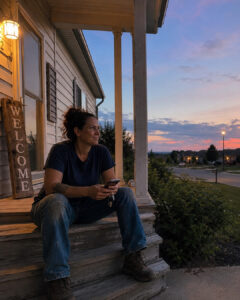
Mom’s handwriting was on a pink note.
Thought you’d like this. You used to love lemon cake. We miss you. Mom.
It wasn’t a cake. It was guilt kneaded and frosted.
The next day brought a new surprise. A soft knock. Not my parents’ knock. A gentler one.
I opened the door, and there was Mandy. Perfect hair, perfect coat, perfect sympathetic smile.
“Teresa,” she said warmly.
Here we go.
Mandy stood on my porch holding a tiny box like it contained fragile peace. Her coat was perfect. Her hair was perfect. Her expression was that gentle diplomatic smile she used whenever she needed to soften the blow of whatever message Mom didn’t want to deliver herself.
“Teresa,” she said lightly, tilting her head, “I was just in the neighborhood.”
“No one is ever just in this neighborhood,” I replied.
She let out a breathy little laugh, pretending not to notice the edge in my voice. Then she lifted the box toward me.
“Mom asked me to bring this to you.”
I opened it. Inside was a small wooden key holder I’d made in high school shop class. I hadn’t seen it in years. Dad used to nail it in the hallway at our old house, right under the thermostat, like it was some proud display of childhood talent.
Mandy watched my face carefully.
“She thought it should be here now, in your home.”
I stared at the key holder a long moment, then looked at her.
“She could have mailed it,” I said.
“She wanted it to feel more personal,” Mandy murmured.
“Just like copying my key was personal?”
Her face twitched, guilt slipping through for half a second before she smoothed it away.
“They didn’t mean harm, Teresa. They just don’t know how to let go.”
“And that,” I said, “is somehow my responsibility?”
“No,” she whispered. “But maybe if you invited them over just once, they wouldn’t feel the need to force their way in.”
I couldn’t help it. I laughed, loudly and bitterly.
“Mandy, you don’t ask burglars to dinner because they keep showing up.”
She winced, but didn’t argue.
“You’ve changed,” she finally said.
“Thank you,” I replied, and I meant it.
She left soon after, walking back to her car like someone who realized the script she’d rehearsed all morning suddenly didn’t apply.
The moment her taillights disappeared, I dropped the key holder straight into the trash. Took a picture first. It looked better there.
Days passed with something that finally resembled peace. No surprise visits. No food on the porch. No emotional booby traps wrapped in nostalgia. I let myself breathe again, bought a new rug, upgraded my tools, built a snack shelf in the garage.
It felt like building a life that was mine.
Then my phone buzzed.
Mom tagged you in a post.
My stomach sank. It was a collage on Facebook. Baby photos of me. Photos of me in overalls holding a wrench. My HVAC certification. Grainy pictures from birthdays and school events.
The caption was drenched in sweet poison.
So proud of the woman our daughter has become. She bought a beautiful home all on her own. Raised right. Blessed to have played a part in her journey.
Played a part?
They stalked my work truck, tried to break in, called a locksmith. But online, they were heroes.
I didn’t comment. I went to Instagram instead, took a photo of my front door, and wrote, “Bought my first home by myself. No cosigners. No financial help. No surprise visitors. Just me, my tools, and peace.”
I didn’t tag anyone.
The family group chat erupted anyway.
Mandy: “Really?”
Mom: “You could have spoken to us privately.”
Dad: “That was petty.”
Cousin Eli liked my post.
Mom again: “After everything we’ve done for you.”
Everything?
I muted them.
Hours later, Mandy texted me privately asking to meet for coffee. I told her no. She asked why.
I typed the truth: Because none of you listen.
But I deleted it and simply wrote, “I’m done.”
She left me on read.
Two days later, my neighbor across the street messaged me.
Are you okay? Your parents were here again, looking through your windows.
Of course they were, because in their minds boundaries meant find another way in.
I checked my security footage and watched them peer into my home like unwanted ghosts. Something settled in me. Cold, heavy, final.
I wasn’t going to plead anymore. I wasn’t going to justify. I wasn’t going to debate.
I was going to shut the door in a way they couldn’t pry open.
The next morning, I walked into a law office that smelled like expensive perfume and quiet confidence. The attorney, Ms. Dwyer, listened without interruption as I described everything.
The copied key, the break-in attempts, the locksmith, the porch gifts, the stalking, the windows, the obsession.
When she asked for proof, I showed her the videos. My mother testing the lock. My father handing fake papers to a locksmith. Both of them staring through my windows like they had the right.
Ms. Dwyer sat back, folded her hands, and smiled the kind of smile lawyers save for cases they know they’re going to win.
“We can absolutely make this stop.”
Two days later, I had a no-trespass order. One for each parent. Signed, notarized, legal.
I taped a copy to the inside of my front window, right beside the “smile, you’re on camera” sticker.
Poetic, really.
Three days of silence passed. Then a voicemail from Dad. His voice thick, angry, wounded in a way that begged for guilt.
“You can’t erase us, Teresa. This is real life. Blood is blood.”
I saved it and forwarded it to my lawyer. And for the first time in my life, I didn’t feel guilty. I didn’t tremble. I didn’t question myself.
I just kept breathing. Steady, clear, sure.
I thought it was finally over. I had no idea the biggest betrayal was still coming.
I wish I could say things got better after the no-trespass order, that my parents finally realized I wasn’t their property anymore, that they backed off, took a beat, reflected, maybe even apologized.
But peace in my family is always the calm before another kind of storm.
About a week after Dad’s voicemail, something strange happened. It was a regular Tuesday. I was sitting in my work truck between HVAC calls, eating a gas station sandwich that barely qualified as food, when my phone lit up with an unknown number.
I almost let it go to voicemail, but something made me swipe.
“Hello?”
“Hi, is this Teresa Owens?” a man asked.
“Yes.”
“This is Craig from Hope and Home Realty. I’m calling about the upcoming listing for 230 Hickory Lane.”
My brain stalled.
“Sorry, what listing?”
“Oh,” he said, confused. “Someone reached out to begin the valuation process. They said the house may be going up for sale soon. We were scheduling a walk-through.”
My sandwich slipped right out of my hand.
“I didn’t request anything,” I said slowly. “Who contacted you?”
There was a shuffle of papers.
“Uh, looks like a Mr. Gary Owens.”
I laughed. A sharp, stunned burst of disbelief.
“My dad,” I said. “My dad contacted you?”
“Yes, ma’am. He said he was the homeowner.”
I pressed my forehead against the steering wheel.
Of course he did. Of course he did.
“Craig,” I said when I could breathe again, “this house is mine. I bought it alone. My name is the only one on the deed. My parents have absolutely zero authority to sell anything.”
“Oh. Oh, okay,” he sputtered. “Wow, I’m really sorry. I’ll cancel the file immediately.”
“No worries,” I said. “And just FYI, if he tries this again, I have security footage of him attempting to access my property illegally. It might save you a headache.”
Craig let out a nervous laugh. “Noted.”
I hung up and sat back, staring at the dashboard as everything clicked into place. The locksmith, the window peeking, the stalking, the social media photo ops, the sudden “We’re so proud of her” narrative.
It wasn’t concern. It wasn’t love. It wasn’t even about me.
It was about control.
They weren’t trying to break into my home. They were trying to break back into my life.
I drove home, opened my laptop, and began typing. A short, direct email. No emotion. No room for misinterpretation.
Any attempt to impersonate ownership, initiate a sale, or involve a third party in matters concerning my property will result in immediate legal action.
I sent it to both of them. CC’d Mandy for good measure.
Two hours later, Dad called. I let it ring. The voicemail was just one sentence.
“I don’t even recognize you anymore.”
I replayed it twice, waiting for the punch of guilt. It didn’t come.
Good, I thought. You’re not supposed to.
That weekend, I invited a couple coworkers and neighbors over for a small backyard barbecue. Nothing fancy, just burgers, mismatched lawn chairs, laughter echoing into a sunset that felt cleaner, lighter, freer than anything I’d felt in years.
Someone handed me a cold drink and asked, half joking, “So, do your folks ever drop by unannounced anymore?”
I glanced at the window facing the yard. The no-trespass order was still taped up, perfectly framed beneath a wooden sign I’d hung ironically: Welcome.
I smiled. “Not since they tried to sell my house out from under me.”
The table erupted in laughter.
And standing there, under soft string lights, surrounded by people who respected my space without needing to be told, I felt something settle in me.
Not relief, not vindication. Freedom.
A simple, quiet, grounded kind of freedom I didn’t realize could exist inside my skin.
For once, my life wasn’t something I was defending. It was something I was living.
Since that night, the silence hasn’t felt threatening. It feels earned. It feels like mine.
And every time I walk through my front door, every time I hear the click of the lock behind me, I’m reminded this home didn’t just give me shelter. It gave me back myself.
The quiet held for almost a month. No texts, no voicemails, no sudden shadows in my driveway, no lemon cake disguised as affection. For the first time in my life, silence didn’t feel like the warning before an explosion.
It felt like air, like space, like something I’d never had the chance to grow inside of.
I should have known it wouldn’t last.
The final betrayal didn’t arrive as a knock or a phone call. It came quietly, disguised as something harmless. An envelope slipped into my mailbox between a utility bill and a coupon booklet. No return address.
Inside was a single sheet of paper, my father’s handwriting.
Teresa, if you won’t talk to us, then maybe we need to consider other options. You are still our daughter. If you can’t take care of that house properly, we’ll make sure it ends up in the hands of someone who will. Dad.
I read it once, twice, then a third time, slower.
There was no question now. The realtor call hadn’t been a one-off. This wasn’t an accident. This wasn’t confusion. This wasn’t misunderstanding.
It was a threat, a reminder of how deep their entitlement went, how blind they were to anything except the illusion of control.
I folded the letter, slid it into a zip bag, and tucked it into the drawer where I kept my legal documents.
Evidence. Proof. Protection.
Then I sat at my kitchen table, hands flat against the wood, and finally let myself feel everything. Anger, exhaustion, sadness, clarity, all layered together like sediment.
They didn’t just want to be part of my life. They wanted ownership of it.
That night I wrote another email to them, short, cold, final.
Any further attempt to interfere with my property will escalate to restraining orders. This is no longer a discussion. This is a boundary backed by law.
I didn’t CC Mandy this time. She’d already chosen silence.
Two days passed without a response. On the third, Dad left a voicemail. His voice was strained, low, like he was speaking through clenched teeth.
“You’re rewriting history, Teresa. We gave you everything, and this is how you repay us? A no-trespass order? Lawyers? Threats? What happened to you?”
I didn’t cry. I didn’t even feel my heartbeat jump. I simply hit save and forwarded it to my attorney.
The next weekend, I hosted a small housewarming. Not because I needed to celebrate, but because I wanted to fill my home with voices that didn’t carry judgment or expectation.
Evan came by with burgers. My coworkers brought drinks. The neighbors walked over with chips and folding chairs. It wasn’t extravagant, it wasn’t planned. It was perfect.
As the sun dipped low, someone pointed to the front window.
“Is that a legal notice?” they asked, laughing.
“It’s decor,” I said. “The theme is peace through paperwork.”
Everyone cracked up.
And standing there on my small wooden deck, surrounded by people who chose to be in my life without demanding control of it, I felt the truth settle into me.
My parents didn’t know me, not really. They only knew the version of me they could manage.
So, when Dad said he didn’t recognize me anymore, he was right, because I wasn’t theirs to recognize.
Later that night, after the last guest left, I stood alone in my quiet living room. The air smelled like grilled food and summer. My speakers still hummed lightly from the playlist that had been looping through the evening.
I looked at the walls I had painted myself, the shelves I built, the rug I chose, the door with locks that only ever opened when I decided.
For the first time, I saw my life not as something I escaped to, but something I built.
I wasn’t running from them. I was finally walking toward myself.
And every step felt like home.