My name is Velma Yansy, and I turned 18 on a Tuesday. I used to think 18 would feel like unlocking a new level of life, like the universe would finally hand me the keys to adulthood with a little ceremony, maybe a cake, maybe a hug that lasted longer than a second.
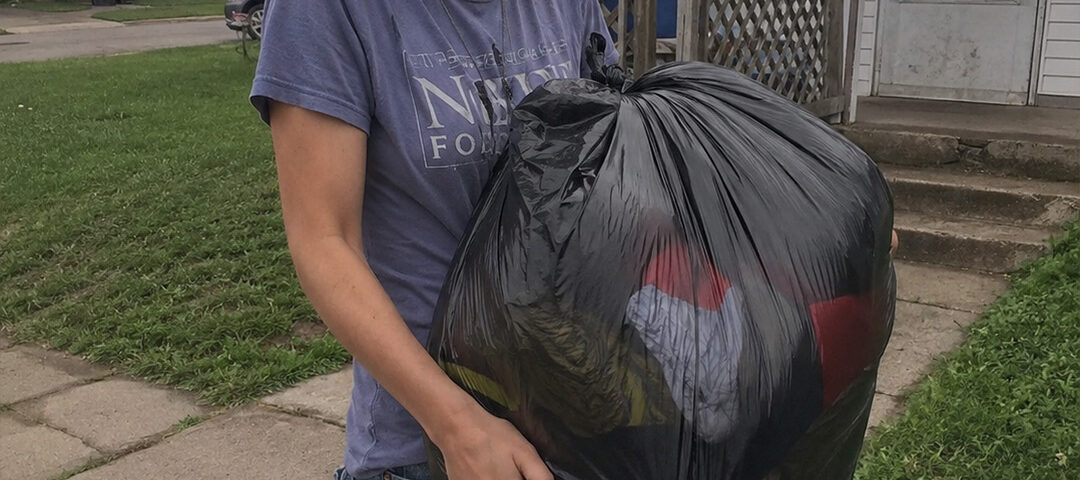
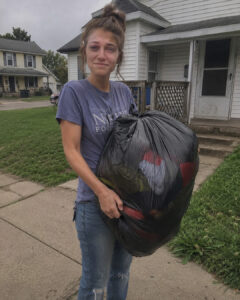
I imagined music swelling in the background, the way it does in movies when the main character finally gets out. Instead, I woke up to a trash bag. Not a suitcase, not a box. A black crinkled trash bag so full it sagged in the middle.
The plastic stretched thin like it was embarrassed to be seen with me. My mom stood in the hallway of our two-bedroom rental in Columbus, Ohio. One hand on the door frame, the other shoving the bag into my chest. She wore leggings and a faded sweatshirt that said blessed in peeling gold letters.
Her hair was pulled into a messy bun that smelled like iced coffee and cigarettes. She didn’t look angry. She didn’t look sad. She looked done.
“Time to survive on your own,” she said.
No happy birthday, no card, no cake cooling on the counter. Just that line, delivered so flat it could have been read off a cue card.
The bag was heavier than I expected. My arms dipped when I took it, and I felt clothes shift inside, wrinkled, shoved in without folding. A pair of my underwear dangled from the top like some kind of humiliating white flag.
I stared at it, waiting for the punchline. Waiting for her to laugh and say, “Relax, Velma. I’m kidding.” She didn’t.
“You’re a woman now,” she added, like that sentence alone explained everything. “We all got to struggle.”
“I did,” I said before I could stop myself.
She blinked, surprised I’d spoken.
“Sure, Mom,” I continued, my voice steady, even though my chest was burning. “Except you had three kids, two exes, and a Netflix subscription on my student email. I’ve got a community college rejection letter, no job, and $47.32 in my bank account.”
Her mouth tightened. That number wasn’t random. She knew it. She’d seen it the week before when she borrowed from my debit card for groceries. Groceries that never showed up.
The apartment behind her looked exactly like my childhood. Thrift store couch. Laundry piles that never fully disappeared. A rattling fan that sounded like it was on life support. The place smelled like old oil and floral spray trying and failing to cover cigarette smoke.
I noticed the kitchen table, two mugs, one with lipstick on the rim. She’d had company last night, so she could make room for that. Just not for me.
“That’s it?” I asked quietly. “You’re really doing this?”
“Don’t be dramatic,” she snapped. “I’m not throwing you out. I’m pushing you.”
I let out a short laugh. It came out sharp and hollow. “A push is a nudge,” I said. “This is a shove off a cliff.”
Her eyes narrowed like my honesty annoyed her.
“You’ll figure it out,” she said. “You’re smart when you want to be.”
There it was, the compliment that doubled as blame. The kind she always used when she wanted credit without responsibility.
I looked down and noticed something tucked into the knot at the top of the bag. A torn strip of paper. I pulled it free. A receipt ripped down the middle. My mom’s handwriting scratched across it.
Time to survive on your own.
No heart, no signature, not even my name. Something inside me tilted. For half a second, my brain tried to soften it. Maybe she’s scared. Maybe this is tough love. Maybe she thinks this will make me stronger.
But the way she’d said it told me the truth. This wasn’t fear. This was relief.
“You can’t keep coming back,” she added quickly. “No crawling back when it gets hard.”
I met her eyes. “Trust me,” I said. “That was never the plan.”
I turned and walked out before my face could crack. The hallway outside was cold and buzzing with fluorescent lights. Each step down the stairs echoed like a countdown. By the time I reached the curb, my hands were shaking so badly the bag rustled like it was alive.
My best friend Joanie was parked out front in her beat-up Honda. She leaned across the passenger seat when she saw me, eyes wide.
“Velma, tell me that’s not what I think it is.”
I forced a smile. “It’s my birthday present,” I said. “Limited edition. Comes with emotional trauma.”
Joanie swore under her breath and popped the trunk. We shoved the bag inside.
“Are you sure this is happening?” she asked, glancing at me like she wanted to drive back up and fight my mom herself.
“Yep,” I said, buckling my seat belt. “Surprise party.”
She shook her head, furious on my behalf. “So,” she said softly, starting the engine. “Happy birthday.”
I laughed. It sounded wrong, like laughter borrowed from someone else’s life.
Joanie’s mom let me crash on their couch for a couple nights. The next morning, she made pancakes, real ones, not frozen. She set a bottle of syrup on the table and asked, “Do you want syrup?”
I froze. Not because syrup was complicated. Because no one ever asked me that.
“Yeah,” I said quietly. “Please.”
A couch isn’t a life plan, though. So on the third night, staring at the ceiling, I replayed my mom’s words over and over like a cruel mantra.
Time to survive on your own.
Fine. I’d survive. And one day, I’d build a life so solid she could never kick it out from under me again.
The next morning, I opened job boards and applied to everything. Dishwasher, busser, stock clerk, dog walker, anything that paid. My phone buzzed once. A text from my mom.
You’re grown now. I don’t owe you anything.
I deleted the message. And that was the moment I stopped hoping and started hustling.
The first job that called me back was Rico’s Diner. Dishwasher, minimum wage, overnight shifts, no benefits, no sympathy. I took it without hesitation.
Rico’s sat off a cracked stretch of road, the kind of place with a flickering neon sign and booths permanently scented with coffee and regret. The kitchen smelled like grease soaked into years of desperation.
On my first day, the manager handed me an apron already stained beyond salvation and said, “If you last two weeks, you’re family.”
I didn’t smile. I’d learned what that word cost.
I scrubbed plates until my fingers cracked. My hands stayed damp, wrinkled, smelling like bleach no matter how much soap I used. Some nights I went home with my ears still ringing from clattering dishes and cooks yelling over each other.
I’d collapse onto Joanie’s couch, muscles screaming, pride bruised but intact. I showed up every day. That became my whole personality.
I didn’t party. I didn’t complain. I worked doubles whenever they offered. When someone called out, I said yes. When they needed someone to close, I stayed.
When Rico himself waddled into the kitchen, rubbing his lower back and muttering about kids these days, I listened. Survival has a way of sharpening you.
Within a month, I was faster than anyone else in the dish pit. Within three, I was training new hires. Within six, I knew which cook drank before his shift and which waitress cried in the freezer on Sundays.
I saved every dollar I could. I learned how to make $20 last a week. I learned cereal could be eaten with water if you were desperate enough. I learned how to ignore hunger like it was just another bad habit.
Eventually, I moved out of Joanie’s place and rented a room in a house with four guys who thought laundry was a government conspiracy. The carpet smelled like old socks and mystery stains.
The fridge was a battlefield of unlabeled containers no one admitted to owning. But it was mine. My rent, my key, my door.
At night, I lay on a mattress that dipped in the middle and stared at the ceiling, listening to strangers argue about video games and women they didn’t respect.
Sometimes I cried quietly, face pressed into my pillow so no one would hear. I never cried at work.
I texted my mom once, just once. Hey, can we talk sometime?
Her reply came two days later. You’re grown now. I don’t owe you anything.
That was it. No punctuation, no warmth. So I stopped texting. I stopped hoping.
And every time something went wrong, when the heater broke, when my paycheck came up short, when I had to choose between groceries and bus fare, I replayed her words in my head like a cruel little chant.
Time to survive on your own.
So I did.
By 21, I’d been promoted from dishwasher to line cook. By 22, I was unofficially running shifts when managers didn’t show. Rico noticed. He started asking me questions about inventory, about schedules, about why his numbers never matched.
Turns out Rico could flip pancakes like a wizard, but couldn’t balance a spreadsheet to save his life. I learned both. I learned inventory counts at midnight. I learned payroll math on coffee-stained notepads. I learned how to calm drunk customers without calling the cops.
I learned how to fix the ice machine with duct tape and profanity. I didn’t go to college, but I got an education anyway.
By 23, I was kitchen manager. By 24, I had my own studio apartment. It was small, peeling paint, a faucet that rattled like it smoked a pack a day.
But there was no one else’s mess, no one else’s moods, and no one who could kick me out.
Around 25, something strange happened. Half the staff quit in the same week. Something about joining a vegan food truck collective. Rico panicked. Bills piled up. Vendors started calling nonstop.
He pulled me aside one night after close, his voice low.
“You ever think about buying in?” he asked.
I laughed. “I don’t have that kind of money.”
Rico sighed. “Neither do I anymore.”
I saw a window. I emptied my savings, maxed out my emergency fund, pulled every favor I had, signed papers that made my hands shake.
That’s how I became co-owner of Rico’s Diner. The next day, I learned co-owner meant plunging toilets and negotiating with suppliers who treated net 30 like a mythological creature.
But it was mine. Mine in a way nothing else had ever been. Business grew slowly, painfully, but it grew.
And that’s when my family started resurfacing. First, it was Alyssa, my younger sister. She showed up one night with a date and acted like it was a coincidence.
“Oh my God,” she said, biting into a free dessert I didn’t remember offering. “You actually made something of yourself.”
I smiled, said nothing.
Then came the messages. Not from my mom. Not yet. From cousins who hadn’t spoken to me since I was the weird kid in hand-me-down clothes.
You still at that diner? Family discount? We should catch up sometime.
No, no, no. I wasn’t the cautionary tale anymore. I was the comeback story, the one they referenced at gatherings like proof they supported all paths. The path they shoved me onto with a trash bag.
Still, despite the success, something sat heavy in my chest. Because I didn’t just want to succeed. I wanted to stop feeling like that girl on the porch. Arms shaking, pretending she wasn’t breaking.
I wanted peace. So I changed my phone number. New phone, new start, same grind. For a while, it worked until the past found me again.
I was 33 when it happened. I remember because it was the week we finally fixed the diner’s front sign. The old neon flickered like a haunted motel. I was standing outside with my manager arguing about font width when my phone buzzed.
Blocked number. Normally, I ignored those, but something made me swipe.
Can we stay with you for a while?
That was it. No greeting, no explanation. Just a sentence that punched me straight back to 18.
Then another message. A screenshot. Heatwave warning. 104 degrees all week.
Then a third. The AC in our building broke. Your sister said you have space.
She couldn’t even type my name. I sat down on the curb, sun burning my scalp, memories flooding back. The trash bag, the door closing, the silence.
And suddenly, I knew exactly what to send back. I opened my photos, scrolled past years of food pics and staff birthdays until I found it.
The photo I’d taken on my old flip phone. The receipt.
Time to survive on your own.
I cropped it neatly, no caption, and sent it. Read receipt on. The typing bubble appeared, disappeared, then nothing.
I slipped my phone into my pocket and stood up. I felt calm, like a door that had been opened too long had finally shut.
I didn’t know then that she’d show up the very next day, but she would, and she’d bring pearls.
She showed up the next afternoon. I had just stepped out of the walk-in fridge, arms full of produce, when I saw her standing in the middle of my diner like she’d wandered onto the wrong television set.
My mother. Baby blue cardigan, cream-colored pearls, pastel flats. In July, she looked like she’d styled herself after a brochure titled, How To Look Harmless While Delivering Lifelong Trauma.
For a second, I just stood there, frozen, the cold from the fridge still clinging to my skin. The diner buzzed around her, forks clinking, the grill hissing, someone laughing too loud in a corner booth, but she cut through it all like a spotlight.
My manager, Joe, noticed her immediately. Joe raised an eyebrow so high it almost detached from her face and mouthed, You good?
I gave a tiny nod. I wasn’t good, but I was ready. I set the produce down and walked toward the woman who once told me love was conditional. Earned, something you lost if you disappointed her.
“Hi, sweetheart,” my mom said, her voice syrupy and loud enough for nearby tables to hear. She clutched her fake leather purse like it contained something sacred instead of mints and old receipts.
“You’re not here for pancakes,” I said flatly. “Let’s skip the prologue.”
She blinked. “I just want to talk,” she said quickly. “No drama.”
“You showed up in pearls in July,” I replied. “It’s already drama.”
A couple customers slowed their chewing. One man actually turned his chair a few inches toward us like he’d paid for the show.
She lowered her voice, but not enough. “That message you sent,” she said, forcing a smile. “It hurt.”
I tilted my head. “So did being homeless on my birthday.”
Her lips pressed together. The smile slipped for half a second before snapping back into place.
“It’s been a hard year,” she said. “Things haven’t gone the way I hoped.”
“It’s been a hard 15,” I replied.
Her eyes flicked around the diner at the clean tables, the steady staff, the line out the door. The math was happening behind her eyes.
“You’ve done well for yourself,” she said. “I always said you had potential.”
There it was, rewriting history in real time. I laughed softly. “You said I was dramatic.”
She ignored that. “Your sister’s been telling me how proud she is of you,” she continued.
“Did she also tell you I blocked her last year?” I asked. “Or that she tried to sell essential oils to my staff?”
That one landed. She hesitated, then reached into her purse and pulled out an envelope. Cream-colored, folded neatly.
“This is from me and your father,” she said, holding it out like a peace offering.
“A letter?”
“No,” I said.
She paused. “You don’t even want to know what it says?”
“I didn’t need a letter,” I replied. “I needed a place to sleep when I was 18.”
The diner went quiet. Even the grill seemed to hiss softer. Her eyes glistened, and for a split second, I almost believed it. Almost.
“You think I don’t regret things?” she asked, voice dropping. “You think I don’t wish I’d done things differently?”
“I think,” I said evenly, “you regret that your daughter grew up without you and turned out fine anyway.”
Her mouth opened.
“Maybe I didn’t do everything right,” she snapped. “But I was doing my best.”
“Your best,” I said, calm as glass, “was weaponized neglect.”
She flinched. “I’m not here to fight,” she said quietly.
“No,” I said, straightening. “You’re here because it’s hot. Your AC broke, and you thought the kid with the trash bag might offer you a guest room.”
Her face fell. “We’re family,” she whispered.
“You remember that now?” I asked. “Because family doesn’t hand you a trash bag and call it character development.”
The silence stretched. Finally, she slipped the envelope back into her purse.
“Just think about it,” she said.
“I have,” I replied. “For 15 years.”
She walked out, pearls bouncing, posture stiff, like even her shoes were offended.
Joe appeared beside me seconds later, holding a coffee pot like a weapon. “You want me to chase her down and throw toast at her?” she asked.
I exhaled. “No,” I said. “She’s already carrying enough baggage.”
I turned back toward the kitchen. Lunch wasn’t going to serve itself. But the envelope stayed with me, blinking, waiting.
After my mother left, life snapped back into chaos like nothing had happened. The fryer caught fire for a solid five seconds, long enough for Joe to scream and long enough for me to age emotionally by 10 years.
Our new delivery guy sent a full shipment of ketchup to the nail salon next door. And Joe tried again to convince me we needed disco lights in the bathroom for ambiance.
So no, I didn’t immediately sit down and unpack 15 years of unresolved trauma. But the envelope wouldn’t leave me alone. It sat in the back of my mind like a blinking notification I refused to open.
I told myself I was too busy, that I didn’t care, that I’d already said everything that needed to be said. None of that was true.
One slow afternoon, when the diner was quiet enough to hear the fridge hum, I finally gave in. I opened the lost and found drawer in the office, the one wedged between a single flip-flop and someone’s abandoned vape pen.
The envelope was there. Cream-colored, generic, the kind you get with sympathy flowers from someone who doesn’t actually know you.
I sat down, took a breath, and opened it like I was defusing an emotional landmine. It wasn’t handwritten. It was typed. Calibri font, the official font of passive-aggressive family guilt.
Dear Caleb.
I froze. I blinked. I read it again.
Dear Caleb.
My name is Velma.
I kept reading anyway.
We hope you’ll read this with an open heart. We know things didn’t happen the way they should have. We all made choices, some harder than others. Life is never black and white. We hope you understand that what we did was never out of hatred, but out of desperation.
I felt something cold settle in my chest.
You were strong. You survived. And while we may not have said it enough, we are proud of you. Genuinely.
The words felt rehearsed, smooth, empty.
Right now, we’re going through a rough time. With the heatwave and your father’s medical bills, things have become complicated. We were hoping you might have room just for a short time, a few nights, maybe a week.
I laughed under my breath. Fifteen years of silence, and suddenly I was a hotel.
We miss you and love you deeply. Love, Mom and Dad.
I stared at the page. Then I flipped it over. Blank. No signature, no note in the margins, no proof it was written with any specific person in mind.
And then it hit me. The name. This letter wasn’t meant for me. It was a template, a mass-produced apology. Copy, paste, print.
They probably sent the same one to my sister, maybe to my brother, maybe to some cousin who posted vacation photos and looked financially stable.
This wasn’t remorse. It was a fishing expedition. And I wasn’t biting.
I folded the letter once neatly, walked out the back door, dropped it straight into the dumpster. No ripping, no drama, just trash meeting trash.
When I came back in, Joe leaned against the counter.
“So,” she said. “Anything life-altering?”
“Just fiction,” I replied. “Fantasy section.”
She grinned. “Happy ending?”
“Oh, yeah,” I said. “The hero throws out the script and goes back to making payroll.”
I thought that was the end of it. It wasn’t. That night, my phone buzzed. Blocked number.
Can we at least talk?
Another message followed.
Alyssa says you’re being dramatic.
I laughed out loud. Then I blocked the number again. I slept better than I had in weeks.
The next morning during breakfast rush, Joe shoved her phone into my hand.
“Velma,” she said. “Some woman called the diner line, asked for the owner, said it’s a family emergency. She’s crying.”
I sighed. “Hello.”
“Oh, thank God.” My sister Alyssa sobbed. “It’s Mom. She collapsed at work. Ambulance came. Dad’s freaking out. She’s at County Hospital. Can you come?”
My heart skipped. Collapsed. For the first time, the manipulation sounded plausible.
“I’ll be there,” I said before I could stop myself.
I hung up and stood there, ladle in hand, staring at the wall. I didn’t trust her, but some stupid leftover part of me, the part trained to respond to emergencies, still did.
So I drove. County Hospital hadn’t changed. Same beige walls, same smell of antiseptic and quiet despair. The receptionist barely looked up when I asked for my mother.
I found Alyssa in the waiting room. She wasn’t crying. She wasn’t shaking. She was scrolling through her phone, chewing a protein bar.
I stopped a few feet away. “Where’s Mom?” I asked.
Alyssa looked up, startled, like I’d interrupted a meeting. “Oh, she’s not here yet.”
I stared at her. “She fainted.”
Alyssa said quickly, “Heat, stress, whatever. She’s fine. They’re checking her vitals.”
“So,” I said slowly, “you lied.”
“No,” she replied. “I accelerated the drama.”
I laughed. Not because it was funny. Because it was familiar.
“You know what’s worse than being manipulated?” I asked. “Being manipulated badly.”
She rolled her eyes. “Come on, Velma. She’s trying.”
“She tried when I was 18,” I said. “That was her shot.”
“We can’t change the past,” Alyssa sighed.
“You’re right,” I said. “But you can stop copy-pasting it.”
I turned to leave. Alyssa grabbed my arm.
“Wait,” she said. “She mentioned maybe giving you part of Dad’s pension.”
I froze. There it was. The real emergency. Money.
I pulled my arm free. “Tell her this,” I said quietly. “I’ve got something better.”
“What?”
“Peace.”
I walked out of the hospital and didn’t look back.
I didn’t hear from them for three days. Three quiet, uninterrupted days. No blocked numbers slipping through. No just checking on you texts. No fake emergencies or guilt-laced apologies.
Just silence, the kind that doesn’t buzz in your chest or make you flinch when your phone lights up. I’d almost forgotten what peace tasted like.
It was glorious. Then Facebook happened. I posted a photo of the diner’s new patio seating. String lights, picnic tables, Joe holding up a triple-decker burger like it was a trophy.
The caption was harmless. Invest in comfort for your guests and for yourself. That was it. Wholesome, boring, safe.
Until Aunt Sharon commented, Your mom showed me your page. She says she’s hoping you’ll reconnect soon. So proud of you.
I stared at the comment for a full minute. This was the same aunt who once told me I gave the family anxiety. The same woman who said I was too sensitive when I cried at 16.
I typed slowly. Thanks, Aunt Sharon. Unfortunately, reconnecting isn’t possible. When the bridge was burned, the ashes were mailed to me and I was billed for postage.
Within seconds, the reactions flooded in. Shocked faces, fire emojis. Joe texted me from the back kitchen.
Did you just emotionally subtweet your mom in 4K?
Yes, Joe. Yes, I did.
But something in me wasn’t done. That night, I scrolled deep into my camera roll until I found it. The old photo I’d taken on my flip phone. The trash bag sitting on the curb next to my duffel bag. Blurry, crooked, sad.
I added two lines of white text. This was my birthday gift at 18. Fifteen years later, they asked to stay in my guest room.
No names, no tags, just truth. I didn’t post it to my main feed. I uploaded it to the diner story. It stayed up for 24 hours.
Within two, it had more views than our entire burger launch. My DMs exploded. One regular wrote, I knew your mom was weird. She tried to pray over the ketchup.
Another said, That post was brutal. Also ordering three burgers tonight.
But the message that stopped me cold came from someone I hadn’t spoken to in over a decade.
Hey, Velma, just saw your story. Didn’t realize you were that Velma. I’m head of development at Lincoln Housing. Ever thought about opening a second location?
I sat down hard in the office chair. A second location. That wasn’t just growth. That was scale.
I replied immediately. Let’s talk.
I sat there for a long time afterward, listening to the fryer hum, watching the version of myself I used to dream about slowly become real.
Out front, Joe was refilling salt shakers, humming off key. I grabbed a rag and helped her wipe tables.
“You know,” she said, “some people post thirst traps. You post generational trauma and get real estate offers.”
“I’m a pioneer,” I deadpanned.
We laughed, and for the first time, I realized I wasn’t angry anymore. Not bitter. Not waiting for the next attack. I was done.
Before closing, I rewrote the chalkboard sign outside. Survive first, then serve pancakes. No guests without reservations.
It felt like a full stop until the voicemail. It came late while I was doing inventory. One new message. Unknown number. I almost ignored it. Curiosity won.
“Velma.” My mom’s voice hissed through the speaker. “I saw your little display. If you think publicly embarrassing me makes you better, you’re wrong. You’ve always been dramatic, always making everything about you.”
I stopped it halfway through. Same tape, different day.
And in that moment, it clicked. She never wanted reconciliation. She wanted access. She wanted a seat at a table she didn’t help build. Next to a daughter she tried to erase when I stopped fitting her story.
I blocked the number. Then I opened my photos, found the original image of the trash bag, no edits, no captions, and sent it to myself.
This is where we started, not where we end.
For the first time in my life, I didn’t need revenge or an apology or closure. I just needed to remember who I was and who I wasn’t anymore.
The next morning, I woke up before my alarm. No knot in my stomach, no urge to check my phone, just quiet.
I made coffee in my tiny kitchen, the kind that gurgled and complained like it hated mornings as much as I used to. Outside, the city was barely awake. The sky was pale, undecided, like it hadn’t picked a mood yet.
I realized something then. For the first time in my life, my peace didn’t feel fragile. It felt earned.
I opened the diner with Joe like always. We joked about the playlist. She wanted early 2000s pop. I vetoed anything that made customers cry into their hash browns.
The first regulars trickled in, nodding hello, asking about specials like nothing monumental had happened. And that’s when it hit me.
This ordinary, unremarkable morning was the life I built. Not because anyone believed in me. Not because anyone helped. Because I refused to disappear.
A few days later, I met with the Lincoln Housing Development team. We sat at a polished table with bottled water I pretended not to be impressed by. They talked about foot traffic, corner spaces, mixed-use buildings.
They talked about me like I was competent, like I belonged there. When they asked how I learned to manage pressure, I almost laughed.
“I grew up fast,” I said simply.
That night, my phone buzzed again. Another unknown number. I didn’t answer. I didn’t listen. I didn’t need to.
Because boundaries aren’t loud. They don’t scream or demand attention. They just exist. Solid, unmoving.
A week later, Alyssa tried one last time. A text from a new number.
Mom’s been really upset. She says she doesn’t recognize you anymore.
I stared at it for a long moment. Then I typed back.
You’re right. She doesn’t.
And I blocked that number, too.
People like to ask why I don’t speak to my family anymore. They tilt their heads, lower their voices like it’s a confession instead of a choice.
I just smile.
They made me strong, I say. I made myself whole.
At the diner, the chalkboard still hangs out front. Customers read it as they walk in.
Survive first, then serve pancakes. No guests without reservations.
Most people laugh. Some people pause. A few understand.
My mom is just a story now. One I survived, one I outgrew, but never one I’ll rewrite.