For a second, I thought I had entered the wrong room.
The chandelier was still lit low over Eleanor Whitmore’s mahogany table. The candles were burned halfway down.
The good silver was scattered with crumbs, and the carved turkey I had brined for thirty hours had been reduced to a pale frame on the platter near Tyler’s father.
The croquembouche was gone too.
Four hours of pastry, caramel, heat, and patience had become a little pile of toothpicks on a porcelain cake stand. A smear of caramel shone on the rim like someone had dragged a finger through it and decided even the evidence was worth licking clean.
Caroline sat in my chair.
She had pulled it close to my husband’s side, close enough that her elbow nearly touched his sleeve.
My folded place card had been moved to the sideboard beside a stack of used dessert plates. It said Hazel Marchand in Eleanor’s neat navy handwriting.
Not Hazel Whitmore.
Not Mrs. Whitmore.
Not even Tyler’s wife.
Just the name I had been born with, placed where the hired help might set down a glass before returning to the kitchen.
Caroline saw me first. She was Tyler’s cousin, twenty-eight, polished in the way a person looks when she has never had to check the price of butter. She was dabbing caramel from her thumb with one of Eleanor’s monogrammed linen napkins.
When her eyes met mine, she stopped dabbing and smiled with her mouth only.
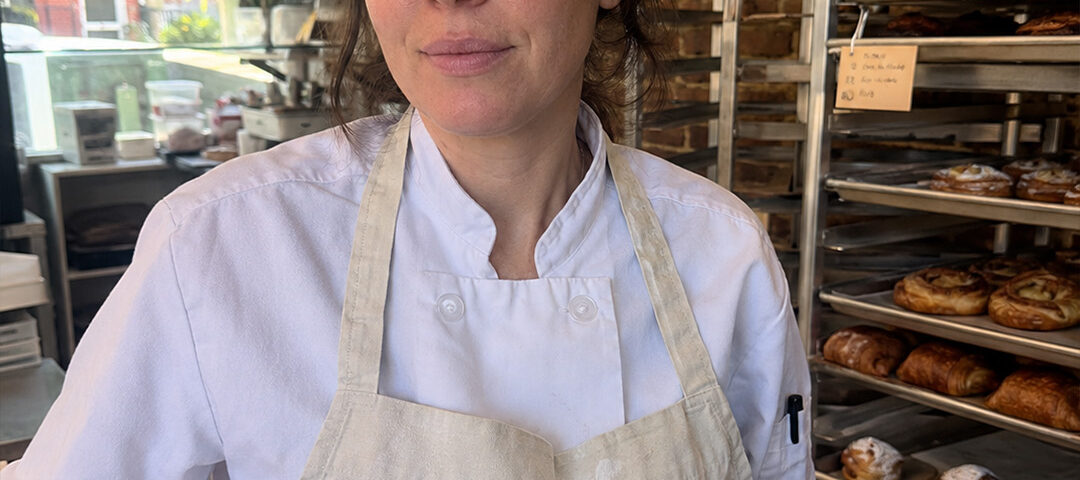
The white apron had been part of my holiday uniform since dawn, tied over my chef coat while I stood in Eleanor’s kitchen and cooked for twelve people who kept asking the housekeeper whether dinner was almost ready.
Nobody asked me.
Eleanor sat at the head of the table in pearls and a dark green dress, one hand resting beside her wineglass. She did not look surprised to see me standing there.
If anything, she looked relieved, as if she had been waiting for me to return so the little performance could have an audience.
“We made room for actual Whitmores,” she said.
The whole table went quiet.
Not the kind of quiet that means shock. The kind that means everyone heard what they were not supposed to admit they understood.
Tyler looked at his plate.
Patrick, his uncle, had one hand around a water glass. His knuckles had gone pale. Cordelia, my mother-in-law, smoothed her napkin twice though it was already flat across her lap. Tyler’s father stared at the turkey carcass as if it might help him.
I stood still long enough to notice one more thing.
Caroline’s place card had been changed too. It had been propped against the crystal bread dish in my spot, facing the room.
Caroline Whitmore.
The family name was not missing from the table. It had just been given to the woman Eleanor wished had married my husband.
My body wanted to do many things at once. It wanted to reach for the card. It wanted to ask Tyler to say my name. It wanted to pick up the empty cake stand and carry it out like a witness.
Instead, I stepped behind Caroline’s chair.
I folded the apron once and laid it across Caroline’s lap like a napkin.
She went rigid.
I reached into my back pocket for my phone. I did not look at Tyler. I did not look at Eleanor. I dialed Patrick even though he was sitting across from me, because what I needed from him was not a family reaction. It was a business one.
His phone rang once. Twice.
He looked down at the screen, then up at me.
“Answer it,” I said.
He did.
I tapped speaker and held my phone three inches above the table, right beside the place card Eleanor had refused to correct for four years.
Patrick’s voice came through thin and careful. “Hazel.”
I heard Eleanor inhale.
I said four words. “Cancel my desserts, Patrick.”
Nothing in the room moved. Not a fork. Not a glass. Not a breath that anyone wanted to claim.
Patrick said, “Understood.”
I ended the call.
Then I picked up my purse from the sideboard, right beside the place card that had tried to put me there, and walked out of Eleanor Whitmore’s dining room before any of them understood what those four words had actually done.
The first time I saw a Whitmore place card, I thought it was beautiful. That was how naïve I was.
It was December of 2021, four months after Tyler and I got married at Lake Oconee under a sky the color of pale blue china.
His grandmother had skipped the wedding because of a charity gala. At least, that was the explanation typed into the cream stationery she mailed to our hotel suite.
“She sends her best,” Tyler had said, reading it beside me in bed.
He sounded embarrassed, so I made myself be generous.
“She’s older,” I said. “Some people need time.”
Tyler kissed my shoulder. “She’ll love you when she knows you.”
I believed him because I loved him, and because love can make a woman mistake a warning for a doorway.
By that Christmas, I had been Hazel Whitmore for four months on bank forms, holiday cards, insurance paperwork, and the little brass mailbox outside the house Tyler and I rented in Virginia-Highland.
My bakery still carried my grandmother’s maiden name, Henley Pastry House, but my personal mail had changed. I had signed the marriage certificate. I had practiced the new signature until my wrist learned it.
Eleanor’s house sat in Tuxedo Park behind a curved drive, white columns, boxwoods cut so neatly they seemed almost scolded into shape. Her dining room had wallpaper hand-painted with pale birds and branches.
Her table was set for sixteen, and each plate had a small folded card above it.
Tyler found his immediately. Mine took longer.
At first I thought the housekeeper had forgotten me. Then I found the card between Tyler’s and Patrick’s. The handwriting was Eleanor’s. The words were simple.
Tyler’s guest.
I laughed softly because laughing gave me something to do with my face.
Tyler saw it and winced. “Don’t make it a thing, babe,” he whispered. “Grandma is old school. She’ll come around.”
I sat down under a label that turned my marriage into a visit.
Eleanor introduced me twice that night. Once as the young woman with the bakery in Inman Park, and once as the girl Tyler brought down from Macon, though I had not lived in Macon since college and my bakery was in Atlanta because I had built it there with my own money and my father’s old truck.
Nobody corrected her. I did not either.
At twenty-six, I still thought dignity was something you could earn from people by refusing to embarrass them.
That was the first wrong detail. There were many after that.
My father had warned me gently about the Whitmores. Beau Marchand did not warn often. He had owned a hardware store in Macon for thirty-five years, and he treated advice like a tool that should not be handed to someone until the right moment.
When Tyler and I got engaged, Daddy took me to dinner at a steakhouse near the interstate. He wore the good button-down my mother ironed for church, and he watched Tyler’s family name move around the room before he ever said it.
“Old money has old rules,” he told me while I cut into a baked potato I barely tasted.
“Tyler isn’t like that.”
“I didn’t say Tyler was.”
That was my father’s way. He gave you half the sentence and trusted you to find the rest when you needed it.
I told him every name was earnable.
He looked sad for me then, not angry. I remember that more than anything. He paid the check, walked me to my car, and hugged me a second longer than usual.
“Keep your bakery in your name,” he said.
“It is.”
“Keep the books clean too.”
“They are.”
“Then you’ll always have somewhere to stand.”
At the time, I thought he meant financially. Later, I understood he meant spiritually.
Henley Pastry House began before Tyler, before Eleanor, before the first person called me Mrs. Whitmore and made me feel like I had been admitted into a room I had only seen from the sidewalk.
I signed the lease in the summer of 2019, in a narrow Inman Park storefront with brick walls, bad plumbing, and a front window that caught the morning light. I was twenty-five and so certain I could work hard enough to make anything love me back.
My father loaned me twenty-eight thousand dollars. I had saved twelve.
The bank loan covered ovens, proofing racks, a used delivery van, and the kind of commercial refrigerator that made a sound like a tired airplane.
For the first six months, I slept in the back twice a week. I frosted cakes at midnight, laminated dough before sunrise, and learned how long I could stand without my feet going numb.
I burned caramel, learned not to, and burned it again on days when brides changed their minds after deposits cleared.
Henley was my grandmother’s maiden name. She baked sweet potato pies for a Methodist church in Statesboro for forty-three years and never once wrote her name on the aluminum pans. She believed food was a quiet form of faith.
I wanted her name above my door because it belonged to me before anyone else tried to rename me.
Tyler walked into the bakery during a charity tasting in the fall of 2020, when the world still felt uncertain and everyone in Atlanta seemed to be learning how to smile with only their eyes.
He wore a navy blazer, no tie, and a white shirt with the sleeves rolled carefully to the same height.
He tasted a rosewater meringue, closed his eyes, and said, “That is the best thing I have eaten all year.”
I was tired enough to distrust charm, but not too tired to like being seen.
He told me he handled marketing for Whitmore Catering, his family’s company. He asked for my card. Two weeks later he asked for coffee.
Two months after that, he knew how I liked my eggs and how long I could talk about vanilla beans before realizing the other person was only pretending to follow.
He was kind in the easy ways.
He brought me dinner when I worked late. He remembered my mother’s birthday. He sent my father a replacement part for an old register at the hardware store because he had heard Daddy mention it once at a barbecue.
When he proposed, he did it in the bakery after closing, standing between the pastry case and the front door while the streetlights outside turned the glass gold.
I said yes before he finished asking. I loved him. That part matters.
It would be easier to make Tyler a villain in the story. Easier to say he tricked me, or that every soft moment had been a lie.
But he was not a monster. He was worse in the way ordinary people can be worse. He wanted me, and he wanted his family’s comfort.
When those two wants stood on opposite sides of a room, he kept choosing the side that had trained him not to notice me bleeding.
Our wedding was small. Sixty people. Lake Oconee.
My mother filled Mason jars with flowers from a wholesale market. My father drove up with bourbon and peaches. Tyler’s parents paid for a string quartet we did not ask for and a flower arch that cost more than my first oven.
Eleanor did not attend.
Tyler told me not to take it personally. He said his grandmother was seventy-eight, proud, complicated, devoted to tradition, and not always good with change.
These words came to feel like curtains hung over a cracked window. They kept the room pretty while the cold still came through.
The second wrong detail came at Tyler’s thirtieth birthday dinner.
It was May of 2022, at a private club in Buckhead where the staff wore white jackets and people lowered their voices when discussing money. Tyler asked me to make dessert because, he said, nothing from the club kitchen could touch my pastry.
I built a four-tier croquembouche in my bakery after midnight. Six hundred profiteroles. Caramel spun in hair-thin threads. Cream scented with orange blossom and vanilla.
I boxed it in sections, drove it across town with my assistant holding the base steady in the passenger seat, and assembled it in a service hallway while waiters stepped around me.
At dessert, Eleanor stood. She tapped her spoon lightly against a glass.
“I want to thank our family kitchen for tonight’s centerpiece,” she said. “It is always good to see a Whitmore recipe carried forward.”
People applauded. Tyler smiled like the compliment belonged to all of us.
I sat at the far end of the table beside Patrick, Tyler’s uncle, who ran operations at Whitmore Catering and spoke less than anyone in the family. He watched my hands. My fingers were still shiny from caramel.
“You made that,” he said quietly.
I nodded. He did not clap. That mattered to me more than it should have.
Later, in the car, I told Tyler the dessert was not a Whitmore recipe. He kept his eyes on the road.
“Grandma was being gracious.”
“She took credit.”
“She gave you exposure.”
“She did not say my name.”
He sighed. Not loudly. That would have made it easier to object. He sighed like I had set something heavy in his lap.
“Hazel, tonight was about my birthday. Don’t turn every little wording thing into a trial.”
The word trial landed wrong. I had not accused anyone. I had only named what happened. Still, I apologized.
Women are taught to apologize for the temperature of a room they did not chill.
The third wrong detail came the following spring.
Eleanor hosted a brunch for her bridge club and asked Tyler to bring me early because the kitchen was “short on hands.” Tyler relayed that phrase while tying his shoes.
“You don’t mind helping, right.”
It was not a real question, so I did not treat it like one. I went.
I carried trays of asparagus tartlets. I refilled coffee. I answered questions about the bakery from women who said “how charming” in a tone that made charm sound like a smaller form of success.
Eleanor introduced me to a woman in a cream turtleneck as “the one with the bakery.”
The woman smiled. “Tyler’s wife.”
Eleanor adjusted the pearls at her throat. “We don’t fuss over labels. She is a friend of the family.”
A friend of the family.
The phrase was soft enough not to bruise if anyone else touched it. That was Eleanor’s talent. She could cut in silk gloves and leave the wound looking like a difference in taste.
That night I stood in my bathroom with the shower running and wrote the phrase on a receipt from a grocery store because I needed proof for myself before I was brave enough to buy a notebook.
A friend of the family.
The next morning, I bought a red leather journal from a stationery shop near Ponce City Market. I wrote every slight as plainly as possible.
No commentary. No adjectives. No guesses at motive. Just the date, the setting, and the words.
December 25, 2021. Tyler’s guest.
May 14, 2022. Whitmore recipe.
March 18, 2023. Friend of the family.
It felt childish at first, like keeping score in a game everyone else denied playing. Then it became necessary.
There is a special kind of exhaustion that comes from being told your memory is dramatic by the same people who benefit when you doubt it.
Tyler found the journal once.
It was open on the bed while I changed clothes after an anniversary dinner at his parents’ house. His mother had referred to me as “Hazel from Henley” three times in front of guests who knew we were married. I had smiled through all three.
Tyler picked up the journal and read the open page. His face closed.
“This is unhealthy,” he said.
“It helps me stay honest.”
“It helps you stay angry.”
“I am angry.”
“You’re choosing to be.”
I took the journal from his hand. He softened after that, which made everything harder. He put both hands on my shoulders and kissed my forehead.
“Grandma is old. Mom is careful around her. Dad avoids conflict. I know it’s not perfect, but you have to stop measuring every word.”
“I am not measuring every word.”
“Then stop writing them down.”
I did not stop. I only hid the journal better.
By the fall of 2024, Henley Pastry House had become the kind of bakery people recommended in careful voices, like they were sharing a secret they wanted credit for discovering.
We were still small, but we were no longer fragile. I had four employees, a wholesale line, and enough wedding work to make my shoulders ache from March through June.
That was when Patrick called.
I was piping lemon curd into tart shells when my phone buzzed. His name on the screen made me wipe my hands before answering.
Patrick did not call socially. In three years of family dinners, he had once texted me a recipe for candied pecans and once sent a condolence message when my mother’s older sister died. That was the whole record of our direct communication.
“Hazel,” he said. “I need an hour offsite.”
The word offsite made my hand still.
I met him at a coffee shop on Edgewood Avenue. He sat in the back booth with a folder under his arm and a paper cup untouched in front of him.
Whitmore Catering had a problem.
Two senior pastry chefs had resigned within a week. Wedding season was coming. Eleanor refused to hire from outside the family network because, according to Patrick, she believed nobody understood a Whitmore palate anymore.
“By family network,” I said, “she means cheap loyalty.”
Patrick almost smiled. “She means control.”
He slid the folder across the table.
Inside was a twenty-four-month subcontract from Whitmore Catering to Henley Pastry House LLC. Seventy percent of their high-end dessert volume. Corporate galas, donor dinners, weddings, specialty installations.
Total value over two years, one point four million dollars.
The name line stopped me. Specialty vendor confidential.
I looked up. Patrick folded both hands around his cup.
“Eleanor cannot know at first.”
“At first.”
“She will block it if she sees your name before the work stabilizes.”
“You want me to bake for a woman who refuses to call me family, while she thinks she is paying someone else.”
“I want Whitmore Catering to pay the person already saving half its dessert reputation for free at holidays.”
I sat back. The coffee shop seemed too loud suddenly. Milk steaming. A chair dragging. Someone laughing near the window.
“Tyler knows.”
“No.”
“My husband works in marketing there.”
“I know.”
“You want me to hide this from him too.”
“I am asking you to make a business decision separate from a family that has not treated you like family.”
That sentence should have offended me. Instead, it steadied me.
Patrick explained everything. The contract was clean. The trust account was real. The confidentiality clause protected vendor identity for competitive reasons, not fraud. Henley would invoice through the line item. Patrick had authority to sign.
Either party could cancel with thirty days’ written notice after the first year. No cause required.
I read that line three times. Patrick saw me reading it.
“That clause matters,” he said.
“Because Eleanor changes her mind.”
“Because Eleanor destroys anything she cannot own.”
I drove home with the folder on the sensory seat.
Tyler was asleep on the couch when I came in. ESPN murmured from the television. His shoes were on the rug. A glass with melted ice sat beside him. I stood there holding the folder and looked at the man I had married.
I wanted to wake him.
I wanted him to tell me not to take the deal because his grandmother did not deserve me. I wanted him to tell me to take the deal because I deserved the money. I wanted any answer that proved I was not alone in the marriage.
Instead, I went to the kitchen island and read the contract again.
The next morning, I called my father from the bakery before sunrise. He listened in his quiet way, not interrupting, not filling the space with outrage that would make me manage his feelings instead of my own.
When I finished, he said, “She wants your hands without your name.”
“That is one way to put it.”
“Patrick is offering payment for the hands.”
“Yes.”
“And the name stays yours.”
“Yes.”
“Then sign it clean and keep every record.”
I looked at the rack of cooling pastry shells in front of me.
“Daddy, it feels dishonest.”
“No, honey. Letting them keep calling your work theirs for free was dishonest. This is just uncomfortable.”
I signed at 6:12 that morning.
For two years, I worked in the dark. Not shamefully. Not illegally. Just quietly.
Henley Pastry House produced towers of macarons for Whitmore donor dinners, chocolate tarts for anniversary galas, sugar flowers for bridal luncheons, and croquembouches that appeared in society pages under captions praising Whitmore Catering’s seventy-year family tradition.
Eleanor accepted compliments for all of it.
I watched her do it once from row four at an awards luncheon in Midtown. She wore ivory and pearls. She thanked her late husband, her sons, her loyal kitchen, and the city of Atlanta for trusting the Whitmore name.
My hands smelled like spun sugar under the table. Patrick found me afterward near the service entrance.
“You should not have come,” he said.
“I wanted to see if it felt different when I was being paid.”
“Did it.”
“A little.”
He nodded. “A little is not nothing.”
It was not. Money changed the shape of my silence. It did not make the disrespect smaller, but it made my cooperation voluntary. I was not trapped in the old story anymore. I was studying it from inside the walls, counting exits.
Tyler noticed the bakery growing and took pride in it when it suited him.
“My wife is killing it,” he told friends at dinner, one hand warm on the back of my chair.
Then we would go to Eleanor’s, and he would let her call me Hazel Marchand as if the marriage certificate were a rumor.
By then, the red journal held thirty-eight entries. I stopped crying when I wrote them down.
That was another warning I did not understand at first. Pain had become data. The moment a woman starts cataloging instead of pleading, something inside her has already begun packing.
In May of 2025, Whitmore Catering handled a children’s charity gala at the High Museum. I delivered two hundred forty lemon-thyme macarons at dawn and stayed to help plate because Patrick’s staff was short.
Constance Holloway, wife of a prominent Atlanta donor, asked who made them.
Patrick told her. Not loudly. Not dramatically. He simply said, “Hazel Marchand of Henley Pastry House.”
It was the first time my name entered one of Eleanor’s rooms attached to the work Eleanor could not deny. Constance kept my card. I did not know that would matter.
At the time, it felt like a match struck in a church and quickly cupped from the wind.
A month later, the Holloway family hired Whitmore Catering for their daughter Adelaide’s wedding.
It was the largest wedding contract Whitmore had ever landed. Four hundred eighty thousand dollars. Seven-tier cake. Six hundred macarons in peach and ivory. Sugar sculpture centerpiece. Bridal luncheon. Rehearsal desserts. Late-night sweets for three hundred eighty guests.
Patrick brought the specifications to my bakery after closing. I read them under fluorescent light while my assistant mopped the front.
“She picked the macarons because of May,” Patrick said.
“She asked for Henley.”
“She asked for the person who made the macarons. Whitmore sold her continuity.”
I looked at him. He looked tired.
“Eleanor still does not know.”
I touched the corner of the file.
There are moments when power arrives quietly, disguised as a problem. You do not hear trumpets. You hear the hum of a refrigerator, the squeak of a mop bucket, the rain starting against the front window.
You look at a stack of paper and realize someone who has kept you outside has built a door that only opens with your key.
I told Patrick I would handle the work. I also told him I was done pretending not to understand the clause.
By October of 2025, Eleanor’s tone had sharpened. She complained about outside vendor costs at board meetings. She told Patrick the company had become dependent on strangers.
She used that word, strangers, in front of Tyler one Friday night at family dinner while eating a chocolate tart I had made at 3:00 that morning.
Tyler repeated the complaint in the car. “Grandma thinks operations is overspending.”
“On desserts.”
“On specialty vendors.”
I watched Atlanta slide past the passenger window.
“That vendor work is why your events photograph well.”
He frowned. “You sound defensive.”
“I sound informed.”
“Hazel.”
There it was. The warning note. Not anger. Not yet. Just the tone that told me I had stepped past the line where a wife was allowed to have an opinion about his family.
I looked at my hands. “Your grandmother would rather lose money than admit she needs help.”
He laughed once, without humor. “She built a company before you were born.”
“I did not say she was incapable.”
“Then stop talking like she is.”
I turned toward him. “Do you think she will ever call me Mrs. Whitmore.”
He kept driving. “Not tonight.”
“That is not an answer.”
“It is the only one I have the energy for.”
The red journal received its forty-ninth entry that night. Not tonight.
A week later, Atlanta Living published a profile of Eleanor for a holiday issue. It called her the grande dame of Southern entertaining. It described the Whitmore dining table as a place where generations gathered.
It included a photograph of her in the library beneath an oil portrait of her late husband.
The reporter asked about family traditions.
Eleanor said Preston’s wife had a gift for flowers, Caroline had always understood the family’s polish, and Tyler’s wife was “a dear friend who helps where she can.”
I read the article at 5:40 in the morning while Tyler slept beside me. A dear friend.
I got out of bed, washed my face, and wrote the fiftieth entry. I did not wake him.
Two weeks before Thanksgiving, I overheard the sentence that ended the last soft place in me.
I had driven to Eleanor’s house with a shopping list because she wanted the holiday menu approved in person. The housekeeper let me in through the side entrance. I was halfway down the back hall when I heard Eleanor in the library.
She was on speaker with her sister Beatrice, not my mother-in-law Cordelia, but another old Whitmore woman who seemed to exist only on phones and Christmas cards.
“Caroline is the right blood,” Eleanor said. “Tyler should have married her. We can correct what we can. Once he moves into operations and Caroline takes marketing, Hazel will drift back to that bakery where she belongs.”
I stood in the hallway with the shopping list in my hand. My heart did not break the way books say hearts break. It cooled. That was worse.
I did not confront her. I did not cry in the car.
I drove back to Henley and went into my office. I opened the contract. I read the termination clause again though I could recite it by then. Thirty days written notice. No cause required. No penalty beyond fulfillment of existing obligations inside the notice period.
I called my father. “Daddy,” I said, “I think I found the edge.”
He was quiet. Then he said, “Edges are useful. They tell you where to stop giving.”
The next morning I called Marisol Ortega, a family law attorney recommended by one of my bakery clients. She had a calm voice and no interest in making drama sound romantic.
I told her about Tyler. I told her about Henley. I told her about the premarital loan from my father and the LLC formation before the wedding.
I told her I was not ready to file that day, but I needed to know how to leave without letting a family company swallow the business I had built before I knew their last name.
She asked for documents. I sent them.
Lease. Tax returns. Loan records. Vendor contract. Bank statements. Payroll. Marriage certificate. Insurance policies. Everything clean, dated, boring, and stronger than any speech.
Marisol called me back the next evening. “Your bakery stands on its own,” she said.
I sat on the floor of my office with my back against the filing cabinet. “Say that again.”
“Your bakery stands on its own.”
I closed my eyes. Some sentences do not sound emotional until they save you.
Patrick came by Henley three nights before Thanksgiving. He had dark circles under his eyes and a paper cup of coffee gone cold in his hand.
“Eleanor is pushing to terminate the specialty vendor before Christmas,” he said.
“She knows.”
“She suspects dependence. Not you.”
“And the Holloway wedding.”
“If you leave, Whitmore cannot replace you in time. Not at your level. Not in this city. Not without telling the Holloways the truth.”
I looked through the office window at the dark bakery. The pastry case was empty. The racks were lined for morning. The place smelled faintly of butter and oranges.
“I am going to cook Thanksgiving,” I said.
Patrick looked at me sharply. “I am.”
“Hazel.”
“I am going to cook the whole thing. I am going to let her show me exactly who she is in front of everyone. Then I am going to decide whether the notice goes out on December first.”
He sat down across from me. “You already decided.”
“I know.”
Thanksgiving morning, I arrived at Eleanor’s house at 5:50.
The kitchen lights were on. The housekeeper, Gloria, was already making coffee. She gave me a sympathetic smile because kind people in unkind houses learn to speak with their eyes.
“You need help, Miss Hazel.”
“I need counter space.”
“That I can give.”
I worked for ten hours.
Turkey first, patted dry and rubbed with herbs. Cornbread dressing with sage and oysters because Eleanor insisted that was how Whitmores had done it since 1978, though the original recipe card in her kitchen was from a Junior League cookbook and had no oysters at all.
Pearled onion gratin. Sweet potato tart. Cranberry relish. Green beans with almonds. Three pies.
One caramel-glazed croquembouche tall enough to make Caroline take a picture when she thought I was not looking.
Tyler arrived at noon. He kissed my cheek while I was whisking gravy and said, “Smells amazing.” Then he went to the den to watch football.
Eleanor came downstairs at two. She paused at the kitchen entrance. Her eyes moved over the platters, the polished copper, the cooling pies, my chef coat.
“Busy,” she said. Not thank you. Not Hazel. Busy.
The family arrived in waves. Hayes and Cordelia, Tyler’s parents. Preston and his wife Audrey. Vincent from Savannah. Caroline in winter white.
Patrick last, carrying wine and the careful face of a man prepared for weather.
Dinner began at four.
Eleanor said grace at the head of the table. She thanked the Lord for family, tradition, and the hands that preserved both. Her eyes passed over me during the word hands and kept going.
My place was to Tyler’s right. For once, the card in front of me had my first and last name. Hazel Marchand. It was not the name I had used socially for four years, but it was at least a name.
I noticed. Patrick noticed me noticing. I ate very little.
At 4:50, my phone buzzed. Patrick had stepped out thirty seconds earlier, supposedly to take a call from operations. His text was short. Need approval on Christmas corporate orders. Step out.
I excused myself. Nobody objected. Eleanor kept cutting turkey. Tyler did not look up.
Caroline smiled at me as if she knew the room would be rearranged before I returned.
I took the call in the marble foyer beneath a portrait of Eleanor’s late husband. Patrick needed real approvals. Three December events. Two yeses. One no. His voice was all business, but under it I heard the question he was not asking.
I checked my watch when we hung up. Ten minutes.
When I pushed through the swinging door, the dining room had changed.
The platter near Hayes was bones and skin. The dressing pan had been scraped down to a brown line. The pies were cut into ragged half-moons. The croquembouche had been taken apart so completely that the cake stand looked abandoned.
My chair was gone from my place. Not moved slightly. Taken.
Caroline sat where I had been sitting. Her body leaned toward Tyler as if it had always belonged there.
Tyler’s shoulders were hunched. His fork rested across his plate. He had not stopped it. That was the detail I saw before Eleanor spoke.
My place card sat on the sideboard. Hazel Marchand. A name off the table.
Eleanor lifted her chin. “We made room for actual Whitmores.”
The sentence landed clean. That was Eleanor too. She never wasted a word when one could do damage.
Caroline lowered her eyes, but her smile stayed. Cordelia smoothed her napkin. Audrey stared down into her wine. Patrick’s hand tightened around his glass. Tyler did not look at me.
I had imagined many versions of that moment.
In some, I cried. In some, I asked my husband to choose. In some, I told Eleanor everything I had written in the red journal and watched shame move around the table like weather.
None of those versions happened.
Real strength, I learned, does not always feel like fire. Sometimes it feels like a door closing quietly inside you.
I stepped behind Caroline. The air smelled of turkey fat, candle smoke, and caramel. My feet hurt. My right thumb had a tiny burn from the sugar work that morning. I felt it pulse once.
I placed the folded cloth across her lap. Then I called Patrick, though he sat ten feet away.
He answered on the second ring. I put him on speaker.
“Hazel,” he said.
Eleanor’s gaze flicked to him, then back to me.
“Cancel my desserts, Patrick.”
Patrick did not ask me to repeat it. “Understood.”
I ended the call.
Tyler finally looked up. His face had gone pale. “Hazel,” he said.
There was so much in that one word. Warning. Plea. Embarrassment. A husband realizing the quiet part of his marriage had stood up without asking permission.
I picked up my purse from the sideboard.
Eleanor’s mouth opened, but no sound came out. It was the first time I had ever seen her lose track of the next line.
I walked through the foyer, past the portrait, past the arrangement of white roses on the entry table, and out into the cold November air.
I drove to the bakery.
The streets were empty in that holiday way, porch lights glowing over quiet houses, a few televisions flickering blue through living room windows. I parked in front of Henley and sat with both hands on the wheel until the clock on the dash changed to 5:36.
I did not cry. I did not feel victorious. Mostly, I felt tired down to the marrow.
Patrick arrived at midnight. He wore the same sweater from dinner and held a gas station coffee. He sat on the curb outside the bakery like a teenager waiting for trouble.
I unlocked the door. We went to my office.
I took the termination notice from the bottom drawer. I had printed it two nights earlier, folded it once, and carried it in my purse through the entire Thanksgiving meal.
Patrick read it in silence.
“This is effective December first,” he said.
“Yes.”
“You will honor everything through December thirty-first.”
“Yes.”
“Nothing beginning in 2026.”
“Yes.”
He took out a pen. “Eleanor will say this is personal.”
“It is.”
He looked at me. “It is also contractual.”
Both things were true.
I signed. Patrick countersigned as authorized officer for Whitmore operations. We scanned the notice.
We sent copies to Marisol, to Patrick’s personal email, and to the operations inbox scheduled for delivery Monday morning.
When it was done, Patrick sat back. “She is going to come for you.”
“She has been coming for me for four years.”
“This will be different.”
“So will I.”
He smiled then, but it was sad. “I should have said something sooner.”
“Yes.”
“I am sorry.”
“I know.”
That was the first apology from a Whitmore I believed.
Monday morning, the notice arrived.
By noon, Eleanor’s office had traced Henley Pastry House LLC through state records. It was not difficult. I had never hidden my ownership. I had only allowed Eleanor not to look because contempt had made her lazy.
Tyler came home that night after nine. He did not pour bourbon. That alone told me he knew.
He stood in the entryway with his coat still on. “Grandma asked me if you have been the specialty vendor for Whitmore Catering for two years.”
I was at the kitchen island with a cup of tea. “She asked the right question.”
His face tightened. “You lied to me.”
“You never asked who made the desserts your grandmother kept praising.”
“I did not know there was something to ask.”
“No. You knew there was something not to see.”
He flinched. I did not soften it.
For years, I had softened everything. My tone. My shoulders. My memory. My appetite. My name.
Tyler pulled out a stool and sat down. “You should have told me.”
“I tried to tell you smaller truths. You told me not to make them about me.”
“This is different.”
“It became different because I stopped asking you to care before I protected myself.”
He looked toward the hallway, toward the bedroom we had painted sage green together in a happier year. “Are you leaving.”
“I have retained Marisol Ortega. Separation papers are being prepared. You will receive them this week.”
He stared at me as if the words were in another language. “For Thanksgiving.”
“For four years.”
His mouth tightened. “You are punishing everyone.”
“I am not feeding everyone anymore. That is not the same thing.”
He left that night for his mother’s house. He did not come back for two weeks.
On December first, I posted one sentence on Henley’s business account: Booking 2026 weddings directly beginning January 15. No third-party catering partnerships at this time.
The post received eight hundred likes overnight. Three planners reached out before lunch. Constance Holloway’s office contacted us at 3:07 that afternoon.
I called the next morning. Constance did not make small talk.
“Hazel, I want continuity for Adelaide’s wedding,” she said. “Your macarons from the gala are the reason she agreed to the peach and ivory palette. I understand there has been a change at Whitmore. I am asking whether Henley Pastry House can contract directly.”
I looked at Patrick, who had come to the bakery before sunrise and resigned from Whitmore by certified letter at ten.
“We can,” I said.
The direct contract was two hundred ninety-five thousand dollars. Less than Whitmore had charged.
More than enough to pay my staff well, bring in two temporary pastry chefs, rent additional refrigeration, and sleep badly but honestly for sixteen weeks.
By December thirteenth, the deposit cleared.
By December seventeenth, Cordelia came to the bakery.
My mother-in-law looked smaller outside Eleanor’s house. She wore a camel coat, held a box of macarons she had just bought, and stood near the front counter while customers pretended not to recognize the tension.
“Hazel,” she said, “I was hoping we could discuss a misunderstanding.”
I wiped my hands on a towel and led her to a small table near the window. “What misunderstanding.”
“Thanksgiving became emotional.”
“Thanksgiving became clear.”
She looked down at the macaron box.
“Eleanor is prepared to offer one and a half times the prior rate. Public credit at future events. A preferred vendor line. There are ways to repair this without tearing the family apart.”
The word family sat between us like a dish nobody wanted to eat.
“Cordelia, the Holloway contract is direct now. There is nothing to repair between Henley and Whitmore.”
“She will not accept that.”
“She does not have to accept it for it to be true.”
Cordelia’s eyes filled, though no tears fell. “You have to understand what Eleanor is like.”
“I do.”
“No, I mean truly.”
“I do.”
She pressed her lips together. “I should have stopped her.”
“Yes.”
“I was afraid of making it worse.”
“You made it lonely.”
That was the sentence that hurt her. I could see it. Her face changed. Not dramatically. Just enough to show the truth had found a place under the coat.
She left the macaron box on the table. I threw nothing away. I put it in the staff room, and my assistant ate two after lunch.
Caroline came three days later.
She arrived without an appointment, wearing a wool coat and no makeup. For the first time since I had known her, she looked like a young woman instead of an argument Eleanor had dressed.
I met her by the pastry case. “I am not here to defend Thanksgiving,” she said.
“Good.”
“I am not proud of it.”
I waited. Caroline’s eyes moved to the croquembouche in the display case.
“She told me to sit there.”
“You sat.”
“I did.”
There was no excuse in her voice. That made it easier to listen.
“She wants me to take Tyler’s job.”
“I know.”
“I do not want it.”
I folded my arms. “Then do not take it.”
“You make that sound simple.”
“No. I make it sound yours.”
She looked at me for a long moment. “You really are leaving all of them.”
“I am leaving the part where I ask permission to be treated like a person.”
Her eyes filled. I did not hug her. Not then.
Instead, I gave her the name of an employment attorney who had handled a contract dispute for one of my customers. Caroline took the card with both hands, as if it weighed more than paper.
“Will you tell anyone I came.”
“No.”
“Thank you.”
That was the beginning of Caroline becoming someone separate from the seat she had taken.
January was hard.
People like clean endings because they do not have to imagine the mornings after. But most dignity is rebuilt on ordinary mornings.
Payroll. Dough. Texts from a husband who alternated between apology and blame. Emails from attorneys. Staff schedules. A refrigerator repair that cost more than expected.
My mother calling to ask whether I had eaten. My father not asking too many questions and somehow making that feel like love.
Tyler’s messages came in waves.
He said I had embarrassed him. He said he understood now. He said Eleanor was old. He said I was cold. He said he missed me. He said the family was under pressure.
He said he loved me at the end of a paragraph about business losses, which told me he still did not know where to put me unless I was attached to the problem.
I answered only through Marisol unless the message concerned the house.
I moved my personal things to a storage unit in Decatur on a rainy Sunday while Tyler was at Eleanor’s. Books first. Winter clothes. My grandmother’s mixing bowl.
The framed photo from our wedding where my parents stood on either side of me and Tyler looked happy. I wrapped that one in newspaper and put it in a box marked not now.
In February, Eleanor came to the bakery.
She arrived at 10:00 on a Tuesday with Hayes, Tyler’s father, beside her. He carried a leather portfolio. She wore charcoal wool and the same pearls from Christmas. The front of house girl went pale.
“Mrs. Whitmore needs a private word,” Hayes said.
I came out of the kitchen in chef whites. “My office.”
Eleanor looked around as we passed through the kitchen. Her face registered the proofing racks, the cooling macarons, the staff moving around me without fear.
I wondered whether she had ever imagined my bakery as a real place before that moment, or only as a charming hobby attached to the girl from Macon.
They sat in front of my desk. I sat behind it. Eleanor did not bother with courtesy.
“End this.”
I folded my hands.
“The Holloway contract. The press attention. Patrick’s resignation. The divorce. The little performance of independence. End it before you damage more than you understand.”
Hayes looked at the floor. I opened my drawer and took out the red journal.
Eleanor’s eyes narrowed. Not afraid yet. Annoyed.
I opened to the first page. “December twenty-fifth, 2021. Tyler’s guest.”
I turned a page. “May fourteenth, 2022. Whitmore recipe.”
Another. “March eighteenth, 2023. Friend of the family.”
Another. “October twentieth, 2025. Dear friend who helps where she can.”
Another. “November twenty-seventh, 2025. We made room for actual Whitmores.”
I closed the journal. Hayes had gone still. “Mom,” he said.
Eleanor did not look at him. “I said nothing untrue.”
There it was. The gift she did not know she had given me.
For four years, Tyler had asked me to believe she meant less than she said. In my office, with my records on my desk and her son beside her, Eleanor refused that escape.
She confirmed the pattern because pride would not let her pretend she had been careless.
I almost thanked her. Instead, I pulled out the subcontract and placed it beside the journal.
“This agreement paid Henley Pastry House for two years of work Whitmore Catering represented as family tradition. That agreement is ending according to its terms. The Holloway wedding will proceed with Henley. My marriage will proceed through counsel. Those are separate matters. Neither is available for family vote.”
Hayes covered his mouth with one hand. Eleanor stood.
“You will regret making an enemy of me.”
I looked up at her. “Eleanor, I regret trying to make family out of someone who only wanted my labor.”
Her face changed then. It was not defeat. Not yet. It was the first recognition that she had mistaken silence for dependence.
She left without another word. Hayes remained in the doorway after her footsteps faded.
“I should have spoken sooner,” he said.
“Yes.”
“I am sorry.”
“I know.”
He nodded once and followed his mother out through the kitchen, past the racks of pastry she had been taking credit for since before she knew their shape.
The Holloway wedding took sixteen weeks off my life and gave me something better than rest. It gave me proof of capacity.
My team worked like people who knew they were building more than dessert. We rented refrigeration. We hired two temporary pastry chefs.
Patrick built delivery schedules with military precision, though he had never served a day in uniform and would have laughed at anyone who said he had.
My father drove preserved peaches from Macon. My mother labeled boxes at the bakery on weekends and brought soup nobody had time to eat until midnight.
Constance Holloway came for tastings and treated me like the person in charge. That sounds simple. It was not.
Respect has weight when you have gone without it. The first few times she deferred to my judgment, I overexplained. By the third tasting, I stopped doing that.
“The buttercream should stay vanilla,” I said when Adelaide considered almond.
Constance nodded. “Then vanilla.”
No argument. No family history. No test. Just trust.
The divorce moved more quietly. Tyler and I met once in a mediator’s office. He looked thinner. He apologized for Thanksgiving, then for Christmas, then for not seeing what I had tried to show him.
I believed the apology. I did not return to the marriage. Those two truths hurt him, but they did not cancel each other.
“I thought keeping peace was protecting us,” he said.
“No,” I said. “It was protecting the person disturbing it.”
He wiped his eyes quickly with the heel of his hand. “I did love you.”
“I know.”
“I still do.”
自由“I know.”
It would have been easier if love were enough. But love without courage becomes another room where a woman waits to be named.
April eighteenth arrived clear and warm.
Atlanta had gone green almost overnight. Dogwoods bloomed along Peachtree. The Cherokee Town and Country Club looked freshly washed by spring light, its brick glowing soft red under white awnings.
By six in the morning, my team and I were unloading at the service entrance.
The cake took nine hours to assemble. Seven tiers. Vanilla bean genoise, strawberry, French buttercream, one dark chocolate tier for the groom.
Six hundred macarons in peach and ivory arranged in concentric arcs. A sugar swan at the center, delicate enough that I held my breath every time someone walked too fast near the table.
At three, the social photographer arrived. At four, the florist cried because the ballroom was too warm. At five, Patrick fixed a power issue with an extension cord and a look so stern the venue manager apologized twice.
At seven, guests entered.
The Whitmores came as guests of a Holloway uncle, not vendors. I saw them from the kitchen pass. Eleanor in midnight blue. Hayes beside her. Cordelia behind them.
Tyler in a charcoal suit, his face composed until he saw the dessert table. Caroline came alone in a gray dress and stood slightly apart from the family.
Their table was near the back. Not a punishment. Just placement.
I stayed in the kitchen until Constance came to find me. “Hazel,” she said, touching my arm. “The cake is breathtaking. Theodore wants to recognize you before the cutting.”
I felt my stomach tighten. “That is not necessary.”
“It is to us.”
Eleanor was six feet away when Constance said it. I had not noticed her approach. She heard every word. For once, she did not interrupt.
The band quieted at 7:55. Theodore Holloway stepped to the microphone. He thanked the couple, the guests, the staff, and his wife. Then he turned toward the dessert table.
“One person deserves particular thanks tonight,” he said. “The chef behind every dessert you are about to enjoy, and the hands behind the macarons that started this whole conversation last May, Hazel Marchand of Henley Pastry House.”
Applause rose. Not thunder. Not a movie scene. Real applause, which is messier and warmer.
Chairs shifted. A few people turned. The photographer’s flash went off.
Constance took my hand and led me forward. I passed the Whitmore table.
Tyler looked at me. His eyes were wet. Cordelia looked down.
Hayes stood. That surprised me.
He stood slowly, as if his body had decided before his pride could object. Then Caroline stood too.
Patrick, from the side of the room, looked at neither of them. He looked at me.
Eleanor remained seated. That was all right. I no longer needed her to rise.
I took the microphone. My voice shook on the first thank you, then steadied.
I thanked Adelaide and her husband. I thanked Constance and Theodore. I thanked my team by name.
I thanked Patrick for operations, my mother for keeping us fed, and my father for driving peaches up I-75 before sunrise.
I did not mention Whitmore Catering. I did not mention Eleanor. I did not need to.
A woman who has her name spoken correctly in a room does not have to explain every room where it was not.
The next morning, a photo ran in the lifestyle section.
In the picture, I stood in chef whites at the microphone. Constance was beside me, smiling. Behind us, eight feet back, Eleanor sat at her table in midnight blue, turned slightly away from the applause.
The caption identified me correctly: Hazel Marchand, chef-owner of Henley Pastry House.
I cut that caption out and taped it inside the red journal. Not as revenge. As a receipt for reality.
The business changes after the wedding were quieter than gossip wanted them to be.
Whitmore Catering did not collapse overnight. Real life rarely grants that kind of clean satisfaction. It shrank.
It lost bridal work first, then a few galas, then the confidence of planners who had once treated the Whitmore name like a guarantee.
Cordelia took over day-to-day leadership after Hayes stepped back. Patrick remained with Henley. Tyler found a marketing job at a small firm in Midtown. Caroline turned down Eleanor’s offer and later joined a startup in Old Fourth Ward.
Eleanor sold the Tuxedo Park house that summer.
I heard it from Cordelia, who wrote me a letter I did not answer for three weeks. When I finally did, I kept it short. I thanked her for the apology. I told her I wished her peace. I did not offer closeness I did not feel.
My divorce finalized at the end of April.
Marisol handed me the decree in a manila envelope. The marriage ended in sixty pages, two signatures, and a filing stamp. Henley remained mine. Tyler kept the house.
There was no dramatic confrontation in a courthouse hallway, no final speech, no scene where everyone understood at once.
There was only me walking out into afternoon sun with a document under my arm and the strange lightness of no longer waiting for a husband to become brave.
In May, I signed a lease for a second location.
It was a two-story Victorian near the corner of North Highland and Krog, with uneven floors and a front porch that needed sanding.
My father walked through with me and tested the windows like he was inspecting a house for a daughter instead of a bakery for a business owner.
“It needs work,” he said.
“So did I.”
He looked at me sideways. “You always did have a taste for old buildings and hard lessons.”
I laughed for the first time in weeks without feeling surprised by it.
We named the new location Henley House Patisserie. The sign painter asked what name to put under the logo. I stood on the sidewalk with a coffee in one hand and a set of keys in the other.
Hazel Marchand, chef-owner.
Patrick Whitmore, director of operations.
When Patrick saw the proof, he went very still. “You do not have to put my last name there,” he said.
“I know.”
“It may cost you some goodwill.”
“From people who cannot tell the difference between Eleanor and you.”
He looked away. “Thank you.”
“Do not make me regret it.”
He smiled. “I would not dare.”
The ribbon cutting was on a Saturday in June. My mother wore a yellow dress. My father brought peaches from Macon. Constance Holloway sent roses.
Marisol came in a navy suit and stood in the shade like a woman prepared to object to anyone who disturbed my peace.
Caroline came near the end. She handed me a paper bag of homemade peanut brittle and looked embarrassed by the sweetness of it.
“I bought a notebook,” she said.
“A red one.”
“Blue.”
“That works too.”
She smiled. “I started writing things down.”
I did hug her then. Not because the seat she took had stopped mattering. It still mattered.
But she had begun to understand that Eleanor’s table had made more than one woman smaller, and some exits are easier to find when another person leaves a light on.
After everyone left, I went into the little back office of Henley House. It smelled like fresh paint and sugar.
I hung the same apron on a hook behind the door, clean now, pressed flat, no longer a costume for someone else’s idea of my place.
Then I opened the red journal and wrote the final entry: June 8, 2026. Henley House. My name on the door.
I closed it.
For a long time, I stood in the office listening to the sounds of the new shop. Staff laughing. The register opening. A little girl asking her mother for the pink macaron.
My father on the porch telling Patrick how to fix the loose railing even though Patrick had not asked.
My phone buzzed once. A text from Tyler: Congratulations, Hazel. The place looks beautiful.
I read it twice. Then I typed: Thank you, Tyler.
That was all.
Some endings do not need slammed doors. Some need a clean counter, a correct name, and the mercy of not dragging old pain into a room where bread is rising.
Months later, a culinary school group came through Henley House on a tour. Twenty students with notebooks, bright eyes, and the kind of hunger that had nothing to do with food.
Their instructor introduced me near the pastry case. “This is Hazel Marchand, chef-owner.”
A young woman in the back raised her hand. “I read an article that said you used another name for a while.”
The room waited.
I thought of Eleanor’s table. The sideboard. The wrong card. The empty chair. Tyler looking down. Caroline’s stiff shoulders. Patrick’s voice on the phone. My father telling me the bakery gave me somewhere to stand.
“It was never mine the way this one is,” I said.
The student wrote that down. I hoped she would remember it before she needed it.
Because a name is not just a sound other people make. It is a place you return to when the room tries to move you. It is the proof you can carry without showing anyone a document.
It is the part of you that remains when a family decides belonging is something they can grant and revoke at dinner.
Eleanor never called me Mrs. Whitmore. In the end, that became the least important thing about her.
The important thing was that I stopped waiting for her to call me anything at all.
What would you have done when the chair you cooked beside, the card they refused to correct, and the name they kept taking all met at the same table?
Disclaimer: This story is a work of fiction created for entertainment purposes. Any resemblance to real persons, events, or places is coincidental.