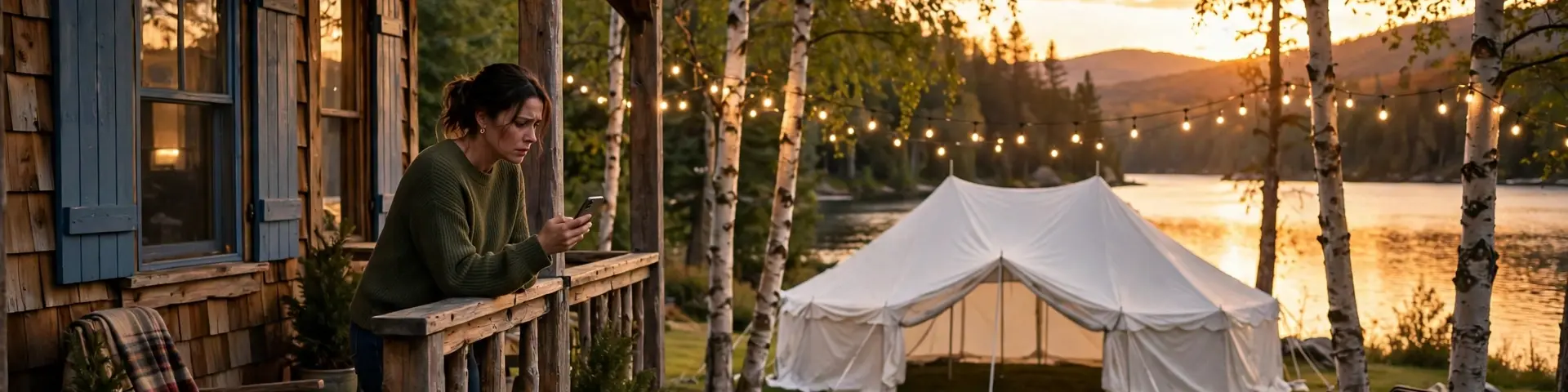
The message arrived while I was restocking paint rollers at the hardware store, and it was so brazen I laughed before I understood she was serious.
Your cabin is ours this weekend. Don’t make this difficult — just leave the keys.
I stood in the aisle with a box cutter in one hand and my phone in the other, the clean smell of lumber and fresh sawdust drifting from the back room. Outside the wide front windows, a June morning was brightening over Birch Falls, the kind of small town where people still wave from pickup trucks and argue about dock stain like it is a local election.
I read the text twice. Then a third time.
The cabin had been in my name for three years. Not almost mine. Not shared. Not emotionally complicated in any way that changed the county records. Mine. My grandfather — everyone called him Pop — had left it to me outright when he passed, with a deed, a notarized will, and a handwritten note tucked in the lawyer’s folder: Victoria will know how to care for it.
My sister Eden had never forgiven that line.
I understood the sting. Truly. We had both spent childhood summers at Silver Birch Lake — burnt hot dogs on paper plates, patchwork quilts, thunderstorms rolling across the water. The cabin lived in both our memories. But memory and ownership are not the same thing, and Pop had been very clear about that.
He did not leave it to me because he loved Eden less. He left it to me because I showed up.
When the dock boards warped, I drove out on Saturdays with a drill and a cooler of iced tea. When the gutters clogged, I climbed the ladder while Pop stood below pretending not to worry. When his knees gave out, I drove him to his appointments and sat with him afterward on the porch, drinking coffee so strong it tasted like a dare, listening to his stories about the factory, the fishing trips, and Grandma burning biscuits their first year married — even the fourth and fifth time he told them.
Eden came when it was pretty. Fourth of July. Labor Day. A long weekend if her calendar allowed. She photographed the lake, called it “our happy place,” and left before the sheets reached the washing machine.
Pop noticed more than people thought.
So when his lawyer called us in after the funeral, Eden sat in a navy dress with her sunglasses in her lap and a smile that looked pinned on. Her husband Brett kept checking his watch. I remember the lawyer sliding a manila folder across the table and reading Pop’s instructions in a voice soft enough to make the words hurt: the cabin at Silver Birch Lake — land, dock, contents, and all associated rights — goes to his granddaughter Victoria Mae Sutton.
Eden’s face changed before she could stop it. Just for a second. Then she smoothed it over, leaned back, and said, “That makes sense. Victoria has more time.” The way she said more time made my life sound like an empty room.
I worked part-time at Denny’s Hardware, four or five days a week. It was not glamorous, but I liked knowing which neighbor needed a new latch and which summer family forgot propane every Friday. The job paid the property taxes and kept the cabin standing instead of sold to someone who would tear it down for a glass box with heated floors.
My life was quiet. I had chosen that. Eden had chosen something louder — a big subdivision house outside Grand Rapids with stone columns, a three-car garage, and a lawn service that came twice a week. Brett sold commercial real estate and used phrases like “leveraging relationships” in normal conversation, as if life were a conference room with appetizers.
I did not judge her for wanting that. I only wished she would stop treating my quiet life like a supply closet for hers.
I typed back: What are you talking about?
The typing dots appeared instantly. I already booked it. Party company comes Thursday. It’s our anniversary weekend and I’m not doing it at some rental in town when we have a lake house in the family.
I stared until the words stopped making sense. A customer turned into the aisle holding a cracked paint tray. “Victoria, do these come in bigger sizes?” I blinked, pocketed the phone, and answered on autopilot. That is the thing about small-town jobs — your personal life can split open in your pocket and you still have to know where the rollers are.
When he left, I pulled the phone out again. It’s not in the family, Eden. It’s mine. Pop left it to me.
Don’t start that again.
That again landed cold. As if the deed, the will, the tax bills with my name on them, the winters I drove through sleet to check the pipes, were all just a mood I kept bringing up to be difficult.
I finished my shift because I needed the time — deck screws, a gallon of paint called Harbor Mist, a new mailbox flag for Mrs. Landry — smiling through all of it while Eden’s message sat inside me like a pebble in a shoe.
After work I drove the twenty minutes to Silver Birch Lake. The road narrowed past the last gas station, winding through birch and maple, past mailboxes shaped like fish and cabins with names carved into driftwood. My cabin sat at the end of a gravel drive: gray cedar siding, blue shutters, a screened porch, and a dock that leaned slightly left no matter how often I fixed it. Pop’s wind chimes moved in the breeze.
I sat on the dock with a beer and watched the sunset turn the water orange. A loon called across the lake. I tried to think of a way to be firm without starting a family storm. But some storms are already moving before you hear the thunder.
I finally texted: No. You can’t use the cabin this weekend. I have plans. And even if I didn’t, you should have asked before booking anything.
Her reply came so fast it felt rehearsed. You’ll regret this.
I sat looking at those four words while the dock cooled under my bare feet.
Eden had always been like that. As a child, if she wanted the last cookie and I had it, she would not ask — she would take it and dare me to make a scene. If I protested, she cried first and louder, and by the time Mom walked in, Eden looked hurt and I looked mean. She learned early that confidence can outrun truth if it gets to the room first.