I picked up my phone twice.
Set it down twice.
Daniel’s voice remained in my head.
Let them grow up the rest of the way.
So I went outside and cleaned leaves from the flower beds.
Ordinary work.
Harder than calling my son.
Michael contacted me late that afternoon.
“The acquisition isn’t happening.”
My heart sank even though I had expected it.
“I’m sorry.”
He laughed weakly.
“That’s generous.”
“What happened?”
The lender wanted documentation.
Michael’s probate inheritance remained under administration.
My home was not his asset.
His remainder interest in the living trust was not currently available collateral.
The financial picture he had described to his partner was therefore materially different from reality.
“What did Kevin say?”
“He asked why I presented estimates like they were confirmed.”
That was the part that wounded him.
Not losing the deal.
Credibility.
Michael went quiet.
“I counted money before it was mine.”
I sat down.
“Yes.”
“I told them I misunderstood.”
“You did.”
He exhaled.
“I mean, I really misunderstood.”
That was new.
No blame.
No argument.
“I kept thinking about Dad.”
“What about him?”
“He never counted a deal before closing.”
I smiled sadly.
“No.”
“And I used an inheritance I hadn’t received to build a business plan around assets I didn’t own.”
Another pause.
“I embarrassed myself.”
I closed my eyes.
There.
Accountability.
Not humiliation.
There is a difference.
“I love you.”
I said.
“I love you too.”
“I’m not fixing this.”
“I know.”
That answer mattered more than any promise.
Clare came two days later.
No casserole.
No folder.
Just my daughter at the front door.
“Can I come in?”
“Yes.”
We made coffee.
She talked about traffic.
Her children.
Anything except why she was there.
Finally, she put down her mug.
“I need to tell you something I’m ashamed of.”
I waited.
“When Mr. Whitmore said Dad left us millions, I felt relieved.”
“That’s understandable.”
“No.”
She shook her head.
“Let me finish.”
Her mortgage was higher than I knew.
Credit cards.
School expenses.
Lifestyle costs that had quietly grown faster than income.
Nothing catastrophic.
Enough to keep her awake.
“For a few minutes, all I could think was that Dad’s money could fix everything.”
Her eyes filled.
“When Michael laughed about the watch, I laughed because I was relieved.”
Another.
“I let that relief matter more than what was happening to you.”
There.
The apology I needed.
Not:
I’m sorry you were hurt.
Not:
We misunderstood.
“I’m sorry, Mom.”
I reached across the table.
“I forgive you.”
Her face softened.
Then I added:
“But forgiveness doesn’t mean we pretend nothing happened.”
“I know.”
“If you’re afraid about money, tell me.”
She nodded.
“I may help sometimes.”
Another.
“I may not.”
Another.
“But I will not make every adult problem disappear because I can.”
She wiped her eyes.
“And nobody plans where I live.”
That earned the smallest smile.
“Definitely not.”
Repair began there.
Michael took longer.
Several weeks passed before he asked to come over.
The fact that he asked mattered.
He sat at the kitchen table wearing the same expression he had worn at sixteen when he needed to admit he had backed Daniel’s car into the mailbox.
Then he reached into his jacket.
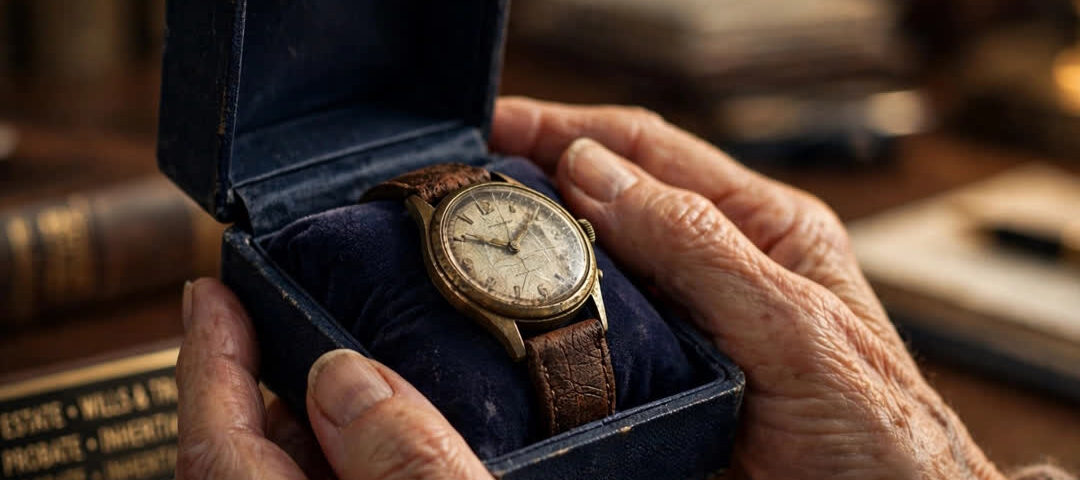
The Hamilton watch.
I had let him take it to a repair shop because the leather band had cracked.
He placed it between us.
“New band.”
I picked it up.
Same scratched crystal.
“I told them not to replace that.”
“Good.”
He stared at the watch.
“Dad left us millions.”
“Yes.”
“And we laughed because we thought you got the worthless thing.”
I ran my thumb over the crystal.
“So did I.”
Michael looked toward me.
“We didn’t even understand what we owned.”
“No.”
“What you owned.”
“No.”
Another pause.
“Or what you did for Dad.”
That one hurt more.
I stayed quiet.
Michael swallowed.
“The banker didn’t embarrass me.”
I waited.
“I embarrassed myself.”
Again.
The words stronger because he had carried them for weeks.
“I spent money before it was mine.”
Another.
“I talked about your house like it belonged in my plan.”
Another.
“I’m sorry.”
I looked at my son.
Then at Daniel’s watch.
“I believe you.”
His eyes filled.
Then:
“I think Dad knew which one of us needed the lesson.”
I smiled faintly.
“All of us.”
Michael looked up.
“Including Dad.”
That surprised him.
“Yes.”
The trust had protected me.
Daniel’s secrecy had also hurt me.
Both truths belonged at the table.
Several months later, I was still living in the house.
That should not sound like victory.
Before Daniel died, I never imagined anyone would need to defend my right to remain in my own bedroom, cook in my own kitchen, or decide when I was finished with the rosebush outside the window.
But grief changes ordinary things.
The pencil marks inside the pantry where Daniel measured the children.
The dent Michael made in the hallway moving a dresser.
The loose porch board Daniel intended to repair.
All of it became evidence of a life I was not ready for someone else to reorganize.
The probate estate continued through ordinary administration.
Michael and Clare remained beneficiaries.
I never changed that.
Never threatened it.
Never used the trust as leverage.
That mattered to me.
Their father had made a choice.
I would not rewrite it merely because their early reaction wounded me.
Money did not need another person using it as a weapon.
Michael abandoned the acquisition and focused on the business he already owned.
His partner Kevin stayed.
They improved cash flow.
Reduced debt.
Eventually pursued a smaller acquisition financed through actual company performance.
Michael never again listed inherited assets in a financing proposal before receiving them.
He once joked that the lesson had been “expensive.”
I told him:
“Education usually is.”
Clare and her husband met with a financial planner.
They created a budget.
Sold one expensive vehicle.
Reduced travel.
Paid down cards.
She did not become poor because I refused to rescue her.
She became informed.
That was better.
I changed too.
For forty-one years, Daniel had handled most estate details.
I trusted him.
Trust was not the mistake.
Absence was.
I should have known how our assets were titled.
What belonged to the trust.
What passed under beneficiary designations.
What happened if one of us died.
So I learned.
I sat with Margaret Ellis and asked questions that made me feel foolish.
She never made me feel foolish for asking.
Eventually, I began volunteering with a community program for older adults on financial organization.
Not legal advice.
I had no qualification for that.
Just practical reminders.