The letter was waiting on my kitchen counter when I came home from Minnesota.
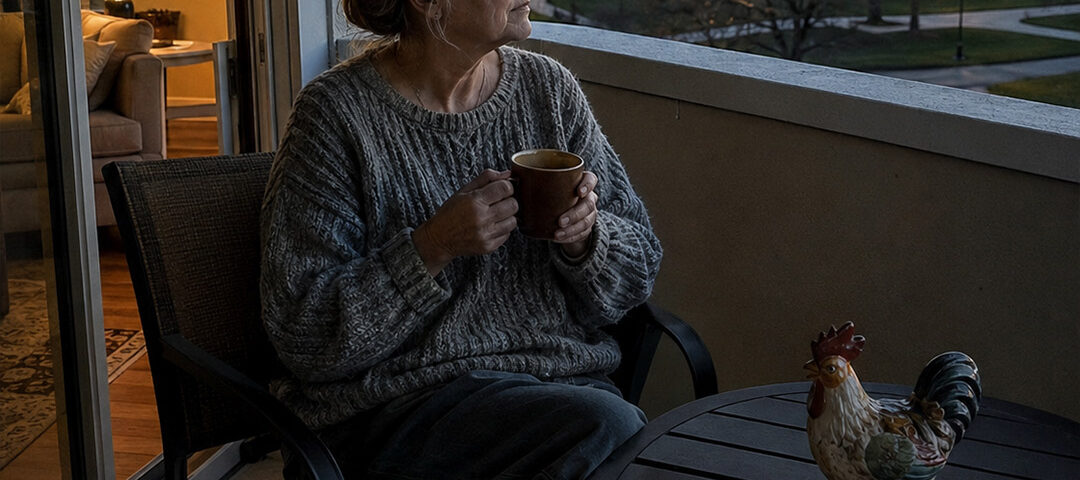
It had not been pushed beneath the door or placed in my mailbox. It sat beside my coffee maker, weighted down by the ceramic rooster my husband bought me at a county fair in 1987. Someone had moved the rooster six inches from its usual place, set the folded page beneath it, and left my blue pen on top as though my kitchen were a hotel desk.
I remained in the doorway with my coat buttoned and my suitcase behind me.
My keys were still in my hand.
The apartment smelled faintly of microwave popcorn and the lavender spray my daughter-in-law used on everything she considered insufficiently fresh. A small plastic cup was wedged between the sofa cushions. There was a child’s handprint on the balcony door and a grocery receipt on the floor beside the trash can.
I did not need to unfold the letter to know who had written it.
Claire’s handwriting leaned forward with the same determined neatness she brought to party invitations, thank-you cards, and lists of things other people should improve.
I placed my suitcase against the wall, removed my coat, and washed my hands before touching the page. That detail may sound strange, but I wanted to feel composed. I had spent most of the flight home imagining this moment, and I refused to meet it with trembling fingers.
The note contained six sentences.
Ellen,
We needed a place to stay while work was being done at the house, and since you were out of town, we used the apartment. The children had a wonderful time at the park. Nothing was damaged, and we cleaned before leaving. Matt will explain how we got the extra building fob. Please do not turn this into something larger than it needs to be.
Claire
At the bottom, in smaller writing, she had added:
You weren’t using it.
I read that last sentence three times.
You weren’t using it.
As if a home belonged only to the person standing inside it at a particular hour. As if my absence had converted the apartment into unused family inventory. As if thirty-one years of work, careful saving, and quiet sacrifice could be set aside because my son’s family wanted a convenient weekend near downtown.
I placed the note back on the counter.
Then I looked around the apartment I had purchased without telling them.
The framed photograph of my husband, Paul, had been moved from the end table to the bookshelf. Two kitchen cabinets stood slightly open. The blanket I kept folded over the armchair had been used and returned inside out. A package of children’s crackers sat beside my tea, and someone had changed the temperature on the thermostat.
They had not only entered.
They had settled in.
The apartment was new to me, but the feeling was not. I had spent years watching my son and his wife treat my time, money, and attention as resources waiting to be reassigned.
The difference was that this time they had crossed a locked door.
I was sixty-three years old when I finally understood that being needed was not the same as being loved.
That realization did not arrive at once. It came in pieces, beginning years earlier with small requests that seemed reasonable.
My husband died on a Tuesday morning in October, eleven years before I found that letter.
Paul had been drinking coffee at our kitchen table when he stopped in the middle of a sentence and pressed one hand against his chest. One moment he was telling me the gutter above the garage needed cleaning. By lunchtime, I was sitting beneath fluorescent lights with his wedding ring in my palm.
We had been married twenty-six years.
He was a quiet man who believed repairs should be made before they became emergencies and bills should be paid before the envelope had time to gather dust. He kept every receipt, labeled every tool drawer, and wrote the date of purchase inside the cover of every appliance manual.
I used to tease him about it.
After he was gone, I found comfort in those dates. His handwriting remained in places grief could not reach: behind the furnace panel, inside the breaker box, on the cardboard sleeve of a replacement faucet.
Our son, Matthew, was twenty-two when his father passed.
He cried at the memorial service and called me every Sunday for several months. At first, those calls lasted an hour. Then thirty minutes. Then ten.
Eventually, they became occasional messages sent while he was driving somewhere else.
I told myself that was normal. Young adults built their own lives. I did not want to become the mother who treated independence like abandonment.
Matt met Claire the following year.
She was polished, organized, and confident. She entered a room the way a real estate appraiser entered a property, noticing everything within seconds. She had opinions about my curtains, my neighborhood, the age of my appliances, and the way I arranged dishes in the dishwasher.
“Plates should face inward,” she told me during her second visit.
“They still get clean.”
“It’s more efficient this way.”
She rearranged them while I stood beside her holding a dish towel.
I decided she was particular.
That was the word I used whenever her behavior made me uncomfortable.
Particular.
Direct.
Ambitious.
I avoided words like controlling because those words required action.
They married when Matt was twenty-five. The wedding took place at a restored mill outside Columbus, with exposed brick walls, hanging lights, and a reception menu that cost more per person than Paul and I had spent on our first weekend away together.
Matt called me six months before the ceremony.
“Mom, the final estimate came in higher than we expected.”
“How much higher?”
There was a pause.
“Claire’s parents can cover part of it, but we still have a gap.”
The gap was forty-two thousand dollars.
I sat at my kitchen table with Paul’s old calculator and went through my savings. I had the money, though taking it out meant postponing several repairs and reducing what I planned to contribute to retirement that year.
I said yes.
Matt cried when I told him.
“You’re the best, Mom.”
For a while, I believed the gratitude would become something permanent.
What I actually created was a pattern.
Two years later, Matt and Claire found a house in a suburban neighborhood with maple trees, sidewalks, and a school district Claire described as essential. They had enough income for the monthly payment but not the full down payment.
They needed twenty thousand dollars.
“This isn’t a gift,” Matt told me. “We’ll repay you.”
Paul’s voice lived in the back of my mind.
Document it.
I printed a one-page loan agreement from a template, entered the amount, and asked Matt to sign it. He laughed gently.
“You don’t trust me?”
“I trust you. Your father believed everything should be written down.”
Claire skimmed the page.
“This feels formal for family.”
“It is still money.”
Matt signed.
There was no fixed payment schedule. The document stated they would repay me when they refinanced, sold the house, or otherwise became able to do so. At the time, that seemed flexible and kind.
For the next eight years, they never repaid a dollar.
Instead, the requests continued.
I watched their children every Thursday and most Saturdays because daycare was expensive. When I mentioned having plans, Claire would become quiet.
“We understand,” she would say. “We’ll figure something out.”
She never raised her voice. She did not need to. Her disappointment had a way of turning my refusal into evidence of selfishness.
I canceled lunches, medical appointments, and weekend trips.
I carried diaper bags through the grocery store, sat through children’s programs, and learned exactly which dinosaur-shaped nuggets my grandson would eat.
I loved those children.
That was what made the arrangement complicated.
Every unreasonable demand arrived attached to someone innocent.
When property taxes increased, Matt called me.
When Claire’s car needed a new transmission, they called me.
When they wanted to take the children to Cancún and discovered they were short on spending money, Claire called it a once-in-a-lifetime family experience.
“You know how quickly kids grow,” she said.
I transferred the money.
At my sixty-first birthday, I sat alone at the same kitchen table and finally calculated what I had given them.
The wedding.
The house loan.
The car.
The taxes.
The trips.
The groceries purchased during weeks Claire said things were tight.
I stopped adding when the total passed an amount that made my chest feel heavy.
The numbers were not the only problem.
I was still living in the three-bedroom house Paul and I had purchased when Matt was seven.
The house had become too large for me.
The yard required more strength than I wanted to spend on it. The roof needed attention. The furnace made a low knocking sound every winter, and I had begun avoiding the basement stairs when carrying laundry.
Still, every time I considered selling, I felt as though I were leaving Paul again.
His workbench remained in the garage with jars of screws organized by size. Pencil marks tracking Matt’s height were still visible inside the hall closet. The kitchen floor had a pale square where our old table once stood.
Memory had settled into the walls.
But memories did not clean gutters.
They did not replace a roof or make stairs easier on aging knees.
During the summer I turned sixty-two, I began making a plan.
Quietly.
I did not tell Matt.
I especially did not tell Claire.
By then, I understood that any financial information I shared with her became an opening.
Once, I mentioned receiving four thousand dollars from an aunt’s estate. Before the check had cleared, Claire sent me photographs of backsplash tile for a kitchen renovation.
“We’re only a little short,” she wrote.
I declined.
She did not respond to me for nine days.
So I hired a real estate agent from a town twenty miles away. Her name was Marlene Shaw, and she had no connection to my neighborhood or Matt’s circle of friends.
Marlene walked through the house carrying a clipboard.
“You’ve taken good care of it,” she said.
“My husband did most of the important work.”
She looked at the labeled breaker panel.
“I can tell.”
We listed the house without a sign in the yard. Showings happened while I was at work. I removed family photographs, packed Paul’s tools, and told neighbors only that I was simplifying.
The house sold in three weeks.
On the morning I signed the closing papers, I sat in a conference room with a blue folder open before me. The pen felt heavier than it should have.
Marlene waited without rushing me.
“I lived there thirty-four years,” I said.
“You can take your time.”
I looked at the signature line.
Then I remembered Paul standing beneath the kitchen light, laughing because he had installed a cabinet door upside down. I remembered Matt racing through the hallway in soccer cleats after being told not to. I remembered my own younger hands painting the nursery.
Selling the house did not erase any of it.
I signed.
The profit, combined with my retirement account and years of careful investing, gave me more freedom than I had allowed myself to imagine. I could retire within eighteen months without depending on Matt or anyone else.
That fact brought a relief so deep it frightened me.
I purchased a two-bedroom apartment in a newer building on the other side of the city.
It had a staffed front desk, secure entry, underground parking, and a fourth-floor balcony overlooking a small park. The kitchen had pale cabinets, wide counters, and enough light to make morning coffee feel ceremonial.
The second bedroom became a reading room.
Not a guest room.
I made that distinction intentionally.
I hired movers from a company I found online. I forwarded my mail. I gave the new address only to my doctor, my bank, my sister Joan in Minnesota, and the attorney who had updated my estate documents after Paul died.
I told my office I would retire in February.
I told no one in my immediate family.
At first, the secrecy felt wrong.
I had been raised to believe good news should be carried directly to family. But I knew what would happen if I told Matt.
He would congratulate me.
Claire would ask how much I had made on the sale.
Then she would begin suggesting ways the money could help everyone.
I wanted one decision in my life to remain mine long enough for me to enjoy it.
The first night in the apartment, I slept on a mattress surrounded by boxes. At three in the morning, I woke expecting to hear the old furnace.
There was only silence.
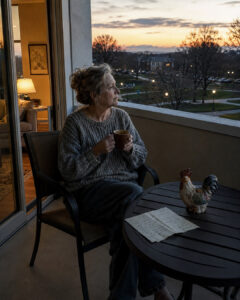
I walked into the living room and opened the balcony door. Cold November air entered the apartment. Below me, streetlights reflected on damp sidewalks, and the small park sat empty beneath bare trees.
I began to cry.
Not because I regretted leaving the house.
I cried because the apartment belonged entirely to the life I still had, rather than the life I had lost.
During the next several months, I felt lighter.
I joined a library book club. I walked through the park after breakfast. I bought a yellow chair I would never have chosen when Paul was alive because he disliked bright furniture.
I slept through the night.
That may sound like a small achievement, but it was not.
For years, I had gone to bed braced for the next request. A car problem. A tax problem. A childcare problem. A message from Claire that began with, “I hate to ask, but…”
In the apartment, the phone stopped feeling like an alarm.
Matt called occasionally.
I answered and spoke normally. I asked about the children. He talked about work, home repairs, and school schedules.
He never asked where I was living.
That detail bothered me more than I wanted to admit.
If he had come to my old house even once, he would have known I had moved. If he had asked one direct question, I might have told him.
Instead, he assumed my life remained exactly where he had left it.
Thanksgiving arrived.
Claire sent a text three days before the holiday.
Dinner at two. Hope you can make it.
No phone call. No conversation. Just an instruction dressed as an invitation.
I went.
I brought an apple pie from a bakery near my apartment. Claire talked through dinner about remodeling their upstairs bathroom. She passed tile samples around the table and mentioned rising labor costs several times.
Matt asked whether I still drove the same car.
I said yes.
No one asked where I had driven from.
I returned to my apartment after dark and sat in the yellow chair without turning on the television.
The distance between us had become something I could feel but not measure.
I retired in February.
My coworkers held a luncheon in the hospital administration building where I had worked for thirty-one years. They gave me a framed photograph, a watch, and a binder filled with messages.
Reliable appeared in nearly every note.
Ellen always showed up.
Ellen knew how to fix things.
Ellen never let anyone down.
I read those pages at home and wondered when reliability had become the only version of me that people recognized.
The morning after retirement, I slept until eight-thirty. I made eggs with too much butter and ate them on the balcony beneath a wool blanket.
The park was covered in frost.
I lifted my coffee toward the empty chair across from me.
“We did it, Paul,” I said.
For the first time in years, I believed the difficult part was over.
The first sign that Matt and Claire were searching for me arrived in April.
Matt called on a Tuesday evening.
“Are you still at the same place?”
The question sounded casual.
I looked through the balcony doors at the trees beginning to turn green.
“Yes.”
It was technically true. I was still living in the apartment where I had spent Christmas.
He did not ask for an address.
The call ended five minutes later.
Three weeks after that, Claire texted.
We’re thinking about coming to your side of town this weekend. Want to have lunch?
My side of town.
She did not name a restaurant or neighborhood. She wanted me to supply the missing location.
I replied that I already had plans.
She did not answer.
I told myself I was becoming suspicious. Families asked casual questions. Not every vague sentence concealed a purpose.
Then June arrived.
Joan had invited me to spend a week with her in Minnesota. We planned to drive along the North Shore, stop in small towns, and eat more pie than either of our doctors would recommend.
On the second morning of the trip, I sat at her kitchen table while she made coffee.
My phone buzzed.
The building’s resident app displayed a notification.
Entry recorded for Unit 412.
I stared at it.
My key fob was in my purse beside me.
No guest fobs were registered to my account.
Joan entered carrying two mugs.
She saw my face and set them down.
“What happened?”
“Someone entered my building.”
“Maintenance?”
“I didn’t request anything.”
I called the front desk.
A young attendant named Jordan answered. I had spoken to him several times when packages arrived.
“Could you check the entry log for my unit?”
Keyboard sounds clicked over the line.
“Yes, Ms. Mercer. A fob registered to Unit 412 was used at eleven-oh-four.”
“I have my fob with me.”
There was a pause.
“Is another resident registered to your account?”
“No.”
“I can review the lobby camera.”
“Please.”
He called back twelve minutes later.
“A man and woman entered with two children. They had grocery bags and what looks like a portable crib. They went directly to the elevators.”
I knew before he described them.
Still, I asked him to send the entry information to the building manager.
Then I opened the camera app connected to the small device inside my apartment.
I had installed it facing the front door because living alone had made me cautious. Most days, it recorded nothing more interesting than me carrying groceries.
I moved backward through the timeline.
At eleven-six, my apartment door opened.
Claire entered first.
She wore white pants and carried two shopping bags. Matt followed with their younger child in his arms. Their daughter walked behind him dragging a pink backpack.
Claire placed her bags on my kitchen counter.
She did not look around like someone entering an unfamiliar home.
She walked directly to the cabinet where I stored coffee. Matt carried the portable crib into my reading room without checking which doorway led there.
Their daughter opened the lower drawer containing napkins.
They knew the apartment.
They had been inside before.
I watched Claire remove my framed photograph of Paul from the end table and place it on the bookshelf to make room for the children’s things.
That small movement hurt more than the door opening.
She lifted his image by the top edge, glanced at it briefly, and relocated it as though rearranging a rental property.
I paused the footage.
Joan stood behind me with one hand against the back of my chair.
“How did they get in?”
“I don’t know.”
But a possibility had already formed.
Years earlier, after Paul died, Matt helped me set up online banking, email recovery, and several household accounts. He used an old laptop I later lent to his children for school games.
When I asked for it back, Claire told me it had stopped working and been recycled.
I had never questioned that.
Joan pulled out the chair beside me.
“Call the building manager.”
The manager, Denise Walsh, answered within minutes. She was calm and methodical, which was exactly what I needed.
“I’m looking at your account now,” she said. “There was a request for a second fob six weeks ago.”
“I did not request one.”
“The request came by email from the address on file.”
She sent me the message chain.
Someone using my email account had written that my adult son needed access to assist with groceries, appointments, and emergencies. The message claimed I had difficulty walking long distances and required family support.
My name appeared at the bottom.
The tone was convincing because it borrowed details from my life and altered them just enough.
I was sixty-three, not incapable.
I walked through the park every morning.
The second fob had been left at the front desk and collected five weeks earlier by a man who showed identification matching the name provided.
Matthew Mercer.
My son.
I changed my email password first.
Then the building account.
Then banking, healthcare, retirement, insurance, and every other account that used the same old recovery information.
Denise continued searching while I worked.
“There are five entries associated with the second fob,” she said when she called again.
Five.
Not one impulsive weekend.
Five separate visits.
The oldest occurred three days after the fob had been issued.
I returned to the camera archive.
On the first visit, Claire entered alone. She walked through every room, opened closets, photographed the balcony, and measured one wall using an application on her phone.
On the second, she brought Matt.
They sat at my kitchen island with papers spread between them. Claire pointed toward the reading room. Matt shook his head. They argued quietly enough that the camera did not capture every word.
One sentence was clear.
“She has two bedrooms and uses one for books.”
On the third visit, they brought boxes and stored them temporarily in my hall closet.
On the fourth, Matt entered alone and removed the boxes.
The fifth was happening while I sat at my sister’s kitchen table hundreds of miles away.
I did cry.
I want that understood.
I was not instantly strong. I did not become calm because the betrayal was obvious.
I cried at Joan’s table with cold coffee between my hands because my son had entered my home repeatedly and never once considered that the locked door meant no.
He had helped invent a story in which I was an aging mother who needed support so he could obtain a key.
He had allowed his wife to walk through my rooms, open my closets, and assess my space.
The boy who once ran into my kitchen holding a crayon drawing had grown into a man who treated my privacy as an inconvenience.
Joan sat beside me until I stopped.
Then she asked, “What do you need?”
That question was different from telling me what to do.
“I need someone who understands property law.”
She helped me find an attorney recommended by a former coworker. Her name was Rebecca Sloan.
Rebecca returned my call within an hour.
She listened without interrupting while I explained the duplicate fob, the email request, the footage, and the previous entries.
When I finished, she said, “Do not contact them yet.”
The firmness in her voice steadied me.
“What should I do?”
“Save every record in more than one place. Ask management to preserve access logs and video. Disable the second fob. Do not return home until management confirms the apartment is empty.”
“Should I tell Matt I know?”
“Not until the documentation is secured.”
She paused.
“Ellen, this is not a misunderstanding about family access. Someone represented themselves as you to obtain entry to your home.”
Hearing it stated plainly made me feel cold.
Rebecca advised me to create a formal incident record through the building and preserve every communication. She also asked whether Matt owed me money.
The question seemed unrelated.
“Twenty thousand dollars from their house purchase.”
“Was it documented?”
“Yes.”
“Send me the agreement.”
Paul had been right.
Document things.
I found the loan agreement in a digital folder created years earlier. Beneath it were emails from Matt acknowledging the debt.
We’ll repay you after refinancing.
We haven’t forgotten the house money.
Thanks for being patient.
Rebecca reviewed everything.
“The loan and the apartment are separate matters,” she said. “But both reveal a pattern of your property being treated as available without your active consent.”
I stayed in Minnesota for the rest of the week.
Joan and I still drove to the lake. The water was gray, and the wind pushed against our coats. We walked along a rocky path without talking much.
I felt hollowed out in a way I had not experienced since Paul died.
Grief after a death carries love inside it.
This grief carried recognition.
Matt was alive. He could call me. He could apologize. He could stand in front of me and explain.
But I could no longer pretend I did not know what he was capable of doing when he believed my boundaries were inconvenient.
Building management disabled the duplicate fob before my flight home.
A locksmith changed the physical lock to the apartment and replaced the mailbox cylinder. Denise added a verbal security phrase to my account and instructed the front desk not to issue keys or admit guests without direct confirmation.
When I returned, the apartment was empty.
Then I saw the letter on the kitchen counter.
Claire had written it before leaving, perhaps because someone at the front desk mentioned the owner received access alerts. Perhaps she believed a note would transform their actions into a family arrangement.
You weren’t using it.
I photographed the letter where it lay.
Then I placed it inside a clear document sleeve.
Only after sending the image to Rebecca did I call Matt.
He answered on the second ring.
“Mom. Hey, what’s up?”
His voice sounded normal.
That may have been the most unsettling part.
“I know you entered my apartment.”
Silence.
“I have the camera footage, the fob records, and the email request sent in my name.”
Another silence.
“Mom, listen—”
“I have retained an attorney.”
“An attorney?”
“Yes.”
“We just needed a place for the weekend.”
“You entered five times.”
His breathing changed.
“Claire was checking on it.”
“She measured my walls.”
“That sounds worse than it was.”
“She opened my closets.”
“We were helping.”
“I did not ask for help.”
“You weren’t using the place.”
The sentence matched Claire’s note exactly.
They had repeated it often enough to each other that it had become an argument they believed.
“It is my home,” I said.
“No one is saying it isn’t.”
“You obtained a second fob by sending a message under my name.”
“Claire handled the building stuff.”
“And you collected the fob.”
“She said you would be fine with it.”
“Did you believe I had authorized the request?”
He did not answer.
“Matt?”
“We knew you would make it complicated.”
That sentence finished something inside me.
Not because it was the worst thing he had said, but because it was honest.
They had not believed I would agree.
They had gone around me because my no had already been included in their plan.
“I will not discuss this further by phone,” I said. “Rebecca Sloan will contact you. Do not come to the building. Do not attempt to use any old account, email session, key, or access code connected to me.”
“Mom, you’re being ridiculous.”
“I’ll contact you when I’m ready.”
“You’re really going to turn this into a legal situation over a weekend?”
“You turned it into a legal situation when you used my name.”
I ended the call.
Claire sent a message four minutes later.
I did not read it.
I forwarded it unopened to Rebecca and blocked both numbers.
Then I sat in the yellow chair with a glass of water and looked out at the park.
I did not feel victorious.
I felt sad.
There is a heavy sadness that arrives when you finally stop pretending a relationship is better than it is. It is not dramatic. It does not make speeches. It simply takes away the explanations you have used to survive.
My son had not made one impulsive mistake.
There had been an old laptop, an email request, a duplicate fob, five entries, measurements, stored boxes, and a planned weekend.
That was not confusion.
It was a system.
Rebecca moved quickly.
She requested preservation of all building records and sent a formal notice requiring Matt and Claire to return any copies of my keys, account information, stored documents, and personal property.
The notice also required reimbursement for the locksmith, security changes, management charges, and attorney expenses.
Matt hired his own attorney.
For several weeks, communication happened through letters and carefully worded emails.
Claire insisted she believed Matt had authority to access the apartment as my closest family member. The building records contradicted that claim because the email request had been written in the first person under my name.
Matt admitted using the old laptop.
He said the email account was already open.
As though an unlocked drawer made its contents available.
Then Rebecca found something else.
During the second apartment visit, the camera had recorded Matt and Claire discussing a longer-term plan.
The audio was faint, but several sentences were clear.
Claire wanted to use my apartment on weekends because it was close to museums, restaurants, and a children’s theater. She also believed they should persuade me to transfer part of the sale profit into a family investment account.
“She’s retired,” Claire said on the recording. “She doesn’t need to sit on all of it.”
Matt’s answer was quieter.
“She’ll say she needs security.”
“She has a pension and the retirement account. How much security does one person need?”
I listened once.
Then I asked Rebecca not to play it again unless necessary.
The apartment had not been the goal.
It was proof of concept.
If they could enter my home, they could enter other decisions.
A mediation meeting was scheduled for September.
It took place in a quiet conference room with gray walls and a long table. Rebecca sat beside me. Matt and Claire sat across from us with their attorney.
I had not seen my son in four months.
He looked older.
Claire wore a navy dress and arranged her legal pad precisely before the meeting began. Her expression was composed, but she avoided looking directly at me.
Their attorney started by describing the matter as an unfortunate family breakdown.
Rebecca placed the duplicate-fob email on the table.
“No,” she said. “This is a documented access violation followed by a family breakdown.”
The room became still.
Claire’s attorney adjusted his glasses.
“We are not here to debate terminology.”
“Then we can discuss evidence.”
Rebecca opened the first folder.
The entry logs.
The second folder contained still photographs from the apartment camera.
The third held the original letter from my kitchen counter.
The fourth contained the loan agreement Matt signed eight years earlier and his later written acknowledgments.
Matt stared at the document.
“What does the house loan have to do with this?”
“It has to do with unresolved financial obligations between the parties,” Rebecca said. “Your mother refrained from enforcing repayment because she believed the relationship was based on trust. That trust no longer exists.”
Claire turned toward him.
“You told me that money was a gift.”
“It wasn’t exactly—”
“You said there was no paperwork.”
Matt looked at me.
“Mom.”
I said nothing.
For years, the word Mom had been enough to make me step forward and solve the problem in front of him.
This time, I waited.
Rebecca slid the signed page across the table.
“Mr. Mercer acknowledged this obligation repeatedly. We are requesting a structured repayment agreement as part of the broader resolution.”
Claire’s composure shifted.
“You’re asking us to repay twenty thousand dollars because we stayed at her apartment?”
“No,” I said.
It was the first time I had spoken.
“I’m asking you to repay money you borrowed because you taught me that my generosity was being mistaken for permission.”
Claire looked at me fully.
“We cleaned the apartment.”
“You entered without asking.”
“The children needed somewhere comfortable.”
“They have a home.”
“Our floors were being refinished.”
“You could have booked a hotel.”
“You have two bedrooms.”
“And neither belongs to you.”
Her mouth tightened.
“This is exactly the problem. You would rather leave a room empty than help your grandchildren.”
I felt the old guilt rise.
Then I looked at the letter in its clear sleeve.
You weren’t using it.
“My grandchildren are welcome in my life,” I said. “They are not a key you can use to enter my home.”
Matt lowered his eyes.
Claire’s attorney touched her arm, signaling her to stop speaking.
Rebecca continued through the proposed terms.
All unauthorized access devices would be surrendered and documented as destroyed.
Matt and Claire would confirm that no copies of my personal records remained in their possession.
They would reimburse the security and legal expenses.
The old loan would be repaid on a fixed schedule, with an option to satisfy it early through refinancing.
They would agree not to contact building staff, my bank, my retirement administrator, or any other institution on my behalf.
Any future contact with me would occur only through channels I approved.
Claire pushed her chair back slightly.
“This is excessive.”
Rebecca closed the folder.
“Then the matter can continue formally.”
Their attorney asked for a private discussion.
Matt and Claire left the room with him.
Through the glass wall, I could see them in the hallway. Claire spoke rapidly, pointing toward the conference room. Matt remained still with one hand in his pocket.
At one point, he looked through the glass at me.
I did not look away.
Ten minutes later, they returned.
Matt sat down without opening his notebook.
“We’ll agree,” he said.
Claire turned toward him.
“We have not finished discussing—”
“I said we’ll agree.”
His voice was quiet.
For the first time that day, he looked like Paul.
Not physically. Matt had my eyes and Claire often said he carried himself like neither parent.
But the stillness in him belonged to his father—the stillness of a man who finally understood a repair could no longer be postponed.
Claire removed her hand from the table.
The documents were revised and signed over the next two weeks.
When the first loan payment arrived, I stared at the bank notification and felt almost nothing.
The money did not repair the relationship.
It did not give me back the ease I once felt when Matt’s name appeared on my phone.
But it marked a change.
For the first time, he was carrying a consequence I had not lifted away.
I changed my estate plan that fall.
The decision was not made in anger.
I created education trusts for my grandchildren, administered independently so the money would support school, training, housing, and healthcare without passing through their parents.
Matt remained a beneficiary of a smaller personal account, but he would not control my home, retirement savings, or the funds intended for the children.
Rebecca asked whether I was certain.
“Yes.”
“Some clients reconsider after relationships improve.”
“If the relationship improves, we will have the relationship. The documents do not need to pretend for us.”
She nodded.
“That is a wise distinction.”
My sixty-fourth birthday arrived in March.
Joan flew in from Minnesota.
We had dinner at a small Italian restaurant near the park. The server brought a slice of lemon cake with one candle, and Joan sang quietly enough that only the next table heard.
Matt did not call.
At nine that evening, a message arrived from an unfamiliar number.
Happy birthday, Mom. I know you may not want to hear from me. I hope you had a good day.
I read it once.
Then I placed the phone face down.
Two weeks later, another unfamiliar number appeared.
I answered because I was expecting a call from the library.
“Mom?”
Matt’s voice stopped me beside the kitchen counter.
“Yes.”
“I’m sorry.”
He said it quickly, as though the words had been rehearsed.
“I hear you.”
“I mean it.”
“I hope you do.”
“I don’t know how to fix this.”
Neither did I.
But I had finally learned that not knowing how to fix something did not require me to fix it for everyone.
“I need time,” I said.
“It’s been almost a year.”
“That does not mean I’m finished needing it.”
“Claire thinks—”
“This is not Claire’s decision.”
He became quiet.
“I miss you.”
The words hurt.
“I miss who we were,” I said.
“Can we ever get back there?”
“No.”
His breath caught.
I softened my voice, not the truth.
“We might build something different. But we cannot return to a relationship where you believe love gives you access to whatever is mine.”
“I understand.”
“Do you?”
“I’m trying.”
That was the first answer he gave me that did not ask for immediate forgiveness.
I looked through the balcony doors.
A woman pushed a stroller along the path below. The trees were beginning to flower.
“I’ll reach out when I’m ready.”
“Okay.”
He paused.
“Mom?”
“Yes?”
“I should have asked where you lived.”
The sentence reached a place in me the legal documents never had.
“Yes,” I said. “You should have.”
After the call, I stood at the counter beside the ceramic rooster.
It had returned to its proper place after I found Claire’s letter. A tiny chip marked one wing where Paul dropped it while painting our first kitchen.
I ran one finger over the rough edge.
My son had apologized, but apology did not erase planning.
Time would reveal whether remorse became behavior.
I no longer believed words had to be accepted before they were tested.
Over the following months, Matt wrote letters.
Actual letters.
He mailed them through Rebecca at first because he knew I had not given him my address again, even though he obviously knew the building.
The first letter was mostly explanation.
He said Claire had found my building information through the old laptop. He admitted collecting the fob. He said he convinced himself that because I was family, the normal rules did not apply.
The second letter contained fewer explanations.
He wrote about his father.
He remembered Paul refusing to enter Matt’s bedroom without knocking, even when Matt was twelve and the door was only partly closed.
“Dad treated privacy like respect,” he wrote. “I forgot that respect still counts when the person is your mother.”
The third letter described the children.
I missed them terribly.
That was the cost no one included in the settlement.
Boundaries protected me, but they did not make me immune to longing. I missed my granddaughter’s questions and my grandson’s habit of lining up toy cars along the baseboard.
I cried after reading that letter.
Then I called Joan.
“Missing them does not mean you made the wrong decision,” she said.
“I know.”
“Do you?”
“Not every day.”
“That’s normal.”
Eventually, I agreed to meet Matt alone in a café.
No Claire.
No children.
No attorney.
He arrived early and chose a table beside the window. When I walked in, he stood but did not move toward me.
“Can I hug you?”
The question nearly undid me.
Not because I wanted the hug.
Because he had asked.
“Yes.”
He held me carefully.
Then we sat.
For the first twenty minutes, we discussed ordinary things. His work. My book club. The children’s school. The park outside my apartment.
He did not ask for my address, money, access, or forgiveness.
Finally, he placed an envelope on the table.
Inside was a printout showing the remaining balance on the old loan.
“We’re paying it off next month,” he said.
“How?”
“We sold Claire’s car and bought something less expensive. I took on an extra project. We refinanced part of the house.”
“You did not have to pay it early.”
“I know.”
I studied him.
“Why are you doing it?”
“Because every month the payment reminds me that you carried us while we treated your help like a permanent condition.”
His eyes filled, but he did not look away.
“I can’t change the apartment. I can stop leaving the old debt open.”
I placed the page back inside the envelope.
“That matters.”
He nodded.
We met again six weeks later.
Then once more.
I did not see Claire for nearly two years.
When we finally met, it was at a counselor’s office suggested by Matt. She entered wearing a gray coat and carrying nothing in her hands.
She looked tired.
“I’m not going to explain why I thought it was acceptable,” she said after we sat. “Every explanation sounds like I’m asking you to make it smaller.”
I waited.
“I was angry that you had sold the house without telling us,” she continued. “I believed family decisions included us, especially financial ones.”
“It was my house.”
“I know that now.”
“You knew it then.”
She closed her eyes briefly.
“Yes. I knew it legally. I did not accept it emotionally.”
That was more honest than I expected.
“You wanted the sale money,” I said.
“Yes.”
The counselor shifted slightly but did not interrupt.
Claire folded her hands.
“I believed it should help Matt and the children because eventually it would have become part of the family anyway.”
“Eventually meant after I was gone.”
Color rose in her face.
“Yes.”
The room remained quiet.
She continued.
“I treated your future as though it were just a waiting period before the assets moved to us.”
The words were painful.
They were also true.
“And the apartment?” I asked.
“I saw it as evidence that you had more than you needed.”
“Who decides what I need?”
“I thought I did.”
She looked at me.
“I am ashamed of that.”
I did not forgive her in that room.
Forgiveness was not a document to be signed once both sides had presented enough information.
But I heard her.
Over time, contact resumed carefully.
Matt brought the children to a public park first. My granddaughter ran toward me, then stopped several feet away because her father had told her to ask.
“Can I hug you, Grandma?”
“Yes.”
She crossed the distance.
My grandson showed me a drawing of a building with a yellow chair on the balcony.
“Dad says this is your home.”
“It is.”
“Can we visit someday?”
I looked at Matt.
He did not answer for me.
“Someday,” I said.
That someday arrived months later.
Before their first visit, I created a list of rules.
No keys.
No mail sent to my address.
No overnight stays.
No access without a direct invitation.
The children could play in the reading room, but the apartment remained my home rather than a family extension.
Matt read the list and said, “Understood.”
Claire read it without comment.
They arrived at two on a Sunday afternoon carrying a bakery box.
Matt pressed the intercom button from the lobby even though he knew I was expecting them.
I buzzed them in.
When they reached my door, they knocked.
That sound mattered.
I opened it.
My granddaughter noticed Paul’s photograph on the end table.
“That’s Grandpa.”
“Yes.”
My grandson ran toward the balcony, then stopped.
“Can I go outside?”
“Yes, but an adult goes with you.”
Claire followed him.
She did not open a cabinet.
She did not move a photograph.
She stood on the balcony with her hands resting on the railing, looking down at the park.
Before leaving, she placed the bakery box in the trash and wiped crumbs from the counter.
Then she looked at the ceramic rooster.
“I moved that,” she said.
“Yes.”
“I’m sorry.”
“I know.”
The visit lasted ninety minutes.
When the door closed behind them, the apartment felt quiet but not invaded.
That was the difference consent made.
It turned presence from an occupation into a visit.
The loan was paid in full the following spring.
Matt mailed the final confirmation with a handwritten note.
Dad was right about documenting things. You were right about enforcing them.
I placed the satisfied agreement in my file cabinet beside Paul’s papers.
I did not frame it or celebrate.
The money went into my retirement account and a portion into the grandchildren’s trusts.
The rest paid for a trip Joan and I had talked about for years.
We went to Maine in September.
I stood beside the ocean beneath a sky so clear it seemed newly made. Wind pulled at my coat, and Joan shouted something about lobster over the sound of the waves.
I laughed.
For most of my adult life, pleasure had required justification.
A vacation had to be affordable after everyone else’s needs.
A new chair had to replace something broken.
A dinner out had to mark an occasion.
That trip existed because I wanted to go.
Nothing more.
When I returned, there was no letter on my kitchen counter.
No moved photograph.
No child’s cup between the cushions.
Only the apartment as I had left it, afternoon light across the yellow chair and my coffee mug drying beside the sink.
I opened the balcony door.
The park below was turning gold with autumn.
I made coffee and sat outside beneath a blanket.
Joan called.
“How are you?” she asked.
“I’m on the balcony.”
She laughed because she understood.
Those words meant more than a location.
They meant I was safe.
They meant the door had remained closed until I opened it.
They meant my home did not become available because I traveled, retired, aged, or lived alone.
I had earned the money that purchased it.
I had chosen every piece of furniture inside it.
I had protected it when people I loved treated it as theirs.
These things sound like the minimum a person should expect.
At sixty-three, I learned the minimum can be difficult when you have spent a lifetime being praised for giving more.
There is still sadness in what happened.
My relationship with Matt will never return to its old shape.
Perhaps that is not a tragedy.
The old shape required me to remain useful, available, and quiet.
The relationship we are building now contains closed doors, direct questions, and answers that do not always please everyone.
It is less effortless.
It is more honest.
Paul used to say a good lock was not an insult to the people outside. It was simply an agreement that entry required permission.
I understand that now.
The hardest lock I ever changed was not the one on my apartment door.
It was the one inside me—the place where guilt had always opened the door before anyone knocked.
That lock works now.
The people who love me can still enter my life.
They simply have to ask.
And I get to decide when to open it.
I am still here.
Still on my balcony.
Still living on my own terms.
Still mine.
If you came here from Facebook because of this story, return to the Facebook post, tap Like, and comment exactly “Amazing” to support the storyteller. That small action means more than it seems and gives the writer genuine encouragement to keep sharing more stories about family pressure, firm boundaries, and finally protecting what you worked so hard to build.
Disclaimer: This story is a work of fiction created for entertainment purposes. Any resemblance to real persons, events, or places is coincidental.