“It’s very rustic, Martha.”
Chloe ran one manicured finger across the cherrywood cabinet and studied the faint mark it left behind, as though the entire kitchen had failed an inspection she had never been invited to conduct.
Morning light poured through the tall barn windows, warming the reclaimed oak floors and the old hand-hewn beams I had spent months restoring. My son, David, stood near the live-edge walnut island with both hands inside the pockets of his coat. He looked everywhere except at me.
I had imagined this moment for four years.
I had imagined surprise, gratitude, perhaps even tears.
Instead, Chloe tilted her head and asked, “Are the appliances supposed to be visible?”
I stared at her.
“They’re professional-grade appliances.”
“Yes, but in modern homes they’re usually integrated. Hidden behind panels.”
“It’s a converted dairy barn,” I said. “The design respects the original structure.”
David cleared his throat.
“Mom, it’s beautiful in its own way.”
In its own way.
Four years of drawings, permits, winter delays, contractor meetings, and checks written from my retirement savings had been reduced to a phrase people used for an unattractive sweater.
Leo stood near the floating staircase, running his small hand over the custom iron railing. At six years old, he was the only person in the room whose face reflected the wonder I had expected.
“Dad, look,” he called. “There’s a room all the way at the top.”
“I see it, buddy.”
“You said I could have bunk beds.”
Chloe turned sharply.
“We haven’t decided anything yet.”
Leo’s excitement dimmed, and he moved closer to the staircase.
I had designed the attic room for him. The ceiling followed the angle of the old roof, and a deep window seat looked over five acres of meadow toward the maple-covered ridge. I had already ordered two built-in beds, imagining cousins and school friends spending summer nights there.
Chloe walked into the great room and crossed her arms.
“The scale is impressive,” she said. “But it feels like a luxury cabin.”
“That was partly the idea.”
“We’re really more of a modern-minimalist family.”
David nodded too quickly.
“Clean lines. Less texture.”
I looked around at the beams Arthur and I had admired for thirty-five years, the limestone fireplace built from stone found along the north field, and the broad floorboards reclaimed from an old mill outside Albany.
Every material had a history.
To Chloe, history was texture that needed removing.
She moved toward the wall of windows.
“What if you sold it?”
The question landed so softly that I almost missed its meaning.
“Sold what?”
“This.” She gestured around the room. “The barn and some of the land.”
David looked at her, then at me.
“A developer might pay a lot for a private parcel out here.”
Chloe’s expression brightened.
“Exactly. You could give us the money for a down payment on a condo in the city. Something closer to David’s office, with better schools and amenities.”
Leo stopped touching the railing.
I heard the heating system click beneath the floor, followed by the small metallic sound of the vent opening near the kitchen.
David stepped toward the island.
“Mom, we appreciate what you were trying to do.”
“What I was trying to do?”
He winced slightly.
“You spent years on this. We know that. But it doesn’t make sense for us to move so far from the city if the design doesn’t fit our lifestyle.”
“You told me your apartment was too small.”
“It is.”
“You said Leo needed a yard.”
“He does.”
“You said the rent was becoming impossible.”
“It is,” Chloe replied. “That’s why selling this could solve everything.”
She had already moved past the gift and into the proceeds.
In her mind, the beams, acreage, and four years of my life had become available cash.
David glanced toward the windows.
“We don’t have to make any decisions today.”
There was relief in his voice. He had interpreted my silence as uncertainty rather than clarity.
Chloe smiled.
“I’ll send you a few condo listings. There’s a building near Riverside Park with a gym, a doorman, and a private children’s lounge. It’s exactly our style.”
I looked at my son.
Eleven years earlier, when he married Chloe, I told myself her sharpness came from confidence. When she corrected how I set a table, criticized the farmhouse bathroom, or described my furniture as dated, I excused it as difference in taste.
David had once defended me.
Not dramatically, but enough.
“Mom’s house is comfortable,” he would say.
“She likes things with history.”
“She worked hard for this place.”
At some point, his defenses became shorter.
Then they disappeared.
Standing in the barn, I realized he had not merely stopped defending me. He had begun translating my life into Chloe’s language before I spoke.
Farmhouse became outdated.
Generosity became expected.
Land became equity.
I offered them lunch at the main house.
Chloe pressed two fingers against her temple.
“I think the farm smell is giving me a headache.”
The barn smelled of cedar, beeswax, fresh paint, and the coffee I had brewed that morning.
David looked embarrassed, though not enough to correct her.
“We should probably get Leo back before traffic.”
They stayed less than an hour.
Leo hugged me beside the gravel drive.
“Can I sleep in the top room sometime?”
I looked over his head at David.
My son studied the keys in his hand.
“We’ll see,” he said.
I knelt and hugged Leo more tightly.
“You’ll always have a place with me.”
Chloe called from the leased SUV.
“Leo, come on.”
He ran toward the car.
David opened the driver’s door, then paused.
“Think about the condo idea, Mom. It could be good for everyone.”
Everyone.
The SUV disappeared down the long drive, leaving pale dust above the gravel.
I stood between the farmhouse and the barn until the air cleared.
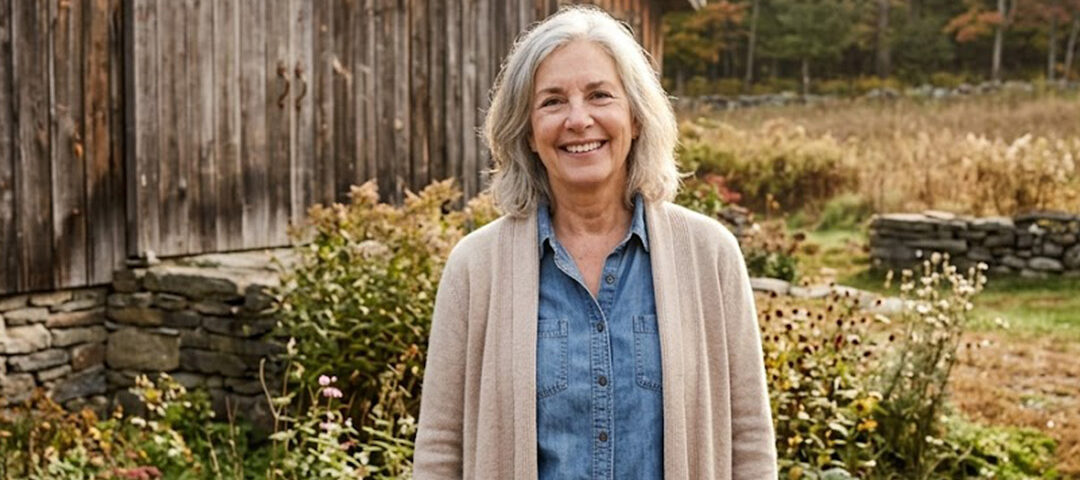
My name is Martha Ellison. I was sixty-four years old that autumn, a retired interior designer and a widow of seven years.
Arthur and I bought the farmhouse in upstate New York when we were twenty-nine. The listing described it as a property with character, which was a polite way of saying the roof leaked, the plumbing complained, and the kitchen had not been updated since the Eisenhower administration.
We loved it immediately.
Arthur taught high school science. I worked for a small design firm in Albany before opening my own practice. We spent weekends repairing whatever the previous week had revealed.
He handled structure.
I handled beauty.
That was how we described it, though the line was never strict. Arthur chose paint colors badly but enthusiastically. I understood load-bearing walls well enough to prevent clients from making expensive mistakes.
David grew up beneath those imperfect ceilings.
He learned to ride a bicycle along the gravel lane. He built forts behind the barn and once tried to keep three frogs inside his bedroom dresser. Arthur coached his Little League team despite knowing almost nothing about baseball.
We were not wealthy.
We were steady.
When David attended college in Boston, Arthur and I refinanced a small portion of the property to reduce his loans. We did not tell him until graduation because we wanted the day to feel like an achievement rather than a debt.
He found work in marketing, moved to Manhattan, and met Chloe at a corporate event.
She was polished, ambitious, and always seemed to know what kind of wine a restaurant expected people to order. Her parents lived in Connecticut and belonged to a country club where the dining room required jackets after six.
The first time Chloe visited the farmhouse, she looked at the wide-plank floors and said, “People pay a fortune to make new houses look this old.”
I chose to hear admiration.
Arthur heard the rest.
After she and David left, he stood beside the kitchen sink drying a plate.
“She looks at places like price tags,” he said.
“She works in luxury branding.”
“That’s what I mean.”
“You don’t like her.”
“I don’t know her.”
“You’ve known her a year.”
“I know how she evaluates a room. I don’t know how she cares for a person.”
Arthur was rarely suspicious of people. His caution made me defensive.
“She loves David.”
“I hope so.”
“And he loves her.”
“I know.”
He placed the plate in the cabinet.
“That doesn’t mean she understands what love costs.”
Arthur died five years later after a sudden illness that gave us enough time to know we were losing him but not enough time to believe it.
After the funeral, the farmhouse became unbearable.
Silence occupied every room differently.
In the kitchen, it sat in Arthur’s empty chair.
In the bedroom, it stretched across the unused side of the bed.
In the mudroom, it lived inside his work boots because I could not bring myself to move them.
David called every few days at first.
Then every week.
Then mostly when I sent a message before he remembered.
I did not blame him. Grief makes young families uncomfortable. They want to help, but they also want the loss contained so it does not enter their own house.
Leo was born the following year.
Holding my grandson gave me something to imagine beyond survival.
David and Chloe lived in a two-bedroom apartment where the second bedroom doubled as David’s office. They complained constantly about the rent.
“There’s nowhere for Leo to play,” David said during one visit.
“Every park is crowded,” Chloe added.
“We need three bedrooms, but anything decent costs more than our current lease.”
They had dinner with me at the farmhouse that night. Leo crawled across the living-room rug while David stood near the window looking toward the old barn.
“What if we moved closer someday?” he asked.
Chloe laughed.
“To the middle of nowhere?”
“Not here exactly. Somewhere with space.”
I looked toward the barn.
The structure stood on the back five acres, separated from the farmhouse by a stone wall and a line of sugar maples. It had not held dairy cattle since before we bought the property.
Arthur kept tools there. David once used the loft as a clubhouse.
The foundation remained solid. The roof needed replacement, but the heavy timber frame had survived a century of winters.
That night, after they left, I walked to the barn with a flashlight.
Dust floated inside the beam. Old hooks hung from the rafters. A broken ladder leaned against the hayloft.
I could see it.
A great room beneath the beams.
A kitchen facing the meadow.
Bedrooms where stalls had been.
An attic room for Leo.
I had spent my career transforming neglected spaces into homes for other people. Perhaps this would transform the silence for me.
I told David about the idea two weeks later.
His face changed immediately.
“You’d really do that?”
“I’m considering it.”
“Mom, that would be incredible.”
Chloe became more cautious.
“How far is the commute?”
“About ninety minutes to David’s office, less if he works remotely.”
“He only goes in three days a week,” David said.
“We could keep a small place in the city if necessary.”
They discussed schools, gardens, and weekend dinners around my kitchen table.
Chloe wanted a large closet.
David wanted an office.
Leo, still too young to understand, wanted a red bedroom.
I drew the first plans that winter.
I designed a separate driveway so they would have privacy. The barn and five acres could eventually be subdivided, though I did not transfer anything then. Arthur had left the property to me, and my attorney advised keeping title simple until the project was complete.
I paid for an engineering inspection.
I hired a local architect to review my plans and a contractor named Miguel Santos to oversee structural work.
“What’s the budget?” Miguel asked.
I named a number.
He looked toward the barn.
“You can make it livable for that.”
“I don’t want livable.”
“What do you want?”
“Something that lasts.”
The project became my new calendar.
Framing in spring.
Roofing in summer.
Plumbing before winter.
Every morning at seven, I walked to the barn carrying a thermos and a binder. I reviewed invoices, measured openings, and argued over details with people half my age.
I selected reclaimed oak floors because they could survive children, dogs, and generations of muddy shoes.
I found cherrywood from a family-run mill for the cabinets.
At a salvage yard, I discovered a slab of black walnut twelve feet long. The owner told me it had come from a tree removed near Cooperstown after a storm.
I bought it for the kitchen island.
Arthur would have loved it.
Whenever I doubted the expense, I pictured Leo sitting there doing homework while David cooked dinner.
The work took longer than expected.
The county required additional drainage plans.
A February freeze delayed the septic system.
A supplier delivered the wrong windows.
The original beams needed specialized treatment before electrical work could begin.
Each problem cost time and money.
I continued.
David visited occasionally during the first year.
He walked through the framed rooms and photographed the progress.
“This will be better than anything we could afford,” he said.
Chloe visited once and asked whether we could replace the exposed beams with white panels.
“No,” I told her.
She frowned.
“They make it feel dark.”
“They are the structure.”
“Couldn’t they be painted?”
“They’re chestnut timbers cut more than a century ago.”
“That wasn’t really my question.”
I laughed because I assumed she was teasing.
She was not.
During the second year, David became busier.
He changed companies and traveled more. Chloe returned to work after taking time with Leo. Their visits grew less frequent.
When I sent photographs, David responded with thumbs-up symbols.
Chloe sometimes sent inspiration images of white apartments with glossy cabinets and stone floors.
I explained gently that the barn would not become a city penthouse.
She stopped sending images.
I should have asked whether their dream had changed.
Instead, I assumed the finished space would convince them.
That assumption cost me more than money.
It allowed me to build an entire future without checking whether the people inside it still wanted the same life.
By the fourth year, the project had consumed a large portion of my savings.
I could afford it.
Arthur and I had lived carefully. My design practice had done well. His retirement benefits and life insurance left me secure.
Still, every check represented a choice.
I postponed replacing my own kitchen counters.
I drove my ten-year-old car.
I declined an expensive river cruise with friends because the stair rail payment was due.
No one asked me to make those choices.
That was important to admit later.
Sacrifice becomes dangerous when we turn voluntary giving into a debt someone else never agreed to repay.
I had chosen the barn.
But David had encouraged the dream until encouraging it cost him honesty.
The morning they came to see the finished house, I placed a brass key inside a small wooden box Arthur had made.
I planned to give it to David after lunch.
The box remained inside my coat pocket while Chloe criticized the appliances.
After they left, I carried it back to the barn.
I sat on a leather stool beside the walnut island and placed the unopened box in front of me.
Afternoon sun stretched across the oak floor.
I thought about permits, invoices, and weather delays.
Then I thought about David standing beside his wife while she suggested selling my land to fund their condo.
He had not looked at the beams.
He had looked at the potential sale price.
I felt no sudden rage.
Only grief.
Not for the house.
For the boy I had imagined would receive it.
Arthur used to say, “When people show you who they are, don’t redesign the evidence.”
It was a joke about my work. Clients often showed me a room’s limitations, and I tried to solve them with layout, light, or fabric.
People were not rooms.
Some things could not be improved through better placement.
I locked the barn and returned to the farmhouse.
I brewed tea.
At the kitchen table, I removed the brass key from the wooden box and placed it beside my phone.
Then I called Beverly Hart.
Beverly and I had worked together on luxury properties for nearly twenty years. She had a talent for looking at land and understanding the buyer before the seller understood the value.
“Martha,” she said. “How is the barn?”
“Finished.”
“I’ve been waiting for photographs.”
“I want you to see it in person.”
“Are we celebrating?”
“I’m thinking of selling.”
The silence on her end lasted several seconds.
“I thought it was for David.”
“So did I.”
She did not ask for details.
“When?”
“Tuesday.”
“I’ll be there at nine.”
That evening, David sent three condo listings.
The first showed a glass tower near the river.
Mom, look at the kitchen. This is more our style.
The second had a private gym and rooftop lounge.
If you sold the barn parcel, this could actually work.
The third cost more than I had spent on the entire conversion.
Chloe loves this one. We should move quickly before someone else takes it.
I read the messages and placed the phone facedown.
For the first time in years, I slept without mentally reviewing the next day’s construction list.
Beverly arrived Tuesday wearing a red wool coat and carrying a leather notebook.
She stopped inside the barn entrance.
For once, the silence felt right.
She walked slowly through the great room, touching nothing at first. Her eyes moved from the iron staircase to the fireplace, then toward the kitchen.
“Martha.”
“I know the refrigerator isn’t hidden.”
She looked at me.
“What?”
“Never mind.”
Beverly ran one hand along the walnut island.
“You didn’t renovate a barn.”
“I hired excellent contractors.”
“You created a residence people will remember.”
She inspected the master suite, the radiant heating, the mudroom, the smart climate controls, and the attic bedroom.
When she reached the window seat, she sat and looked over the meadow.
“A family from Manhattan would pay for this view alone.”
We returned to the kitchen.
Beverly opened her notebook.
“The market for private retreats is strong. Executives want space they can reach from the city in a few hours. Boutique hospitality groups are buying unique properties.”
“What would you list it for?”
She named a figure.
“One point four million.”
I felt the number enter the room.
The full project had cost me less than half that amount, even including the land allocation.
“Are you certain?”
“I might be conservative.”
I looked toward the beams.
“Can we separate the barn and five acres from the farmhouse parcel?”
“Yes. You already have separate access and utility capacity. We’ll need a survey, subdivision approval, and updated title documents.”
“How long?”
“If everyone moves quickly, several weeks.”
“Start today.”
Beverly closed her notebook.
“Are you sure?”
“Yes.”
“This was not just money to you.”
“No.”
“Then take one night.”
“I’ve had four years.”
“That isn’t what I mean.”
I looked at the brass key on the island.
“My heart is not inside the barn, Beverly. My work is.”
She studied me, then nodded.
“I’ll call the surveyor.”
The next several weeks moved with professional clarity.
The surveyor marked the five-acre boundary with orange flags.
My attorney reviewed the original deed.
The county approved the division because the barn already met residential standards.
I signed forms, paid filing fees, and created a separate parcel.
My name remained the only name on every document.
I boxed the few personal items I had staged inside.
Vintage quilts.
Family photographs.
A wooden rocking horse for Leo.
The rocking horse was the hardest.
Arthur had built a similar one for David when he was four. I found this one at an estate sale and refinished it in the farmhouse workshop.
I carried it back to my living room.
Selling the barn was not a trap for David.
I had not built the house planning to test him.
He had rejected it.
I simply stopped preserving the opportunity for him to reconsider after he had already treated my property like his future cash.
Beverly scheduled photographs on a Thursday morning.
The images captured everything Chloe had dismissed: amber floors, textured beams, warm light, and the contrast between old structure and modern comfort.
The listing went live Friday afternoon.
By Saturday, the driveway filled with expensive cars.
I watched from the farmhouse porch as buyers toured the property.
A couple from Brooklyn stood beneath the maples for twenty minutes.
A retired physician photographed the kitchen.
A woman in a camel coat cried when she saw the attic window because it reminded her of her grandmother’s house.
No one called it too rustic.
On Wednesday, Beverly called.
“We have three offers.”
I carried my coffee to the porch.
“Tell me.”
“Two are slightly below asking. The third is full price, cash, thirty-day closing.”
“Who?”
“Hartwell Retreats. They operate small executive properties for private company gatherings and creative residencies.”
“They want to use it commercially?”
“Quietly. No large events. Limited guests. They would keep the architecture exactly as it is.”
I looked across the field.
“What about the furniture?”
“They want the island, built-ins, dining table, and most staged pieces.”
“The island isn’t furniture.”
“You know what I mean.”
I smiled.
“Accept the offer.”
“Martha.”
“Yes?”
“You sound relieved.”
“I am.”
While the sale moved toward closing, David continued sending condo links.
One message arrived while I signed the subdivision filing.
Did you talk to a developer yet?
Another appeared after the inspection.
Chloe found a unit with three bedrooms. We need to know what budget we’re working with.
I did not respond.
Explaining my decision before closing would only invite negotiation.
They had no legal claim.
I did not owe them an opportunity to approve what I did with my land.
Still, silence carried an emotional cost.
Every evening, I wondered whether I should call David and tell him.
Then I remembered the wooden key box waiting unopened in my desk.
He had never asked whether there was a key.
He asked about sale proceeds.
The closing took place on a rainy Thursday morning at a title office downtown.
Hartwell’s representative was a woman named Nina Patel. She had toured the property twice and knew the history of every reclaimed beam.
“We plan to call it Ellison Barn Retreat,” she said.
“You don’t have to use my name.”
“We would like to honor the design.”
I signed my name twelve times.
Nina handed me a cashier’s confirmation while the wire was processed.
I gave her the heavy iron keys.
The brass key I had intended for David remained with me.
By noon, 1.4 million dollars had entered my account.
I did not feel triumphant.
I felt finished.
I drove directly to the bank and met Greg Lawson, the adviser who had managed Arthur’s retirement accounts.
He raised his eyebrows at the deposit.
“That is significant.”
“It is.”
“What are your goals?”
“Security. Independence. And a trust for Leo.”
Greg reviewed conservative options.
I kept enough in a high-yield account to cover my living expenses comfortably for the rest of my life. A large portion went into diversified funds designed for stability rather than excitement.
Then we created an irrevocable trust for my grandson.
Leo could use the money for education or the purchase of his first home after reaching the required age. Neither David nor Chloe would control distributions.
A professional trustee would administer everything.
“How much authority do you want the parents to have?” Greg asked.
“None.”
He looked up.
“That is clear.”
“It needs to be.”
I loved my son.
I no longer trusted him with money connected to his child.
Those truths could exist together.
After the meeting, I returned to the farmhouse.
Delivery trucks moved furniture toward the barn. Hartwell employees carried rolled rugs and framed art through the double doors.
I watched from the kitchen window.
The barn looked alive.
Not in the way I had imagined, but alive nonetheless.
That evening, I opened the family cell-phone account.
David and Chloe had remained on my plan for five years. I originally added them when Leo was born and money was tight.
Their finances improved.
The arrangement never ended.
I scheduled both lines to leave my account at the end of the billing cycle, giving them time to transfer their numbers.
Then I canceled the automatic payment for their car insurance. I sent formal notice through the insurance portal so they could establish their own policy without interruption.
I did not cut off service suddenly.
Boundaries did not require chaos.
They required clarity.
For six weeks, no one discovered the sale.
Then my phone rang at eight one morning.
David.
I let it ring.
He called again.
On the fourth attempt, I answered.
“Hello, David.”
“Did you sell the barn?”
His voice was louder than usual.
“Yes.”
“A guy from my office was looking for weekend rentals. He showed me the listing. It says Hartwell owns it.”
“They do.”
“How much?”
“Why?”
“Mom.”
“One point four million.”
Silence.
Chloe’s voice sounded in the background.
“What did she say?”
David covered the phone, but I still heard their hurried conversation.
Then he returned.
“How could you do that?”
“I signed a contract.”
“You know what I mean. We were going to use that money for a condo.”
“No, you planned to use my money for a condo.”
“You built the barn for us.”
“I did.”
“Then it was ours.”
“No.”
“You said it was a surprise.”
“I intended to offer you a home.”
“That’s the same thing.”
“It is not.”
He breathed heavily.
“Dad left that property to the family.”
“Arthur left the entire property to me.”
“I’m his son.”
“You are.”
“So I have a claim.”
“You do not.”
“Chloe already spoke to agents. We made plans.”
“You made plans for money you did not own.”
His voice sharpened.
“We’ll talk to a lawyer.”
“You’re free to do that.”
“We can challenge the sale.”
“My attorney reviewed the deed, subdivision, and sale. My name was the only name on the property.”
“You had no right to make this decision without us.”
I leaned against the kitchen counter.
“Listen carefully, David. I am alive. My assets belong to me. Your father did not leave you the right to control my property while I am living.”
“This is unbelievable.”
“No. It is simply unfamiliar.”
“What does that mean?”
“It means you are used to my generosity and have confused it with obligation.”
He became quiet.
Then he said the sentence that removed the last softness from the conversation.
“You stole our future.”
I looked through the window at Arthur’s roses.
“I sold my property.”
Before he could answer, I continued.
“Do not threaten me again. If you spend money asking an attorney to confirm the deed, that is your choice.”
I ended the call.
My hands did not shake.
Two hours later, Chloe’s messages began.
I cannot believe you did this to your family.
Leo needs his own room.
David is devastated.
You manipulated us into criticizing the house so you could sell it.
Wire us half the money by Friday or you will not see your grandson again.
I read the final sentence twice.
For years, the possibility of losing access to Leo had kept me agreeable.
I paid for vacations.
I covered insurance.
I accepted last-minute changes.
I tolerated Chloe’s criticism because I feared any resistance could become distance from my grandson.
Her threat named the arrangement clearly.
Love in exchange for compliance.
I typed one message.
Your phone service will transfer off my plan at the end of the billing cycle. The car insurance payment will also end. Please establish your own arrangements. Kiss Leo for me.
Then I blocked her number.
I blocked David’s number for thirty days.
Not forever.
Long enough for the storm to stop entering my kitchen.
I put on gardening gloves and spent the afternoon pruning Arthur’s rosebushes.
Autumn air moved through the yard. Across the field, Hartwell employees arranged chairs on the barn terrace.
For the first time in years, I did not feel my son’s expectations resting on my shoulders.
I was not a funding source.
I was not an inheritance waiting to happen.
I was Martha.
That had to become enough for me before it could become enough for anyone else.
The transition into winter was quiet.
Hartwell treated the property respectfully. Their guests arrived in small groups, mostly executives, writers, and nonprofit leaders attending retreats.
They did not cross the property line.
Occasionally, someone waved from the gravel lane.
Nina sent me a photograph after the first snowfall. Warm light filled the great room. The walnut island stood beneath pendant lights. Every chair was occupied.
The house was being appreciated.
That mattered more than I expected.
No lawyer contacted me.
David’s threatened claim disappeared, likely after someone explained the deed.
At Christmas, a handwritten card arrived.
Mom,
Things have been hard since the phone and insurance changed. Chloe and I have been arguing. I wish you had talked to us before selling. I would like to find a way forward.
David
There was no apology.
No acknowledgment of Chloe’s threat.
No recognition that they had rejected a home and claimed its cash value instead.
The card was not accountability.
It was an attempt to reopen access.
I placed it in a drawer.
I did not close the door forever.
But respect had become the cost of entering my life, and David had not yet offered it.
That winter, I reviewed Leo’s trust statement every month.
The account grew modestly.
I imagined him at twenty-five receiving help with college debt or a first home.
Not a luxury condo chosen by his parents.
A foundation for his own adult life.
The trust allowed me to protect my grandson without feeding the entitlement surrounding him.
In February, my attorney received a letter from David requesting information about Arthur’s estate.
We provided the will and property records.
The response from his attorney arrived one week later.
No claim would be pursued.
The letter used formal language, but its meaning was simple.
David had been wrong.
Spring returned gradually.
Snow melted along the stone wall. Daffodils appeared beside the farmhouse steps. Hartwell planted native grasses near the barn entrance and repaired part of the old fence without asking me to share the cost.
Nearly eight months after the sale, David arrived unannounced.
I was reading on the front porch when a modest gray sedan turned into the driveway.
The leased SUV was gone.
David stepped out wearing jeans and a brown jacket. He looked thinner.
He stopped at the bottom of the porch steps.
“Hi, Mom.”
“Hello, David.”
I did not stand.
He looked toward the barn.
Several Hartwell guests crossed the lawn carrying yoga mats.
“They seem busy.”
“They are.”
“You were right about the design.”
I closed my book.
“What changed?”
“Nothing. I saw photographs online.”
“You could have looked when you were inside it.”
His face tightened, but he nodded.
“That’s fair.”
He placed both hands inside his pockets.
“Chloe and I moved.”
“Where?”
“Farther outside the city. Smaller place.”
“That sounds financially responsible.”
He looked at me, perhaps waiting for the old Martha to offer help.
I remained silent.
“I miss you,” he said.
The words were quiet.
I studied him.
“I miss the boy I raised.”
His eyes lowered.
“That’s difficult to hear.”
“It was difficult to recognize.”
He nodded again.
For once, he did not defend himself.
“I handled everything badly.”
“That is true.”
“I should have thanked you.”
“Yes.”
“I should not have asked you to sell.”
“No.”
“I thought because you built it for us, the value belonged to us either way.”
“That belief was the problem.”
He looked toward the porch floor.
“Chloe still thinks you planned to teach us a lesson.”
“I planned to give you a house.”
“I know.”
“You rejected it.”
“I know.”
“Then you tried to claim the proceeds.”
His voice weakened.
“I know.”
Each admission sounded painful, but he made them without demanding comfort.
That was new.
“What about Leo?” I asked.
“He misses you.”
“I miss him.”
“Chloe should never have threatened to keep him from you.”
“No.”
“I didn’t tell her to send that.”
“Did you correct her?”
“Not immediately.”
“Then you benefited from the threat.”
He closed his eyes.
“Yes.”
We sat with that truth.
The barn lights came on across the field as clouds moved over the sun.
“I came to ask if I could bring Leo next weekend,” David said. “Just for an hour.”
“Will Chloe come?”
“No.”
“Does she know?”
“Yes.”
“Did she agree?”
“She isn’t happy, but yes.”
I watched my son carefully.
“Bring him Sunday at two.”
Relief entered his face.
“Thank you.”
“This is not everything returning to normal.”
“I understand.”
“No financial requests.”
“I understand.”
“No discussion of the sale with Leo.”
“Of course.”
“And if Chloe uses contact with him as leverage again, the visit ends.”
David swallowed.
“I understand.”
He turned toward the car, then stopped.
“Mom?”
“Yes?”
“Was there really a key for us?”
The question surprised me.
I thought of the wooden box inside my desk.
“Yes.”
His face changed.
“What happened to it?”
“I kept it.”
He nodded slowly.
“I wish I had been the person you built that place for.”
“So do I.”
He drove away.
The following Sunday, Leo ran from the gray sedan before David had fully turned off the engine.
“Grandma!”
I stepped from the porch and opened my arms.
He had grown taller. His front teeth had changed. His hair needed cutting.
He hugged me tightly enough to make my chest ache.
“Dad said we can stay an hour.”
“We can do a lot in an hour.”
He looked across the field.
“Is that the barn house?”
“It is.”
“Can we go inside?”
“Not today. Other people are staying there.”
“Did you build it?”
“Yes.”
“For me?”
The question was simple.
I looked at David.
He stood near the car with his hands in his jacket pockets.
“I designed a room I thought you might like,” I said.
“Dad showed me pictures. It had a window seat.”
“Yes.”
Leo considered this.
“Do you still have the rocking horse?”
I stared at him.
“How do you know about that?”
“Dad told me.”
“I have it in the living room.”
We went inside.
Leo climbed onto the rocking horse, though he was almost too large. He laughed as it moved across the rug.
David stood in the doorway.
His eyes filled.
I did not pretend not to notice.
We ate cookies at the kitchen table. Leo told me about school, soccer, and a classmate who could draw every state from memory.
No one discussed money.
No one asked for anything.
When the hour ended, David stood.
“We should go.”
Leo hugged me again.
“Can I come back?”
“Yes.”
“Next week?”
“We’ll plan it.”
He looked toward his father.
David nodded.
On the porch, my son handed me a folded paper.
“What is this?”
“Our new insurance statement.”
I raised an eyebrow.
“I wanted you to know we handled it.”
“You didn’t need to show me.”
“I know.”
That was the point.
He was not asking for approval or money.
He was showing me that he had begun carrying his own life.
Over the next year, the visits continued.
At first, David came with Leo and remained for one hour.
Then two.
Eventually, we shared lunch.
Chloe did not come.
She sent one letter through David.
It was longer than his Christmas card and far less polished than her earlier messages.
Martha,
I treated your work as an asset available to us rather than a gift you had the right to offer or withdraw. I also threatened your relationship with Leo because I believed it would force you to give us money. That was wrong.
I am not asking you to forgive me immediately. I am working on understanding why I believed your generosity belonged to us.
Chloe
I read the letter twice.
It did not erase the threat.
But it named it.
I allowed Chloe to join one visit three months later.
She arrived wearing flat shoes.
The detail almost made me smile.
We sat on the porch while Leo searched for frogs near the stone wall.
Chloe looked toward the barn.
“It is beautiful.”
“It always was.”
“Yes.”
She folded her hands.
“I couldn’t see it because it wasn’t what I had imagined.”
“That happens.”
“I also thought anything David might inherit someday was already part of our plan.”
I looked at her.
“That is a dangerous way to live.”
“I know.”
“Do you?”
She met my eyes.
“We had built a lifestyle around future help—your property, your insurance payments, the possibility that you would keep covering things. When you stopped, I felt as though you had taken something from us.”
“I stopped giving.”
“Yes.”
“Those are different.”
“I understand that now.”
I believed she was beginning to.
Trust did not return that afternoon.
But the conversation ended without blame, and that was more than I expected.
I never told David or Chloe the amount inside Leo’s trust.
They knew one existed. They knew it was professionally managed and unavailable to them.
That was enough.
Hartwell’s retreat business flourished.
They restored the old stone wall, planted an orchard, and asked whether they could name the attic reading room after Arthur.
I agreed.
A small brass plaque beside the doorway read:
The Arthur Ellison Room
For those who understand that every strong structure begins with care.
Nina invited me to the dedication.
David and Leo attended.
Chloe came too.
We stood beneath the beams while guests admired the craftsmanship.
No one mentioned the condo.
No one complained about visible appliances.
Leo sat in the window seat I designed and read the plaque aloud.
“Grandpa Arthur would like this,” he said.
“Yes,” I replied. “He would.”
Afterward, David stood beside the walnut island.
“I remember the day you showed us this.”
“So do I.”
“I keep wishing I could redo it.”
“You can’t.”
“I know.”
“But you can decide what you do with the memory.”
He placed one hand on the edge of the island.
“I want to remember it as the day you finally stopped letting me take you for granted.”
“That would make it a useful memory.”
He gave a sad smile.
“You always were good at making things useful.”
“No. I was good at making things beautiful.”
He looked around the room.
“You still are.”
Years earlier, that compliment would have meant everything to me because it came from my son.
Now it meant something, but not everything.
That was healthier.
I no longer measured my worth by David’s ability to recognize it.
The proceeds from the sale remained invested. Leo’s trust grew. I replaced my farmhouse kitchen counters and repaired the porch.
I traveled with Beverly to Vermont in the fall and later took the river cruise I once postponed.
On the cruise, I met three women my age who had spent decades managing families that mistook their reliability for endless availability.
We laughed more than we complained.
Freedom becomes easier when spoken aloud among people who recognize it.
David and Chloe remained in their smaller suburban apartment for several years. David stopped leasing luxury vehicles. Chloe changed positions and began working closer to home.
Their marriage did not become perfect.
No marriage does.
But they stopped treating financial strain as someone else’s responsibility.
When Leo turned ten, he spent his first full weekend alone with me.
We made pancakes, walked the field, and watched the sunset from the porch.
The barn glowed across the meadow.
“Do you wish you still owned it?” he asked.
“Sometimes.”
“Why did you sell it?”
I thought carefully.
“Because I built it for one purpose, and life gave it another.”
“Were you mad at Dad?”
“I was hurt.”
“Is that different?”
“Yes.”
“How?”
“Anger wants to do something immediately. Hurt sometimes needs time to understand what happened.”
He leaned against the porch railing.
“Dad says he was selfish.”
“He made selfish choices.”
“Are you still mad?”
“No.”
“Do you trust him?”
“More than I did. Less than I once did.”
Leo considered that with the seriousness children bring to adult answers.
“Can trust grow back?”
“Yes.”
“Like a tree?”
“More like a staircase. One careful step at a time.”
He nodded.
“Dad is trying.”
“I know.”
That evening, after Leo fell asleep in the guest room, I opened the desk drawer and removed the wooden box.
The brass key still rested inside.
It no longer opened the barn. Hartwell had replaced the locks during the commercial transition.
The key had become symbolic only.
I thought about giving it to David.
Then I changed my mind.
I placed it inside a new envelope and wrote Leo’s name on the front.
Not because the barn would belong to him.
Because someday he might need to understand that love can build something without requiring the recipient to own it.
Years passed.
The relationship with David became quieter and more honest.
He called without asking for money.
I learned to answer without bracing for a request.
Chloe attended holidays and sometimes helped clear plates without commenting on the farmhouse kitchen.
Leo grew taller than both of us.
When he turned eighteen, I told him about the trust.
He stared at me.
“You did that after selling the barn?”
“Yes.”
“Do Mom and Dad control it?”
“No.”
He looked relieved, then guilty for looking relieved.
“I love them,” he said.
“So do I.”
“But they’re not always good with money.”
“That is why the trust has rules.”
“What am I supposed to do with it?”
“Use it to build something that supports your life rather than impresses other people.”
He nodded.
“Did Grandpa Arthur say that?”
“No. I learned it the difficult way.”
On his twenty-fifth birthday, Leo used part of the trust as a down payment on a modest house near where he worked as an elementary-school teacher.
The house had an unfinished attic and worn oak floors.
When I visited, he stood in the kitchen holding a set of plans.
“I want to turn the attic into a reading room.”
I smiled.
“What kind of windows?”
“Deep ones. With a seat.”
“Visible appliances?”
He laughed.
“Very visible.”
David stood beside him.
For a moment, the three generations occupied the same room without anyone discussing inheritance, entitlement, or what might belong to whom someday.
Leo had received the future I wanted for him.
Not the barn.
Choice.
That was the true gift.
I remained at the farmhouse long after friends suggested downsizing.
The property was large, but it was mine. I hired help for the heavy maintenance and converted Arthur’s old workshop into a small studio.
Occasionally, Hartwell guests walked the lane and waved.
The barn continued holding people.
Writers completed manuscripts there. Nonprofit teams planned community programs. A group of teachers spent a winter weekend developing reading materials for rural schools.
The house I created for one family became useful to many.
There was justice in that, though I had not planned it.
On the tenth anniversary of the sale, Hartwell invited me to a celebration.
Nina had become a friend by then. She stood beside me near the great-room fireplace while guests talked beneath the beams.
“Do you regret selling?” she asked.
“Not the sale.”
“The original plan?”
I looked toward the attic staircase.
“I regret assuming love gave me permission to design someone else’s future.”
Nina nodded.
“That is honest.”
“I also regret how long I confused giving with being valued.”
“And now?”
“Now I give where the gift is respected.”
David approached carrying two glasses of sparkling water.
He handed one to me.
“I heard that.”
“You were meant to.”
He smiled.
“I deserved it.”
“No. You needed to learn it.”
He looked around the barn.
“You know, the first time I saw this place, I thought about what it could buy.”
“I know.”
“Now I see what it cost.”
I met his eyes.
“Money?”
“No.”
That answer mattered.
We stood beside the walnut island while evening light crossed the oak floor.
Years earlier, I had sat in that same place believing I had built a monument to a son who no longer existed.
I had been partly wrong.
The boy I raised had not vanished.
He had become hidden beneath comfort, expectation, and the belief that his mother’s love would always absorb the consequences of his choices.
When I stopped absorbing them, he had to decide who he would become next.
He did not transform overnight.
He stumbled.
He defended himself.
He returned for the wrong reasons before learning to return with honesty.
But he changed.
Not because I sold the barn.
Because I stopped confusing rescue with love.
After the celebration, David walked me to the farmhouse.
The night was cool, and lights from the barn glowed behind us.
At the porch steps, he paused.
“Mom?”
“Yes?”
“Thank you for not giving us the money.”
I laughed softly.
“That may be the strangest gratitude you’ve ever offered.”
“I mean it.”
“I know.”
“If you had, I think Chloe and I would have spent it, upgraded again, and learned nothing.”
“Probably.”
“I’m sorry you had to lose the dream you built.”
I looked toward my house.
“I didn’t lose it.”
He followed my gaze.
“What did you keep?”
“Myself.”
He nodded.
Then he hugged me.
The embrace was not payment.
Not apology.
Not proof of a perfect ending.
It was simply my son holding me because he wanted to.
That was enough.
The next morning, I sat at my kitchen table with tea and looked across the five acres that once belonged to me.
The property line was almost invisible now. Hartwell maintained the field, and the old stone wall continued from their land onto mine.
Ownership had changed.
The landscape had not.
Arthur’s roses bloomed beside the porch.
Leo’s photograph stood on the mantel.
The first page of his trust rested securely in my files.
Inside my desk, the old brass key waited in an envelope bearing his name.
I had spent years believing motherhood meant keeping every door open, paying every bill I could afford, and smoothing every path before my son reached the difficult ground.
I know better now.
Sometimes love opens a door.
Sometimes it closes one.
Sometimes it creates a trust no parent can access.
Sometimes it allows an adult child to struggle long enough to understand the difference between support and entitlement.
I built the barn to give David a home.
When he rejected the home and claimed the money, I thought the project had failed.
It had not.
The barn gave me the evidence I needed to see my family clearly.
Its sale funded my independence.
Its proceeds protected my grandson.
Its new purpose honored Arthur.
And the boundary I drew forced my son to decide whether he wanted a mother or an account.
Years later, he chose the mother.
That was the only inheritance I had ever truly wanted to leave him.
Not the farmhouse.
Not the barn.
Not 1.4 million dollars.
The knowledge that love does not become less real when it finally says no.
Disclaimer: This story is a work of fiction created for entertainment purposes. Any resemblance to real persons, events, or places is coincidental.