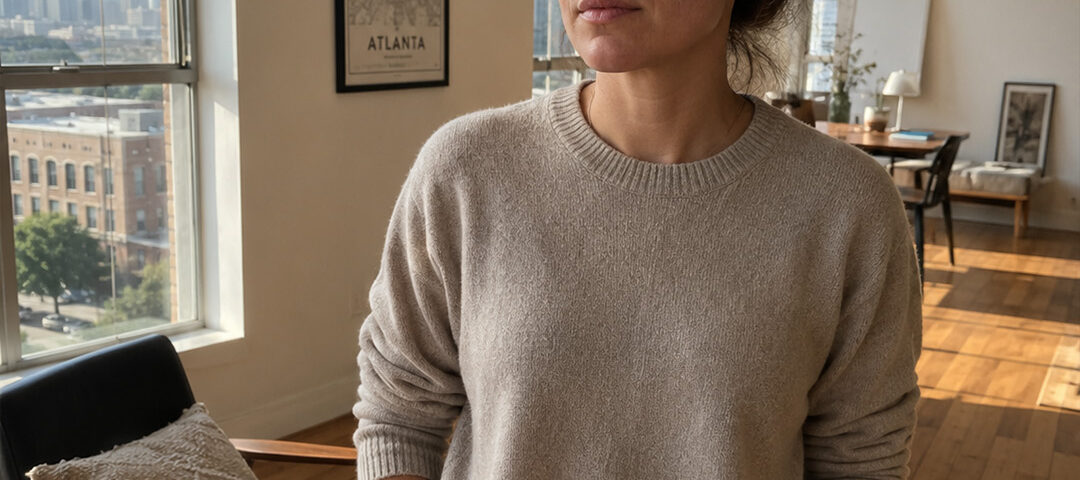
My name is Ava Monroe. I am 33 years old and I used to believe that if I stayed useful enough, my family would eventually call it love. That belief died on a Tuesday afternoon while my phone was still pressed against my ear.
I had called my mom about my father’s blood pressure appointment—just a routine reminder because I was always the one who remembered doctors, bills, passwords, due dates, and every little emergency nobody else wanted to handle.
She said, “Let me check the calendar on the counter,” then set the phone down and forgot to hang up. At first, I heard drawers opening. Then I heard my father ask something I could not catch. My mom laughed softly like she was talking about a bad piece of furniture they should have thrown out years ago.
“She is just a burden,” she said. “A mistake we kept too long.” I did not blink. I did not breathe.
For six years, I had been sending them almost $1,850 a month, covering HOA fees, insurance gaps, medical bills, roof repairs, and even part of the business class tickets for the Europe trip they were taking next week.
The townhome in Sarasota they showed off as their retirement dream was not built by their sacrifice. It was protected by my name, my trust, my money, and my silence. The strangest part was that I did not cry.
I smiled because in that second every excuse I had ever made for them finally broke. They thought I was too loyal to leave. Too soft to fight back. Too grateful to close the door.
They were wrong. Before I tell you what happened when they came back from Europe and their key no longer fit, tell me this: Have you ever stayed loyal to people who only valued you when you were useful?
The next morning, I woke up before my alarm and did not feel tired. That scared me a little because after a normal heartbreak, people expect tears, shaking hands, maybe a dramatic text message they regret later.
I had none of that. I made coffee, opened my laptop, and pulled up every account that had quietly connected my life to theirs for 6 years.
HOA fees, utilities, health insurance supplements, emergency repairs, credit cards, wire transfers, pharmacy charges, travel upgrades, storage payments, and the private little account my mother liked to call our family cushion.
Even though most of the cushion came from me, I made a spreadsheet because paper tells the truth when people do not. By noon, I was staring at a number that made my stomach go cold. Over six years, I had paid more than $133,000.
That did not include the phone calls, the payment plans, the insurance forms, or the shame I swallowed every time my mother called me selfish for hesitating. I clicked through the files for the Sarasota townhome. Next, the Gulf View place my parents showed off online as their retirement dream had never been theirs. I bought it four years earlier, back when I believed giving them comfort would finally make them see me.
The deed was held under my living trust, managed through a small LLC my estate attorney had set up for privacy. They were allowed to live there under a family occupancy agreement that had expired 8 months ago. They never asked about that part. They only cared that they could stand beneath the roof and call it theirs.
At 10:15, I called Celeste Grant, my estate attorney in Tampa. My voice was calm enough that she asked if this was a business decision. I said yes, because in that moment, it was. I told her I wanted a clean exit, legal notice, no drama, no loopholes, no chance of anyone claiming I acted out of spite.
She asked if my parents had a lease. No. Were they on the deed? No.
Had they contributed to the purchase, taxes, insurance, or mortgage in any documented way? I almost laughed. I said, “No. They had contributed opinions.”
By the end of the call, she had a checklist ready. Notice to vacate because the occupancy agreement had lapsed. Confirmation of ownership. Inventory of personal property.
Storage arrangement with 30 days prepaid. Transfer of utilities. Realtor consultation. No confrontation.
No emotional messages. Just documents. Clean, quiet, final documents. Two hours later, I spoke with a realtor named Ben who specialized in quick cash closings for coastal properties.
He knew buyers from up north who wanted a winter home without long negotiations. When he asked how fast I wanted to move, I said fast enough that nobody could build a story before it was done. The next 3 days passed like I had stepped outside my own body. I went to work at the hospital system in Atlanta, reviewed staffing reports, joined operations calls, and nobody knew I was dismantling my family role between meetings.
My mother texted me a photo of her suitcase and asked if the beige coat looked European enough. I replied, “Beautiful. Have a wonderful anniversary trip.” My father sent a thumbs up emoji when I reminded him to pack his blood pressure medication.
My brother messaged from Las Vegas asking if I could spot him $1,500 until Friday. I left him on read.
Chapter 3: Closing the door
On the morning my parents flew to Barcelona, my mother posted an airport selfie with the caption, “Finally, our turn to enjoy life.” I looked at it for 5 seconds, then signed the listing agreement. While they were eating tapas and filming Cathedral Ceilings, I was forwarding mail, closing shared payment access, removing my card from recurring charges, and authorizing a moving crew to separate what belonged to them from what belonged to me.
Their clothes, family photo boxes, papers, and personal items went into a climate-controlled storage unit near Tampa, prepaid for 30 days with written notice. The sectional sofa I bought, the espresso machine, the coastal dining set, the wall art, the patio furniture, the smart TV, the golf cart. All of it had receipts in my name. Some pieces sold in 48 hours.
Some went to charity. I kept nothing. I did not want trophies. I wanted silence.
The cash buyer came in strong. No financing, no inspection games, no sentimental delays. The closing date landed while my parents were in Paris, posing beside wine glasses and smiling like they had built a life that could not be touched. My mother wrote, “40 years of love, hard work, and family first.”
I saved the screenshot because it explained everything. Family first had always meant Ava last.
Chapter 4: The pattern of exploitation
On the day the final documents were signed, I sat in my Atlanta loft and watched the confirmation email arrive. My hands did not shake. I thought about calling them, warning them, giving them one last chance to apologize for words they did not know I had heard. Then I remembered my mother’s voice, soft and casual, saying I was a mistake they kept too long.
So I closed the laptop, turned off my phone, and let Paris have them a little longer. While they were raising champagne glasses under golden lights, I was signing away the free life they thought my loyalty would protect forever. People like my mother always know how to make selfishness sound like tradition. “Family takes care of family.”
That was her favorite line. She said it when the HOA special assessment came due and my father forgot to budget for it. She said it when their air conditioner died in the middle of a Florida summer and the repair company wanted $4,900. She said it when my brother lost another job and needed money to keep his apartment in Las Vegas.
She said it when she wanted a new dining set because the old one made the townhome look less elegant in photos. But somehow family only moved in one direction, toward them, away from me. I was 27 the first time they asked for real money. My father had retired earlier than planned after a health scare and my mother cried on the phone about how hard it was to adjust.
I was newly promoted, still living in a small apartment with furniture I assembled myself. I sent them $800 that month and told myself it was temporary. Temporary became monthly. Monthly became expected.
Expected became invisible. They stopped saying thank you after the first year. By the second year, my mother would text screenshots of bills with no greeting, no explanation, just a sad face emoji and due Friday. If I did not respond fast enough, she would call and sigh before I even said hello.
I learned to answer with my credit card open on the screen. That was easier than hearing disappointment dressed up as motherhood. My father played helpless in a quieter way. He would say, “Your mom is stressed, kiddo. You know how she gets.”
Then he would let her do the asking while he benefited from the answer. When property taxes came due, I paid the penalty. When the roof needed repairs after a storm, I covered the deductible. When their prescription plan changed and my mother claimed the paperwork was too confusing, I spent three lunch breaks fixing it.
When my brother needed money for a sales certification he never finished, they called it an investment in his future. When I asked why his future always seemed to cost me money, my mother said, “Because he has not found his footing yet. You have always been stronger.” Stronger became the word they used when they wanted me to carry things no one else would touch.
I was strong when I missed vacations because I had to save. I was strong when I worked late and still answered their calls. I was strong when I had shoulder surgery and took a rideshare home because nobody could come. My mother said she would have helped, but she had already committed to a charity luncheon.
My father texted, “Hope it went okay.” My brother did not text until 3 weeks later when his car payment bounced. On my birthday, my mother sent a cupcake emoji and wrote, “Busy week. We’ll call soon.”
She did not. That same year, for their 40th wedding anniversary, I booked the restaurant, paid the photographer, ordered flowers, upgraded their hotel room, and bought my mother a spa package she later described online as a gift from my beautiful family. She tagged my brother. She did not tag me.
I noticed, but I told myself noticing made me petty. I told myself mature daughters do not keep score. I told myself love was not a transaction. The problem was they had made it one.
They just made sure I was the only one paying. Their Sarasota friends thought they were comfortable retirees. My mother hosted brunches on the patio I furnished. She poured coffee from the machine I bought and told guests they had sacrificed for years to build this chapter.
Once a neighbor complimented the townhome and asked how long they had owned it. My mother smiled and said, “Hard work pays off if you are patient.” I was standing right there holding pastries I had paid for. She did not look at me.
My father looked at the floor. That was his specialty. Silence that protected the wrong person. The worst part was how normal it became.
Chapter 5: The homecoming confrontation
I stopped expecting warmth. I started accepting access. If they called, at least they needed me. If they needed me, at least I mattered.
That is the trap nobody warns you about. When love is scarce, responsibility can start to feel like proof of belonging. So, I became the responsible one, the emergency contact, the password keeper, the invisible hand behind every comfortable photo my mother posted. Then came that phone call, not an argument, not a slip during a fight.
Her voice was calm, almost bored. She said I was a burden the way someone might say the carpet needed cleaning. That was what broke the spell. Not just the insult, but the ease of it.
I realized she had probably said worse before. I realized my father had probably heard it before. I realized they had accepted my money with one hand while shrinking me with the other. That night, I replayed everything.
Every bill, every forgotten birthday, every emergency I solved, every public post that erased me. For the first time, I did not ask what I could have done to be loved better. I asked why I had kept funding people who were comfortable disrespecting me. The answer was ugly, but it was honest.
I had confused loyalty with self-abandonment. And once I understood that, the locks on the Sarasota house were already as good as changed. They came home on a Thursday evening, sunburned, tired, and still laughing. I know because my mother posted from airport baggage claim before the wheels on her suitcase had even touched Florida ground.
“Back in paradise,” she wrote. “Nothing like coming home.” I was sitting in my Atlanta loft with my phone face down beside me, drinking tea that had gone cold. I did not open the comments.
I could imagine them. Welcome home, beautiful couple. You deserve it. Family goals.
My parents had always been talented at making people applaud a life they did not pay for. Their rideshare pulled into the Sarasota community just after sunset. I had seen the notification from the HOA gate system because my authorization had not fully expired from the owner portal yet. Their names were no longer listed as residents.
They entered as guests, which felt almost poetic. Guests in the life they had pretended to own. I pictured my mother stepping out first, wearing the beige coat she had asked me about, probably complaining that the Florida humidity was ruining her hair. My father would be slower, one hand on his suitcase, the other patting his pocket for the keys he trusted more than the daughter who paid for the door.
The first thing they must have noticed was the porch. The welcome mat was gone. The potted palms were gone. The patio chairs were gone.
The warm light in the front window was gone. The house looked clean, quiet, and unfamiliar, like it had stopped pretending for them. My mother tried her key first. Nothing.
She probably frowned, pulled it out, and tried again. My father took it from her with that impatient little sound he made when he wanted to feel useful. His key did not work either. Then the side door, then the garage keypad, then the smart lock code.
Nothing. I let the first call ring through. Then the second, then the third. My mother’s first voicemail was irritated, not scared.
“Ava, we just got home and something is wrong with the lock. Call me back.” The second came 6 minutes later. “The garage code is not working either. Did the HOA change something while we were gone?”
The third was sharper. “This is not funny. We are exhausted.” My father called next.
“Hey, kiddo, your mother is getting upset. Just call us and tell us what is going on.” Kiddo. That word almost made me laugh.
It always came out when he wanted something softened.
Chapter 6: The reality of exclusion
Then came the locksmith. I know because the old neighbor, Mrs. Lang, texted me without understanding she was narrating my ending. “Your parents are outside with a locksmith. Did you sell the place?”
I did not answer her either. The locksmith asked for identification and proof of ownership. My parents gave him their driver’s licenses with the Sarasota address printed proudly beneath their names. He checked the property record on his tablet.
Then he told them he could not open the door because their names did not match the current owner information. I wish I could have heard that sentence land. My mother hated being corrected by service people. She hated being ordinary.
She hated being seen without control. She called the HOA emergency line and used the voice she used for restaurants when a table was not ready. “There must be a mistake,” she said. “We live here. We have lived here for years.”
The HOA manager was polite, which probably made it worse. The property had transferred. The authorized resident list had changed. They were not listed.
They could contact the owner or new management if they had questions. Owner. New management. Transferred.

Words are small until they take a house away. That was when they found the envelope taped beside the doorbell, not on the paint because I had promised Celeste I would not cause damage. Inside was the storage notice, the final utility information, and one yellow sticky note. “Surprise! This is what a burden can do.”
No signature, no explanation. They did not need one. My mother screamed first. Mrs. Lang told me later that it was not a cry.
It was the sound of someone watching a mirror break. My father kept saying, “No, no, no.” As if repetition could reverse a deed transfer. The curtains were gone from the front windows, so when they looked inside, they saw the truth.
Empty living room, no sectional sofa, no framed beach prints, no smart TV, no coffee table, no dining set, no proof of the life my mother had been selling online. Everything they had called theirs because I was too tired to correct them had been removed, sold, donated, or stored according to the paperwork. Their personal boxes were safe. Their clothes were in storage.
They were not homeless because of cruelty. They were inconvenienced because the person they used had stopped volunteering to be used. That difference mattered to me. My mother called again and this time her voice cracked.
“Ava, where are we supposed to sleep tonight?” I stared at the phone until the screen went dark. I thought of her in Barcelona, smiling under old stone balconies. I thought of Paris, Champagne, captions about love and family.
I thought of her voice through the phone on that Tuesday afternoon. “She is just a burden, a mistake we kept too long.” So, I did what she had taught me to do when someone was inconvenient. I let her deal with it.
By midnight, they were at a hotel near the interstate, not the beachfront place my mother would have chosen if someone else were paying. The voicemails kept coming. Confusion turned into panic. Panic turned into accusation.
Accusation turned into begging. But the door stayed closed. They thought the locked door was the punishment. They had no idea the real punishment was realizing every comfortable part of their life had been paid for by the daughter they called a mistake.
Chapter 7: Breaking the financial ties
By the next morning, I had 42 missed calls, 18 text messages, seven voicemails, and one email with no subject line from my father. My mother’s messages followed the same pattern she had used my entire life. First she was helpless. Then she was wounded.
Then she was angry. Then she became the victim of the pain she had caused. Her first voicemail was full of tears. “Please, Ava, just tell us what happened. We are in a hotel. We do not understand.”
Her second had a harder edge. “Whatever you think you heard, this is not the way family handles things.” By the third, she was not pretending anymore. “Do you have any idea how humiliating it was to stand outside that house with neighbors watching?”
There it was. Not I am sorry I called you a burden. Not I am sorry I let you pay for our life while I mocked you. Not I am sorry I made you feel unwanted.
She was upset because people saw. My father’s email was worse because it tried to sound reasonable. He wrote that my mother had been emotional, that I must have misunderstood the context, that the word burden was about stress, not about me. Then two paragraphs later, he asked if I could at least restart the hotel card for a week while they sorted things out.
That was my father in one email. Deny the wound, then ask the wound to pay the bill. My brother finally appeared around noon with the courage people get when they are not holding receipts. “What did you do to Mom and Dad?” he texted.
“Mom is devastated after everything they did for you. This is disgusting.” I read it twice, not because it hurt, but because I wanted to study the entitlement in its natural habitat. Everything they did for me.
They raised me. Yes. They fed me. Yes.
They gave me the legal minimum wrapped in resentment and called it sacrifice for the rest of my life. Meanwhile, I had paid their HOA, repairs, insurance gaps, upgrades, trips, and half of my brother’s failures. I did not reply to him. Silence was the only language they had never been able to use against me.
Then I sent one email. One, no emotion, no insults, just facts. Attached were six years of transfers. Attached were receipts for the air conditioner, roof repair, dining set, espresso machine, golf cart, patio furniture, and medical premium support.
Attached was the expired occupancy agreement. Attached was the deed history showing the Sarasota townhome had never belonged to them. Attached was the storage unit notice prepaid for 30 days. My message was one line: “You called me a burden, so I removed the burden.”
My mother responded in four minutes. “That is not fair,” she wrote. “I gave you life.” I stared at those five words for a long time.
She thought life was a loan I could never finish repaying. She thought because she gave birth to me, she owned unlimited access to my money, time, forgiveness, and silence. That belief had kept me trapped longer than love ever had. So, I kept going.
I logged into the family credit card account and removed every authorized user. The card had been for emergencies, but my mother had used it for candles, brunches, hair appointments, and linen curtains she said were necessary because cheap curtains made her depressed. I canceled the autopay for their Medicare supplement, not the plan itself, just my card. They would have to enter their own payment method like every other adult.
I canceled the storage auto-renew beyond the notice period. I removed my banking information from utilities, internet, insurance, and HOA portals. I reviewed the joint checking account. $12,600 sat there, and more than 11,000 could be traced to my deposits. I transferred my documented portion into my private account and left the rest.
Celeste had told me to be precise, so I was precise. Revenge feels better when it cannot be challenged.
Chapter 8: Family backlash
By evening, the family group chat exploded. A cousin wrote that I was being cruel to aging parents. An aunt sent a Bible verse. My brother sent a long message about respect, which was bold for a man who once asked me to pay his car insurance and posted nightclub photos the same night.
I did not defend myself in the group chat. I simply uploaded the ledger, dates, amounts, purpose, receipts, screenshots. The chat went quiet for 27 minutes. Then my aunt wrote, “Patricia, is this true?”
My mother left the chat. That may have been the most satisfying moment of the week. Not because she was embarrassed, though she was, because for once, the room did not automatically believe her. My parents stayed three nights in the hotel.
On the fourth day, they signed a short-term lease on a two-bedroom apartment inland closer to Tampa with beige carpet, street-facing windows, and no view except the parking lot. My mother called it temporary. My father called it a misunderstanding. I called it math.
Without my money, they could afford exactly what they moved into. My mother left one final voicemail that week, quieter than the others. “You embarrassed us, Ava.” That was it.
Not you hurt us. Not we miss you. Not we are sorry. You embarrassed us.
When she finally stopped asking where she would sleep and started asking what people would think, I knew I had hit the one thing she loved more than control. Her image. After the house, I moved through the rest of my life with a calm I had never known before. Not happiness exactly.
Not yet. More like the quiet after a machine shuts off and you realize how loud it had been for years. The first thing I changed was my emergency contact at work. It took less than 5 minutes.
For years, my mother’s name had sat there like proof that I had a family who would come if something happened. But when I had surgery, she had not come. When I was sick, she had not come. When I was lonely, she had not called.
So, I replaced her with Maya, a colleague who once brought me soup during a flu week without making me feel like I owed her my soul. Then I updated my medical directive, then my beneficiaries, then my will, then the trust, then every password recovery option connected to an old family email, every shared streaming account, every photo album, every calendar invite, every invisible thread that made them feel close enough to reach me when they needed something. I did not make an announcement.
People who benefit from your boundaries rarely deserve a ceremony when you set them. My father tried the legal route first. He found a cheap attorney who sent a letter full of soft threats and phrases like possible misunderstanding of family ownership. Celeste answered with documents, deed history, trust records, expired occupancy agreement, payment trail, storage notice, proof that no personal property had been destroyed or withheld.
The attorney did not send a second letter. My brother tried shame next. He texted from three different numbers. “You really destroyed this family. You got what you wanted. Hope you enjoy being alone.”
I blocked every number. The funny thing was being alone felt nothing like the loneliness I had felt inside that family. Alone in my own space I could breathe. Alone with my own money I could plan.
Alone without their voices I could hear myself.
Chapter 9: The aftermath of separation
My mother went public two weeks later because of course she did. She posted an old photo of us from when I was nine. My hair in a crooked ponytail, her arm around me in a way that almost looked gentle. The caption said, “Some daughters forget who sacrificed for them. Family betrayal is a pain no mother should know.”
For an hour, the comments comforted her. Then my aunt, the same one from the group chat, wrote, “Patricia, maybe this should not be handled online.” That single sentence changed the temperature. The comments slowed.
A neighbor from Sarasota liked the aunt’s comment, but not my mother’s post. Someone else asked if everything was okay with the house. My mother deleted the post by dinner. She tried again with quote graphics.
“Blood makes you related. Loyalty makes you family.” “Do not burn bridges and cry when you cannot cross.” But the likes were different now.
Fewer hearts, fewer compliments, more silence. Image needs an audience to survive, and hers had started asking questions. My father had to sell the SUV two months later. He told people they were downsizing for simplicity.
My mother picked up part-time work at a decor boutique, which matched the life she had pretended to own almost too perfectly. My brother finally took a full-time sales job because nobody was sending him emergency money. For the first time in years, their problems stayed where they started, with them. That was the hardest part to accept.
How quickly the world kept turning when I stopped rescuing everyone. I had believed everything would collapse if I said no. In reality, they adjusted. Not gracefully, not happily.
But they adjusted. That taught me something painful and useful. Some people are not helpless. They are practiced.
They know who will panic first, who will pay first, who will apologize first, who will confuse guilt with duty. I had been that person. Now I was not. A cousin sent me a message a few months later.
She said, “I did not know you were paying for all that. I am sorry.” I appreciated the apology, but I did not invite a conversation. I had learned that every open door looks like a path back to people who dislike locked ones.
My mother sent one birthday card to my office. No return address, but I knew her handwriting. Inside, she wrote, “I hope you are proud of what you did.” I placed it in a folder with the ledger, the deed transfer, and the printed email where my father asked me to restart the hotel card after denying the insult.
I keep those papers not because I want to stay angry, but because memory becomes generous when loneliness visits. It tries to soften sharp things. It tries to turn patterns into accidents. The folder reminds me this was not one bad sentence.
It was a system. I paid, they posed, I hurt, they denied, I gave, they took, I disappeared, and they cried for the money before they cried for me. Their punishment was not poverty. It was simpler and more honest.
They had to live at the exact level they could afford without me. They had to answer their own calls, pay their own bills, carry their own image, and sit in a smaller life built from the choices they had actually made. And I, the mistake they kept too long, became the one thing they could no longer use.
Chapter 10: Finding peace
A year later, my life looked smaller from the outside and bigger from the inside. I did not buy another giant house. I did not need high ceilings, a perfect patio, or a room designed to impress people who only visited when they wanted something. I moved into a quiet condo in Midtown Atlanta with tall windows, warm lamps, and furniture chosen by me for me.
The first night there, I slept on a mattress on the floor because the bed frame had not arrived yet. And I remember waking up at 3:00 a.m. in total silence. No panic about whether my mother’s insurance payment had cleared. No dread that my brother would send another desperate text.
No mental list of repairs, birthdays, guilt trips, or bills hiding behind cheerful family messages. Just silence. Real silence. The kind that does not punish you.
The kind that gives you back to yourself. My savings grew faster than I expected. At first, I thought there had been an accounting mistake. Then I realized the mistake had been the life I was living before.
Money stayed where I put it. My credit card stopped carrying charges from restaurants I never visited and stores I never entered. My calendar opened up. My weekends became mine.
I started going to the gym before work. Not because I wanted a revenge body, but because I wanted to feel present in a body that had spent years bracing for impact. I accepted a promotion to operations strategy lead, something I almost turned down months earlier because I was afraid more responsibility at work would leave less energy for family emergencies. That thought made me sad when I recognized it.
I had been shrinking my future to make room for people who called me a burden. Therapy helped me name what had happened without dressing it up. It was not just family conflict. It was financial exploitation wrapped in emotional obligation.
It was parentification, wearing a pretty dress called loyalty. It was the slow training of a daughter to believe love had to be earned through usefulness. My therapist asked what I missed most about them. I expected to say my mother’s voice or my father’s old jokes or the idea of holidays.
Instead, I said, “I miss who I kept hoping they would become.” That was the grief. Not losing the family I had, losing the family I had been waiting for. My parents still lived near Tampa the last time I checked.
I do not look often. My mother posts less now. No more European captions. No more brunches on a patio I paid for.
No more family first under filtered sunsets. Sometimes she shares quotes about forgiveness, usually the kind written by people who want forgiveness without accountability. My father looks older in the few photos relatives post. My brother works full-time now.
Imagine that a miracle performed by direct deposit ending. I do not celebrate their struggle. Freedom does not always feel like victory music. Sometimes it feels like finally putting down a heavy box and realizing your arms are bruised.
I do not want revenge forever. Revenge was the door. Peace was the room behind it. And peace has rules.
No access without respect. No help without honesty. No family title powerful enough to erase cruelty. I still hear that call sometimes.
My mom’s voice, calm and certain. “She is just a burden, a mistake we kept too long.” For months, those words burned through me. Now they sound different, not true, just useful.
They were the ugly truth I needed to stop living inside a prettier lie. I think that is the lesson I want people to understand. Being kind is beautiful, but kindness without boundaries becomes self-harm. Helping family can be honorable, but funding disrespect is not love.
Loyalty is not supposed to require you to disappear. A parent, a sibling, a partner, or anyone else can love you imperfectly. But they do not get to drain you, mock you, and still demand access to the life you built. Education does not always come from classrooms.
Sometimes valuable knowledge arrives through pain, through a phone that was not hung up, through a sentence you were never meant to hear. That knowledge can save you if you listen to it. It can teach you that your worth is not measured by how much suffering you can absorb quietly. It can teach you that boundaries are not walls built from bitterness, but doors with locks, keys, and standards.
I used to think home was a place I could buy for people until they finally loved me correctly. Now I know home is where I am not required to earn my right to exist. Sometimes walking away is not revenge. Sometimes it is the first honest lesson you ever teach people who confused your kindness with ownership.
Have you ever had to choose between blind loyalty and self-respect? Because I did. And the day I stopped being their burden was the day I finally became my own
If you came here from Facebook because of this story, return to the Facebook post, tap Like, and comment exactly “Amazing” to support the storyteller. That small action means more than it seems and gives the writer genuine encouragement to keep sharing more stories about family pressure, firm boundaries, and finally protecting what you worked so hard to build.
Disclaimer: This story is a work of fiction created for entertainment purposes. Any resemblance to real persons, events, or places is coincidental.