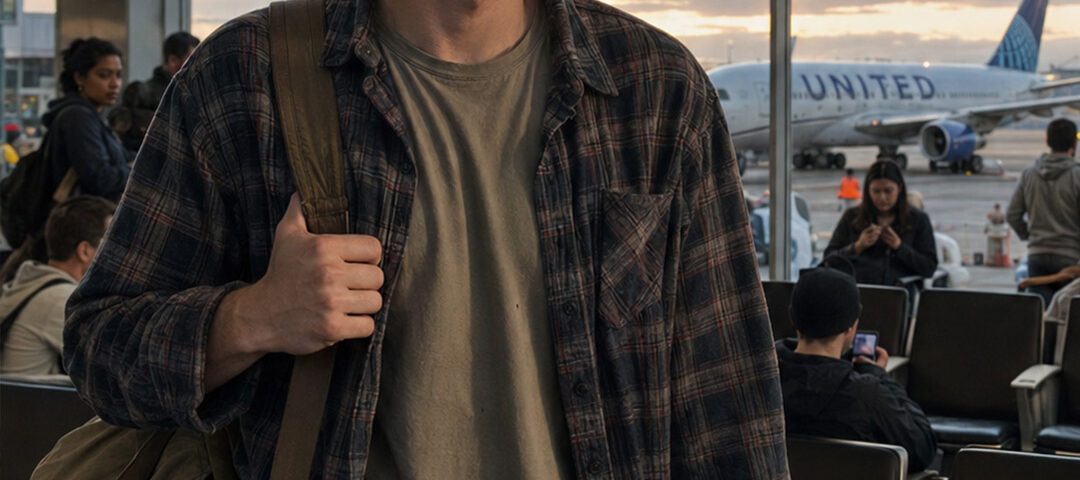
Eve of my med school flight, my brother burned all my scholarship papers.
“Street rats don’t deserve college,” he mocked.
My parents agreed. I took my bag… and smiled.
At 6 a.m., the airport called…
My brother burned my scholarship papers the night before my flight to start medical school across the country.
“Street rats don’t belong in classrooms,” he said with a laugh.
My parents agreed.
“Your place is washing our dishes, not sitting with doctors.”
I didn’t cry. I grabbed my duffel bag and smiled. At 6 in the morning, my father’s phone rang with a call from me from the airport.
The scholarship letter caught fire starting from the bottom-left corner. The flame climbed up the margin, curled through the letterhead of the Stanford University School of Medicine, and consumed the paragraph that began with, “We are pleased to offer you a full scholarship.”
It burned before it even reached the line that stated my name: Jonah Miller. The letters turned orange, then black, and then nothing.
The ash floated above the stove burner and settled on the counter next to a stack of unpaid utility bills, which I had been covering since I was 18.
My brother Tyler held the burning page by the top corner with two fingers, tilting it so the flame would advance faster. He was smiling, but not with the quick grin of someone playing a prank.
It was the wide, satisfied expression of someone who had been waiting to do this since the acceptance letter arrived six months ago—and who had finally decided that tonight was the night.
The night before my flight.
He dropped the last burning edge into the sink. It hissed against the wet stainless steel.
Then he reached for the second document, the financial summary of the scholarship, and lit that one too. Next was the housing confirmation, then the list of enrollment requirements.
Four pages. Four distinct futures. All turned to ash in less than two minutes.
My father stood by the refrigerator with his arms crossed. My mother sat at the kitchen table with her hands clasped in front of her, the way she sits when she has already made up her mind and is just waiting for everyone else to reach the same conclusion.
Tyler dusted the last bit of ash from his fingers and looked at me. He leaned against the counter with one elbow on the edge. His body settled into the posture of someone who had just completed a task he considered productive.
“Street rats don’t belong in classrooms,” he said.
He didn’t whisper it. He said it the same way someone reads a verdict. Loud enough for the kitchen walls to hold on to it. Loud enough for the neighbor’s dog to stop barking for a moment on the other side of the chain-link fence.
If you are new here, welcome to Conflicts and Revenge.
That line is where most people would start screaming.
I didn’t scream.
Tyler wasn’t finished. He pushed off the counter and took a step closer.
“You spent your whole life running from this house to the library like a street rat, Jonah. Now you want to run all the way to California. You pushed pills over a counter for seventeen an hour, and you think you belong in a lecture hall with real doctors?”
He continued before I could answer.
“Mom and Dad fed you, clothed you, and kept a roof over your head for twenty-three years. And you paid them back by treating this family like a bus stop on your way to somewhere better. You’re just a golden boy with a plane ticket. That’s all you’ve ever been.”
My father looked at me from across the kitchen, his chin raised the way it gets when he is about to say something he has been turning over in his head for weeks.
“Your place is washing our dishes, not sitting with doctors. You want to fly somewhere? Fly down to the grocery store and pick up what your mother needs,” Frank added without unfolding his arms.
“That scholarship money should be coming into this house, not going to you.”
“The scholarship doesn’t pay out in cash,” I told him. “It covers tuition and room and board on campus. There’s no money to send back here.”
“Then what good is it?” Frank said.
“It’s a medical degree,” I replied.
“A medical degree,” Tyler repeated, loading the words with the exact same tone he used when describing something ridiculous he had seen on television. “Then go find yourself a bus ticket home when it all falls apart.”
“Why will it?”
Tyler pointed at the sink.
“Because that’s where your scholarship is. Right next to your library card, your little hospital badge, and whatever else you collected, thinking it made you better than this house. Down the drain.”
I stood in the kitchen doorway and looked toward the sink, where four documents were dissolving into gray pulp.
I looked at Tyler, who was now smiling with his whole face. I looked at my father, who believed what he was saying because he had repeated it enough times for it to feel like the truth.
I looked at my mother, who had not once attended a parent-teacher conference, a science fair, a pharmacy school information night, or any event that acknowledged I was building something outside of this kitchen.
I picked up my duffel bag from the hallway floor. The bag was already packed. It had been packed for two days.
I smiled.
It was not a performance. It was a release.
It was the kind of smile that breaks out when you realize the people you spent five years trying to win approval from have just given you the clearest permission you will ever receive to stop trying.
I walked to my bedroom, closed the door, sat on the edge of my bed, and opened my phone.
The first thing I checked was my email.
The enrollment confirmation from Stanford was in my inbox, dated six weeks earlier. Digital copies of every document Tyler had just burned were in a secure folder, uploaded through the same system I had used to complete my enrollment.
Tyler had only burned paper.
The enrollment was digital. Every document he held over that stove had been uploaded to the secure university portal six weeks ago.
He destroyed printed sheets.
The acceptance lived on a server three thousand miles away, untouched.
I didn’t sleep that night, but not because I was mourning.
I had work to do.
Here is what you need to understand about the Miller household before the rest of this story makes sense.
I have been a certified pharmacy technician at Memorial General Hospital since I was eighteen. On the night shift, from 11:00 p.m. to 7:00 a.m., I process medication orders, perform sterile compounding, verify dosage calculations, and manage the controlled-substance registry for a 340-bed hospital.
I have done this five nights a week for five years.
On my breaks, between 2:00 and 4:00 in the morning, I studied for the MCAT in the employee break room with a highlighter and a secondhand preparation book I bought for five dollars at a used bookstore.
I scored in the 97th percentile.
No one in my family asked what the MCAT was.
For five years, sixty percent of my net pay had gone into that house. Four hundred dollars a month went directly to my parents.
Rent was one thousand dollars. Utilities were three hundred forty. Groceries were four hundred eighty.
The rest went toward what Frank called “household expenses,” a generic category he managed and no one questioned, because questioning it would have meant admitting the system was designed to keep me paying without knowing what my money was buying.
The roof over their heads existed because of my paychecks.
My brother paid nothing.
My father collected a partial disability pension of $2,100 a month. My mother worked twenty hours a week at the local grocery store and came home tired in a way that turned her exhaustion into everyone else’s problem.
And every single month, without fail, someone in that house reminded me where I came from.
As if coming from a rough place was proof that I shouldn’t go anywhere better.
I spent my childhood in the public library. Not only because I loved to read, although I did, but because there was nothing at home.
No help with homework. No books on the shelves. No one asking what I had learned that day.
Frank came home from work at four and turned on the television. Brenda got in at six and started making dinner. Tyler played video games in the living room until midnight and left his plates on the coffee table for me to pick up in the morning.
I sat at a table in the Fair View Public Library from 3:30 to 7:00 every weekday for six years, doing homework, reading biology textbooks I pulled from the reference section, and teaching myself how to study because nobody at 114 Maple Drive was going to teach me.
The librarian, a woman named Mrs. Faulk, started leaving a pencil and a legal pad on my usual table every afternoon.
She never asked me to explain why I was there instead of at home. She just made sure the table was clear and the overhead light was working.
I owe more of my education to a public librarian who never asked questions than to anyone who shares my last name.
The family called this “running the streets,” and not as a joke.
They said it with genuine disapproval, the way you describe a kid heading down the wrong path.
Once, Frank told a neighbor at a backyard barbecue, “Jonah is never home. He’s out running the neighborhood doing who knows what.”
I was at the library.
I was thirteen years old. I was reading about cellular respiration for the third time because the diagram in the reference book was the clearest I had ever seen.
The neighbor looked at me, standing in the yard with a paper plate of potato salad I had served myself, and didn’t say a word.
“Street rat” started as Tyler’s joke when I was fourteen.
I came home from the library one night and found him in the kitchen eating cereal straight out of the pot because all the bowls were dirty.
He looked at me and said, “The street rat returns.”
He was seventeen.
By the time I turned sixteen, it was no longer a joke. It was a label.
By twenty-three, it had become the family’s shorthand for everything I was and everything they had decided I would always be.
I almost stopped going to the library after Tyler spray-painted “street rat” on my bicycle when I was fifteen.
The letters were red and jagged, crossing the rear fender. I rode that bike to the library every afternoon for three months with those letters visible to every car that passed me because I couldn’t afford to repaint it, and the paint didn’t wash off with soap.
I told myself it didn’t bother me.
But it bothered me every single day.
On one of those rides, though, I stopped at Uncle Jim’s house on Elm Street to fill my water bottle because the library’s drinking fountain was broken.
Jim was in his driveway loading copper fittings into his Ford truck for an HVAC job.
He saw the bike. He saw the paint.
He didn’t say anything about it for a long moment.
Then he went inside the house and came back with two things: a can of black Rust-Oleum spray paint and a secondhand copy of Campbell Biology with a cracked spine and pages annotated by some college student who had underlined the important parts in pencil.
“Cover the letters first,” he said, handing me the can. “Then open the book.”
I painted over the red letters in his driveway that afternoon. He held the bike steady while I sprayed.
When I finished, he opened the biology book to the inside cover and showed me what he had written in pen.
You are going to need this more than they think.
Jim is my mother’s brother.
He installs air-conditioning systems for a living. He drives a twelve-year-old truck, and not once has he ever told me what I couldn’t become.
He didn’t lecture me about Tyler. He didn’t call Brenda to complain.
He gave me a can of paint and a book, and he treated both things as equally necessary.
That textbook was in my bag.
It was in my bag when the scholarship letter burned. It is in my bag now.
Stick with me in Conflicts and Revenge, because the papers were not the only things my family destroyed under my name.
Three weeks before my flight, a letter from the state board of pharmacy arrived at 114 Maple Drive.
It came in a standard white commercial envelope with the board’s seal in the top-left corner. I opened it at the kitchen table on a Tuesday morning after a night shift, while my hands still smelled of nitrile gloves and isopropyl alcohol.
The coffee was bitter. The house was quiet.
Tyler was asleep. Frank was watching morning television in the living room with the volume turned low.
The letter informed me that unusual ordering activity had been flagged under my CPhT license number.
A secondary wholesale distributor account had been opened fourteen months earlier using my license, my name, and my credential number.
The account was registered to a post office box in Henley County, one county north of ours.
Over fourteen months, the account had ordered quantities of hydrocodone and tramadol that did not correspond to any institutional pharmacy with which I was affiliated.
The board was requesting a written response within thirty days.
I am a pharmacy technician. I know what a drug-diversion alert looks like because I have processed six of them at Memorial General Hospital over the last three years.
I know the pattern: small orders at regular intervals, with quantities sitting just below the threshold that triggers an automatic DEA review.
Someone who understood the reporting system had designed this account to fly under the radar.
It wasn’t a street-level operation. It was highly calibrated.
I drove to the Henley County Post Office that same afternoon before my shift.
The building was a single-story brick structure next to a tractor-supply store. I told the clerk I needed to verify the registration of a post office box for a fraud investigation.
She asked for identification.
I showed her my pharmacy technician badge and the letter from the state board.
The post office box was registered under the name Tyler Miller.
She couldn’t give me any more information, but I didn’t need it.
The secondary contact phone number on the distributor account, which I had looked up through the board’s portal that morning, matched Tyler’s personal cell phone.
It was the exact same number he used to text me when he wanted me to bring home coffee from the gas station after my shift.
My brother had been using my pharmacy license to order controlled medications and resell them for more than a year.
He was sitting in the living room playing a racing game on the Xbox when I got home.
He had the controller in both hands. His feet were on the coffee table. He didn’t look up when I walked through the door.
He didn’t know that the credential number printed on the small laminated card in my wallet—the same one he had typed into an online distributor portal fourteen months earlier—was now the subject of a state investigation that would eventually involve federal agents.
I didn’t confront him.
I went to my room, opened my laptop, and started pulling records.
Two weeks before my flight, a credit report appeared on my laptop screen, and it didn’t match anything I recognized.
My credit score, which had been 761 the last time I checked, had plummeted to 698.
The reason was a $95,000 home-equity line of credit opened eighteen months earlier and co-signed by Jonah Miller.
A document I never signed. A loan I never saw. A desk at a bank I never sat at.
I pulled the application.
Frank’s signature was on the primary-borrower line.
My signature was on the co-borrower line.
Except it wasn’t my signature.
My J has a specific hook at the bottom of the vertical stroke that curves inward. The J on that application did not curve.
Someone had practiced my name without understanding the one letter that made it mine.
The $95,000 had been disbursed in a single withdrawal to a contractor named Fullbrite Construction.
Fullbrite’s invoice was for the garage conversion at 114 Maple Drive.
Tyler’s auto-detailing shop.
The one with the air compressor, power polisher, pressure washer, and high-end LED lighting. The one that grossed two hundred dollars in a good month against a six-figure debt.
The monthly payment on the line of credit was $1,247.
That number had been rolled into the household expenses, which I had been paying for eighteen months without knowing what was going toward what.
My father had forged my signature to take out a loan backed by a house that wasn’t mine, then used the money to build a shop for a son who had not held a steady job since he dropped out of community college at nineteen.
I almost called Frank out that night.
The application was on my screen. His handwriting was on the main line. My forged name was on the co-borrower line.
But I was two weeks away from a flight that would take me to a different coast and a different life.
If I confronted them then, they would spend those two weeks finding ways to stop me from leaving.
The pharmacy board letter. The home-equity loan. The burning of the scholarship papers—something that had not happened yet, but that I could already feel approaching the same way you feel the weather changing.
I closed the laptop and went to work.
I processed 127 medication orders that night and didn’t make a single mistake.
One week before the flight, I discovered the final piece.
Brenda was at the kitchen table on a Saturday morning. Frank was out in the garage. I was making coffee.
Brenda’s phone was on the table, face up, and a text notification from Frank appeared on the screen.
Did you move the bank folder? The one I signed for Jonah.
She picked up the phone, read it, typed a reply, and set the phone back down without looking at me.
She wasn’t surprised by the text. She wasn’t confused by it.
She responded the exact same way you answer a routine question about grocery shopping.
She knew.
She had been at the table when Frank practiced my signature. She had watched him sign my name on the bank-loan application.
She wasn’t a bystander who had looked the other way.
She was an accessory who had sat there and watched.
I contacted a lawyer named Wendell that same afternoon.
He had an office above a dry cleaner downtown. He ran the kind of firm that handled estate disputes, small-business fraud, and those quiet family catastrophes that never make the local news.
I sat across from his desk with the pharmacy board letter, credit report, loan application, printout of the distributor account, and eighteen-month breakdown of household expenses.
He read them in the order I had arranged them.
When he finished, he took off his glasses and set them on the desk.
“How long have you known about the drug diversion?” he asked.
“Three weeks.”
“And the equity loan?”
“Two weeks.”
“And you haven’t confronted anyone. Why?”
“Because my flight to California is in seven days, and if I confront them now, they’ll spend those seven days finding ways to keep me from boarding.”
Wendell looked back at the pharmacy board letter.
“The board notification is urgent. We should file the response to the DEA notice now, while the evidence is clean. If we wait and he closes the distributor account, the order logs will be harder to pull.”
“File the board response now. The DEA notice too. Hold everything else until I’m in the air.”
“The loan fraud?”
“Hold it.”
“The credit-bureau dispute?”
“Hold it.”
“And the demand letter for your father?”
“Put it in a folder. I’ll leave it on the kitchen table the morning I leave. They can read it while I’m at the airport.”
Wendell leaned back in his chair.
“You want them to find out from a folder on their own table?”
“They burned my scholarship papers on that table. They can read the consequences on that exact same table.”
He nodded once.
“I’ll have everything ready in four days.”
The night the papers burned, I already knew everything.
I stood in the kitchen doorway and watched Tyler strike a match against a letter that had been confirmed electronically six weeks earlier.
I didn’t stop him because stopping him would have cost me the one thing I needed more than those pages.
My departure.
I needed to be on a plane before the family realized that their financial structure—the one built on my paycheck, my forged signature, and my stolen credential—was about to be dismantled from an airport departure gate.
I picked up my bag, smiled, went to my room, and waited.
At 4:30 in the morning, I carried my duffel bag down the dark hallway.
The house was dead quiet. Tyler’s door was shut. The light in my parents’ room was off.
I placed a manila envelope on the kitchen table.
Inside was the pharmacy board audit letter, the distributor account log showing Tyler’s phone number, the loan application with my forged signature circled, the disbursement log showing the loan proceeds going to Fullbrite Construction, the contractor’s invoice for the garage conversion, and the household-expense breakdowns from the previous eighteen months.
Those breakdowns showed the $1,247 loan payment grouped into my contributions.
There was also a single printed page from Wendell summarizing the legal actions already in motion.
The front door clicked shut behind me for the last time.
The deadbolt turned the way it always turned, smooth and familiar.
I threw my bag into my car.
The CPhT certification card was in my wallet, where it had been since I earned it at eighteen.
The small laminated rectangle with my name, credential number, and the state board of pharmacy seal.
The first document that ever confirmed I was qualified for anything.
The same number Tyler typed into a distributor portal to order medications he then sold to a buyer in Henley County.
The card was mine.
The credential was mine.
The seat on the plane was mine.
The drive to the airport took thirty-five minutes.
The roads were empty except for delivery trucks and a police cruiser parked at a gas station with its lights off.
The sky shifted from black to dark blue and then to early-morning gray. The radio stayed off.
The words for the phone call didn’t need rehearsing.
They had been assembling themselves for two weeks—verified, cross-checked, and confirmed the exact same way you verify irreversible medication orders.
Once submitted.
The long-term parking lot was mostly empty.
My bag passed through the automatic doors, past the check-in counter, and through TSA security behind a family with three carry-ons and a stroller.
Gate C14 was at the far end of the terminal.
I found a molded plastic chair between a woman reading a novel and a sleeping man with a jacket pulled over his face.
The departure board displayed my flight.
San Francisco. 7:15 a.m. On time.
Boarding in thirty-eight minutes.
I opened my phone.
I dialed the house number, the number I had known by heart since I was six years old.
The number I would never dial again after that day.
It rang four times.
Frank answered. His voice held the heaviness of a man who had been awake for less than ten minutes.
I could hear the coffee maker in the background. I could hear a chair scraping across the floor.
Someone else was awake.
“I’m at the airport.”
There was silence.
Then he asked, “Which airport?”
“The one where planes leave. Dad, my flight boards in thirty-eight minutes. Before I leave, I need you to open the folder I left on the kitchen table.”
I heard the rustling of paper.
I heard Brenda’s voice in the background asking what was going on. I heard a chair being dragged, more rustling, and then nothing for twelve seconds.
Twelve seconds is a long time on the phone when the person on the other end is reading a document that changes everything.
“This isn’t what it looks like,” Frank said.
The phrase arrived the exact same way it always does when paperwork lands on a table in front of someone who has been lying.
“It’s exactly what it looks like. Tyler used my pharmacy credential to order controlled substances for fourteen months. The DEA referral was filed yesterday. Hydrocodone and tramadol, through a wholesale account registered to a post office box in Henley County under his name and my license number. The state board of pharmacy has the entire audit trail.”
I heard Tyler’s voice, sharp and close.
“What is he talking about?”
He was in the kitchen. He was reading the pages.
“He’s talking about the distributor account you opened using my CPhT number,” I said loudly enough for the speakerphone to carry my voice to wherever he was standing. “Tyler, the account tied to your personal cell phone. The one that has been ordering controlled medications for fourteen months.”
“That isn’t mine,” Tyler said.
I could hear the speed of his denial.
Too fast.
The kind of speed that tells you a person has already rehearsed the line, just in case the day ever came.
“Your phone number is on the account registry. Your name is on the post office box. The paperwork is in the folder.”
Silence from Tyler.
“Dad, you forged my signature on a $95,000 home-equity loan. The bank has been notified that the co-borrower designation is fraudulent. That loan payment of $1,247 a month—the one you buried in the household bills I’ve been paying for eighteen months—is yours now. Every single penny of it. My lawyer has the application, the disbursement log, and the contractor’s invoice.”
Frank’s breathing changed on the line.
Short pulls of air through his nose. The sound of a man whose chest had just seized up.
“Mom, you watched Dad practice my signature at the kitchen table. You watched him sign my name on a bank document. You texted him about the folder where he kept it. You’re an accessory to fraud, and your text messages are in my lawyer’s file.”
I heard Brenda speak.
“Jonah, that’s not fair.”
Her voice was higher-pitched than usual.
It wasn’t a denial.
It was the tremor of someone who had been sitting in a chair she thought was solid and had just felt it wobble.
“Fair?” I replied. “You people told me the scholarship money should come to this house. I’ve been sending four hundred dollars a month to this house for five years—twenty-four thousand dollars total—and you used my name to borrow another ninety-five thousand on top of that without my knowledge.”
I let the words settle.
“My lawyer filed a police report for the forgery of the co-borrower signature. Whether the district attorney presses charges is out of my hands. You’re right, Mom. It isn’t fair.”
“Jonah, you can’t just leave,” Frank said. “We’re your family.”
“You burned my scholarship letter. You called me a street rat. You told me my place was washing dishes. You forged my name on a loan I never signed.”
I looked toward the departure board.
“And the papers you burned last night were photocopies. Dad, I submitted everything to Stanford digitally six weeks ago. My enrollment was locked in before Tyler ever struck the match.”
“We can work this out,” Frank said.
His voice had dropped to the register of a man who was no longer arguing, but negotiating.
“Come back from the airport. We’ll sit down. We’ll fix the loan.”
“My next paycheck has been rerouted to an account at a bank none of you can access. The four hundred dollars a month stops today. Every bill in that house is yours, including the $1,247 for a garage that pulls in two hundred dollars in a good month.”
“You’re killing us,” Tyler said in the background.
His voice had changed.
That laughing, leaning-back, match-striking voice from eight hours earlier was completely gone.
What remained sounded like a man reading numbers on a page and understanding for the first time what they added up to.
“You called me the golden boy, Tyler,” I told him. “The golden boy is the one who read the pharmacy board audit and tracked down your distributor account in four hours. The golden boy is the one who pulled the credit report and found the forged home-equity loan.”
I continued.
“The golden boy processed controlled-substance logs for five years while you sat on the couch playing racing games. And the golden boy is the reason you’re about to explain a DEA referral to a federal investigator. You should’ve paid more attention to what the golden boy does for a living.”
Silence.
The kind of silence that has physical weight.
Tyler tried one last thing. His voice shifted into something I had never heard from him before.
It became smaller. Almost reasonable.
“Jonah, listen. I’ll close the distributor account today. Right now. I’ll pay off everything on the card. We’ll figure out the loan. Just come back from the airport. Give us a chance to fix this before it goes to the feds.”
“The board referral and the DEA notice were filed four days ago, Tyler. There’s nothing to close. It’s already in the system.”
There was another silence.
This one was even longer.
“My number will change when I land,” I said. “All future communication from me will go through my lawyer. The household bills are your problem now. Every single one of them, including the $1,247 for a loan I never signed.”
I gripped the phone.
“The four hundred dollars a month I sent to that house for five years is finished. There is no payment plan. There is no phone call I’m going to answer. There is no version of this story where I come back to that kitchen and wash your dishes.”
I almost let the silence stretch long enough for one of them to fill it with something that might have changed the math.
The gate agent had started the preboarding announcement. Her voice sounded flat and professional over the intercom.
A little girl three rows away tugged on her mother’s sleeve.
The world at Gate C14 was continuing the exact same way the world continues when a family implodes over a phone line forty miles away.
But I had stood in that kitchen for five years, paying their bills and swallowing their insults.
And no sound they could make through a phone at six in the morning was going to be louder than the sentence I had waited twenty-three years to say.
“The golden boy is at Gate C14, Dad. The street rat is going to medical school. Don’t ever call this number again.”
I hung up.
I powered off the phone.
The gate agent called Group B.
I stood, handed her my boarding pass, and walked down the jet bridge.
I pushed my bag into the overhead bin. Inside it was Uncle Jim’s Campbell Biology textbook with his note scrawled on the inside cover, my wallet with the certification card, and a phone charger for a phone that would have a brand-new number before I even left the California baggage claim.
I sat in a window seat.
The plane pushed back from the gate at 6:48 a.m.
I watched the airport shrink, then the highway, then the neighborhoods, and finally the county where I had spent twenty-three years listening to them tell me what I was and what I would always be.
Then it was gone.
It was replaced by the tops of the clouds—white, flat, and endless, like a page that hadn’t been written on yet.
I closed my eyes and slept for the first time in thirty-one hours.
Three hours after I left, Uncle Jim pulled up to 114 Maple Drive.
I had called him from the boarding gate before I called Frank. I told him everything.
He drove forty-five minutes to the house.
Jim told me later what he found.
The front door was unlocked. The kitchen smelled like burned coffee. The manila folder was open on the table.
Its contents were spread across the surface in the exact order I had arranged them.
No one had reorganized the pages.
They were reading them in the sequence I engineered, the same way I organized a controlled-substance audit at the hospital: chronologically, leaving the worst document for last.
Frank was sitting in the chair closest to the wall.
Both hands were flat on the table, and his fingers weren’t moving. His eyes were locked on the loan application, specifically the circled forgery.
But Jim said he wasn’t reading it anymore.
He was just staring at a fixed point on the paper, the way people stare at things when their brains have stopped processing information and are running the exact same calculation over and over without ever reaching a number.
His coffee was cold. The mug had a brown condensation ring around the base where it had been sitting untouched for two hours.
His phone was on the table with the screen dark and the last outgoing call still showing my name.
Brenda was standing by the counter with both hands gripping the edge. Her knuckles were white against the laminate.
She was facing the stove where the scholarship letter had burned eight hours earlier.
The sink was directly below her, and the ash from the documents had dried into a gray film coating the stainless steel.
She wasn’t crying.
Jim said she looked like a woman standing in a room she no longer recognized, trying to locate the version of herself who had sat at that table the night before and said the scholarship money needed to stay in that house.
Tyler wasn’t in the kitchen.
He was out in the garage, sitting on the concrete floor with his back against the workbench and his legs stretched out.
The overhead lights were off. The only light came through the gap under the garage door.
He held his phone in one hand, resting on his thigh, but the screen was black.
The detailing polisher sat on the shelf above his head, unplugged. The air compressor was silent.
The garage smelled of motor oil, dust, and silence.
Jim sat down at the table across from Frank.
He didn’t raise his voice.
“You people burned his scholarship letter and told him to wash your dishes,” he said. “Then you let your other son use his pharmacy license to deal drugs, and you forged his name on a loan to build a garage that can’t even pay for itself. What did you think was going to happen, Frank?”
Frank didn’t look up. His hands stayed flat on the table.
Brenda didn’t turn around.
Later that same afternoon, Brenda called Jim.
I know what was said because Jim told me word for word in an email he sent three days later.
“Jim, your nephew has lost his mind,” Brenda said. “He filed some kind of report against Tyler, and he’s telling the bank Frank forged something. He’s abandoned this family during the worst moment of our lives. I need you to call him. Tell him to come home. Tell him to at least keep sending the money until we get this sorted out.”
“Which part would you like him to help you sort out?” Jim asked. “The part where Tyler used his brother’s pharmacy license to sell drugs, or the part where Frank forged Jonah’s name on a $95,000 loan?”
“That isn’t what happened.”
“I have the documents, Brenda. Jonah sent them to me before he ever called you. I read every single page.”
“He’s twisting things.”
“He’s a pharmacy technician who makes a living processing controlled-substance audits. He doesn’t need to twist anything. The paperwork speaks for itself.”
“He’s my son, and he left without saying goodbye.”
“He’s your son, and you told him his place was washing your dishes. The kid earned a medical-school scholarship, and you let his brother burn it on the stove. I have nothing left to say to you that could possibly make this any smaller than it is.”
Brenda hung up.
Jim texted her a single image.
The scanned loan application with Frank’s primary signature and the forged co-borrower signature circled in red ink.
No commentary. No follow-up text.
Just the document.
She didn’t reply.
If this story meant something to you, subscribe to Conflicts and Revenge.
Here is the fallout.
The DEA referral moved through the system within three weeks.
Federal investigators contacted the wholesale distributor, confirmed the unauthorized account, and traced the orders to the Henley County post office box.
Tyler’s employer, Whitfield Auto Parts, was notified that its warehouse shipping address had appeared on a secondary delivery manifest tied to the investigation.
The regional compliance officer showed up on a Wednesday during the lunch rush.
Tyler was called into the break room. His shift manager stood by the door.
Two coworkers at the vending machine watched Tyler walk out with the contents of his locker in a cardboard box. They watched his key card get revoked at the exit.
Nobody told him to have a good day.
A coworker asked the manager what had happened.
The manager replied that he was not permitted to discuss personnel matters.
By Thursday morning, everyone at Whitfield knew.
The bank called in the $95,000 loan.
After receiving the forgery notification, Frank received a certified demand letter for the full outstanding balance with a ninety-day payment term.
Two weeks later, a second letter arrived, this time from the county district attorney’s office, requesting an interview regarding the forgery of the co-borrower signature.
Frank hired a defense attorney.
The retainer was $4,500 against a pension that barely covered his monthly bills.
His partial pension paid $2,100 a month. The loan payment was $1,247.
The remaining household expenses I used to pay totaled $1,920.
The math simply did not work.
Frank sat at the kitchen table with a calculator and produced the exact same impossible number four times before putting the calculator in a drawer and sliding it shut.
Brenda’s manager at the grocery store called her into the back office after a regular customer brought up the Miller situation in the checkout line.
Brenda wasn’t fired.
She was transferred from the main cash register to the stockroom.
Same hours. Same pay.
But the customers who used to greet her by name now got their change from someone else.
At church, the family that used to sit behind the Millers moved three pews forward without a word.
Brenda still attends.
She sits in the exact same spot.
The space behind her stays empty.
Tyler sits on the floor of the garage shop, the very one that cost a forged signature and a six-figure loan, yet generates barely two hundred dollars in a good month.
The detailing polisher sits unplugged on the workbench.
A half-finished customer car has been sitting on the hydraulic lift for seven weeks. The owner stopped returning Tyler’s calls about when to pick it up.
The compressor is silent.
The LED strip lights Frank bought with the loan money shine down on a business that cannot even cover its own electric bill.
Tyler doesn’t turn on the main lights anymore.
He leaves the garage door cracked open just enough for the streetlamp to illuminate the first few feet of concrete.
He sits there some evenings with his back against the workbench, staring at the empty spot in the driveway where I used to park my car.
The car that drove me to the hospital five nights a week for five years.
The car that took me to the airport at 4:30 in the morning on a day he slept in.
The car that is not coming back to Maple Drive.
I am sitting at a desk in a shared apartment in California.
It is raining outside, coming down sideways and unapologetic.
My anatomy textbook is open to the section on the brachial plexus.
On the shelf above the desk, Jim’s Campbell Biology book rests between a physiology manual and a small box of Earl Grey tea bags.
The tea was a welcome gift left by an apartment mate.
The book’s spine is cracked. The pencil annotations from some anonymous college student are still inside.
Jim’s note is still written on the inside cover.
You are going to need this more than they think.
My CPhT certification card is pinned to the corkboard above my desk.
My name. My credential number. The state seal.
The first document that ever said I was qualified for something.
I earned it at eighteen years old, working the night shift while my family slept and the hospital hummed—while I counted pills, compounded IVs, and learned that precision is a type of love that doesn’t require anyone’s approval.
On the wall next to the corkboard is a printed schedule.
Monday, 9:00 a.m.
Gross Anatomy.
My first class.
My name is on the attendance roster.
A seat in a room full of people who earned the right to be there, just like me.
My phone is on the desk.
It has a brand-new number.
It doesn’t get calls from Maple Drive.
It doesn’t get calls from anyone who told me to wash their dishes, called me a street rat, or burned a letter with my future printed on it.
The contact list has four names.
None of them share my last name except Uncle Jim.
My phone doesn’t ring.
And I prefer it that way.
If you came here from Facebook because of this story, return to the Facebook post, tap Like, and comment exactly “Amazing” to support the storyteller. That small action means more than it seems and gives the writer genuine encouragement to keep sharing more stories about family pressure, firm boundaries, and finally protecting what you worked so hard to build.
Disclaimer: This story is a work of fiction created for entertainment purposes. Any resemblance to real persons, events, or places is coincidental.