My husband looked me straight in the eyes, took a sip of expensive Cabernet, and smiled as though he was offering me a promotion. I’ve decided we’re going to have an open marriage.
Then he reached across the table, squeezed my hand, and added the sentence that destroyed 18 years of love. You’ll still have me. You’ll still have this house. You’ll still have everything that matters. I smiled. I told him I understood.
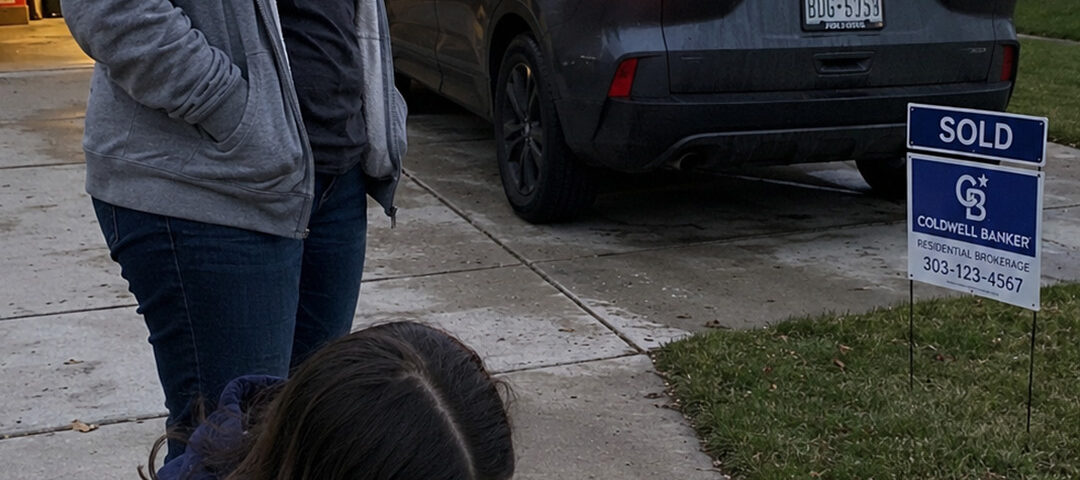
3 weeks later, he came home from his business trip to find strangers living in our house. He thought my silence meant surrender. He never realized it was the moment I stopped asking permission to save my own life.
Part one: The ultimatum disguised as freedom.
If someone had asked me the week before whether my marriage was happy, I probably wouldn’t have answered yes, but I would have answered stable. At 43, stability felt more valuable than fireworks.
Our home sat on a quiet street outside Denver, Colorado, where the sidewalks were lined with maple trees, and almost every garage door opened at exactly the same time every weekday morning.
After 18 years in the neighborhood, I knew which families ordered pizza every Friday, which dogs escaped their fences, and which neighbors secretly watered everyone else’s flowers during vacations.
Routine had become the language of my life. Every weekday started before 6. I’d make coffee, pack lunches when Emily still needed one, review the calendar hanging beside the refrigerator, answer a few work emails from my phone, and mentally organize a dozen invisible tasks before most people had even opened their eyes.
People often said Daniel was the successful one. He was regional sales director for a logistics software company, traveled frequently, wore tailored suits, and had recently received another promotion. I managed operations for a medical supply company.
My job wasn’t glamorous. It was schedules, vendors, compliance reports, shipping delays, inventory problems, and endless spreadsheets. But organization wasn’t something I only did at work. I managed our lives the same way.
Mortgage payments, insurance renewals, Emily’s orthodontist appointments years earlier, the furnace inspections, holiday planning, property taxes, birthday gifts for Daniel’s parents, remembering that the smoke detector batteries needed replacing every autumn. People call it mental load now. Back then, I simply called it Tuesday.
That particular Friday began like countless others. I left work just after 5, stopped by the grocery store, and picked up Daniel’s favorite ribeye steaks because he texted me that afternoon. Celebrating tonight. Promotion bonus finally cleared.
I smiled when I read it. Despite everything that had felt different lately, part of me still wanted reasons to celebrate him. Emily was sprawled across the kitchen table when I got home. College brochures spread everywhere. Colorado State, University of Colorado, University of Denver. Acceptance letters hadn’t all arrived yet, but applications had.
Our daughter was 17. Smart, funny, and somehow already becoming someone who didn’t need me nearly as much as I still needed her. “Mom,” she said without looking up.
“Can you read my scholarship essay one more time?” “Only if you’re prepared for ruthless editing.” She laughed. I’ve been preparing my whole life. For nearly an hour, we worked through paragraphs while dinner cooked in the oven. Daniel walked in shortly after 6:30. He looked different these days. Not dramatically, just polished. His suits fit tighter because he’d been spending hours at the gym. His hair was trimmed every 2 weeks instead of every month. He wore a cologne I’d never bought him.
His phone never left his pocket anymore, not even inside the house. 3 months earlier, I might have asked questions. Instead, I had learned something strange. Whenever I noticed a change, somehow I became the problem. You’re imagining things. You’re getting insecure. Maybe you’re having a hard time with aging. That last one had stung. Not because I feared getting older. Because it came from the man growing visibly obsessed with looking younger. Daniel kissed Emily on top of her head.
How’s my future college freshman? Still broke. He laughed. I’ll fix that. Then he kissed my cheek. You smell amazing. So do you. I answered automatically. The words felt oddly rehearsed. Dinner was pleasant. Normal. Emily talked about her English teacher. Daniel described meetings in Seattle where he’d be spending the next 3 weeks overseeing a major client transition. I reminded him that the HVAC company was scheduled to inspect the furnace the following Tuesday. I’ll be gone. I know you’ll handle it like always.
He didn’t say those words. He didn’t have to. After dinner, Emily left to spend the night with her best friend Olivia. She hugged me goodbye. I’ll text you when I get there. Drive safely. She rolled her eyes. I’m not driving. Then remind Olivia, too. The front door closed. The house became quiet. Daniel unccorked another bottle of wine. Come sit with me. We settled into the living room.
The fire flickered softly in the stone fireplace we’d chosen together nearly 15 years earlier when we renovated the house. The house. My mother’s inheritance had paid most of the down payment. I rarely thought about that anymore. Not because it wasn’t important, because I’d always believed what was mine was ours. Daniel swirled his wine. I’ve been thinking. My stomach tightened. Nobody starts a sentence like that after 18 years unless something unpleasant is coming. I’ve done a lot of growing this past year.
I nodded slowly. I’ve realized people aren’t meant to be owned. The sentence landed strangely. I don’t think marriage should mean limiting yourself. I stared at him. He continued speaking with the calm confidence of someone presenting quarterly sales projections. I’ve decided we’re going to have an open marriage. Silence filled the room. I honestly wondered whether I’d misunderstood. What? He leaned back comfortably. I’ll still be your husband. His tone sounded reassuring. As far as I’m concerned, nothing important changes. I kept staring.
He continued. We’ll still live together. We’ll still take vacations. We’ll still spend holidays with family. We’ll still sleep together. His smile returned. I just won’t limit myself sexually anymore. The words seemed to float around the room without meaning. Finally, I asked quietly, “Are you asking me?” His forehead wrinkled. “No.” Another pause. “I’m telling you.” I felt something inside me become perfectly still. So, this isn’t a conversation. It’s reality. He reached for my hand. This is actually healthier. I didn’t move.
He kept talking. I’ve been reading about modern relationships. People aren’t designed for lifelong monogamy. I love you. I always will. But expecting one person to meet every emotional and physical need forever isn’t realistic. I listened. Every sentence sounded carefully rehearsed. Every justification polished, every excuse comfortably memorized. “So I said slowly. You’ll date other women. I’m not dating.” He corrected me immediately. “I’m experiencing connections, and I’ll continue being your wife.” “Exactly.” He smiled again, relieved that I was finally understanding.
“I knew you’d see the logic.” I looked directly into his eyes. Is there already someone? For the first time that evening, he hesitated. His gaze shifted toward the fireplace. That’s beside the point. So, yes. He sighed dramatically. I don’t want you obsessing over individuals. Individuals plural. I’ve never hidden the fact that I travel. You’ve hidden something. He shook his head. I’m being honest now. The arrogance of that sentence almost took my breath away. He expected credit.
Credit for confessing only after deciding I had no choice. Then he said the sentence that changed everything. I’m not leaving you, Clare. He sounded almost generous. Most women would be relieved to hear that. Relieved? As though keeping me as his wife while sleeping with other women was some extraordinary gift. I looked at the man I’d loved since my 20ies. The man whose career I’d supported, whose parents I’d cared for after surgeries, whose daughter I’d raised beside him.
And suddenly, I understood something terrifying. Daniel wasn’t asking me to share my husband. He was informing me that I would continue performing every responsibility of being a wife while he enjoyed every freedom of being single. He wanted loyalty, comfort, partnership, laundry folded, bills paid, holiday dinners planned, someone waiting at home, someone sleeping beside him, someone protecting his reputation in exchange. He offered me the privilege of watching him betray me openly. I asked one final question.
If I said no, his expression softened with something that almost resembled pity. I think eventually you’ll realize this is better than divorce, not better for us. Better for him? I nodded once, very slowly. I understand. Relief flooded his face. I knew you would. He leaned forward and kissed my forehead. I love you.
Then he smiled as though we’d successfully negotiated a minor household disagreement. That night, we slept in the same bed. Or rather, Daniel slept. I lay awake beside him, listening to his breathing. My mind wandered through 18 years. The promotion I’d declined because his required relocating first. The weekends I’d spent repainting this house. The inheritance my mother left me before cancer took her. The promises we’d made. The ordinary sacrifices that slowly become invisible because they’re repeated every day for nearly two decades.
Around 3:00 in the morning, I finally realized I wasn’t grieving the marriage. I was grieving the woman who had spent 18 years believing sacrifice automatically created respect. The next morning, Daniel wheeled his suitcase toward the front door. He kissed me goodbye. I’ll call when I land. I nodded. He hesitated. And Clare, yes. Don’t make this into something dramatic.
Then he climbed into his SUV and drove away toward Denver International Airport. I watched until the vehicle disappeared around the corner. The house became completely silent. I walked inside, made a fresh cup of coffee, sat at the kitchen table, opened my phone. Then I called the only person I trusted to tell me the truth. My name is Maya Rodriguez, the calm voice answered. How can I help you? I took one slow breath.
My husband thinks I just agreed to an open marriage. There was a pause. What do you think happened? I looked out the kitchen window at the empty driveway. I think, I said quietly, my marriage ended about 12 hours ago. Maya did not offer comfort first. She offered precision. Do not move money, sign anything, confront anyone, or send a message you might regret, she said. Not until I’ve seen every document. I had met Maya 2 years earlier through work.
She once told me that people often ruined their strongest legal position during the first 48 hours because pain made them reckless. By 10 Monday morning, I was sitting across from her in a downtown conference room with a folder on my lap and 18 years of marriage reduced to paper, tax returns, mortgage statements, retirement accounts, credit cards, the deed to the house, and my mother’s probate records. Maya read quietly, marking pages with yellow tabs. Colorado follows equitable distribution, she finally said.
That means fair, not automatically equal. But fair depends on evidence. The house was purchased mostly with your inheritance. Yes. My mother left me a little over $200,000. We used $160,000 for the down payment. And later you refinanced twice. She turned the deed toward me. During the second refinance, the property was placed in both names.
That complicates the separate property argument, but it doesn’t erase your contribution. We document everything. My throat tightened. Can I sell it? Not simply because you’re angry. I’m not angry. Maya studied me. That worries me more. Then I remembered something. 6 months ago, Daniel signed a limited power of attorney. We were considering moving closer to downtown after Emily graduated. He travels so often that the lender suggested it. Maya’s expression changed. Do you have it? I pulled a copy from the folder.
This authorizes you to handle refinancing or sale related real estate transactions during the stated period. She said it may be enough, but I’ll verify the scope and whether the closing company will accept it. So, I can sell. You may be able to. You cannot hide the proceeds, spend his share, or pretend the transaction never happened. I don’t want his share. I want my life back. Maya’s face softened.
Then we do this cleanly. Over the next 3 days, cleanly became a full-time job. I opened an account at a different bank and redirected my future paychecks. From the joint account, I transferred only the amount Maya approved. My documented share after upcoming obligations were covered. The mortgage, utilities, insurance, and Emily’s school expenses remained funded. The rest would go into Maya’s trust account. I did not empty Daniel’s wallet. I removed my hand from beneath it.
At home, I worked after midnight while Daniel sent cheerful messages. The client dinner went great. “Want me to bring you something?” I answered politely. “No, thank you. Hope the meetings go well.” He believed he had delivered his ultimatum, survived the conversation, and left me home to adjust. On Thursday night, I began reviewing our credit card statements.
At first, the charges looked ordinary. Airfare, rental cars, restaurants. Then patterns appeared. A boutique hotel in Boulder on a weekend. Daniel claimed he was in Phoenix. Two dinners at a steakhouse in Cherry Creek, each over $300. A jewelry store charge for $1,289. I had received no jewelry. My hands went cold. I searched older statements, more hotels, spa charges, room service for two, a florist in Seattle.
Then I found an emailed receipt in our shared tax folder for a gold bracelet shipped to someone named Vanessa Cole. Three months before Daniel announced his new philosophy about human freedom, I sat alone at the dining table, the blue light from my laptop washing over the room where we had hosted birthdays and Thanksgiving dinners. The open marriage had never been an idea. It was an alibi.
I saved copies of everything to an encrypted folder, printed the most important records, and sent them to Maya. Her reply came quickly. Do not contact Vanessa. Do not confront Daniel. Preserve all records. The next conversation was harder. Emily came home Friday afternoon and found me packing documents into a banker’s box. Mom, what’s happening? I considered lying, the kind adults call protection. Instead, I closed the box. Your father and I are separating.
Her face changed so quickly that I hated Daniel for making me witness it. What? You do not have to choose sides, I said. You’re allowed to love both of us, but I’m not going to tell you this was mutual. Emily sat down slowly. Is it because of Vanessa? The room seemed to tilt. You know her name? Tears filled her eyes. I saw a message on Dad’s phone in December.
She wrote, “I miss waking up next to you.” I didn’t say anything because I thought maybe I misunderstood. Oh, sweetheart. I thought if I told you, I’d be the one who broke everything. I crossed the kitchen and held her. You did not break this family. You were a child carrying information that never should have been placed in your hands. She cried against my shoulder, and I kept my own tears quiet.
By the following week, Maya had confirmed that the power of attorney could be used, provided every step was disclosed, and the proceeds were protected. I contacted a real estate agent named Susan Park, who had sold two homes on our street. She walked through the house with a tablet, taking notes while I tried not to remember choosing every light fixture. The market is strong, she said. This neighborhood moves fast.
Within 4 days, we received a cash offer from a family relocating from Austin. It was above asking and included a short closing period. Every page went through Maya. Every disclosure was documented. Every dollar would be wired into escrow until the divorce court determined distribution. Daniel, meanwhile, texted me a photograph of the Seattle skyline. Beautiful view, he wrote. New beginnings everywhere. I stared at the message.
Then I signed the sale contract. That evening, I stood in the living room after Emily had gone upstairs. The fireplace was dark, and the walls already seemed less personal, as though the house understood before Daniel did that the Bennett no longer lived there. I expected grief. What I felt was clarity. I was not mourning the loss of a home. I was mourning all the years I had spent trying to make one for a man who treated it like a hotel.
Full service, always available, and waiting whenever he decided to return. The closing happened on a Wednesday morning. There were no dramatic speeches, no celebration, no sense of victory. I signed the final documents in a quiet conference room while Maya reviewed every page one last time. The proceeds from the sale went exactly where they were supposed to, into an escrow account supervised through the divorce proceedings. Not $1 landed in my personal account.
When the last signature dried, Susan, the real estate agent, smiled warmly. I know selling a family home is never easy. I smiled back politely. It’s easier than living in one that stopped being a family. Emily and I moved into a townhouse 15 minutes from her high school. It wasn’t large, two bedrooms, a small office barely big enough for a desk, a narrow kitchen with white cabinets that had probably been installed sometime around 2005.
The living room overlooked a row of cottonwood trees instead of our old backyard. It wasn’t impressive. It was peaceful. For the first time in months, I noticed what silence actually sounded like. No wondering whether Daniel was telling the truth. No checking flight schedules against business trips. No listening for his garage door while rehearsing conversations in my head. Just silence. Emily helped unpack boxes while pretending she wasn’t emotionally exhausted. She held up one framed family photograph. Should we keep this?
It showed the three of us at Yellowstone six summers earlier. Daniel had one arm around me. Emily sat on his shoulders, laughing into the camera. I looked at it for several seconds. Yes. You still want it? I want to remember that not every memory became fake just because the ending did. She nodded quietly. I like that. Most of the furniture stayed behind.
The pieces that clearly belong to me, my mother’s antique dining table, several inherited cabinets, personal artwork, family keepsakes, came with us. Everything jointly owned had been photographed, cataloged, and placed into professional storage until the property division was finalized. Maya insisted on documentation for everything. “If we’re cleaner than they expect,” she’d said. “They’ll have very little to attack.” Daniel remained blissfully unaware. “Every evening,” he texted. “Long meetings today. Seattle weather is awful.
Can’t wait to sleep in my own bed again.” Sometimes he added heart emojis. I responded politely. Safe travels. Hope the meetings go well. I wasn’t pretending anymore. I was preserving evidence. 3 weeks passed faster than I expected. Then on Sunday afternoon, my phone rang. Daniel. I answered. Hello. For 2 seconds. Nothing. Then came shouting. What the hell did you do? I leaned against the kitchen counter. His voice echoed so loudly I had to pull the phone away from my ear.
I came home. I know. You sold the house. Yes. Where are my things? Insecured storage. Your attorney has the inventory. You had no right. My attorney disagrees. He [snorts] sounded completely out of control. I just walked into my own neighborhood and some stranger answered the door. I closed my eyes. I could almost picture it.
Daniel entering the driveway with his expensive suitcase, typing the old security code, finding it disabled, ringing the bell, then watching an unfamiliar couple opened the front door while their young son peaked around his father’s leg. What happened? He demanded. I accepted the marriage you offered. What? I simply declined to remain in it. You’ve lost your damn mind. No, I found it. He cursed loudly. My accounts are frozen. No, they’re not.
The joint account was properly closed after all shared obligations were satisfied. My credit card was declined. The authorized user account connected to our joint finances was cancelled. You embarrassed me. There it was. Not you hurt me. Not I miss you. Not even. Why didn’t you tell me? His first real complaint was humiliation. You made me look like an idiot. I answered quietly. Daniel, you accomplished that without my help. He hung up. 5 minutes later, Maya called.
I just received correspondence from Daniel’s attorney. Already? He works quickly when he’s angry. What happens now? We respond with documentation. That afternoon, Maya emailed every relevant record. The limited power of attorney, closing documents, escrow confirmation, storage inventory, financial accounting, every transaction, every receipt, every signature, nothing hidden, nothing stolen, nothing illegal. Daniel could be furious. He could not honestly claim he had been robbed.
Three evenings later, Emily and I were eating takeout Chinese food while assembling inexpensive bookshelves from a hardware store. Neither of us particularly enjoyed building furniture. We both hated reading instructions. It became our unofficial therapy. Emily laughed after attaching one shelf backward. I think IKEA has destroyed more families than divorce. I don’t think we’re allowed to blame Sweden. The doorbell rang. Neither of us expected anyone. I looked through the peepphole. Daniel, before I could react, he started pounding on the door. Claire.
Another bang. Open this damn door. Emily froze. Dad. His voice grew louder. I know you’re in there. The entire hallway echoed. Open the door now. Emily looked smaller than 17. She looked seven. I walked toward her instead of the entrance. Go into your room. I don’t want Please. She disappeared down the hallway. Daniel continued hitting the door. This isn’t your house. You don’t get to keep my daughter from me. I unlocked nothing. Instead, I called 911.
My aranged husband is outside my residence refusing to leave. Within minutes, two officers arrived. Daniel immediately changed his tone. I just wanted to speak with my wife. One officer remained outside with him while the other knocked gently. I opened the door. Are you okay, ma’am? Yes. Would you like him removed? Yes. Daniel stared at me in disbelief. Claire. The officer raised a hand. Sir, you’ve been asked to leave. This is my family. Not here. It isn’t.
Daniel argued for several more minutes before finally walking toward his SUV. Before leaving, he looked up at Emily’s bedroom window. She had pulled the curtain back only an inch. Their eyes met briefly, then she closed it. That image stayed with me. Not because Daniel had cheated, not because he had demanded an open marriage, because in the moment he lost control, his first instinct wasn’t protecting his daughter. It was reclaiming possession. Later that night, Emily sat beside me on the sofa.
I’ve never been afraid of Dad before. I took her hand. I know. He didn’t even ask if I was okay. No, he just wanted inside. Yes. She looked down quietly. I think that’s what hurts. I hugged her. Neither of us spoke again for several minutes. The following morning, Maya called with another discovery. Claire, you need to see something. She forwarded an email obtained during financial disclosure.
It had been sent from Daniel’s work account to a luxury apartment leasing agent in downtown Denver. The subject line read, “Corporate housing inquiry.” The message itself was short. My wife handles our household finances, so I need discretion regarding payment timing. The apartment would primarily be for business travel. Attached was a floor plan, onebedroom, high-rise, walking distance from restaurants Vanessa had tagged repeatedly on social media. The lease amount exceeded $4,000 per month. I read the sentence again.
My wife handles our household finances. He had planned everything. He intended to let me continue paying the mortgage, continue managing Emily’s future college expenses, continue balancing every household bill while financing a luxury apartment where he could build a second life. Not after leaving me, while remaining married to me. The cruelty wasn’t the affair anymore. It was the assumption that I would unknowingly sponsor it.
That evening, another notification appeared. Voicemail. Daniel. His breathing sounded uneven. You think you’ve won? A long pause. Wait until I tell Emily what kind of woman her mother really is. The recording ended. I didn’t cry. I didn’t call him back. I simply saved the voicemail. Then I forwarded it to Maya because by then I had finally learned the difference between reacting um and documenting.
By the end of that week, Daniel had stopped trying to speak to me directly. Instead, he started speaking about me to everyone else. The first call came from a woman named Linda, whose children had attended elementary school with Emily. She sounded embarrassed before she even finished saying hello. Clare, I thought you should know Daniel told Mark that you sold the house without permission, emptied the bank accounts, and disappeared with Emily. I closed my office door before answering.
Did he say Emily was missing? He used the word kidnapped. For a moment, I stared at the framed photograph on my desk. Emily, at 14, standing beside me at Garden of the Gods, sunlight in her hair, and red dust on her shoes. She is 17, I said. She attends school everyday, answers her phone, and has spoken to her father. I knew something didn’t sound right. Thank you for telling me. I did not explain further. Maya had been clear.
Public arguments created private evidence for opposing lawyers. Daniel wants you defending yourself emotionally, she told me. Do not give him free material. So, I stayed quiet. Daniel did not. He told co-workers I had suffered a breakdown. He told neighbors I had become vindictive after discovering one harmless mistake. He told his family I had manipulated Emily and hidden marital assets.
Then his mother called. Margaret Bennett had always spoken as though every conversation were a hearing at which she served as both judge and jury. Clare, I’m deeply disappointed in you. I’m sorry to hear that. You destroyed your family over one mistake. I looked across the townhouse living room where Emily’s college application folders sat beside a bowl of unopened mail. This wasn’t one mistake. Men make foolish choices when they’re under pressure.
Daniel made reservations, purchased jewelry, lied about business travel, and planned a second residence. Margaret was silent for a beat. He says you refused to listen. I listened very carefully. He informed me that he would continue sleeping with other women and expected me to remain his wife. You could have gone to counseling. Counseling requires two people who believe the marriage belongs to both of them. Her voice hardened. You’ve turned Emily against her father.
No, Emily is old enough to form her own opinion, and I will not lie to improve Daniel’s image. You’re punishing him. I am divorcing him. There was a difference, though Margaret had no interest in hearing it. A temporary parenting arrangement was discussed the following week. Because Emily was less than a year from turning 18, her wishes carried significant weight. She told the family counselor she wanted to remain with me until graduation and see Daniel only when she felt comfortable.
I stayed out of the room while she spoke. When she came out, her face was pale but composed. “Did I say the wrong thing?” she asked. “No, he’s going to think you told me what to say.” “He already thinks that.” She exhaled slowly. “I hate that I still care what he thinks. That doesn’t make you weak. It makes you his daughter. Daniel responded by buying her a car.
It was a used silver Honda, reliable enough, parked outside her school with a red bow stretched across the windshield. He had arranged for the dealership representative to hand her the keys at the end of the day. Emily called me from the parking lot. Dad bought me a car. I closed my laptop. How do you feel about that? Like I’m supposed to forgive him before I drive it. You don’t owe anyone forgiveness in exchange for a gift.
That evening, Daniel took her to dinner. She returned 2 hours later without the car. What happened? I asked. He said he would pay my tuition, too, if I stopped letting you poison me. My stomach tightened, but Emily continued before I could respond. I asked whether that money was coming from the apartment he planned to rent for Vanessa. I stared at her. What did he say? Nothing. He just looked at me like I’d opened a locked drawer.
She had left the keys on the restaurant table. 2 days later, Vanessa contacted me. Her message arrived through LinkedIn of all places. I know you have no reason to answer me, but I need to know whether you and Daniel had actually agreed to an open marriage. I read it three times. Anger came first, sharp and instinctive.
Then I remembered the receipts, the hotel rooms, and the bracelet shipped to her address. I also remembered that Daniel had lied to me for months. There was no reason to assume he had been honest with her. I replied with one sentence. He informed me after the affair had already begun. I never agreed. Vanessa answered almost immediately. She asked whether we could speak. I did not want a friendship, confession, or shared grief.
Still, Maya advised me to preserve anything relevant, so I agreed to a brief phone call. Vanessa’s voice was quieter than I expected. Daniel told me you had been emotionally separated for years. She said he said you slept in different rooms. That was false. He said you were seeing someone, too. Also false. He told me the open marriage was your idea. I closed my eyes. Of course, he had.
To me, he had presented himself as a brave, modern man trapped by outdated expectations. To Vanessa, he had presented himself as an abandoned husband whose enlightened wife had already moved on. Neither story required him to admit he was simply cheating. Then Vanessa told me something I did not know. He borrowed money from me. How much? Almost $14,000. She explained that Daniel had claimed I controlled the family finances and temporarily froze his access whenever we argued.
He told her he needed help covering deposits, travel expenses, and legal consultations until he could separate his assets from mine. In reality, he had been using her money to maintain the image of a wealthy man preparing for a glamorous new life. I thought he was protecting himself from you, she said. He told me he was protecting himself from you. The silence between us was uncomfortable, but clarifying. Vanessa did not ask me to forgive her. I did not offer.
She said she had ended the relationship and would preserve every message if subpoenaed. That was enough. At the first formal mediation session, Daniel arrived wearing a charcoal suit and the expression he used when negotiating contracts. He asked for half the house proceeds, access to Emily’s entire college fund, temporary support from me, and reimbursement for the career damage he claimed I had caused. Maya listened without interrupting.
Then she opened our evidence binder. She documented my inheritance contribution to the house, Daniel’s marital spending on hotels and gifts, the protected escrow account, my continued deposits into Emily’s college fund, and the apartment correspondence showing he intended to use shared income for a private residence. When Daniel’s attorney saw the email trail from Vanessa, his posture changed. Daniels did not. He leaned toward the mediator. This is selective evidence. Clare has always controlled the narrative. For the first time that day, I spoke.
No, Daniel. I controlled the records. You controlled the narrative. His attorney requested a private conference. 20 minutes later, he recommended settlement negotiations. Daniel refused. He believed delay would exhaust me, legal fees would frighten me, and loneliness would eventually make me return to the life I had built for him. He still did not understand. I was no longer fighting to persuade him that I mattered. I was fighting because I finally knew I did. Daniel’s refusal to settle did not make him stronger.
It made everything more expensive. For 4 months, our divorce moved through financial disclosures, attorney letters, temporary orders, and scheduling delays that made every week feel borrowed from someone else’s life. I kept working. I drove Emily to school through snow, bought groceries after work, and reviewed college aid forms at the kitchen table. Life did not pause simply because my marriage was ending. Daniel seemed surprised by that. He had expected me to collapse under the pressure.
Yet, I continued doing what I had always done, organizing the necessary things. Only now, none of that effort was being used to protect him. The first sign of strain appeared in an email from his attorney requesting additional time to pay mediation fees. Then Daniel called me about a utility bill. I never received the final statement for the old house. It was sent to your lawyer with the closing documents. I don’t know where anything is anymore.
For 18 years, I had known where everything was. The insurance cards, tax folders, warranties, and passwords Daniel always forgot. Now he rented a furnished apartment near his office, paid his own health insurance, managed his own credit cards, and discovered that comfort had always required labor. He was not becoming poor. He was becoming responsible for himself. There was a difference.
One rainy Tuesday, Maya called while I was leaving work. Has Daniel accused you of contacting his employer? No. Why? Because his attorney just implied that you triggered an internal investigation. My hand tightened around the car keys. I haven’t spoken to anyone at his company. I know. I’m asking before I respond. The investigation had begun during a routine expense audit. Several hotel stays, dinners, and conference charges did not match Daniel’s client calendar.
Some involved Vanessa, yet had been submitted as business development expenses. 2 weeks later, Daniel was placed on administrative leave. He called that night. You did this. I stood in the townhouse kitchen slicing apples for Emily’s lunch. No, Daniel, don’t lie to me. I didn’t contact your company. They suddenly investigate me right after you collect all those statements. You submitted false expenses. Your employer found them. You handed them everything. I handed records to my lawyer. He laughed once without humor. Same thing.
It was not the same thing, but Daniel had reached the stage where any consequence felt like persecution. The company did not fire him. They demoted him, removed several major accounts, and required repayment of disputed expenses. For a man who had built his identity around status, the title change wounded him more deeply than the money. He stopped calling for almost 3 weeks. Then, one Sunday evening, my phone rang while Emily was upstairs studying. His voice sounded unfamiliar, not angry, tired.
Claire, can we talk? We’re talking. I mean, really talk. I sat at the edge of the sofa. He told me he had been under pressure, that the promotion had changed him, that Vanessa had made him feel admired, and that everything had gotten out of control before he understood what he was risking. Then he said the words I once would have prayed to hear. I made a mistake. I waited. We could go to counseling, he continued.
We don’t have to throw away 18 years. The old version of me would have heard hope. The woman I had become heard fear. Do you miss me? I asked. Or do you miss the life I made possible for you? Silence. Outside tires hissed over wet pavement. Finally, Daniel said. That’s not fair. It was the answer. Our final mediation took place in early spring. Sunlight poured through the conference room windows, too bright for the heaviness of the day.
Maya had prepared several possible trial outcomes. Some favored me, some did not. All of them involved more months, more legal fees, and more strain on Emily. I could have fought for every disputed dollar. Instead, I chose certainty. Daniel received a fair portion of the house equity after my traceable inheritance contribution was recognized. I kept my retirement account and he kept his. A portion of the marital money he had spent on hotels, jewelry, and private travel was reimbursed from his share.
Emily’s college fund became protected by court order. Neither of us could withdraw from it for personal use. There would be no long-term spousal support. Emily would remain with me until graduation, though she could see Daniel whenever she chose. When Maya read the final terms, Daniel stared at the table. His attorney leaned close and whispered to him. I could not hear every word, but I caught enough. Trial risk, documented spending, threatening voicemail. Possible sanctions. Daniel picked up the pen.
For a moment, he looked at me as though waiting for hesitation. I had none, he signed. The sound of his pen moving across paper was almost disappointingly ordinary. No thunder, no applause, just ink. Outside the building, he followed me toward the parking garage. Clare. I turned. He looked older than he had 6 months earlier. Not ruined, not broken, simply stripped of the confidence that everyone else would absorb the consequences of his choices. “Did you ever love me?” he asked.
The question hurt because the answer remained true. I loved you for 18 years. His eyes lowered. You just confused my love with permission. I walked away before he could answer. That Friday, the court entered the final decree. The same afternoon, Emily found a large envelope in the mailbox from Colorado State University. She stood in the entryway with both hands shaking. Mom, I can’t open it. Yes, you can. She tore the envelope, scanned the first line, and screamed.
I laughed before I cried. She had been accepted. We sat on the floor, surrounded by papers, reading scholarship details and housing information while takeout containers cooled on the counter. For months, I had imagined the divorce ending with relief. Instead, it ended beside my daughter, planning the beginning of her future. Daniel had believed winning meant keeping every comfort while breaking every promise. I had learned something else. Winning was not watching him lose his title, his apartment fantasy, or his control over me.
Winning was reaching a place where his failure was no longer necessary for my freedom. One year after the divorce, I learned that peace has a sound. It is not silence exactly. It is the hum of a refrigerator in a smaller kitchen. The click of a lamp beside a sofa no one criticizes. The soft scrape of a key turning in a lock you chose for yourself. My townhouse never became impressive. The upstairs hallway still creaked in winter.
The patio was barely large enough for two chairs and a pot of basil. The guest bathroom had a stubborn faucet that dripped whenever the weather changed. But the rooms felt honest. Nothing inside them asked me to pretend. A few months after Emily left for Colorado State, my company offered me the operations director position I had turned down twice before. The first time, Daniel said the extra travel would be difficult for the family.
The second time, he reminded me that his schedule was less flexible than mine. This time, I said yes before anyone could explain why I should not. The work was demanding, but it suited me. I had spent years organizing other people’s chaos while treating my own ambition like an inconvenience. Now when I stayed late, it was because I had chosen responsibility, not because someone else had quietly assigned it to me. Emily called every Sunday evening.
Sometimes she wanted advice about classes or roommates. Sometimes she called while walking across campus, breathless from the cold, only to tell me about a professor who mispronounced her name or a dining hall dessert that should have been illegal. Her relationship with Daniel remained complicated. He did not transform overnight. Real change rarely arrives with a dramatic apology and a perfect speech. It appeared in smaller, less impressive ways. He began therapy after his demotion. He stopped blaming me when Emily asked difficult questions.
He arrived on time for planned visits. He paid his share of tuition without using the money as leverage. When she said she was not ready to spend Thanksgiving with him, he did not punish her with silence. Months later, a letter from Daniel arrived in my mailbox. I almost threw it away. Instead, I made tea, sat at the kitchen table, and opened it.
He wrote that he had spent most of our marriage believing love was something he had earned permanently, like a title or a house deed. He admitted that he had mistaken my reliability for dependence, my patience for weakness, and my silence for agreement. For once, the letter contained no request. He did not ask me to reconsider. He did not say Vanessa had manipulated him. He did not blame stress, age, alcohol, work, or loneliness. He simply apologized. I read it twice.
Then I wrote back. I told him I hoped he became a better father, not to prove he deserved forgiveness, but because Emily deserved a father who could tell the truth without needing to be cornered first. That was all. Forgiveness, I discovered, was not the same as reopening the door. It was choosing not to stand behind it forever, waiting for another apology.
At Maya’s suggestion, I joined a support group for women rebuilding their lives after divorce. We met twice a month in the basement of a community center where the coffee was terrible and the folding chairs pinched the backs of our legs. The women were different ages from different backgrounds with stories that should not have fit together. Yet, almost all of us had done the same thing. We had made ourselves smaller to keep someone else comfortable.
One evening, a woman named Ruth asked what had been hardest for me. I expected to say selling the house. Instead, I said, admitting that I spent years calling self-erasure loyalty. The room became very quiet. I told them I had believed endurance was proof of love. I had thought that if I kept the house running, protected Daniel’s reputation, remembered every appointment, softened every disagreement, and asked for less, eventually he would see my value.
But people do not always value what they are allowed to take for granted. Sometimes they simply take more. The following spring, I returned to our old neighborhood for the graduation party of a friend’s son. I parked two streets away and walked beneath the same maple trees I had watched change color for 18 years.
When I reached our old house, I slowed. The new family was outside. The father stood at the grill while two children ran through a sprinkler. Their mother carried a pitcher of lemonade onto the patio. Someone had painted the front door blue. For a moment, I remembered Thanksgiving dinners, Emily’s first day of kindergarten, my mother sitting by the fireplace before she became too sick to visit. The memories came without warning. So did the grief.
But it no longer felt like a command to return. The house had not betrayed me. It had simply held a life that was over. I stood there for another moment, then continued walking. Daniel had once believed the house was the prize. He believed the money was the prize, the marriage was the prize, and keeping me available while he pursued other women was proof that he had won. He had been wrong. The house was never the reward. Freedom was.
Freedom was paying my own bills and knowing exactly where every dollar went. It was accepting a promotion without apologizing. It was watching my daughter learn that love did not require surrender. It was understanding that revenge did not have to be loud, cruel, or destructive. Sometimes revenge was simply refusing to keep protecting someone from the consequences of the life they chose. I had not rushed into another relationship, and I no longer treated being alone as an emergency.
Some evenings were lonely, but loneliness was honest. It did not smile across a dinner table while rewriting the terms of my life. I had learned that companionship was meaningful only when it did not require me to disappear. Daniel told me I had to accept an open marriage. He was right about one thing. I did have to accept something. I had to accept that love without respect was not a marriage. Silence was not consent. And leaving was not failure.
Sometimes the most honest revenge is building a life that no longer has room for the person who thought you would never walk away. If this story made you think about the difference between love and self-abandonment, I hope you will share your thoughts in the comments. And if you believe stories like Claire’s can help someone recognize their own strength, please consider subscribing and joining us for the next one.
If you came here from Facebook because of this story, return to the Facebook post, tap Like, and comment exactly “Amazing” to support the storyteller. That small action means more than it seems and gives the writer genuine encouragement to keep sharing more stories about family pressure, firm boundaries, and finally protecting what you worked so hard to build.
Disclaimer: This story is a work of fiction created for entertainment purposes. Any resemblance to real persons, events, or places is coincidental.