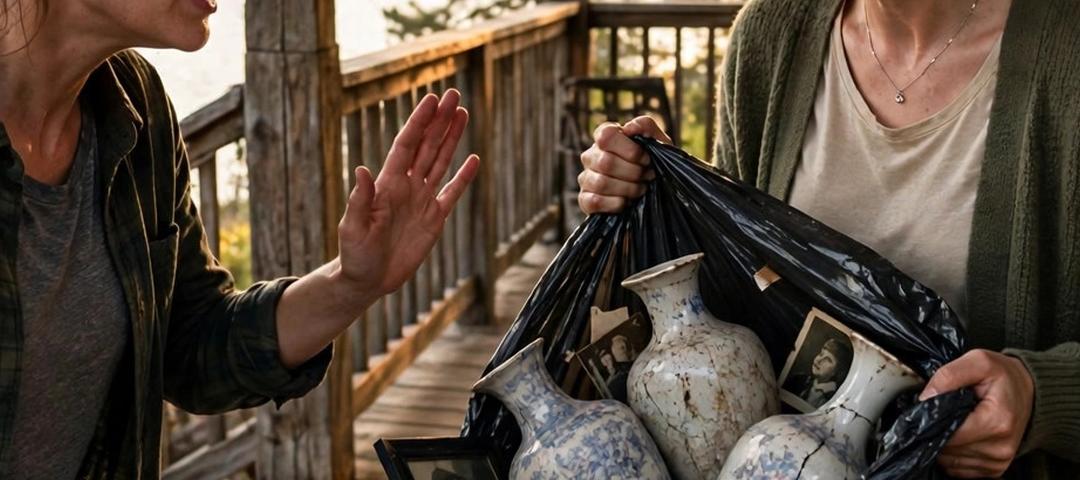
Victoria’s offer of the guest room returned to my mind. At the time, I had been so hurt by the idea of becoming a visitor in my own home that I hadn’t yet understood how much more my family intended to take from me.
The house wasn’t simply going to provide Jacob with rooms where he could live and work. Its value was supposed to make his financial problems manageable.
They were prepared to place my property, my financial security, and my professional standing at risk to save him.
I asked Gregory to keep going.
I didn’t want an informal promise that the plan would end. I didn’t want my parents to return the stamp, call the destruction a misunderstanding, and expect me to repair the damage to my property and reputation without further questions.
I wanted the record to reflect what had actually happened.
I wanted the restoration costs covered. I wanted my professional reputation protected. I wanted their supposed authority over my property permanently ended, without room for another explanation later.
Those requests felt harsher whenever I pictured my parents rather than the documents.
That was something I had to sit with.
I could care about them and still refuse to overlook what they had done. I could remember their generosity, acknowledge the good moments in our family history, and still recognize that none of those things gave them the right to forge my signature or put my future at risk.
Eight months after the incident, the case reached court.
By then, I had spent months answering questions through Gregory, continuing my work, and watching the lake house gradually come together again.
I still wasn’t prepared for how ordinary my parents looked as they sat beside their attorney.
They weren’t carrying Jacob’s boxes anymore. They weren’t standing in my kitchen explaining why their decisions were reasonable.
They were waiting for someone else to explain their conduct in language that might make it seem less deliberate.
Gregory didn’t begin with our family history or the years of tension that had led to the confrontation.
He began with the property and the documents.
The lead contractor testified that my parents had represented themselves as owners and supplied the paperwork used to authorize the renovation.
The same document I had first seen amid the dust was now being examined in a courtroom where my mother couldn’t end the discussion by telling me to calm down.
Experts confirmed that the signature had been copied and that my notary seal had been used without my authorization.
I watched the document while they explained their findings.
At the house, seeing a familiar signature had briefly made me feel as though I were standing outside my own certainty. The handwriting resembled mine. The seal was real. Someone had taken things I trusted and used them to create an appearance of authority.
But in court, the questions were precise.
Had I signed the document?
I had not.
Had I authorized the use of my notary seal?
I had not.
My parents’ attorney offered explanations, but Gregory returned to the evidence. Whatever they had hoped to accomplish for Jacob, the necessary permission had never come from me.
Then Jacob was questioned.
He began with the account we had all heard before: his company needed to expand, and the house would give him a place to work and live.
Gregory introduced the financial records.
More than $800,000 in debt.
He presented the evidence concerning the federal investigation and then introduced text messages showing that Jacob had begged our parents for help before the demolition began.
Jacob looked toward them.
Neither of my parents gave him an answer he could use.
The messages mattered because they connected his request for rescue to what had happened at my house. This wasn’t a business expanding into a new office. It was a business in serious trouble, and my parents had tried to make my property part of the solution.
Gregory kept his questions short. Jacob’s answers became less certain as the evidence accumulated.
Finally, he stopped defending the plan.
“It wasn’t my idea,” he said.
He admitted that my parents had taken my stamp and forged the paperwork.
I looked at my mother.
Weeks before the demolition, she had spilled wine on my blouse, and I had left my work bag unattended in a room where I believed it was safe.
For months, I had carried the suspicion that the incident at dinner was connected to the forged document. Now there was an admission behind that suspicion.
Then Jacob offered something I hadn’t known existed.
He said he had an audio recording of our mother admitting how the stamp had been taken and the documents forged.
He was willing to surrender it. He was willing to give them everything.
For months, my parents had treated my refusal to help as a betrayal of the family. They had insisted that loyalty meant making sacrifices for Jacob, regardless of what those sacrifices cost me.
Now the son they had risked everything to protect was offering evidence against them as soon as he believed it might protect him.
I didn’t feel pleased watching it happen.