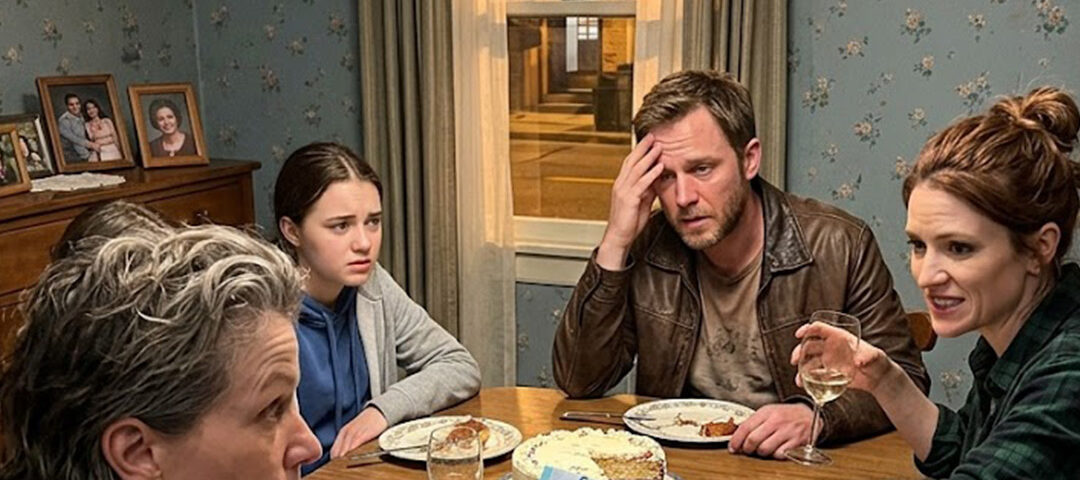
At my forty-ninth anniversary dinner, my daughter-in-law raised her wineglass and announced that she had found “a lovely little senior community” for me.
She said it gently, as though she were offering me a vacation.
My son, Daniel, smiled beside her.
That was when I realized they had already made the decision.
Without me.
Marissa explained that the community was only twenty minutes away.
It had prepared meals, transportation, weekly activities, and a garden club filled with “people your age.”
Then she glanced around my dining room.
“The house is simply too much for you now,” she said.
“And once you move, we can finally start the renovations.”
Finally.
The word landed harder than anything else she had said.
This was the house my late husband, Robert, and I had spent thirty years paying for.
The kitchen where I had packed Daniel’s school lunches.
The hallway where I had measured his height in pencil.
The bedroom where Robert had taken his final breath.
Yet Marissa was already discussing which walls they would remove after I was gone.
Earlier that evening, she had pushed Robert’s empty chair against the wall.
“We need more space,” she had said.
Now I understood what she meant.
Daniel stared at his plate while his wife described my removal as a “smooth transition.”
My two granddaughters sat silently, watching their father avoid my eyes.
I waited for him to speak.
To say they had gone too far.
To say this was still my home.
He said nothing.
There are moments when love does not disappear.
It simply refuses to defend you.
Marissa reached across the table and touched my shoulder.
“We’ve already handled most of the paperwork,” she said.
“You won’t need to worry about anything.”
That was her second mistake.
Her first was believing I knew nothing.
I placed my fork beside my plate and reached into my purse.
Slowly.
Marissa’s smile tightened.
I removed the same glossy brochure she had shown Daniel weeks earlier.
On the cover, a silver-haired couple walked beneath flowering trees.
Inside was a floor plan for a one-bedroom unit with no porch, no full kitchen, and no room for the cedar chest Robert had built for me.
Daniel’s face changed the moment he saw it.
“Mom,” he whispered.
I opened the brochure to the page I had marked with a blue paper clip.
This was not a request for information.
It was an authorization form.
Someone had entered my name, my address, my medical details, and the proposed sale date of my house.
At the bottom of the page was Marissa’s signature.
I had circled it in blue ink.
For three full seconds, no one moved.
Marissa reached for the document.
I placed two fingers over it.
“That isn’t yours,” she said.
“No,” I replied.
“But the name you used is.”
Daniel’s skin went pale.
Marissa looked toward him, but he could no longer pretend this was only a misunderstanding.
What they still did not know was that the brochure was not the only document inside my purse.
And before that anniversary cake was cut, my son would finally learn exactly who owned the house he had already promised to his wife.
I kept two fingers pressed over the brochure.
Marissa’s hand remained suspended above the table.
“That isn’t yours,” she said.
“No,” I replied.
“But the name you used is.”
Daniel’s skin went pale.
Marissa looked toward him, but he could no longer pretend this was only a misunderstanding.
What they still did not know was that the brochure was not the only document inside my purse.
And before that anniversary cake was cut, my son would finally learn exactly who owned the house he had already promised to his wife.
My granddaughters, Lily and Grace, sat at the far end of the table.
Lily was seventeen.
Grace was fourteen.
Both had stopped eating.
Marissa lowered her hand.
“You’re making this sound much worse than it is,” she said.
I looked at the form.
“My medical details are written here.”
“Only basic information.”
“My date of birth.”
“They needed it.”
“My prescription list.”
Daniel looked up sharply.
“What prescription list?”
Marissa turned toward him.
“The community required preliminary health information.”
“You told me you were only asking about availability.”
“I was.”
I lifted the brochure.
“Then why does this form list a proposed move-in date?”
Daniel stared at the page.
Marissa said nothing.
I continued.
“And why does it say the house will be placed on the market within forty-five days?”
Daniel’s chair creaked as he shifted.
“Marissa?”
She exhaled impatiently.
“It was provisional.”
“You signed it.”
“It was not legally binding.”
“That is not the point.”
Her mouth tightened.
“It absolutely is the point.”
I looked at her.
“The point is that you used my personal information to arrange my removal from my own home.”
“Removal is a very dramatic word.”
“What word would you prefer?”
“Transition.”
Grace flinched.
I noticed.
Children always hear the truth beneath polished language.
Daniel rubbed one hand across his forehead.
“Mom, no one is removing you.”
I turned to him.
“Then tell me what you understood was happening.”
He opened his mouth.
Nothing came out.
Marissa answered for him.
“We were trying to help.”
“By planning renovations?”
Her eyes moved around the dining room.
The wallpaper had faded slightly near the windows.
Robert and I had chosen it in 1998.
Tiny blue flowers, simple and cheerful.
Marissa had always hated it.
“The house needs updating,” she said.
“You know that.”
“It needs paint.”
“It needs much more than paint.”
Daniel finally spoke.
“We thought if you moved somewhere smaller, we could take over the maintenance.”
“Take over?”
He looked trapped.
“We would keep the house in the family.”
I let the silence stretch.
That phrase.
Keep the house in the family.
It sounded generous until one remembered that I was still part of the family.
“Would you buy it?”
I asked.
Daniel’s eyes dropped.
Marissa leaned back.
“It would make no sense to sell it outside the family.”
“That was not my question.”
She crossed her arms.
“We assumed the equity would help pay for your care.”
“And after that?”
Daniel spoke quietly.
“Any remaining value would stay in the family.”
“With whom?”
He did not answer.
I looked at my granddaughters.
Lily was staring at her father.
Grace had folded her napkin into smaller and smaller squares.
“Say it plainly,” I said.
Marissa’s voice hardened.
“Daniel is your only child.”
“That is true.”
“So eventually the house would come to us anyway.”
There it was.
Not concern.
Not safety.
Arithmetic.
They had looked at my life and seen a future asset being inefficiently occupied.
I reached into my purse again.
Daniel watched my hand.
This time, I removed a cream-colored legal envelope.
Robert’s name was written across the front in his own handwriting.
For a moment, I felt the room disappear.
I saw him at this same table, years earlier, wearing reading glasses and pretending not to be tired.
Cancer had made him smaller by then, but not weaker.
He had slid the envelope toward me and said, “Only open this when Daniel starts behaving like the house already belongs to him.”
I had scolded him.
“He would never do that.”
Robert had given me a sad smile.
“Then you’ll never need it.”
I had placed the envelope in the locked drawer of my desk and left it there for four years.
Until three weeks earlier.
Until I discovered the brochure.
Daniel looked at his father’s handwriting.
“What is that?”
“A precaution.”
Marissa gave a humorless laugh.
“This is becoming theatrical.”
I looked at her.
“You arranged to move me into a senior community during my forty-ninth anniversary dinner.”
Her face flushed.
“We wanted the evening to feel supportive.”
“You pushed Robert’s chair against the wall.”
“We needed space.”
“No,” I said.
“You needed me to understand that you had already begun rearranging the house.”
Daniel shifted in his seat.
“Mom, please.”
I opened the envelope.
Inside were three documents.
The first was Robert’s will.
The second was the deed to the house.
The third was an amendment to the family trust.
I placed them on the table.
Daniel stared.
Marissa leaned forward.
I covered the pages with my hand.
“You may listen before you read.”
Neither objected.
“When your father became ill,” I said to Daniel, “he worried about what would happen after he died.”
Daniel’s expression softened slightly.
“He knew I would be alone.”
“I know.”
“He also knew you were struggling financially.”
Marissa’s eyes narrowed.
Daniel looked embarrassed.
At the time, he and Marissa had just bought a larger home they could barely afford.
They never told us the full truth, but Robert found late notices mixed with Daniel’s mail after Daniel used our address for a refinancing application.
Robert paid one of their mortgage installments without telling me.
Then another.
By the time I learned, he had transferred nearly twenty thousand dollars.
I was angry.
Not about the money.
About the secrecy.
Robert said he was trying to protect Daniel.
I told him protection without honesty becomes permission.
He agreed.
Then he did something I did not understand until later.
He changed the ownership structure of our home.
“The deed is not in my name alone,” I said.
Daniel frowned.
“What do you mean?”
“The house was transferred into the Whitaker Residence Trust six months before your father died.”
Marissa looked at the papers.
“Who controls the trust?”
“I do.”
“For life?”
“Yes.”
“And after you?”
I looked at her.
She was already thinking past my death.
“After me, the trust does not pass directly to Daniel.”
Daniel’s face changed.
“What?”
I turned the deed toward him.
He read the first page.
Then the second.
His eyes moved quickly.
Marissa leaned closer.
“What does it say?”
Daniel did not answer.
I did.
“It says that I have permanent, exclusive occupancy rights for the rest of my life.”
“That’s normal,” Marissa said.
“It also says the property may not be sold, transferred, mortgaged, renovated, or occupied by another family member without my written approval.”
She stiffened.
I continued.
“And if any beneficiary attempts to pressure, coerce, misrepresent, or remove me for financial gain, that beneficiary forfeits all future interest.”
The dining room went silent.
Even the refrigerator’s low hum seemed loud.
Daniel looked at me.
“Dad put that in?”
“Yes.”
Marissa reached for the trust amendment.
I allowed her to take it.
She scanned the pages.
Her face slowly lost color.
“This can’t be enforceable.”
“It is.”
“You had this reviewed?”
“By two attorneys.”
“When?”
“Last week.”
Daniel stared at me.
“You went to a lawyer?”
“I went after I found the form.”
“How did you find it?”
“The senior community mailed a confirmation packet to this address.”
Marissa closed her eyes briefly.
Apparently, she had expected everything to go through email.
The packet arrived on a Tuesday.
Inside were meal plans, payment schedules, a medical intake checklist, and a bright yellow note thanking “Mrs.
Evelyn Whitaker and family” for beginning the transition process.
At first, I thought it was advertising.
Then I saw my birth date.
My insurance provider.
The name of my doctor.
I called the community.
A kind woman in admissions explained that my daughter-in-law had submitted the forms and indicated that I was becoming forgetful, resistant to change, and increasingly unable to live independently.
I was standing in my kitchen while she spoke.
The same kitchen where, that morning, I had replaced a leaking faucet valve by myself.
I asked for copies of every document.
Then I called Robert’s attorney.
The trust clause he had created was not symbolic.
It was precise.
A beneficiary who attempted to displace me through fraud or coercion could be disinherited.
Robert had built a door into the future.
Marissa had walked straight through it.
Daniel’s voice trembled.
“Mom, I didn’t know she used your medical information.”
“But you knew about the community.”
“Yes.”
“You knew she intended for me to move.”
“We discussed it.”
“You knew she planned renovations.”
He looked at the table.
“Yes.”
“You knew she wanted the house.”
“We thought it would eventually be ours.”
“That is not an answer.”
He looked up.
“No,” he said quietly.
“I didn’t know she had gone this far.”
Marissa placed the amendment down.
“You make it sound like I committed a crime.”
“You signed my name on a medical release.”
“I signed as your family representative.”
“You are not my legal representative.”
“You would have agreed eventually.”
I stared at her.
There are statements that reveal more than confessions.
That was one.
Not I thought you agreed.
Not Daniel told me you agreed.
You would have agreed eventually.
Meaning my refusal was merely an inconvenience to be managed.
Lily spoke for the first time.
“Mom, did Grandma say she wanted to move?”
Marissa looked toward her.
“This is an adult conversation.”
“That means no,” Lily said.
Daniel closed his eyes.
Marissa’s voice sharpened.
“Do not speak to me like that.”
Lily’s chin trembled, but she held her ground.
“You told us Grandma had already decided.”
Grace looked at her mother.
“You said she was excited about the garden club.”
Marissa’s face changed.
I looked at my granddaughters.
“Is that what she told you?”
Neither answered immediately.
Then Grace nodded.
“She said you didn’t want the house anymore.”
Something inside me cracked.
Not because Marissa lied to me.
Because she had used my grandchildren as witnesses to a fiction.
She had wanted everyone around me to believe the move was voluntary before I was even told it was happening.
Daniel stood up.
“Marissa, enough.”
She turned toward him.
“Don’t you dare.”
“You lied to the girls.”
“I simplified the situation.”
“You lied.”
“And you agreed with me!”
The words struck the room.
Daniel froze.
Marissa stood too.
“You sat beside me when we toured the place.”
I looked at him.
He seemed suddenly older.
“You toured it?”
He swallowed.
“Yes.”
“When?”
“Three weeks ago.”
“The day you said you had a dental appointment?”
His face reddened.
“Yes.”
I nodded slowly.
For several minutes, I had been tempted to separate him from Marissa in my mind.
To tell myself she had manipulated him.
That he had been weak.
Passive.
Confused.
But he had driven there.
Walked through the unit.
Looked at the small bedroom.
Seen the narrow closet.
Seen the absence of a kitchen.
Seen the life they had selected for me.
And then he came home and ate dinner at my table without saying a word.
Marissa was cruel.
Daniel had collaborated through silence.
Sometimes silence is not the absence of a decision.
It is the decision.
I gathered the documents.
Daniel stepped toward me.
“Mom, what happens now?”
I looked at him.
“The trust provision is being activated.”
His face went pale.
“What does that mean?”
“It means your future interest in the house is under legal review.”
Marissa laughed nervously.
“You can’t disinherit Daniel because we tried to help you.”
“I am not doing it.”
“Then who is?”
“Your actions are.”
She looked toward Daniel.
“Say something.”
He remained silent.
For once, his silence did not protect her.
I reached for the final document.
It was a letter from my attorney confirming that the trust review had begun.
Until the matter was resolved, neither Daniel nor Marissa could make any claim against the property.
They could not list it.
They could not borrow against it.
They could not use it as collateral.
They could not enter it without my consent.
Marissa read the first paragraph.
Then the second.
Her expression sharpened.
“This says the house could pass to a charity.”
“Yes.”
“What charity?”
“The Robert Whitaker Veterans Housing Foundation.”
Daniel looked up.
“Dad’s foundation?”
Robert served in the Navy for six years.
Afterward, he volunteered with veterans struggling to secure housing.
Before his illness, he helped establish a small nonprofit fund, though it never had enough money to expand.
The trust amendment stated that if Daniel forfeited his interest, the house would be sold after my death and the proceeds donated to that foundation.
Daniel’s voice became quiet.
“He never told me.”
“He hoped he would never need to.”
Marissa pushed the letter away.
“This is manipulation from beyond the grave.”
I stood.
“No.
It is protection from people who mistake inheritance for ownership.”
The anniversary cake sat on the sideboard.
White frosting.
Gold lettering.
Forty-Nine Years of Love.
Marissa had ordered it.
I had wondered why the message sounded as if Robert were still alive.
Now I understood.
The dinner had not truly been about our anniversary.
The occasion was camouflage.
A sentimental backdrop for a conversation they hoped I would be too emotional to resist.
Daniel looked toward the cake.
“Mom, we should all calm down.”
“I am calm.”
“We can talk tomorrow.”
“I have spent weeks thinking.”
Marissa lifted her handbag.
“This is absurd.
Come on, girls.”
Neither girl moved.
“Now,” she said.
Lily looked at me.
“Can we stay with Grandma tonight?”
Marissa’s face hardened.
“No.”
Daniel spoke.
“Let them stay.”
She turned on him.
“You don’t get to become noble now.”
“I’m not trying to.”
“Yes, you are.
You’re trying to make this my fault.”
Daniel looked at her.
“Was forging the form my fault?”
“I did not forge anything.”
“You signed Mom’s name.”
“I signed for her.”
“You had no right.”
“You agreed she should move.”
“I agreed to discuss it with her.”
“No, you agreed we needed the house.”
That was the sentence that ended their united front.
Daniel’s face crumpled.
I looked at him.
“Is that true?”
He sat down.
For a long moment, he stared at Robert’s empty chair against the wall.
Then he said, “We’re in debt.”
Marissa closed her eyes.
“Daniel.”
“How much?”
I asked.
He rubbed both hands over his face.
“One hundred and twelve thousand.”
Lily gasped.
Grace began crying silently.
Marissa snapped.
“Not in front of the girls.”
“They live in your house,” I said.
“The debt affects them.”
Daniel continued.
“Credit cards.
The kitchen renovation.
The car.
Some investments that failed.”
“What investments?”
“A restaurant partnership.”
I stared at him.
Daniel had never mentioned a restaurant.
Marissa answered.
“It was supposed to double in value.”
“It closed,” Daniel said.
“When?”
“Five months ago.”
“And you planned to use this house?”
He nodded.
“We thought if you moved, we could sell our place, move here, and use the difference to clear the debt.”
It was worse than I had imagined.
They did not merely want my home.
They needed it to erase the consequences of their own choices.
“And where would I go after the senior community became too expensive?”
I asked.
Daniel looked confused.
“What do you mean?”
“The monthly fee increases after the first year.”
Marissa’s head snapped toward me.
“How do you know that?”
“I read the contract.”
Daniel turned to his wife.
“You said the rate was fixed.”
“It is for twelve months.”
“And after that?”
She crossed her arms.
“We would reassess.”
“With what money?”
No one answered.
I had done the math.
My pension and Social Security would cover less than half the monthly fee.
The proceeds from selling the house might have paid for years of care.
But they never intended for the proceeds to remain mine.
They intended to occupy the house.
So who would cover the senior community after my savings ran out?
The answer was obvious.
No one had thought that far.
Or worse, they had.
I looked at Daniel.
“Did you ever calculate whether I could afford the place?”
His silence lasted too long.
“No,” he whispered.
Grace wiped her face.
“Dad.”
He looked toward her.
She stared at him as though seeing someone new.
I knew that feeling.
Marissa grabbed her coat.
“We are leaving.”
She looked at Lily and Grace.
“Get your things.”
Lily stood.
Grace did too.
But neither moved toward their mother.
Lily looked at Daniel.
“Are we losing our house?”
He swallowed.
“I don’t know.”
Marissa snapped.
“We are not losing anything.”
I looked at her.
“You already lost the right to speak about my home as if it belonged to you.”
She stepped toward me.
For a moment, I thought she might take the documents.
Instead, she lowered her voice.
“You’re going to destroy your son’s life.”
“No,” I said.
“I’m refusing to let him repair it with mine.”
She stared at me.
Then she left.
Daniel remained seated.
The front door slammed.
A moment later, Marissa’s car started outside.
She had left without her husband or daughters.
Daniel looked toward the window.
Then at me.
“I didn’t think she would actually file the papers.”
“But you gave her the information.”
He nodded.
“You gave her my medication list?”
His face twisted.
“She said the community needed it.”
“And you never asked me.”
“No.”
“You never thought I deserved to know?”
“I thought you would say no.”
The honesty was brutal.
I sat down across from him.
“So you removed my chance to refuse.”
Tears filled his eyes.
“I’m sorry.”
I had heard him apologize before.
As a boy.
As a teenager.
As a man who had forgotten birthdays, missed hospital appointments, borrowed money, and failed to repay it.
Sorry had often been the bridge between his actions and my rescue.
This time, I did not cross.
“Are you sorry I found out?”
He flinched.
“No.”
“Are you sorry the trust may disinherit you?”
He looked at the papers.
“I don’t know.”
It was not the answer I wanted.
It was the first honest one he had given.
He continued.
“I’m terrified.”
“Of losing the house?”
“Yes.”
“Of losing me?”
He began to cry.
“Yes.”
I watched him.
Love remained.
Anger remained too.
They sat beside each other without canceling one another.
“That fear does not restore trust,” I said.
“I know.”
“No, Daniel.
You are only beginning to know.”
He nodded.
Lily moved around the table and sat beside me.
Grace followed.
Neither said anything.
Their presence warmed me more than I expected.
Daniel wiped his face.
“What do you want me to do?”
For years, that question had been a request for instructions.
A way to make me responsible for his repair.
This time, I gave the responsibility back.
“You tell the truth.”
“To whom?”
“Everyone you lied to.”
He looked toward the front door.
“Marissa won’t listen.”
“That is not an excuse.”
He nodded.
“You take responsibility for the debt.”
“I can’t pay all of it.”
“You can begin.”
“What about the trust?”
“That is with the attorneys.”
“Will you stop the review?”
“No.”
His face fell.
“Mom.”
“You asked what to do.
I told you.”
He stared at the table.
Then he looked at Robert’s chair.
“Dad knew I might do something like this.”
“He knew you were capable of becoming someone who might.”
“That’s worse.”
“Yes.”
He stood slowly.
“I should go.”
“The girls may stay if they want.”
Daniel looked at them.
Lily said, “I want to stay.”
Grace nodded.
He seemed relieved.
“I’ll talk to Marissa.”
I walked him to the door.
Before leaving, he turned.
“Did Dad really write that clause because of me?”
“Yes.”
“Did he still love me?”
I looked at my son.
“Enough to protect both of us from the worst version of you.”
He closed his eyes.
Then he left.
The anniversary cake remained untouched.
Later that night, Lily cut four slices.
One for herself.
One for Grace.
One for me.
One she placed in front of Robert’s chair.
We ate quietly.
The frosting was too sweet.
The girls told me they had heard their parents arguing about money for months.
They knew their mother wanted the house.
They did not know she had signed my name.
I told them none of it was their fault.
Grace looked around the dining room.
“Are you going to have to leave?”
“No.”
“Promise?”
I took her hand.
“I promise.”
For the first time that evening, I felt safe in my own home again.
The trust review lasted three months.
Marissa hired an attorney.
She claimed I had become confused and emotionally unstable after Robert’s death.
That claim ended quickly.
My physician provided a recent cognitive assessment.
My financial records were organized.
My attorney produced emails in which Marissa discussed renovation estimates before she ever told me about the senior community.
One email included a photograph of my dining room with the words: Once she’s out, this wall has to go.
Daniel had replied: Agreed.
The room needs to be opened up.
When my attorney showed me, I felt grief.
Not surprise.
Surprise depends on hope.
By then, I had become realistic.
The forged authorization and the email chain triggered the trust’s forfeiture clause.
Daniel lost his future claim to the house.
The decision was final.
Marissa blamed him.
Daniel blamed no one.
That was the beginning of his change.
He and Marissa separated before the year ended.
Their marriage had been built around appearances, debt, and shared entitlement.
Once the plan involving my house disappeared, they had no common rescue left.
They sold their home.
Most of the proceeds went to creditors.
Marissa moved into a condominium near her sister.
Daniel rented a small apartment.
The girls divided their time between them, though they spent many weekends with me.
Daniel began working evenings in addition to his regular job.
He entered a formal debt repayment plan.
He sold the expensive car.
He stopped asking me for money.
At first, he called every day.
Then less often.
I answered when I felt ready.
Sometimes he apologized.
Sometimes he complained.
Sometimes he simply asked whether I needed groceries.
I never gave him a key.
That mattered.
He had spent years entering my house as if it were already partly his.
Now he rang the bell.
Two years passed.
On what would have been my fifty-first anniversary, Daniel came for dinner.
He brought flowers.
Not roses.
Robert had always bought roses, and Daniel knew better than to imitate him.
He brought yellow tulips.
Lily and Grace helped cook.
After dessert, Daniel stood beside the wall where their childhood height marks remained.
He touched the pencil line from his tenth birthday.
“I wanted to paint over these,” he said.
“I remember.”
“I thought old things made a house look poor.”
I waited.
He looked around the room.
“Now I think they make it honest.”
He reached into his jacket and placed an envelope on the table.
My body tightened automatically.
He noticed.
“It isn’t paperwork.”
I opened it.
Inside was a receipt from the debt management company.
The balance was not zero.
But it was less than half what it had been.
“I didn’t bring it because I expect anything,” he said.
“I wanted you to know I’m paying for my choices.”
I folded the receipt.
“That is good.”
He nodded.
“I’ve been meeting with a counselor.”
“I know.”
“The hardest thing she asked me was why I thought I had the right to decide where you lived.”
“What did you say?”
“That I had confused being your son with being your owner.”
The words settled heavily between us.
Lily looked down.
Grace reached for my hand.
Daniel continued.
“I thought because I would inherit someday, I was entitled to manage the future early.”
“And now?”
“Now I understand that inheritance is not ownership.
It is not even a promise.”
I looked at him.
“Your father would have appreciated that.”
His eyes filled.
“Do you think he would forgive me?”
“I cannot speak for him.”
Daniel nodded.
“Do you?”
The question I had expected for two years.
I looked around the dining room.
Robert’s chair had returned to its place at the table.
Not because I believed he would sit in it again.
Because grief did not require erasing him to make room for the living.
“I forgive parts of you,” I said.
Daniel gave a small, sad smile.
“That sounds fair.”
“Trust is different.”
“I know.”
“You may never inherit this house.”
“I know.”
“The trust decision will not change.”
“I know.”
He looked directly at me.
“I came anyway.”
That mattered.
Not enough to restore everything.
But enough to begin something real.
Five years after the anniversary dinner, I made my own decision about the house.
I did not sell it.
I did not leave it to Daniel.
Instead, I amended my estate plan.
After my death, the house would pass to a housing nonprofit connected to Robert’s veterans foundation.
But it would not be sold immediately.
For ten years, it would serve as transitional housing for older widows and veterans at risk of displacement by relatives.
The dining room would remain.
The pencil marks would remain.
Robert’s cedar chest would remain in the upstairs bedroom.
Residents could plant flowers in the garden.
They could cook full meals.
They could sit on the porch.
No one would be told that their age made them inconvenient.
When I explained the plan to Daniel, he was quiet.
Then he said, “That sounds like Dad.”
“Yes.”
“And you.”
“Yes.”
He did not argue.
He did not ask for compensation.
He volunteered to help repair the porch.
That spring, we worked together.
Daniel replaced loose boards.
Lily painted the railing.
Grace planted lavender beneath the windows.
I sat nearby with lemonade and watched them.
At one point, Daniel found the old pencil markings in the hallway.
He ran his finger over the line marked: Daniel — age 8 Then he looked at me.
“You kept all of it.”
“Of course.”
“Even after everything?”
“The past was real.”
He swallowed.
“Was the love real too?”
“Yes.”
He nodded.
I understood what he was asking.
Whether his worst actions had erased everything before them.
They had not.
But neither did love erase what he had done.
Both truths remained.
That evening, we ate dinner in the same room where Marissa had announced my future as if I were not present.
Robert’s chair sat at my right.
Daniel sat across from me.
Lily and Grace argued cheerfully over who had made the better pie.
No one mentioned renovations.
No one discussed equity.
No one suggested where I belonged.
After dinner, Daniel helped clear the plates.
At the kitchen sink, he paused.
“Mom?”
“Yes?”
“Thank you for letting me come back.”
I dried a dish.
“You did not come back.”
He looked confused.
“We built something different.”
He considered that.
Then he smiled.
“Better?”
“More honest.”
Outside, evening light settled across the garden.
The house creaked softly around us.
Still mine.
Still standing.
Still filled with memories no contract could value.
Marissa had once looked at these rooms and seen wasted space.
Daniel had once looked at them and seen future relief from debt.
Robert had seen a place worth protecting.
And I had finally learned to see myself the same way.
Not as an obstacle.
Not as an aging woman waiting to be managed.
Not as the temporary occupant of someone else’s inheritance.
As the owner of my own life.
The anniversary cake from that night was long gone.
The brochure had been shredded.
The forged form remained in my attorney’s files.
But Robert’s chair was back at the table.
And every time I passed it, I remembered the promise I had failed to make when he was alive.
The promise I finally kept after he was gone.
I would not disappear to make someone else’s future more convenient.
I would not surrender my home to prove I loved my son.
And I would never again confuse silence with peace.
If you came here from Facebook because of this story, return to the Facebook post, tap Like, and comment exactly “Amazing” to support the storyteller. That small action means more than it seems and gives the writer genuine encouragement to keep sharing more stories about family pressure, firm boundaries, and finally protecting what you worked so hard to build.
Disclaimer: This story is a work of fiction created for entertainment purposes. Any resemblance to real persons, events, or places is coincidental.