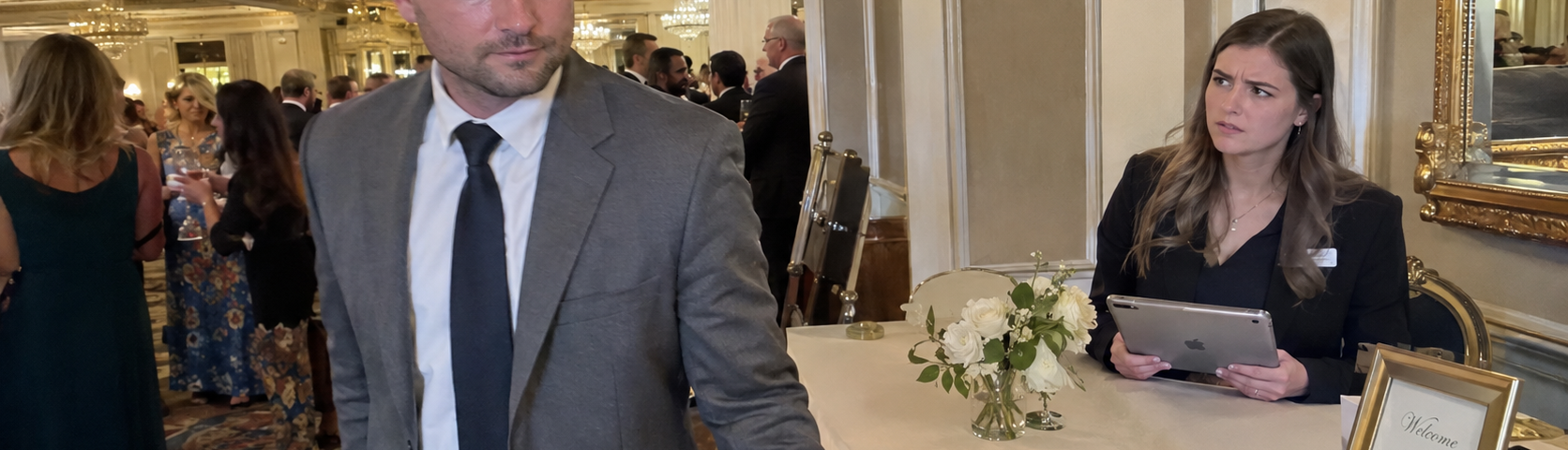
I heard the attendant murmur to the coordinator, just under the music, “Investors are already asking about seating near Summit Bridge.” The irony of it almost made me smile. They were rearranging the seating chart to be closer to a man they had just turned away at the door.
I pushed through the revolving door and did not look back. Pine Street sloped away under a glitter of frost. The wind made my eyes sting the way they do when you sign a deal you know is right and know will be misunderstood. Behind me, the hotel glowed like a lantern — warm, golden, full of people celebrating a union. Ahead of me, the street stretched dark and empty and entirely mine. I had never felt less sorry for myself. I had never felt more free.
I walked to a small Italian place in Capitol Hill and took the window table. Pasta arrabbiata, a glass of red. I set my phone face down. The envelope was no longer in my pocket, and the absence felt like air returning to a room. The restaurant was the kind of place that doesn’t try to impress anyone — checkered tablecloths, the smell of garlic and tomatoes, a waiter who’d been there twenty years and treated everyone like a regular. It was the opposite of the Crescent Bay in every way, and that was exactly why I went there. I needed something real after an evening of performance.
The TV above the bar flickered through local finance. For a second, a headline burned bright. “Summit Bridge Capital Sets New Northwest Housing Fund.” I smiled without teeth. Some tables you leave so a larger one can be set. And if anyone in that ballroom recognized my name first, they’d do it without me standing there to explain. The headline was about my fund — my work, my numbers, my late nights. None of the people toasting in that ballroom knew that the quiet man they’d turned away was the reason the headline existed.
The Cole House in Tacoma had a way of making dinner feel like a quarterly review. Mom narrated Lauren’s promotions, bonuses, the ribbon of clients she had landed. Dad checked the amortization schedule on the retirement mortgage like it was a weather report. The dining room was always too warm, the food always slightly overcooked, and the conversation always followed the same script: Lauren’s achievements were the main course, and everything else was a side dish nobody ordered. I had been eating at that table for thirty years. I knew every line by heart.
I mentioned a conversion project I was running up in Spokane, warehouse to mixed-use, hard numbers nobody at that table ever asked for. It was a twelve-million-dollar deal — the kind of project that would have made the local paper if anyone in my family had bothered to mention it to a reporter. I laid out the numbers the way I’d been taught: clean, confident, factual. I might as well have been describing the weather in another country.
Mom nodded the way you nod at traffic. Lauren dabbed the corner of her lipstick and said, “You should get a real job, Ethan. A brand they print on a CV.” She said it lightly, the way you might comment on someone’s haircut — not cruel, exactly, just completely certain. In her world, there were real jobs (hers, at a firm with a name everyone recognized) and then there was whatever it was I did, which existed in a fog of vague nouns like “allocations” and “acquisitions” that nobody at the table cared to understand.
“CVs do not always hold the important parts,” I said. It was the truest thing I’d said at that table in years, and it landed with the same weight as everything else I said there — which is to say, none at all. Lauren was already telling a story about a client dinner. Dad was already refilling his water. The moment passed like everything I said passed: unacknowledged, unrecorded, unremembered.
Dad asked, “When do you settle down?” I told him, “When we stop measuring other people with our own ruler.” He frowned at that — not because he disagreed, but because he didn’t understand what I meant, and in our family, not understanding something was the same as it being wrong. He went back to his mortgage schedule. I went back to being invisible. We were all very good at our roles.
Later that week, Mom accidentally sent a screenshot, white bubbles over pink confetti, of a wedding group chat that did not include me. It arrived at 11:47 PM, followed thirty seconds later by “Oops! Wrong person!” and then, a minute after that, “Please don’t tell Lauren.” I stared at the little pink confetti emojis for a long time. They were planning the seating chart. There were forty-three people in the chat. I knew most of them. None of them had asked where I was.
“What is this?” I texted. “Oh, honey,” she replied. “We did not want to make you uncomfortable. You are not really into weddings.” I read that sentence four times. The casual cruelty of it — dressed up as consideration, wrapped in a mother’s love. She had decided, on my behalf, what I was “into,” and then used that decision to justify erasing me. It was so elegant, so perfectly Mom, that I almost admired the construction.
I wrote nothing back. I scribbled a note in my own head instead. Ignorant or unkind? What is the difference in the dark? I have thought about that question many times since. I have come to believe that the difference matters less than we think. A wound doesn’t ask about intentions. It just bleeds.
At a family get-together, Aunt Margaret cut through the frosting. “Why is not your brother a groomsman?” she asked Lauren, eyes gentle but unmoving. The table went quiet in the particular way of families who have just heard someone say the thing nobody says. Lauren’s smile tightened. “He is more of a behind-the-scenes person.” That was the first time I said it to myself plain. She did not want me in the frame. Not in the wedding photos, not in the family narrative, not in the story she was telling about who the Coles were. I was behind the scenes of my own family.
Aunt Margaret later mentioned, almost idly, that one of Daniel’s family’s investors had asked about an Ethan who handled real estate allocations for them. We were on the porch, the party thinning out behind us, and she said it the way she said everything — as if it were a small observation about the weather. She did not know if it was me. I did not confirm. But I saw the way she looked at me afterward, with a new curiosity, as if I were a book she’d been shelving in the wrong section for years.
Lauren posted a carousel a month out from the wedding. “Women who carried me here.” Mentor, yoga coach, stylist. No mention of the brother who lifted quietly when the floor tilted. I thought about the night her car broke down on I-5 and I drove forty minutes in the rain to get her. I thought about the security deposit I covered when her first apartment fell through, the “loan” we both knew was a gift. None of that made the carousel. Carousels are for aesthetics, not for truth.
“Inspiration is the person who helps you stand,” I told Mom when she showed me the post, “not the one who stands in front of you.” She laughed — a short, nervous sound — and changed the subject. I don’t think she understood what I was really saying: that I was done auditioning for gratitude, done keeping score, done waiting for a carousel that would never come.
I kept my principal where I keep my pulse. Do the work. Let the room decide. It became my private motto, the thing I told myself on the hard mornings. Not everyone needs to see the work for the work to matter. The building doesn’t care if you watched it being built. It stands anyway.
That night, I placed a spare key into a small wooden box and slid it to the back of a drawer. No one needed to know what had opened unless the moment was right. The key was for the penthouse — the one I’d bought in secret, the one Lauren had once pressed her face against the window of and called her dream. I had imagined, in my weaker moments, handing it to her at the wedding. A grand gesture. A speech. Ninety seconds of grace. The key sat in the dark and waited, the way I had waited, for a moment that might never come.
A week later, Mom asked, “Are you planning to give a speech at your sister’s wedding?” “Depends on where she invites me to stand,” I said. The house went quiet in the way houses do when truth lands with no raised voice. Mom looked at Dad. Dad looked at his plate. Nobody asked what I meant, because everybody knew exactly what I meant.
In my apartment, the phone buzzed on the table, subject line glowing in the dark. “Round Four, Summit Bridge.” I stared at it for three breaths, then opened my laptop. The ruler they used at that table would never fit the map I was drawing, and that was fine. I had stopped trying to make it fit a long time ago. Some maps are drawn for territories other people can’t see yet.
In the end, a list is just a list. A door is a choice, and a key stays a secret until someone proves they know what a home is. I wrote that in my notebook that night, underlining it twice. It would turn out to be the truest sentence I owned.
Six rounds. That is how many interviews it took before anyone at Summit Bridge stopped underestimating me. Six rounds of being tested, probed, and measured by people who had already decided what someone like me could do — and then watching them revise their assumptions in real time. It was exhausting. It was also the most honest hiring process I had ever been through, because nobody was doing me any favors. Every round, I had to prove it again.