Inside, the lobby smelled faintly of fresh paint and coffee. Along the hallway hung framed photos of families who had lived here, women smiling beside bunk beds, children clutching toys, tiny kitchens filled with light. In the center of the wall, a bronze plate caught my eye. “This home was rebuilt through the generosity of Ethan Cole.” The words landed differently than I expected. I did not feel pride, more like a small ache, quiet and human, as if the gift had continued living without me. It had, of course. That was the point. Gifts are supposed to outgrow the giver.
Julia Rivera met me at the entrance of her office, warm, composed, practical. “Mr. Cole,” she said, shaking my hand. “Thank you for coming. We have been wanting to show you what your contribution built.” She placed a file in front of me, numbers and photographs inside. “The penthouse you donated sold for 3.5 million. The proceeds funded 50 transitional homes and job training for 70 women.” She paused. “Most donors give money to be seen. You gave to disappear. That is rare.” I smiled faintly. “I was not trying to disappear, just to make something reappear in the right place.” It was the most honest thing I’d said in months. I hadn’t donated the penthouse to punish Lauren. I had donated it because the key in that drawer had started to feel like a question I didn’t want to answer anymore.
Julia nodded, then reached for a small envelope. “Someone asked me to give you this.” It was cream-colored, handwritten, the loops uneven. Inside was a short letter. “The key you meant for that apartment ended up building my room. I hung my son’s photo on the wall yesterday. We have a door now.” I read it three times. We have a door now. Six words from a stranger, and they undid me more completely than anything my family had ever said. I folded it once, slid it into my wallet. There are sentences that do not need responses, only remembering.
The conference room TV flickered to life as Julia grabbed her coffee. A local business report filled the screen. “Summit Bridge Capital Announces Ethan Cole as Executive Vice President, Pacific Northwest Division.” The anchor smiled. The stock ticker rolled. Julia glanced up, amused. “Seems your good deeds echo louder than you think.” “They do not echo,” I said, finishing her coffee for her. “They just find the right rooms.” She laughed at that — a real laugh, surprised and warm. It was the first time in a long time that I’d made someone laugh without it costing me anything.
When I stepped outside, the Sound wind met me again, softer this time. I walked toward the parking lot, keys turning in my hand like coins. That is when I noticed the white SUV idling near the curb. The door opened, and Lauren stepped out, thinner, quieter, her face stripped of the armor she used to wear. She carried a bouquet of lily stems trembling slightly in her grasp. She did not come close. Instead, she placed the flowers by the center’s door, straightened them, and looked at me. “I came to see what you turned my dream into,” she said. The words hung in the air between us. My dream. Even now, even here, she was claiming it — the penthouse, the vision, the life. It had been her dream, in her telling, and I had taken it and turned it into… this. A brick building. Strangers. Doors for people she’d never meet.
I met her eyes, not unkindly. “It was never your dream, Lauren,” I said. “Just your wallpaper.” Her eyes welled, but she did not argue. She nodded once, as if she finally understood something I had stopped trying to explain long ago. She walked back to her car. I watched her leave without bitterness. It felt like the last page of a chapter closing itself. Not slammed shut — just quietly turned, the way you turn a page when you’re ready for what’s next.
Standing there, sunlight scattering off the hood of my car, I realized that peace does not arrive when people apologize. It arrives when you stop needing them to. For the first time since that winter night at the Crescent Bay Hotel, I felt the air move cleanly through my chest. No tightness. No bracing. Just breath, in and out, simple and sufficient.
I drove down to the waterfront and parked by the railing. The water glittered like broken glass, endless and forgiving. I leaned against the car, thought of the key once meant for a toast, now multiplied into dozens of doors I had never opened myself. The wind coming off the water was cool and clean, and for a moment I just stood there, letting it move through me, feeling the particular lightness that comes when you set down something heavy you didn’t know you were carrying.
I had planned to give her a home. What I really built was the strength to leave one that no longer had a place for me. That sentence had been forming in me for months, and standing at that railing, it finally landed — fully formed, undeniable. I hadn’t lost a family. I had outgrown a waiting room.
A full year had passed since the wedding. Seattle summer again. The same sound, the same city, just a different man looking out its window. My new office was on the 49th floor of Summit Bridge Tower, glass stretching from carpet to sky. I had the corner office now — not because I asked for it, but because the work had made it inevitable. From up there, the city looked like a circuit board, all light and connection. I thought about how far I’d come from the kid who sat quietly at that dining room table in Tacoma.
The desk was neat except for one thing. A single envelope, handwritten, postmarked from Tacoma. I opened it slowly. The handwriting was shaky but familiar. “A year ago, I removed your name from my list because I was ashamed, not of you, but of myself. I thought success was measured by applause. Now I see it is measured by silence, by grace. I do not expect forgiveness. I just needed you to know I finally understand.” The letter ended there. No signature, just the indentation where her pen pressed too hard. I held the paper for a long time, feeling the grooves where the pen had bitten in. A year ago, those words would have been everything. Now they were just… words. True ones, I thought. But late.
I read it twice. My chest tightened, but not from anger. More like the ache of something healing correctly. There’s a particular pain that comes with healing — not the sharp pain of the wound, but the deep, dull throb of tissue knitting itself back together. I recognized it. I welcomed it. It meant the work was happening, even if I couldn’t see it.
My phone rang. Mom. For a second, I thought of ignoring it, but I answered. Her voice was soft, unguarded — a voice I hadn’t heard since I was a child, before the quarterly reviews and the careful diplomacy. “She has been in therapy,” she said. “She is trying.” “I know,” I said. Silence stretched between us. Not awkward, just true. It was the kind of silence that says what words cannot. We have moved past the wreckage. I thought about all the things I could have said — about the group chat, the carousel, the laugh. I said none of them. Some silences are gifts you give to people who are finally ready to receive them.
When the call ended, I turned back to my computer. An unread email from Julia Rivera waited. The subject line read, “Update from Harbor Light Haven.” I clicked. Attached was a photo. Women standing in front of freshly painted apartments, each holding a silver key. On the wall behind them hung a small plaque engraved with a quote. My quote. “Home is who lets you in.” I leaned closer to the screen. The words looked less like mine now, more like they belonged to everyone who had ever needed a place to start over. That was as it should be. The best sentences don’t belong to the people who write them. They belong to the people who need them.
Later that week, I met Noah for coffee at a cafe near the harbor. He looked at me over the rim of his cup. “Are you ever going to talk to Lauren again?” I shook my head. “I do not need to. Sometimes silence keeps the memory intact.” It was true — and not true. The fuller truth was that I didn’t know. Forgiveness, I was learning, isn’t a door you walk through once. It’s a hallway you walk down slowly, and some days you stop, and some days you turn around, and some days you keep going. “You have changed,” he said. I smiled. “Not really. I just finally sat at the right table.” He laughed at that — a real laugh — and for a moment we were just two cousins having coffee, the way we’d been before any of this started.
We said goodbye on the sidewalk, the afternoon bright around us. I walked along the waterfront path, the air thick with the smell of summer and salt. Across the water, Harbor Heights Residences gleamed. The penthouse lights were on. Different owners now, families coming and going. But every time I saw that window, it looked like gratitude flickering back at me. I thought about the key in the wooden box, the one I’d almost given away. I was glad, now, that I hadn’t. Some keys are meant to open other doors.
I reached into my pocket and touched the small metal key I had kept. The only one I did not give away. Cold, solid, real. A reminder that what is truly ours does not vanish when someone erases our name. It just changes form. People can strike you from their lists, but they cannot erase your worth from the world. I had carried that key for a year — through the wedding, through the fallout, through the quiet rebuilding. It had become a talisman, a proof. Not of what I’d lost, but of what I’d kept.
I had learned to walk past closed doors without forcing them open, to find another entrance built by my own hands. That was the real skill, I realized — not the deals, not the numbers, not the titles. The skill was knowing when to stop knocking. Most people spend their lives banging on doors that will never open, mistaking persistence for dignity. Dignity, I had learned, is walking away and building your own door.
The wind came off the Sound again, warm and full of possibility. I took a breath, steady and unhurried, and kept walking. I was no longer the unwanted guest. I was the man who built his own table, and finally, everyone sitting there belonged. The table wasn’t fancy — it was just honest. And everyone who sat at it had earned their seat, including me. Especially me.
There is something about endings. They never really end, do they? They just shift shape, turning into quiet realizations you carry forward. When I look back at everything that happened, the wedding, the eraser, the silence that followed, I do not see revenge or triumph anymore. I see clarity. I see the long, uncomfortable journey of learning where you truly belong. And I see, with a gratitude that surprises me, that the journey was worth every step — even the ones that hurt.
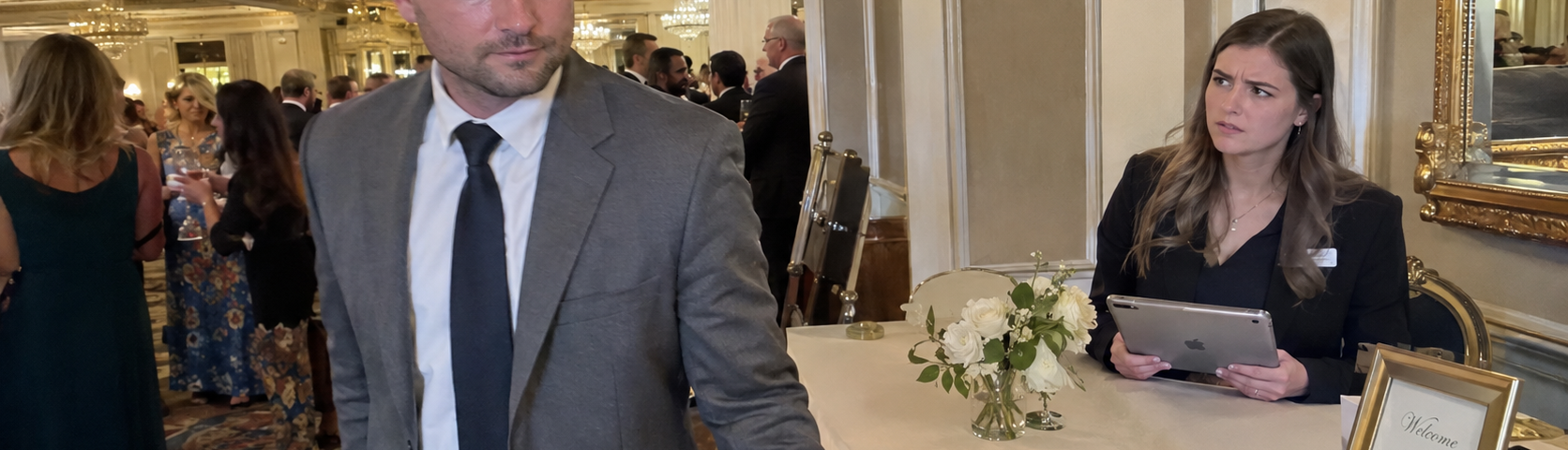
That night at the Crescent Bay Hotel, when my name was not on the list, it felt like the world was closing a door in my face. I stood there humiliated but strangely calm, not realizing that door had to close so another could open. I think about that version of me sometimes — standing in the lobby, envelope in hand, the music starting without him. I want to tell him: it’s going to be fine. Not just fine — better than fine. The door that’s closing is the wrong door. The right one hasn’t been built yet. You’re going to build it.
What I have learned since then is that sometimes life does not give you the invitation you think you deserve, but it gives you a chance to write your own. That chance often comes disguised as loss. It looks like a rejection, feels like an ending, sounds like a laugh on the phone. But underneath, it’s an invitation — not to their table, but to your own. The hardest part is recognizing it. The second hardest part is accepting it.