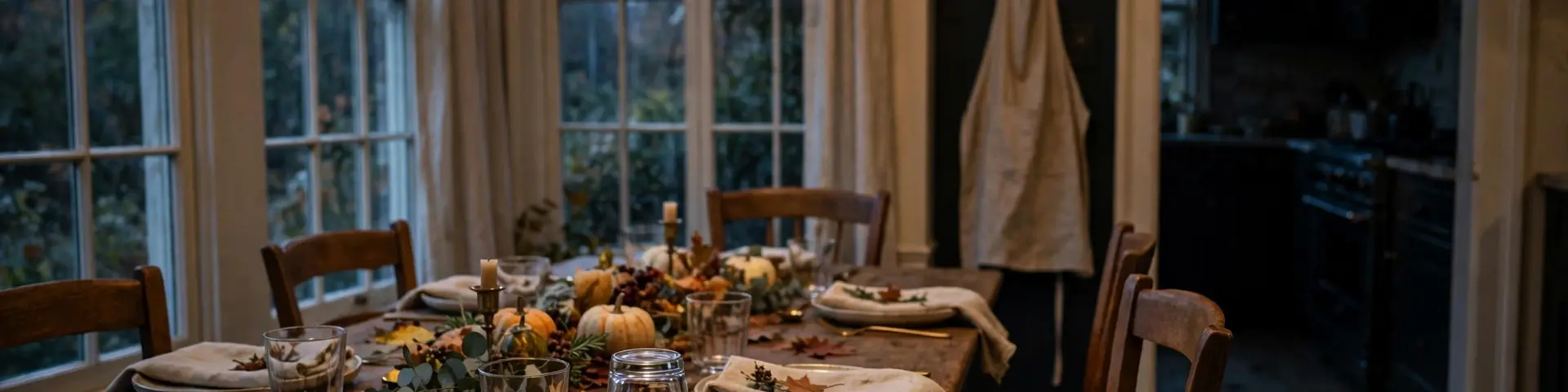
The stained apron landed at Karen’s feet in the middle of our son’s living room, and for one second, nobody moved.
Melissa had tossed it with two fingers, like something unpleasant she wanted off her skin. It slid across the polished hardwood and stopped against Karen’s shoes. One corner of the baked dish had browned a little too much — nothing more, the kind of small kitchen mistake anyone with a functioning heart would have laughed off. But Melissa had twenty guests in her house, champagne flutes lined up on the sideboard, and a need for every person in the room to understand who mattered and who served.
“Mom,” she said, smiling tightly while her friends turned to watch, “you couldn’t even manage one simple casserole without embarrassing me?”
Karen stood with her hands clasped in front of her. Those hands had spent the past ten hours chopping, rolling pastry, seasoning, lifting heavy pans, washing dishes between batches, trying to keep Melissa’s party from falling apart before it began. The skin near one thumb was red from a hot pan handle she had insisted was “nothing.” Her gray sweater had flour on one sleeve. Her hair had slipped loose from its clip. She looked smaller than she had that morning — not because age had caught her, but because everyone in the room had quietly agreed to make her feel invisible.
I stood near the fireplace and felt something inside me shift.
My name is Frank Whitaker. I spent thirty-two years managing construction projects across Ohio, Kentucky, and Pennsylvania — office buildings, school additions, hospital wings, parking structures. I understood pressure. I understood weight. I understood the difference between a decorative wall and the one quietly keeping the entire roof from coming down.
For most of our marriage, Karen had been the load-bearing wall in every room she entered. Nobody noticed until they leaned too hard.
She was a retired elementary school teacher, the kind of woman who kept extra mittens in her car in case a child showed up without them, who wrote thank-you notes for thank-you notes, who brought soup before anyone asked. Her whole life was built around usefulness — not because she was weak, but because she believed love should be practical. If someone was hungry, she cooked. If a neighbor needed a ride, she grabbed her keys. If our son Derek called at the last minute, she found a way.
Melissa had learned that quickly.
My daughter-in-law was beautiful in a sharp, polished way — dark blond hair always blown smooth, pale pink nails, clothes chosen to look effortless but never inexpensive. She spoke sweetly when people were listening and more directly when she believed the room belonged to her. She had a gift for turning demands into compliments. “Nobody makes stuffing like you, Mom.” “The kids just feel safer when you’re here, Mom.” “You’re the heart of the family, Mom.” The words sounded warm until you noticed the heart was always expected to work while everyone else sat down.
The party that night was supposed to be casual, according to Melissa — just a small gathering with friends from her new social circle, a few couples from Derek’s office, a neighbor whose husband served on some nonprofit board Melissa wanted to join. In practice it had become a staged production: matching candles, rented wine glasses, a playlist she had tested twice, a cheese display arranged as if the grapes might be photographed for a magazine. Karen had cooked almost all of it. Melissa had posted pictures all afternoon — her living room, her flower arrangement, her white serving dishes, her “cozy little spread.” Not one picture included Karen.
That was bad enough. But when one corner of the dish came out darker than Melissa wanted, she called Karen into the living room like an employee being corrected in front of management. “Everyone was looking forward to your food,” Melissa said, the smile still there, the tone sweet enough to make cruelty sound decorative. “I told them you were amazing in the kitchen.”
One of her friends gave a nervous laugh.
Karen bent down and picked up the apron. She did not defend herself. That was the part that hurt me most.
I looked at Derek. My son stood by the kitchen doorway, one hand in his pocket, the other around a glass of sparkling water. He had seen everything — his eyes moved from the apron to his mother’s face and quickly away. He looked uncomfortable. Ashamed, maybe. But he did not speak. I had spent his whole childhood teaching him that a man’s character shows when silence would be easier. He chose silence anyway.
Karen folded the apron over her arm. “It’s all right,” she said softly. “I’ll make another one.”