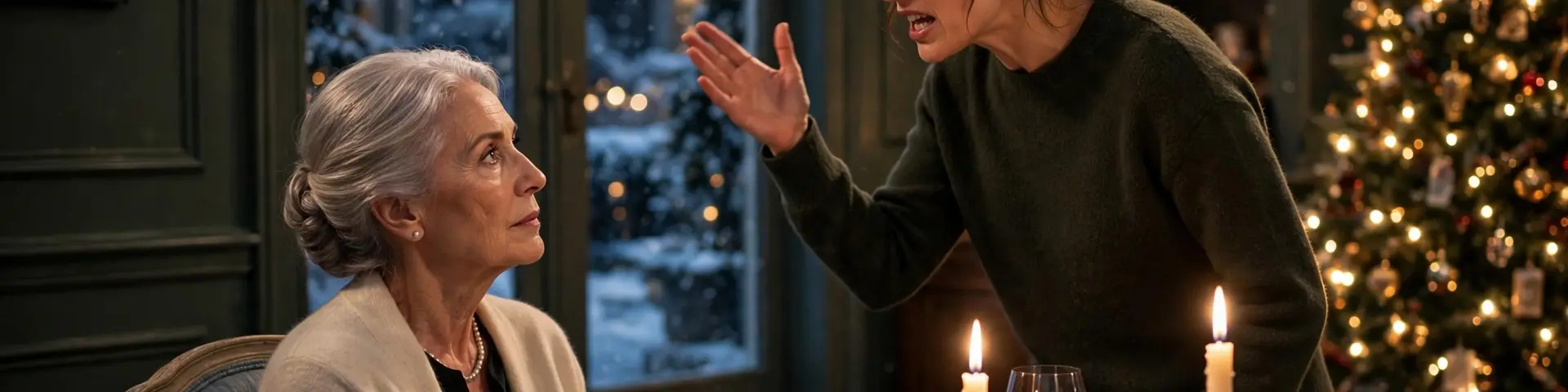
I didn’t need an audience to know I was safe.
Ethan visited the second weekend of August.
He arrived carrying groceries and spent part of the afternoon fixing a loose cabinet hinge without being asked. He didn’t make a speech about being helpful, and he didn’t wait for me to thank him before sitting down beside me on the back porch.
We watched the sun lower behind the dunes, the light turning softer as the day drew toward evening.
After a while, he spoke.
“I filed for divorce.”
“I know.”
He turned toward me.
“You knew?”
“Daniel told me the petition was public.”
Ethan smiled faintly.
“Of course he did.”
We returned our attention to the beach. Gulls circled above the water, their wings catching the fading light.
For a long time, neither of us spoke.
Then Ethan said, “I don’t expect you to put me back in the trust.”
I turned toward him.
“You are still in the trust,” I replied. “You were never removed as my son. Only as a man with unchecked access.”
He considered that carefully.
Then he nodded.
“That’s fair.”
A year earlier, he would have argued with that word. He would have heard punishment where I intended responsibility, rejection where I intended a boundary.
Now he simply accepted it.
And I understood that the change mattered far more than any apology he could have offered.
Christmas came again, as it always does.
That year, I hosted dinner in my Connecticut home.
Not everyone was invited.
Harold was not. Beverly was not. Claire was not.
Applause has consequences too.
I didn’t make an announcement about their absence, and I didn’t explain my decisions to anyone who wasn’t there to share the evening. I had learned that peace sometimes required nothing more than refusing to reopen a door just because someone expected it to be unlocked.
Ethan arrived early to help cook.
He burned the first tray of rolls and laughed at himself instead of making excuses. He brought no grand speech, no expensive gift, and no dramatic apology designed to make everyone forget the past.
Instead, he washed dishes, took out the trash, and asked me about my life before his father.
For the first time in years, I told him.
I told him about the young woman I had been before marriage and motherhood became the center of my world. I told him about the sacrifices I had made and the things I had given up without ever mentioning them because I had believed that being a mother meant carrying certain burdens quietly.
I also told him that I had made mistakes.
I had protected him when I should have let him fail. I had softened consequences when I should have allowed them to teach him. I had sometimes confused being needed with being a good mother.
He listened without interrupting.
That, too, was new.
At dinner, there were eight of us. Friends, two neighbors, Daniel, Ethan, and me.
The candles were simple. The china did not match. The meal was warm rather than extravagant, and the conversation moved naturally from one subject to another.
No one performed power.
No one announced control.
Nobody had to humiliate another person to feel important.
Before dessert, Ethan raised his glass.
“I want to say something,” he said.
The room grew quiet, but this time the silence was not tense. Nobody was waiting for a confrontation or wondering whose life would be turned upside down by the next sentence.
Ethan looked directly at me.
“Last Christmas, I lost my marriage, my house, and the story I’d been telling myself. I thought my mother was keeping me small. The truth is, she was keeping the floor from collapsing while I complained about the ceiling.”
I looked down at my plate, blinking once.
His words touched a place in me that I had kept guarded for a long time.
He continued.
“I’m not proud of what happened. But I’m grateful I finally had to see it clearly.”
Daniel lifted his glass.
“That may be the most expensive education in Westchester.”
Everyone laughed.
So did Ethan.
So did I.
And the laughter felt different from the applause that had filled the dining room a year earlier. It wasn’t approval purchased by someone else’s humiliation. It wasn’t a celebration of power or a performance meant to convince the room that everything was perfect.
It was simply laughter.
For the first time in a long while, I felt no need to wonder what anyone wanted from me.
Later, after the guests had left, Ethan and I stood together by the mantel.
This year, there were only two stockings.
Mine and his.
The fire had burned down to a gentle glow, and the house was quiet except for the occasional sound of a log shifting in the fireplace.
Ethan reached out and touched the edge of his stocking.
“You kept it.”
“I kept a lot of things,” I said.
He looked at me, and I saw a man who had grown older in the best possible way. Not because time had passed, but because he had finally begun to understand what time was supposed to teach.
He wasn’t the boy in the courthouse photograph anymore. He wasn’t the man who had signed documents without reading them or mistaken comfort for proof that he deserved everything he had been given.
He was still my son.
But he was learning how to stand on his own.
“Do you think we’ll be okay?” he asked.
I watched the firelight move across his face.
For years, I had mistaken rescue for love. Madison had mistaken control for power. Ethan had mistaken comfort for inheritance.
Each of us had believed something that made life easier in the short term and more painful in the long run.
Now, at last, we were all paying the correct prices.
“ Yes,” I said. “But not because nothing broke.”
Ethan waited, his eyes fixed on mine.
“Because we stopped pretending it hadn’t.”
Outside, snow began falling again, soft and steady over the quiet street. The flakes drifted beneath the streetlights and settled along the windowsills, covering the world in a clean layer of white.
Inside, the fire continued to burn.
My son reached for my hand.
This time, I let him hold it.
If you came here from Facebook because of this story, return to the Facebook post, tap Like, and comment exactly “Amazing” to support the storyteller. That small action means more than it seems and gives the writer genuine encouragement to keep sharing more stories about family pressure, firm boundaries, and protecting what you worked so hard to build.