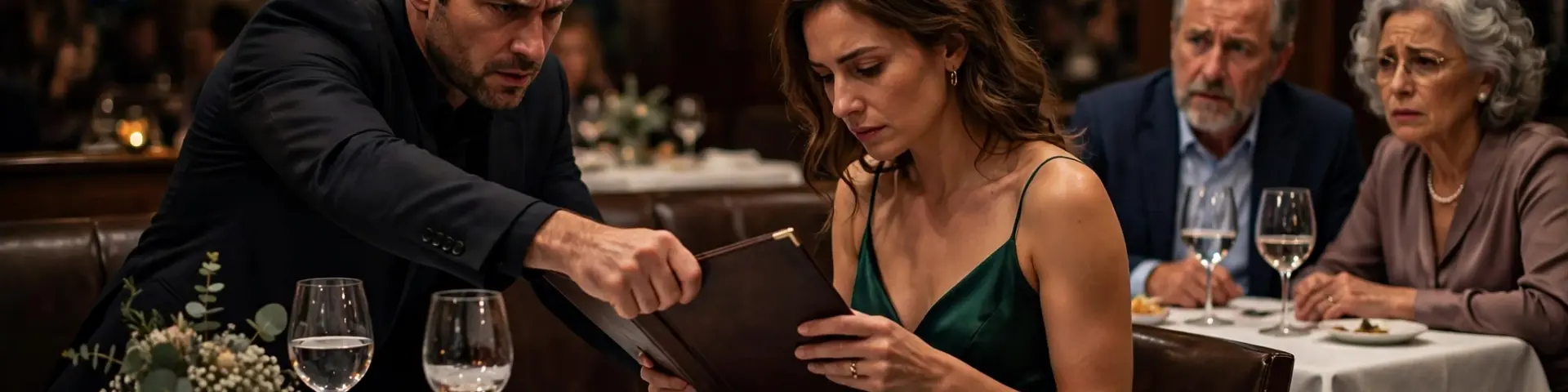
I didn’t tell Paul about the job.
For three weeks, I lived a double life. Every morning, I waited until Paul left for work, then I changed out of my house clothes into my work clothes in the library parking lot. I kept my work badge in the tampon box with my debit card. I ate lunch at my desk and saved every penny.
My first paycheck was $1,184 after taxes. I stared at the direct deposit notification on my phone for a full five minutes. It was the most beautiful number I had ever seen.
I was careful. So careful. But Paul found the pay stub anyway. I had left it in my bag, and he went through my bag while I was in the shower.
He was waiting for me in the kitchen when I came out, the pay stub in his hand.
“What’s this?” he asked, very quietly.
My blood turned to ice. “It’s my paycheck. I got a job.”
“Without telling me.” It wasn’t a question.
“I knew you wouldn’t support it. You told me not to take a retail job because it was beneath us. I found something better, and I—”
“You’re lying,” he said. “You’ve been lying to me for weeks.”
“I was trying to—”
“Do you have any idea what this means?” His voice was rising. “You’re going behind my back? Making money I don’t know about?”
“It’s my money, Paul. I earned it.”
He crumpled the pay stub in his fist. “I’ll call your employer. I’ll tell them you’re unstable. I’ll tell them you stole from me.”
“You can’t do that.”
“Watch me.”
Then he turned and punched the wall, inches from my head. The drywall cracked. Dust floated down. His knuckles left a dent the size of a fist.
I didn’t flinch. I didn’t cry. I just looked at the hole in the wall and then back at him, and I understood that this was the moment Chloe had warned me about. The moment when the control stops being financial and starts being physical.
“I’m done,” I said quietly.
“What?”
“I’m done.”
I walked past him, went to the bedroom, and started packing. I had been preparing for this for weeks without admitting it to myself. The folder was already in my trunk. My documents were safe. I packed two bags: clothes, toiletries, the tampon box with my debit card and work badge.
Paul stood in the doorway, watching. “You can’t leave. You have nowhere to go.”
“Watch me,” I said.
I left before sunrise the next morning, while Paul was still asleep. I drove straight to Natasha and Matt’s house. Natasha opened the door in her robe, took one look at my face and my bags, and pulled me inside without a single question.
“You’re safe now,” she said.
Matt made coffee. Natasha called Chloe. By noon, I was sitting in Chloe’s office, and by three, I was meeting with an attorney named Michelle Bright.
Michelle was formidable. Silver-streaked hair, sharp suit, eyes that missed nothing. She listened to my story, looked at my hundred photos, and said, “We’re filing for a protective order today.”
The protective order was granted. Paul violated it twice in the first month—once by showing up at my workplace parking lot, once by sending forty-seven text messages in a single night. He spent a night in custody after the second violation. After that, he stopped.
The divorce took eight months. Paul tried to hide accounts. He tried to claim my new income meant I didn’t need support. Michelle found everything: the separate accounts, the hidden savings, the money he had been siphoning while telling me we were broke.
The settlement divided our assets fairly. For the first time in years, I had money that was actually mine, no permission required.
I rented a studio apartment across town. Small, bright, mine. I started therapy on Tuesdays. I got a raise after my probation period. I bought a plant and kept it alive, which felt like a bigger achievement than it should have.
Six months after the divorce was final, Natasha called me.
“Matt and I are taking you to dinner,” she said. “And Laura’s coming too. No arguments.”
We went to a nice restaurant, not the steakhouse, somewhere new with no bad memories attached. When the bread basket arrived, Natasha picked it up and handed it directly to me first.
“Ladies first,” she said with a wink. “Always.”
I laughed until I cried.
Healing wasn’t linear. For months, I felt anxious in restaurants, my shoulders tensing every time a waiter approached. Therapy helped. Time helped. Having my own apartment with my own key helped most of all.
One evening, about a year after the anniversary dinner that changed everything, I took myself out to dinner alone. I dressed up, I ordered what I wanted—pasta, not steak, because I actually prefer pasta—and when the check came, I paid with my own card. My own money. My own choice.
I sat there for a while after the waiter cleared my plate, just sitting in the quiet satisfaction of it.
People ask me when I knew my marriage was over. They expect me to say it was the night Paul punched the wall, or the morning I found the pay stub crumpled in his fist, or the day the divorce was final.
It was earlier than all of that.
It was at the restaurant, on our tenth anniversary, when a stranger stood up from the next table, pulled out a chair, and looked directly at me.
That was the night I remembered that I was a person. Not a line item. Not a dependent. Not a problem to be managed.
A person. Who deserved to eat.
If you came here from Facebook because of this story, return to the Facebook post, tap Like, and comment exactly “Amazing” to support the storyteller. That small action means more than it seems and gives the writer genuine encouragement to keep sharing more stories about family pressure, firm boundaries, and finally protecting what you worked so hard to build.
Disclaimer: This story is a work of fiction created for entertainment purposes. Any resemblance to real persons, events, or places is coincidental.