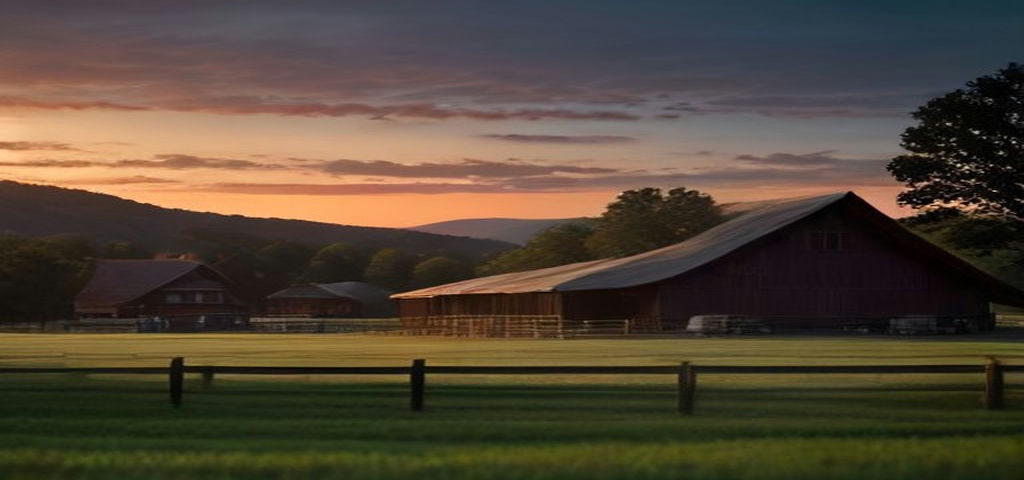
Clare had brought multiple vehicles, including the moving trucks. She was standing near the gate when I reached the house, her jaw tight and her posture rigid. She looked as though she had arrived to supervise a job she expected to be completed without delay.
The movers waited for instructions.
Clare spoke to them briefly, then turned toward the house. I could see her studying the windows and the front porch, perhaps imagining the rooms empty and the furniture already on its way somewhere else.
I stood near the entrance and waited.
When it became clear that no one was entering the house or carrying anything away until the dispute was resolved, the atmosphere shifted. The movers began exchanging uncertain looks. They had been hired to move belongings, not to become involved in a family ownership battle.
Clare’s expression hardened.
“What is the problem?” she demanded.
One of the men gestured toward the paperwork I had provided and explained that they could not proceed while the ownership issue remained disputed.
Clare turned toward me.
“You’ve got to be kidding.”
“I’m not,” I replied.
She looked as though she wanted to argue, but there was little she could do to make the men continue. The paperwork had made the situation more complicated than the simple job she had promised them.
For several minutes, she tried to persuade them to wait while she sorted things out. When that failed, she snapped at them to leave.
The movers loaded their equipment back into the trucks. The sound of dollies and metal ramps echoed across the driveway, and the trucks began turning around one by one.
Clare did not say goodbye to me.
She climbed into her SUV, slammed the door, and pulled away. The moving trucks followed her down the road, their engines growing quieter until all I could hear was the wind moving through the grass.
I stood there until the dust settled.
I wanted to believe the embarrassment would make her stop. I hoped that being forced to leave without accomplishing anything might finally convince her that the ranch was not something she could simply claim because she wanted it.
I wanted to believe my sister would reconsider before things went any further.
Instead, it made her more determined.
The following week was silent.
Too silent.
No calls. No surprise visits. No cheerful messages asking whether I needed anything. The absence of contact should have been a relief, but I found myself listening for every vehicle that passed the property. Whenever an unfamiliar car slowed near the driveway, I looked up from whatever I was doing and watched until it continued down the road.
I kept working because the ranch did not care about family disputes. The horses still needed feeding. The fences still needed checking. The barn still required repairs, and the bills continued arriving whether Clare was making threats or not.
Yet even ordinary tasks felt different. I found myself wondering whether each quiet day was a sign that she had given up or simply a pause while she prepared her next move.
The first new move came through the mailbox.
One morning, I walked down the driveway to collect the mail. The air was cool, and a thin layer of mist hung over the lower pasture. I was expecting the usual bills and advertisements, perhaps another statement related to the ranch.
Instead, I found an envelope addressed simply to “Tenant.”
I stood beside the mailbox and stared at it.
The word itself irritated me. Tenant. As though I were a stranger renting a place from someone else. As though the years I had spent caring for the ranch, the inheritance documents, and the work I had done to protect the property meant nothing.
I opened the envelope before returning to the house.
Inside was a notice from a property management company claiming that the owner had elected to raise my rent by sixty percent.
I read it twice.
Then I read it a third time, slowly, checking the address and the wording to make sure I had not misunderstood something. There was no rent. I owned the ranch outright through the structure I had established, and no legitimate rental arrangement existed between me and the company named on the notice.
I carried the letter inside and placed it on the kitchen table.
For several minutes, I simply looked at it. I could feel the old anger beginning to rise, but beneath it was something more revealing. Clare was no longer trying to convince me that her actions were reasonable. She was attempting to make my life uncomfortable enough that I would eventually surrender.
I picked up the phone and called the number printed on the notice.
Clare answered.
“Hello?”
For a second, I said nothing. I wanted to hear how she would respond when she realized exactly who was calling.
Then I spoke.
“You’re the property manager now?”
There was a brief pause, followed by a soft laugh.
“Oh. That.”
“What is this?”
“Probably a misunderstanding.”
I glanced down at the notice again. The sixty-percent increase seemed almost absurd when I considered that there was no rent to increase in the first place.
“A misunderstanding? You sent me a rent increase on a property I don’t rent.”
She paused. When she spoke again, her tone had changed. The lightness had disappeared, replaced by the familiar firmness she used whenever she wanted to make a conversation go her way.
“You might want to start thinking about your options, Jake. It’s not sustainable for you to keep that whole place up alone.”
I stared out the kitchen window toward the barn.
“I’ve been keeping it up for years.”
“That was before.”
“Before what?”
She did not answer the question directly.
“You can’t do everything forever.”
I could hear the message beneath her words. She wanted me to believe that the ranch was too much for me, that the work would eventually become impossible, and that the easiest solution was to hand it over.
I had spent enough time listening to her explanations to recognize the pattern.
“I’ll take care of it,” I said.
Then I hung up.
My hand stayed around the phone for another few seconds. I could feel my pulse beating in my fingers, and the kitchen seemed unusually quiet.
She was not trying to convince me anymore.
She was trying to wear me down.
Soon after, she and her fiancé started appearing at the ranch again.
They walked the property without asking. Sometimes I saw them through the window, moving along the edge of the pasture or standing near the barn, pointing at things and talking between themselves. They photographed the building from different angles, as though they were preparing a record of its condition.
I watched them from a distance, trying to decide whether to confront them immediately or wait until I understood what they were doing.
One afternoon, I came inside through the mudroom and found them in the kitchen.
Clare stood beside the counter while her fiancé held a measuring tape stretched across its surface. A notebook lay open nearby, and he was studying the measurements as though he were planning a renovation.
I stopped in the doorway.
“What are you doing?”
Clare looked up without any sign of embarrassment.
“Oh, relax.”
Her fiancé let the measuring tape retract with a sharp snap.
“We were curious.”
“About my countertops?”
Clare gave a dismissive wave.
“It’s not like we’re hurting anything.”
I stepped farther into the room and pointed toward the door.
“Get out.”
Her eyebrows rose, and for a moment she looked genuinely offended.
“You don’t have to be dramatic.”
I said nothing. I simply kept my arm extended toward the doorway.
The silence stretched between us. Her fiancé glanced at her, apparently waiting for her to decide whether the argument was worth having.
Clare studied me for several seconds, then offered a thin smile.
“Fine.”
She gathered her things, and they left.
I waited until their vehicle disappeared before returning to the kitchen. The measuring tape had left no mark on the counter, but that was not the point. They had entered my home, examined my belongings, and behaved as though they had every right to plan its future without consulting me.
That evening, I started a journal.
Not because I wanted somewhere to complain or because I thought writing down my anger would make the situation easier. My attorney friend had advised me to document everything that happened, including incidents that might seem too minor to matter at the time.
Dates. Times. Visits. Calls. Notices. What was said. Who was present.
I sat at the kitchen table with a notebook and pen, reconstructing the recent incidents as carefully as I could. I wrote down the date of the rent notice, the details of the phone call, and the afternoon Clare and her fiancé had measured the counter.
At the top of the first page, I wrote a sentence my friend had told me during one of our conversations.
“You don’t win this kind of fight by screaming louder. You win by being more organized.”
I underlined it once.
The journal became part of my routine. After each incident, I recorded what had happened while the details were still fresh. I kept copies of letters, saved messages, and made notes about conversations. It was tedious, but I knew I would rather have too much information than find myself months later struggling to remember exactly what had been said.
A few Saturdays later, I was repairing a fence near the back pasture when I heard voices coming from the direction of the barn.
I recognized Clare’s SUV parked nearby.
I set down my tools and moved along the fence line, staying far enough away that they would not notice me. Clare was standing with two men in suits. One of them held a folder, and the other appeared to be listening closely as she spoke.
I could not hear every word. The wind moved across the pasture, and their voices occasionally disappeared beneath the sound of the trees.
But I heard enough.
“Once we get this signed over, we can flip it for triple,” Clare said.
One of the men asked something I could not make out.
She answered, “It’s just a matter of forcing him to comply.”
I stood behind the fence with a hammer still in my hand.
For a moment, I could barely process what I had heard. I had suspected that she wanted control of the ranch, but hearing her discuss it in those terms made the situation feel more calculated than ever.
Flip it.
That was the word that stayed with me.
Not preserve it. Not share it. Not keep it in the family.
Flip it.
I watched them for another moment, then returned to my work without making my presence known. I kept the hammer in my hand as I walked along the fence, but I had stopped thinking about the repair.
That night, I sat on the porch looking over the land my father had spent most of his adult life maintaining.
The sky was darkening, and the last light rested along the tops of the hills. The fence posts stretched across the pasture in uneven lines, each one representing hours of work. Every pasture had required years of attention. The barn had been repaired and improved countless times. Mom had planted the trees near the east side of the house herself, carefully choosing where each one would grow.
I remembered her standing in the dirt with a small shovel, brushing soil from her hands and explaining why she wanted the trees positioned where they were.
Clare saw acreage and a sale price.
I saw my parents.
For the first time, I understood that the dispute was no longer simply about an inheritance. It was about whether the place my parents had built their lives around would remain what it had always been or become an asset in someone else’s financial plan.
Thanksgiving made everything worse.
We gathered at Aunt Linda’s house because that had been the family tradition for years. The arrangement was familiar enough to make the day feel almost normal. There were dishes covering the table, conversations overlapping from one end of the room to the other, and the same old stories being repeated as relatives settled into their usual places.
I tried to focus on the food and the familiar company. I wanted one holiday without the ranch becoming a subject of discussion.
I should have known better.
I had barely sat down when Clare began talking about the “changes” she intended to make at the ranch.
She spoke casually, describing possibilities for the house and property as though the matter had already been settled. She mentioned improvements, renovations, and plans for the future without once acknowledging that I was sitting across the table from her.
My uncle raised his glass.
“Sounds exciting.”
A cousin asked whether she would renovate the barn.
Clare smiled.
“We have plans.”
I looked around the table, watching people congratulate her for plans involving my home. Some appeared genuinely interested. Others nodded simply because they assumed she knew what she was talking about.
I wanted to interrupt. I wanted to tell everyone that the ranch was not hers to renovate or sell, that I had never agreed to any of it, and that the supposed ownership claim she had been making was being challenged.
But I also knew that a family dinner was the last place where facts would receive a fair hearing. Clare had a way of presenting herself as the reasonable person in any disagreement, and I could already imagine how my objections would sound to relatives who had heard only her version.
So I remained quiet.
After dinner, she caught me alone in the hallway.
“You know,” she said, leaning slightly against the wall, “you’re making this harder than it needs to be.”
I turned toward her.
“For who?”
“For everyone.”
I almost laughed at the answer.
“Everyone?”
She lowered her voice, making the conversation sound private and reasonable.
“You could sign it over and be done. We’d even let you stay for now.”
A laugh escaped me before I could stop it. The suggestion was so insulting that for a second I could not find a serious response.
Clare frowned.
“You think this is funny?”