I had known Aunt Linda regretted signing the letter, but hearing her explain that mistake in court gave the matter a different weight. She was no longer simply apologizing to me in private. She was acknowledging what had happened in the place where the dispute would be decided.
Clare stared straight ahead.
Her lawyer argued that the ranch should have been treated as part of a more equal distribution of family assets. He spoke about family interests and the idea that one sibling should not be excluded from the legacy of their parents.
I listened carefully, but the argument felt increasingly disconnected from the records before the court.
The issue was not whether Clare had grown up on the ranch. She had. It was not whether she was part of our family. She was.
The issue was whether our parents had intended to leave the property to her as well.
The codicil addressed that question directly.
The judge reviewed it, turning the pages slowly. Then he looked toward Clare’s side.
“You understand that this document specifically identifies Jacob as the intended sole recipient of the ranch?”
Clare’s attorney began explaining their interpretation, but the judge continued reviewing the record.
The hearing felt much longer than it probably was.
I sat with my hands folded, trying to keep my breathing steady. My attorney remained beside me, occasionally making notes and referring to the documents in front of him.
I thought about the years of work behind every page. The receipts I had collected. The statements I had requested. The nights I had spent checking dates and organizing records while the rest of the house was quiet.
I thought about Dad’s ledger and the codicil, and about the trust he had placed in me to continue caring for the property.
When the ruling came, I almost missed the first few words because my pulse was so loud in my ears.
The transfer Clare had obtained was reversed.
The ranch was restored fully to me.
The court also granted legal fees and damages associated with the claim.
For a moment, I sat completely still. I had spent months preparing for the possibility of losing, months imagining how I would keep going if the court ruled against me. I had never allowed myself to assume that the outcome would be favorable.
Clare’s fiancé muttered something under his breath and received a warning look from the courtroom officer.
Clare did not move.
I did not look at her.
I listened as the final details were addressed, making sure I understood what had been decided and what steps would follow. My attorney leaned toward me once the ruling was clear.
“We got it,” he said quietly.
I nodded, but I could not find words immediately.
The relief was real, yet it did not feel like the triumph I had imagined during the worst nights of the dispute. I was exhausted. The months of uncertainty had left me with little energy for celebration.
When we stepped outside afterward, the winter sun was painfully bright.
I blinked against the light, carrying the binder under my arm as my attorney walked beside me.
He put a hand on my shoulder.
“That’s it.”
I looked back at the courthouse doors.
For months, I had imagined that moment. I thought I would feel victorious, perhaps even eager to call everyone who had doubted me and tell them how wrong they had been.
Mostly, I felt tired.
But underneath the exhaustion was relief.
The ranch was mine again without an asterisk.
Word spread through the family quickly.
Some relatives called to apologize. Some sent short messages. Others disappeared, apparently deciding that the safest way to handle the situation was to avoid discussing it at all.
My uncle admitted he had signed Clare’s letter without reading enough of the underlying dispute. A cousin said Clare had presented the situation as though I was trying to erase everyone else from the family history.
I listened.
I did not argue.
There was nothing left to prove.
I had spent months trying to make people understand what the ranch meant to me. I had gathered records, explained the ownership arrangements, and answered questions from relatives who had already decided what they wanted to believe.
Now the legal dispute had been resolved. I no longer felt the need to persuade every person who had taken Clare’s side.
Clare sent one long message.
She accused me of humiliating her. She said I had ruined her future. She said I had turned the family against her.
I read it once.
For a moment, I considered responding. There were so many things I could have said about the months of pressure, the attempted transfer, the recording she had used against me, and the relatives she had drawn into the dispute.
But I knew that another argument would not change anything.
I deleted the message.
Months later, I heard that she and her fiancé had sold their condo at a loss while dealing with legal expenses and problems connected to their failed development investment.
She stopped coming to family gatherings.
Some relatives thought I had been too hard on her. Others thought I had done exactly what was necessary. A few seemed to change their opinions depending on who was in the room.
I stopped asking which side anyone was on.
The ranch needed work.
That was real.
Opinions were not.
I expanded the arrangement with the riding school, making more pasture space available on weekends. We hosted a few small community events, carefully choosing activities that fit the property and did not interfere with the horses or the ordinary work of the ranch.
The income began to make a difference.
For the first time, I could plan repairs instead of merely reacting to them. I could set aside money for improvements, budget for maintenance, and think about the next year without wondering whether an unexpected expense would undo everything I had managed to accomplish.
The ranch was becoming more sustainable, and I felt a sense of responsibility that was different from the fear I had carried during the dispute.
I was no longer simply protecting what my parents had left behind.
I was building something that could continue beyond me.
Using part of the money recovered through the judgment, I established a modest scholarship fund in my parents’ names.
It was not huge.
That was never the point.
I wanted something good attached to their names after so many months of fighting over what they had left behind. I wanted their legacy to include an opportunity for someone else, something that reflected the values they had taught me through their actions rather than through grand speeches.
When the arrangements were completed, I sat on the porch and thought about how Dad would have reacted. He probably would have said I was making too much fuss over something simple. Mom would have wanted to know who the scholarship might help and whether the money would make a meaningful difference.
I could almost hear their voices.
Spring came.
The pasture changed color as the grass grew thicker and brighter. The horses shed their winter coats, and the air warmed enough that I could spend longer hours outside without needing an extra jacket.
The trees Mom had planted near the east side of the house began showing new growth. I found myself checking them more often than necessary, pleased to see the branches filling out after the winter.
For the first time since my parents died, I found myself enjoying ordinary days again.
There were mornings when I woke before sunrise and felt no immediate dread. There were afternoons when I repaired a fence without thinking about court documents. There were evenings when I sat on the porch and watched the horses moving across the pasture, content simply to be there.
The ranch was still work. It would always be work.
But it no longer felt like a place I might lose at any moment.
One evening, months after the court case, I was sitting on the porch with coffee when an SUV appeared at the end of the driveway.
I recognized it immediately.
Clare.
My shoulders tightened before I could stop them. It was an old reflex, one that had developed over months of unexpected visits and confrontations. For a moment, I was back in the kitchen with the rent notice, standing on the porch while she threatened to change the locks, and watching her arrive with the moving trucks.
I took a slow breath.
She parked and stayed inside for almost a minute.
I watched through the windshield, trying to understand why she had come. There was no obvious sign of another planned confrontation, but experience had taught me not to assume anything.
Eventually, the door opened.
She stepped out and walked toward the porch alone.
There was no folder. No lawyer. No fiancé. No demand.
She stopped at the bottom step.
“I came to say I’m sorry.”
I looked at her without answering immediately.
She kept her eyes on the porch boards, her hands hanging at her sides. She seemed uncomfortable in a way I had rarely seen before, as though she had arrived without the confident explanation she usually relied on.
“I shouldn’t have done any of it.”
I waited.
For months, I had imagined hearing those words. I had pictured Clare acknowledging what she had tried to do and admitting that she had been wrong to treat the ranch as something she could take from me.
Now that she was standing in front of me, the moment felt less dramatic than I had expected.
She rubbed her thumb against the side of one finger.
“I thought if I could get the money, I could fix everything.”
Her voice was quieter than I remembered.
“I just made everything worse.”
I said nothing.
I did not know whether she expected me to reassure her or tell her that the past could be put behind us. I was not ready to offer either.
She finally looked up.
“I don’t expect you to forgive me.”
The pasture stretched behind her in the evening light. The grass moved gently in the breeze, and the horses grazed near the lower fence.
For months, I had imagined all the things I might say if Clare ever admitted what she had done. I had rehearsed arguments in my head, imagined pointing out every contradiction, and thought about asking her how she could have treated our parents’ home as a way out of her financial problems.
But standing there, I realized that none of those speeches seemed useful anymore.
The court had settled the ownership dispute. The ranch was protected. The life I had worked to preserve was continuing.
I did not need to win the argument again.
“I can’t forget it,” I said.
She nodded.
“I know.”
I studied her face for a moment. She looked older than she had during the earlier confrontations, although perhaps that was simply because the confidence I remembered was no longer there.
“I hope you figure out what you actually want out of your life.”
Her eyes filled.
I looked across the ranch, toward the pasture and the trees Mom had planted. The evening light rested along the fence posts, and the farmhouse behind me felt solid and familiar.
“This isn’t just dirt and wood to me, Clare. It’s home.”
She swallowed.
“I know.”
I believed that she understood the words, at least in that moment. Whether she understood everything they meant was something I could not know.
I took another sip of coffee before continuing.
“I’m not going to let anyone take it away again.”
She nodded once more.
Then she turned and walked back to her SUV.
I watched her drive away, following the same driveway where she had once arrived with movers and a folder full of papers. This time, there were no trucks behind her and no one waiting at the gate to help her take control of the property.
There was no dramatic reconciliation.
No promise that we would become close again.
Just an apology and a boundary.
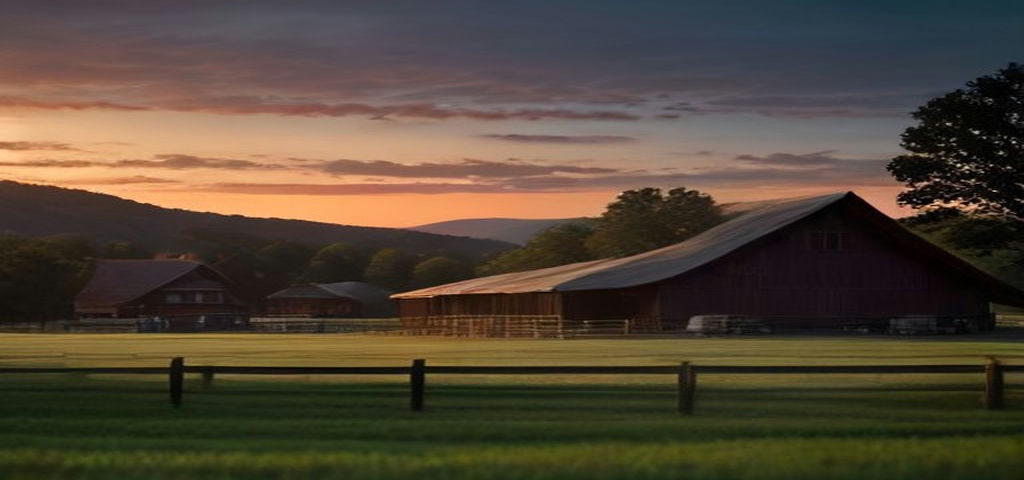
I remained on the porch as the sun disappeared behind the hills. The light slowly faded from the pasture, and the farmhouse settled into the familiar shadows of evening.
Crickets started in the grass.
I could hear the horses shifting in the barn, the occasional creak of wood, and the wind moving through the trees Mom had planted. Those sounds had been part of my life for as long as I could remember, but I had spent so many months listening for the next threat that I had nearly forgotten how comforting they could be.
I stayed there until the last light faded, letting the quiet settle around me.
For the first time since everything began, the ranch felt quiet without feeling threatened.
I looked toward the pasture and thought about Dad. I thought about the years we had worked side by side, the lessons he had taught me without realizing how much I would one day depend on them, and the trust he had placed in me when he made his final decisions about the property.
I thought about Mom, too, and the trees she had planted with her own hands. They were growing taller now, their branches moving gently in the evening breeze.
The ranch was still here.
The farmhouse was still standing.
The horses were safe, the fences were holding, and the land remained what my parents had intended it to be.
I looked toward the pasture one last time.
“It’s safe now,” I whispered.
Then I leaned back in his old chair.