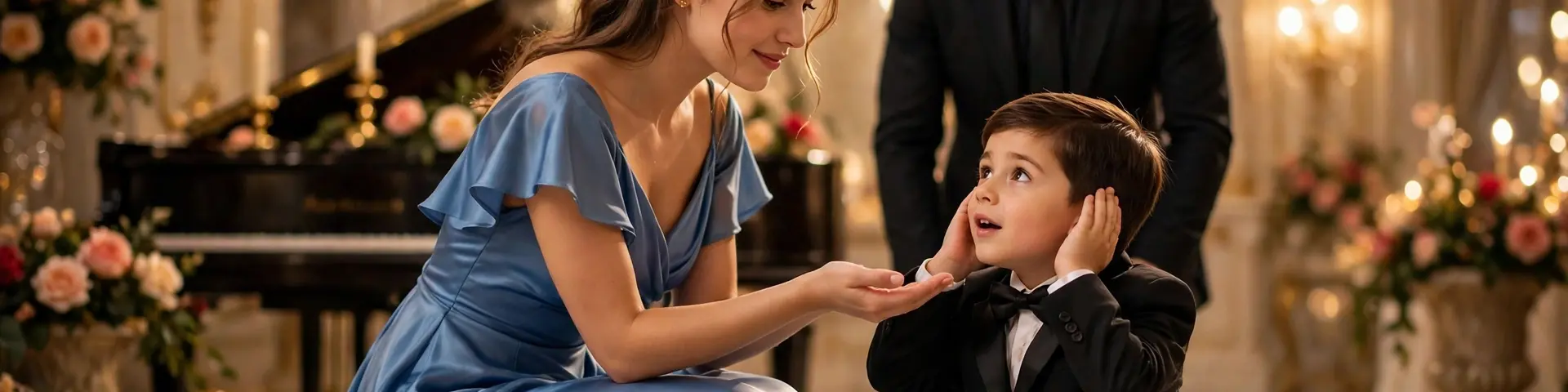
Leo walked the perimeter of the room first, touching the wall, the window frame, the edge of the piano — mapping it. Then he sat at his bench and placed one finger on middle C, testing the sound the way he had tested the blue satin.
Clara matched it, an octave lower. “One,” she said.
He pressed another key. “Two.”
She waited.
“Pause,” Leo said, and lifted his hands.
They sat in the pause together, and it was perfect.
Over the following weeks, the pauses got shorter and the music got longer. Leo learned that the piano would wait for him — that it asked nothing, demanded nothing, and always answered honestly. Dante learned to sit in the doorway without entering, to watch without directing, to let his son’s world run on its own time.
One afternoon, Leo played four full bars without stopping, then looked up at Clara with something like triumph flickering across his face.
“Again,” he said.
It was the first time he had asked for anything twice.
The Lesson
Monday came. The hospital bill got paid. And in a sunlit music room overlooking the city, a boy in a soft sweater sat beside a woman in blue, and together they counted.
One, two, pause.
Leo’s fingers found the keys — hesitant at first, then surer. Clara never touched his hands. She only played beside him, side by side, the way she had danced beside him.
From the doorway, Dante watched — learning, at last, how to approach his own son. Not with power. Not with fear. With patience.
People had spent years looking over Leo Moretti.
It took one pianist, one borrowed blue dress, and one quiet act of courage to teach a whole room — and one formidable father — how to truly see him.
Sometimes the bravest thing you can do in a room full of powerful people is to kneel beside the one person everyone else has decided not to notice — and ask him to dance.