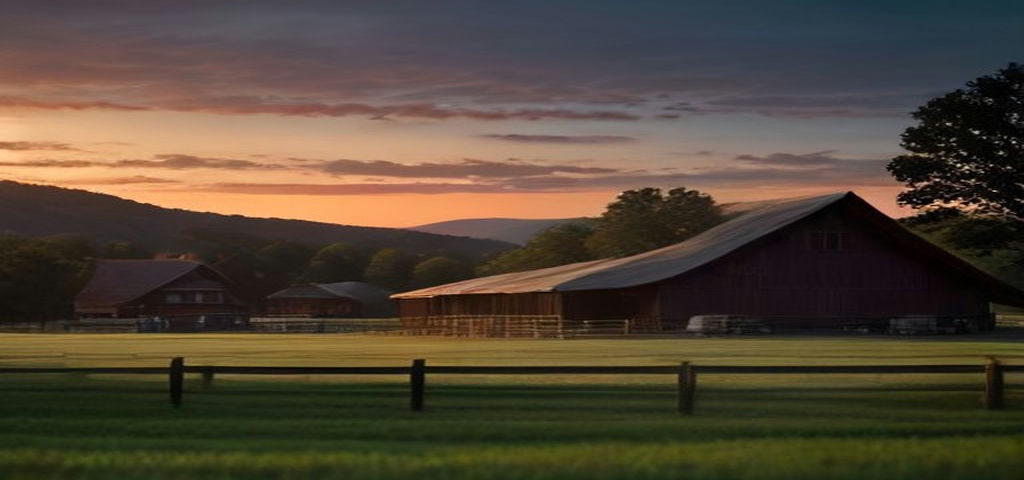
My name is Jacob. I was twenty-nine when my parents died, and for a long time afterward, I measured time by the things that no longer happened. Dad’s heavy boots stopped crossing the porch before sunrise. Mom no longer stood at the kitchen window with a mug held between both hands, watching the pasture slowly emerge from the morning mist. The light above the barn still came on every morning because I made sure to switch it on, but the ranch no longer sounded the same. Even the familiar creaking of the old farmhouse seemed louder without their voices filling the rooms.
They left me eighty acres of rolling pasture, fences, stables, and the farmhouse that had belonged to our family for three generations. The property was worth around $1.2 million, at least according to the estimates people liked to discuss after the funeral, but I never thought of it in those terms. I had learned to ride a horse on that land before I learned to ride a bicycle. I had spent summers repairing fence posts beside Dad, winters hauling feed before daylight, and countless evenings sitting on the porch while Mom talked about which trees needed pruning or which horse had started favoring a leg.
I knew which sections of the pasture stayed muddy after heavy rain, which gate needed an extra push to close properly, and which floorboards inside the farmhouse creaked if you stepped on them too quickly. Those details mattered more to me than the property’s market value ever could. The ranch was not a prize waiting to be claimed. It was the last place where my parents still felt close, where their habits and voices seemed to linger in every room.
My older sister, Clare, had left years earlier. She was three years older than me, sharp, ambitious, and exceptionally good at getting people to move in whatever direction she wanted. She had become a lawyer in the city and rarely came home except for holidays, birthdays, or the occasional weekend when the weather was pleasant enough for photographs with the horses. She liked the idea of the ranch, but I had never seen her take much interest in the work that kept it alive.
I stayed. I worked beside Dad, learned the practical side of running the property, and helped keep everything from falling apart. While Clare built her career elsewhere, I was here fixing broken equipment, checking the animals, and making sure the bills were paid. When Dad’s health began to decline, I took on more responsibilities without thinking much about it. It was simply what needed to be done.
When the will was read and the ranch was left entirely to me, Clare hugged me and said she understood.
“I’m glad it’s staying with you,” she told me.
Her voice was warm enough. Her smile wasn’t.
At the time, I blamed grief. We were both exhausted. We had spent weeks making funeral arrangements, speaking to relatives, answering calls, and sorting through rooms that still smelled like our parents. Every decision seemed to bring another reminder that the people who had always guided us were gone. I didn’t want to believe there was anything else hiding beneath Clare’s expression.
I told myself she was hurting in her own way. Maybe she was struggling with the fact that our parents had chosen me to inherit the property. Maybe she simply needed time to accept that the ranch would no longer be a place we both visited but a place I was responsible for maintaining.
I wanted to give her that time. She was my sister, and I had no desire to turn our parents’ deaths into another source of conflict.
Then the comments began.
At dinner one night at Aunt Linda’s house, someone mentioned how much land prices had increased in the county. The conversation moved from farms to housing developments, then to the rising value of properties that had once seemed ordinary. Clare leaned back in her chair, turning her glass slowly between her fingers.
“Jacob certainly landed on his feet,” she said. “Not everyone gets a million-dollar golden ticket.”
A few people laughed. I kept my eyes on my plate, hoping the comment would pass without becoming a bigger issue.
“It isn’t a golden ticket,” I said. “It’s a working ranch.”
She shrugged as if I were being unnecessarily serious. “I know. I’m joking.”
I forced a small smile and returned to my dinner. I didn’t want to argue in front of the family, especially not at a table where Mom and Dad had sat so many times over the years. Still, I remembered the way Clare had said it. There had been something deliberate beneath the casual tone, as though she wanted everyone to start thinking about the ranch as money rather than as the home our parents had left behind.
A week later, she asked whether I had considered renting out the house.
“There’s so much unused space,” she said over the phone. “You could generate income without doing much.”
“I live here,” I reminded her.
“Of course you do. I’m just saying there are options.”
Another time, she suggested turning the barn into an event space. She talked about weddings, private gatherings, and the kind of rustic setting people were willing to pay for.
“People love this kind of property,” she explained. “You’d be surprised what you could make from it.”
I told her I was busy keeping the ranch running. She laughed lightly and said I was missing opportunities.
Then she started appearing without calling.
At first, she came alone. She would walk through the living room, straighten something on a shelf, open cabinets, or stand in the doorway of an unused bedroom and talk about what could be done with the space. Sometimes she moved things around as if she were trying to imagine how the rooms might look after a renovation.
One afternoon, I found her standing beside the old bookcase in the hallway, studying the room with her hands on her hips.
“You’ve got too much house for one person,” she said.
I set down the box of supplies I had been carrying. “I grew up here too, Clare.”
“I know.”
She said it lightly, almost dismissively, but something about the answer bothered me. She didn’t say she remembered growing up here. She didn’t mention our parents or the years we had spent running through those rooms. She spoke as if my childhood in the house were an irrelevant detail.
I watched her walk toward the kitchen, opening another cabinet along the way.
“Are you looking for something?” I asked.
“Just looking.”
That became her explanation for everything.
The visits continued. One Saturday, she brought her fiancé. I was working outside when their vehicle pulled into the driveway, and by the time I came back toward the house, they were already walking through the rooms.
They inspected the kitchen, commented on the layout, and discussed improvements in the same tone people used when looking at a property they were considering buying. Her fiancé ran his hand along the counter while Clare pointed out where she thought additional cabinets could go.
I stood in the doorway, trying to decide whether to interrupt them or simply wait for them to finish.
Clare eventually stopped in the hallway outside my parents’ old room. She tilted her head, looking from one side of the doorway to the other.
“If we ever lived here, this side of the house would make a perfect nursery.”
I actually laughed.
Not because it was funny, but because I assumed she could not possibly be serious. The idea was so far removed from anything we had discussed that I thought she must be teasing me.
She turned toward me. “What?”
“Nothing.”
Her fiancé smiled faintly, but neither of them explained what they meant by living there. Instead, they continued discussing the house as though my presence were merely temporary.
That night, I sat in Dad’s old chair on the porch while crickets buzzed in the grass. The evening air carried the familiar smell of pasture and damp earth. I could see the barn against the darkening sky and the trees Mom had planted near the eastern side of the house.
Usually, those sights settled my mind. That evening, they did the opposite.
For the first time since the funeral, the ranch did not feel completely like home. It felt like a chessboard, with every room and every stretch of land becoming a square on which someone was quietly planning the next move.
And Clare had started moving pieces.
Two weeks later, she came into the kitchen carrying a small stack of papers.
“Estate cleanup,” she said, placing them on the table. “Nothing complicated.”
I was halfway through sorting the mail. I looked at the papers, then at her.
“What kind of cleanup?”
“Just a few things that need to be finalized. Administrative stuff.”
She slid the documents toward me and pulled out a chair. Her manner was casual, but she watched closely as I began reading.
Within the first page, the wording made me uncomfortable. There were references to title adjustments, transfer agreements, and changes involving the ownership structure of the property. None of it sounded like the routine paperwork she had described.
I turned to the next page, then went back to the first.
“Why would I need to sign this?”
Clare reached for her coffee as though the question bored her.
“Because there are still loose ends from the estate.”
“What loose ends?”
“Jacob, this is literally what I do for a living.”
“That doesn’t answer the question.”
Her mouth tightened. For a moment, neither of us spoke. The refrigerator hummed in the background, and the old wall clock ticked steadily above the doorway.
“You’re overthinking it,” she finally said.
I placed the papers flat on the table.
“I’m not signing anything today.”
Her expression changed. It was subtle, but I saw the irritation beneath the practiced patience. She had expected me to accept her explanation, sign where she pointed, and move on with my day.
Instead, I had asked questions.
For several seconds, she stared at me. Then she gathered the pages into a neat stack, tapping their edges against the tabletop.
“Fine.”
She stood, picked up her bag, and left twenty minutes later.
I remained in the kitchen long after her vehicle disappeared down the driveway. The papers were gone, but the uneasiness they had left behind stayed with me. I could still picture the language on the pages, the references to transfers, and the way Clare had reacted when I refused to sign.
That night, I called an old friend who worked in real estate law.
I explained what had happened and described the documents as accurately as I could remember. I told him Clare was a lawyer herself and that I did not want to accuse her of anything without knowing what I was dealing with.
He listened without interrupting.
The next morning, I sent him copies of the documents.
He called me back almost immediately.
“Do not sign those.”
“I wasn’t planning to.”
“Good.”
There was a pause, and I could hear him turning pages on the other end of the line.
“Jacob, I’m not saying your sister is doing anything illegal. I am saying those documents deserve independent review before you put your name anywhere.”
I leaned back in my chair and stared through the kitchen window at the pasture.
“So what should I do?”
“First, make sure you understand exactly how the ranch is titled and what your parents’ estate documents say. Then we can talk about protecting your interests. Don’t rush into anything because someone tells you it’s routine.”
That was enough for me.
Over the next several days, we went through the estate paperwork, deed history, tax records, and the structure of the property. I gathered documents from cabinets and filing folders, checking dates and comparing information until the dining table was covered with papers.
It was tedious work, but I found comfort in it. The documents were not emotional. They did not change their stories depending on who was asking questions. They either supported a claim or they did not.
By the end of the week, I had transferred the ranch into an LLC that I controlled.
It was not some elaborate scheme, and I did not think of it as a way to defeat my sister. It was a practical layer of separation between me personally and the ranch operation. It also forced me to organize the business side of the property in a way I probably should have done years earlier.
I made sure the paperwork was reviewed properly and that the arrangement reflected the actual ownership and operation of the ranch. My friend explained each step, and I asked questions until I understood what we were doing.
I did not tell Clare.
Part of me felt guilty about keeping it from her. She was my sister, and I had always believed family should be able to discuss difficult things honestly.
Another part of me remembered the documents on my kitchen table, the pressure to sign them without explanation, and the expression on her face when I refused.
That part stayed quiet.
For a while, I hoped the matter would end there. I returned to my routine, tending the horses, repairing fences, and managing the ordinary problems that never seemed to stop arriving at a ranch. I wanted to believe Clare had accepted my refusal and moved on.
A month later, she arrived with a man in a suit.
I was sitting in Dad’s chair when I noticed them through the front window. Clare’s vehicle was parked near the entrance, and the man beside her carried a folder tucked beneath one arm. Neither of them looked as though they had come for a friendly visit.
Clare did not knock in the usual way.
She opened the door, stepped inside, and motioned for the man to follow.
“Jacob.”
I stood slowly, already feeling the tension gathering in my stomach.
“Who’s this?”
“My attorney.”
I looked at the man, then back at her. He gave me a restrained nod but said nothing.
Clare held a folder against her side. She seemed unusually composed, as though she had rehearsed the conversation and expected everything to proceed according to plan.
“The deed is in my name now.”
For a moment, I thought I had misunderstood her.
“What?”
“You heard me.”
She crossed the room and stopped a few feet away. Her eyes remained fixed on mine, and the confidence in her expression was almost unnerving.
“Pack your bags.”
The words seemed to hang in the room long after she had spoken them. I could hear the clock ticking and the faint rattle of the heating system. Everything around us looked exactly as it had a few minutes earlier, yet the atmosphere had changed completely.
For a moment, neither of us moved.
I thought about the years I had spent on the property. The early mornings beside Dad. The hours repairing fences in the summer heat. The nights I had stayed awake checking on a sick horse. I thought about Mom’s plants outside the kitchen window and the worn armrests on Dad’s chair beneath my hands.
Then I sat back down.
“Good luck with that.”
Clare’s eyes narrowed.
“You think I’m joking?”
“No.”
“Then why are you smiling?”
“I’m not.”
I realized that I had, in fact, developed a small smile. It wasn’t amusement, exactly. It was the reaction of someone who had spent weeks preparing for a possibility and had finally seen it arrive.
The man beside her shifted uncomfortably. His gaze moved from Clare to me, as though he had expected a very different response.
Clare watched me for another few seconds, waiting for panic that never came. I could almost see her trying to decide whether I was bluffing or whether I knew something she didn’t.
Finally, she turned toward the door.
“You’ll understand soon enough.”
She left with her attorney, and the farmhouse fell silent again.
I remained in Dad’s chair for several minutes, staring at the doorway through which she had disappeared. My heart was beating harder than I wanted to admit, but I did not feel helpless. I had learned enough from the previous weeks to understand that confidence and legal authority were not necessarily the same thing.
I called my attorney friend as soon as I was certain Clare had left the property.
I told him exactly what she had said and explained that she claimed the deed was now in her name. He listened carefully, then asked me to send him any paperwork I had received.
“I haven’t been given anything yet,” I told him.
“Then don’t assume her claim is valid just because she says it is. Send me whatever arrives, and don’t sign anything or agree to anything under pressure.”
I thanked him and ended the call.
For the rest of that day, I tried to concentrate on work. I checked the barn, fed the horses, and walked the fence line. The familiar tasks helped keep my thoughts from spiraling, but Clare’s words followed me everywhere.
Pack your bags.
It was not merely a threat to take the property. It was an attempt to erase the life I had built there, as though my years of work could be dismissed with a folder and a few confident sentences.
Two days later, she came back with movers.
By then, my attorney friend had already prepared the paperwork establishing the LLC ownership and the documents challenging her claim. I had copies organized and ready, and I knew that the next confrontation would require patience more than emotion.
I was outside when I heard the vehicles approaching.
The sound reached me before I saw them: engines climbing the driveway, tires crunching over gravel, and the low rumble of heavy trucks moving slowly toward the farmhouse. I set down the tool I was carrying and walked toward the front of the property.