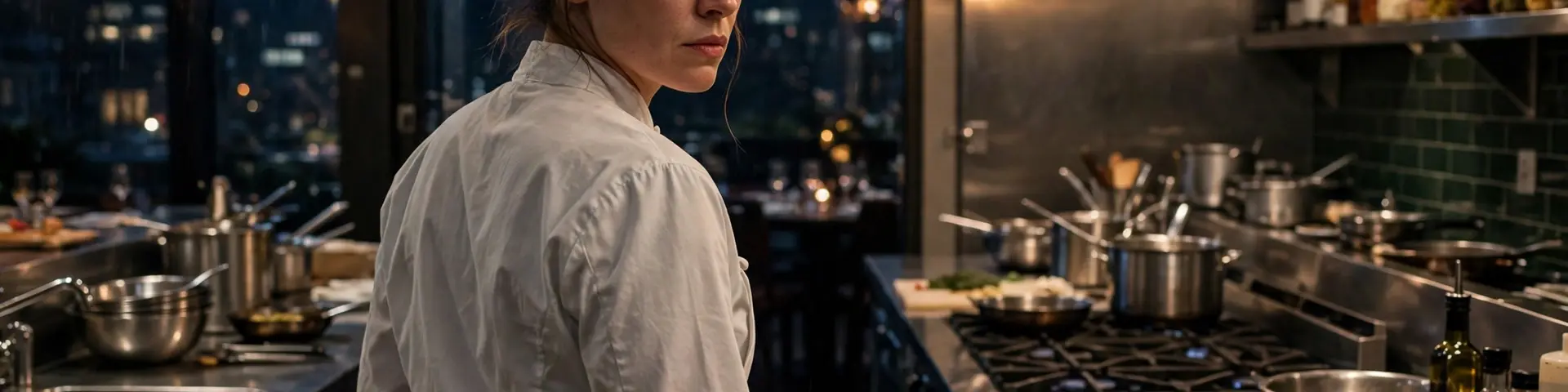
\He pointed to the floor plan.\
\“You would have equity.”\
\“Salary.”\
\“Operational control subject to a board.”\
\“Financial reporting.”\
\“Key-person provisions.”\
\“No blank check.”\
\“Good.”\
\He almost smiled.\
\“You sound disappointed.”\
\“I sound relieved.”\
\Then I asked the question I had been holding back.\
\“Why me?”\
\He studied me for a moment.\
\“Not because you walked out.”\
\“That was dramatic.”\
\“Potentially irresponsible.”\
\“Thank you.”\
\“But you told me immediately.”\
\He folded his hands on the table.\
\“You did not allow me to invest under a false assumption that you were participating. That matters.”\
\He tapped the due-diligence packet.\
\“And this matters more. The restaurant improved because of work you can describe and systems you can repeat. That is what I’m interested in.”\
\I looked at the floor plan again.\
\For three years, every idea I had passed through the same filter. Would Dad approve? Would Mom worry about the cost? Would Camille know how to sell it? Would the family think it was worth the trouble?\
\For the first time, someone was asking a different question.\
\What would you build?\
\I went home to my apartment at two in the morning. Dad had left nine voicemails. I listened to one.\
\“Mara, whatever happened tonight, we can fix it.”\
\Then another.\
\“Gerald overreacted.”\
\Then another.\
\“You need to call him and explain.”\
\There it was. Not, I’m sorry. Not, you should have been in the meeting. Fix it.\
\I deleted nothing, but I called no one.\
\The next morning, I met Gerald’s team. Then I met my own attorney. That part matters. I had spent enough years trusting family agreements because they were family. I was not going to sign a multimillion-dollar deal simply because an investor had bought me coffee and made me feel seen.\
\We negotiated for weeks. My attorney changed clauses. Gerald rejected some and accepted others. I received meaningful founder equity tied to vesting, a chef salary, profit participation, and clear intellectual-property terms covering recipes developed for the new concept.\
\We established a board with independent members. Capital would be released in stages based on build-out milestones. No single person could remove me from operations without cause and a formal board process. Every important responsibility was written down. Every expectation was explicit.\
\I had learned what could happen when people relied on assumptions instead of agreements. I was not going to repeat that mistake.\
\The restaurant would not be called Mara’s. I did not want my name above the door. I wanted the restaurant to have an identity beyond me, something that could represent the food and the experience rather than turn the business into a monument to its chef.\
\I called it Selene.\
\Doris from culinary school had once told me that a restaurant name should sound good when whispered and shouted. Selene did.\
\Dad finally came to my apartment three weeks after I left. He stood outside holding the old framed review Mom had hung in Bennett House.\
\QUIETLY EXTRAORDINARY.\
\“What are you doing with that?” I asked.\
\“Your mother said this belongs to you.”\
\I let him in.\
\He sat down, carefully holding the frame on his knees. For a while, neither of us spoke. I made coffee. He did not drink much of it. The silence was uncomfortable, but I had stopped believing it was my responsibility to fill every difficult pause.\
\Finally, he said, “We may have to close.”\
\That hurt, despite everything. Bennett House had been part of my life since I was twelve. I knew every worn corner of the dining room, every flaw in the kitchen, and every sound the old refrigerators made when the compressors started. I had spent three years trying to give the place a future.\
\“What about simplifying the menu?”\
\“We did.”\
\“Luis?”\
\“He got another offer.”\
\Of course he did. Good cooks do not remain long in kitchens where leadership becomes uncertain. Luis had skills, ambition, and a right to choose a workplace where his future was not dependent on a family’s unresolved conflicts.\
\Dad rubbed his hands together.\
\“I made a mistake.”\
\I waited.\
\“I should’ve had you in the meeting.”\
\“Yes.”\
\“But I was trying to protect the family.”\
\That old sentence again.\
\I sighed.\
\“From what?”\
\He looked ashamed.\
\“From Gerald thinking the whole business depended on one daughter.”\
\I stared at him.\
\“It did depend on me.”\
\“I know that now.”\
\“No.” I shook my head. “That’s not even the problem.”\
\He looked confused.\
\“Then what is?”\
\“You thought dependency was embarrassing. You thought my importance made the rest of you look smaller.”\
\He looked down at his hands. Maybe I was right. Maybe he had been afraid that acknowledging my role would make his own years of work seem less significant. Maybe he had believed a business needed to present a united family image more than it needed to tell the truth about who did what.\
\Then he said, “Camille is better with people.”\
\“She is.”\
\“I thought investors would respond to that.”\
\“Then she belonged in the meeting too.”\
\He looked at me.\
\“Too.”\
\“Yes.”\
\Not instead.\
\The distinction seemed to hurt him. Good. Necessary hurt.\
\“I’m sorry,” he said.\
\I believed he meant it. For the first time, he seemed to understand that he had made a choice that damaged more than a business relationship.\
\Then he asked, “Could your deal include us?”\
\And there it was. The apology becoming a bridge toward another request before the apology had finished standing on its own.\
\I leaned back.\
\“No.”\
\Dad’s face tightened.\
\“Mara.”\
\“No partnership.”\
\“We’re family.”\
\“Yes.”\
\“That is why this has to stay separate.”\
\He stood. For a second, the anger returned to his face, the familiar expression of a man who was not accustomed to hearing no from someone he believed he had helped raise.\
\Then he looked at the framed review in his hands. Slowly, he set it on my table.\
\“I don’t know how to talk to you anymore.”\
\“Try talking to me without needing something at the end.”\
\That landed. He stood there for another moment, apparently searching for a response that would not make things worse. Then he left.\
\Mom’s apology came in a card. Four handwritten pages, folded carefully into an envelope. She admitted that she had known Dad planned to feature Camille. She had told herself I would prefer the kitchen anyway, that I would be happier cooking than sitting through meetings and talking about investment terms.\
\That sentence hurt.\
\Because part of it was true. I did prefer the kitchen. They had used my preference as permission to erase me from ownership of the work.\
\Mom wrote, “I thought because you hated attention, you would not care about credit. I understand now those are not the same thing.”\