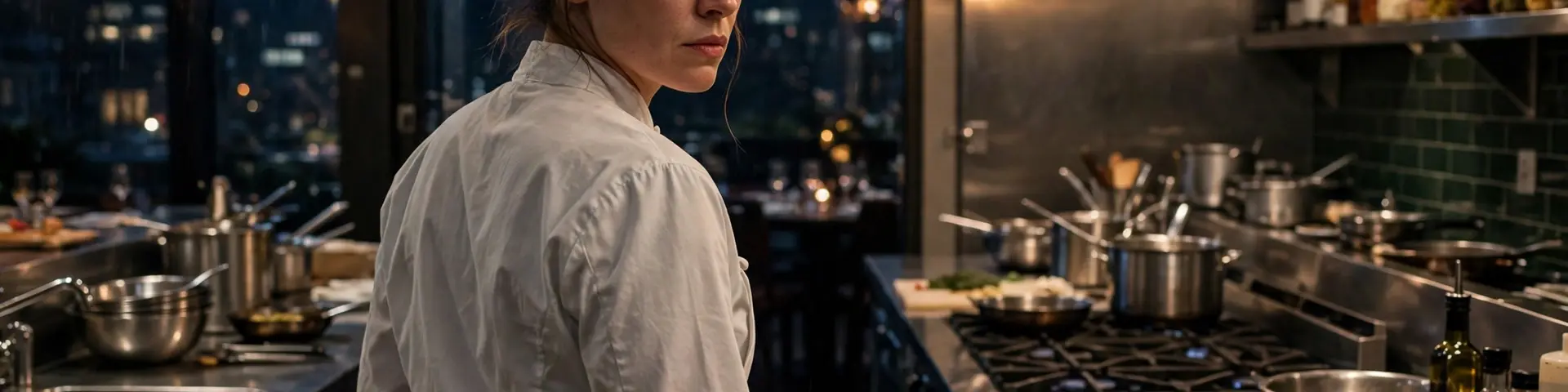
\That was exactly right.\
\I called her. We cried. We talked longer than either of us expected, and for once I did not hurry to reassure her that everything was fine. It was not fine. But we could begin telling the truth about what had happened, and that was something.\
\Camille waited longer.\
\Her message arrived the week construction began at Selene. I almost deleted it without reading. I had grown accustomed to her explanations, to the way she could turn a difficult choice into something that sounded inevitable if she spoke about it confidently enough.\
\Instead, I opened the message.\
\Mara, I knew the deck removed your name. I told myself it was branding. I liked being introduced as director of hospitality. I liked Dad looking at me like I was the one who could save the deal. I knew that wasn’t true. I also knew if I defended you, I might lose the role I wanted. I’m sorry. I don’t expect an answer. Camille.\
\I read it several times. For the first time, she had not tried to explain away the difference between what she wanted and what she knew was right.\
\I did not answer for two months.\
\Then I sent, “Thank you for telling the truth.”\
\Nothing more.\
\Selene took nine months to open. Not six.\
\Real construction never respects emotional storytelling. Permits took longer than expected. A refrigeration unit arrived damaged. The tile shipment was wrong, forcing us to wait for a replacement. A hood inspection got rescheduled twice, and each delay pushed the schedule further into a calendar that had already been revised too many times.\
\Gerald never once said, “Just make it work.” He asked what the schedule impact was, what alternatives we had considered, and whether the additional cost would affect working capital. That difference mattered. He expected answers, but he did not treat a problem as a personal failure or assume that pressure could substitute for planning.\
\I hired Luis as sous chef.\
\He accepted after making me promise that this kitchen would have written promotion criteria.\
\“Why?” I asked.\
\He shrugged.\
\“I like being asked.”\
\That made me smile.\
\Elise became one of our primary farmers. We planned the opening menu around eight dishes, not twenty. We built a tasting counter with twelve seats, while the main room seated thirty-eight. I wanted a restaurant small enough that the team could recognize the rhythm of the entire room and notice when a guest needed something without being told.\
\From the pass, I could see almost every table.\
\On opening night, Gerald sat at table four. Not at the chef’s counter.\
\“You don’t want the best seats?” I asked.\
\“They’re not mine.”\
\The first service was imperfect. Table nine waited too long between courses. A sauce broke on one plate, and we had to remake it while the rest of the kitchen adjusted its timing. Someone dropped a spoon during the quietest moment of the evening, and the sound seemed to travel through the entire room.\
\I loved every second.\
\Not because everything went right, but because every problem belonged to us to solve. The team communicated, adjusted, and recovered. Nobody had to pretend that a mistake was someone else’s fault to protect a title. We finished the service tired, sweaty, and proud.\
\After the last guests left, the team gathered in the kitchen. Luis raised a deli container of sparkling cider.\
\“To the throne.”\
\Everyone looked confused.\
\I laughed. He had heard Dad’s old sentence through the staff grapevine, and he knew exactly why the joke mattered.\
\The kitchen was never the insult.\
\That became a private joke.\
\Three weeks later, a respected regional critic called the meal luminous. Reservations filled for the next month. Broader recognition followed, then awards, a dining-guide recommendation, and eventually national attention I had once imagined would feel like proof that I had been right all along.\
\It did not.\
\The best proof came at eleven thirty on a rainy Thursday when I walked through the dining room after service and saw two strangers lingering over dessert because they did not want the evening to end. Their plates were nearly empty. Their conversation had slowed into the comfortable quiet of people who were not ready to leave.\
\I had built a place people wanted to stay.\
\That mattered more.\
\Bennett House closed five months after I left.\
\Dad did not lose everything. The landlord took the space back. My parents sold the equipment and paid their remaining obligations. Dad found consulting work with a food distributor. Mom returned to bookkeeping for other small businesses. Camille went back to event marketing.\
\There was no dramatic ruin and no punishment waiting at the end of the story. There was simply the end of a restaurant that had outgrown the structure supporting it and then lost the person holding that structure together.\
\A year after Selene opened, Dad made a reservation.\
\He used the public website. That mattered. No phone call asking me to squeeze in family, no expectation that the usual rules would bend because he was my father. Table for four. Dad. Mom. Camille. And me, apparently, because the reservation note mentioned that they hoped I might have time to join them.\
\When I saw it, my stomach tightened. I almost canceled. I considered asking the host to move the reservation or telling myself that I had too much work to sit with them.\
\Then I did something different.\
\I asked myself what I wanted.\
\Dinner.\
\I wanted dinner.\
\So I told the host to seat them normally.\
\At seven fifteen, they arrived. Dad wore a sport coat. Mom carried flowers. Camille looked nervous in a way I had rarely seen her look in public. They were led to their table like any other guests, and I finished service through the second course before joining them.\
\Dad looked around the room.\
\“This is beautiful.”\
\“Thank you.”\
\Camille glanced toward the tasting counter.\
\“I can’t believe how small it is.”\
\“It’s supposed to be.”\
\“I meant that nicely.”\
\“I know.”\
\Mom touched my hand. The meal moved carefully, with the kind of politeness people use when they know there are important things to say but are not certain how to begin. We talked about the food, the weather, and a local event Camille had worked on recently. Nobody mentioned Bennett House until dessert.\
\Then Dad pulled an old document from his jacket.\
\The investment showcase deck. The one that removed my name.\
\He had kept it.\
\“I found this while cleaning the office.”\
\He placed it between us. The pages had softened at the corners, and the printed colors looked slightly duller than I remembered. I recognized the slide immediately.\
\Culinary Program — Bennett House Kitchen Team.\
\No Mara.\
\Dad looked at it for a long time.\
\“I don’t know what I thought I was doing.”\
\Camille answered before I could.\
\“You were trying to make us look like a company instead of a family.”\
\Dad nodded.\
\“Yes.”\
\Then she said, “And somehow that meant making the person who actually knew what she was doing disappear.”\
\Dad looked at me.\
\“I’m sorry.”\
\No request followed.\
\That mattered most.\
\I reached across and closed the deck.\
\“Thank you.”\
\Mom cried. Camille rolled her eyes at her because sisters are still sisters even after emotional growth.\
\Later, I walked them to the door. Dad paused beside the open kitchen, where Luis was calling for a pickup and the team moved around him with the familiar rhythm of a busy service.\
\Dad watched for a moment.\
\“Can I ask you something?”\
\“Yes.”\
\“Did you really leave because I told you to stay in the kitchen?”\
\I thought about it before answering.\
\“No.”\
\He looked surprised.\
\“I left because you thought staying in the kitchen meant I did not deserve a seat in the room where my own work was being sold.”\
\He absorbed that, his eyes moving briefly toward the kitchen before returning to me.\
\Then he nodded.\
\“That’s fair.”\
\He left.\
\Camille stayed behind.\
\“I used to think you were lucky.”\
\I laughed.\
\“What?”\
\“Because you knew exactly what you wanted.”\
\She looked toward the kitchen, where a cook was wiping down the pass.\
\“You always looked miserable at family meetings. You never cared what people wore. You just cooked. I thought that meant things were easy for you.”\
\I leaned against the host stand.\
\“They weren’t.”\
\“I know.”\