She pointed toward a sideboard, away from the rest of the food, a small exile within the kitchen itself.
“Just leave it over there.”
I did.
My pie sat forgotten on the counter, exactly where she’d pushed it. Michael had earned warm praise for arranging crackers on a board. I’d baked something the night before, packed it carefully, driven it across the country, and received a reminder that nobody had asked for it.
Not because I agreed with her. Because I’d spent a lifetime learning how to survive these little moments without giving her the reaction she wanted. The trick, I’d discovered years ago, was to stop performing for an audience of one.
During the afternoon, my father had clasped my shoulder and told me he was glad I’d made it safely. His hand was heavy and warm, and for one second I remembered the hot chocolate he used to bring me after my mother’s lectures — the way he’d knock softly, hand me the mug, and sit on the edge of my bed without saying a word. He could be gentle when nobody was watching. But when she humiliated me in front of everyone, his gentleness always vanished into silence, as if it had never existed.
Before dinner, she entertained relatives with a story about eight-year-old me spilling soup across the kitchen floor, her voice rising with theatrical disbelief.
“Always so clumsy,” she said.
People laughed politely. I smiled the smile I’d perfected by age ten.
Aunt Carol, to her credit, reminded everyone that I’d won a statewide debate championship. For a moment, I thought my mother might let that stand — might let one small good thing about me sit in the room unchallenged.
Instead, she immediately praised Emily’s medical-school recognition, her voice lifting with genuine pride, the contrast so sharp it was almost a kindness that it was over quickly.
Later, Uncle James mentioned a swimming achievement of mine from years ago, and before I’d even finished saying thank you, my mother had redirected the conversation to Emily’s research, describing it in loving detail.
Every attempt to recognize me disappeared beneath another celebration of my sister. It was done so smoothly that no single moment looked cruel. Only the pattern was cruel.
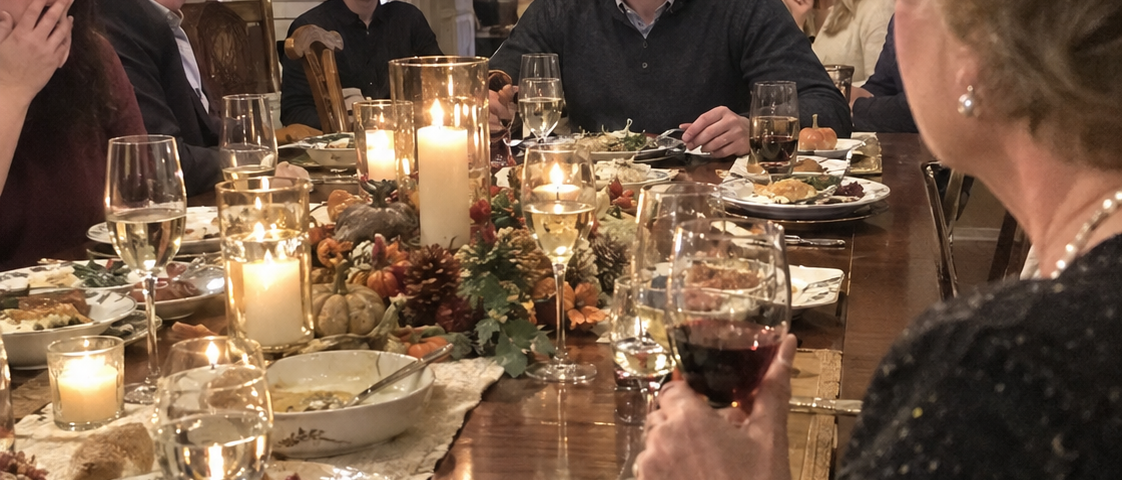
At dinner, the place cards put Emily, Michael, and the baby near my mother, in the warm center of the table. I sat at the other end, where the light was dimmer and the conversation thinner.
Linda announced our annual tradition with the satisfaction of a host who knows her production is running on schedule: everyone would say what they were thankful for.
She praised Emily and Michael for putting family first, for making the drive with the baby, for understanding what really mattered. My father thanked everyone for being together. Emily spoke about having a loving, supportive family, and my mother beamed.
When my turn came, I folded my hands on the edge of the table and chose my words the way Dr. Keane had taught me — carefully, and for myself.
“I’m thankful that this year I’ve learned to grow and to understand the importance of setting boundaries.”