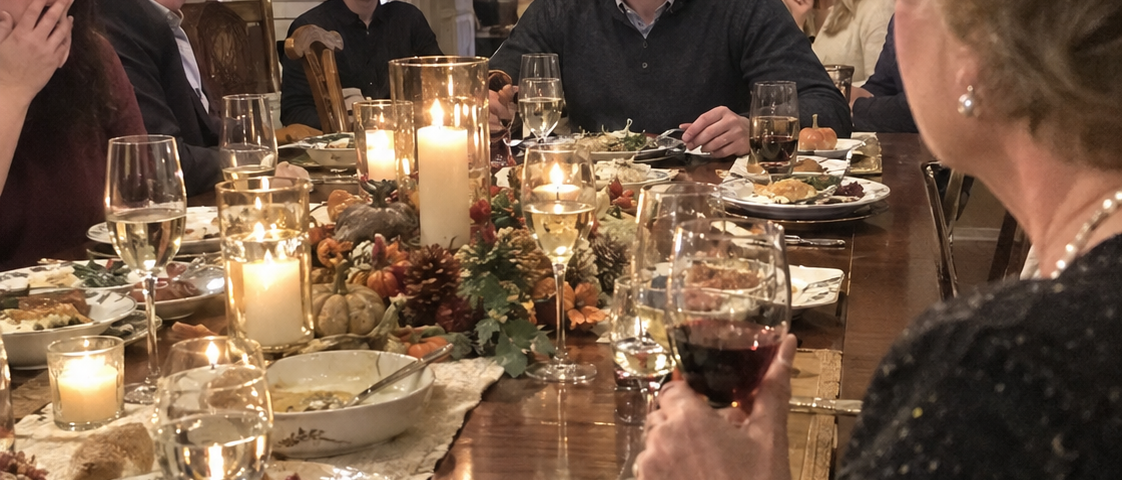
She stated it over dessert: “I wish you were never born.” Everyone laughed except me. I set my fork down slowly. My heart was racing, but I smiled. Then I said my one line. The room fell dead silent. She never spoke to me again. I walked out.
“Ethan was always difficult.”
My mother said it over Thanksgiving dessert, holding her wineglass as if she were making an innocent observation. Across the polished dining table, someone let out a small, nervous laugh. The candlelight caught the crystal and threw small flecks of gold across the tablecloth.
“He cried all night,” Linda continued. “Ruined our sleep. We had to cancel plans because of him.”
I was thirty-two years old, sitting in the Wisconsin house where I’d grown up, and she was still talking about me like a problem she’d never forgiven. The steam from the coffee cups curled in the air between us, and I watched it rise while she turned a night from three decades ago into the story of my entire existence.
My fork hovered over a slice of pumpkin pie I no longer wanted.
My father, Robert, stared into his coffee as though the answer to everything were somewhere at the bottom of the cup. My younger sister, Emily, shifted beside her husband, Michael, and fixed her eyes on her plate. Nobody interrupted. Nobody ever did.
Then my mother glanced around the table, pleased to have everyone’s attention, and delivered the line she’d clearly been saving.
“We even had to cancel our trip to Europe because of him.”
A few people chuckled again, softer this time, the way people laugh when they aren’t sure they should be laughing at all.
I looked at her hand curled around the stem of her glass. She wasn’t angry. That was the worst part. She was comfortable. This was a story she’d told so many times it had worn smooth in her hands, like a favorite piece of jewelry she liked to show off.
Four days earlier, I’d been driving toward this house knowing Thanksgiving wouldn’t be easy. I had turned the heat up in the car and the radio down, and I’d practiced, out loud, the sentence I’d already decided on: I am a grown man, and I can leave any table that poisons me. In Seattle, her invitation had arrived as an email that sounded less like an invitation than a warning.
“Emily and Michael will be driving in with the baby,” she’d written. “I trust you’ll be on time this year.”
Then came the comparison, as predictable as the November cold that had already settled over the highways.
“Emily always finds a way to make it work, even with the baby. I’m sure you’ll manage somehow, won’t you?”
I had a career as a brand strategist. My own apartment with a balcony where I grew herbs I’d actually remember to water. A life I’d built without asking her permission. But every time I walked through that red front door, I felt twelve again — small, loud, and somehow always in the wrong.
Emily was the daughter whose accomplishments became family announcements, printed and framed and repeated. I was the son whose childhood mistakes became entertainment, retold at every gathering until they hardened into legend.
My therapist, Dr. Keane, had given me one instruction before the trip, and she’d made me repeat it back to her twice so it would stick.