The second text came the next morning.
“Call your mother.”
I didn’t.
On Christmas Eve, she called me herself, and for one strange moment I almost answered out of habit. Then I let it ring, and when it went to voicemail, I listened to her voice — smaller than I remembered — say that she didn’t understand what had gotten into me, that family was family, that I was being dramatic.
I deleted the message and made hot chocolate the way my father used to make it for me.
In January, my father and Emily came to see me in Seattle. We sat in my small living room with its balcony and its herbs, and my father cried — actually cried — and said he was sorry for every silence, for every time he’d looked into his coffee instead of at me. Emily held my hand and told me she’d always admired how I’d built a life on my own terms, and that she was tired of being the weapon my mother used against me.
That spring, I adopted a rescue dog named Max, a scruffy, joyful creature who greeted every morning like it was the best thing that had ever happened to him. I decided to learn from him.
For the first time in my life, I had a full year of peace — a year without performing, without bracing, without shrinking. I grew into my apartment, my work, my friendships. I learned what my own laugh sounded like when nobody was grading it.
Then this year, I decided to host Thanksgiving dinner myself.
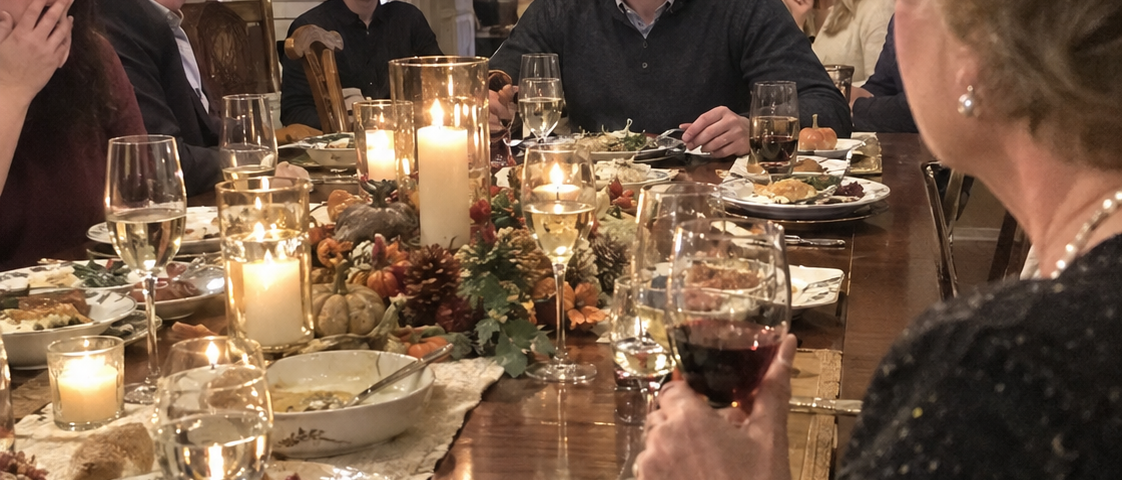
Twelve people filled my Seattle home — friends who had become family, Aunt Carol and Uncle James, Emily and Michael and the baby, all the people who had ever looked at me and actually seen me. The table was crowded and loud and imperfect. Nothing matched. Everything was warm.
Before we ate, I started a new tradition. I asked everyone to name one boundary they’d set that year — one way they’d chosen themselves.
People laughed. People cried a little. People told the truth.
When my turn came, I raised my glass.
“I’m thankful I finally learned that love shouldn’t cost you your dignity. And I’m thankful for every person at this table who taught me what family is supposed to feel like.”
Aunt Carol raised her glass back at me with tears in her eyes, and the room — my room, my table, my people — glowed.
My mother wasn’t there. She hadn’t been invited. Some doors, once you walk through them, you don’t walk back through — not out of cruelty, but out of clarity.
I used to think the worst thing a parent could say was that they wished you’d never been born. Now I know the real tragedy would have been believing her. I was never the mistake. The mistake was spending thirty-two years trying to earn love that should have been mine from the start.
If you came here from Facebook because of this story, return to the Facebook post, tap Like, and comment exactly “Amazing” to support the storyteller. That small action means more than it seems and gives the writer genuine encouragement to keep sharing more stories about family pressure, firm boundaries, and protecting what you worked so hard to build.